Author: Kaizen

  • CFTC Swap Data Reporting in Uncertain Times: 5 Reasons Why It Matters More

    CFTC Swap Data Reporting in Uncertain Times: 5 Reasons Why It Matters More

    Given the backdrop in Washington, clients and industry contacts are asking me if the CFTC remains as focused on reporting and whether firms could consider scaling back their efforts. I understand the logic: a shifting regulatory environment in the US, recent No-Action Reliefs on error correction and notification, and signals of a regulatory pivot towards crypto and fraud.

    Factor in an industry exhausted after years of gruelling rewrites and the case for easing off feels almost compelling. Almost.

    My answer is a categorical nope – and here’s why.

    1. Regulators increasingly use the data for far more than systemic risk monitoring

    The Dodd-Frank Act reporting framework may have originated from the 2008/9 financial crisis with systemic risk the objective, but regulators across the G20 countries are using this data for an expanding range of purposes, including:

    • Market surveillance
    • Position monitoring
    • Market abuse and insider trading detection
    • Policy calibration.

    ASIC’s recent review of the Australian CFD market is a case in point. They used the reported data for consumer protection purposes and the resulting enforcement action secured nearly A$40m in refunds to retail investors. A different use case entirely from the original mandate but made possible by the quality of the underlying data.

    And consider the Archegos collapse. The SEC took significant criticism for what it didn’t see coming. The idea that either the CFTC or SEC would voluntarily walk away from data they’ve spent years working to obtain and improve just doesn’t hold up.

    It’s also worth remembering that the original systemic risk mandate is looking as mission critical as it has been since The Big Short. If anything the environment we’re operating in has made it more relevant:

    • War in the Middle East driving oil prices sky high and damaging the global economy
    • Growing concerns about structural vulnerabilities in the private credit space
    • Questions about whether the current AI boom might be a bubble
    • Significant uncertainty about the risks, opacity and sustainability of cryptocurrency markets (and yes, the irony of arguing for data quality while regulators are being nudged to go easier on crypto is not lost on me)
    • All of the above sitting alongside risks like stretched asset valuations, elevated sovereign debt levels, and a geopolitical risk environment that feels anything but settled.

    2. No-Action Relief letters are not a free pass on data quality

    It would be easy to assume the two recent CFTC No-Action Relief letters (easing the so-called ‘Part 49’ burdens around Error Correction and Error Notification) are a signal that the commission is easing off. It’s actually the opposite.

    Let’s recap:

    • NOAR Letter 25-25 (July 2025) means firms only having to submit a ‘failure to timely correct’ notification where the issue impacts over 5% of the open trades within that asset class.
    • NOAR Letter 25-43 (December 2025) reduces the correction requirements in three main ways:
      • Reduced requirements to correct dead (matured/terminated) trades
      • Corrections focused on the most important fields (LEIs, UTIs, UPIs and Appendix A fields)
      • Only the latest version of any trade needs corrected.

    Collectively, that’s a significant reduction in administrative burden. And credit to ISDA for the advocacy that got the CFTC to this more pragmatic place.

    But the intent is telling. The Commission isn’t saying reporting quality matters less. It’s saying: we’ve cleared away the noise, so now crack on with what really matters. In other words, there are no excuses left. 

    Regardless of where the CFTC sits on enforcement priorities, NFA examinations of swap dealers continue with data accuracy and reporting controls firmly in scope. The same goes for FINRA’s examinations on the SEC side. Reporting quality is not an optional extra.

    And here’s the sting in the tail: those two No-Action Relief letters cut both ways.The NFA will likely expect firms to demonstrate exactly what they’re doing with the correction requirements that remain. Relief from the burdensome stuff is not a pass on the important stuff.

    3. Cross-jurisdiction reporting means issues don’t stay isolated to CFTC

    If your firm is big and important enough to be invited into the Swap Dealers Ballroom, there’s a strong chance you’ve qualified for other equally prestigious obligations. The Security-Based Swap Dealers convention is only two blocks down Fifth Avenue. Toronto and the glamour of the CSA Gala are just a short flight from JFK. And further afield, your international colleagues are getting dressed up for EMIR, ASIC, HKMA and more.

    Even if the CFTC were to signal a reduced focus in data quality – which it won’t – the underlying data, systems and teams that support them tend to have multi-jurisdictional duties. Let your CFTC data grow stale or polluted and there will be a knock-on effect across every other regime you report into.

    As I commented here, the CFTC and SEC recently announced a Memorandum of Understanding that has implications for swap and security-based swap data. The MOU commits the two agencies to sharing access to reported data, combining analytical and monitoring capabilities, and coordinating on examinations and enforcement.

    Given that these two agencies have historically been more territorial than collaborative, that part about sharing analytical capabilities and analysis is game-changing. Likewise, collaboration on monitoring capabilities and examinations is an interesting and sensible development. And none of it points towards a reduced emphasis on data quality, quite the opposite. Factor in the rapid pace of AI tooling and the two commissions will soon be able to pore over your swap data like never before.

    4. The current ‘quiet period’ is the best time to improve your reporting

    The last three or four years of reporting rewrites have been a major slog. Factor in the SEC’s Security-Based Swap Reporting implementation in late 2021 and early 2022, the CFTC ReWrite in 2022, Phase 2 in 2024, and Canada’s CSA Rewrite in 2025 and even firms with purely North American obligations have been living on a near-permanent regulatory deadline treadmill. And regulatory deadlines, as everyone in this industry knows, are not renowned for their flexibility.

    Whilst we wait for the next round of regulatory timelines, it’s entirely understandable to want to take a bit of a breather. But it’s also a missed opportunity.

    With the rewrites bedded in and the next major deadline not imminent, this is precisely the window to tackle the things that always get deprioritised: cleaning up source data, enhancing systems, tightening controls, and investing in the teams that run them. Firms that use this period will be in a fundamentally stronger position than those that don’t.

    Because before long, the CFTC will have fired the starting gun on the remaining phases of the rewrite, or the CSA will have announced timelines for the next iteration of their Derivatives Data Technical Manual. Or both. And we’ll all be back in deadline mode, and those “day two” initiatives will get quietly shelved again. The window is open now – it won’t stay that way.

    5. High quality data is a business asset, not a compliance tax

    Several years of regulatory stress, my once youthful team is now looking like The Battered Bastards of Baseball, and all for what? So that regulators can ensure we’re not the next Bear Stearns?

    Well, not quite. Because it’s not just the regulators who can use this data. You can too. And you should.

    The good news is that within all that regulatory effort your firm has achieved most of the following:

    • Sourced and cleaned up massive amounts of data
    • Associated LEIs to internal client and counterparty codes
    • Collated and normalised data from multiple upstream systems
    • Linked collateral data from a collateral management system with actual trade data
    • Enriched and verified financial product codes and taxonomies with UPI data
    • Implemented multiple data controls that surface anomalies and issues like never before.

    It’s not just the regulators who now have better oversight of your derivatives business. You do too. This data and the infrastructure around it, is an asset. It isn’t siloed like many trading or upstream systems. It spans your entire derivatives business, with potential value extending across risk, finance, operations, legal and commercial functions simultaneously.

    Looking at the reporting data and controls as solely a regulatory burden is not only shortsighted. It’s also a strategic error. There is value within that data if you choose to unlock it.

    So is CFTC Swap Data Reporting still worth the effort?

    The regulatory pressure hasn’t gone away – it’s evolved. The CFTC and SEC have better tools, broader mandates, and now a formal framework for sharing data and analysis with each other. Examination programmes continue. Cross-jurisdictional obligations don’t disappear because Washington feels uncertain. And the quiet period won’t last.

    But beyond the compliance case, the firms that will come out ahead aren’t just the ones that report accurately. They’re the ones that recognise what they’ve built and put it to work.

    The data is there. The infrastructure is there. The only question is whether you choose to treat it as a burden or an asset.


  • Kaizen RegTalk 2026

    Kaizen RegTalk 2026

    Kaizen RegTalk 2026, our flagship conference for the regulatory reporting community, returns on Tuesday 2 June at Drapers’ Hall, London.

    We are pleased to welcome back Tom Soden from the Financial Conduct Authority (FCA) as our keynote speaker, alongside specialists from across the industry, including firms, trade associations and Kaizen’s regulatory experts.

    The regulatory landscape is entering a new period of transition, with significant changes proposed across UK and EU regimes.  As these changes develop, firms will face increased scrutiny on the accuracy and quality of their reported data.

    This year’s event will bring the industry together to share practical insights, examine what the changes mean for firms, and explore what comes next.

    Join us to:

    • Hear directly from the FCA
    • Gain practical insight into UK and EU regulatory developments
    • Prepare for upcoming changes to UK MiFIR Transaction Reporting
    • Explore how firms are strengthening reporting quality and controls
    • Connect with peers across the regulatory reporting community
    • Experience the next evolution of the Kaizen Hub platform, including enhancements available now and a preview of what’s to come.

    View the Kaizen Regtalk 2025 highlights in the video at the top of the page.

    Places are limited to clients and invited guests but if you would like to attend, please email your interest to communications@kaizenreporting.com and we will do our best to accommodate you.

  • Key themes from our webinar: The Regulatory Reporting Landscape in 2026

    Key themes from our webinar: The Regulatory Reporting Landscape in 2026

    Regulatory reporting is entering a new phase as the era of large-scale refits and rewrites across G20 regimes comes to an end but the pressure on firms has not let up.

    In our recent webinar, The Regulatory Reporting Landscape in 2026, our regulatory specialists explored what this shift means in practice and where firms should be focusing their attention now.

    Below are some of the key themes discussed during the session.

    From regulatory change to regulatory scrutiny

    Following several years of extensive refits and rewrites across G20 reporting regimes, regulators are now entering a period of reassessment. While proposals for change are on the table including the Financial Conduct Authority’s (FCA) MiFID transaction reporting consultation and ESMA’s Call for Evidence on reporting simplification, firms are operating in a landscape where scrutiny is increasing.

    Across jurisdictions, regulators are placing increased emphasis on the quality, consistency and usability of reported data. But firms should be aware that ‘simplification does not mean deregulation’. Regulatory data remains key to market abuse detection, financial stability monitoring and risk-based supervision and has an increasing number of other uses, making the quality of reported data even more important. Regulators are actively using today’s data to assess risk and exposure, so firms cannot take their eyes off the ball.

    Diverging timelines but shared direction of travel

    One of the central themes of the webinar discussion was the differing pace of change between the UK and the EU.

    In the EU, the European Markets and Markets Authority (ESMA) is currently in a period of reflection following its Call for Evidence on transaction reporting, with no immediate changes to reporting expected in the short term. By contrast, the UK’s FCA is already moving forward with proposals to simplify MiFID transaction reporting, including descoping certain instruments, removing reporting fields and revisiting existing guidelines.

    Despite these different timelines, the underlying direction of travel is the same: simpler frameworks, fewer data points and reduced costs of reporting, but higher expectations around data quality and controls.

    Data quality is the focus for all regulators and firms

    Live polling during the webinar revealed that improving reporting accuracy is the top priority for firms heading into 2026, ahead of preparing for future regulatory change or investing in new reporting platforms.

    Common reporting errors highlighted in the webinar included:

    • Inconsistent counterparty data

    • Collateral and valuation reporting

    • Reference data quality

    • Repeated or overlapping data fields that do not reconcile cleanly.

    These issues can occur even in mature reporting environments and often only come to light through deeper data quality analysis.

    EMIR and other G20 regimes – expanded requirements

    Although EMIR and other OTC derivative reporting regimes are no longer in rewrite mode, the webinar highlighted that 2026 will still bring operational challenges. There are expanded reconciliation requirements for EMIR, evolving guidance and increased supervisory focus. This means that firms cannot afford to treat these regimes as ‘business as usual’.

    Regulators in North America and APAC are also shifting attention towards data governance, control frameworks, UTI and UPI usage, and delegated reporting oversight.  A recent report from ASIC that reviewed the CFD sector, shows how reporting quality is increasingly being used as a proxy for governance.

    What does this mean for firms? 

    A consistent message throughout the webinar was the importance of knowing your current state. Firms that have a clear understanding of their reporting processes, data lineage and controls will be far better placed to respond to both supervisory scrutiny and future regulatory change.

    Rather than waiting for what comes next, firms should use this period to stabilise business-as-usual reporting, remediate known data issues and strengthen governance foundations.

    Watch the on-demand webinar to hear the full discussion, including regulator-focused insights, live polling results, and audience Q&A with our regulatory reporting specialists.

  • WATCH: Introducing Kaizen’s Regulation Dashboard

    WATCH: Introducing Kaizen’s Regulation Dashboard

    Kaizen’s Regulation Dashboard is new feature of our ReportShield™ solution – providing clients with a complete, single view of their regulatory reporting quality, making it easier to understand where the top errors are, what to prioritise and how data is improving over time.

    What the Regulation Dashboard delivers:

    1. A clear dashboard summary of reporting completeness and accuracy:
      Demonstrating the overall health of regulatory reporting data, without the need to analyse detailed testing outputs.
    2. Top reporting errors at a glance:
      Highlighting the most significant issues instantly and automatically allows firms to prioritise remediation efforts.
    3. Status tracking across reporting data:
      Tracking shows which issues are new, which have been resolved, and which are recurring or trending – all in one dashboard.

    The Regulation Dashboard helps firms:

    • Reduce time spent analysing results
    • Improve confidence in regulatory reporting submissions, and
    • Support better, faster decision-making across compliance, data and ops teams

    Contact us for a demo or a conversation with one of our regulatory experts. 

  • Kaizen RegTech Group refines leadership roles to support continued growth

    Kaizen RegTech Group refines leadership roles to support continued growth

    London, 2 February 2026 – Kaizen RegTech Group (Kaizen), a leading provider of regulatory compliance solutions for global financial institutions, has announced new leadership responsibilities within its existing group structure. 

    Dario Crispini will continue in his role as Group CEO, overseeing strategy and growth across the group. He will also continue to lead regulatory reporting product and innovation, while remaining closely involved with clients and broader market engagement.   

    Michael Leach has been promoted to CEO of Kaizen Reporting, the group’s flagship regulatory reporting business. 

    Dario Crispini said, “As Kaizen continues to grow, it’s important that we align leadership focus with how the business is evolving. This change allows me to spend more time on group strategy, innovation and client relationships, while Mike leads Kaizen Reporting through its next phase of growth. Mike has been a key part of shaping our commercial direction, and I know the business is in great hands.” 

    Dario founded Kaizen Reporting in 2013, developing the first automated quality assurance solution for regulatory reporting. The company is now the market leader in this space, trusted by hundreds of financial firms globally.   

    Michael Leach joined Kaizen Reporting as Chief Revenue Officer (CRO) in June 2025. He joined from London Stock Exchange Group (LSEG), where he played a pivotal role in building UnaVista (now LSEG Regulatory Reporting Solutions) into a global brand. 

    Michael Leach said, “Kaizen Reporting has an incredibly strong foundation, a clear strategy, and a talented team. I’m excited to lead the business, support our clients, and drive the next phase of growth through continued investment in technology, innovation, and delivery excellence.” 

    Kaizen Reporting has recently announced several senior hires including James Crow as Chief Technology Officer (CTO) and Chris Childs and Tim Keady as strategic advisors. 

    The continued focus will be on enhancing the group’s strategy, technology, and commitment to its clients and people. 

    (ends)

    For more information, please contact: communications@kaizenreporting.com


  • WEBINAR REPLAY: The Regulatory Reporting Landscape in 2026


  • Webinar – Regulatory Reporting in 2026: Preparing for the Next Phase of Reporting

    Webinar – Regulatory Reporting in 2026: Preparing for the Next Phase of Reporting

    Watch the recording

    Date: Wednesday 28 January 
    Time: 15:00 GMT / 16:00 CET / 10:00 EST

    The honeymoon period for global reporting rewrites is over. As we enter 2026, the regulatory focus has shifted with the “grace periods” of 2024 and 2025 being replaced by a rigorous new standard of scrutiny. Regulators are no longer just looking for timely submissions, they are increasingly interrogating the accuracy, logic, and consistency of your data.

    In Kaizen’s annual Year Ahead webinar, our regulatory experts will break down the global regulatory roadmap, plus explain how firms can maintain compliance in a climate of increased scrutiny and enforcement.

    Why attend?

    This session is designed to provide regulatory reporting professionals with the insights needed to align their 2026/27 reporting with regulatory expectations.

    ● Audit-Ready Insights: Understand the areas regulators are likely to target this year.

    ● Multi-Jurisdictional Updates: A one-stop briefing on MiFIR, EMIR, ASIC, MAS, and North American developments.

    ● Money Markets in Focus: How to prepare for heightened transparency in short-term liquidity reporting.

    ● Expert Q&A: Get direct answers to your most pressing reporting challenges from Kaizen’s subject matter experts.

    With limited spaces available, reserve your place to stay ahead of the curve in 2026

    Speakers:

    Watch the recording

  • Kaizen returns to Eurex Derivatives Forum 2026

    Kaizen returns to Eurex Derivatives Forum 2026

    Date: 25 and 26 February | Location: Congress Center Messe Frankfurt | Hear us speak: 13:40, 25 February in breakout room: Illusion 3

    We are delighted to be returning to Frankfurt for the leading European event focused on trading and clearing for derivatives across asset classes. 

    On Wednesday 25 February from 13:40, we hope you can join Matthew Vincent, Managing Director, Tim Hartley, EMIR Reporting Director and John Graham, Senior Director of Regulation, FIA for a deep dive session into Regulatory Reporting in Transition. 

    The regulatory reporting landscape is undergoing significant transformation, with firms expected to manage evolving requirements while maintaining high-quality, accurate submissions. This session will examine ESMA’s latest updates to EMIR and MiFIR reporting, focusing on both the practical challenges and the opportunities arising from these changes. In this session, speakers will:

    • Break down the latest ESMA updates, including key changes to EMIR and MiFIR reporting requirements
    • Explore the wider regulatory reporting landscape, focusing on implementation challenges, supervisory expectations, and data-quality considerations
    • Share practical and actionable insights to help firms prepare effectively for the upcoming changes and strengthen their reporting frameworks.

    You can find the team in the exhibit hall throughout.

    Redeem your free ticket using code: Kaizen-DFF

    Register

  • Webinar: The Regulatory Reporting Landscape in 2026

    Webinar: The Regulatory Reporting Landscape in 2026

    Date: Wednesday 28 January | Time: 15:00 GMT / 16:00 CET / 10:00 EST

    Watch the recording

    As regulatory reporting enters a new phase in 2026, firms are navigating potential changes to reporting data alongside increased regulatory scrutiny. With regulators continuing to rely on high-quality data to meet their statutory objectives, expectations around accuracy and control are increasing.

    In Kaizen’s annual Year Ahead webinar, our regulatory experts will explore what this means across global trade and transaction reporting regimes, including MiFIR, G20 reporting (EMIR, ASIC and MAS), North America and money markets. 

    Speakers:

    Watch the recording

  • Kaizen selected in RegTech100 ranking for sixth time

    Kaizen selected in RegTech100 ranking for sixth time

    London, 10 December 2025 – Kaizen, a leading provider of regulatory compliance solutions for global financial institutions, today announced that it has been listed as a leading regulatory technology company in the 2026 RegTech100 ranking. It is the sixth time Kaizen has been included in the exclusive directory of the world’s most innovative RegTech companies.

    RegTech100 companies are selected by a panel of analysts and industry experts as the world’s most innovative companies in the regulatory technology space that are helping financial institutions manage regulatory and technological change.

    Kaizen has been selected in recognition of its leadership in developing innovative regulatory solutions for the industry, including ReportShield™, its award-winning assurance for regulatory reporting. The ranking supports Kaizen’s commitment to transforming how financial institutions manage regulatory obligations with intelligent, scalable solutions that reduce risk and enhance operational efficiency.

    “We are delighted to be included in next year’s RegTech100 list,” said Dario Crispini, CEO of Kaizen. “As we move forwards into 2026, technological advancements will continue to help financial institutions streamline compliance, drive operational excellence, and proactively adapt to evolving regulations. We’re grateful to Fintech Global for this recognition and incredibly proud of the Kaizen team whose relentless innovation and commitment to our clients make achievements like this possible.”

    Mariyan Dimitrov, Director of Research at Fintech Global’s RegTech Analyst, said, “As regulatory demands intensify and AI becomes more deeply embedded in compliance workflows, choosing the right RegTech partner is becoming a decisive factor in an organization’s ability to remain compliant and competitive. 

    “This year’s RegTech100 highlights the standout players in areas such as communications monitoring, onboarding, risk and controls, and financial crime prevention. These firms are pushing innovation forward – integrating advanced AI capabilities to help institutions anticipate regulatory changes, enhance customer journeys and drive operational efficiency.”

    (ends)

    For more information, please contact: communications@kaizenreporting.com


  • Kaizen Appoints James Crow as Chief Technology Officer

    Kaizen Appoints James Crow as Chief Technology Officer

    London, December 2, 2025 — Kaizen, a leading provider of regulatory compliance solutions for global financial institutions, is pleased to announce the appointment of James Crow as Chief Technology Officer (CTO). 

    James joined Kaizen in April 2025 as Head of Engineering and has been promoted in recognition of his outstanding contribution to the company’s technology vision and delivery. Prior to joining Kaizen, James spent the majority of his career at London Stock Exchange Group (LSEG) building and scaling the UnaVista platform and services; most recently, he served as UnaVista’s Chief Information Officer (CIO), responsible for change, testing and technology operations.  

    In his new role, James will lead Kaizen’s technology strategy and oversee the expansion of the Kaizen Hub, a unique portal providing leading compliance and RegTech solutions to tier-one financial institutions. He will also drive innovation to support the company’s growth plans and product roadmap, ensuring Kaizen remains at the forefront of regulatory-reporting technology, providing scalable, secure and high-performance solutions for clients worldwide. 

    “I’m thrilled to step into the CTO role at Kaizen,” said James Crow. “Having experienced Kaizen’s commitment to innovation and client-centric delivery in regulatory reporting and data quality, I look forward to working closely with our team to solve the problems for our clients and the industry as a whole, as well as engineering solutions that elevate our platform and service offering.” 

    Dario Crispini, CEO of Kaizen, added: “We are delighted to appoint James as our Chief Technology Officer. His proven experience in building and scaling mission-critical regulatory reporting platforms, combined with his hands-on and detail-driven approach, makes James the perfect leader to advance our technology capabilities as we expand our global market presence. We look forward to his technology leadership in driving our next phase of growth.” 

    James’s appointment comes at a pivotal moment for Kaizen as the company continues to extend its reach across the regulatory reporting and compliance space and deepen its technology offering and expertise for global financial institutions. 

    (ends)

    For more information, please contact Fiona Wilde, Head of Marketing and Communications, at media@kaizenreporting.com

  • Kaizen Achieves SOC 2 Type II and SOC 3 Information Security Attestations

    Kaizen Achieves SOC 2 Type II and SOC 3 Information Security Attestations

    Latest Attestations Complement Kaizen’s ISO 27001 Information Security Management System and Reinforce Global Compliance and Data Security Excellence

    London, 27 November 2025 – Kaizen, a leading provider of regulatory compliance solutions for global financial institutions, today announced it has successfully achieved System and Organization Controls (SOC) 2 Type II and SOC 3 attestations, further strengthening its commitment to the highest standards of information security and data protection for its global client base.

    The attestations, conducted by an independent American Institute of Certified Public Accountants (AICPA) accredited Certified Public Accountant (CPA) firm, validate the operational effectiveness of Kaizen’s security controls over a 12-month period. This achievement complements the company’s existing ISO 27001:2022 certified Information Security Management System (ISMS), creating a robust dual-framework approach that addresses the diverse compliance requirements of financial institutions across the UK, EU, US and APAC.

    “Achieving SOC 2 Type II and SOC 3 attestations represents a significant milestone in our continuous journey to provide world-class information and data security to our clients,” said Dario Crispini, Founder and CEO at Kaizen. “While our ISO 27001 certification has long demonstrated our systematic approach to information security management, these SOC attestations provide the detailed operational validation that our North American clients particularly value. Together, these frameworks create a comprehensive security system that meets and exceeds expectations of our global client base.”

    The SOC 2 Type II attestation evaluated Kaizen’s controls across all five Trust Services Principles – Security, Availability, Processing Integrity, Confidentiality, and Privacy – providing detailed assurance on the effectiveness of controls protecting client data throughout Kaizen’s ReportShield platform. The accompanying SOC 3 report enables Kaizen to publicly demonstrate its commitment to security excellence.

    Financial institutions are facing increased scrutiny from regulators worldwide on information security. Therefore, by maintaining both ISO 27001 certification and SOC 2 Type II attestation, the company is addressing the wide range of data security requirements across different regulatory jurisdictions, from prescriptive ISMS focused requirements in Europe and APAC, to the detailed control validation  required by US institutions. While the ISO 27001 certification provides a framework for continuous improvement in data security and risk management, SOC 2 Type II provides operational evidence and control testing for our security practices.


    (Ends)


    For more information about Kaizen’s security certifications, please contact: communications@kaizenreporting.com


  • What the Industry Learned at our Breakfast Briefing on Market Watch 84 & EMIR Refit Reporting

    What the Industry Learned at our Breakfast Briefing on Market Watch 84 & EMIR Refit Reporting

    Last week, Kaizen brought together more than 300 regulatory reporting professionals – both in person and online – for a deep-dive into Market Watch 84, the recently published UK EMIR Reporting Q&As and the implications for EMIR Refit reporting. With representatives from both the supervisory and policy sides of the UK regulatory landscape joining the discussion, the session offered a direct look at evolving expectations for EMIR reporting.

    While the conversation took place under the Chatham House Rule, several clear themes emerged. Below we summarise the key messages and practical takeaways for firms navigating the next phase of EMIR Refit.

    1. Data quality is a strategic priority, not a technical issue

    A consistent thread throughout the discussion was the critical importance regulators place on data quality. EMIR data is used widely across supervisory, policy and market-monitoring functions. The message was clear:

    • EMIR data feeds directly into senior decision-making
    • Poor reporting undermines supervisory insight
    • Data quality issues are no longer viewed as operational noise – they impact policy outcomes.

    The move to XML and the Refit schema has already improved baseline quality but regulators expect firms to keep raising reporting standards. Data quality is now a leading regulatory risk, not a back-office technical issue.

    2. The Refit implementation was a success and provided essential lessons too

    Both regulators and industry should take confidence from the smooth transition to the new regime under EMIR Refit. Day-one reporting was strong, and the majority of firms completed their six-month uplift window on time.

    However, there were also lessons learned during the implementation phase:

    • Reliance on third-party vendors increased sharply during this time, bringing with it gaps in oversight and testing
    • Some firms struggled to manage competing regulatory projects, especially those with dual EU/UK obligations
    • The uplift to the new regime had removed a small but significant population of “zombie” trades, highlighting weaknesses in historical data hygiene.

    3. Error and omission reporting: more transparency, better governance

    One of the key themes in the discussion concerned error notifications. Error reporting should not be viewed negatively and is increasingly a sign of:

    • Strong controls
    • Clear governance
    • A willingness to be transparent.

    However, what may be viewed negatively is the absence of notifications where errors clearly exist.

    The important points for firms to note are:

    • There is no fixed threshold for materiality – volume alone is not sufficient to determine significance
    • Firms should take a ‘cautious’ approach to submission – if in doubt, submit.  The regulators will communicate with firms if they think their materiality thresholds are not appropriate.
    • Initial submissions can be updated over time, but timeliness is important
    • Quality of narrative can be poor – firms should improve clarity, completeness and consistency.

    Error and omission reporting is now an important part of supervisory dialogue. Firms who avoid it are drawing the wrong conclusion about how it is perceived.

    4. Change management remains a weak spot across the industry

    Despite long preparation windows, many reporting issues stem from weak change-management practices:

    • Insufficient oversight of third-party providers
    • Inadequate testing of mapping and judgements
    • Limited visibility of delegated reporting outputs
    • Dependencies / overlap between EU and UK projects causing resource pressures.

    Firms should now consider the following:

    • Refresh their change-management frameworks
    • Perform structured post-implementation reviews
    • Revisit testing strategies and reconciliation approaches
    • Ensure they have trade repository (TR) access and can independently validate completeness and accuracy.

    5. Q&A updates bring clarity on technical ISINs and FX swaps

    The recent UK EMIR Q&A update addressed two longstanding pain points.

    Technical ISINs

    A new “technical ISIN” is now available for scenarios where underlying instruments lack an issued ISIN. This prevents firms from failing validation rules and, crucially, enables regulators to identify where gaps in global ISIN coverage exist.

    Use is strictly limited to the specified scenarios. This is not a workaround for convenience, and firms should apply it cautiously.

    FX Swaps Clarification

    Perhaps the most welcome update was the long-awaited clarity on FX swaps:

    • If a single instrument is executed, confirmed and settled as a swap, it should be reported as one instrument
    • Where a near-leg and far-leg are executed as separate contracts, only the eligible components should be reported, typically the forward leg, unless both legs fall within the spot window (in which case no reports are required).
    • Package fields should be populated even where the spot leg is not reportable.

    This clarity is expected to significantly improve pairing, matching and overall data quality across the FX landscape.

    5. Pairing and matching are now in the spotlight

    With Phase 2 reconciliation rules coming into effect next year, pairing and matching rates are receiving closer attention.

    Key points:

    • Pairing should approach 100%, even if not fully achievable in practice.
    • Firms should be actively collaborating with peers to resolve UTI, lifecycle and population mismatches.

    Firms that are not already analysing their reconciliation performance, both bilaterally and via vendor tools, should prioritise this now.

    6. Looking ahead: expect more collaboration, not less

    The UK EMIR Reporting Industry Engagement Group, used heavily during the Refit rollout, will continue and will be used to maintain an open channel with industry and to:

    • Shape future Q&A
    • Identify areas of ambiguity
    • Improve pairing and matching
    • Support industry-wide operational alignment
    • Prepare for the 2026 reconciliation phase.

    Conclusion

    EMIR reporting has entered a new phase with the focus having shifted from implementation to ongoing accuracy, demonstrable governance and proactive issue management.

    For firms, this means:

    • strengthening internal controls
    • scrutinising vendor-led reporting
    • investing in reconciliation and data validation
    • engaging early and transparently with supervisors and regulators
    • gearing up for the 2026 reconciliation expansion.

    The industry has made real progress but expectations are rising across the industry.

    For a conversation with one of our subject matter experts or a free health check of your EMIR Reporting please get in touch. 

  • Market Watch 84: Insights from the FCA and Bank of England Livestream

    Market Watch 84: Insights from the FCA and Bank of England Livestream

    Date: 20 November | Time: 09.30 GMT | Location: Livestream

    Following the publication of Market Watch 84 on EMIR Refit, we are pleased to invite you to a livestream of our breakfast briefing exploring what it means for firms.

    Register

    With senior representatives from the Financial Conduct Authority and the Bank of England joining our panel, this session offers a unique opportunity to hear directly from – and put questions to – the regulators on their expectations and priorities for EMIR reporting in the months and years ahead. 

    Speakers:

    • Richard Kind, Technical Specialist, Financial Conduct Authority
    • Will Parry, Leading the Data Team in the Financial Market Infrastructure Directorate, Bank of England
    • Tim Hartley, EMIR Reporting Director, Kaizen.

     Attendees will gain: 

    • A clearer understanding of the FCA and Bank of England’s latest expectations on EMIR reporting data quality 
    • Insights into how Market Watch 84 signals a shift in supervisory focus and compliance expectations 
    • Key actions to take to strengthen data quality and governance in response to the Market Watch and the recent Q&As.

    Register

  • Kaizen launches groundbreaking MAR360 Solution for Market Abuse detection and prevention

    Kaizen launches groundbreaking MAR360 Solution for Market Abuse detection and prevention

    Unique three pillar approach encompasses revolutionary online market abuse risk assessment tool, trade and communications surveillance technology, and expert-led market abuse training programme

    London, 23 September 2025 – Kaizen, a leading provider of regulatory compliance solutions for global financial institutions, today announced the launch of its revolutionary MAR360 solution – a comprehensive, new suite of products that transforms how financial institutions approach market abuse detection and prevention.

    Kaizen’s MAR360 solution combines cutting-edge technology with regulatory expertise to provide a comprehensive compliance offering covering i) market abuse risk assessment, ii) trade and communications surveillance technology and iii) an expert-led market abuse training programme.

    Transforming how firms manage market abuse

    Designed by former regulators, senior compliance professionals and technology experts, Kaizen’s solution includes a sophisticated online risk assessment tool which analyses firms’ market abuse risks and controls across more than 27 distinct risk areas. These areas have been meticulously crafted to uncover hidden risks that even experienced compliance professionals might miss and are based on regulatory enforcement actions and industry best practices, then enhanced by AI to ensure no vulnerability goes unnoticed.

    Kaizen’s MAR360 solution comprises our proprietary trade and communications surveillance platform as well as an advanced market abuse training programme. The training programme includes ongoing support from subject matter experts and former regulators to help firms remediate issues and gaps in their market abuse risk framework giving clients the assurance they need to meet their regulatory obligations.

    Simon Appleton, Market Abuse & Surveillance Director at Kaizen commented: “Our MAR360 solution moves beyond standard surveillance systems to the proactive management of market abuse risk, supporting the Financial Conduct Authority’s five year strategy to fight financial crime. As global regulators continue to focus on market abuse, firms need to integrate their solutions and controls to demonstrate to regulators how they are taking steps to detect and prevent market abuse incidents happening in the first place.”

    (ends)

    For more information, please contact communications@kaizenreporting.com or visit our website.

  • Kaizen returns to XLoD Global London – 11 & 12 November

    Kaizen returns to XLoD Global London – 11 & 12 November

    Date: 11 and 12 November | Location: Convene, 133 Houndsditch, London, EC3A 7DB | Stand no: 28

    Kaizen is returning to XLoD Global, taking place in London on 11 & 12 November.  Over two days financial institutions and regulators will come together to discuss the future of non-financial risk and control.

    You’ll find the Kaizen team at stand 28 so please stop by to find out how we can help solve your compliance challenges.  We will have representatives from our Surveillance and Market Abuse, Single Rulebook and ReportShield Assurance teams available. 

    We have a limited amount of heavily discounted tickets to give away.  If you’d like to be our guest, please contact us using the button below.

    Contact us


  • EMIR Refit: Five Key Takeaways from Kaizen RegTalk

    EMIR Refit: Five Key Takeaways from Kaizen RegTalk

    EMIR Refit is one of the most significant pieces of regulatory change in financial services in recent years. At our recent Kaizen RegTalk conference, we hosted a panel discussion: “EMIR Refit – One Year On” bringing together speakers from the Financial Conduct Authority (FCA), Bank of England, HSBC as well as Kaizen’s subject matter expert Tim Hartley, to share their experiences of the implementation. The panel was hosted by John Graham from the Futures Industry Association (FIA). 

    To set the scene, the EMIR panel commenced with a live audience poll asking how firms felt about their EMIR Refit experience one year on. The results painted an interesting picture: 

    • 47% said it went “about as expected,” 
    • 20% found it “smoother than expected.” 
    • 20% are “still working through issues,” and 
    • 13% found it “more challenging than expected.” 

    These results confirm the broad industry view that firms made good progress in ensuring compliance at go live, and were able to submit successfully, but that momentum has slowed down as firms focus on their ‘day two’ book of work. 

    Here are five key takeaways from our panel discussion:

    1. Learning from the challenges of EU go-live 

    Firms with dual reporting obligations in the UK and EU had the advantage of going live first with EU EMIR Refit and then five months later with UK EMIR Refit. The staggered go-live dates meant that firms had the chance to see what worked and what didn’t in the EU regime, providing them with the opportunity to rectify errors and improve processes in time for UK implementation. 

    The majority of UK firms reported successfully on day one with high acceptance rates and minimal disruptions, which is reflected above in the total 67% of firms who highlighted a positive experience of go-live (i.e. “about as expected” and “smoother than expected”).

    2. Now is the time to focus on data quality

    While the initial focus was on acceptance rates, the panel participants made it clear that getting technically connected and having reports accepted was only the beginning. Many firms are meeting the validation rules, and trade repository rejection rates are thankfully low. However, firms can be compliant with the validation rules BUT still have inaccuracies in their data – the focus for firms now must be to identify and locate issues and remediate them.   

    Many firms are now spending significant time and resources on fixing errors that are still ongoing, and the industry is grappling with the much more difficult task of ongoing data quality management. 

    Key issues that firms continue to face include: 

    • Matching Problems: while pairing rates are getting better, reconciliation breaks still create significant work. Different interpretations between counterparties on certain fields are causing ongoing headaches. 
    • Counterparty Data Issues: this is especially problematic when firms use delegated reporting, where maintaining oversight while relying on third parties creates practical challenges with reporting for the same legal entity. 
    • More Changes Coming: additional reconciliation fields will be rolled out in phases, indicating that firms need to stay prepared. 

    3. Resilience during periods of increased volatility 

    One area discussed by the panel participants was how well systems are coping under pressure for example, during the recent ‘Liberation Day’ market stress and volatility, reporting volumes jumped from 30 million to 76 million reports per day – more than double average volumes. But firms’ systems and teams across the industry managed the increased reporting volumes smoothly.

    4. ‘Regulatory decay’ 

    The panel highlighted something that is often underestimated: the ongoing effort required to continue to align with regulatory requirements after implementation and go-live. Budget pressures and limited team resources means firms need to prioritise which problems to fix first. 

    A major concern raised was “regulatory decay” – losing knowledge as team members move onto new projects. Firms realise they need strong processes in place to maintain standards and grow the expertise they’ve built in-house. 

    5. Regulators ARE using the data

    Regulators from the Bank of England and FCA gave insights into how they are actually using EMIR data, which reinforces why it’s so important to get reported data correct: 

    • Policy Decisions: the data goes directly to the Financial Policy Committee and Monetary Policy Committee 
    • Watching Markets: real-time monitoring of risks and market concentration 
    • Crisis Response: quick analysis when firms fail (like Silicon Valley Bank) — results in minutes, not days 
    • Stress Testing: using detailed derivatives data for policy planning 
    • Market Abuse: every FCA investigation in the past decade has started with data from transaction reports. 

    Looking Ahead 

    Panel participants made it clear that the key lesson from the EMIR Refit implementation is that it wasn’t a one-time project. Meeting the regulatory obligation is an ongoing process that requires constant attention to data quality and systems management, especially given how important this data is to regulators and what it’s being used for. 

    Concerned about the quality of your EMIR Reporting data? More than 200 firms from tier 1 banks to small fund managers rely on Kaizen’s quality assurance to meet – and exceed – their regulatory obligations. Contact us to request a demo or for a conversation with one of our regulatory experts. 

  • ESMA’s 2024 Annual Report: Data Quality Progress and Recent MiFIR Review Developments

    ESMA’s 2024 Annual Report: Data Quality Progress and Recent MiFIR Review Developments

    ESMA’s 2024 Annual Report, released in June, provides a wide ranging overview of the European regulator’s activities across its broad mandate. While the 84-page document touches on numerous regulatory initiatives, the updates on transaction and trade reporting frameworks provide useful insights for reporting firms.  

    Data Quality Indicator Dashboards  

    The report highlights ESMA’s implementation of data quality indicator (DQI) dashboards, now accessible to National Competent Authorities (NCAs) via ESMA’s data platform, for both MiFIR transaction reporting and EMIR trade reporting.  

    The new framework establishes clear accountability: reporting entity issues go to relevant NCAs, while Data Reporting Service Provider (DRSP) problems are handled directly by ESMA. While in theory the DQIs sound like an improvement in supervisory tools, as we know, the real test will be whether they translate into meaningful improvements in data quality. 

    MiFIR Developments Overshadowed by Strategic Pause 

    ESMA’s data strategy implementation focused on “optimising financial market data while reducing regulatory burden” through reusing transaction data to eliminate duplications. The migration to ESMA’s new data platform allowed wider use of MiFIR transaction data for applications like monitoring European carbon market integrity.  

    The most significant development came after the Annual Report’s publication when ESMA announced that the MiFIR Review is being put on hold while it conducts a Call for Evidence “to gather feedback on opportunities to simplify, better integrate and streamline supervisory reporting.” This pause affects existing requirements under transaction reporting (RTS 22), order data (RTS 24), and reference data (RTS 23). 

    The Call for Evidence deadline is September 19, with ESMA’s final report due by early 2026.  

    EMIR: Modest Improvements Amid Complexity 

    The report also highlights improvements in EMIR reporting data quality, supported by ESMA’s peer review follow-up. However, these improvements should be seen in perspective, coming after many years of well-known data quality problems that have made effective supervision difficult. 

    ESMA’s Trade Repository supervision during the EMIR Refit implementation was more successful, which the regulator attributes to intensive pre-implementation engagement.  

    Broader Regulatory Pressures 

    Beyond reporting frameworks, the Annual Report reveals an organisation struggling with an expanded mandate and limited resources. ESMA admits it has had to move staff and resources to different areas due to new responsibilities without the additional funding. 

    The report also illustrates ESMA’s increasingly broad mandate. This shows regulatory ambition, but it also highlights how difficult it is to maintain focus and expertise when covering so many complex areas. 

    Evolution, Not Revolution 

    The developments in MiFIR and EMIR reporting represent gradual improvements rather than fundamental reforms to regulatory reporting. Better data quality tools and clearer operational guidance are welcome, but they address symptoms rather than the underlying framework and complexity of rules. 

    The pause of the MiFIR Review, while giving breathing space for firms, acknowledges that the current approach may be overly burdensome. For firms, this provides an opportunity to influence the direction of the reporting framework but obviously extends the uncertainty about long-term requirements. ESMA’s growing focus on data and enhanced supervisory powers suggests more intensive oversight could be just around the corner. 

  • Kaizen Appoints Michael Leach as Chief Revenue Officer

    Kaizen Appoints Michael Leach as Chief Revenue Officer

    London, 24 June 2025 — Kaizen, a leading provider of regulatory compliance solutions for global financial institutions, today announced the appointment of Michael Leach as Chief Revenue Officer (CRO). Leach brings extensive experience from his tenure at London Stock Exchange Group (LSEG), where he played a pivotal role in building UnaVista (now LSEG Regulatory Reporting Solutions) into a global brand.

    As one of the original founders of UnaVista, Leach has known Kaizen since its inception and has extensive knowledge of the regulatory reporting industry. Most recently serving as Global Sales and Regulatory Reporting Business Development Group Director at LSEG, he has demonstrated proven expertise in building successful sales teams and expanding market reach on a global scale.

    In his new role as CRO, Leach will oversee Kaizen’s sales strategy, business development initiatives, and revenue operations, with a focus on driving revenue growth and supporting the company’s market expansion objectives.

    Michael Leach, Chief Revenue Officer at Kaizen commented: “I’m excited to join the Kaizen team and contribute to the company’s continued growth. I’ve seen firsthand the value and innovation the company brings to the regulatory reporting and compliance space. I look forward to working with the talented team here to accelerate our market presence and deliver exceptional value to our clients.”

    Dario Crispini, CEO of Kaizen, said: “We are thrilled to welcome Mike to our executive team. His extensive background at LSEG, combined with his deep understanding of our industry and proven track record in building successful sales organisations, makes him the ideal leader to drive our revenue growth strategy. Mike’s leadership and industry expertise will be instrumental in helping us achieve our ambitious growth and market expansion goals.”

    Leach’s appointment comes as Kaizen continues expand its market presence in the regulatory compliance sector.

    (ends)

    For more information, please contact Fiona Wilde, Head of Marketing and Communications, at media@kaizenreporting.com

  • ESMA’s SFTR Data Quality Indicators: Progress with Limitations

    ESMA’s SFTR Data Quality Indicators: Progress with Limitations

    The New Framework 

    ESMA finalised its 23 SFTR Data Quality Indicators (DQIs) during 2024 and published them last month together with a “Framework for provision of data and follow-up on SFTR data quality issues“. The framework laid out how results of the DQIs are identified and expressed at the EU level, discussed at the Repositories Task Force (RTF) and shared with National Competent Authorities (NCAs) at the entity level.

    NCAs are now expected to follow up with the entities and provide feedback to ESMA. ESMA then reviews the feedback and performs a rerun to confirm the issue has been resolved, this is then shared with the RTF with any follow-ups deemed necessary. Given how variable and sporadic SFTR supervision has been across Europe, these are very positive developments. 

    Understanding the 23 DQIs: Not All Created Equal 

    Ask an ESMA official and all 155 SFTR reporting fields were created equal, however, I suspect that there is a very different view on the ground in the regulatory reporting oversight offices of the 30 NCAs and two European Supervisory Authorities (ESAs). Under SFTR, predominantly but not exclusively a systemic risk monitoring regulation, trade economics are king.  

    In summary, while the DQIs will provide the less sophisticated NCAs with a means of challenge their regulated entities in at least a minimal way, for others unfortunately at this stage, they may be little more than a distraction in performing their valuable work in keeping their domestic economies from harm. ie. time spent reviewing ESMA findings and coordinating responses may actually be better placed analysing genuinely systemic issues in that jurisdiction. 

    Two-Sided Reconciliation Tests (8 DQIs): Eight of the 22 DQIs rely on a fundamental assumption: that SFTR reports are genuinely two-sided. This means both parties have reporting obligations, are in the same jurisdiction, haven’t delegated their reporting, and their data comes from independent sources rather than shared systems. In theory, this creates a true representation of each firm’s books and records. However the reality is very different. These DQIs are flawed because so few reports are genuinely, independently two-sided. Most data ultimately comes from a single source – whether through shared systems, data vendors, or reporting delegation. In our experience, time and time again, two wrongs really do make a wrong when you’re trying to reconcile reports that originated from the same place.

    Reporting Discipline Issues (10 DQIs): A further 10 of the DQIs cover essentially SFTR reporting discipline issues rather than material economics. These include the number of rejected reports (NACKs), late reporting, missing variation margin reports on CCP cleared trades, client codes used in place of LEIs, missing issuer LEIs, incorrect reporting counterparty classification x 3, duplicate reports and not updated event dates. 

    The One with Potential: DQI 11A Anomalies 

    There is just one SFTR DQI that appears to have the potential to be truly powerful. Unfortunately like many things SFTR, it is rather loosely defined. DQI 11A Anomalies uses statistical approaches to identify abnormal/anomalous values in listed fields but encouragingly, in ratios between relevant fields too. This DQI spans 20 SFTR fields covering repo, securities lending and margin lending across loan values, collateral values, market values, lending fees, haircuts, CCP margins, collateral reuse and cash reinvestment (for securities lending). Arguably this should really be broken down into hundreds of sub and specific DQIs per type of SFT and nature of the test, such that there is a thorough understanding of the parameters and expectations. It would also enable firms to implement these indicators in their own controls frameworks. Unfortunately there are no further details or definition, such that both NCAs and reporting counterparties are left to guess the precise nature of the tests. 

    The Bigger Picture Problems 

    Aside from the limited instances of true independent two-sided reporting and an over-emphasis on reporting discipline, many of the tests also focus on the number of reports or instances, not their economic value. Also considering that in terms of market size and risk exposure, in excess of 75% of the SFT market in the EU is repo and the closely related buy-sellback market, it is something of a concern that the lion’s share of DQIs are focused on the securities lending. As primarily macro-systemic regulation, this is disappointing. 

    Looking Forward 

    It’s easy to pick holes in the new SFTR DQIs but for the forgotten stepchild of EMIR, they are certainly a move in the right direction. While at this stage it appears to be something of an opportunity squandered, firms should be painfully aware that they are on notice to up their game in terms of SFTR data quality. Those NCAs that have kept quiet and have been lurking in the shadows are highly likely to let their presence be felt once they start receiving DQI queries from ESMA that require their attention. 

    Kaizen’s quality assurance testing includes checking for all issues included in ESMA’s DQIs and many more. For a conversation with Jonathan or one of our regulatory experts about your SFTR data quality, please get in touch.

  • WATCH: Highlights of Kaizen RegTalk 2025

    WATCH: Highlights of Kaizen RegTalk 2025

    We’re thrilled to share the highlights of Kaizen RegTalk, our annual event for our client community, which took place on Tuesday 10 June at Merchant Taylor’s Hall, London. 

    More than 200 clients, partners and industry specialists joined us for an afternoon of networking, insights and best practices on regulatory reporting, with speakers from the FCA, Bank of England, ISDA, Regis-TR, FIA and many client firms. 

    Tom Soden, Manager, Markets Reporting Team at the FCA gave the keynote address.

    Key topics for the afternoon included the MiFIR Review, EMIR Refit lessons learned, delegated reporting best practices, and the growing role of AI.

    Once again, a huge thank you to all our speakers and panellists, and of course to our valued community of clients who make events like this possible.

  • Kaizen wins Best Solution for Sell-Side Regulatory Compliance

    Kaizen wins Best Solution for Sell-Side Regulatory Compliance

    London, Wednesday 21 May – Kaizen, a leading provider of regulatory compliance solutions for global financial institutions, has won ‘Best Solution for Sell-Side Regulatory Compliance’ at the A-Team RegTech Insight Awards Europe 2025 for its ReportShield™ Accuracy Testing service.  

    Kaizen’s ReportShield™ Accuracy Testing is an automated, managed solution that tests the quality of trade and transaction data reported to the regulator. What makes the solution unique is the deep testing of all reportable trades down to field level, providing financial firms with full visibility of their reporting quality.  Accuracy Testing covers all global trade and transaction reporting regimes.

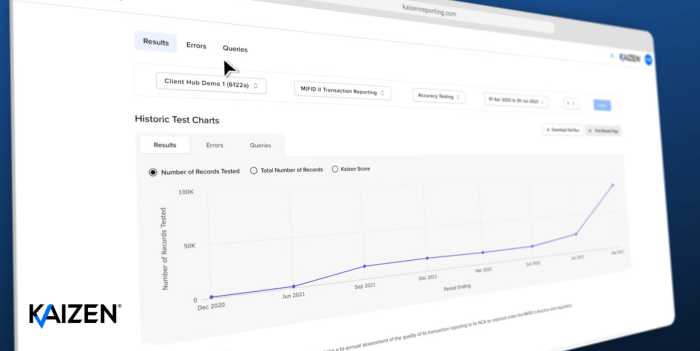
    Clients access their results including detailed management information via the Kaizen Hub, Kaizen’s easy-to-use platform, which also provides actionable insights into reporting quality. They can also assess their ongoing performance with historical trends and compare the quality of their reporting with similar firms, thanks to Kaizen’s large client base.  

    Jean-Marie Mamodesen, Head of European Sales at Kaizen, said: “A big thank you to the editorial and advisory board members who selected Kaizen as the Best Solution for Sell-Side Regulatory Compliance at this year’s RegTech Insight Awards Europe 2025. This award is testament to our commitment to helping financial institutions navigate complex regulatory challenges. As sell-side firms in Europe continue to grapple with the complex changes introduced by EMIR Refit and prepare for the upcoming MiFIR Review, our ReportShield Accuracy testing provides the confidence and clarity they need. By providing detailed insights that go beyond basic validation, we empower our clients to turn reporting from a burden to a business advantage.”

    Angela Wilbraham, CEO of A-Team Group commented: “Congratulations to Kaizen for winning Best Solution for Sell-Side Regulatory Compliance at the fifth annual RegTech Insight Awards Europe 2025. The awards recognise both established providers and innovative newcomers providing RegTech solutions that have successfully improved firms’ ability to effectively respond to evolving and ever more complex regulatory requirements across the global financial services industry.”

    At last year’s RegTech Insight Awards Europe, Kaizen’s Single Rulebook platform won ‘Best Solution for Regulatory Change Management’.

    (ends)

    For more information, please contact James Dunseath, Communications Director, on +44 (0) 7557 955795 or media@kaizenreporting.com

  • WATCH: Introducing Kaizen Insights

    WATCH: Introducing Kaizen Insights

    Kaizen Insights is an exciting new feature of our ReportShield Accuracy Testing. Clients can now navigate from Accuracy Testing results on the Hub to view explanatory texts for incident codes written by our subject matter experts and links to the regulations in Single Rulebook.  Kaizen Insights provides clients with greater transparency of the tests themselves, as well as directing to the section of the regulation where the test is derived.

    Gain immediate access to:

    • Expert interpretations of error codes from our subject matter specialists
    • Clear regulatory definitions and source references
    • Industry best practices to resolve compliance issues
    • Direct links to the relevant regulations within Single Rulebook

    Contact us for a demo or a conversation with one of our regulatory experts. 

  • The FCA’s Approach to Financial Crime: Market Integrity is Non-Negotiable

    The FCA’s Approach to Financial Crime: Market Integrity is Non-Negotiable

    In an important powerful address at the Market Abuse and Market Manipulation Summit on April 28, 2025, Therese Chambers, joint executive director of enforcement and market oversight at the Financial Conduct Authority (FCA), laid out the regulator’s comprehensive strategy to maintain market integrity and combat financial crime, including market abuse, through what she terms the “three Ps” approach – being predictable, proportionate, and purposeful.

    Crackdown on Organised Crime: No Mercy for Market Abusers

    Financial crime is at the forefront of the FCA’s agenda and strategy. In her speech in April, Chambers identified Organised Crime Groups (OCGs) as “the most serious threat to our markets,” revealing they account for approximately 25% of all Suspicious Transaction & Order Reports (STORs). The scale of the problem threatening market integrity is staggering – the FCA has identified over half a billion pounds in OCG profits from suspicious trading since 2022 alone.

    As a result, the regulator is taking aggressive action to disrupt these criminal operations, including executing arrests and coordinating with multiple agencies on financial crime both domestically and internationally. This zero-tolerance approach extends beyond OCGs to all forms of market abuse and market manipulation.

    Where firms persistently fail in their responsibilities, the FCA won’t hesitate to intervene with decisive action. A recent example is the restrictions imposed on an investment firm, preventing it from onboarding any new customers to its Contracts for Difference (CFD) business without FCA permission due to inadequate systems and controls for identifying and reporting market abuse.

    Raising the Bar: Sophisticated Threats Demand Sophisticated Controls

    As market abuse techniques evolve in complexity, the FCA is raising expectations for firms’ detection and prevention capabilities. Chambers acknowledged that “those who seek to abuse our markets are becoming more sophisticated. But so are our detection and enforcement capabilities.”

    Firms are expected to implement increasingly advanced surveillance systems that can keep pace with emerging threats. The FCA was explicit that adequate systems and controls to identify and report market abuse are “not just a nice-to-have – it’s a fundamental responsibility.”

    MiFID transaction reports remain vital to the FCA’s work in identifying and acting against market abuse, providing “a rich and unique view of our markets.” This is particularly important during periods of volatility – Chambers noted that on April 7 alone, 76 million transaction reports were received across asset classes, more than double the daily average of 30 million.

    Culture Is Key: Building Market Integrity From Within

    A strong anti-market abuse culture within firms forms the bedrock of the FCA’s strategy. The regulator sees firms as “the first line of defence against market abuse,” and recognises that “most firms work very hard to get it right.”

    Chambers emphasised that firms should not hesitate to offboard entire corporate relationships if they don’t fit their risk profile. “In fact, this is often the right response when risks are identified,” she stated. This highlights the expectation that maintaining market integrity should be prioritised over commercial interests when necessary.

    The value of data combined with collaboration is evident in the FCA’s reliance on Suspicious Transaction & Order Reports (STORs). These reports are described as “invaluable” to the FCA’s work, with over 70% of current market abuse investigations originating from a STOR. Last year alone, the FCA received 4,528 STORs, showing an increasing trend over previous years.

    Market Integrity: The Foundation of Economic Growth

    One of the most compelling aspects of Chambers’ speech was the direct connection drawn between market integrity and economic prosperity. She emphasised that “cleaner markets instil confidence, which encourages investment into our markets, which encourages growth and innovation. It’s a virtuous cycle.”

    The FCA’s 5-year strategy to 2030 includes a dedicated pillar to fighting financial crime, alongside supporting sustained economic growth. Chambers was emphatic that “our work on market abuse is a critical part of all areas of that strategy” and that “market cleanliness and economic growth go hand in hand.”

    Innovation Meets Integrity: The PISCES Initiative

    In a significant move to balance regulation with growth, the FCA has announced plans for a ‘Private Intermittent Securities and Capital Exchange System’, or PISCES – a new type of stock market for private companies that will allow firms to trade shares on a periodic basis, outside the Market Abuse Regulation (MAR) regime.

    This innovative approach is described as a ‘private plus’ mechanism where “transaction reporting will not apply” and “companies will retain more control over aspects of their trading events, such as timing, frequency and participation.” While this represents a lighter regulatory touch to support growth, it’s important to note that the UK’s Criminal Market Manipulation regime will still apply to this market. In addition, MAR would also apply if PISCES shares were admitted to trading to a Multilateral Trading Facility (MTF).

    This initiative demonstrates the FCA’s “calculated increase in our risk appetite to support growth” and willingness to “innovate and take more risks.”

    Recent Enforcement Success: Day Traders Face Consequences

    The FCA’s commitment to enforcement is producing results. As recently highlighted in a LinkedIn post by our Subject Matter Expert for Market Abuse & Surveillance, Simon Appleton, “Wall crossed ‘day traders’ plead guilty to insider dealing,” the regulator is successfully pursuing convictions and confiscating proceeds from illegal activities.

    The case raises important questions about how and why ‘professional day traders’ were routinely provided with non-public, price-sensitive information through ‘wall crossings’ – which are typically used to gauge interest from potential investors rather than traders seeking quick profits.

    Another recent enforcement action demonstrates the critical importance of industry vigilance. Chambers referenced charges against five individuals for insider dealing offences, including a former analyst at an asset management firm, who allegedly used inside information to enable trading that yielded profits of approximately £1.5 million. This case originated from a STOR that prompted further investigation of trading data.

    Looking Ahead: Global Challenges Require Global Solutions

    As suspicious behaviour easily crosses borders, Chambers stressed that “close and cooperative relationships with domestic and international regulators and law enforcement agencies are more important than ever.” The FCA is strengthening its international engagement and strategy to address this reality.

    The regulator is also expanding its focus across asset classes, having “significantly ramped up our effort and coverage across Fixed Income, Currencies & Commodities (FICC) markets.” A recent example includes an investigation into three bond traders regarding alleged manipulation of Italian government bond futures, resulting in bans and fines.

    The message from the FCA is clear: market integrity is non-negotiable. Through their three-pronged approach of being predictable, proportionate, and purposeful, they are determined to create markets that remain hostile to abuse while fostering innovation and growth. As Chambers concluded, “Together, let’s keep building a market that remains hostile to abuse and welcoming to honest participation.” 

  • Kaizen’s CEO Dario Crispini on RegTech Innovation

    Kaizen’s CEO Dario Crispini on RegTech Innovation

    How are regulatory technology firms responding to the fast pace of change and evolving to meet the needs of the investment industry?

    In this short video, our CEO Dario Crispini, speaks at the Investment Association’s EmTech Global 2025 event, where he covers: 

    • How Kaizen is responding to help firms with increased regulatory complexity 
    • How we are helping our clients to reduce costs and regulatory risk
    • The benefits of using a regtech vendor over an in house solution.

    EmTech Global 2025 brought together tech and industry thought leaders to explore the latest advancements in AI, tokenisation, quantum computing and more. 

  • Kaizen wins Most Innovative Regulatory Reporting Solution

    Kaizen wins Most Innovative Regulatory Reporting Solution

    London, 30 April 2025 – Kaizen, a leading provider of regulatory compliance solutions for global financial institutions, has won ‘Most Innovative Regulatory Reporting Solution’ at the A-Team Innovation Awards 2025 for its ReportShield™ Accuracy Testing product.  

    Kaizen’s ReportShield™ Accuracy Testing is an automated, managed solution that tests the quality of trade and transaction data reported to the regulator. What makes the solution unique is the deep testing of all reportable trades down to field level, providing financial firms with full visibility of their reporting quality.  Accuracy Testing covers all global trade and transaction reporting regimes. Clients access their results including detailed management via the Kaizen Hub, Kaizen’s easy to use web-based platform which also provides actionable insights into reporting quality. Clients can assess their ongoing performance with historical trends and compare the quality of their reporting with similar firms, thanks to Kaizen’s large client base.  

    The A-Team Innovation Awards, now in their 5th year, celebrate innovative projects and teams across the vendor and practitioner communities that make use of new and emerging technologies to deliver high-value solutions for financial institutions in capital markets, with a specific focus on data management, trading technology, ESG and RegTech solutions. 

    Angela Wilbraham, CEO, A-Team Group, said: “Congratulations to Kaizen for winning the Most Innovative Regulatory Reporting Solution at the A-Team Innovation Awards 2025. These awards celebrate providers of leading RegTech solutions, services and consultancy and are uniquely designed to recognise both start-up and established providers who are creatively finding solutions to help with regulatory challenges and span a wide range of regulatory requirements. Our congratulations to Kaizen for their achievement in winning this award in a highly competitive contest.” 

    Rory McLaren, Chief Product Officer at Kaizen, commented: “I would like to thank the judging panel who selected Kaizen as the Most Innovative Regulatory Reporting Solution at the A-Team Innovation Awards 2025.    

    “With significant regulatory changes on the horizon across global markets such as the MiFIR Review, firms face increasing complexity in their reporting obligations. Kaizen has consistently led the way with innovative solutions, evidenced by their award-winning ReportShield™ Accuracy Testing. This product exemplifies our commitment to innovation by offering the most comprehensive quality assurance available. To continue supporting clients effectively, Kaizen must persist in its inventive approach, leveraging cutting-edge technology and deep regulatory expertise. This will ensure firms not only meet current requirements but are also prepared for upcoming regulatory shifts, ultimately reducing compliance risk and operational burden.”  

    (ends) 

    For more information, please contact James Dunseath, Communications Advisor, at communications@kaizenreporting.com  

  • Kaizen welcomes Kathy Perrotte and Mark Husler to the Kaizen Board

    Kaizen welcomes Kathy Perrotte and Mark Husler to the Kaizen Board

    London, 26 March 2025 – Kaizen, a leading provider of regulatory compliance solutions for global financial institutions, is delighted to announce the appointment of Kathy Perrotte and Mark Husler to its Board as non-executive directors.

    Kathy co-founded ActiveViam, a global provider of advanced data analytics software, including risk and compliance solutions, purpose-built for the unique needs of the world’s largest financial institutions, and was appointed CEO in 2021. Under her leadership, ActiveViam accelerated its innovative product roadmap, refined global operations, and enhanced go-to-market capabilities, resulting in four straight years of record growth and a successful sale to Nordic Capital in 2024.

    Mark has over 25 years of management experience within the financial services sector including at Citigroup and LSEG. Mark co-founded and led UnaVista (a division of LSEG) as CEO for 15 years where he scaled the business from a start-up to a global regulatory reporting solution, supporting over 1,000 sell and buy side clients including tier 1 investment banks and asset managers.

    Dario Crispini, founder and CEO of Kaizen commented: “A big welcome to Kathy and Mark who have joined our Board as non-executive directors. The wealth of knowledge and experience that they bring to Kaizen will be instrumental in helping us deliver our strategy of building and enhancing our technology, delivering new compliance solutions, and driving our expansion into North America. I look forward to working with Kathy and Mark as we continue to drive innovative solutions that transform how our clients work with regulation.”

    Kathy Perrotte said: “I’m thrilled to join Kaizen at a time when regulatory technology is becoming essential for financial institutions to navigate an increasingly complex compliance landscape. Having led FinTech businesses and helped them expand successfully into North America, I look forward to utilising this knowledge and experience to help scale Kaizen’s innovative solutions across new markets.  And this Board involvement is a terrific opportunity to work with Dario and the Kaizen team and partner with Guidepost Growth Equity again.”

    Mark Husler commented: “Having spent more than 25 years in financial services, I’ve witnessed firsthand how regulatory technology has evolved. What impressed me most about Kaizen is its unique combination of deep regulatory expertise and market leading regulatory compliance solutions. I’m excited to join at this pivotal moment and leverage my experience across the FinTech and RegTech ecosystems to help drive the company’s next phase of innovation and growth.”

    As part of the Guidepost Growth Equity minority investment in November 2024, Gene Nogi, General Partner at Guidepost, joined the Kaizen Board. Guidepost also led a minority growth investment in ActiveViam in 2019. 

    (ends)

    Notes to Editors

    The Kaizen Holdings Board now consists of: Dario Crispini, CEO, Kaizen; Ian Rennie, Managing Director, Kaizen; Gene Nogi, General Partner, Guidepost Growth Equity; Kathy Perrotte and Mark Husler.

    For more information, please contact James Dunseath, Communications Advisor, on +44 (0) 7557 955795 or media@kaizenreporting.com

  • Vote for Kaizen: RegTech Insight Awards Europe 2025

    Vote for Kaizen: RegTech Insight Awards Europe 2025

    We’re thrilled to be nominated in EIGHT categories for the RegTech Insight Awards Europe 2025. The nominations cover our full range of compliance products:

    ·        Shareholding disclosure monitoring and reporting
    ·        Trade and comms surveillance
    ·        Regulatory rules management with Single Rulebook
    ·        Our market leading ReportShield quality assurance.

    The winners are decided by you so we’d be very grateful if you’d take a moment to vote for us!

    Please click on the link below, fill in your details, select Kaizen in categories 3,5,6,7,9,10, 15 and 16.  And don’t forget to press submit!

    Vote here

    Thanks so much for your support and congratulations to all other nominees. 

    For more about the awards please visit the RegTech Insight website. 

  • It was ‘just a matter of time’ before the FCA issued its first fine: Kaizen’s Matthew Vincent speaks to FOW

    It was ‘just a matter of time’ before the FCA issued its first fine: Kaizen’s Matthew Vincent speaks to FOW

    Following the FCA’s first fine for transaction reporting failures under the MiFID II regime, Kaizen’s Matthew Vincent spoke to journalist Gregory Rosenvinge at FOW about what this means for firms and what they should now expect from the regulator.

    Before the fine was issued, Kaizen said it had sensed from clients the FCA was stepping up its focus. “Unfortunately for firms, it appears their patience may have run out. This fine is a timely warning for firms to make sure they have the right systems and controls in place for their transaction reporting,” said Kaizen’s Matthew Vincent.

    Read the full article on FOW’s website (subscription needed).

  • FCA confiscation order demonstrates that insider dealing doesn’t pay

    FCA confiscation order demonstrates that insider dealing doesn’t pay

    Last year the Financial Conduct Authority (FCA) secured a successful conviction against Mr Mohammed Zina for six insider dealing offences that took place between 2014 and 2017. Although the profit from the insider dealing totalled just over £140,000, the confiscation order is for nearly £600,000, thus confiscating the entirety of Mr Zina’s assets.

    The order must be paid within three months, or Mr Zina will face an additional five years in prison on top of the original 22 month sentence. The reason the confiscation order is significantly larger than the trading profits is because the court found Mr Zina ultimately benefited across a number of offences, including fraud.

    Although examples of compelling restitution from firms, issuers and individuals were first heard of in Hong Kong, the FCA has increasingly been keen to use these powers.

    In 2017, Tesco agreed to pay redress to 10,000 investors after giving a false and misleading trading update, which was the first redress order under s384 of FSMA 2000. In addition, in 2020 Redcentric Plc agreed to provide compensation to all net purchasers of shares between Nov 2015 and Nov 2016, having misstated accounting balances.

    Long gone are the days when insider dealing was seen as a ‘victimless crime.’ The focus now is not only on securing convictions, but also on ensuring that those benefitting from insider dealing are forced to compensate innocent investors that were on the other side of the orderbook.

    These are very healthy developments in the ongoing drive to uphold market integrity, maintain confidence in the markets and send a clear message that insider trading or fraud in financial markets won’t be tolerated by the UK regulator.

    Additional Resources:

    If you would like support with your Market Abuse Risk Assessment framework to help prevent issues like insider trading before they occur, please get in touch. 

  • Kaizen returns to Eurex Derivatives Forum 2025

    Kaizen returns to Eurex Derivatives Forum 2025

    Date: 26 and 27 February | Location: Congress Center Messe Frankfurt

    We are delighted to be returning to Frankfurt for the leading European event focused on trading and clearing for derivatives across asset classes. 

    On Wednesday 26 February from 14:15, we hope you can join our EMIR Reporting Director, Tim Hartley and John Graham, Senior Director of Regulation, FIA for a deep dive session into Regulatory Reporting in 2025.  Among other things, they will discuss:

    • 10 months on from EMIR Refit go live in Europe, how have firms fared with the new requirements?
    • Has EMIR achieved its desired aims and objectives and what is needed going forward to achieve accurate, complete and timely reporting?
    • What are the changes proposed by ESMA to MiFIR and will the changes improve MiFIR reporting for the better?

    You can find the team in the exhibit hall throughout.

    Redeem your free ticket using code: Kaizen+DFF

    Register

  • ‘It would be an easy win for the FCA’: Kaizen’s Dario Crispini speaks to Compliance Corylated

    ‘It would be an easy win for the FCA’: Kaizen’s Dario Crispini speaks to Compliance Corylated

    News of the FCA’s first fine for MiFID II transaction reporting errors may be hot off the press, but in 2024 alone the FCA found 139 MiFID firms failing to report transactions. 

    Following a Freedom of Information Act request, Compliance Corylated also found 450 firms have failed to check MiFID transaction reports for accuracy and completeness using extracts from the FCA’s own system. 

    Our CEO Dario Crispini, former FCA regulator, told Rachel Wolcott that “It would be an easy win for the FCA to write letters to all those firms and ask what they are doing.”

    Read the story in full on Compliance Corylated.

  • FCA highlights linkages between market abuse and money laundering, with another Dear CEO letter

    FCA highlights linkages between market abuse and money laundering, with another Dear CEO letter

    The FCA has written to the chief executives of wholesale brokers setting out their new strategy for supervising the sector. In the letter, the FCA cites the inherent risk that wholesale brokers may be used to execute trades that facilitate financial crime.

    The FCA will be conducting targeted work to assess how firms manage their broker employees and control various inherent risks, including insider trading, market abuse and non-financial misconduct, such as bullying and harassment.

    The letter to wholesale brokers specifically references the link between anti-money laundering controls and market abuse, as well as four Market Watch newsletters, including Market Watch 69 which outlines the benefits of having effective surveillance systems in place and a comprehensive, accurate and up-to-date market abuse risk assessment.

    The UK regulator explains the importance of having a good culture to complement a robust control framework and detective and monitoring controls, including “trade and communication surveillance.”  The expectation is that firms receiving the letter should agree actions and next steps by the end of March 2025.

    Also in relation to financial crime and market abuse, the FCA published a paper last week entitled ‘Assessing and reducing the risk of Money Laundering Through the Markets (MLTM)’, which the FCA expects firms to read in full.

    The MLTM paper, which applies to investment firms more broadly, highlights: the advantages of an integrated approach to market abuse and money laundering surveillance; the benefits of trading surveillance alerts being considered alongside KYC and other information; and that Suspicious Activity Reports (SARs) often originate from Trade Surveillance alerts and Suspicious Transaction and Order Reports (STORs).

    Additional Resources:

    To learn more about how Kaizen could help your firm with its Market Abuse Risk Assessment framework, please get in touch. 

  • Kaizen returns to EmTech Global 2025

    Kaizen returns to EmTech Global 2025

    Date: 25 March | Location: The Minster Building, 21 Mincing Lane, London, EC3R 7AG

    We are delighted to be returning to EmTech Global Conference on 25 March.  This theme of this year’s conference is ‘Innovate to Elevate’.  Our Founder and CEO, Dario Crispini will share his thoughts on how regulation and leadership are supporting innovation on the ‘CEO Panel: Ambition and opportunity‘ at midday. 

    Please join us at the event to hear from tech and industry thought leaders as they explore the latest advancements in AI, tokenisation, quantum computing and more.

    Further information found via the link below. 

    Register

  • WATCH: WatersTechnology Buy-Side Technology Awards 2024 Winner’s Interview

    WATCH: WatersTechnology Buy-Side Technology Awards 2024 Winner’s Interview

    Kaizen won ‘Best Market Surveillance Platform’ in the WatersTechnology Buy Side Awards in 2024. In this short video interview, Alistair Downes, Vice President for Product at Kaizen discusses the award win and how Kaizen has been developing its surveillance solutions and technology with Victor Anderson, Global Content Director at WatersTechnology.

    Watch the video above to learn more or contact us for a free demo of our surveillance solution.

  • Kaizen’s Alan McIntyre and Tim Hartley speak to DerivSource on trade reporting changes

    Kaizen’s Alan McIntyre and Tim Hartley speak to DerivSource on trade reporting changes

    Kaizen’s North America Reporting Director Alan McIntyre and EMIR Reporting Director Tim Hartley, spoke to Bob Currie at DerivSource about the implications of the significant changes for derivatives reporting globally over the past few years.

    ‘While firms have broadly met the challenge of reporting trade data into the trade repository, Hartley is clear that the hard work still continues from this point. “Although the firm may be meeting validation rules, it is possible that their reporting may be valid but wrong,” he says.’

    Read the full article at DerivSource.

  • Kaizen to speak at The Broker Club Conference 2025

    Kaizen to speak at The Broker Club Conference 2025

    Date: 08 May | Location: America Square, Conference Centre, London, EC3N 2BQ

    Register

    We are delighted to be participating in the The Broker Club Conference on Thursday 8 May.  The half-day event will focus on ‘The Future of Broking 2025’ and provides an opportunity to meet with peers and thought leaders in the wholesale broking, retail broking, wealth management and banking industry.

    Simon Appleton, our Market Abuse, Surveillance and MiFIR Transaction Reporting Director will join the ‘Regulatory Panel: Anticipating the Next Wave’. 

    The panel will focus on:

    • Financial risk trends and the regulatory response 
    • Transaction Reporting: the upcoming MiFID Review
    • Market Abuse Risk Assessment
    • Surveillance challenges.

    You can also find representatives from our ReportShield, Surveillance and Single Rulebook teams at our exhibition stand in the networking area. 

    The event is free to attend for brokers, wealth managers, banks and digital asset firms – click the link below to join us at the event. 

    Register

  • Join Kaizen at the Global Regtech Summit 2025

    Join Kaizen at the Global Regtech Summit 2025

    Date: 20 May | Location: Convene, 133 Houndsditch, London 

    Register

    We are looking forward to returning to this year’s Global Regtech Summit to connect with other leading regtech organisations and share the latest advances in the regulatory technology space.

    To hear from our Market Abuse & Surveillance expert, Simon Appleton head to the Risk & Surveillance Stage at 12:15pm.  Simon will join a panel to share his insights on the ‘Evolving Strategies for Effective Communications Surveillance in Financial Markets’.

    Key panel topics include: 

    • The market trends and regulatory shifts that are driving the demand for more robust communications surveillance in 2025
    • How emerging regulatory requirements are shaping the design of communications surveillance systems
    • Examples of surveillance strategies that have successfully identified or prevented financial misconduct
    • In contrast, what recent surveillance failures have occurred, and what insights can we gain from these instances
    • The technologies or tools are most effective in providing organisations with a comprehensive view of market activity
    • How firms are handling the integration of various data sources (emails, chats, voice, etc.) into a unified surveillance framework
    • How AI is currently being integrated into communications surveillance, and what are the potential future developments in this area.

    You can find the team in the exhibit hall throughout. 

    We hope you can join us.

    Register

  • FCA’s Discussion Paper starts to shape the UK’s Market Abuse Regime for Crypto Assets

    FCA’s Discussion Paper starts to shape the UK’s Market Abuse Regime for Crypto Assets

    Following confirmation from the government last month that it will introduce legislation to bring crypto assets into the FCA’s regulatory perimeter, the UK regulator has published a Discussion Paper (DP) that includes market abuse related considerations.

    The roadmap indicates that a Consultation Paper covering Market Abuse, Admissions and Disclosures will be published in Q3 2025 with the FCA’s Crypto regime scheduled to go live in 2026.

    It’s clear from the DP that the FCA will carefully consider the competitiveness of the UK crypto assets market but it’s also apparent that the proposed Market Abuse Regime for Crypto assets (MARC) intends to reduce the incidence of market abuse, lessen information asymmetries and reduce harm to consumers, thus increasing confidence and market growth.

    The MARC framework approach intends to prevent, detect, and disrupt crypto asset market abuse and help prevent regulatory arbitrage by aligning with global standards, including the IOSCO CDA Recommendations covering Market Abuse, Surveillance and Material Non-Public Information.

    New legislation is expected to require the disclosure of inside information in relation to crypto assets traded on a regulated Crypto Asset Trading Platform (CATP) as well as prohibit insider dealing, the unlawful disclosure of inside information and market manipulation.

    Challenges

    The existing market abuse regime cannot simply be transferred to crypto asset markets, given the highly fragmented and cross-border nature of these markets, issuers being less identifiable, the decentralised price formation processes and greater participation from retail consumers making the surveillance process more difficult.

    However, the fact that the FCA acknowledges these key challenges, coupled with the questions being raised in the DP being so considered and broad, appears to be a positive development for the crypto assets sector and the proposed UK MARC regime.

    Comments on the FCA’s DP must be submitted to the regulator by 14 March 2025.

    Additional Resources:

    To learn more about how Kaizen’s surveillance solution could help your firm comply with global market abuse regulation or for assistance with your market abuse risk assessment, please get in touch. 

  • Kaizen selected as a RegTech100 Company for the fifth time

    Kaizen selected as a RegTech100 Company for the fifth time

    London, 11 December 2024 – Kaizen, a leading provider of regulatory compliance solutions for global financial institutions, today announced that it has been selected for the RegTech 100 listing, an exclusive directory of the world’s most innovative RegTech companies, for the fifth time.

    The RegTech100 companies are chosen by a panel of analysts and industry experts as the world’s most innovative and disruptive businesses in the regulatory technology space that are seeking to help financial institutions manage the fast-paced changes brought on by ongoing regulatory updates and technological advances.

    Chosen from a longlist of nearly 1,500 companies worldwide, Kaizen was selected for its RegTech solutions which provide a network of services for the compliance and reporting community on one platform.

    Kaizen has become the global leader in quality assurance for regulatory reporting with its award-winning ReportShield™ solutions. More recently it has diversified its product suite to include solutions for managing and reporting shareholding disclosures, regulatory rules management, trade and e-comms surveillance and research management. It has also invested in London Reporting House and Cumulus9.

    Dario Crispini, CEO of Kaizen, said, “We are very honoured to have been selected as a RegTech100 company for the fifth time and to be recognised for the range of compliance solutions we offer our clients. As we head into 2025, the pace of regulatory change continues unabated, putting increased pressure on firms. In this increasingly complex environment, firms are looking for solutions that help them to reduce costs, increase operational efficiencies and stay ahead of regulatory change. Thank you to Fintech Global for the accolade and well done to everyone at Kaizen for their hard work and innovation.”

    Mariyan Dimitrov, Director of Research at RegTech Analyst, said. “As we reach the eighth annual RegTech100 we are seeing another year of growth in the RegTech industry and this year was as competitive as ever with nearly 1,500 companies applying to be in the top 100. Kaizen and the compliance solutions they offer made them a notable contender for the 2025 RegTech 100. Congratulations to Kaizen and the team for making this year’s list which is now the fifth time that they have been included in this prestigious listing.”

    In November 2024 Kaizen received a £42 million minority investment from Guidepost Growth Equity, a Boston-based growth equity firm partnering with entrepreneur-led technology companies. 

    (ends)

    For more information, please contact James Dunseath, Communications Director, on +44 (0) 7557 955795 or media@kaizenreporting.com

  • WATCH: Regulatory Reporting – 2024 in Review, 2025 Preview

    WATCH: Regulatory Reporting – 2024 in Review, 2025 Preview

    On MiFIR transaction reporting, there were significant changes announced by ESMA and a new discussion paper launched by the FCA, and new regimes are being introduced in the money markets space.

    Watch Kaizen’s regulatory experts as they reflect on 2024, and look ahead to what’s in store for regulatory reporting in 2025.

    The webinar was hosted by Yvonne Deane Harte, Director, Secondary Markets & Post-Trade at UK Finance and featured:

    Please note, we accept business emails only.

    For any queries relating to the upcoming regulatory changes or to speak to one of our subject matter experts, please contact us.

  • Kaizen and RegGenome Announce Strategic Partnership using AI to expand regulatory content on Single Rulebook

    Kaizen and RegGenome Announce Strategic Partnership using AI to expand regulatory content on Single Rulebook

    London, December 3, 2024 – Kaizen, a leading provider of regulatory compliance solutions for global financial institutions, announced today that it has entered into a strategic partnership with RegGenome, a UK based provider of global financial regulatory data, to use artificial intelligence (AI) to vastly expand the coverage and content of Kaizen’s Single Rulebook platform including new jurisdictions and regulatory domains.

    The collaboration between Kaizen and RegGenome will support the digitisation of regulation where both parties will work together to provide fast and efficient access to a vast array of global regulatory rules, jurisdictions and taxonomies on the Single Rulebook platform. By combining Single Rulebook’s front end user interface with RegGenome’s AI powered regulatory data and information structures, the firms will provide clients with a new standard of regulatory intelligence and change management.

    Many financial institutions operate across multiple locations and global regulatory jurisdictions. Today’s announcement means that firms will be able to navigate and respond quickly to the complex landscape of regulatory change and divergence more easily and efficiently.

    In early 2025, Single Rulebook clients will be able to access regulatory content covering all major global financial markets. This includes coverage of US federal regulators and agencies, European national law and global G20 members.

    In addition to core financial services regulations, Single Rulebook users will also be able to investigate emerging compliance requirements for cryptocurrency, cyber security and digital operational resilience.

    Mark Johnston, CEO, RegGenome commented: “We are delighted to announce our strategic partnership with Kaizen’s Single Rulebook. This collaboration will make RegGenome’s comprehensive structured regulatory data available through Single Rulebook’s innovative platform. By combining our extensive regulatory content with Single Rulebook’s advanced search and analytics capabilities, we’re enabling financial institutions to better navigate the complex regulatory landscape.”

    Chris Dingley, CEO, Single Rulebook said: “We’re excited to announce our partnership with RegGenome today. Working with RegGenome’s AI solution for regulatory data and information means that we will be able to expand the Single Rulebook platform and content rapidly for our clients, continuing and enhancing our efforts to support them with the burden of managing global regulation.”

    RegGenome processes global regulation using artificial intelligence (AI) to transform what is human-readable into machine-readable and machine-consumable data. It is part of the Regulatory Genome Project (RGP), a public-private initiative between the University of Cambridge, Judge Business School, and RegGenome. RGP aims to build and review a set of open-access regulatory information structures, known as the Cambridge Regulatory Genome (CRG), and make available a global repository of aggregated, structured regulatory data.  

    Single Rulebook is Kaizen’s digital solution for searching and navigating global regulation. The platform helps firms manage regulatory change with front end functionality such as rule maps, labels and annotations which can be pinned to regulatory rules and shared across global organisations.

    About RegGenome

    RegGenome is a regulatory data technology company and a leader in computational regulation, changing how the world produces and consumes regulatory information. We process the world’s regulation using AI to transform what is human-readable into machine-readable and machine-consumable data. 

    www.reg-genome.com

    For more information, please contact James Dunseath, Communications Director, on +44 (0) 7557 955795 or media@kaizenreporting.com

  • Kaizen wins Best Transaction Reporting Solution at the RegTech Insight Awards USA 2024

    Kaizen wins Best Transaction Reporting Solution at the RegTech Insight Awards USA 2024

    New York, London, 22 November 2024 – Leading regulatory technology firm, Kaizen, has won ‘Best Transaction Reporting Solution’ at the RegTech Insight Awards USA 2024 for its ReportShield™ Accuracy Testing service. This is the fourth year in a row that Kaizen has won a RegTech Insight USA award.

    Kaizen’s ReportShield™ Accuracy Testing is an automated, managed solution that tests the quality of trade and swap transaction data reported to the regulator. What makes the solution unique is the comprehensive deep testing of all records, which provides financial firms with full visibility of their reporting quality. Accuracy Testing is available via the Kaizen Hub, Kaizen’s easy to use web-based portal. It is the only assurance service that is tailored to all global reporting regimes including the CFTC and SEC swap data reporting rules as well as MAS, HKMA, ASIC, MiFIR, EMIR, and SFTR.

    Angela Wilbraham, CEO at A-Team Group and host of the 4th annual RegTech Insight Awards USA 2024, commented “Congratulations to Kaizen for winning the Best Transaction Reporting Solution award in this year’s A-Team Group RegTech Insight Awards USA 2024. These awards celebrate providers of leading RegTech solutions, services and consultancy and are uniquely designed to recognise both start-up and established providers who are creatively finding solutions to help with regulatory challenges and span a wide range of regulatory requirements. Our congratulations to Kaizen for their achievement in winning this award in a highly competitive contest.”

    Ian Rennie, Managing Director and Co-founder of Kaizen, commented: “I would like to thank everyone who selected Kaizen as the Best Transaction Reporting Solution at this year’s RegTech Insight USA Awards. As part of our recent £42 million minority investment, the US will be a key focus for us as we look to help firms with the challenges in adhering to the CTFC and SEC rules and other regulations. This year we have seen an unprecedented amount of change not only in the USA but globally and we are as committed as ever to providing the very best in solutions that help firms meet their regulatory requirements of accurate, complete and timely reporting.”

    The CFTC has been one of the most active of the global regulators over the past few years, fining six registered swap dealers US$60m in the past year, for reporting violations, making it clear that failure to comply with supplying accurate and complete data comes at a cost.

    (ends)

    For more information, please contact James Dunseath, Communications Advisor, on +44 (0) 7557 955795 or media@kaizenreporting.com

  • WatersTechnology explains why Kaizen selected as Best Buy-Side Market Surveillance Tool/Platform

    WatersTechnology explains why Kaizen selected as Best Buy-Side Market Surveillance Tool/Platform

    In November, Kaizen won Best Buy-Side Market Surveillance Tool/Platform in the WatersTechnology Buy-Side Technology Awards. In this article, WatersTechnology explains why Kaizen was selected. 

    “Kaizen’s surveillance solution combines sophisticated technology with regulatory expertise to offer buy-side clients a continually evolving surveillance and market abuse platform. In the last 12 months, the firm launched a multi-solution AI voice transcription model as well as a market abuse risk assessment framework and guidance, which sit alongside the platform.”

    Read the full article at waterstechnology.com

  • Kaizen receives £42 million growth investment from Guidepost Growth Equity

    Kaizen receives £42 million growth investment from Guidepost Growth Equity

    London, November 6, 2024 – Kaizen, a leading provider of regulatory compliance solutions for global financial institutions, today announced the completion of a £42 million minority investment from Guidepost Growth Equity, a Boston-based growth equity firm partnering with entrepreneur-led technology companies. The investment will be used to accelerate product development, invest in go-to-market initiatives, expand in North America, and enhance its award-winning compliance technology. This represents Kaizen’s first external investment since its founding in 2013 by CEO Dario Crispini.

    Kaizen is the global leader in regulatory reporting quality assurance with its pioneering ReportShield platform, which enables its clients to fully test the accuracy and quality of regulatory reports at the trade level, identify 100% of errors at scale, and efficiently remediate with global regulatory coverage including MiFID, EMIR, SFTR, CFTC, and SEC, among others. 

    Kaizen has established itself as a trusted partner to the world’s largest and most sophisticated banks, asset managers, hedge funds and brokers to ensure accurate, complete, and timely reporting in an increasingly challenging regulatory environment, evidenced by strong revenue growth since inception.

    More recently, the Company has diversified its product suite to include solutions for managing and reporting shareholding disclosures, regulatory rules management, trade and communications surveillance and research management. Kaizen has also invested in London Reporting House and Cumulus9.

    Dario Crispini, Founder and CEO, Kaizen commented: “We are delighted to be partnering with Guidepost as we enter a new chapter in our evolution. Guidepost has a great track record in helping firms reach their full potential and their investment and partnership will enable us to build and enhance our existing technology, deliver new compliance solutions, and drive our expansion into North America. The solutions we offer at Kaizen are designed to help our clients adhere to their compliance obligations in an efficient and cost-effective manner and we look forward to delivering more solutions that do just that.”

    Gene Nogi, General Partner at Guidepost said: “Kaizen has transformed the transaction reporting and compliance market, helping the world’s largest financial institutions navigate and comply with an increasingly complex regulatory environment with heightened scrutiny from regulators. The Company embodies everything we look for in an entrepreneur-led, capital-efficient, rapidly growing, and highly differentiated technology business operating within a large, dynamic market. We are thrilled to partner with Dario, Ian and the entire team at Kaizen and look forward to working together on the next stage of the journey.”

    As part of the investment, Gene Nogi will join the Kaizen Board of Directors alongside two new independent directors to be named. Raymond James was the exclusive financial advisor on the investment and Norton Rose Fulbright acted as legal counsel to Kaizen. Liberty Corporate Finance, Alvarez and Marsal and Crosslake also advised Kaizen. Choate Hall & Stewart and Stevens & Bolton acted as legal counsel to Guidepost.

    About Guidepost Growth Equity

    Guidepost Growth Equity (“Guidepost”) is a leading core growth equity firm that partners with entrepreneur-led companies utilizing technology to transform industries within application and infrastructure software and tech-enabled and data services. Current and prior investments include ActiveViam (acquired by Nordic Capital), ClassWallet, Lucid (acquired by Cint Group AB), Mineral (acquired by Mitratech), OutSystems, Traction on Demand (acquired by Salesforce), and Tractive. The firm is headquartered in Boston, MA.

    Guidepost Growth Equity provides the flexible capital, operational assistance, and strategic guidance necessary to support the continued success of high-growth businesses and has over $1.9 billion of capital under management. For more information, please visit their website. 

    For more information, please contact James Dunseath, Communications Advisor, on +44 (0) 7557 955795 or media@kaizenreporting.com


  • Kaizen wins Best Buy-side Market Surveillance platform at WatersTechnology – Buy-Side Technology Awards 2024

    Kaizen wins Best Buy-side Market Surveillance platform at WatersTechnology – Buy-Side Technology Awards 2024

    London, 4 November 2024 – Leading regulatory technology firm, Kaizen, has won ‘Best Buy-side Market Surveillance platform’ at this year’s WatersTechnology Buy-Side Technology (BST) Awards for its Surveillance Solutions. This is the fifth WatersTechnology award that Kaizen has won in recent years.

    The WatersTechnology BST awards recognise leading technologies and third-party vendors in their areas of expertise, through an auditable and transparent methodology underpinned by a panel of WatersTechnology’s five most senior and experienced journalists.

    Kaizen’s proprietary surveillance solutions provide trade and communications monitoring on one system to help middle office and compliance teams comply with market abuse regulations and record keeping rules bringing analysts the market intelligence and data they need to operate in an efficient and effective manner.

    Dario Crispini, CEO of Kaizen commented: “We are honoured to have been selected as the ‘Best Buy-side Market Surveillance platform’ at this year’s WatersTechnology BST Awards. It is essential that firms have the right surveillance solutions and monitoring tools in place that allow them to adhere to market abuse and record keeping regulations globally and that they are able to detect all forms of market manipulation.”   

    “This year’s Buy-Side Technology Awards were one of the biggest ever with 223 entries across the 37 individual categories,” said Victor Anderson, global content director of WatersTechnology “Kaizen stood out as the clear winner in the best buy-side market surveillance platform category, thanks to its surveillance solutions, which allow buy-side firms to monitor trade and communications activity in one stream.”

    (ends)

    For more information, please contact James Dunseath, Communications Advisor, on +44 (0) 7557 955795 or media@kaizenreporting.com

  • Kaizen joins the Securities Finance Symposium

    Kaizen joins the Securities Finance Symposium

    Date: 12 November | Location: One Great George Street, Westminster, SWIP 3AA 

    Kaizen is returning to Securities Finance Symposium taking place in Westminster on 12 November.  The event is the repo’s industry leading technology event.

    Our SFTR Reporting Director, Jonathan Lee will join the first panel discussion of the day to discuss regulation. 

    You’ll also find the Kaizen team at our exhibit stand.  We hope you can join us at the conference. 

    Register


  • Kaizen’s Tim Hartley speaks to Risk on the deadline to backload EMIR derivatives reporting

    Kaizen’s Tim Hartley speaks to Risk on the deadline to backload EMIR derivatives reporting

    Kaizen’s EMIR Reporting Director, Tim Hartley spoke to Sam Wilkes at Risk about how firms are dealing with backloading their EU EMIR Refit derivatives reporting following the go-live on 29 April.

    “What we’ve seen from speaking to trade repositories and looking at our own data is that roughly 75-80% of derivatives that were open before Refit went live have been updated, which sounds positive, but to get the other 20% updated. That’s cutting it very fine to get those trades updated.”

    Read the full article at risk.net (subscription needed)


  • FCA pushing firms to be more intrusive when trading for ‘obfuscated overseas aggregated accounts’

    FCA pushing firms to be more intrusive when trading for ‘obfuscated overseas aggregated accounts’

    Market Watch 80 highlights the potential risks associated with trading for overseas clients who operate aggregated accounts with unknown ultimate beneficial owners (UBOs). While these accounts offer administrative advantages, they can be used to conceal suspicious trading activity and facilitate market abuse.

    The Financial Conduct Authority (FCA) has observed an increase in such activity, particularly in leveraged equity products, and particularly in firms overseas where the regulatory approach to market abuse may not be equivalent to that of the FCA. They have identified instances where FCA authorised firms unknowingly executed trades for individual UBOs who had previously had their own trading accounts terminated due to suspected market abuse.

    To mitigate these risks, the FCA recommends firms take extra precautions when onboarding and dealing with ‘obfuscated overseas aggregated accounts’ (OOAAs). This includes modifying risk frameworks, requiring additional information from OOAAs, and applying robust measures to terminate relationships if necessary.

    Whilst the FCA acknowledges it is harder to detect market abuse when the identity of the underlying client is not known, the regulator recommends and encourages firms to be more intrusive with their clients in these situations.

    Simon Appleton commented:

    “Regulated Investment Exchanges and operators of trading venues have historically questioned the market abuse related controls of member firms. Although the commercial nature of the relationship between firms and their clients is different to that between operators and members of trading venues, the suggestion here is that firms need to be more on the front foot with their clients and be more intrusive in a similar manner to the approach taken by exchanges and their members.”

    Given that it is the responsibility of all investment firms in the execution chain to have effective market abuse related systems and controls in place, these steps are a way of protecting the firm from being used to facilitate insider dealing or market manipulation.

    Additional Resources:

    Read Market Watch 80 in full on the FCA’s website..

    To learn more about how Kaizen’s surveillance solution could help your firm comply with global market abuse regulation or for assistance with your market abuse risk assessment, please get in touch. 

  • WATCH: Is your regulatory reporting valid but wrong?

    WATCH: Is your regulatory reporting valid but wrong?

    A large majority of the reports that Kaizen tests are ‘valid but wrong’. The valid but wrong scenario occurs when reports pass the validation rules by the regulator or intermediary entity (ARM, SDR or TR) but the data within the reports is inaccurate. 

    Watch our video above to find out more or contact us for a free healthcheck to find out how many of your reports are valid but wrong.


  • Tim Hartley speaks to FOW a week after the UK EMIR Refit implementation

    Tim Hartley speaks to FOW a week after the UK EMIR Refit implementation

    How did the first week of UK EMIR Refit go? How did it compare to the EU go live in April?

    Kaizen’s EMIR Reporting Director, Tim Hartley spoke to Luke Jeffs at FOW about how the go live is going and the challenges that firms now face with both sets of reporting rules.

    “The challenge is finding the things that are wrong. When a trade gets submitted, you’ve met the validation rules, which is great, so you’ve formatted in the right way but is the data right? Does it reflect your firm and your derivatives in the right way? That is a much harder question.”

    Read the article on FOW’s website.

  • Join us at FIA Forum 2024 in Frankfurt

    Join us at FIA Forum 2024 in Frankfurt

    We’re delighted to be returning to the FIA Forum: Frankfurt 2024 on 9 October.  The event will address key issues and developments impacting listed and cleared derivatives markets and participants in the region.

    Once again, we are looking forward to joining FIA and a host of industry experts to discuss trends in trading and clearing, product development, regulatory compliance and industry operations.

    We hope to see you there.

    Register

  • Commentary – managing the upcoming money markets reporting obligations

    Commentary – managing the upcoming money markets reporting obligations

    Kaizen’s Money Markets Reporting Director, Jonathan Lee shares his insights on the upcoming reporting obligations in the SFT and money markets reporting space in a commentary written for the Securities Finance Times and Asset Servicing Times.

    “We are entering a period of significant change in the money markets and securities financing regulatory reporting space. Extraterritoriality in the FINRA SLATE rules for US securities lending, the likelihood of growing requirements in Europe in the SFTR Review/Refit, further new but smaller requirements for uncleared bilateral repo reporting to the OFR in the US, and the potential for further global and European divergence, are all likely to feature over the next couple of years.”

    Read the full article on the Securities Financing Times Website. 

  • Kaizen’s Tim Hartley speaking at ISDA/IA Transaction Reporting Evolution

    Kaizen’s Tim Hartley speaking at ISDA/IA Transaction Reporting Evolution

    Date: 12 September | Location: State Street, 20 Churchill Place, London, E14 5HJ

    We’re delighted to be joining the ISDA/IA Transaction Reporting Evolution Conference on 12 September in London.  The event will bring together a mix of buy and sell-side firms to discuss regulatory re-writes, industry partnership, transaction reporting regulatory excellence and the future of regulatory reporting.

    Our EMIR Reporting Director, Tim Hartley is moderating and sharing his expert advice on the first panel of the day on EMIR Refit. The panel will discuss lessons learnt from the EU Transition and next steps as we prepare for the UK go-live in September.

    This event is sold out but please visit the link below to join the waitlist. 

    Join the waitlist

  • Book your place on the Transaction Reporting Academy

    Book your place on the Transaction Reporting Academy

    Join Kaizen and PIMFA for our Transaction Reporting Academy, developed and delivered by our regulatory experts Simon Appleton and Matthew Vincent, starting on 8 October 2024. 

    The academy aims to upskill individuals involved in the reporting process and those responsible for regulatory oversight with the expertise they need to meet regulators’ expectations and promote high-quality reporting.

    The course is suitable for those working in buy side and sell side firms. 

  • Tim Hartley speaks to FOW on the UK EMIR Refit go-live

    Tim Hartley speaks to FOW on the UK EMIR Refit go-live

    Kaizen’s EMIR Reporting Director Tim Hartley spoke to Luke Jeffs at FOW about UK EMIR Refit go-live, what lessons have been learned from the EU Refit and what’s next.

    Tim told Luke that while some firms are fine-tuning their European reporting, many are also having to prepare for the UK version of the reporting rules that take effect on September 30

    “There should be economies of scale for firms that have been through mill with EU Refit in their preparations for UK Refit. The validation rules are very similar and the joint Q&A from the Bank of England and the Financial Conduct Authority (FCA) do not contain any show-stoppers. There are things to be taken into account but there shouldn’t be a heavy impact on EU firms impacted by UK EMIR,.”

    Read the article on FOW’s website. 

    Want to see how accurate your reporting data is? For a free heathcheck of your reporting please get in touch.

  • High stakes mean compliance monitoring of unauthorised communications required

    High stakes mean compliance monitoring of unauthorised communications required

    A US bank received heavily reduced fines from the US SEC and CFTC for proactively admitting unauthorised channels were used for business-related communications which were neither recorded nor monitored.

    According to the CFTC the bank is the only firm to self-report their recordkeeping and supervisory failures.

    It is not enough to have policies and attestations

    What these fines show is that it is not enough for firms to have a list of approved communication channels that are monitored, subject to review and when appropriate archived.

    It was also not enough that the bank required regular attestations from dealers that they were not using personal text messages and social interactions to engage in business-related communications.

    Compliance monitoring, disciplinary action and enforcement are all key

    It was the failure of the bank to ensure that employees complied with their communications policies and procedures. It was also the failure of the bank to maintain those business-related communications and failing to supervise its business effectively.

    Although approaching employees about the usage of personal devices is a sensitive area, the stakes are so high because their unauthorised usage can undermine the effectiveness of the market abuse regime.

    Given the importance of market integrity and confidence in the financial services sector, the proactive compliance monitoring for breaches of the firm’s communication policy and procedures is key.

    Being clear about the firm’s business-related communications policy, as well as informing employees about the firm’s disciplinary and escalation processes is also essential.

    These controls should already be in place for firms that have conducted and acted upon a comprehensive market abuse risk assessment (MARA). The potential for regulatory enforcement action is high for firms with gaps in their controls.

    Additional Resources:

    CFTC Orders Truist Bank to Pay $3 Million Penalty and Remediate Recordkeeping and Supervision Failures Relating to Widespread Use of Unapproved Communications Methods

    Twenty-Six Firms to Pay More Than $390 Million Combined to Settle SEC’s Charges for Widespread Recordkeeping Failures

    • To learn more about how Kaizen’s communications platform could help your firm comply with global market abuse regulation or for assistance with your market abuse risk assessment, please get in touch. 
  • FCA Market Abuse Surveillance TechSprint – What We Learned

    FCA Market Abuse Surveillance TechSprint – What We Learned

    Last month we were excited to take part in the FCA’s Market Abuse Surveillance TechSprint which brought together industry participants to explore AI-powered solutions to help detect forms of market abuse.

    We asked our Head of Operations for Surveillance Charles Dickson, Data Scientist Josian Quintana-Arroyo, and our subject matter expert Simon Appleton about their experiences taking part in the event and what they learned from it.

    First things first, what was your role in the TechSprint?

    Charles: I was the project manager, coordinating within our team and with the FCA. I ensured our project remained true to the TechSprint objectives whilst providing tangible benefits to our clients. This was done by constantly linking our research back to (i) the presentation and knowledge we would be able to share on the demo day at the FCA, and (ii) the enhancements we could roll out to our clients upon project completion.

    Jos:  My role was technical: data science and machine learning. I investigated the data, engineered variables and applied AI methods to detect market abuse.

    Simon: I provided subject matter expertise covering market abuse, surveillance, MiFIR transaction reporting data and order book data.

    What was the problem we were given to explore? Were we successful with our approach?

    Charles:  We chose to explore how to ‘transform market abuse surveillance by incorporating anomaly detection’. This is because we had an existing research project in this area which would allow us to immediately start applying these ideas to the vast datasets which the FCA helpfully gave TechSprint participants access to. In our case, given Kaizen’s rich history and deep knowledge in transaction reporting, it was that dataset we were most interested in.

    Jos: There was success showing our approach was correct although further work is being carried out. This is because detecting market abuse is a complex process that requires a lot of analysis and consensus. There were some false positives. The variables we engineered were relevant and our approach showed results consistent with other datasets which is how we knew we were on the right track.  However, many of the potential anomalies flagged required further investigation. This ‘further investigation’ aspect of product development is a critical part of developing a meaningful algorithm.

    Simon: It was clear that our data scientists, programmers and product development staff benefitted from having access to an extensive and broad dataset covering transaction reports, orders and prices. We also further advanced our understanding and usage of AI in the anomaly detection process.

    What was your biggest learning from taking part in the TechSprint? Do you have any advice for individuals and firms taking part in future events?

    Charles: Thanks to AI, we have a rapidly improving toolset available to us. It is our responsibility to apply these with careful thought and discretion so that the resulting output is explainable and defensible, both for clients and regulators. With the vast options available, it is best to have a targeted approach to return specific answers rather than generating an exponentially growing set of questions. To get these answers implemented with clients, you need to prove additive value to existing rules-based monitoring – reduced false positives with better true positive detection, allowing compliance officers to concentrate more of their time investigating breaches and near-misses.

    Jos: We learned a lot from engineering a model with so much data. We also had the chance to refine our current algorithms as all the fresh data allowed us to shed light on our own work: for example, we reconsidered the importance of two variables that we currently use. Having to explain our findings to an audience also made me think of the problem from a different point of view and I am now testing the same models with a simpler approach which will make them more easily interpretable.

    My advice to others would be to move fast and come up with end-to-end solutions and improve them later, time feels a lot shorter when having to handle so much data. Also to be honest with yourself about the results if they are not as good as expected, there is a lot to learn from what doesn’t work as intended.

    Simon: Although obvious, the importance of having data scientists, programmers, product and market abuse surveillance experts working well together and learning from each other made it exciting and resulted in a positive atmosphere and outcome. Selecting people with the relevant, complementary skills, knowledge and a collaborative approach would be my main suggestion.

    Along with our TechSprint participation, we recently announced we are introducing a new AI powered voice transcription functionality on our communications surveillance platform. What is your advice for firms when assessing AI powered tools?

    Charles: Firms should run AI powered tools in parallel with conventional processes to ensure they are achieving at least the same effectiveness before migrating fully to AI. This would involve a multi-month period with in-depth comparison and human feedback. Categories for assessment would include transparency, defensibility, effectiveness, efficiency, and synergies to other monitoring processes.

    Jos: Some tools are very easy but expensive to implement especially when scaling up. Some more rudimentary approaches are effective albeit more difficult to implement, and they will be worth the saving in costs. Be realistic and well informed about what the latest technology can and cannot do. Some tools can improve performance even if they don’t do the work for you; they could still be valuable.

    Simon: Given that this is a fast-moving environment, keeping your options open, opting for shorter contract periods and selecting a provider that has hedged their bets, rather than opting for a single solution.

  • Kaizen’s AI powered voice surveillance set to revolutionise communications monitoring

    Kaizen’s AI powered voice surveillance set to revolutionise communications monitoring

    London, 17 July 2024 – Leading regulatory technology firm, Kaizen, is introducing a new artificial intelligence (AI) powered voice transcription functionality on its communications surveillance platform.  

    By using the latest technology Kaizen can bring the same fast search and flexible rule-based monitoring that clients already experience on email and chat messages, to audio communications.

    Kaizen’s Chief Product Officer Rory McLaren, said, “Anecdotal evidence suggests that the type of behaviour organisations need to monitor takes place on the phone more than in written communications where people are more aware they’re being monitored. This new functionality makes it easier for firms to be confident they’re monitoring all forms of communication.”

    Adopting AI in a safe and secure way

    Kaizen has been researching and analysing recent developments in and different models of AI to understand how this technology can revolutionise surveillance and compliance workflows. 

    Rory adds, “We will only use AI where it can add value in a high quality, reliable, cost-effective, safe and secure way. Recent advances in voice transcription have improved the technology dramatically to the point that it is now a viable and valuable addition to surveillance workflows.”

    Choice of voice transcription models 

    Kaizen expects technology in this area to continue to improve, but in such a fast-moving space it is difficult to predict which approaches will be winners in future. Kaizen’s approach is therefore to offer its clients a choice of voice transcription models to use at any given time.

    Kaizen launched its trade and communications surveillance platform in 2023 following its acquisition of Red Deer.

    (ends)

    For more information, please contact James Dunseath, Communications Advisor, on +44 (0) 7557 955795 or media@kaizenreporting.com

  • Kaizen returns to XLoD Global London

    Kaizen returns to XLoD Global London

    Date: 13 and 14 November | Location: Convene Sancroft, St Paul’s, London, EC4M 7DQ | Stand no: 29

    Kaizen are returning to XLoD Global taking place in London on 13 & 14 November.  Over two days the event will explore Innovation & Collaboration: Advancing non-financial risk management across the 3 lines of defence.

    Our Market Abuse, Surveillance & MiFIR Transaction Reporting Director, Simon Appleton will join a panel discussion on Understanding Regulatory Expectations for Communication Surveillance at 10:55 on 13 November.  The panel will discuss the guidelines and standards regulators set for communications surveillance and how they may evolve in the future, the importance of surveillance and material risk assessments and how firms can proactively adapt their communication surveillance to align with the shifting regulatory expectations.

    You’ll also find the Kaizen team at stand number 29 so do stop by for a chat.

    We have a limited amount of heavily discounted tickets to give away, please contact us using the button below.

    Contact us


  • Market abuse risks for the buy-side not limited to insider dealing

    Market abuse risks for the buy-side not limited to insider dealing

    At a recent market abuse event it became obvious that the general feeling in the room was that market manipulation risks are not the primary concern for many asset managers. Although insider dealing was seen as the main market abuse risk for buy-side firms, the risk of market manipulation should be treated just as seriously.

    Ability to manipulate prices

    Buy-side firms have historically been seen as users of markets but over the last few years they have increasingly been able to directly impact the price formation process and, with it, the potential to create a false and misleading impression of trading interest.

    A significant percentage of asset managers are now direct market participants on trading venues, mainly multi-lateral trading facilities but some regulated markets too. In addition, with the advent of direct electronic access, asset managers can directly route orders to a wide variety of markets, including via the use of algorithmic trading.

    The ability to manipulate prices can also come through the usage of non-binding Indications of Interest (IOI) messages, misuse of Request for Quote functionality, conditional orders and “off-venue crosses” and so, it becomes clear that the risk of market manipulation exists quite broadly at inherent level. Lastly, the ability to release false and misleading news is there for any market user.

    Motivation

    Where clients and funds sit on large positions (long or short) there can be a heightened focus on whether the positions are showing a paper profit or loss, and this focus can intensify on key dates and at year end.

    Market manipulation at year end

    An interesting market abuse case involved Stefan Chaligné, a fund manager, and Patrick Sejean, a trader, who bought shares minutes before Chaligné’s lviron Fund was to be valued. The value of the fund was artificially inflated and Chaligné’s performance fee boosted by more than £260,000.

    Sejean emailed the following to an unnamed colleague shortly after speaking to Chaligné: “Please buy in the last hour of trading …The goal is to put each stock price as high as possible at the close, so if you want you can buy most of the volume at the close.”

    The purchase of shares on New Year’s Eve resulted in a 2.9% uplift in the value of the £70m fund at year end. The UK’s regulator fined Mr Chaligné (the fund manager) £900,000 plus €362,950 disgorgement of benefit (profits gained from the manipulation). Lastly, the fund manager was deemed not a fit and proper person and was banned from performing any regulated activity.

    Although this case, from 2013, highlights the importance of trade and communications surveillance, importantly, the fund manager could now independently use direct electronic access to transmit orders directly to the market.

    Market abuse risk assessments

    While it’s impossible to eliminate all risks, some market manipulation risks can be reduced through using centralised dealing desks and having a robust market abuse control framework in place.

    Conducting up-to-date and periodic market abuse risk assessments will help a firm identify the risks and ultimately help mitigate them where possible.  It also demonstrates to internal audit and risk management teams, as well as regulators that a firm has the correct risk assessment policies and procedures in place and is doing all it can to reduce the risk of the firm committing or facilitating market abuse.

  • Watch our ‘Regulatory Reporting 2024’ conference highlights

    Watch our ‘Regulatory Reporting 2024’ conference highlights

    Watch the highlights of our annual regulatory reporting conference where we welcomed more than 200 clients, the FCA, trade organisations and industry specialists to Banking Hall, London for an afternoon of engaging talks, panels and audience discussions.

    Tom Soden, Markets Reporting Manager, FCA delivered the keynote speech on MiFIR Transaction Reporting data quality. 

    Panellists included Carmel Deenmamode, Market Conduct & Post Trade Policy Manager at the FCA, as well as representatives from the ISDA, FIA, Regis-TR, BMO,  HSBC, Deutsche Bank, ABRDN and our very own industry experts.  The panel discussions covered a wide range of issues facing the industry today including MiFIR, EMIR Refit go live, and upcoming ASIC and MAS ReWrites.

    A huge thank you to our speakers, clients and everyone who attended for making it such a fantastic afternoon! 

    • If you would like to learn more about how Kaizen can help you with your regulatory reporting, please get in touch.
  • Kaizen and LPA partner to provide transaction reporting assurance solutions

    Kaizen and LPA partner to provide transaction reporting assurance solutions

    London, Frankfurt am Main – 26 June 2024 – Leading regulatory technology firm, Kaizen and Lucht Probst Associates (LPA), the German capital market technology and advisory firm, have partnered to offer a range of compliance solutions to international clients.

    The new partnership will allow Kaizen and LPA to work with clients offering them independent transaction reporting assessments and regulatory reconciliations solutions.

    Kaizen’s ReportShield™ Accuracy Testing is an automated, managed solution that tests the quality of trade and transaction data reported to the regulator. What makes it unique is the comprehensive deep testing of all records, which provides financial firms with full visibility of their reporting quality. In addition to Accuracy Testing, Kaizen offers an Advanced Regulatory Reconciliation solution that provides an independent assessment of the completeness of a firm’s regulatory reporting to identify under and over-reporting.

    LPA offers a broad range of consulting services for banks, asset managers, and exchanges, with a strong focus on capital markets. Our expertise extends to the implementation of regulatory requirements in transaction reporting. Beyond the initial setup of transaction reporting regimes, we place a significant emphasis on data analysis, optimizing data quality, and enhancing the efficiency of reporting processes.

    Jean-Marie Mamodesen, Managing Director – Head of European Sales at Kaizen, commented: “LPA has a strong reputation in Germany and we are delighted to be working with them. By bringing the skillset and expertise of the two companies together we are able to provide solutions that ensure that the data which firms are reporting to the regulators is of the highest quality.”

    Hans Joachim Lefeld, Senior Partner – Head of Transaction Reporting from LPA said: “We are delighted to be working with Kaizen, who offer an array of market leading compliance solutions. By joining forces with Kaizen we extend our eco system and will be able to better serve our clients and help them navigate the complexity of the global regulatory reporting landscape.”

    (ends)

    About LPA

    Founded in 1999 by Stefan Lucht and Roland Probst, LPA was one of the first financial services providers to focus on technology solutions and consulting that optimize processes and guarantees regulatory compliance. LPA’s success is based on sound capital market expertise combined with ongoing technical innovations. Following the integration of Modelity, EffCom and AAAccell, the rapidly growing software and consulting company employs around 400 people at twelve international locations.

    www.l-p-a.com

    For more information, please contact James Dunseath, Communications Advisor, on +44 (0) 7557 955795 or media@kaizenreporting.com

  • Kaizen partners with Suite2Go to offer regulatory reporting quality assurance solutions in APAC

    Kaizen partners with Suite2Go to offer regulatory reporting quality assurance solutions in APAC

    London, Sydney, 5 June 2024 – Leading regulatory technology firm, Kaizen and Suite2Go, the Australian financial software consultancy have partnered to offer Kaizen’s ReportShield™ quality assurance solutions in APAC, as part of its continued expansion in the region.

    Kaizen’s ReportShield™ Accuracy Testing is already used by 18 firms in Australia, including some of the largest banks and asset managers. This means that 50% of ASIC’s systemically important banks use our assurance solutions.

    Accuracy Testing tests the quality of trade and transaction data reported to the regulator. What makes it unique is the comprehensive deep testing of all records, which provides financial firms with full visibility of their reporting quality. The solution is available via the Kaizen Hub, Kaizen’s easy to use web-based platform. It is the only assurance solution that is tailored to all global derivative reporting regimes including ASIC, MAS, HKMA, MiFIR transaction and post-trade reporting, EMIR, and SFTR.

    In addition to Accuracy Testing, Kaizen offers an Advanced Regulatory Reconciliation solution, which is an end-to-end solution that provides an independent assessment of the completeness of a firm’s regulatory reporting to identify incorrect interpretation or application of the regulations, enabling all under and over-reporting to be detected. The solution also identifies mismatches across all the reported data fields (e.g.  price, quantity, product difference etc).

    Dario Crispini, CEO of Kaizen, said, “This new partnership with Suite2Go is an important step in our plans to bring our ReportShield solutions to the wider APAC region. With the constant evolution in the global regulatory landscape, including the upcoming ASIC, MAS and HKMA ReWrites, firms face the challenge of being able to report their trade and transaction data in an accurate, complete and timely manner. Kaizen’s ReportShield™ solutions help firms deliver the quality of data that the regulators have come to expect, and by partnering with Suite2Go we look forward to supporting organisations in the APAC region.”

    Andrew King, Principal at Suite2Go, commented, “We are delighted to have the opportunity to work with Kaizen in the Asia Pacific region. The solutions they offer will be invaluable to the many firms that have reporting obligations in APAC and we look forward to helping develop their presence in the market.”

    (ends)

    For more information, please contact James Dunseath, Communications Advisor, on +44 (0) 7557 955795 or media@kaizenreporting.com

    About Suite2Go

    Based in Sydney, Australia, Suite2Go is a financial software consultancy team of experienced professionals with deep working knowledge of the financial services industry and how to best solve for workflow challenges through technology solutions. 

    We were founded in 2017 with a team of 8, comprising principals and consultants with an average of 20+ years experience who have expertise across; capital markets, data management, regulatory and risk reporting, superannuation, asset, and wealth management, including front and back office, asset servicing and payments. We look to assist world class fintech organisations to achieving success in their chosen target market by bringing solutions to the financial services industry to overcome challenges and address problems while saving cost and time for both buyers and sellers.

    Press Contact: Leanne Bradley, Co-CEO leanne@suite2go.com

  • Take a tour of our new London office…

    Take a tour of our new London office…

    We’re excited to announce that the Kaizen team has moved offices. Our new office address is:

    30 St Mary Axe (The Gherkin)
    London
    EC3A 8BF
    United Kingdom

    We are looking forward to welcoming you to our new offices soon!

  • Kaizen’s Single Rulebook wins ‘Best Solution for Regulatory Change Management’

    Kaizen’s Single Rulebook wins ‘Best Solution for Regulatory Change Management’

    London, 23 May 2024 – Kaizen’s Single Rulebook, a leading and integrated software platform for the management of regulatory rules, has won ‘Best Solution for Regulatory Change Management’ at the RegTech Insight Awards Europe 2024.

    The RegTech Insight Awards, hosted by A-Team Group, recognise both established providers and innovative newcomers providing RegTech solutions that have successfully improved firms’ ability to effectively respond to evolving and ever more complex regulatory requirements across the global financial services industry.

    In 2023, Single Rulebook and Linklaters launched Law Compare, which was developed by Single Rulebook in order to support their in-house teams and provide Linklaters’ clients with quick and easy access to regulatory comparisons and guidance on the differences and changes brought about by diverging EU and UK MiFID II regimes.

    Chris Dingley, CEO of Single Rulebook, commented: “We are honoured to have been selected as the winner of ‘Best Solution for Regulatory Change Management’ at the RegTech Insight Awards Europe 2024. This year sees an unprecedented amount of change across many global regulations, particularly in the UK and Europe, and it’s essential that firms are able to not only keep abreast of these changes but compare versions, and Single Rulebook enables them to do just that.”

    “Congratulations to Single Rulebook for winning the Best Solution for Regulatory Change Management award in this year’s A-Team Group RegTech Insight Awards Europe 2024. These awards celebrate excellence in RegTech solutions, services and consultancy for capital markets across Europe. The winners are selected by A-Team Group’s RegTech Insight community and demonstrate exceptional creativity in building solutions that solve regulatory challenges”, said Angela Wilbraham, CEO of A-Team Group and host of these awards.

    (ends)

    For more information, please contact James Dunseath, Communications Advisor, on +44 (0) 7557 955795 or media@kaizenreporting.com

  • Jonathan Lee on the challenges of SEC’s Rule 10c-1a and the OFR Final Rule

    Jonathan Lee on the challenges of SEC’s Rule 10c-1a and the OFR Final Rule

    At this year’s Securities Finance Symposium (SFT) held in Boston, Kaizen’s Money Markets Reporting Director Jonathan Lee took part in a panel discussing the challenges that firms face with the introduction of the SEC Rule10c-1a and the Office of Financial Research’s (OFR) final rule which was adopted on 6 May.

    “Firms have got a very short space of time to implement what’s going to be highly scrutinised reporting. This won’t just be in the US, but on a global basis. It’s very much front and centre of systemic risk,” said Jonathan. 

    Read the full article on the SFT’s website.


  • FCA expects robust and increasingly sophisticated market abuse surveillance controls

    FCA expects robust and increasingly sophisticated market abuse surveillance controls

    In Market Watch 79, the UK’s Financial Conduct Authority (FCA) has shared its observations concerning failures of market abuse surveillance at authorised firms, and observations stemming from their peer review of firms’ testing of front-running surveillance.

    Failures of market abuse surveillance were frequently caused by the faulty implementation of surveillance systems, poor change management controls that introduced errors, and missing necessary information feeds, such as trade or order data for certain business flows.

    The impact of these failures meant that certain business flows were not monitored and that alerts were either partially or wholly ineffective due to inadequate testing. The length of time it took firms to identify and fix these failings ranged between a few weeks or less to two years or more. Coincidentally, a firm in the US was recently fined $350 million as a sub-set of trading and order data had not been feeding into their surveillance platforms, as outlined here.

    The FCA observed that one firm had not activated a news feed to facilitate the identification of insider dealing, a failure found only after contact from FCA. Separately, the poor design and setting of a firm’s insider dealing alert parameters, led to potentially suspicious activity going undetected for several years.

    In a separate review, the FCA looked at the frequency and methods used by several large investment firms to test the effectiveness of their client order front running models. Some firms had no formal process covering this, whereas some focused their reviews too heavily on parameter calibration. The FCA cites factors to consider, including the type of financial instrument, the market participants involved, trading methods and trading venues accessed.

    Finally, the FCA helpfully lists the steps firms should take to help prevent surveillance failures, including:

    • Ensuring all relevant trade and order data is accurate and captured
    • Having comprehensive governance arrangements as well as documentation covering testing
    • Appropriate tailoring of alert models and testing by second line and internal audit
    • Having processes to proactively guard against surveillance failures

    It’s clear that the FCA is increasingly stressing the importance of having effective market abuse surveillance by conducting deep dive, thematic and peer reviews and identifying weaknesses in the controls at firms.

    The UK regulator is pushing the boundaries further than before by highlighting that their expectations, and what they see as best practice, are becoming more advanced and sophisticated.

    Given the profound consequences for firms getting this wrong, the FCA is encouraging firms to review the observations in their latest MarketWatch newsletter and consider the adequacy of their arrangements.

    At Kaizen, our proprietary surveillance solutions provide trade and communications monitoring on one system to help middle office and compliance teams comply with market abuse regulations and detect spoofing, layering and other forms of market manipulation.

    • For a free demo of our surveillance solutions, please contact us.
    • Read the MarketWatch newsletter in full on the FCA’s website.
  • SEC Rule10c-1 and FINRA’s Securities Lending Transparency Engine (SLATE)

    SEC Rule10c-1 and FINRA’s Securities Lending Transparency Engine (SLATE)

    Securities Loan? Put it on the SLATE

    The Financial Industry Regulatory Authority (FINRA) published a proposed rule change to adopt the FINRA Rule 6500 Series (Securities Lending and Transparency Engine) ‘SLATE’ on 1 May 2024.

    US Securities Lending Reporting Takes Shape

    SLATE proposals take the SEC’s Final Rule 10c-1a of 13 October 2023 and start to map out what the securities lending transparency regime will look like in the USA once it goes live on 2 January 2026 (assuming no delay by the SEC). This in turn will lead to the publication of individual loan and aggregated securities lending data by FINRA from 2 April 2026. The FINRA rule is subject to a consultation, albeit scheduled to end on 28 May – a mere 21 days after its appearance in the Federal Register. At this stage, we have quite a detailed text outline but no schemas, validation rules or exacting field specifications.

    Requirements for Trade Reporting ++

    The industry has been somewhat surprised by the proposed rule. What first appeared ahead of the FINRA announcement to be simple trade reporting of approximately 12 data elements is shaping up to be a great deal more complex and expensive to implement and report under. This is end of day transaction and lifecycle reporting (on T) by the lender or their agent and subsequent significant loan transparency on T+1. 

    Elements of the scope remain TBC

    The exact scope, potential extra-territoriality and potential dual reporting (to FINRA and the OFR) remain somewhat uncertain. FINRA have identified 609 ‘Covered persons’ who will need to register and report to SLATE, broken down as 434 persons effecting a loan as lender without intermediary, 34 broker dealers borrowing excess margin securities, 4 broker dealer intermediaries, 31 non-broker intermediaries, 97 broker dealers acting as reporting agents and 9 clearing agencies acting as reporting agents. There is no further detail as to who they are or how they came to this estimate.

    Devil will be in the detail regarding reporting taxonomy

    The reporting requirements break down into around 15 public data fields, together with confidential fields relating to identifiers for parties to the loan, indications where securities are sourced from broker/dealer inventory and whether the loan is being used to close out a fail. Depending upon how you count them, we can see effectively up to 45 reportable fields.

    It is the conditional fields (referred to as modifiers and identifiers), full disclosure of all lifecycle events with sequencing, the need to report all modifications (changes and terminations) and the requirement to ingest FINRA generated unique trade identifiers (UTI) and reuse them for all subsequent lifecycle reporting that ramp up the complexity.

    Same day reporting

    Unfortunately for “covered person” reporters, FINRA requires not only the end of day snapshot of any modification but individual reports for each and every change to the terms of the transaction. All by 8pm ET on trade date (if ‘effected’ by 7:45pm ET).

    The modifiers and identifiers required are: Exclusive Arrangements (the lender has with a borrower or intermediary), Loan to Affiliate, Unsettled Loan, Terminated Loan and Rate or Fee Adjustment. To an SFTR veteran, these have the look and feel of counterparty fields in the case of the first two, an error action type (where the loan ultimately wasn’t good), a termination report and a modification of the rebate rate field or lending fee field. It may make the reporting more intuitive to frame these as optional fields (where applicable) and action types (new, modify, error or terminate) or similar, rather than “modifiers and identifiers.”

    Security Lending Data Published T+1

    The public data will be shared by FINRA during the morning of T+1 (excluding the loan amount) at both the individual loan level and in the form of daily loan statistics (e.g. aggregate loan activity and the distribution of loan rates). This data will incorporate both new loans and loan modifications. On T+20, loan amounts will also be shared. This data will be on the FINRA website free of charge for personal, non-commercial use only. For other uses, FINRA will require fees to obtain SLATE data.   

    Reporting requirements exceed remit and could jeopardize effective transparency

    The Financial Stability Board’s (FSB) 2015 proposals around securities financing data collection globally generally were to focus on periodic, settled, position level reporting. The primary objective here (and the substance behind the majority of the c.2000 consultation responses received by the SEC) was to provide greater retail level transparency around the securities lending market and how this market in turn facilitates short sellers in the US equity market. By insisting on pre-settlement trade level data, every modification, incorporating loans that never actually conclude and the modifiers and identifiers (rather than simply excluding biased data from the daily tape) runs the risk of blinding the public with science rather than in providing an invaluable level playing field of transparency with enhanced competition.

    If you are concerned about your reporting obligations under SEC 10c-1, the OFR’s Uncleared Bilateral Repo Reporting requirements or other global money market reporting obligations generally, please get in touch.

  • Kaizen Selected as FinCrimeTech50 Company

    Kaizen Selected as FinCrimeTech50 Company

    08 May 2024, London – Leading regulatory technology firm, Kaizen today announced that it has been selected for the FinCrimeTech50 listing, an exclusive directory which highlights the leading firms in the world of financial crime and fraud prevention, and organisations who are focused on supporting businesses in developing their financial crime risk management strategies.

    The finalists were selected by a distinguished panel of analysts and industry experts. The judges were given the task of reviewing a list of over 400 nominated enterprises with FinTech Global providing detailed information on each business to help reach a decision.

    Kaizen’s proprietary surveillance solutions provide trade and communications monitoring on one system to help middle office and compliance teams comply with market abuse regulations bringing intelligence analysts the sources they need to operate in an efficient and effective manner.

    Kaizen CEO Dario Crispini, said:

    “We are honoured to have been selected as a FinCrimeTech50 company and to have been recognised for the surveillance solutions we provide to the industry. Having the right analytic tools in place is essential for firms that want to demonstrate that they are considering all relevant market abuse risks and are in compliance with the Market Abuse Regulations (MAR).”

    FinTech Global director Richard Sachar said, “As global financial crime trends continue to rise, compliance teams face growing datasets that outpace traditional tools. Given this pressure, financial institutions are increasingly turning to AI to improve their fraud prevention, biometrics, risk management tools, process automation, and data analytics.

    “The FinCrimeTech50 list will help senior compliance professionals filter through all the solution providers in the market by highlighting the tech leaders in the market who can help financial institutions stay ahead of fraudsters and criminals in 2024 and beyond.”

    (ends)

    • For more information, please contact James Dunseath, Communications Advisor, on +44 (0) 7557 955 795 or media@kaizenreporting.com.


  • EMIR Refit implications for the SFTR Review

    EMIR Refit implications for the SFTR Review

    With the go live of EMIR Refit this week, ESMA’s attentions will surely turn next to what to do about SFTR. Next year, SFTR will be five years post-implementation and it will be time for the delayed SFTR Review to commence.

    Having studied the EMIR Refit, it’s apparent that quite a few of the changes were piloted by the SFTR introduction in 2020. Lessons learned by ESMA from the original EMIR regulation and implementation subsequently fed through to SFTR. And it seems likely that many of the developments rolled out in the EMIR Refit will find their way into the SFTR Review.

    Opposite directions

    As a bit of an EMIR outsider, it’s somewhat alarming the extent to which EU regulation and the industry dynamic are moving in opposite directions. The industry is focused on adopting standards, the Regulatory Oversight Committee’s (ROC) common data elements, common booking models, common domain models (CDM), simplification and far greater automation through machine reading and blockchain. CDMs focus on non-proprietary, non-licensed fundamental transaction, position and lifecycle data, an approach that is about achieving fully matched, perfectly replicable trade data with relatively few fields and no complications. CDMs should in theory dramatically reduce the number of manual touchpoints on any trade, significantly reducing operational costs.

    However EU regulators are looking for more data, extensive embellishment and enrichment, to not only achieve a truly forensic analysis of a firm’s balance sheet, processes and operations, but also to negate the need for them to hold any reference or static data at all. Indeed, thinking that 155 fields for SFTR was a lot, we now face up to 203 fields under EMIR Refit (a 65% increase on the original). There are ‘just’ 110 common data elements listed by the ROC…

    Which EMIR Refit elements are likely to be incorporated into the SFTR Review?

    • Bilateral variation margin reporting. Back in 2016 at the Paris hearings on SFTR technical standards, I suggested that there be a separate table to report bilateral variation margins for repo transactions, as ESMA insisted that Table 3, the Margin Table, was exclusively for CCP margins. This motion wasn’t carried and consequently, it is evident that SFTR bilateral variation margin reporting is currently flawed and frequently underreported. The approach required under SFTR v1 of providing trade level collateral updates with UTIs and bilateral variation margin collateral updates without UTIs does not appear to ever have been fully understood. Therefore, the EMIR Refit change that incorporates both CCP margins together with bilateral variation margining in the same margin table would be a welcome step forward, removing confusion and enhancing regulatory certainty.
    • Executing Agent field. The introduction of an executing agent field (as per EMIR Refit) would also significantly enhance the trade repository reconciliation process, particularly when reporting or facing funds as one of the counterparties. This should mitigate current misreporting, where the agent lender or broker fields are often misused to represent fund managers.
    • Intra-group trade identifier. Another party to the transaction field that may carry from EMIR is an Intra-group trade identifier. This omission was something highlighted in the recent ESMA Market Report on EU Securities Financing Transactions Markets 2024. While not strictly necessary (intra-group entities can be identified by their LEI), it would further reduce the burden on regulators to establish this relationship themselves. 
    • Waterfall guidance on UTI. EMIR Refit was written post-Brexit and consequently, they have taken account of the fact that many transactions in Europe today are single sided, being cross-jurisdictional. Therefore, there is a new waterfall providing guidance about responsibility to generate and share unique transaction identifiers (UTIs) when trading across borders. This measure should reduce late reporting (where there is uncertainty about UTI generation and sharing and consequently late reporting) and again provide clearer direction and certainty for reporting counterparties.   
    • Effective dates are another EMIR Refit feature that are likely to benefit SFTR.  At present the need to delay reports until agreed contractual modifications take effect certainly presents a timing challenge to complete and accurate reporting. The revive action type (allowing the reopening of matured or terminated/cancelled by mistake trades) may also be broadly welcomed, aiding in dealing with trades failing over their maturity date/end date for example.
    • Additional EMIR Refit changes that are likely to be mooted include event types complementing certain action types, package identifiers (useful for identifying products such as collateral swaps) and the requirement to report the nature and corporate sector of the other counterparty in addition to the reporting counterparty.

    There is no better way to prepare for SFTR 2 than to get your house in order for SFTR 1. For help addressing your SFTR data quality concerns, please get in touch.

  • Kaizen joins the Securities Finance Technology Symposium, Boston

    Kaizen joins the Securities Finance Technology Symposium, Boston

    Date: 07 May | Location: Longwood Venues, Boston

    Kaizen will once again join The Securities Finance Technology Symposium in Boston on 7 May.  

    Kaizen’s Money Markets Reporting Director, Jonathan Lee, will be speaking on the ‘The Rise in Regulatory Reporting’ panel at 09:30am.  

    Click the link below to view the full agenda and contact your relationship manager for free VIP tickets (limited amount available). 

    Register

  • Tim Hartley speaks to FOW on EU EMIR Refit go-live

    Tim Hartley speaks to FOW on EU EMIR Refit go-live

    Kaizen’s EMIR Reporting Director Tim Hartley spoke to Luke Jeffs at FOW about EMIR Refit go-live, what firms have been doing to get over the line and what’s next.

    Tim told Luke that regulators’ tolerance for inaccurate reporting would be low because of the significant length of time firms have had to prepare. 

    “Because the implementation period has been 18 months rather than the usual 12 and we’ve seen guidance documents from the regulators, the grace period for implementing the changes correctly will be very small so firms should not expect a grace period around getting the data right,” said Tim. 

    Read the article on FOW’s website. 

    Want to see how accurate your reporting data is? For a free heathcheck of your reporting please get in touch.


  • Tim Hartley speaks to Thomson Reuters on EMIR Refit go-live

    Tim Hartley speaks to Thomson Reuters on EMIR Refit go-live

    Kaizen’s EMIR Reporting Director Tim Hartley spoke to Rachel Wolcott at Thomson Reuters Regulatory Intelligence about EMIR Refit EU go-live and the challenges firms with dual reporting face.

    “Many firms will have an obligation in both the EU and the UK. This introduces new challenges for them in that they’ve probably got one reporting system, but it now needs to be separated. One will go live for the new format on the 29th of April, and the other catches up to that new format on the 30th of September. Having two dates is quite tough from a technical point of view,” said Tim. 

    Read the article. 


  • Kaizen returns to The Broker Club Conference 2024

    Kaizen returns to The Broker Club Conference 2024

    Date: 02 May | Location: America Square, Conference Centre, London, EC3N 2BQ

    We are delighted to be returning to the The Broker Club Conference on 2 May.  This year, the half-day conference will focus on ‘The Future of Broking 2024’ and provides an opportunity to meet with peers and thought leaders in the wholesale broking, retail broking, wealth management and banking industry.

    Matthew Vincent, Managing Director at Kaizen will be speaking on the ‘Navigating regulatory challenges in 2024’ panel.  The panel will focus on the key regulatory changes facing brokers and discuss the compliance and operational challenges that will impact the broker community, such as EU-UK divergence, clearing and margining.  The panel will also explore the role of technology and innovation in facilitating regulatory compliance for financial brokers.

    You can also find us at exhibit stand 7 in the networking area. 

    The event is free to attend for brokers, wealth managers, banks and digital asset firms – click the link below to join us at the event. 

    Register

  • Berenberg Selects Kaizen for Regulatory Reporting Assurance

    Berenberg Selects Kaizen for Regulatory Reporting Assurance

    London, Hamburg, 17 April 2024 – Berenberg, one of Europe’s leading privately-owned banks, has selected leading regulatory technology firm, Kaizen as its regulatory reporting assurance provider.

    The agreement sees Berenberg take Kaizen’s award-winning (ReportShield) Accuracy Testing to support the bank to effectively meet the regulatory requirements of complete, accurate and timely EU and UK MiFIR transaction reporting.

    Kaizen’s ReportShield™ Accuracy Testing is an automated, managed solution that tests the quality of trade and transaction data reported to the regulator. What makes it unique is the comprehensive deep testing of all records, which provides financial firms with full visibility of their reporting quality. The solution is available via the Kaizen Hub, Kaizen’s easy to use web-based platform. It is the only assurance solution that is tailored to all global reporting regimes including MiFIR transaction and post-trade reporting, EMIR, and SFTR.

    In addition to Accuracy Testing, Kaizen offers an Advanced Regulatory Reconciliation solution that provides an independent assessment of the completeness of a firm’s regulatory reporting to identify under and over-reporting. It identifies mismatches of data (price, quantity, product difference etc) between a firm’s trading systems and what has been reported to the regulator.

    Jean-Marie Mamodesen, Managing Director – Head of European Sales at Kaizen, commented: “We are delighted to be working with Berenberg, one of Europe’s leading privately-owned banks, to independently check the quality of their EU and UK MIFIR Transaction Reporting data. It’s a challenging time for firms as they grapple with significant regulatory change including EMIR Refit and the EU’s MiFIR Review. The solutions we offer at Kaizen help ensure that firms have the best control framework in place and are better served to deliver the high standards that the regulators have come to expect.”

    Stephan Henning, Head of TS Clearing & Reporting at Berenberg said: “We are delighted to be working with Kaizen. In this way, we can further automate and improve processes in the area of reporting and create significant added value for our customers. We look forward to a successful long-term partnership with Kaizen.” 

    (ends)

    About Berenberg

    Berenberg was founded in 1590 and is today one of Europe’s leading privately owned banks with its Wealth and Asset Management, Investment Bank and Corporate Banking divisions. The Hamburg-based bank is managed by personally liable partners and has a strong presence in the financial centres of Frankfurt, London and New York.

    • For more information, please contact James Dunseath, Communications Advisor, on +44 (0) 7557 955795 or media@kaizenreporting.com
  • How Surveillance Platforms can help Prevent Data Leaks

    How Surveillance Platforms can help Prevent Data Leaks

    Data is the lifeblood of the modern world, but its increasing vulnerability to leaks and breaches poses a significant challenge. In the age of digital communication, sensitive information can be just a click away from falling into the wrong hands. Fortunately, communications surveillance tools are emerging as a critical defence against data leaks. In this article, we explore how these tools can be deployed to prevent data leaks and safeguard valuable information.

    The Data Leak Dilemma

    Data leaks can have devastating consequences for organisations, including the exposure of private data and confidential information, financial losses, damage to reputation, legal liabilities, and the erosion of customer trust. Common types of data leaks include:

    • Unauthorised Access: When individuals gain unauthorised access to confidential data, either internally or externally.
    • Insider Threats: Employees or contractors intentionally or unintentionally disclosing sensitive information.
    • Phishing and Social Engineering: Cybercriminals manipulate individuals into revealing confidential data or login credentials.
    • Third-Party Compromise: Data leaks can occur through third-party vendors or service providers with access to an organisation’s systems.

    The Role of Communications Surveillance Tools

    Communications surveillance tools have traditionally been associated with compliance and risk management. However, they are increasingly recognised for their vital role in proactively preventing data leaks. Here’s how they can be deployed for this purpose:

    • Emails: Surveillance tools can scan emails for sensitive data, attachments, or suspicious patterns indicative of data leaks, such as the use of personal email addresses.
    • Chat and Messaging Apps: These tools can monitor internal and external communications for signs of data sharing or compromise.
    • Voice Calls: Surveillance software can analyse voice calls to identify keywords or phrases related to data leaks.
    • Alerts: Surveillance software can send timely alerts when it detects unusual communication patterns, large data transfers, or unauthorized access attempts.
    • Algorithms: the platform can flag irregular behaviour, such as accessing confidential data outside of normal working hours.
    • Behaviour Analysis: Surveillance software can analyse user behaviour to identify potential insider threats or suspicious activities that may lead to data leaks.
    • Data Loss Prevention (DLP) solutions: often integrated with surveillance tools, they can classify and tag sensitive data, ensuring it is not shared inappropriately.

    Challenges and Considerations

    While communications surveillance tools are valuable in preventing data leaks, there are important considerations to bear in mind:

    • Privacy Concerns: Balancing the need for security with employee privacy is crucial. Clear policies and transparency are essential to address these concerns.
    • Data Encryption: Implementing end-to-end encryption can make surveillance more challenging. Organisations need to strike a balance between security and surveillance capabilities.
    • False Positives: Overly aggressive surveillance can lead to false positives, impacting productivity and potentially causing employee morale issues.
    • Compliance: Organisations must ensure that their surveillance practices comply with relevant data protection and privacy regulations.

    Why it’s important

    In a world where data is both an asset and a liability, data security has become a paramount concern for organisations of all sizes. Communications surveillance tools, when implemented thoughtfully and responsibly, play a pivotal role in safeguarding sensitive information and mitigating the risks associated with data leaks. By proactively monitoring communication channels, detecting anomalies, and responding swiftly to potential threats, organisations can fortify their defences and protect their most valuable data assets from falling into the wrong hands.

    Where companies already have these tools in place for workflows like market abuse monitoring, not additionally leveraging them for other use cases could be a missed trick. 


    • Please get in touch to see how our communications surveillance platform could help you improve data security and prevent leaks.
  • FCA to help develop market abuse regimes for Crypto Assets and Private Intermittent Securities

    FCA to help develop market abuse regimes for Crypto Assets and Private Intermittent Securities

    The FCA recently published its 2024/25 business plan where it outlined a number of priorities, including that it will continue to deliver on its public commitment to “take assertive action on market abuse”. During the next financial year this commitment will involve the FCA:

    • Increasing their ability to detect and pursue cross-asset class market abuse, including fixed income and commodities;
    • Issuing a discussion paper on transferring MiFID data reporting regimes for transactions (RTS22) and reference data (RTS23) as part of the Smarter Regulatory Framework (SRF) process;
    • Assisting in delivering a proportional market abuse regime for Crypto Assets and the Private Intermittent Securities and Capital Exchange System (PISCES) facility;
    • Extending their data reporting supervision approach to EMIR, SFTR and Orderbook regimes;
    • Publishing the results of their peer review of market abuse systems and controls in providers of Direct Market Access (DMA); and
    • Publishing updated Market Cleanliness Data in Q3 2024

    Market abuse regime for Crypto assets

    It’s too early to tell but it is expected that the market abuse regime would apply to all persons committing market abuse on a crypto asset that is admitted to trading on a UK trading venue, regardless of where the person is based or where the trading takes place. 

    In addition, UK based crypto asset trading venues will be required to have controls to detect and disrupt market abuse and report suspicious activity to the UK regulator.

    Private Intermittent Securities and Capital Exchange System (PISCES) facility

    As anticipated, PISCES will allow privately held companies to open ‘intermittent trading windows’ in which shareholders can sell existing shares through its platform. Buyers in the trial period are likely to be limited to institutional and professional investors, although this could be expanded to include sophisticated and high-net worth investors.

    From the UK Treasury’s Consultation Paper relating to PISCES, the proposed market abuse regime will draw on existing definitions and concepts from MAR where appropriate. The proposed regime will also focus on the greatest market abuse risks in the context of PISCES (to avoid being disproportionate) and the scope will be limited to on-PISCES trading. The three market abuse offences under MAR, which the government intends to apply to PISCES are unlawful disclosure of inside information, market manipulation and insider dealing.

    In relation to the monitoring and enforcement against market abuse on the PISCES facility:

    • market participants, such as the PISCES operator and intermediaries, will need to establish and maintain effective arrangements, systems and procedures to prevent, detect and report suspected market abuse to the FCA
    • the PISCES operator would also be subject to requirements to ensure fair and orderly markets
    • the FCA will be the statutory authority for investigating and taking any enforcement action
    • participant companies will not be able to delay disclosure of inside information
    • the offences would apply to both firms and individuals

    UK authorities helping markets by fostering innovation

    It is always interesting to see where the FCA intends to increase its focus of attention in the short-term. Investing £11.3m in the SRF to repeal assimilated law and replace these with FCA rules, including MiFIR transaction and reference data reporting was to be expected. 

    Tailored market abuse regimes for crypto assets and for the trading of shares in private companies shows how the UK Treasury and the FCA are both helping to foster innovation and are embracing the FCA’s secondary objective for international competitiveness and growth.   


    • Please get in touch to see how we can help your firm improve its monitoring controls and achieve peace of mind with regards to detecting any suspicious activity or market abuse.
  • What does daylight saving mean for regulatory reporting?

    What does daylight saving mean for regulatory reporting?

    On 31 March, in the early hours of the morning, clocks across the UK and the majority of mainland Europe will go forward an hour. Since Europe spans several time zones, the switch will occur at different local times. 

    Whilst you may need to adjust the clocks at home or spend another six months with different times on the microwave and oven, please remember that the time fields for UK & EU MiFIR trade and transaction reporting and UK & EU EMIR trade reporting should continue to be populated in Coordinated Universal Time (UTC).

    Trade time is of significant importance to regulators. As we have highlighted before, UK and EU NCAs are unlikely to be sympathetic if you make errors following these time transitions.  The UK’s FCA has warned firms of such mistakes for many years:

    “The time when the transaction was executed should be reported in Coordinated Universal Time (UTC). We continue to see errors in transaction reports when UK clocks transition to and from British Summer Time, as well as errors driven by inaccurate clock synchronisation. Firms should have arrangements in place to ensure consistent and accurate reporting of trading date and time.”  Market Watch 59.

    The CSSF in Luxembourg has also commented as to the importance of this field:

    “In the context of data quality tests performed on transaction reports, the CSSF identified that in several transaction reports the time indicated in field 28 “Trading date time” was the local time instead of UTC. Investment Firms have been informed that, within the framework of the transaction reporting obligation, dates and times shall always be reported in UTC.”

    • For more details or a discussion with one of our regulatory experts, please contact us. 
  • Unleashing AI to Transform Regulatory Compliance

    Unleashing AI to Transform Regulatory Compliance

    Our Chief Product Officer Rory McLaren recently gave a presentation at EmTech Global in London on the hot topic of Generative AI (GenAI).  He shared a five-step plan for businesses to take a strategic approach, giving examples of what we are doing at Kaizen. Rory emphasised the importance of being careful with IP and uncompromising about the security of customer data.

    (Please note, the images featured in this blog are generated by GenAI with the prompt used below the image.)

    What is GenAI?

    Generative artificial intelligence focuses on generating new content which could be text, audio, images and video. It has the potential to significantly impact regulatory compliance in the financial services industry. It can help with streamlining tasks, enhancing detection of suspicious activities, ensuring compliance, assessing the impact of regulatory requirements, and future proofing risk and compliance.

    However, GenAI is already causing concerns about privacy and questions about the integrity and accuracy of the information being created. There is also fear that GenAI might change jobs and society. As the ancient proverb goes, GenAI is like a tiger – it’s bloody dangerous in the wrong hands.

    Here’s Rory’s five step approach for taming the tiger.

    1. Approach the Tiger

    It’s important to get started and engage with GenAI to understand how it can be used. We recommend starting with simple, safe use cases using public data only. Blocking access within your company has limited long-term benefit. Instead, focus on crafting prompts and understanding how to use GenAI, as learning how to use and understand it is a critical skill we must all get to grips with.

    A monk crouching in front of and looking at a tiger
    Prompt: Draw an image in the style of the Japanese artist Hokusai of a novice monk approaching a crouching fearful looking tiger.

    2. Don’t get eaten

    There are important precautions that need to be taken to avoid getting eaten by the GenAI beast. Firms need to be careful with company-sensitive information and personally identifiable data. Firms should also be cognisant of the regulatory landscape, including the US Executive Order (October 2023), The Bletchley Park Declaration (November 2023), and the EU’s AI Act (December 2023). The technology is changing so quickly so be aware of SAAS software with continually evolving features which may add GenAI without your knowledge.

    A monk carefully placing his head inside the gaping mouth of a very large fierce looking tiger
    Prompt: Draw an image in the style of the Japanese artist Hokusai of a novice monk placing his head in the mouth of a savage looking tiger.

    3. Unleash the Power

    To unleash the power of GenAI, it’s important to focus on areas where it can make a significant difference. There is no point in using it to make small improvements that won’t make an impact on day-to-day work.

    There are examples already where GenAI is making or has the potential to make a large impact. In knowledge management, natural language processing, inference and summarisation can be used to leverage untapped resources, discover best practices and make a consistent approach available to all. This could be wealth managers accessing previous advice for new scenarios, tax companies connecting decades worth of data to gain insights via LLMs (Large Language Models), and law firms tapping into regulatory interpretation and advice they’ve previously provided. Data analysis and pattern matching can also be used to review large data sets quickly, identify patterns and surface possibilities for human review.

    The sweet spot is amplifying humans with AI, not replacing them. We need to see GenAI as a useful coach or another team member that helps us to do our jobs better.

    Fierce looking tiger leaping above waves
    Prompt: Draw an image in the style of Japanese artist Hokusai of a savage looking tiger, leaping in an explosive and powerful manner.

    4. Master the Stripes

    To master the stripes of the GenAI beast, new ways of thinking about problems are required to fully take advantage of the technology. It’s as much about training staff and changing working practices as it is about selecting the right technology. Understanding how to price the value of GenAI will be critical for both customers and suppliers. Not all AI adoption will be through adding a prompt to a product.

    Profile of a tiger's head stylised with geometric stripes
    Prompt: Draw an image in the style of Japanese artist Hokusai of a side on view of a savage looking tiger. The stripes on the tiger should look as natural as possible, whilst at the same time looking like there is some sort of maze or hidden pattern within them.

    5. Live in Harmony

    To live in harmony with GenAI, it’s important to remember that it’s just another tool for people to use. It augments humans, it doesn’t replace them. Firms can successfully integrate GenAI into their processes and workflows if they think strategically about where it can make the biggest difference. It is important to strike a balance and not apply it to all tasks. Junior analysts, developers, and lawyers all need tasks in order to become senior versions of these roles. How will this happen if AI does these tasks? Who will train the models and validate the output if we become too reliant? Where will that leave us?

    A large tiger sitting beside a young monk deep in meditation
    Prompt: Draw an image in the style of Japanese artist Hokusai of a savage looking tiger sitting peacefully next to a novice monk who is sitting in the lotus position with eyes closed.

    Where to from here?

    GenAI is so fast moving, it can be challenging to know where to begin and the best way to approach it.  To summarise:

    1. Approach GenAI now to gain experience and control the way it will transform your business
    2. Ensure you are aware of the legal and regulatory obligations for using the technology
    3. Find the area that has maximum impact for you
    4. Understand how your business and people will change
    5. Embrace the change, understand the ethical implications.
    • Interested to hear more about Kaizen’s experiences with AI?  Please get in touch to arrange a call with Rory. 

    • EmTech Global is the showcase event of Engine, the Investment Association’s FinTech hub.
  • International Women’s Day 2024: Spotlight on Nicole Brown

    International Women’s Day 2024: Spotlight on Nicole Brown

    This month, to mark International Women’s Day on 8 March, we are sharing a series of profiles on inspiring Kaizen women.  Nicole Brown is a data analyst in our G20 Regulatory Reporting Team. 

    What motivated you to choose data analysis as a career?

    My journey towards choosing data analysis as a career began during my time at the University of Kent, where I had the opportunity to immerse myself in a year-long study of data analytics. Through this experience, I delved into learning R code and exploring the manipulation of large datasets.

    I found myself captivated by the ability to solve complex problems and identify patterns within the results.

    What truly solidified my decision was the realisation how versatile data analysis is. It became apparent to me that data analysis is significant in many industries and can be applied to virtually any field, whether it is in finance or healthcare, marketing or even fashion. This versatility appealed to me, making data analysis an exciting career path.

    What is it about your work at Kaizen that interests you?

    I work within Kaizen’s G20 regulatory reporting team and we are responsible for ensuring timely delivery of our ReportShield quality assurance testing and reconciliation solutions to clients.  G20 regulations include EMIR, CFTC, SEC, MAS, ASIC, HKMA and Canadian reporting regimes amongst others. I enjoy extracting, cleansing and enriching data before running tests, to ensure that everything works smoothly.


    At the moment, as part of our efforts to make our testing more efficient, I am learning a new coding language which is both challenging and rewarding.

    Not to mention, being part of a great team that collaborates effectively has made working at Kaizen enjoyable. Overall, I appreciate the constant opportunity for growth and learning, which keeps me engaged in my role.

    What positive steps do you think we could take to help women overcome the challenges they face in your industry?

    Taking small but yet meaningful steps in the right direction can make a significant difference in creating a more inclusive environment for women.

    One positive step is to have mentorship and support programmes tailored specifically for women in the industry. These are important as they provide a safe space for women to grow, develop skills, and gain confidence in their abilities.

    Pairing aspiring female professionals with experienced mentors can offer valuable guidance and insights into navigating the challenges of the industry.

    In addition, hosting women’s networking events can be beneficial for women to connect with other aspiring women, providing a sense of community and support. This is something we do at Kaizen which I value.

    Furthermore, programmes focusing on skills such as public speaking can empower women to feel more comfortable and confident in expressing themselves within the workforce. By implementing these positive steps, we can work towards creating a more inclusive and supportive environment for women in the Regtech industry.

    Which women inspire you the most? Why?

    My greatest source of inspiration has always been my mother. Since my early years, she has consistently been my number one inspiration. Her constant support and belief in my abilities have been instrumental in shaping my character and aspirations. Furthermore, witnessing her ability to manage multiple responsibilities has been inspiring. I admire her ability to show that as a woman, there are no limits to what we can accomplish, and nothing should hinder us from pursuing our goals.

    Another woman who inspires me is Michelle Obama. While some may only see her as a former First Lady, her journey is marked by many challenges that she faced with resilience and grace.

    Despite the obstacles, she remained true to herself and worked to make a difference and serve as an inspiration to others.

    During her time as First Lady, Michelle Obama used her platform to advocate for education and empower young girls to fulfil their potential and dreams. Her commitment to uplifting others, even when faced with public scrutiny I find truly inspiring. She serves as a role model for many. Her resilience inspires me to step out my comfort zone and see challenges as opportunity for growth.

    Nicole’s profile is part of a series on inspiring Kaizen women to mark International Women’s Day 2024. Read about Legal Counsel Angharad Bryant and Relationship Manager Coral Durham. 


  • International Women’s Day 2024: Spotlight on Angharad Bryant

    International Women’s Day 2024: Spotlight on Angharad Bryant

    This month, to mark International Women’s Day on 8 March, we are sharing a series of profiles on inspiring Kaizen women.  Angharad Bryant recently qualified as a solicitor after completing her training at Kaizen and is now a Legal Counsel in our legal team.

    What motivated you to choose law as a career?

    While studying Ancient Greek at The University of St Andrews, I attended careers fairs where I spoke to solicitors about the nature of their work and the skills needed to be a successful commercial solicitor, such as analytical ability, interpersonal skills and commercial awareness.

    I thought I would be suited to a career in law as I had developed these skills at school and during my degree.

    I gained work experience in commercial firms and in-house legal departments within companies during university holidays and enjoyed the work and professional environment. My first legal work experience was with a team of in-house solicitors at Universal Music, which was very exciting as I love music. In my second week, I was tasked with drafting a licensing agreement concerning the distribution rights of the recordings of an artist’s concerts and began to appreciate how the law is used to facilitate business and manage risk. After graduating from St Andrews, I completed the GDL and LPC at The University of Law and never looked back.

    What is it about your work at Kaizen that interests you?  Why did you choose to do your training with Kaizen?

    The variety of my workload at Kaizen appeals to me. No day is the same and I am constantly confronted by new challenges. As an in-house solicitor, I support the business in a range of legal matters, from drafting, reviewing and negotiating commercial contracts to advising on contentious and litigious matters.

    From previous work experience, I knew that I was suited to an in-house environment and focused on applying for in-house legal roles.

    When the role at Kaizen came up, I immediately applied as the company had a reputation as a market leader in the regulatory technology industry and as a great place to start a career.

    I was also keen to work in a growth company as I expected that I would be involved in corporate matters, such as mergers and acquisitions, and gain the breadth of experience required to qualify as a solicitor.

    Since joining Kaizen, we have incorporated a Dutch subsidiary, acquired a company and invested in a few businesses, which has kept the legal team busy! By training to be a solicitor in-house and working alongside my clients, I have gained a unique insight into Kaizen’s business and truly understand my clients’ goals and priorities.

    Regtech can be male dominated, what positive steps do you think we could take to help women overcome the challenges they face in our industry?

    The Covid-19 pandemic led to a transformation in the way we work. It is now standard for employers to offer flexible and remote working policies to employees, which are particularly valuable to women as they still carry out a disproportionate amount of childcare and household work. Flexible working arrangements make it possible for women with caring duties to work full-time without sacrificing career progression.

    Further, I think that it is important for employers to have competitive maternity policies to attract and retain young, ambitious women in the workplace. By offering women a generous maternity policy, employers are giving women the opportunity to both continue with their careers and start families in the knowledge that their careers will not suffer.

    Establishing support networks is a great way to give women the opportunity to share their experiences and support one another with challenges. For example, at Kaizen, we have an Empowering Kaizen Women (Microsoft) Teams group where people share webinars, articles and events related to women’s career advancement in the Regtech industry. The marketing team also host an annual event in celebration of International Women’s Day, which is always a great opportunity to network and get to know other women in the company and hear their career stories.

    Which women inspire you the most?  Why?

    I am inspired by women who have been key proponents of women’s rights over the last few centuries and women who have broken the boundaries in law, politics, music and literature. For example, I admire Ruth Bader Ginsburg, who was the second woman to be appointed to the Supreme Court of the United States. Throughout her career, Ginsburg advocated for women’s rights and gender equality and is one of the most famous female lawyers in the world.

    Her visibility and power have no doubt inspired a generation of female lawyers.

    As a fan of pop music, musicians such as Taylor Swift and Dua Lipa inspire me as they are incredibly hardworking, talented songwriters and wholly dedicated to their careers. Dua Lipa has appeared in films, has her own podcast, interviewed Douglas Stuart at Hay Festival and launched a collection with Donatella Versace last year. Her confidence, dedication and willingness to step outside her comfort zone are inspiring. Meanwhile, Taylor Swift continues to break records in the music industry, most recently becoming the first artist to win Album of the Year at the Grammy Awards four times.

    Angharad’s profile is part of a series on inspiring Kaizen women to mark International Women’s Day 2024. Read Coral Durham’s profile here. 

  • International Women’s Day 2024: Spotlight on Coral Durham

    International Women’s Day 2024: Spotlight on Coral Durham

    This month, to mark International Women’s Day on March 8, we are sharing a series of profiles on inspiring Kaizen women. First up is Coral Durham, a sales and relationship manager in our European Team.

    How did you get to where you are today? 

    It has been a long road, but I have been fortunate in that I came into the city at a time when there were few women in IT or banking. The 80s were an exciting time and I felt like a pioneer in this new rapidly moving world.

    I started in 1982 in what was then called ‘IT computer operations’ and within two years was managing my first team running DEC PDP 11/70’s (amusingly another similar DEC computer is now on display in the Science Museum).

    Those were the days before email, the internet, laptops, and mobile phones. I worked shifts (nightwork included), soldered hundreds of cables whilst always or nearly always being the only woman, and definitely the only 5ft blonde in make-up and stilettos in IT.

    At the beginning of 1990, I joined ICMA (then AIBD), to set up its technical helpdesk team. I spent the first two years installing Trax systems, diagnosing, and fixing faults across all the Trax subscribers in London ranging from tiny brokers to the biggest global institutions – just me, my trusty soldering iron, a few 5 ¼ and 3 ½ inch floppy disks and an ex-army field telephone in a wooden box (seriously – it was bigger than my briefcase). I learnt so much during that time.

    I loved every moment – it was the early nineties, and the Canary Wharf tower was still being built. There were so many buildings springing up that I once had to install a Trax system via a builders’ lift with a hard hat as the building was still a shell.

    By the time MiFID I was launched in 2007, I was running a team of technical helpdesk analysts, a team of consultants, and a compliance function. Migrating all the Trax subscribers to the new MiFID version was an enormous project but I had an amazing team and together we worked a 24-hour shift system over the final three days with four hours on and four hours off, until the job was done. I worked with the Trax service for over 22 years and will always be grateful for the opportunity I was given to prove myself as a woman in IT and Finance.

    Since then, I have set up customer relationship functions for CHAPS (Clearing House Automated Payment System) and even decided to leave the city for a while, but I so missed the buzz that when I got the call to join Deutsche Boerse in its new Regulatory Reporting Hub venture I was there in a hot minute. This time I moved into a sales and relationship management role utilising the skills gained over the years in supporting and listening to customer needs.

    What motivated you to move into Sales and Relationship Management as a career?

    I didn’t choose relationship management, it chose me and felt like a natural progression. Whenever I’ve been asked what I do for a living, I say ‘I talk for a living’ which is partially true but more importantly I listen.

    My sales and relationship management role at Kaizen allows me to combine my technical knowledge, compliance, risk, governance and regulatory experience with soft skills such as listening and communication.

    Being part of the European Team within Kaizen offers me yet another exciting new opportunity as we navigate along this post Brexit world with its lines of divergence and ever changing Regulatory landscape.

    Regtech can be male dominated, what positive steps do you think we could take to help women overcome the challenges they face in our industry?

    I’m not sure I ever believed in quotas when it came to ‘women in the boardroom’ for example, as inevitably it was the male members of the Board who chose them based on their idea of what a female Board member should bring to the table.

    Sadly, I’m still reading the same articles stating women feel overlooked, ignored and not listened to in the workplace and this may well go back to how we were brought up and how we still bring up our daughters. We may not be able to change that but what we can do is work on a positive continuous framework that addresses and challenges the areas of concern. For example training for women in public speaking, debating, training on building self-confidence and self-worth.

    These suggestions may sound obvious, but they are the foundations from which women can start challenging other inequalities and stereotypes.

    Finally, demonstrating and setting success criteria within this framework will make it harder for it to be ignored and who knows, we may even see a few men taking some unconscious bias training.

    Who’s had the biggest influence on your career? 

    That’s a difficult question as I’ve always followed my own path. Rather the people that have encouraged me to pursue my career in my own way are the people that have shaped my life.

    My earliest influence was of course, my mum – who had to leave school at 15. She was never given the opportunities I had and was determined that I did not suffer the same fate.

    She loved to hear my stories about the banks I had visited and the people I had met and would always wear her best suit or ‘costume’ as she called it if she was meeting me at the office.

    The other major influence would be my mother-in-law who was one of the Windrush generation that came over from St. Vincent in the late fifties and although she was well educated, suffered prejudice. I have never met such a strong woman. Fearless in so many ways, not loud but just magnificent. Between them they have given me the confidence to shape my own career, on my own terms, in my own way and enjoy every moment.

    Coral’s story is part of a series on inspiring Kaizen women to mark International Women’s Day 2024.


  • Tim Hartley speaks to FOW: ‘no honeymoon period for EMIR Refit’

    Tim Hartley speaks to FOW: ‘no honeymoon period for EMIR Refit’

    Kaizen’s EMIR Reporting Director Tim Hartley told the Eurex conference in Frankfurt on Thursday that regulators will be very focused on data quality post EMIR Refit go live.  

    Tim was speaking as part of a panel of experts that discussed the EMIR Refit reporting requirements that take effect across EU member states on April 29.

    “There will be no honeymoon period with EMIR Refit and some of the other G20 reporting regulations that are changing this year as well. Firms have had at least two years notice for EMIR Refit and, while it is tough, I think there will be no honeymoon period,” Tim said. 

    Read the article in full on FOW’s website. 

  • Kaizen’s Chief Product Officer to speak on GenAI at EmTech Global

    Kaizen’s Chief Product Officer to speak on GenAI at EmTech Global

    Date: 07 March | Location: CodeNode, 10 South Place, London, EC2M 7EB

    We are delighted that our Chief Product Officer Rory McLaren is the headline speaker at the EmTech Global Conference on 7 March.  Rory will be speaking on ‘Regtech Revolution: Unleashing AI to Transform Regulatory Compliance‘. 

    Taking place in-person at CodeNode in the City of London and in conjunction with the Investment Association, the City of London Corporation, and the Department for Business and Trade, the event looks at the latest innovations in financial technology, including AI, quantum, tokenisation, gamefication and the metaverse.  

    We have a limited amount of discounted tickets so please do get in touch if you’d like to attend.  Further information found via the link below. 

    Register

  • Money market regulation – what’s in store for 2024/25?

    Money market regulation – what’s in store for 2024/25?

    In the world of transaction reporting, we’re always slave to events – economic crises, major fines, unexpected guidelines or Q&As. However, the path of wholesale regulatory development, new regulations and change tends to be slightly better signposted with official announcements, effective dates, regulations coming into force and reporting go-live dates. Relative to the world of derivatives, the regulatory landscape for money markets and SFTR looks significantly quieter in 2024.

    However, this may prove to be the calm before the storm. 2025 and 2026 are set to host two brand new reporting regimes in the USA and it’s highly likely that these will coincide with the onset of the SFTR Review and subsequent Refit.  

    SEC 10c-1a Securities Lending Reporting

    Coming back to 2024: The next known change is the US deadline for the Financial Industry Regulatory Authority (FINRA), the sole Registered National Securities Association (RNSA) to publish implementation rules for SEC 10c-1a Securities Lending reporting. According to the proscribed timeline, this must occur by 2 May 2024. The clock will also be ticking for reporting itself to commence on 2 January 2026. These rules will set out how US securities lenders or their agents will be required to report 12 data elements relating to those loans. We will discover just how many reportable fields those 12 data elements translate into (I would suggest that while not of SFTR proportions it’s likely to be rather more than 12). In instances where a covered securities loan consists of a broker or dealer borrowing fully paid or excess margin securities, only the broker or dealer (the borrower) is required to report and not the lender. The final deadline is 2 April 2026, when FINRA will be required to publish aggregated transaction activity and the distribution of loan rates for each security.  

    OFR’s Bilateral Uncleared Repo Reporting

    The timing is less certain on the next most imminent regulation – it’s now more than 12 months since a 60-day consultation was announced by the Office of Financial Research (OFR) department of the US Treasury on proposed data collection for the bilateral uncleared repo market. In spite of this, we still await the final rule which remains imminent. This regime was successfully piloted in 2022. The reporting requirements are more extensive than 10c-1 and are likely to be a major burden to plan, build, implement and control ahead of a 2025 or 2026 go-live. There are 33 proposed data elements including haircut, rate and optionality. Mooted by the OFR as “The last segment of the US SFT market lacking a transaction-level data source.” They expect approximately 40 reporting institutions, made up of brokers, dealers and other financial companies with large exposures ($10bn+) to the non-centrally cleared bilateral repo market to have to report daily to the OFR.       

    Expansion of Money Market Statistical Reporting (MMSR) in Europe

    Returning to Europe: On 1 July 2024, an additional 24 banks will add to the ranks of Money Market Statistical Reporting (MMSR) institutions, on top of the 45 existing reporters. This follows the first major extension of scope. Following LIBOR decommissioning and a less benign interest rate environment, the regulation has seen greater scrutiny from the European System of Central Banks members in recent months. The new reporters were expected to implement a soft go-live at the beginning of 2024 ahead of a more formal adoption in July. These reports, due 7am CET on T+1 pertain to the four money market segments of Unsecured, Secured, FX Swaps and OIS markets. As the sole mechanism for calculating the benchmark Euro Short Term Rate (€STR) and the principle means for the ECB to monitor the market transmission of monetary policy, it is very apparent that data quality is critical and effective controls, paramount.

    Closer scrutiny on SFTR in 2024

    Last, but certainly not least, ESMA’s SFTR review and subsequent Refit planning is not expected until 2025. Nevertheless, a number of National Competent Authorities (NCAs) appear to be paying closer attention to data quality and compliance in 2024 as SFTR takes its place as a more mature and topical regulation in the current geo-political environment.

    • If you have any concerns about existing or impending money market/securities financing regulation on either side of the Atlantic, please do not hesitate to get in touch with our team of regulatory experts at Kaizen.   
  • Matthew Vincent speaks to IFLR on post-Brexit divergence

    Matthew Vincent speaks to IFLR on post-Brexit divergence

    Kaizen’s Matthew Vincent spoke to Thomas Helm on the topic of post-Brexit divergence, which is forcing firms with both a UK and an EU presence to operate two separate compliance policies and reporting systems.

    Excerpt: 

    Matthew Vincent, managing director at Kaizen, used the niche topic of MiFID II’s RTS 22 as an example of a seemingly small divergence area that may come with a large price and complexity tag.

    “The EU’s review text is so unspecific around the conditions for linking specific transactions and identifying aggregated orders that it could mean anything at this stage,” he said. “In any case, this is the first legislative divergence from FCA (Financial Conduct Authority) reporting. The high level of granular detail may make this challenging for firms to implement.”

    Kaizen has been helping clients by holding awareness-raising events in which they pinpoint changes on the horizon.

    “Horizon-mapping” helps firms locate and assess the known unknowns, such as RTS 22, in an orderly manner, Vincent explained.

    Knowing when the changes will take place – or at least when ESMA, in the case of RTS 22, is expected to fill in the blank spaces – is the first step towards compliance.

    Read the article in full on IFLR’s website.

  • MAS updates FAQ ahead of October ReWrite of transaction reporting rules

    MAS updates FAQ ahead of October ReWrite of transaction reporting rules

    The Singapore financial regulator, MAS, has published a revision to its FAQ on Reporting of Derivatives Contracts. The latest revision contains some timely guidance aimed to provide clarity around certain aspects of the MAS reporting ReWrite which will be implemented on 21 October this year alongside ASIC’s similar ReWrite of the Australian reporting rules.

    The new questions can be identified by the tag “[With effect from 21 Oct 2024]” and include guidance on:

    • Reporting CFDs at position level
    • Whether previously reported trades need updating with a UTI that meets the latest standards
    • Reporting collateralisation category when the counterparty has a sub-agreement that differs with the main credit support annex
    • When reporting firms should populate the FX swap link ID and package identifier fields
    • When updating previously reported trades does the reporting firm need to report information that was not previously captured or reported.

    While the latest guidance is timely and will hopefully provide firms with additional clarity around certain aspects of the MAS ReWrite, the industry is still awaiting final rules from MAS.

    Many firms are actively working towards the 21 October deadline implementation based on the message specifications published by the trade repositories. Publishing the final rules would provide much needed clarity for all the firms involved. We hope the publication of these final MAS rules follow soon after this FAQ.

    • The revised FAQ can be found on MAS’ website
    • For a free health check of your MAS reporting ahead of the ReWrite, please contact us. 


  • Market Watch 77: FCA calls out organised crime groups as a risk to market integrity

    Market Watch 77: FCA calls out organised crime groups as a risk to market integrity

    It has long been known that insider dealing is typically performed by different types of market participants, from individual opportunists through to organised criminal groups (OCGs).  In the FCA’s Market Watch 77 there is a heavy focus on the risks to market integrity and firms posed by the latter. 

    Helpfully, the UK regulator outlines the characteristics and signs for firms to look out for to prevent and detect such criminal activity, including:

    • the appeal to OCGs of using equity spread bets and CFDs to optimise profits
    • trading ahead of legitimate merger and acquisition (M&A) announcements and speculation about M&A
    • the use of umbrella accounts to help mask the identity of the beneficial owners
    • feeding true and false stories about M&A to the market (the latter being a form of market manipulation)
    • the view that this activity can represent the tentacles of and a link to serious crime

    The FCA adds that suspicions should be aroused if specific clients are frequently the subject of Suspicious Transaction and Order Reports (STORs) or if several clients trade in the same security for the first time at favourable times.

    To help guard against OCGs the FCA provides a number of suggestions, including:

    • communicating to all clients that they have a zero-tolerance approach to market abuse
    • submitting STORs where appropriate, even if no public confirmation of the M&A activity is made
    • Training staff who work in M&A advisory of the risks posed by OCGs and avoid referencing the names of staff engaged in M&A advisory on the firm’s own website

    Market Watch 77 highlights the significant risks posed by OCGs to investment firms and market integrity more broadly. Where investment firms do not have effective controls in place, the FCA reminds firms that they have the option to use their enforcement powers, including requesting a FSMA s.166 report through to the variation of permissions.  

    This Market Watch re-iterates the importance of monitoring trading, communications and news together. The Kaizen surveillance platform comprises both trade and communications surveillance functionalities and is integrated with news stories from thousands of sources, sub-categorised into hundreds of market-impactful areas such as M&A, to optimise a firm’s monitoring effectiveness.

    In addition, our rules engine allows for blended alerts to be set up, for example, when high profit trades are made around significant news events (whether fake or real), making it much easier to focus on this kind of OCG activity that the FCA is keen to clamp down on.


    • Please get in touch to see how we can help your firm improve its monitoring controls and achieve peace of mind with regards to detecting any suspicious activity relating to OCGs.
  • US regulators continue to focus on incomplete data being submitted to surveillance platforms

    US regulators continue to focus on incomplete data being submitted to surveillance platforms

    In October last year we communicated that US regulators had imposed substantial fines on several large financial institutions for unauthorised communications on WhatsApp, iMessage and Signal and for poor record keeping and supervisory failures. 

    We also set out our thoughts regarding market abuse risk assessments and the need to have controls in place to identify situations where staff by-pass authorised communication channels while discussing work related matters and business with external parties.

    Multiple enforcement actions

    The US Securities and Exchange Commission (SEC) recently announced that it has charged and fined 16 more investment firms (broker-dealers and investment advisers) for breaching recordkeeping requirements when their employees used “off-channel” communications to discuss company business.

    Employees used personal text messages to make investment recommendations and provide advice. These messages were not recorded, maintained, or preserved in violation of the federal securities laws. These breaches meant that the SEC did not have access to these off-channel communications when conducting their investigations.

    Investigations and controls undermined

    Given that unauthorised communications can significantly undermine regulatory investigations into potential insider dealing and market manipulation, as well as the effectiveness of a firm’s internal market abuse controls, we expect this to remain an area of focus for regulators globally.  Between 2020 and 2022 alone, US regulators imposed fines of $2.7 billion on financial firms for a range of different market abuse behaviours across all asset classes (Source: Deloitte Market Abuse Outlook 2022).

    Financial and reputational damage

    The majority of firms already have trade surveillance platforms in place, but these latest fines, which amounted to more than $81 million, highlight the critical need for firms to implement robust and comprehensive controls and solutions to monitor electronic communications as well. Although the fines have a financial effect on firms, there is the reputational damage that also needs to be considered. For example, the SEC publicly censured the firms and ordered them to “cease and desist” from future violations of the relevant recordkeeping provisions.

    In addition, a fine of $350 million was also recently imposed in the US on an investment bank, as a sub-set of trading and order data had not been feeding into their surveillance platforms. This further highlights the importance of checking the completeness of trading, order and communication feeds from a surveillance perspective. 

    Trade and Communication surveillance controls

    As firms navigate the evolving regulatory landscape and ongoing enforcement actions, the need to adopt and embrace new processes, controls, and technologies for a proactive approach to trade and communication surveillance is now more evident than ever.

    At Kaizen we work with our clients to ensure an understanding of both the regulatory obligations and the business benefits of monitoring trading activity as well as on and off-channel communications. By working with firms across the buy-side and sell-side, we are able to ensure our clients adopt best practices and benefit from the latest technological innovations. 

    • As regulators focus more on this area, please reach out to learn more about the ways we can assist you.
  • WATCH: Ten years of EMIR Reporting

    WATCH: Ten years of EMIR Reporting

    EMIR Reporting went live on 12 February 2014.

    To mark its 10 year anniversary, we asked our EMIR Reporting Director Tim Hartley a few questions:

    • Looking back has EMIR Reporting achieved what it set out to do?
    • Have we seen the improvements in data quality that the regulators were expecting?
    • Will the introduction of EMIR Refit help address some of the challenges firms are facing?  Will Refit provide the regulators with the level of data quality that they expect?

    Kaizen is offering firms pre go live testing for EMIR Refit.  Please contact us to register your interest. 


  • Alan McIntyre speaks to Risk.net on the proposed updates to CFTC trade reporting

    Alan McIntyre speaks to Risk.net on the proposed updates to CFTC trade reporting

    The introduction of 49 extra trade reporting fields to a proposed update by the US Commodity Futures Trading Commission is being questioned by specialists. Kaizen’s North America Reporting Director spoke to Risk.net on the matter.

    “The update comes alongside an extension of the Unique Product Identifier (UPI) to include commodities, which was expected at some point.

    “It’s telling that so many changes are being made at this stage after all the years the CFTC has spent on the original rewrite.”


    Read the full article here.  (You must be a subscriber to view the article in full).

  • This Valentine’s Day, the SEC is sending very little love to 13D Filers …

    This Valentine’s Day, the SEC is sending very little love to 13D Filers …

    Instead, for 2024 the language of love comes in the shape of accelerated deadlines, expanded derivative inclusion and data formatting obligations, in some big changes for beneficial ownership in the US, fit for a machine’s eyes only.

    February deadlines 

    February will stage the first phase of the amendments to Sections 13(d) and 13(g) of the Securities Exchange Act of 1934 (The Exchange Act) by halving the initial reporting deadline to five business days for Schedule 13D filers and two business days to file any amendments. As the reduced deadline is effective from 5 February, the new rules for disclosures mean investors have until 12 February for their initial filings to reach the SEC and any amendments to these submissions to be filed by 14 February. This will result in visibility and transparency of beneficial ownership much sooner to the market than was previously the case.

    Cash settled derivatives added to 13D reporting

    A more complex addition to 13D reporting is the US expansion of the inclusion of cash settled derivatives. Although it is largely understood that derivatives settled exclusively in cash indicate a pure economic interest, our experience is that this isn’t always how and why these derivatives are held. The SEC has now put greater emphasis and clarity on certain circumstances which could result in a holder having voting / investment power or deemed to be a beneficial owner. We therefore urge investors to carefully consider the terms of their derivative contracts to ensure these are not inadvertently subject to the disclosure requirements under the Rule 13d-3.

    Furthermore, 13D filers are now burdened with the task of including cash settled interests within item 6 of Schedule 13D. Here, the requirement to notify “any contracts, arrangements, understandings or relationships with respect to any securities of the issuer,” will now extend to including information concerning cash settled interests and disclosable on a Schedule 13D.

    XML from December 2024

    The amendments impose structured data requirements on those investors who would have typically utilised the more basic platforms for filing reports for Schedule 13D. These will no longer be adequate as the SEC leads investors towards its approved structured, machine-readable XML-based language, effective from December 2024.  Within this short timeframe, investors and Schedule 13D filers will need to undertake technical development and resource given that the XML process requires experience in producing, translating, and generating XML to be consumed correctly.

    Our Shareholding Disclosure system not only has this XML expertise, but it can fully automate the conversion of 13D disclosure information from its standard form into the language readily available for EDGAR consumption, saving you time and the risk of incorrectly filing with the SEC.

    Managing expanded ownership requirements

    These changes demonstrate the SEC’s continuous focus on the transparency of beneficial ownership. They also show the importance of the markets and investors having accessibility to, and visibility of the ownership of shares, and the promptness of this relevant and material information in what is a very fast paced market. 

    With this focus in mind, let’s not forget the changes implemented for those 13G filers scheduled for later this year as a result of the amendments to Sections 13(d) and 13(g) of the Securities Exchange Act of 1934, and Rule 13f-2 which introduces a gross short position regime, causing significant changes to disclosure obligations for investment managers in early 2025.

    Put simply, these adoptions magnify the need for an accurate automated reporting tool to capture these expanded ownership requirements and generate an auto-populated disclosure form within the new tighter deadlines. Kaizen’s platform deals with all these issues, supported by subject matter experts like myself, who have a background in filing global disclosures on behalf of tier one financial institutions. 

    • For more background to the changes, please visit the SEC’s website.
    • To learn more about Kaizen’s Shareholding Disclosure system and service, please get in touch. 


  • FCA Market Watch 76 outlines market abuse risks concerning ‘flying’ and ‘printing’

    FCA Market Watch 76 outlines market abuse risks concerning ‘flying’ and ‘printing’

    The UK’s Financial Conduct Authority (FCA) has shared its recent observations concerning ‘flying’ and ‘printing’ in its recent Market Watch 76 newsletter. The FCA explains that these activities create a false impression of a financial instrument’s liquidity and / or price through communicating in a misleading way.

    Back in 2018, the FCA described these two activities in Market Watch 57, including their expectations on firms in relation to trade, order and communication surveillance. Of greater concern is that in Market Watch 57 the FCA reminded firms that (back in 2015) they had highlighted their concerns regarding firms publishing incorrect volume data in Market Watch 48, including their expectation of firms. A theme is emerging here, and the FCA clearly sees the need to repeat its observations and concerns indicating that perhaps firms are failing to take note?

    The FCA’s most recent observations include cases where firms have failed to deal with ‘flying’ and ‘printing’ behaviour in a thorough or timely manner, including:

    • Failing to recognise the risks of flying and printing
    • Failing to implement proper surveillance
    • Not submitting Suspicious Transaction or Order Reports (STORs) or market observations
    • Taking too long to investigate potential misconduct.

    The FCA recommends that firms mitigate the risks associated with flying and printing in the following ways:

    • Ensuring compliance documentation prohibits this activity
    • Including these activities in (market abuse) training content
    • Ensuring that surveillance procedures to identify these activities are robust
    • Having appropriate disciplinary procedures and ensuring that commercial interests are not drivers of outcomes.

    This Market Watch reinforces the importance of having robust surveillance solutions in place to detect fictitious communications regarding bids, offers or actual trades and to automate reporting of such activity.

    In addition, these examples continue to show that firms can only really achieve assurance around market abuse regulations by having comprehensive, expertise-driven, internal frameworks across the entire compliance process; from risk assessment & policy transparency through surveillance monitoring to training and visible consequences for non-compliance.

    Given these repeated reminders and the severe consequences for firms that get this wrong, this Market Watch newsletter is an important read for all investment firms.

    • Read the Market Watch 76 Newsletter on the FCA’s website
    • For a discussion with Simon or one of our regulatory experts about your market abuse controls, please contact us.
  • SEC fires warning shot to firms on reporting data quality

    SEC fires warning shot to firms on reporting data quality

    The SEC has fired a warning shot across the bows of security-based swap reporting firms, warning them that it is observing failures related to the timeliness, accuracy and completeness of reporting.

    Risk Alert: Observations Related to Security-Based Swap Dealers cites issues the SEC has detected through examinations of, and outreach to, security-based swap dealers. As well as reporting issues it cites the US regulator’s concerns around failures involving:

    • Business conduct standards
    • Security-based swap trading relationship documentation and portfolio reconciliation
    • Recordkeeping

    The SEC’s section on Reporting and Correction of SBS Reporting Errors states:

    “In examinations and other outreach to security-based swap dealers, the Division observed that certain security-based swap dealers failed to:

    • Report certain security-based swap trade data to a registered security-based swap data repository within the required timeframes;
    • Accurately report primary trade information, including by reporting:
      • inaccurate notional amounts, including miscalculated notional amounts and notional amounts that are not economically possible
      • incorrect underlying asset information, such as an incorrect International Securities Identification Number (“ISIN”) or an underlying asset of “Basket,” without identifying specific underlying reference asset(s), reference issuer(s), or reference index as required under Rule 901(c)(1)(i)
    • Accurately and completely report all secondary trade information, such as:
      • counterparty identifications, including reporting an internal identifier for security-based swap transactions that did not involve privacy laws or natural persons; and
      • buyer, seller, receiver, or payer fields.

    In many instances, the failures identified above were the result of weak internal controls and processes for ensuring that information reported was accurate. In addition, examinations of security-based swap dealers revealed that certain security-based swap dealers did not employ procedures that were reasonably designed to identify and correct the trade reporting errors noted above.”

    • See the SEC’s press release here
    • Contact us to find out more about how we can help get your SEC reporting accurate, complete and timely.


  • WEBINAR REPLAY: Regulatory Reporting in 2024

    To view the recording of the full webinar, please watch the video to the right. 

    The videos below are shorter clips from the same webinar in case you wanted to focus on a particular topic.

  • Tim Hartley speaks to FOW on EMIR Refit preparations

    Tim Hartley speaks to FOW on EMIR Refit preparations

    Kaizen’s EMIR Reporting Director Tim Hartley spoke to Luke Jeffs at FOW about where firms should be with their EMIR Refit preparations now that the EU go-live is fast-approaching.

    “As we move towards the development date, firms still have a lot to do and they are now at the point where they are looking at the low level details, so the four or five things that they still have to do before the April deadline.”

    Read more

  • Chris Machin speaks to IFLR on consolidated tape implementation

    Chris Machin speaks to IFLR on consolidated tape implementation

    Kaizen’s MiFIR Reporting Director Chris Machin spoke to IFLR on the technical and political complexities that may present roadblocks for consolidated tape implementation in the EU and UK.

    “It is the sheer complexity of both the data and the political landscape that makes me question whether the regulators and mandated firms will succeed.

    “Differences in data standards among both the APAs and the asset classes make consolidation costly and difficult, especially in fixed income and derivatives.”

    Read the full article here.  (You must be a subscriber to view the article in full).

  • Regulatory Reporting – 2024

    Regulatory Reporting – 2024

    Watch our webinar replay to find out what you need to do to stay on top of 2024’s unprecedented regulatory change.

    • Proposed changes to MiFIR Transaction and Post-Trade Transparency Reporting
    • EMIR Refit go live in the EU and UK
    • APAC derivative reporting rewrites and global harmonisation of reporting rules
    • MMSR expansion and new rules on securities lending and uncleared bilateral repo in the US
    • Proposed changes to CFTC Part 43 and 45 reporting.

    Speakers

    Hosted by Kaizen’s Co-Founder and Managing Director Ian Rennie, the webinar features: 

    For any queries relating to the webinar or to speak to one of our subject matter experts, please contact us.

  • Kaizen’s CEO Dario Crispini speaks to FinTech Global

    Kaizen’s CEO Dario Crispini speaks to FinTech Global

    Following Kaizen’s inclusion in the 2024 RegTech100 listing, our CEO Dario Crispini spoke to FinTech Global about the key challenges facing the industry today, including staying connected in a post-Covid world and how the Kaizen Community is bringing compliance professionals together by combining technology and regulatory expertise with in-person networking opportunities.
     

    “We’re trying to have more touch points across our client base and use our position in the industry to bring clients together so they can share their war stories and their pain points… There is an appetite to get back together and to start chatting and networking with peers. We are facilitating that.”

    Read more

  • Kaizen returns to Eurex Derivatives Forum 2024

    Kaizen returns to Eurex Derivatives Forum 2024

    Date: 28 and 29 February | Location: Congress Center Messe Frankfurt

    We are delighted to be returning to Frankfurt for the leading European event focused on trading and clearing for derivatives across asset classes. 

    Our EMIR Reporting Director, Tim Hartley will be sharing his views on the Regulatory Resilience & Reporting panel (Thursday 29 February at 14:00 – 14:45) and you can find us in the exhibit hall throughout.

    Register

  • Kaizen selected as RegTech100 Company

    Kaizen selected as RegTech100 Company

    London, 6 December 2023 – Leading regulatory technology firm, Kaizen today announced that it has been selected for the RegTech 100 listing, an exclusive directory of the world’s leading RegTech companies, for the fourth time. The RegTech100 companies are chosen by a panel of analysts and industry experts as the world’s most innovative and disruptive businesses in the regulatory technology space that are seeking to help financial institutions manage the fast-paced changes brought on by ongoing regulatory updates and technological advances.

    Chosen from a longlist of over 1,400 companies worldwide, Kaizen was selected for its RegTech solutions which provide a network of services for the compliance and reporting community on one platform.

    Dario Crispini, CEO of Kaizen, said,

    “We are very proud to have been selected as a RegTech100 company for the fourth time and to be recognised for the range of solutions we now offer our clients. Our aim is to make working with regulation easy and cost effective and ensure clients stay on top of their compliance obligations through the introduction of new technologies and product innovation.”

    RegTech Analyst director of research Mariyan Dimitrov said, “With the tougher economic climate and the continued rise of AI, financial institutions are re-examining the compliance software’s true cost, namely whether a given RegTech solution truly will free up compliance staff for higher-level tasks and whether the software can scale, adapt, and get implemented efficiently. This year’s RegTech100 list highlights the leading companies in areas such as information security, compliance, risk management and fraud prevention working on the forefront of innovation and new AI implementations who have demonstrated a strong track record delivering regulatory and operational improvements in financial services.”

    Since last being listed as a RegTech 100 company, Kaizen has expanded its product offering. Our ReportShield™ suite of regulatory reporting assurance services, which includes Kaizen’s award-winning Accuracy Testing, is now complemented by solutions for monitoring and reporting of Shareholding Disclosures, Trade and Communications Surveillance, Research Management, and Single Rulebook, a digital platform for managing regulatory rules.

    (ends)

    • For more information, please contact James Dunseath, Communications Advisor, on +44 (0) 7557 955795 or media@kaizenreporting.com.
  • Commentary – CFTC ReWrite marks its first anniversary

    Commentary – CFTC ReWrite marks its first anniversary

    First Published in FOW.

    December 5 marks one year since the reworking of the US swap data reporting rules, known as the CFTC ReWrite, went live. Coming nearly ten years after the Dodd-Frank reforms led to OTC derivative reporting being introduced, the ReWrite implementation was a wholesale overhaul of the reporting rules. But the changes are by no means done yet. In this article, we will review how it’s going so far and what lies ahead.

    More reporting clarity

    The original CFTC reporting implementation involved ‘principles based’ standards where the regulator published the minimum key fields (primary economic terms) that should be reported and largely left the industry to determine the remainder of fields and values that should be reported. The 2022 ReWrite flipped this on its head. The CFTC published detailed message specifications, outlining the fieldnames, definitions, permitted values and the conditionality/applicability of each of the 128 fields. Additional guidance provided further clarity and solidified the transition to a very prescriptive reporting standard.

    This has been beneficial for reporting firms as there is more clarity around what the regulators are expecting.

    However, as is often the case, the devil is in the details and three main issues persist:

    • Errors or contradictions in the technical specification requiring either the CFTC to update the specification or trade repositories to implement temporary workarounds
    • Interpretation issues where different people can read the same text as meaning very different things
    • The technical specifications were only intended as the bare minimum of rules to be met but this can lead to a mindset that anything additional isn’t required

    Under Pressure – Part 49

    The CFTC deliberately upped the ante with the ReWrite by including the much-discussed Part 49 rules. These rules are aimed at enforcing high data quality and ensuring firms proactively remediate reporting issues through:

    • Verification of the accuracy and completeness of their reported data
    • Correction of any issues within seven days
    • Notification to the CFTC of any issues where correction is not possible within seven days

    Other regulators have error and notification requirements but the CFTC’s Part 49 rules are without a doubt the most formidable. However the lack of any materiality around what constitutes a serious enough issue to warrant a CFTC notification has led to much stress and debate.

    There has been a lot of discussion around what the CFTC is doing with all the notifications it must be receiving and whether its staff are prepared to deal with the increased workload. Kaizen recently conducted an industry survey regarding how firms interpret and operationally deal with the Part 49 rules. Some 73% of the swap dealers that participated had not received any feedback or questions from the CFTC on the notifications they had submitted to date.

    But then perhaps the threat of having to submit a notification to the CFTC was the point in itself. Fix your reporting data quickly or tell us why not, will inherently put firms under pressure to prioritise anything related to improving the data quality of their reporting.

    Serious about enforcement

    The CFTC has been by far the most active regulator in the derivative reporting space when it comes to enforcement actions. Where some of its peers are relying on admonishing firms behind closed doors, the CFTC has publicly fined more firms for swap data reporting issues than the rest of the regulators collectively. The recent eight-figure fines have caught the attention of the industry and signalled that the US regulator isn’t messing around.

    The CFTC also recently announced enhanced enforcement powers that include;

    • Civil Monetary Penalties – increasing fines to achieve deterrence, especially when the penalty is to a repeat offender.
    • Admissions – removal of “neither-admit-nor-deny settlements”.
    • Monitors and Consultants – the Commission can appoint a third-party to oversee remediation efforts.

    Remediation and increasing compliance are very costly, difficult, and often lengthy programmes. The prospect of having a CFTC mandated third party on-site looking over a firm’s shoulder and saying “that’s not good enough” will be an alarming prospect for many firms.

    The road ahead

    Despite the past year’s mammoth changes, more is to come:

    • January 29 2024: Next month sees the implementation of the long-awaited Unique Product Identifier (UPI) in the CFTC ReWrite Phase 2. This completely overhauls the taxonomies for how to describe the various swap derivative products.
    • July 1 2024: The delayed Block Trade Size and Capping Rule amendments for CFTC Part 43 following a recent No Action Relief letter.
    • Further ahead is the adoption of UPI for the commodities asset class. This was de-scoped for the January 29 release. We assume this is at least a year away.
    • Presumably around the same time is the introduction of ISO 20022 messaging. Also de-scoped from the January 29 release, the CFTC wanted to wait for UPI to be supported on commodities as well as the other asset classes.
    • The CFTC also circulated a technical specification update to trade associations earlier this year containing 47 newly proposed fields. Somewhat counterintuitively after just harmonising its reporting to internationally agreed standards, the CFTC appears to be considering adding a large number of fairly bespoke data fields into the mix.

    Happy first birthday CFTC ReWrite 

    After a great deal of preparation and implementation effort, the CFTC ReWrite reaches its first birthday. The clarity and specificity of the technical specification gives reporting firms a much clearer understanding of what the regulator wants to see. The onerous Part 49 rules combined with the CFTC’s increasing usage of its enforcement powers will encourage firms to continually strive to improve their reporting. It’s also clear that the job is by no means done with four or five more major changes lined up over the next couple years.

    Happy first birthday CFTC ReWrite. Fingers crossed this time next year doesn’t signal the onset of the terrible twos!

    • To discuss upcoming regulatory reporting changes with Alan or one of our regulatory specialists, please contact us. 
  • Register: MiFIR Transaction Reporting – Developments in the UK and EU

    Register: MiFIR Transaction Reporting – Developments in the UK and EU

    Join Kaizen and the Investment Association for a webinar focused on MiFIR Transaction Reporting – Developments in the UK and EU. 

    The webinar will take place on Tuesday 12 December from 14:00 to 14:45 GMT.  

    During the webinar, Kaizen’s MiFIR Reporting Specialists Simon Appleton and Matthew Vincent, will join Alex Chow, Investment Association Operations Policy Lead, to cover:

    • The key announcements made by UK and EU regulators this year
    • Market Watch 74
    • The changes on the horizon that will impact firms
    • Answer your questions.

    The webinar is free to attend and open to IA members and non-members.

    Register

  • Jonathan Lee discusses SFTR validation rule changes at this year’s SFT Symposium

    Jonathan Lee discusses SFTR validation rule changes at this year’s SFT Symposium

    At this year’s Securities Finance Technology Symposium held in London, Kaizen’s Money Markets Reporting Director Jonathan Lee took part in a panel, discussing navigating the regulatory landscape, including Money Market Statistical Reporting, 10c-1 and the new SFTR validation rules.

    “The UK and EU have seen a small but growing level of divergence’ in the face of upcoming Securities Financing Transactions Regulation (SFTR) updates, which will potentially lead to ‘two speed’ changes to validation rules.” 

    Read more

  • Join us for the EMIR Refit Rundown with LSEG Regulatory Reporting

    Join us for the EMIR Refit Rundown with LSEG Regulatory Reporting

    As we approach the end of the year, join LSEG – Regulatory Reporting and Kaizen’s Tim Hartley for a fast-paced and practical “check-in point” on the transition to EMIR Refit, specifically on where you should be on the journey, how to tackle key challenges and how your firm’s preparations align with your peers.

    This is the third of a three-part series on preparing for EMIR Refit.  

    Date: 30 November 2023

    Time: 10-10.30 GMT

    Location: Virtual


    Book here

  • ISDA Regulatory Reporting Conference

    ISDA Regulatory Reporting Conference

    Our EMIR Reporting Director, Tim Hartley will speak on EMIR Refit as part of panel at the ISDA Regulatory Reporting Conference on Wednesday 29 November.

    With the major financial jurisdictions implementing significant changes to their regulatory reporting rules with the intention of delivering greater harmonisation between jurisdictions and more standardisation in how trade data is reported, the virtual event will help ISDA members to identify and prepare for these major updates to reporting requirements.

    Tim and his co-panellists will discuss what firms should be doing in the lead up to the EU EMIR Refit go-live on 29 April 2024.

    The conference will also cover the Unique Product Identifier and digital regulatory reporting. 

    For the full agenda and to register, please click the button below.  

    Register

  • The RegTech Convention 2023

    The RegTech Convention 2023

    How effectively have regulation and technology combined to help forge a more secure and stable world? Find out at Regnology’s RegTech Convention 2023 taking place virtually on 21 – 22 November. 

    With the theme “The Balancing Act of Reg and Tech”, the event will discuss if regulation has become too complex and too costly to be effective, and look at the consequences of digital transformation.

    On the second day, the conference will split into five different streams with industry experts deep diving into different topics. Kaizen’s EMIR Reporting Director Tim Hartley will share his insights on the ‘Adapting to the ever-increasing focus on data quality, reporting completeness and accuracy’ panel.

    Find out more

  • Kaizen wins Best Transaction Reporting Solution at the RegTech Insight Awards USA 2023

    Kaizen wins Best Transaction Reporting Solution at the RegTech Insight Awards USA 2023

    New York, London, 17 November 2023 – Leading regulatory technology firm, Kaizen, has won ‘Best Transaction Reporting Solution’ at the RegTech Insight Awards USA 2023 for its ReportShield™ Accuracy Testing service. This is the third year in a row that Kaizen has won a RegTech Insight USA award.

    Kaizen’s ReportShield™ Accuracy Testing is an automated, managed service that tests the quality of trade and swap transaction data reported to the regulator. What makes the service unique is the comprehensive deep testing of all records, which provides financial firms with full visibility of their reporting quality. The service is available via the Kaizen Hub, Kaizen’s easy to use web-based portal. It is the only assurance service that is tailored to all global reporting regimes including the CFTC and SEC swaps data reporting rules, MAS, HKMA and ASIC as well as MiFIR, EMIR, and SFTR.

    Angela Wilbraham, CEO at A-Team Group, commented

    “These awards recognise companies providing RegTech solutions that have successfully improved firms’ ability to respond to evolving and ever more complex regulatory requirements across the global financial services industry. Our congratulations go to Kaizen for winning Best Transaction Reporting Solution.”

    Dario Crispini, CEO of Kaizen, commented: “We are honoured that both our clients and the RegTech community voted for us for the third consecutive year, thank you. The next year will see an enormous amount of change for firms, with changes afoot for MiFIR, the introduction of the EMIR Refit in both the EU and UK and a number of ReWrites coming into force in Japan, Australia and Singapore, plus Canada and Hong Kong in 2025. With multiple changes going on at the same time it is more important than ever that firms have the right controls in place and using Accuracy Testing as part of these controls is the only way that a firm can truly identify where their reporting is accurate and deal with the errors that arise in a way that is expected by the regulator.”

    The 29 January 2024 sees the first of these changes with the implementation of the CFTC ReWrite Phase 2 which introduces the adoption of UPI (Unique Product Identifier). The UPI’s aim is to provide a consistent product taxonomy for reporting derivative products and is just one of the changes being rolled out across the G20 reporting regimes next year. Other changes include Critical Data Elements (CDE) to globally agree the fields, values and definitions, ISO 20022 XML messaging standards and global UTI standards.

    While the purpose driving the changes is the standardisation of reporting requirements which should benefit firms, regulators will expect higher quality reporting data as a result. 

    (ends)

    • For more information, please contact James Dunseath, Communications Advisor, on +44 (0) 7557 955795 or media@kaizenreporting.com.
  • Tim Hartley speaks to Thomson Reuters on EMIR Refit

    Tim Hartley speaks to Thomson Reuters on EMIR Refit

    Originally published by Thomson Reuters.

    EMIR reforms: New EU reporting rules and proposed changes to CCP clearing

    The 2008 financial crisis showed the desirability of intermediary central counterparties (CCPs) covering default and other derivative trade risks and collating details about all deals so regulators can spot potential market risks.

    The 2012 European Market Infrastructure Regulation (EMIR) introduced the requisite rules. Its reporting requirements change substantially in 2024, and proposals for more fundamental reform, EMIR 3, have advanced.

    EMIR applies to any EU-based entity that is a counterparty to a derivatives contract. It divides counterparties into financial counterparties (FCs), which are financial institutions, and non-financial counterparties (NFCs).

    NFCs whose total positions in over-the-counter (OTC) derivatives exceed a qualifying threshold are essentially under the same, more onerous requirements as FCs.

    EMIR contains a clearing obligation and a reporting obligation. The former obliges FCs and qualifying NFCs that are party to OTC derivatives contracts of a type designated by the European Securities and Markets Authority (ESMA) to use a CCP.

    There are exemptions for certain intragroup transactions. The reporting obligation requires details of all derivative deals to be reported to a trade repository. These act as registries and provide collated information to relevant financial regulators.

    EMIR refit

    EMIR underwent a refit with regulation (EU) 2019/834. ESMA was mandated to draft new implementing technical standards (ITS) and regulatory technical standards (RTS) on the reporting obligation. These are the source of major changes that apply in the EU from April 29, 2024. Similar UK reforms apply from Sept. 30, 2024.

    The reporting changes are designed to better align EMIR reporting with guidance on critical data elements set by the Committee on Payments and Market Infrastructures (CPMI) and the International Organisation of Securities Commissions (IOSCO).

    The International Regulatory Oversight Committee (ROC) has overseen this harmonisation work since 2020.

    The core change is a requirement for EMIR reports to use the ISO 20022 messaging standard XML methodology, already introduced for other reporting, including under the Securities Financing Transactions Regulation (SFTR).

    The EMIR refit also introduces unique product identifiers (UPIs), and its overall aim is to improve data quality and compatibility. More details can be found here.

    “By aligning reporting with the ROC’s critical data elements guidance, the EMIR Refit should produce more efficiency and efficacy by improving data quality, which has been lacking since EMIR reporting began,” said Tim Hartley, EMIR reporting director at Kaizen.

    “A major benefit is that the Refit comes with more regulatory guidance than the current regime, including guidelines issued by ESMA last December that nicely back up the RTS and ITS by justifying and explaining many of their requirements.”

    The ESMA guidelines span 329 pages and give firms copious information about their obligations, reducing the scope for disparate interpretations. Firms are dependent on ESMA Q&A documents, which many have found inadequate.

    Burden for firms

    Standardised reporting should prove a boon for firms, but moving to the new regime will not be easy. The number of reporting fields rises from 129 to 203, but this is not a straightforward increase. More fields must be reconcilable; some old fields are withdrawn, and many others are amended. Firms must also migrate live deals concluded under the old rules to the new format.

    “There’s no avoiding the fact that the EMIR Refit will involve a lot of work,” Hartley said.

    “Pre-existing live trades must be converted to the new format within six months, and the number of reconcilable fields rises from approximately 56 to 149 over time. But it is a good opportunity for firms, as they have better guidance and will be able to see whether the risk profile they’re giving regulators is fit for purpose.”

    The main UK EMIR refit rules are in joint Bank of England- Financial Conduct Authority (FCA) policy statement PS23/2. The regulators said they tried to align with EU requirements as far as possible, but the UK will have 204 reportable fields, not 203, and the new rules take effect five months later.

    “Except for their implementation dates, the EU and UK Refits are generally structured in the same way, with only minor differences, but we may see them diverge more with time,” Hartley said.

    “Unlike ESMA, the FCA is covering tolerance levels in non-legally binding guidance, which it can change easily. Furthermore, the FCA will be issuing Refit Q&As periodically until around June 2024, and there’s potential for more divergence during that process.”

    EMIR 3, proposed by the European Commission last December, would make major changes to EMIR’s clearing obligation. Its stated purpose is to reduce EU exposures to third country CCPs, meaning ones in the UK.

    Bank for International Settlements figures show London still dominating global OTC FX and interest-rate derivative (IRD) clearing in 2022. The previous year, UK CCPs handled 94% of euro-denominated IRDs.

    The EU sees this as a threat to its financial stability and autonomy and wants EU CCPs to replace UK ones, which have access to EU markets under a temporary equivalence determination.

    Brussels hoped to end that determination in June 2022, but the deadline was extended to 2025, due to the lack of any adequate EU CCP. Meanwhile, a working group that included the European Central Bank (ECB) examined ways to end that weakness.

    Controversial ‘active account’ requirement

    EMIR 3 aims to encourage EU CCPs’ development by easing some regulatory requirements and boosting their market share with an “active account” requirement under new article 7a. This would require FCs and NFCs subject to the clearing obligation to clear an as yet unspecified proportion of deals through an EU CCP.

    “There has been concern in the EU over the very high proportion of euro-denominated transactions cleared through London, especially by LCH,” said Kirsty McAllister-Jones, an expertise counsel at the law firm Ashurst’s global markets practice.

    “The ECB says the proposed ‘active account’ requirement is necessary to improve financial stability, but it is only one of two arms of EMIR 3 aimed at reducing third country clearing,” McAllister-Jones said.

    “The other is the introduction of measures that would make it easier for EU CCPs to expand their offering, including streamlining and clarifying the application process and related documentation requirements.”

    The active account proposal has been controversial, especially as many firms want to keep a free choice of clearing venue.

    The ECB’s official opinion on EMIR 3 endorsed it, subject to active accounts having an appropriate phasing-in period. Politicians were lobbied about the obligation, but the EU Parliament approved the proposal in its June report on EMIR 3 whilst recommending amendments.

    “What the active account requirement will ultimately look like is very much up in the air,” McAllister-Jones said.

    “The European Parliament has suggested softening the Commission’s proposals with a two-stage introduction, the second ‘quantitative’ stage only applying if an initial ‘qualitative’ one does not increase EU clearing. There is widespread concern about the requirement among market participants, who would like it to be as soft and unobtrusive as possible.”

    The active account requirement is not the only controversial measure in EMIR 3. It contains several proposals intended to tidy existing rules, but they include scrapping the reporting exemption for intragroup transactions involving an NFC or third country equivalent.

    “Some proposals are helpful, such as the suggestion that only transactions that are not cleared by an appropriate CCP should count towards the clearing threshold and giving NFCs that become subject to the margin requirements for the first time a four-month grace period to complete the necessary arrangements,” McAllister-Jones said.

    “Others are less helpful, like removing the reporting exemption for intragroup transactions involving an NFC. The parliament picked up
    on this and asked the Commission for an impact report and cost-benefit analysis of this proposal.”

    (Tim Hitchcock, Regulatory Intelligence)

  • Join us at Securities Finance Technology Symposium 2023

    Join us at Securities Finance Technology Symposium 2023

    We’re looking forward to returning to the Securities Finance Technology Symposium on 21 November in London.

    Jonathan Lee, our Money Markets Reporting Director, will share his insights on the first panel of the day, which focuses on how to navigate the regulatory horizon.

    Visit our booth to find out more about how we support firms achieve accurate, complete and timely SFTR reporting.  We’ll also be joined by industry repo experts London Reporting House.

    Please click the link below to find out more and to register.

    Register

  • Visit us at XLoD Global Conference

    Visit us at XLoD Global Conference

    We’re looking forward to taking part in XLoD Global in London on 15 – 16 November. The event brings together senior leaders in financial services to explore the evolving landscape of non-financial risk and control.

    Visit our stand to speak to our experts about our Surveillance and Market Abuse solutions, Shareholding Disclosure and award winning ReportShield™ Assurance services.

    We hope you can join us.  Please click the register button below for further information and to register. 

    Register now

  • Join us in New York for TSAM 2023

    Join us in New York for TSAM 2023

    We are delighted to be taking part in TSAM (The Summit of Asset Management) New York 2023 on Tuesday 31 October at the Metropolitan Pavilion. TSAM will bring together leading firms to discuss the latest challenges facing the community as well as the evolving technology and regulatory landscape.  

    Visit our stand and speak to our experts about our Surveillance and Market Abuse solutions and award winning ReportShield™ quality assurance services.

    We hope to see you there.  Click the button below for the full agenda and to register.

    Buy-side firms can register for free!

    Register here

  • WEBINAR REPLAY: Why MMSR Matters

    Kaizen’s Jonathan Lee and Faizal Shaikh, and London Reporting House’s Danny Corrigan, share their insights on all things MMSR in this webinar hosted by Kaizen’s Managing Director Ian Rennie. 

    Topics include:

    • Why MMSR reporting is important to regulators
    • Reporting requirements and common errors
    • The consequences of getting your reporting wrong
    • Are you one of the 24 firms now in scope for MMSR?
    • How to put the right controls in place.
  • WATCH: Why Money Market Statistical Reporting Matters

    WATCH: Why Money Market Statistical Reporting Matters

    Webinar summary

    • Why MMSR reporting is important to regulators
    • What the reporting requirements are and common errors
    • The consequences of getting your reporting wrong
    • Are you one of the 24 firms now in scope for MMSR?
    • How to put the right controls in place.

    Speakers

    • Ian Rennie, Managing Director, Kaizen
    • Jonathan Lee, Money Markets Reporting Director, Kaizen
    • Faizal Shaikh, Money Markets Reporting Director, Kaizen
    • Danny Corrigan, London Reporting House


    • For any queries relating to the webinar or to speak to one of our subject matter experts, please contact us.


  • Market Watch 75: FCA reminds firms of the importance of market soundings regime

    Market Watch 75: FCA reminds firms of the importance of market soundings regime

    The UK’s Financial Conduct Authority has shared its observations relating to the market soundings regime within the UK Market Abuse Regulation (MAR) in its latest Market Watch newsletter. 

    Having robust market sounding controls in place offers protection to firms from the risk of committing market abuse, as was seen in 2012, when David Einhorn and Greenlight Capital Inc were both fined by the UK regulator.

    The FCA has observed that Market Sounding Recipients (MSRs) have traded the relevant financial instruments having had an initial communication with Disclosing Market Participants (DMPs). Although the DMPs had not specifically disclosed the identities of the financial instruments to the MSRs, the MSRs were still able to identify those details using other information available to them.

    One example involved an MSR selling a financial instrument in the secondary market, then buying the same quantity of the same financial instrument back in a subsequent placing, potentially at a discount.  It’s not clear how similar this example is to when two bond traders, Darren Morton and Christopher Parry were publicly censured for market abuse by the UK regulator in 2009.

    The FCA is concerned that in some instances MSRs could have an unfair advantage over other market participants even before they have agreed to receive inside information.  To help minimise this and other associated risks, the FCA helpfully sets out several ideas and sound processes that would constitute best practice, including the suggestion that DMPs assess the scripts they use at all stages of the sounding.

    Given the serious consequences for firms and market participants that get this wrong, this Market Watch newsletter is an essential read for both sell-side and buy-side firms.

    Kaizen’s integrated surveillance solution allows firms to identify both legitimate market soundings and potential abuses of this process, and then track the trading activity of those receiving the information.


    • Click here to learn about our integrated surveillance solution and request a demo.
    • Or, for a discussion with Simon or one of our regulatory experts about your market abuse controls, please contact us.
  • Jonathan Lee talks to Securities Finance Times on the SEC’s Rule 10c-1

    Jonathan Lee talks to Securities Finance Times on the SEC’s Rule 10c-1

    The SEC has now adopted Rule 10c-1 relating to the reporting of securities lending trades. Kaizen’s Money Markets Reporting Director, Jonathan Lee shares his insights on the introduction of the new rule.

    “Jonathan Lee believes that the SEC has found a good initial balance in the regulatory design that it has put forward in its 10c-1a Final Rule. This was always going to be a fine line to tread, he notes, and there will be further opportunity to review and refine these initial provisions, in consultation with FINRA, when the Rule is live and when the market starts to see transaction data being published.”

    Read more

  • Kaizen to speak at REGIS-TR’s Annual Client Event 2023

    Kaizen to speak at REGIS-TR’s Annual Client Event 2023

    We are looking forward to taking part in our partner REGIS-TR’s Annual Client Event on 26 October in London.

    Kaizen’s EMIR Reporting Director Tim Hartley will speak on one of our favourite topics, regulatory reporting data quality, alongside Will Parry, Senior Data, Financial Market Infrastructure Directorate, Bank of England and Laura Rodríguez Molina, Institutional Relationship Manager, REGIS-TR.

    Click the button below to visit REGIS-TR’s website.

    Find out more 

  • SEC adopts Rule 10c-1a on reporting securities lending trades

    SEC adopts Rule 10c-1a on reporting securities lending trades

    The countdown begins! Securities lending reporting in the United States is set to go live in 2025, after the US Securities and Exchange Commission (SEC) published the ‘Final Rule on Reporting of Securities Loans’ on Friday 13 October 2023. We’ll have more precise timing as soon as the adopting release is published in the Federal Register (not less than 30 days following the publication of the Final Rule). Securities lending reporting could be upon us as soon as January 2025.

    Our view on the Final Rule 

    Following more than 2,000 consultation responses to the proposed rule from every spectrum of investor and market participant, it seems the SEC has listened and allayed many concerns. It was always going to be a fine balance between satisfying the requirements to monitor, supervise and ensure an efficient, orderly market while providing much greater transparency and a more level playing field, while not appearing punitive towards market professionals or creating an operationally unworkable regime.       

    The final report appears to be less alarming and less onerous than the draft rule published back in November 2021.

    In particular, the proposal that securities lenders would be required to disclose details of securities “available to loan” and securities “on loan” to the registered national securities association (being FINRA – Financial Industry Regulatory Authority) which would be required to publish this information to the general public have both been removed. Also, the most sensitive aspects relating to transaction level loan amounts and individual loan and security identifying information will now be subject to a 20-day deferral period prior to publication.

    Finally, much to the relief of securities lending operations teams across the USA, the 15-minute reporting proposal has been shelved, replaced by “the end of the day on which the covered securities loan is effected.” End of day reporting will be required for new loans and loan modifications.

    Implementation and firms in scope

    FINRA is the organisation that will implement the rules regarding the format and manner to administer collection of information. They must propose rules within four months of the effective date of Rule 10c-1a (with the effective date set 60 days following the publication of the adopting release in the Federal Register).

    Scope of the reporting: 

    • Single-sided reporting from lenders only
    • Any person/entity who loans a security on behalf of itself or another ‘person’ 
    • Alternatively, reporting may be submitted by banks, clearing agencies, brokers, dealers, intermediaries (such as agent lenders) who act on behalf of beneficial owners.

    What must be reported?

    The Final Rule identifies 12 reportable data elements. We anticipate FINRA’s implementation may involve more than 12 fields but the data elements required to report are as follows:

    1. Legal name of the security issuer, and the LEI (Legal Entity Identifier) of the issuer, if the issuer has a non-lapsed LEI
    2. Ticker symbol, ISIN, CUSIP, or FIGI of the security, if assigned, or other identifier
    3. Date the loan was effected
    4. Time the loan was effected
    5. Name of the platform or venue for loans executed on a venue or platform
    6. Amount, such as size, volume, or both, of the reportable securities loaned
    7. Securities lending fee or rate, or any other fee or charges for loans not collateralised by cash
    8. Type of collateral used to secure the loan of securities
    9. Rebate rate or any other fee or charges for a loan collateralised by cash
    10. Percentage of collateral to value of loaned reportable securities required to secure such loan
    11. Termination date of the loan, if applicable
    12. Whether the borrower is a broker or dealer, a customer (if the person lending securities is a broker or dealer), a clearing agency, a bank, a custodian, or other person.
    • Read the press release on the new rule on the SEC’s website 
    • For background read Jonathan’s previous blog 
    • For a conversation with Jonathan on what this new rule means for your reporting, or for a discussion on your data quality concerns, contact us.
  • January 2024 – UPI and CFTC ReWrite Phase 2

    January 2024 – UPI and CFTC ReWrite Phase 2

    The bad news

    January 2024 kickstarts a truly tumultuous year for transaction reporting. January 29 more precisely sees the implementation of the CFTC ReWrite Phase 2 which means the adoption of UPI (Unique Product Identifier). After many years in the making the UPI might be having its debutants ball in the USA but that really just gets the ReWrite/Refit party circuit started.

    At the time of writing, the calendar for 2024 also entails implementation go-lives for:

    Jurisdiction  Regulator Status Description Date
    Japan JFSA Confirmed ReWrite 1 April 2024
    EU ESMA Confirmed EMIR Refit 29 April 2024
    UK FCA Confirmed EMIR Refit  30 September 2024
    Australia ASIC Confirmed ReWrite 21 October 2024
    Singapore MAS Expected ReWrite “October 2024”
    Canada CSA Expected ReWrite Q1 2025
    Hong Kong HKMA Expected ReWrite  Q3 2025


    The (somewhat) good news

    Back in 2015 I wrote an article describing transaction reporting as “the gift that keeps giving”. With eight major implementations planned for next year that’s as true today as it was back then. The 2024/5 reporting ReWrites’ schedule is without a shadow of a doubt the toughest we’ve seen since the inception of OTC derivative transaction reporting. But it’s not all bad news. Challenging as this will be there is some good news. The purpose driving all these implementations is harmonisation and they, for the most part, share a lot in common including the adoption of:

    • UPI to provide a consistent product taxonomy for reporting derivative products
    • CDE (Critical Data Elements) to globally agree the fields, the values and the definitions
    • ISO 20022 XML messaging standards for submitting to trade repositories
    • Global UTI standards to enforce common transaction identifiers across the various reporting regimes.

    Therefore the difficulties of managing multiple implementations across various reporting regulations is somewhat offset by the fact the reporting requirements are becoming more standardised and many of the data elements are converging on common globally agreed definitions. Reporting solutions, data dictionaries, analysis and reporting flows in theory become a bit simpler to manage. In theory at least.

    What does UPI mean for reporting?

    Anyone hoping that reporting with UPIs means simply replacing the current product identifier taxonomies with a new shiny UPI and sitting down with a nice cup of tea is going to be sorely disappointed.

    Reporting firms need to map all their current product attributes and then use these attributes to source a UPI from ANNA-DSB for each product. They’ll need to do this for all the product types they currently trade and any open positions previously reported to a trade repository (TR) or swap data repository (SDR).

    Some firms may opt to integrate the UPI data in their reporting solution only. Whereas others may integrate it further upstream in their trading, confirmation and associated systems as well. Either way, care will need to be taken to ensure the correct products are mapped to the correct UPIs. Unlike the current simple taxonomies such as FX Forward, the UPI is comparatively opaque and as such it won’t be easy for a human to see if the wrong UPI is on the trade without first looking up the reference data behind that UPI.

    Finally, firms will need to take a lot of care to ensure the other fields being reported on any given transaction are consistent with the UPI’s product characteristics. For example, if your UPI relates to a GBP/USD FX Forward then you need to ensure Notional Currency Leg 1&2 also contain GBP & USD.

    What does 29 January 2024 look like for CFTC & UPI?

    CFTC Rewrite Phase 2 contains two items of good news:

    1. The CFTC descoped UPI for commodity asset class. So UPI is being implemented for credit, equity, FX and interest rates but not commodity
    2. The CFTC also descoped ISO 20022 messaging because they wanted to wait until UPI is also ready for commodities.

    Some may argue it’s only postponing the pain as the above postponements will result in a Phase 3, likely in 2025, but for the time being given the evident confusion around UPI, this is probably best for most firms reporting to the CFTC.

    Once firms have designed and implemented a functioning UPI process, they will have the joy/pain of ensuring that UPI info is accurately incorporated into regulatory reporting processes given that:

    1. UPI will be required on all* Part 43/PPD submissions to the SDR
    2. UPI will be required on all* Part 45 trade submissions to the SDR
    3. UPI will be required on all Part 45 valuation submissions to the SDR.

    *Terminations and Erroring out (Action Types TERM & EROR) will not require UPI for either Part 43 PPD or Part 45 trade submissions. This is to accommodate removing previous submissions that may have been reported prior to UPI being applicable.

    Looking at the message specifications for one leading SDR, a handful of previously submittable fields have been deprecated. For example, Underlier ID is no longer required as this information is now embedded within the UPI.

    A new paradigm

    More interestingly there are fields which will be reported to the CFTC based on data that is derived from the UPI but are not submitted by the reporting firm, such as UPI Status, UPI Instrument Type and UPI Delivery Type. This is essentially a new paradigm for transaction reporting where a range of fields will be sourced from an external data provider (ANNA-DSB) and reported to the regulators despite not being submitted into the SDR by the reporting firm.

    This will also impact firms’ control frameworks as they need to ensure that the various product attributes within their systems are aligned to the correct UPI which they’ll submit to the SDR. They’ll also need to consider reconciling fields the SDR derived from the UPI to their source systems despite not having actually submitted these fields.

    Conclusion

    The CFTC may be the first off the mark with UPI in January next year but there are several other implementations coming, not least for both the EU & UK versions of EMIR. With only four months to go there is a worrying amount of confusion around UPI. Hopefully the UAT process will help to iron out the kinks and figure out the edge cases. Whether UPI achieves the regulatory aims of standardisation and interoperability, time will tell. Meantime 2024 is looking like a doozy for many reporting firms, ourselves at Kaizen included.

    • To understand the fundamentals of UPI, read Alan’s recent guide, UPI Explained
    • Still scratching your head over UPI?  For a conversation with Alan or one of our regulatory specialists, please get in touch. 
  • Global regulators to continue market abuse clampdown

    Global regulators to continue market abuse clampdown

    More market abuse fines could emerge as global regulators turn their attention to control failings

    Given the importance of maintaining confidence in authorised firms and the world’s financial markets we can expect regulators around the globe to continue to clamp down on participants who commit or facilitate market abuse.

    Control failings will be punished

    In August, the SEC and CFTC imposed substantial fines in the US on several large financial institutions for unauthorised communications on WhatsApp, iMessage and Signal and for poor record keeping and supervisory failures.

    Given that these issues are not confined to the US, further enforcement action can be expected in other major financial centres given how the use of unauthorised communication channels can undermine and jeopardise an otherwise robust market abuse control framework.

    The UK’s Financial Conduct Authority has previously fined firms for having deficient surveillance processes, including communications surveillance.

    Changing landscapes and challenges

    The pandemic which led to more staff working remotely, coupled with the proliferation of new communication channels have both served to increase the challenges faced by firms when developing their market abuse control frameworks. To emphasise this point, US prosecutors recently charged an individual for allegedly disclosing inside information using Xbox audio chat.

    With the patchwork of communication channels now available and ever changing technology, firms are considering whether they should be more selective to make it easier to govern. Although these challenges mean that integrated communications surveillance is more important than ever, there are more solutions available to investment firms.

    In the main, given the challenges with data storage and importance of scalability, the shift is towards using surveillance offerings developed by specialist third parties that offer offsite, cloud solutions.

    In relation to market manipulation, layering and spoofing continues to be one of the most common types of abuse being committed. For example, on 22 August two commodity traders were given prison sentences after jury trial convictions in the US for spoofing futures on precious metals.

    Market abuse risk assessments and controls

    Given the need to monitor pre-trade activity, resultant transactions and all relevant communication channels for potential market abuse, there is a need for an automated solution in all but the smallest of firms.

    Although data collection and technology play a leading role when developing a robust market abuse control framework, there are other important factors to consider. General market abuse training for all staff as well as deeper, tailored training for different teams including surveillance analysts is crucial.

    Having a comprehensive understanding of the business conducted, IT systems, applicable regulations and associated market abuse risks is essential. Just as important is the need to capture the firm’s existing market abuse controls that help mitigate these risks. Concentrating on the residual risks associated with insider dealing and market manipulation then becomes the focus when reinforcing the robustness of your control framework.

    The changing landscape and these latest cases emphasise the need for effective controls and the importance of having a holistic and integrated approach to surveillance, including all communications channels.

    • Click here to learn about our integrated surveillance solution and request a demo.
    • Or, for a discussion with Simon or one of our regulatory experts about your market abuse controls, please contact us.
  • Join us at FIA Forum 2023 in Frankfurt

    Join us at FIA Forum 2023 in Frankfurt

    We’re delighted to be taking part in the FIA Forum: Frankfurt 2023 on 12 October 2023.  The event will address key issues impacting listed and cleared derivatives markets and participants in the region.

    Our EMIR Reporting Director, Tim Hartley will be joining the Regulatory Compliance: Data Quality and the Drive to Improve It panel.  The panel will discuss how firms are prepared for 2024, their primary concerns and dependencies and the challenges that lie ahead.

    We hope to see you there.

    Book here

  • Winners of the Barclays RepoHack 2023!

    Winners of the Barclays RepoHack 2023!

    We are thrilled to announce that Kaizen and our colleagues at London Reporting House (LRH) have been crowned winners of the Barclays RepoHack 2023! Congratulations to Kaizen’s Samuel Jackson (pictured far left) and Joseph Awonusi (pictured far right), together with our LRH colleagues Aleksandr Mattal and Dr. Luke Johnson for their tremendous efforts.

    The hackathon, hosted by Barclays Bank, ICMA, ISLA, ISDA, and FINOS was held in London. Organisations including Barclays, JP Morgan, CapGemini, Transcend, TradeHeader, and Lab 49 came together to compete against one another to streamline the post-trade processing of repo trades by integrating the repo Common Domain Model (CDM).

    Participants were tasked with crafting a seamless trade execution process and interface, all while spotlighting post-trade innovations through CDM.

    The team’s winning strategy came down to both innovation and efficiency. Aleksandr, Luke, Samuel and Joseph devised a system, harnessing CDM objects to facilitate the smooth transfer of transaction data between post-trade systems and SFTR reports. By utilising CDM’s consistent and digital trade representation, the team were able to sidestep redundant data reconciliation, thus accelerating the transition from trade execution to in-depth data analysis.

    We are so proud of the efforts of our Hackathon team, what an achievement!

  • Kaizen hosts FCA and industry specialists at Ready, Steady…Refit!

    Kaizen hosts FCA and industry specialists at Ready, Steady…Refit!

    We were delighted to host more than 120 clients and industry experts at Merchant Taylor’s Hall, London on 14 September 2023 for an afternoon of discussion and information sharing on all things EMIR Refit.

    Speakers included Carmel Deenmamode, Market Conduct & Post Trade Policy Manager at the FCA as well as representatives from the Investment Association, FIA, LSEG Post-Trade, ISDA, DTCC, HSBC and our very own EMIR Reporting Director, Tim Hartley.

    The panel discussions focused on the go-live of EMIR Refit in both the UK and EU and how market participants can best prepare for the changes ahead, including how to navigate the nuances between the UK and EU regimes. 

    An insightful audience Q&A session covered the main pain points and queries that firms are still facing, such as:

    • What should reporting firms do when counterparties do not or cannot agree on consistent reporting fields for matching?
    • Will the UK publish similar guidance to ESMA’s Guidance and Q&As for EMIR Refit?
    • What is the UK’s general approach to publishing guidelines and documentation?
    • Will there be a new errors and omissions process in the UK for EMIR Refit?
    • Can firms apply their EU processes to their UK reporting to judge the quality of their submissions, for example using EU calculations for materiality?
    • How do reporting entities and their clients identify errors and what’s causing the errors when they’re using delegated reporting?

    We address some of these questions and more in our guide: How to Navigate UK and EU EMIR Refit Reporting Changes. 

    A huge thank you to our speakers and all our attendees! 

    • If you would like to learn more about our ‘Ready, Steady…Refit’ event or how our EMIR Refit Toolkit can help you prepare, please get in touch.
  • Unveiling key changes in ECB’s MMSR – a closer look

    Unveiling key changes in ECB’s MMSR – a closer look

    The European Central Bank (ECB) recently released revised guidelines for Money Markets Statistical Reporting (MMSR), bringing some key changes to the reporting framework. This comes hot on the heels of an earlier announcement by the ECB that it was expanding the scope of the regime, including 24 new firms that now required to report from next year.

    What do the revised guidelines say?

    • To improve efficiency and reduce reporting burden, transactions below EUR 500,000 nominal amount will not be reported across all money market segments and sectors, to maintain focus on significant transactions.                             
    • Only ‘reverse stock loans’ or ‘reverse securities loans’ economically equivalent to a repurchase agreement, are reportable, focusing on cash-driven transactions with securities loaned. Other SLEBs are out of scope.
    • To simplify and streamline Novations Reporting, ‘RELATED PROPRIETARY TRANSACTION IDENTIFICATION’ and ‘NOVATION STATUS’ fields will only need to be reported in the first rollover after novation, unless another novation occurs.
    • Reporting of UTI in all four segments is strongly advocated however still not enforced; for FX Swaps, the far leg’s UTI needs to be reported if they differ for accurate identification of these transactions.
    • ‘REFERENCE RATE INDICES ISIN CODES’ list truncated; EONIA and LIBOR indices ISINs have been removed. These revisions align with the wider adoption of the €STR benchmark interest rate and the ongoing decommissioning of EURIBOR and LIBOR indices.

    Impact on reporting firms

    Existing reporting firms must adjust their reporting logic to align with the revised guidelines, while the 24 new firms in scope will need to comply with MMSR regulations from July 1 2024, or can adopt early with prior notification to ECB. Adherence to these guidelines is vital for correct and accurate data submission, enabling the daily calculation of the €STR benchmark rate.

    Focus on controls and data quality

    The ECB emphasises the importance of controls and data quality. These guidelines aim to enhance the understanding of money markets, facilitate timely surveillance, improve information on monetary policy transmission, and provide reliable and transparent data to market participants. They guide reporting agents towards accurate reporting and increased market transparency. 

    The revised guidelines represent a significant step in the quest for data accuracy and transparency in money markets. Together with the expanded number of reporting firms, streamlined requirements, and a strong focus on controls and data quality, the ECB aims to bolster market surveillance and strengthen monetary policy transmission. Reporting firms, both existing and new, play a crucial role in this journey towards data excellence, ensuring the integrity of the money markets and providing valuable insights for market participants and policymakers alike.

    • Read the revised guidelines on the ECB’s website
    • For a discussion with Faizal or one of our regulatory experts about your MMSR reporting requirements, please contact us.
  • ECB expands Money Markets Statistical Reporting

    ECB expands Money Markets Statistical Reporting

    The European Central Bank (ECB) has announced a significant expansion of its Money Markets Statistical Reporting (MMSR) regime. From 1 July 2024, 24 new institutions will join the ranks of reporting agents for the MMSR dataset. The list includes some prominent financial institutions and another set of top tier institutions in Europe. This expansion promises to enrich the dataset’s diversity and depth.
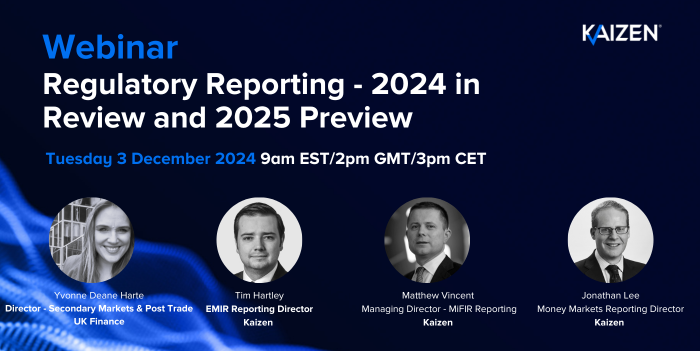
    The MMSR dataset is a vital repository of transaction-by-transaction data that provides insights into various segments of the Euro money market. This includes secured and unsecured markets, foreign exchange swaps, and overnight index swaps. Perhaps most importantly the euro short-term rate (€STR) is created off the back of the MMSR data.

    At its core, the MMSR dataset serves as a window into the intricacies of the Euro money market. By collecting granular transaction data, the ECB gains a holistic understanding of market dynamics. This wealth of information, in turn, informs the ECB’s monetary policy decisions, enabling them to navigate market complexities effectively.

    Impact on €STR benchmark rate

    The data provided by the new reporting agents will be incorporated into the calculation of the euro short-term rate (€STR). As such, the expanded reporting population will have a direct influence on this crucial benchmark, which serves as a reference rate for various financial transactions.

    The ECB’s decision to add 24 new reporting agents to the Money Markets Statistical Reporting dataset underscores its commitment to maintaining accurate and comprehensive insights into the Euro money market. This expansion aligns with the ECB’s and other global regulators’ efforts to enhance transparency and make well-informed monetary policy decisions based on robust data.

    • View the list of the new reporting agents on the ECB’s website
    • If you would like to discuss any concerns or issues you have with your MMSR reporting please contact us.
  • How to interpret the EMIR Reporting Broker ID Field

    How to interpret the EMIR Reporting Broker ID Field

    With all the focus on EMIR Refit, it is easy to forget that firms still have a day-to-day EMIR reporting obligation that they have to attend to!   

    Earlier this year, ESMA made a useful and important update to its EMIR Q&A ‘Level 3’ guidance, which impacted the ‘Broker ID’ field.  This short article explores what that means for firms, and how Kaizen can help with ongoing regulatory changes.

    Background

    This is what the ‘Broker ID’ field in both ESMA and the FCA’s RTS for EMIR reporting currently says:

    In the case a broker acts as intermediary for the reporting counterparty without becoming a counterparty himself, the reporting counterparty shall identify this broker by a unique code.

    Despite being a reasonably straightforward field, the Q&A previously included wording (shown below) that threw open the interpretation of what a ‘Broker’ actually was under EMIR reporting, indicating that the Broker ID should always be populated, which was a somewhat controversial interpretation.  March’s update helps to clarify how firms should be populating this field.

    Previous ESMA Q&A

    TR Question 9(e)

    If a broker is itself the counterparty (legal principal) to a trade, should it be reported in both the “broker” and “counterparty” fields?

    TR Answer 9(e)

    Yes

    Latest ESMA Q&A

    TR Question 9(e)

    If a broker is itself the counterparty (legal principal) to a trade, should it be reported in both the “broker” and “counterparty” fields?

    TR Answer 9(e)

    No, when a broker is a counterparty to a derivative, it should report the derivative and identify itself as a counterparty. In line with the RTS on reporting and more particularly with regard to the details to be reported in the field 1.8, the broker is then not required to report its LEI in the field ’Broker ID’.

    Sadly, the validation rules include no corresponding update to help firms adhere to this change, and so it is possible to make submissions to a trade repository, which will contradict the wording under TR Q9(e).  Such submissions fall under trap of being valid, but wrong.

    How can Kaizen help me with this change?

    Kaizen’s award winning Accuracy Testing is constantly being improved and updated in line with regulatory and industry changes.  With this in mind, we immediately amended our testing, so that for all Kaizen clients, we could now check that the Reporting Counterparty field and Broker ID field are no longer populated with the same value, in line with TR Q9(e).  This is a good example of where Kaizen’s assurance testing will capture ‘valid but wrong’ reporting scenarios, as the existing validation rules will not prevent firms from having the same LEI repeated in both the Reporting Counterparty and Broker ID field.

    And finally, this change provides a useful opportunity to remind firms that even though some fields, such as the Broker ID, are listed as ‘optional’, regulators still very much expect them to ‘be populated if applicable’ to the derivative – which is something I have heard regulators and NCAs stress many times.  Where Kaizen sees important optional fields reported without a value, this is highlighted within the thorough results we provide, highlighting potential further ‘valid but wrong’ scenarios.

    Conclusion

    The Reporting Counterparty and Broker ID fields should never be populated with the same value, which may require some firms to amend their current EMIR reporting workflow, but is nonetheless a welcome clarification from ESMA for a field that will continue to be required under EMIR Refit.

    • The EMIR Q&A can be found on ESMA’s website
    • For help preparing for EMIR Refit or to discuss your EMIR reporting data quality with one of our regulatory experts, please contact us.


  • Join Kaizen and the FCA for an EMIR event ‘Ready, Steady…Refit!’

    Join Kaizen and the FCA for an EMIR event ‘Ready, Steady…Refit!’

    We are delighted to host ‘Ready, Steady…Refit!’ on Thursday 14 September 2023.  With seven months to go until EMIR Refit goes live in the EU, and a year to go until UK go-live, we will discuss where firms should be with their preparations.

    The event will bring together regulatory reporting experts from all facets of the industry for an afternoon of information sharing on all things Refit including:

    • View from the regulator – featuring Carmel Deenmamode, Market Conduct & Post Trade Policy Manager, FCA
    • Insights from different industry participants including sell and buy-side firms, trade repositories and trade bodies
    • Lessons learned from previous go lives including the recent CFTC ReWrite
    • Industry pain points, how to tackle them and where your peers are with preparations
    • Practical tips to take your preparations to the next level.

    If you are interested in finding out more, please email us with your name, job title and company.

  • Join us at BWF and ICMA Capital Markets Conference

    Join us at BWF and ICMA Capital Markets Conference

    We are pleased to be returning to support the bwf and ICMA Capital Markets Conference in Frankfurt for a second year in a row.  The conference will take place on Monday 11 September at the Deutsche Nationalbibliothek. 

    Our Money Markets Reporting Director, Jonathan Lee will be presenting on the topic of Money Markets Statistical Reporting (MMSR) and our regulatory experts will be available at our pop-up stand. 

    We hope to see you there.  Click the link below for further information and to register.

    Register

  • UK SFTR Validation Rules – a late twist from the FCA

    UK SFTR Validation Rules – a late twist from the FCA

    The UK FCA finally proposed its own changes to the SFTR validation rules on 1 August 2023, subject to a consultation period ending on 15 September 2023, before taking effect on 4 November 2024.

    This follows ESMA’s announcement in March 2023, due to come into effect in the EU on 11 September 2023. The proposals largely mirror ESMA’s changes with a few sensible twists – that will give small data quality benefits. In particular, the FCA is proposing using the EMIR Refit currency code validations (prohibiting special currency codes) and planning to add major post Libor benchmark interest rates such as €STR, SONIA and SOFR to the list of recognised floating rates and floating rebate rates. This last point is a big win and something that has likely frustrated regulators across Europe, with their inability to aggregate spurious ‘free text’ populated rates.

    ESMA’s mirroring changes are to the list of actions that will mandate reporting counterparty details (nature & sector) and entity responsible for the report. There are clarifications around the method used to provide collateral (conditionality only applying to securities lending), clearing, open term, collateralisation of net exposure, type of collateral component, the uncollateralised securities lending flag and collateral market value. These are in addition to clarifications on report tracking numbers, permitted types of collateral and associated fields for securities lending (cannot be commodities collateral) and UTI for collateral updates when collateralisation of net exposure is false.

    Finally, the UK cements its minor deviation from ESMA’s rules, with no reporting required for non-financial counterparties, through appropriate changes to the validation rules to reflect this.  

    The pressing issue is going to be the two speed validation rules changes, which will be running in parallel for the 15 months between September 2023 and November 2024. For any firm with both UK and EU SFTR reporting obligations, this is likely to prove significantly more onerous than the two and a half month wait that we saw last time…

    • Read the full update on the FCA’s website
    • For a conversation with Jonathan on the new validation rules, please contact us.
  • ESMA report shows market manipulation related STORs outnumber insider dealing

    ESMA report shows market manipulation related STORs outnumber insider dealing

    ESMA recently published a report relating to suspicious transaction and order reports (STORs) and reiterated their importance as a source of market abuse investigations. 

    The report makes it evident that Brexit has had a significant impact on the STOR-related statistics. Because of this, ESMA decided to primarily focus the main part of their analysis on STORs received during 2021 and 2022.

    ESMA found that there were no major changes to the statistics over this two-year period, as the breakdown by all measures remained relatively consistent between 2021 and 2022, including:

    • the total number of STORs received totalled 6,125 in 2021 and 5,833 in 2022. Germany submitted the most raising 42% of the total STORs in 2021 and 40% in 2022, followed by France
    • the ratio of notifications by trading venues and investment firms
    • the percentage of STORs by instrument type (87% equities and bonds 7% in both years, with derivatives and other instruments covering the remainder)
    • the type of violation – alleged market manipulation accounted for 52% of the total in both years. Whereas insider dealing-related STORs accounted for 45% of the total in 2021 and 44% in 2022.

    Market manipulation

    One of the interesting aspects of the report is that more STORs now consistently relate to market manipulation than insider dealing. Previously (between 2010 and 2018) most STORs raised related to insider dealing. 

    The increase in STORs relating to market manipulation could be a sign that firms are becoming more sophisticated in their approach to detecting potential market abuse, but it’s probably too early to say. The continued increase in electronic and algorithmic trading could also be a factor.

  • Webinar: MiFIR Transaction Reporting with PIMFA

    Webinar: MiFIR Transaction Reporting with PIMFA

    Date: Thursday 29 June 2023
    Time: 11:00-12:00pm BST

    Join Kaizen’s Matthew Vincent and Simon Appleton and PIMFA’s Kevin Sloane for a webinar where they will unpack the challenges of reporting accurately, the importance of data quality and meeting regulatory expectations, and provide practical solutions for firms to ensure they are reporting correctly.

    Key webinar discussion topics include:

    • Common errors in regulatory reports
    • How to put the right controls in place
    • Consequences of inaccurate reporting
    • How to take your reporting from ‘Good’ to ‘Great’

    Book here

  • Kaizen speaks to DerivSource on the upcoming APAC ReWrites

    Kaizen speaks to DerivSource on the upcoming APAC ReWrites

    Kaizen’s Alan McIntyre and Tim Hartley spoke to DerivSource on the challenges firms face in complying with the upcoming APAC rewrites of the OTC derivatives reporting rules, scheduled to go live in 2024.

    “The different regulators will have different interpretations that firms will have to be aware of.”  – Alan McIntyre

    “In many ways it is a good excuse to re-evaluate what they have. There will be more than one way to do it but the real challenge with overlapping regulations is to ensure that best practice is being applied across the regions.” – Tim Hartley

    For help preparing for the upcoming APAC rewrites, please contact us. 

    Read the article in full


  • Kaizen wins at the Securities Finance Times Industry Excellence Awards 2023

    Kaizen wins at the Securities Finance Times Industry Excellence Awards 2023

    London, 7 July 2023 – Leading regulatory technology firm, Kaizen Reporting has won ‘Regulatory Solution of The Year’ at the Securities Finance Times Industry Excellence Awards 2023 for its ReportShield™ Accuracy Testing service.

    The Securities Finance Times Industry Excellence Awards were judged by a panel of industry experts, and are dedicated to supporting and recognising talented and dedicated firms, individuals and departments across the industry.

    Justin Lawson, Founder and Group Publisher, Black Knight Media Limited, commented:

    “With more entries than ever, this year’s Industry Excellence Awards were highly competitive. Kaizen Reporting’s Accuracy Testing positioned it as a deserving winner of the ‘Regulatory Solution of the Year’ category. Regulators expect the SFTR data they receive to be accurate and Kaizen’s Accuracy Testing service enables firms to deliver just that.”

    Dario Crispini, CEO of Kaizen Reporting commented:

    “We are honoured to have been selected as the winner of ‘Regulatory Solution of the Year’ at the Securities Finance Times Industry Excellence Awards 2023. The SFTR regime is now three years old and regulators expect the data reported by firms to be of the highest quality.  This is particularly important at times of market volatility as regulators rely on this data – and that of other reporting regimes – to detect systemic risk. We are proud to offer a service that helps firms improve their data quality and fulfil their regulatory obligations.”

    Kaizen’s Accuracy Testing, part of its ReportShield™ suite of regulatory reporting controls, is an automated managed service that tests the quality of trade and transaction reporting data reported to the regulator. What makes the service unique is its ability to test all data fields on all reports, giving clients full visibility of their reporting quality. The expertise of Kaizen’s subject matter experts is embedded in the service, which covers a wide range of regimes including MiFIR Trade and Transaction Reporting, EMIR, SFTR, CFTC and many more. This year Kaizen also added Sterling Money Market Daily (SMMD) reporting and Money Market Statistical Reporting (MMSR) to the list of regimes its testing covers.

    (ends)

    • For more information, please contact James Dunseath, Communications Advisor, on +44 (0) 7557 955795 or media@kaizenreporting.com
  • LISTEN: Tim Hartley on EMIR Refit for the Regis-TR RoundUp podcast

    LISTEN: Tim Hartley on EMIR Refit for the Regis-TR RoundUp podcast

    Tune in to Tim Hartley on the second episode of series 9 of the Regis-TR RoundUp!

    He joins Regis-TR’s John Kernan and Nick Bruce with a very special guest appearance from an AI Tim Hartley, putting his own knowledge of regulatory reporting to the test! But can he beat the bot?

    They discuss market readiness for the upcoming EMIR Refit, the importance of data quality and dual reporting obligations.

    “Having reconciliations and assurance services in place to make sure that you’re reporting something… it’s a lot of work to get done and it’s almost just as important as reporting the original trade.”

    Listen now

  • Kaizen and London Reporting House write for ISLA 30

    Kaizen and London Reporting House write for ISLA 30

    Kaizen and London Reporting House have written a joint article which has been featured in ISLA 30, a special publication by the Securities Finance Times, marking ISLA’s 30th Securities Finance & Collateral Management Conference.

    In the article we question whether regulation has been a help or hindrance to the securities lending and repo markets, and argue that regulatory requirements have in fact paved the way for incredible growth in these markets.

    Read the article in full

  • Webinar: Preparing for EMIR Refit with The Investment Association

    Webinar: Preparing for EMIR Refit with The Investment Association

    Date: Tuesday 4 July 2023
    Time: 2:00-3:00pm BST

    Join Kaizen’s EMIR Reporting Director Tim Hartley and The Investment Association’s Alex Chow for a webinar on preparing for EMIR Refit. 

    The webinar will provide an understanding of:

    • Reporting requirements to help with preparations for go-live
    • A summary of timelines
    • An overview of key changes for both the UK and EU Refit
    • Specific challenges of delegated reporting and new UPIs & UTIs.

    Register your interest

  • A Guide: The Importance of Money Market Statistical Reporting (MMSR)

    A Guide: The Importance of Money Market Statistical Reporting (MMSR)

    What is MMSR?

    The Money Market Statistical Reporting (MMSR) regime is the European Central Bank’s (ECB) official and only source of data on daily money market transactions. Accurate reporting of this statistical information is crucial for decision-making at the ECB. This data provides a view of not just collateralised but also the unsecured, FX swaps & overnight index swaps (OIS) elements of the money markets.

    Why is it important?

    The ECB has been particularly keen on monitoring and regulating this aspect of the market, as it directly impacts economic activity across Europe. The regulator relies on MMSR reports to make informed decisions on monetary policy, financial stability, financial regulations and more importantly, the daily Euro benchmark computation of €STR (European Short-Term Rate).

    One of its measurements so far has been the withdrawal of the ECB’s quantitative easing. As the ECB scaled down its bond-buying programme, market participants watched the impact of the decision by tracking the money markets performance.

    What are the consequences of getting it wrong?

    The ECB requires financial institutions to report their data promptly, accurately, and transparently. Additionally, the legislation states the requirement that all statistical data reported is:

    “…tested frequently and adequate data quality checks are implemented by the reporting.”

    If a discrepancy is found, the ECB can impose fines on the institution responsible, ultimately holding them accountable for their actions.

    “ECB and the NCBs carry out frequent data quality checks on submitted reports to assess and question the quality and consistency of the data; Appropriate internal testing procedures and health checks of trading and reporting systems; Early detection of failures and gaps in reporting flows.” Reporting Instructions for the Electronic Transmission of Money Market Statistical Reporting (MMSR), version 3.5. (20 December 2021)

    The repercussions of inaccurate reporting are severe for firms and also have broader long-lasting effects on trust and stability within the financial markets. These issues range from simple errors in reporting to more complicated instances of data misrepresentation.

    Common errors

    Any small discrepancy in reported values can have a ripple effect that can cause significant damage to the economy and the financial industry.

    When testing our clients’ data we see a number of common errors occurring:

    • Enormously high or irrelevant haircuts and spreads
    • Erroneous rates, cash and nominal fields misinterpretation
    • Misreporting on collateral indicators and collateralisation values.

    These errors can lead to a distortion of the true state of the market and paints a completely different picture, undermining the existence of such data-driven and effective benchmark reporting in first place.

    How Kaizen can help

    Financial institutions should regularly test their data to ascertain the production of accurate results. Kaizen’s ReportShield™ quality assurance services have been developed by former regulators and industry specialists to provide firms with robust controls including continuous independent testing and validation of submitted data. Our testing is unique because we test every single data field on every report, so firms can be confident that they’re receiving a comprehensive assessment of their reporting quality.  

    One of our mantras is ‘don’t mark your own homework’ when it comes to your regulatory reporting data. Using an independent specialist provider gives far greater rigour than what can be achieved internally.

    Our services include:

    Final remarks

    Failure to report accurate statistical data creates risk of regulatory fines and reputational damage for the firm involved jeopardising the stability of financial markets. It’s crucial for firms to prioritise the importance of achieving maximum accuracy in their MMSR reporting, both to ensure that the economic environment remains stable and robust in the long run and to avoid serious consequences for the firm. Investment in assurance activities will provide significant cost savings as well as reducing regulatory risks.

    • Do you have the right controls in place for your MMSR reporting? Are you 100% certain on the data quality and accuracy of your reporting?
    • For a discussion with Faizal or one of our regulatory experts about any of the topics above, please contact us.


  • Join Kaizen at FIA’s Compliance & Regulation Member Briefing 2023

    Join Kaizen at FIA’s Compliance & Regulation Member Briefing 2023

    Date: Tuesday 6 June 2023
    Time: 8:30am – 12:00pm
    Location: London Pl, London, SE1 2AQ

    Kaizen’s Tim Hartley joins a panel of trade reporting industry experts on a panel at the FIA Compliance and Regulation Member Briefing as they discuss strategies to ensure firms are fully prepared for EMIR Refit.

    This is a FIA members’ only event.

    Book here

  • ESMA’s spotlight on data quality – Part 3: SFTR – a case of ‘valid but wrong’

    ESMA’s spotlight on data quality – Part 3: SFTR – a case of ‘valid but wrong’

    Identifying SFTR errors should be rather like shooting fish in a barrel. In spite of this, ESMA’s latest data quality report simply did not uncover the bodies.

    In this edition, there was no smoking gun, more of a smoking peashooter. In relation to SFTR, only one low-key material issue was uncovered in which three entities in a single jurisdiction had reported unfeasibly large securities loans.

    Our SFTR testing experience indicates that there is a sea of price unit errors, haircut issues, incorrect quality, incorrect price, incorrect type, under-reporting (collateral, re-use, cash reinvestment & funding sources) among a litany of other errors. On top of that, many aspects of SFTR remain only partially defined or undefined, such that the resultant data is of dubious value, full of uncertainty and contradiction.

    Data quality indicators dashboard

    ESMA stated that it had been transitioning to a new data quality indicators (DQIs) dashboard for both EMIR and SFTR, with the SFTR implementation to be completed during 2023. Together with a data-sharing framework, this is how ESMA is proactively monitoring and engaging with National Competent Authorities (NCAs) on data quality issues.

    In the existing case for EMIR, it includes 19 DQIs to detect and measure various types of misreporting, including under and over reporting, inconsistent reporting vis-à-vis the other counterparty, incomplete information in the key fields of the report, late reporting, abnormal values, and a lack of correct identifiers of the counterparties. This is computed by ESMA monthly, based on the entire EMIR dataset.

    The empirical evidence we have from our quality assurance testing services indicates that ESMA’s methods – with dependency on extraordinary values, the validation rules and TR reconciliation processes – may only scratch the surface of errors present in reported data.

    False comfort

    In ESMA’s EMIR data, there appears to be a lot of false comfort to be had from the reduction in the percentage of errors identified under these DQI methods from a high of 27.6% to a low of 7.8%. If we were to speculate that ESMA’s methods identify only 10% of true outstanding errors, then a decline from 27.6% to 7.8% equates to less than a 2% improvement in actual data quality.

    On SFTR specifically, ESMA identified implausibly high loan values (field 2.56) for securities lending trades, where loans from three entities in a single jurisdiction accounted for 77% of the total loan value in the market as a whole. On further investigation, it proved to be misreporting. This emphasises the importance of having SFTR reporting controls in place to identify ‘fat fingers’, spurious values and issues with units.

    Five fields responsible for most errors

    We repeatedly state that the validation rules, or indeed validations in conjunction with TR reconciliations are woefully inadequate measures for establishing high standards of data quality. We have also harboured doubts that the validation rules were always applied in their entirety, as we repeatedly see accepted messages we would expect to be ‘NACKed.’ However, ESMA has chosen to perform a “revalidation” process, largely to ensure that the TRs have applied the validation rules correctly. During this exercise, it identified issues with between 23 and 43 fields depending on which month’s run. However five fields were responsible for 95% of total failures:

    1. Collateral basket identifier (by far the biggest)
    2. Classification of a security
    3. Spread
    4. Floating rate reset frequency – multiplier, and
    5. Floating rate reference period.

    We have observed a number of issues with the population of the collateral basket identifier and ways in which this field can be ‘abused.’ In some cases, we’ve seen individual bond ISIN codes entered (that are clearly not collateral basket ISINs), proprietary (non-official) ISIN codes and frequent use of the collateral basket identifier (typically in relation to securities lending business) to avoid having to provide further collateral detail.

    With regards to classification of a security (CFI code), until very recently (and the publication of Q&A 15), it has been the only SFTR field with a golden source, namely the ANNA ASB database. In our experience, it is common to see the default character ‘X’ used in place of correct characters, CFI codes that bear no relation to the security in question and inconsistencies with the values published in the ANNA ASB database.

    The final two fields mentioned, floating rate reset frequency – multiplier and floating rate reference period – time period, in our experience, are both impacted by default values (particularly one) and inconsistent inputs that do not make economic or standard market practice sense.

    Fit for purpose?

    Sadly, the conceptual issue remains, the vast majority of incorrect reports pass the validation rules – the classic ‘valid but wrong’ problem. SFTR is crying out for greater regulatory certainty, precisely defined fields with limited acceptable parameters. The doctrine “counterparties should agree amongst themselves” simply does not work. A regime with a litany of errors and extraordinary operational burden, is simply not fit for purpose.

    • Read the Data Quality full report on ESMA’s website
    • Read our insights from our regulatory experts on the EMIR and MiFIR aspects of the report
    • For a free healthcheck of your SFTR reporting or a conversation with Jonathan or another regulatory expert, please contact us.
  • ESMA’s spotlight on data quality – Part 2: the use and quality of MiFIR transaction data

    ESMA’s spotlight on data quality – Part 2: the use and quality of MiFIR transaction data

    MiFIR transaction reporting data was a surprise inclusion in ESMA’s recent data quality report which has previously focused on EMIR and SFTR. The report includes some noteworthy updates around the key developments affecting data quality and colour on additional use cases that go beyond the traditional uses of the data. One notable area is where National Competent Authorities (NCAs) are using transaction reporting data to understand the behaviours of retail investors.

    This work is contributing to ESMA’s wider work on retail risk indicators, again highlighting the importance of complete and accurate identification of natural persons.

    The report also details ESMA’s consistent approach to monitoring data quality and reminds readers that the cornerstone for the efficient and effective fulfilment of the authorities’ mandate is high-quality data.

    ESMA hopes that based on the lessons learnt and the development of a revised strategic approach to supervisory convergence on data quality, there will be further strengthening in its outcome-focused, data-driven, and risk-based approaches to supervising the reporting regimes.

    Key developments and the supervisory actions affecting data quality across MiFIR

    • ESMA becomes the supervisor of significant Data Reporting Service Providers (DRSPs)

    To meet the need for improved data quality convergence across the EU, ESMA became the direct supervisor of the most significant DRSPs in January 2022. In total, this accounts for almost 99% of reported transactions amongst registered ARMs. In the second half of the year, the volumes stabilised at around a monthly average of 650m transactions, but this was preceded by some volatility in the first half of the year, with the first quarter having an average of over 900m. Approximately half of the reports received by NCAs were received directly, ie. they were not reported through an ARM.

    • Insights from the analysis of CDS prices

    ESMA is looking to provide clarifications or modifications to the reporting of certain fields, with the aim of improving consistency. It provides a clear use case when highlighting the reporting of the price of Credit Default Swaps (CDS). Out of 260k reported CDS transactions, 200k were reporting with basis points as the applicable price type. Out of this population of 200k, 89% of the trades were reported with a standardised coupon and the remaining 11% were reported as a quoted spread.  This should give firms food for thought and the opportunity to review how they are reporting CDS transactions.

    • Lessons learnt from the analysis of MiFIR transactions data for the Carbon Market Report

    Another use-case comes from the Carbon Market Report where MiFIR transaction reports were used to provide important insights into the trading of emission allowances from H2 2021. The reported data was supplemented with information from other sources which will be familiar to many: ANNA, MiFIR Reference Data (FIRDS), GLEIF and ESMA counterparty data based on the EMIR trade repository data and public registers of counterparties. ESMA notes “unprecedented analysis” and the “multiple challenges associated with reconciling the various data sources”.

    This could point to areas of inconsistency with the transaction reporting data. In addition, other challenges called out were duplicated buy-sell chains and aggregation of the data. What is particularly interesting about this line is that ESMA may be proactively addressing this challenge through the proposed changes to the legislative text: “(j) the conditions for linking specific transactions and the means of the identification of aggregated orders resulting in the execution of a transaction.”

    • Consistency of transaction and transparency data

    ESMA has also undertaken a project to analyse the data from transaction reporting and post-trade transparency reporting to identify gaps in completeness in either domain. To add to this, ESMA has initiated ad-hoc supervision to assess the consistency between APA and ARM data from transaction and transparency reporting.

    ESMA’s focus on transaction reporting data quality is clear, so too is the emphasis on using the data to go beyond investigating market abuse. MiFIR transaction reporting data is increasingly providing ESMA the opportunity to delve deeper into tangible use-cases assessing and supporting the functionality of the market. Increasingly, transaction reports are cross-referenced and supplemented by additional data sources, which helps ESMA to highlight poor data quality and increasingly shape policy developments across transaction reporting and beyond. We can also see examples of this approach in the UK.

    • Read the full report on ESMA’s website
    • Read our blog on the EMIR aspects of the report
    • If you would like to discuss your MiFIR reporting data quality with Robert or one of our regulatory experts, please contact us.


  • Improving Equity Secondary Markets: A Debrief

    Improving Equity Secondary Markets: A Debrief

    The FCA has released its much-anticipated policy changes on the back of last year’s consultation: ‘Improving Equity Secondary Markets’, part of the Treasury’s Wholesale Markets Review (WMR).  As suggested, the aim is to enhance execution quality, increase liquidity and ultimately strengthen the UK’s position and competitiveness in global wholesale markets.

    This first Policy Statement relates to equities only, RTS 1 of MiFIR, and the majority of proposals will enter into force in April 2024, although it is noted that, for investment firms, changes in areas like pre-trade waivers will apply immediately (per the FCA’s existing powers). So please read through the document and understand the impact on you and your organisation…

    The Future Regulatory Framework (FRF) Review gave responsibility of retained EU law to the regulators and subsequently moves the UK MiFIR/MiFID II regime into the FCA Handbook.  Improving the content of Post-Trade Transparency (PTT) Reporting with a clearer identification of transactions that contribute to the price discovery process in a consolidated way, was important. The simplification of reporting by delineating the Systematic Internaliser (SI) regime from the new Designated Reporter Regime (DRR) was also key.

    The changes by the FCA should lead to:

    • improved market liquidity
    • more efficient prices
    • greater competition, choice and access between trading venues, SIs and investment firms
    • lower operating costs for firms
    • lower costs of trading
    • greater activity on UK trading venues.

    In this article I focus on three main areas – Exemptions, Flags and DRR.

    1. Exemptions

    The FCA was keen to expand on the list of transactions that are exempted from PTT reporting due to their non-price forming nature. The changing of conditions for when investment firms are required to PTT Report should simplify and lower costs. Article 13, RTS 1 lists the transactions exempt from PTT, adding noise to the market unnecessarily, but for consistency links to Article 2(5) of RTS 22.  Going forward, this list would include intra-group transactions, deemed non-price forming and which do not constitute addressable liquidity and are mainly used for the purpose of Risk Management (mirroring market conditions but not contributing to price). ‘Inter-affiliate transaction’ means a transaction between entities within the same group carried out exclusively as part of centralised booking for intra-group risk management purposes.”  The FCA would also streamline the overlap between Article 2, 6 & 13 of RTS 1.

    2. Flags

    The deletion of Pre & Post-Trade Transparency flags was proposed and has now been confirmed.  For post-trade this means the deletion of ‘SIZE’, ‘ILQD’ & ‘RPRI’ plus ‘ACTX’ & ‘DUPL’, taking into account the limited use of them today.  ‘ALGO’ will be maintained. Merging existing flags into one was discussed but ‘TNCP’ and ‘BENC’ will be maintained.  ‘CLSE’ has been introduced for Closing Prices and ‘PORT’ introduced to align with EU standards for Portfolio Transactions.

    The FCA highlighted that the removal of waivers would mean improved access to liquidity under the reference price waiver. In line with post-trade flags, there’s the aggregation of existing pre-trade flags ‘NLIQ’, ‘OILQ’ and ‘PRIC’ to ‘NETW’ for different types of negotiated trades.  A new flag will also be introduced for pre-trade large in scale ‘NTLS’, which has not been in place since MiFID II inception.

    It was noted that some of the pre and post trade flag changes will have an impact on fields 61 & 63 of Firms Transaction Reporting under RTS 22.

    3. DRR

    The proposal was to remove the SI status as a criterion in establishing when an investment firm is obligated to report a transaction. Under the DRR, firms could elect to register themselves as a designated reporter (DR) by notifying the FCA. A firm would be able to register as a DR regardless of its SI status. Registration would apply at entity level. This would mean DR status would apply to all that firm’s reportable trades across all eligible financial instruments. Where firms are trading with a non-DR, a DR would be responsible for reporting all trades. The seller would report where both, or neither, of the counterparties are a DR.

    Concerns were raised by some sell-side firms but the FCA clarified DRs can bilaterally agree, explicitly and in advance, which party shall fulfil the reporting obligation. The seller will always have the regulatory obligation to report but may discharge this by entering into an agreement with the buyer whereby the buyer agrees to report on its behalf. This option addresses the situation of having a reporting obligation but no arrangements to make the report public. DRR firms that wish to register as a designated reporter will need to submit a notification to the FCA. The FCA has said it will announce further details of this process in ‘due course’.

    Other points to note; the slight adjustments to the ‘Price’ field (numerical values only) ‘Price Currency’ field (incl. minor ccys) and the introduction of a new field called ‘Price Condition’ (already an existing FIX field but not published) to be populated with ‘PNDG’ when the price is not available at point of execution.

    Lastly, the FCA continues to highlight that it is developing the Consolidated Tape (CT) regime with the Treasury. The FCA intends to consult on this in the near future as part of work towards having a regulatory regime in place for a CT by 2024. A framework for CT will initially be for bonds but will have the scope to be built upon and adapted for equities.

    To summarise, the FCA post-Brexit consultation has been discussed for a while now and should not come as a surprise but there is still an impact on Investment Firms, (SIs & DRs) and APAs alike.  Careful consideration is needed on the Front Office IT development required and the understanding, across the market, of the DR responsibilities and communication with the buy-side.  Lots more to come and we hotly anticipate the non-Equities RTS 2 review in due course.

    • Read the full Policy Statement: Improving Equity Secondary Markets on the FCA’s website
    • For a conversation with Chris on any of the MiFID II Post-Trade Transparency Reporting matters raised above, please contact us.
  • FCA highlights lack of formal market abuse controls among some CFD providers

    FCA highlights lack of formal market abuse controls among some CFD providers

    What has the Financial Conduct Authority (FCA) said?

    In Market Watch 73, the FCA sets out its observations from its recent market abuse peer review into Contracts for Difference (CFD) providers. While the report was largely positive it did highlight some areas of weakness. In this blog we summarise some of its key findings and why the findings matter.

    The FCA observes that the surveillance of insider dealing is soundly covered compared to market manipulation, albeit further improvements could be made. The main concerns relate to firms not considering unrealised profits when determining whether insider dealing has potentially taken place.

    In comparison, it finds that the monitoring for market manipulation is weaker. Cross product manipulation was flagged as possibly on the increase, for example manipulating the underlying asset to profit from a related CFD or spread bet.

    ‘Narrowing the spread’ – a key area of weakness

    Although most firms were aware of ‘narrowing the spread’ behaviour, with some submitting suspicious transaction and order reports (STORs), no firms had listed this type of abuse in their risk assessments or had any ‘compliance-based’ surveillance to detect it. This behaviour is harder to detect when manipulation is conducted across multiple providers or via a dealing ring.  

    Two things can help here: communications surveillance tools can help identify different parties acting in concert and across markets. Secondly, the FCA can access MiFIR transaction reporting data to help detect such behaviour across firms. They also receive order level data covering the main UK equity markets.

    Lack of surveillance for non-equity asset classes

    Market Watch 73 also reports that most firms do not have effective surveillance for non-equity asset classes. Although a common and recurring theme over the years, firms still need to consider if insider dealing or market manipulation has occurred in retail derivatives referencing any asset class, not just equities.

    A tailored Market Abuse Risk Assessment (MARA) is key to helping identify market manipulation

    Some organisations lack a formal market abuse controls framework. Firms that undertake a Market Abuse Risk Assessment (MARA) can demonstrate that they are considering relevant market abuse risks. Furthermore, a tailored MARA is much more effective at identifying such risks.

    When conducting a MARA and building a surveillance framework, it’s important to consider:

    • All asset classes
    • Cross product and cross market manipulation
    • Trading activity in its historical context
    • Unrealised as well as realised profits
    • The different ways transactions are executed
    • How pre-trade activity (Orders, RFQs, IOIs) can manipulate prices and mislead market participants
    • The level of liquidity and pre and post trade transparency at instrument and market level
    • How electronic and voice communications are monitored
    • Keeping your MARA up to date!


    • Read the full Market Watch 73 on the FCA’s website
    • To learn more about Kaizen’s trade and communications surveillance solutions through our acquisition of Red Deer, please contact us.
  • ESMA’s spotlight on data quality – Part 1: a missed opportunity for EMIR?

    ESMA’s spotlight on data quality – Part 1: a missed opportunity for EMIR?

    ESMA’s latest Data Quality Report (DQR) presents a noticeable change in style and content from previous years.  Out are the detailed areas of concern or ‘tellings off’, and in are optimistic future endeavours, coupled with over-comforting graphs and statistics, and importantly the promise of systematic warnings of data quality breaches!  This blog discusses the key EMIR aspects of this year’s DQR.

    The best is yet to come

    With high quality data absolutely essential for the monitoring of derivative exposures, and reporting data quality known to be lower than desired, substantial changes are needed to address the previously admitted shortcomings.

    Change comes via the finalisation of EMIR Refit, bringing wholesale change to the reporting of derivatives in Europe, aligning standards more closely with the CDE guidance. Revised technical standards and a reasonable volume of guidance documentation will assist firms greatly, and ESMA is correct to highlight this important regulatory change.

    ESMA highlights its own process and controls. Since May 2022, ESMA has been implementing a data quality ‘dashboard’, which uses 19 data quality indicators (DQIs) to compare EMIR data on a monthly basis against an ‘EU benchmark’, which focuses on metrics including:

    • Under/over reporting
    • Inconsistent reporting v the other counterparty
    • Incomplete key fields
    • Late reports
    • Abnormal values
    • Lack of correct identifiers of counterparties

    Data is then shared with National Competent Authorities (NCAs), who in turn target and remediate ‘significant’ issues with entities, via a prescribed ‘NCA Engagement Framework’.  The framework aims to promote efficacy and efficiency of ESMA and the NCAs’ limited resources, stating that for remediation, they will focus on a ‘limited subset of entities with the highest volume of incorrect reports’.

    So firms with reporting obligations will and are being targeted for data review and remediation with the implementation of ESMA’s DQIs and Engagement Framework.

    Minor telling offs and comforting graphs

    Previous versions of the DQR discussed targeted areas of concern, whereas the ‘key developments’ section this year provided a far more watered down view of issues seen in the last 12 months.

    The majority of statistics provided a tale of decline in certain offending activities, such as late or missing valuations.  But this section misses a vital opportunity to critique existing reporting issues, such as the difficulty of reporting ‘CFI’ codes, poor interpretation of collateral fields, and unrealistic reported exposures.  Admittedly many of these areas will be targeted under EMIR Refit, but most entities are actively trying to remediate reporting issues well ahead of 2024, so that such problems do not become exponentially hard to fix once the regime is updated. More detailed examples of areas of concern are not easy for firms to hear, but provide important regulatory insight and help significantly with workload prioritisation for firms who are equally limited in resources.

    Could do better

    Overall, this year’s DQR represents a missed opportunity to give valuable insight into the key areas of concern for the quality of EMIR regulatory reporting.

    Significant changes via the DQIs, Engagement Framework and EMIR Refit updates are clearly crucial for significant and accelerated improvements to data quality going forward, as ESMA and NCAs adopt a more data driven approach to their supervisory duties. Impacted firms will be systematically targeted for their data quality issues, from which NCAs will expect to follow remediation projects until resolution.

    ESMA has provided some useful insights into areas of improvement, such as the completeness, timeliness and accuracy of submissions, but as a ‘flagship’ regular report in the regulator’s arsenal, future iterations would greatly benefit from more detailed examples of the issues across a much wider array of reporting topics.

     
  • Single Rulebook and Linklaters join forces to launch Law Compare

    Single Rulebook and Linklaters join forces to launch Law Compare

    London, 24 April 2023 – Single Rulebook, a leading integrated software platform for the management of regulatory rules, and Linklaters, a global law firm focused on bringing legal certainty in a changing world, today announced the launch of Law Compare. The new service is an intuitive online tool, which helps lawyers view, compare and annotate UK versions of financial services legislation alongside the equivalent EU rules in order to manage the divergence of once-harmonised regulation.

    Law Compare has been developed by Single Rulebook for Linklaters in order to support in-house teams and gives Linklaters’ clients access to comparisons and guidance on the EU and UK MiFID II regimes quickly and efficiently.

    The online tool provides a single authoritative source of the most up-to-date regulation and guidance, and offers full coverage of EU and UK MiFID II regimes, from Directives, Regulations, Regulatory Technical Standards to Level 3 guidance, with the potential to extend to other areas of regulation. The legislation hosted on the Single Rulebook platform is complemented by Linklaters’ guidance which provides an invaluable record of the firm’s legal views, interpretation and comments relating to specific provisions and areas of EU-UK divergence.

    Pansy Wong, Financial Regulatory Partner at Linklaters said: “I am thrilled to be launching this innovative product, which is truly market leading in its capability and offering. Linklaters Law Compare offers a valuable collaborative solution with a better overall user experience when navigating regulatory divergence across the EU and UK. We believe this technology will form a crucial part of legal compliance toolkits post-Brexit. This tool is further evidence of our commitment to helping our global clients stay ahead of a rapidly changing regulatory framework in the EU and UK.”

    Chris Dingley, CEO of Single Rulebook commented: “We are delighted to have joined forces with Linklaters to launch Law Compare, a new regulatory comparison tool, on our platform.  The new tool provides Linklaters’ clients with a dynamic comparison of diverging EU and UK regulation, as well as changes in regulatory texts over time.  Combining Linklaters’ legal and regulatory expertise with our award-winning technology and platform creates a unique solution for managing regulatory change.”

    (ends)

    • For more information, please contact James Dunseath, Communications Advisor, on +44 (0) 7557 955795 or media@kaizenreporting.com
  • Does your firm have an SMF for trade and transaction reporting?

    Does your firm have an SMF for trade and transaction reporting?

    The Senior Managers and Certification Regime (SM&CR) may be under review but that doesn’t mean it’s not still in place.

    The FCA and PRA recently published a joint discussion paper which asks for feedback on the operational aspects of the SM&CR.  At the same time HM Treasury also published a Call for Evidence seeking views on the legislative aspects of the regime.  This follows the announcement in December 2022 that there would be a review of SM&CR as part of the Edinburgh Reforms.  Responses to the discussion paper are due on 1 June.

    This could not come at a more crucial time for the industry with so much regulatory change afoot with expected divergence in MiFID II reporting, EMIR Refit upcoming, as well as various other rewrites concluding. 

    But in the meantime, we wanted to remind firms of their SM&CR responsibilities. Do firms have a Senior Management Function (SMF) in place for their trade and transaction reporting requirements, accuracy and approvals?  Who is your SMF16?

    SM&CR takes three key elements:

    • Senior Managers Regime – Understanding and mapping out of the SMF responsibilities and consequences of actions, personal accountability
    • Certification regime – Documenting, demonstrating, and certifying that SMFs are suitable and ‘fit & proper’ for the role, with annual assessments. “Have my SMFs been trained?”
    • Conduct Rules – Governance and documentation, procedures & policies that have been brought into line for SM&CR and controls in place for recording the implementations, steps and the decisions made by your firm to comply with the Conduct Rules across all staff within your organisation.

    Kaizen can help firms through the understanding of the accuracy of their regulatory reporting, so SMFs have a valued and independent view of their reporting.  We also provide governance and controls with our structured Control Framework services, designed by former regulators and our industry specialists experts, making sure internal GRC structures and procedures are acceptable.

    Only a few months ago, the FCA issued a Dear CEO letter to wholesale brokers reminding them of their regulatory obligations and to take proactive steps towards ensuring compliance, in particular highlighting that individuals in compliance risk personal liability when something goes wrong under the SM&CR.

    • If you’d like some help getting the right controls in place to ensure your firm meets the requirements of the SM&CR from regulatory reporting perspective, please get in touch.


  • Kaizen Reporting acquires Red Deer

    Kaizen Reporting acquires Red Deer

    London, 19 April 2023 – Leading regulatory technology firm, Kaizen Reporting today announced that it has acquired Red Deer, a provider of integrated compliance solutions for surveillance and research workflows.

    Red Deer’s proprietary technology platform provides surveillance and research tools that help middle office and compliance teams at banks, asset management and trading firms comply with regulations, including market abuse and manipulation. Its trade and communications surveillance technology helps companies spot market abuse including spoofing, layering and other forms of manipulation in exchange and OTC markets, while the communications surveillance product can scan and trace emails and chat conversations for signs of prohibited activity. In addition, Red Deer’s online research management tools provide solutions for managing MiFID II’s Unbundling and Fair Value rules.

    The Red Deer surveillance and research tools will be available via the Kaizen Hub, a web based RegTech platform for accessing a range of compliance tools.

    Dario Crispini, CEO of Kaizen Reporting, commented:

    “As a leading RegTech provider, we are always looking to diversify our compliance offering for clients. The acquisition of Red Deer demonstrates our strengths in supporting clients with their regulatory and compliance needs and we’re delighted to offer this new range of surveillance and research tools to our clients through the Kaizen Hub.”  

    Alistair Downes, Head of Product at Red Deer, commented:

    “We are delighted to be part of Kaizen and by combining the two companies’ expertise and technology we are able to better solve clients’ regulatory challenges. Kaizen’s reputation for delivering leading services in the reporting industry along with the service and tools we offer will create an integrated solution for all of a firm’s regulatory and compliance needs.”   

    Last month Kaizen announced it had acquired a majority stake in London Reporting House, a new service that brings unrivalled insight into the repo market.

    The terms of the acquisition were not disclosed.

    (ends) 

    About Red Deer:

    Red Deer’s proprietary technology platform provides surveillance and research tools that help middle office and compliance teams at banks, private equity, asset and wealth managers and trading firms comply with regulations, including market abuse and manipulation as well as MiFID II’s unbundling and fair value rules. We have a proven track record of delivering innovative front office solutions, regulatory compliance, research consumption and cutting-edge technology to the buy side. Our technology is trusted by tier one firms within Private Equity, Alternatives, Asset Management and Wealth.

    • For more information, please contact James Dunseath, Communications Advisor, on +44 (0) 7557 955795 or media@kaizenreporting.com


  • UK gilt market crisis leads regulators to dig deeper

    UK gilt market crisis leads regulators to dig deeper

    Bank of England working paper underlines the importance of getting regulatory reporting right

    The Bank of England’s recently released working paper ‘An anatomy of the 2022 gilt market crisis’ reminds us why regulatory reporting is so crucial to the healthy operation of the financial markets.

    The paper, published in March, is a subject for further debate rather than a policy document. Nevertheless, the production of a 95-page document has clearly been prompted by a very keen interest.

    A quick recap – what happened last year?

    The Bank of England intervened on three separate occasions during September and October 2022 in order to maintain financial stability and prevent pension funds collapsing, following the Kwarteng/Truss ministerial statement, ‘The Growth Plan’ of 23 September 2022.

    The paper’s author identified such extreme concentration in the liability driven investment (LDI) pension insurance industry that just 3 firms were accountable for 70% of UK gilts they were forced to sell to primary dealers in the eye of the storm.

    Rapidly rising interest rates and inflation expectations at this time played havoc with the balance of assets and liabilities at these funds, particularly as real yields plummeted to new extreme negative levels.

    The demands of future pensioners necessitate real, rather than nominal returns, i.e. pension funds need to be able to lock in a certain level of future spending power for their members, irrespective of the future path of inflation. When you discount future liabilities with ever more negative real yields, those liabilities grow alarmingly.

    The LDI pension insurance industry faced the double whammy of significant bond market losses being compounded by margin calls on repo, inflation swap and OIS swap positions, meaning that they had to sell yet more gilts in order to cover these margin calls. Subsequently, the gilt market entered into something of a downward spiral, that it took BoE intervention to bring to a close. 

    What does this mean for regulatory reporting?

    On the first page of this working paper, the author places a quote prominently at the top of the page:

    “It was not quite a Lehman moment. But it got close.”

    (ref: Sep 2022, senior London-based banker).

    One of the outcomes of the last financial crisis was the additional regulatory reporting obligations that were placed on firms to ensure that both prudential and conduct regulators had sufficient transparency of derivative markets, securities financing markets and greater transparency of securities markets.

    This was achieved through the regulatory reporting regimes introduced post-crisis – EMIR, SFTR/MMSR/SMMD (financing & money markets) and a significant broadening of the MiFID transaction reporting requirements via MiFID II.

    These obligations allow regulators to quantify and respond effectively to the macro-systemic risks around solvency, market stability and concentration risks.  The Bank of England has been able to use this data; MiFIR RTS 22 transaction reporting (UK government bond, inflation linked and conventional ‘gilt’ markets), EMIR reporting (inflation & OIS swaps, UK gilt futures) and Sterling Money Market Daily (SMMD) reporting (UK gilt repo market) to produce this.

    Clearly, if the bank’s efforts were thwarted by low quality data stemming from firms’ transaction reports, the firms’ CEO and compliance officers would be the first to hear about it in no uncertain terms! Any reporting errors could lead to costly audits or investigations and potentially substantial fines and reputational damage. Firms need to ensure they have robust controls and procedures in place, including how accurately they report under these regimes.

    • Read the full working paper on the Bank of England’s website
    • If you have concerns about the quality of your transaction reporting under any of the regimes referenced in this blog or for a conversation with Jonathan Lee. Please contact us. 


  • Join us at the Broker Club Conference 2023

    Join us at the Broker Club Conference 2023

    Join Kaizen at the Broker Club Conference on 4 May.  The event will take place at 1 America Square, 17 Crosswall, London, EC3N 2LB. Our Managing Director Ian Rennie will be speaking on the ‘challenges and opportunities facing brokers and how technology and data can help drive the required changes?’ panel.

    The conference is free to all broker firms.

    Register here

  • Join us in Boston for the Securities Finance Technology Symposium 2023

    Join us in Boston for the Securities Finance Technology Symposium 2023

    We are delighted to be taking part in the industry-leading Securities Finance Technology Symposium 2023 on 2 May, which is coming to America for the first time. 

    The event will take place at the Longwood Venues State Room in Boston, providing panoramic views of the iconic Boston skyline.

    Our SFTR Reporting Director Jonathan Lee will be speaking on the ‘Regulatory Reporting: ReWrite, Reform, Refit’ panel, providing an update on recent regulatory implementations, new regulations and regulatory reviews, including the potential challenge presented by SEC 10c-1.

    When: Tuesday 2 May 2023
    Time: 7.30am -5pm
    Where: State Room, Longwood Venues, 33rd Floor, 60 State St, MA 02109, USA.


    Email for your free ticket

  • SFTR: Which jurisdiction is the issuer?

    SFTR: Which jurisdiction is the issuer?

    ESMA publishes Q&A 15

    SFTR reporting is saddled with a number of hidden mysteries. The lack of regulatory certainty frustrates reporting counterparties, regulators and quality assurance providers alike. Any field, especially a matchable/reconcilable field that has multiple permissible answers will forever be a quandary. 

    The publication of ESMA’s SFTR Q&A 15 finally answers one of the great mysteries of SFTR reporting! 

    When reporting the jurisdiction of the issuer of either a loaned security (field 2.53) or a collateral security (field 2.92), the question has remained unanswered until now – which jurisdiction should be used?

    Question 15 was published in a new version of the SFTR Q&As by ESMA on 31 March 2023. The question raised is:

    “Should the fields 2.53 and 2.92 ‘Jurisdiction of the issuer’ be populated with the country code of the registered office of the issuer or of the country where the head office is located?”

    The answer ESMA has given is:

    “These fields should be populated with the country of the registered office of the issuer (fields 2.54 and 2.93 ‘LEI of the issuer’), corresponding to the ‘Legal address’ in GLEIF data.”

    In practical terms, always use the jurisdiction of the registered office (equivalent to incorporation) of the ultimate parent, or, if not known, the jurisdiction of the subsidiary if the issuer does not feature in the GLEIF database.

    • To read the latest Q&A, please visit ESMA’s website
    • For help navigating through the maze of ESMA and FCA rules around SFTR reporting, or for a conversation with Jonathan Lee, please get in touch.
  • WEBINAR REPLAY: CFTC ReWrite Three Months On

    To view the recording of the full webinar, please watch the video to the right. →

    The videos below are shorter clips from the same webinar in case you wanted to focus on a particular topic. ↓

  • UPDATED: A tale of inflation, solvency & regulatory jeopardy

    UPDATED: A tale of inflation, solvency & regulatory jeopardy

    We first published this article in November 2022 but given current market events, we’re republishing it this week with some updated opening paragraphs. 

    There is a common perception in securities trading that getting the timing right when taking positions in the market is far more difficult than having the right idea to begin with. In hindsight, the below blog, written in November 2022, was a classic example of this. Regulatory concerns I raised five months ago in relation to rising interest rates, badly positioned market counterparties, bond market losses, capital adequacy, solvency issues and fears of contagion were well placed, but four months too early…

    In a similar manner to government preparations for a flu pandemic in 2020, following the 2008-2011 financial crisis, regulators were well prepared for a series of credit events. Unfortunately, the pre-cursor to the current situation is not a credit event but an interest rate event, for which preparations are far less appropriate, regulators simply find themselves looking in the wrong direction. Regulators will be quantifying counterparty exposures, collateral concentrations, leverage, levels of collateralisation and evidence of any further systemic risks. The principal tools for identifying these risks include SFTR, MMSR, SMMD and the likes of PRA Liquidity Reporting. If this data is poor, regulators will be active in their response. For a conversation about your data quality, please contact us.

    ***

    21 November 2022

    The deflation that followed rapid Chinese industrialisation has kept interest rates on a declining and ultimately stagnant path for decades since the 1990s.  In recent years, interest rate and government bond markets could have been politely described as being as dull as ditch water.

    However, as with all things in the market, the trend is your friend, until it isn’t…

    UK Treasury 2050, 0 5/8% Bond Price – theoretically one of the safest investments…

    Source: London Stock Exchange


    Supply chain and booming inflation

    Supply chain issues stemming from Covid, compounded by the emergence of China as a new superpower with massive domestic consumption and to a lesser extent Brexit, saw the price of the long dated UK Gilt (above) dip from around 100 (or par) into the 80s in February 2021. This c.20% fall in value accelerated as war broke out in Ukraine in February 2022 resulting in a dramatic jump in global inflation, with central banks increasing official interest rates in an attempt to ensure that this inflation is transitory. The downward trajectory in UK bond prices troughed with the fallout from the misguided September UK mini-budget on 8 October 2022 when the price hit 36.40 – a fall of 64% in the 2050 Gilt price from its high to low.

    Rates markets have become sexy again

    Higher interest rates, volatility, differing views on inflation expectations all of a sudden bring bond markets, money markets and securities financing markets back into sharp focus. While this may be to the delight of rates traders, it will have been highly unwelcome by the pensions industry as the value of many of their key ‘low risk’ assets are needed to service pensioners of the future evaporated. The moves were so dramatic, some pension funds’ solvency was called into question, resulting in intervention by the Bank of England to support the Gilt market in October.

    What does all this mean for regulatory reporting?

    Central banks and regulators will be on heightened alert to identify large interest rate exposures, the effective transmission of official central bank interest rates, solvency issues, credit default risk and the potential for contagion. Trade and transaction reporting regimes are among their principle means of performing this supervisory oversight and analysis. This will encompass everything from MiFID, SFTR, EMIR, MMSR, SMMD, CFTC, FinfraG, SESTA and many more besides. When faced with something of a crisis or an emergency situation, there is a risk that regulators need to react quickly with punitive measures if their investigative work is thwarted by reporting data quality issues.

    Enforcement has been notable in its absence for a number of years, just don’t be too surprised if this now goes the way of the bond market.         

    • If your money markets reporting (under SFTR, MMSR & SMMD), your bond market transaction reporting (under MiFIR) and your interest rate derivatives reporting (under EMIR, CFTC, MAS & HKMA) is not in perfect order or you are unaware of how good (or bad) it is, please get in touch.
  • Join us at the EUREX Derivatives Forum 2023 in Frankfurt

    Join us at the EUREX Derivatives Forum 2023 in Frankfurt

    Join the Kaizen and Single Rulebook teams in person at the EUREX Derivatives Forum Frankfurt 2023 on 22-23 March.  The event will take place at the Congress Center Messe Frankfurt and will also be available virtually with thought leadership insights, industry debates and keynote speeches, focusing on trading and clearing for derivatives and securities financing across asset classes.

    We will have an exhibition stand, so please come and say hello!

    To register, follow the link below and enter the following token: Kaizen-DFF

    Register here


  • WATCH: MiFID II Transaction Reporting Valid but Wrong errors

    WATCH: MiFID II Transaction Reporting Valid but Wrong errors

    What types of errors is Kaizen able to detect with our Accuracy Testing platform? We call these ‘valid but wrong’ errors.

  • WATCH: Kaizen client conference 2023 highlights

    WATCH: Kaizen client conference 2023 highlights

    Watch this video to see highlights of our Kaizen client conference ‘Regulatory Reporting – where are we now?’ at Banking Hall in the heart of the city of London. 

    More than 180 clients, staff and industry experts joined us for an afternoon of all things regulation and reporting. 

    We were delighted to host the FCA’s Markets Reporting Team Manager Tom Soden as the keynote speaker, as well as speakers from HSBC, DTCC, FIA, and our very own Advisory Board and subject matter experts. 

    Panel discussions included:

    • The current regulatory landscape
    • Data quality and the drive to improve it
    • Regulatory reporting in 2023 and beyond.

    A huge thank you to everyone who took part in or attended the event and we look forward to seeing you next year.  For suggestions for topics you’d like us to cover, please get in touch. 

  • Dario Crispini speaks to Global Investor Group on LRH acquisition

    Dario Crispini speaks to Global Investor Group on LRH acquisition

    Kaizen’s CEO Dario Crispini spoke to the Global Investor Group on the recent investment in London Reporting House.

    “Our clients see us as a trusted third party so LRH is one of the initiatives that we have pursued, where we are trying to take the data and create something new that adds value to their businesses.

    “We have teamed up with LRH to create something new which I think is a real game-changer for the industry.”

    Read the article in full

    (You must be a subscriber to view the article in full).

  • Dario Crispini speaks to Securities Finance Times on LRH acquisition

    Dario Crispini speaks to Securities Finance Times on LRH acquisition

    Kaizen’s CEO Dario Crispini spoke to the Securities Finance Times on the recent investment in London Reporting House.

    “Our partnership with London Reporting House shows our commitment to expanding the services we can offer our clients.”

    Read more

  • Kaizen Reporting acquires majority stake holding in London Reporting House

    Kaizen Reporting acquires majority stake holding in London Reporting House

    Tuesday 7 March 2023 – Leading regulatory technology firm, Kaizen Reporting today announced that it has acquired a majority stake in London Reporting House, a new service that brings unrivalled insight into the repo market.

    London Reporting House’s platform anonymises, aggregates, enriches and analyses raw SFTR trade data from multiple sources to provide unprecedented views over, and depth into, the EU and UK repo markets. There are six key elements to London Reporting House’s offering which provide clients and market participants with analytics and metrics on GC repo curves and spreads, specials, collateral haircuts and prices, flows of new transactions and open interest.

    The new London Reporting House products and analytics tools will be available via the Kaizen Hub, a web based RegTech platform for accessing a range of compliance tools.

    Dario Crispini, CEO of Kaizen Reporting, commented: “Our partnership with London Reporting House shows our commitment to expanding the services we can offer our clients.  It also highlights our belief in the expertise and creativity that Danny and Richard [Danny Corrigan: CEO and Co-founder and Richard Comotto: Head of product and Co-founder at London Reporting House] bring to LRH and the products they are building at LRH.  The products they are creating provide invaluable information for trading and risk teams at a time when financial institutions are looking for enhanced transparency and data across all markets.”

    Danny Corrigan, CEO and Co-founder, London Reporting House, commented: “We are delighted to be a part of Kaizen and by joining forces we are able to enhance our offering and build out our platform which leverages Kaizen’s IT infrastructure and legal framework for onboarding. Bringing their expertise and technology together with ours, we are able to offer the repo market a unique service that creates a transparent and deep view of the UK and EU repo markets.”

    The terms of the acquisition were not disclosed.

    (ends)

    About London Reporting House

    London Reporting House was founded by a team of repo specialists who saw an opportunity to bring a new level of transparency to the repo markets. Having access to granular, detailed and timely data is invaluable for making superior investment decisions. London Reporting House’s repo analytics tools provide a deep and granular view of the market for front and back-office functions across the industry. Our products and analytics tools are available via the Kaizen Hub, a web based RegTech platform for accessing a range of compliance tools.

    www.londonreportinghouse.com

    • For more information, please contact James Dunseath, Communications Advisor, on +44 (0) 7557 955795 or media@kaizenreporting.com
  • MiFID II reporting five years on: The future of post-trade transparency reporting

    MiFID II reporting five years on: The future of post-trade transparency reporting

    MiFIR trade & transaction reporting was five years old in January. In the third of our blog series on MiFIR, Chris Machin reviews what’s ahead for MiFIR post-trade transparency reporting in Europe and the UK.

    As mentioned by Simon Appleton in part two of this blog series, there has been significant focus on post-trade transparency (PTT) reporting in the last year by both the FCA and ESMA.

    Since the foundations of MiFID II were put in place in 2018, the main area of consternation has been RTS 2 non-equities (rather than the vanilla RTS 1 equities). Leading up to go-live, the industry had been clear that bracketing all non-equities into one RTS wouldn’t work. If we could start again, segregating out OTC derivatives from bonds and the other asset classes would be essential. Five years on, this debate still painfully rumbles on.

    What we are now seeing post-Brexit, is an interesting mix of divergence and convergence from the UK and EU regulators, with a common debate around liquidity vs transparency.

    ESMA issues positive opinion on amended RTS 1 and 2

    ESMA loves to share an update just before a holiday season and so it did just before Christmas 2022, confirming its support for the European Commission’s proposed amendments to the regulatory technical standards on RTS 1 and RTS 2. The amendments are an attempt to establish increased transparency, strengthen data integrity and availability, and create a level playing field. However, it should be noted that this was the same mandate and message used more than five years ago when MiFID II went live in January 2018.

    So, is anything actually changing? And is ESMA’s approach in line with the potential changes announced by the FCA in its post-Brexit consultation paper earlier last year?

    Liquidity vs transparency

    Liquidity vs transparency, as mentioned earlier, is still the burning argument. By increasing transparency, will this improve liquidity?  A consolidated tape has been proposed since 2014 as consolidated tape providers (CTPs) were listed amongst approved publication arrangements (APAs) and approved reporting mechanisms (ARMs) as data reporting service providers (DRSPs), but none have materialised to date. It’s complex. The industry sees shares and bonds in scope for consolidation, but the complexity of OTC derivatives is still a derided topic, with trade associations like ISDA at the forefront of lobbying what members are saying. Is a derivatives tape needed? There’s also the terminology of MiFIR Article 13 and ‘reasonable commercial basis’. How do the exchanges and APAs feel about this when data sales are a big revenue driver for them?

    Dark pools/trading

    Limitations on dark trading and moving to a single volume cap have been discussed and in practice for a while. But ESMA’s latest update demonstrates how it is diverging from the UK.  ESMA is trying to increase transparency with the aim of encouraging trading on lit markets, by keeping the cap in place, whereas the UK is trying to increase liquidity by reducing these restrictions and pulling back the liquidity that was lost when the UK exited the EU.

    Clarity on transparency fields

    Clarity on transparency fields is welcomed although the somewhat ambiguous ‘price’, ‘quantity’ and ‘notional amount’ are not always relevant, depending on the asset class being traded. More clarity is required on defining non-price forming transactions and deferrals aside, however it will be interesting to see how 2023 plays out.

    FCA’s update on MiFIR transparency

    ESMA’s opinion still needs to be negotiated through the European Parliament and it is likely the new ‘Manual’ described in the guidance, will replace or co-exist with the transparency Q&A, whereas in the UK, HM Treasury has given the FCA the power to change the rules accordingly.  

    With the FCA, we know the share & derivatives trading obligations (STO & DTO) have to change as the statements from the respective articles 23 and 28 in the regulation no longer apply now the UK has segregated. Traded on a Trading Venue (ToTV ) is questionable but the biggest draw may be the delineation of the systematic internaliser (SI) regime from the reporting responsibility.  It seems that this responsibility will be at entity level which still brings uncertainty around communication of status between SI and the Non-SIs and buy-side.  A central evergreen source is needed, something like Smartstream RDU’s SI register which was made available in preparation for 2018.  This was crucial to market participants and APAs alike on the identification of who has the publication obligation, given RTS 1 and 2 post-trade transparency reporting is single-sided.

    Though trying to achieve extra transparency, the regulators need to keep one eye on creating undue risk in the market to those that are providing the much needed liquidity. On the UK side, there is mention of change in deferral flags, providing more precise information and less ambiguity, but caution should persist. RTS 1 and 2’s goals were OTC price transparency, level playing fields, and encouraging investor confidence, whilst reducing investor risk and allowing informed investment decisions for all. If the FCA and ESMA keep this in mind as 2023 progresses, taking on the feedback from the industry, the battle of liquidity vs transparency could harmonise into achieving both, a match made in heaven!

    • For a conversation with Chris about the upcoming changes to RTS 1 and 2 requirements or a free healthcheck of your MiFIR post-trade transparency reporting, please contact us.
  • What took so Elon-g?

    What took so Elon-g?

    A breakdown of Twitter shareholding lawsuit

    Elon Musk is being sued due to his delayed shareholding disclosure of a large stake in Twitter from March 2022.  Under US law, anyone who acquires more than 5% of a class of voting equity securities must disclose their holdings to the SEC within ten calendar days, Musk failed to do this and only disclosed 21 days after acquiring the disclosable amount, taking more than double the length of time required by law. 

    Twitter share price jump

    Once Musk announced his 9.2% stake, the share price jumped 27% from US$39.31 to $49.97.  This indicated two things about the 11 days preceding Musk’s eventual disclosure:

    • Musk was able to continue to buy shares at a lower share price, amassing his stake for a cheaper price. It has been estimated that he saved approximately $200 million as a result of this
    • Anyone selling shares during this time would have sold them for below their true value.

    Earlier this week Musk asked a US judge to throw out the lawsuit, denying that this was a deliberate attempt to defraud.  The case is still ongoing.

    What the Elon Musk case tells us about shareholding disclosures

    We can see from this example why disclosing on time is important, however shareholding disclosures are important for many other reasons. They provide transparency to the market, the issuer, and the relevant regulator, about positions and voting rights that are being accumulated. 

    These regulations have a common purpose but differ greatly across the world.  In the US, shareholders are to calculate exposure through shares and some physically settled derivatives of the same class (excluding put options and anything that isn’t exercisable within the next 60 days) and report anything above 5% within ten calendar days.  This is a longer time frame than many other countries such as Hong Kong, Japan, China and most European, where the reporting deadline is normally between two-five business days.  These countries also include cash-settled derivatives in their holding calculations, something that was brought about after the Volkswagen short squeeze in 2008. The SEC has made some proposals to bring the US requirements in line with those of its international peers including shortening the disclosure deadline to five days and the inclusion of cash-settled derivatives.  These proposals are currently under consideration following the public comment period.

    Better monitoring for Musk

    Musk has made it known that he has fulfilled these obligations in the past for other issuers, including Tesla Inc, on multiple occasions, and is claiming this late filing was ‘inadvertent’.  If this is the case, we can only suggest that Musk puts better monitoring in place to prevent this from happening again in the future.

    At Kaizen our fully automated, customisable solution will calculate your holdings under each jurisdiction, allowing for increased efficiency and accuracy. Our service processes your position and trade data and alerts you to your disclosure obligations. We also provide the option to export your disclosable holding on to the relevant regulators forms. Using our solution means that you save time and remove the risk of human error and late reporting.

    Did you know there are over 100 countries globally that have a form of Substantial Shareholding Disclosure requirements?  We cover those too.

    • For a demo of our Shareholding Disclosure Service, or for a conversation with Sam or one of our regulatory specialists, please contact us.
  • How-to Guide: SFTR repo day-count conventions

    How-to Guide: SFTR repo day-count conventions

    Day-count conventions – a land of confusion

    Anecdotal evidence from regulatory testing, reported data, questions we’re asked and the helpdesk queries we receive indicate that confusion reigns when it comes to repo market day-count conventions. This is an issue both in terms of ensuring SFTR reports are accurate but also an issue as a matchable field reconcilable at the Trade Repository (TR).

    Market craves standards and best practice

    The problems arise primarily from two factors:

    1) A tendency to report the underlying collateral bond interest accrual day-count convention instead of the correct repo interest convention.

    2) The prevalence of a large number of irrelevant conventions (in the context of SFTs) on the ESMA/FCA validation rules list of options including many bond coupon conventions and derivative interest conventions too.

    Very tellingly, the latest proposals from the Office of Financial Research in the US state that they believe the ISO 20022 definitions to be too broad and that they were going to insist on everything being reported on the US market convention Actual/360 basis.

    Until now, there simply has not been a definitive guide to which day-count conventions to use in which markets.

    Only two repo day-count conventions in regular use

    In the vast majority of cases, we foresee only two of the listed day-count conventions being relevant and correct when reporting repo transactions. While not all market participants will necessarily follow the market convention associated with the particular market in question, nevertheless, they tend to abide by Actual/360 or Actual/365. In rarer cases, we see Actual/Actual (notably in Russia). We would also expect these to be repo market specific conventions and not derivatives related ISDA ones for example. Indeed, if the SFTR reported convention is not A004 or A005 and it is a major market, the reported convention is quite probably incorrect.

    Actual/360 covers Euro, USD, JPY (international) and CHF

    In the Euro, USD, CHF and international repo markets in Japan, Canada, Australia and New Zealand, the standard convention is Actual/360 , the actual number of days interest (the numerator), divided by an assumed 360 days in a year (the denominator). This is denoted under SFTR as A004.

    Actual/365 covers Euro, USD and JPY (domestic) 

    In the UK and Japanese, Canadian, Australian and New Zealand domestic markets the convention is Act/365 Fixed, the actual number of days interest divided by 365 days in a year, regardless of leap-years. This is denoted by A005.

    Japan, Australia, New Zealand and Canada conventions differ between international and domestic. Do not be surprised to see repo trading under the international (Actual/360) convention in the repo markets in any of these jurisdictions.

    There are some smaller markets such as Brazil (that uses a business day convention) and Burundi, Ethiopia and Rwanda that use an Actual/364 convention that would need to be reported using the free-text option. This option should only be used when reporting activities in smaller, non-standard markets. The ICMA provide some guidance on the reporting of unlisted conventions in recommendation 5.17 of its recommendations for reporting under SFTR. Using this as a context for the reporting of non-standard conventions should limit instances of TR reconciliation breaks on this field too.

    NB: When referencing domestic repo markets, this relates to trades between two onshore counterparties, potentially on a domestic platform or venue, settling in the domestic location, often using a domestic interest rate, e.g. Tibor in Japan. International repo trades are typically cross-border, off-exchange (although some is now exchange traded), cleared through an  International Central Securities Depository (iCSD) such as Euroclear and executed using an internationally recognised common rate standard.

    Day-count conventions and SFTR codes per jurisdiction

    Actual/365F (A005 SFTR)

    Actual/360 (A004 SFTR)

    Actual/Actual (A006)

    UK

    US

    Russia

    Japan (domestic)

    EUR


    Australia (domestic)

    Japan (international)


    Canada (domestic)

    China


    Israel

    Switzerland


    India

    Sweden


    New Zealand (domestic)

    Denmark


    Singapore

    Norway


    South Africa

    Australia (international)


    South Korea

    New Zealand (international)


    Taiwan

    Canada (international)


    Thailand

    Turkey


    Sri Lanka

    Mexico


    Kenya

    Argentina


    Kuwait

    Algeria


    Malawi

    Angola


    Malaysia

    Bahrain


    Mauritius

    Barbados


    Pakistan

    Botswana


    Poland

    Bulgaria


    Tanzania

    Chile


    Zambia

    CFAF


    Colombia


    Congo DRC


    Czechia


    Egypt


    Hungary


    Iceland


    Indonesia


    Morocco


    Oman


    Philippines


    Qatar


    Romania


    Saudi Arabia


    UAE


    Vietnam


    WAMU


    • If you have any concerns about the quality of your firm’s SFTR reporting or require training, please contact us to discuss your requirements.
    • Many thanks to Richard Comotto for his assistance in compiling this list. 
  • MiFID II reporting five years on: what does the future hold?

    MiFID II reporting five years on: what does the future hold?

    MiFIR transaction reporting is five years old this month. In the second of a three-part blog series on MiFIR, our reporting director Simon Appleton looks ahead at some of the upcoming changes expected in Europe and the UK.

    Status check

    Five years after MiFID II’s implementation and nearly three years after Brexit, the EU and UK transaction reporting regimes are under review.  Both regimes are generally working well hence, in the UK for example; other parts of MiFID appear to be being assessed with a greater sense of urgency, such as Post-Trade Transparency.

    Transaction reporting data quality has improved steadily over the last five years, albeit accuracy levels vary greatly across firms, asset classes and data fields. Firms conducting deep, regular testing have seen reporting standards improve significantly and those with robust control frameworks have seen the greatest progress.

    However, the fact that only a third of the investment firms reporting under UK MiFIR have requested data via the FCA’s Markets Data Processor, confirms that two-thirds (over 850 UK MiFID investment firms), are at risk of being in breach of their reporting obligations.

    Pre-MiFID an independent review established that there is no viable alternative to transaction reporting that would allow regulators to monitor investment firms and markets effectively. Regulators are increasingly describing themselves as being data-led and so clearly the receipt of accurate, complete and timely reports has never been so crucial.

    MiFID transaction reporting in the UK

    Given that the rules were implemented five years ago, the FCA is reviewing its policy options to ensure that the reporting regime is not only effective but also efficient for firms and that the requirements are not disproportionate when compared to the benefits. They will be aware of the impact of divergence from EU MiFIR but will also want what works well for UK firms and the FCA.

    The FCA will be very considered in its approach to reviewing the transaction reporting requirements. This will allow it to determine which parts of the regime need to be updated, taking into account feedback from industry, as well as experience gained since 2018. 

    Which aspects of the technical standards, guidelines and Q&A require amendment or additional clarity and guidance for firms? Areas such as corporate actions and the reporting of swaps are ripe for review.

    In addition, before considering when to engage with industry, the FCA needs to absorb the UK Treasury’s:

    The Treasury’s policy statement for “Building a smarter financial framework for the UK” and Edinburgh Reform plans were both only published last month, so the publication of the FCA’s transaction reporting discussion paper (DP) may be some way off.

    Areas of likely change in the UK

    • Removal of the Securities Financing Indicator: the requirement to report securities financing transactions (SFTs) under UK MiFIR ceased with effect from 31 March 2022 and so this field is effectively redundant
    • Changes to the OTC Post-trade indicator: Given the UK Treasury’s Wholesale Markets Review it is highly likely that there will be changes to the applicable values for this field
    • Removal of the Short Selling Indicator: Given previous communication from the FCA, it would be highly surprising if they did not follow ESMA’s lead and remove the Short-Selling Indicator
    • OTC derivatives and crypto: The reporting scope for OTC derivatives is to be considered, as will the development of Unique Product Identifiers (UPIs), which could help resolve issues with the use of ISINs. Crypto-related instruments could form part of the discussion given the expected greater scrutiny on these
    • Cross-regime alignment: The UK Treasury is keen to understand where overlaps lie between MiFID II and EMIR reporting and where different reporting formats are used. Given the significant differences between the two regimes as to what constitutes a reportable event or valuable information, it’s anticipated that the use of consistent and international data standards, reportable values, formats and methodologies is where further efficiencies can be made. MAR and Benchmark Regulation are both likely to form part of the cross-regime analysis
    • ESMA’s proposals: The FCA will consider which proposals from the EU’s review (below) will form part of the forthcoming discussion paper.

    EU review of MiFID transaction reporting

    ESMA’s proposals for changes to transaction reporting under EU MiFIR were published back in March 2021 and so the EU’s review is much further advanced than the UK’s. As a reminder, the headline changes include:

    • AIFMs and UCITS management companies providing one or more MiFID services to third parties will be required to transaction report for the first time
    • Replacement of the “Traded on a Trading Venue” (ToTV) commonalities concept with a simplified “SI approach” for determining whether an OTC derivative is reportable
    • A new field, a Buy-back Programme flag, to identify trades in buy-back programs conducted on behalf of an issuer
    • Introduction of a MiFID client categorisation flag, to identify whether the transaction was for a professional, opted-up professional or retail client.
    • Replace ‘INTC’ with a unique code to the reporting firm when aggregating orders across more than one client
    • Removal of the Short Selling Indicator.

    In December 2022, the EU Council announced that it had voted in favour of final compromise amendments to the commission’s MIFID II and MiFIR proposals in the EU MIFID Review. The texts will represent the council’s negotiating position for trilogues, which are expected to commence around Q2 2023 (as the European Parliament is still working towards its final compromise position in Q1).  

    The MiFIR Article 26 level 1 text, dated 16 December 2022, was published on 21 December 2022 and includes reference to other additional information, for example, the due date for the transaction report, which could prove challenging for firms in certain scenarios. The short-selling flag has indeed been removed and a new designation for aggregated orders has been included.  For the detail though, we will have to wait for the revised RTS 22.

    Estimated timelines for implementation are contained within a recent Kaizen blog.

    Focus on data quality

    Regulators, both in the EU and the UK have frequently stated the importance of accurate reporting to support them maintain clean and orderly markets. They remain unlikely to look kindly on a firm when either mis-reporting has hampered a market abuse investigation, or where they fail to act upon observations made by regulators, either through general communications (e.g. Market Watch newsletters) or through those made directly to firms. 

    It’s now nearly 30 years since the Investment Services Directive and 2023 looks likely to be a busy year as ESMA’s MiFIR review leads to its legislative conclusion and the UK FCA digests the impact of the government’s reforms.

    Read the first part of this blog series MiFID II reporting five years on: a retrospective.

    • We at Kaizen will stay on top of any developments and continue to work with new and existing clients to detect and remediate their reporting issues. 
    • For conversation with Simon about anything raised in the commentary above, please contact us.
  • EMIR Refit 2024 – Five key changes every EEA & UK company should know

    EMIR Refit 2024 – Five key changes every EEA & UK company should know

    ESMA recently published the final reporting validations for EMIR Refit for European (EEA) based firms.  As firms prepare for the go-live date of 29 April 2024 (Europe) and 30 September 2024 (UK), this article highlights some of the key changes that firms face for derivatives reporting under EMIR.

    1. A large number of changes to the reportable fields

    There’s no better place to start than the data fields themselves. In short, the vast majority of fields will change. The addition of 89 new fields, the withdrawal of 15 and updates to the name, definition or format of how to report a field. 

    This brings the total number of reportable fields from 129 to 203, which is twice the size of MiFIR trade and transaction combined, and even outstrips the weighty SFTR reporting requirements.

    A lot of the additions are logical, such as asset class specific fields, the removal of ‘Beneficiary’ and ‘Trading Capacity’ (something I’ve championed for some time). Other fields will be more of a challenge for firms, specifically ‘Clearing Threshold of Counterparty 2’, ‘Reporting Obligation of Counterparty 2’ and ‘Corporate Sector of Counterparty 2’ require firms to know more detail on the counterparties they have traded with in order to fulfil their own reporting obligation.  I expect that ‘Prior Unique Trade Identifier’ and ‘Subsequent Position Unique Trade Identifier’ will be difficult for many firms.

    2. EMIR reporting via XML

    Next, the way to report these fields will change. Firms have long favoured the flexibility of reporting in CSV, chiefly due to its ‘pick up and go’ style.  With no need for specific CSV training, organisations could simply populate fields and amend the same submissions when they encounter validation errors. 

    EMIR reporting will be the latest derivative regime to adopt XML submissions using ISO 20022 standards, as favoured in the CDE Guidance.

    But the move to XML submissions is a heavy lift, and is the primary reason why the proposed changes will be implemented in 18 months, rather than the usual 12. The corresponding benefits of this change are important. They include a much more ‘level playing field’ for reporting to a trade repository (TR), whichever repository you use. And porting between TRs will be much easier given the uniform format across jurisdictions.

    On the flip side, multiple TR specific submission specifications across the same derivatives reporting regime is far from ideal. Further to this, the ability to add repository specific fields in my opinion only adds work, confusion and ambiguity for reporting firms within a regulation that is already complicated enough.

    3. Inter-TR reconciliation pulled into regulatory documentation

    This change has been a long time coming, but the Inter-TR reconciliation process is now being formally dictated. I remember being present at the first Inter-TR reconciliation meeting between EMIR trade tepositories, who, in earnest, wanted to create a suitable reconciliation process for separate submissions, but with virtually no guidance from the regulators on what was required or how to achieve it. Six trade repositories, six different preferred ways to achieve it! That said, the smart folk at the TRs agreed on a process reasonably quickly, but the formalising of this inter-TR reconciliation process is welcome, and comes with some significant improvements –  such as the minimum time requirements (10am next day), and later, explicit requirements for the TRs to send mismatched fields with corresponding data to the firms each day.

    One subtle but sensible proposal from the FCA/BoE for UK EMIR reporting has been not including the reconcilable fields and their tolerance levels in the technical standards. Instead they will be provided as guidance, allowing for relatively quick amendments, and avoiding any unduly high mismatches relating to the reconciliation criteria.

    This trial and error approach is unusual, but sensible in its rationale, indicating that the slow and steady approach may be the most pragmatic going forward.

    4. Unique Product Identifiers (UPI)

    Long before EMIR came into force in 2012 and reporting began in 2014, the industry had not been able to agree on a unique reference type for identifying product types. As a result, EMIR has had over seven years of reporting with a mix of ISINs, Classification of Financial Instrument (CFI) codes with other fields, and sometimes nothing at all! Interpretation of these identifier related fields has been widespread, often confused and almost always inconsistent.

    The use of CFI codes is often wrong, and simply doesn’t correspond to the same data reported elsewhere in the same report (such as delivery type). Indeed populating just the first two characters of six, leaving the remaining characters as XXXX (for example JRXXXX) is unfortunately an all too common misconception. The introduction of the UPI under ANNA DSB is therefore a welcome improvement. One centralised place for UPIs will surely reduce inconsistency and importantly, will hopefully reduce the volume of reportable fields in the future, as many separate data fields can be obtained from the UPI.

    But these advantages will not be without cost and effort for firms. Firms will need to apply for UPIs, and will be charged for the pleasure of doing so.

    They will also need to allow enough time to have a UPI allocated and still adhere to its T+1 reporting requirement, or otherwise need to make regulatory notifications for missed/late reporting. This will require planning with checks and balances in place for derivatives trading firms, banks and asset management houses, especially when new derivatives are executed.

    5. Unique Trade Identifiers (UTIs)

    Rounding up the top five important changes, the consultation paper has made changes to the use of the Unique Trade Identifier. Unlike the UPI, reporting firms are well versed on the use and merits of the UTI, which has been used since reporting inception.

    The changes to the UTI’s format are not ‘show stoppers’ (e.g. no special characters), and are generally welcome, but the revision of the UTI generation waterfall will prove challenging for many reporting counterparties.

    Today, firms are expected to agree bilaterally who will create and disseminate a UTI, so that both counterparties to a trade can meet their T+1 reporting requirement. Where no agreement exists, firms fall back on the UTI waterfall for generation of this identifier. Under these new proposals, the bilateral agreement between firms is no longer the default choice, and falls much further down the waterfall, following Critical Data Elements (CDE) guidance, with significantly more prescriptive steps inserted above, dictating which firm should create the UTI for different reporting situations. Market participants will argue the benefits of such an approach are primarily aimed at global reporting harmonisation, and many will comment that the flexibility of the bilateral agreement as default option is the strength of the process, and the most flexible option too. One welcome change here has to be the specification that the UTI must be provided to the other firm by 10am T+1, allowing both firms to report their trade on time.

    One more thing…

    I hope this blog has helped to highlight the significant size and scope of the amendments under the EMIR Refit, and the granularity to which changes are being applied. One notable addition to this list is the requirement to amend all outstanding derivatives to adhere to these new technical standards within six months from go-live.  This easily missed requirement is no small feat, and could present problems for firms that may not have all the required data points for historically executed derivatives.

    The move to harmonise derivatives reporting globally via the Regulatory Oversight Committee’s CDE Guidance (formerly issued and overseen by CPMI IOSCO) is a welcome enhancement, and will hopefully help to achieve a high quality of reported data, as desired by ESMA, but may undoubtedly result in a significant change request for firms caught by EMIR reporting.

     
  • Help Kaizen win at the Hedgeweek European Awards 2023

    Help Kaizen win at the Hedgeweek European Awards 2023

    Help us win at the Hedgeweek European Awards 2023 where we have been shortlisted for two awards:

    Best Outsourced Solution

    Best Regulatory Reporting Solution

    The Hedgeweek European Awards 2023 recognise excellence among fund managers and service providers in Europe across a wide range of categories. Voting closes Monday 23 January 2023.

    All you need to do is follow the link below, fill in your details and select yes for question 9, and select Kaizen Reporting for questions 41 and 53.  And press submit! 

    A huge thank you in advance for your support. 

    Vote here


  • Join us at the Asset Management Derivatives Forum 2023 in California

    Join us at the Asset Management Derivatives Forum 2023 in California

    Join the Kaizen team in person at the eighth Asset Management Derivatives Forum, hosted by FIA and SIFMA in California on 8-10 February 2023. The conference will take place at The Ritz-Carlton, Laguna Niguel in Dana Point, California and offers a comprehensive review of the most critical derivatives issues across a series of panel discussions, keynote addresses and roundtables.

    We look forward to seeing you there.

    Register here

  • Alan McIntyre talks to Risk.net on the recent CFTC ReWrite go-live

    Alan McIntyre talks to Risk.net on the recent CFTC ReWrite go-live

    Kaizen’s Senior Regulatory Reporting Specialist Alan McIntyre spoke to Risk.net on the recent CFTC ReWrite go-live, giving an overview of its progress and what firms should be mindful of.

    “That’s a really tough time timeframe, your investigation could take more than seven days easily, and if they can’t fix it within the seven days, they need to notify the CFTC in writing about what the issue is and why they couldn’t fix it.”

    Read the article in full

  • Tim Hartley writes for S&P Global on regulatory reporting predictions for 2023

    Tim Hartley writes for S&P Global on regulatory reporting predictions for 2023

    In the recent S&P Global Market Intelligence Cappitech blog on regulatory reporting trends and predictions for 2023, Kaizen’s Director, EMIR Reporting Tim Hartley shares his insights on data quality and assurance.

    “2023 is a crucial year for data quality and assurance testing. With so many reporting regimes facing rewrites/refits/re-do’s poised for go-live in 2024, firms will use 2023 to ensure that the quality of their regulatory reporting is fit for purpose ahead of these major regulatory changes.”


    Read more

  • FCA releases Market Watch 71

    FCA releases Market Watch 71

    In today’s Market Watch 71, the Financial Conduct Authority (FCA) has taken the opportunity to highlight to firms the importance of compliance with obligations laid out in the UK Market Abuse Regulation (MAR) to include personal information in insider lists. The regulator also reiterates the importance they attach to firms maintaining accurate insider lists and reducing access to inside information to employees to prevent market abuse.

    Insider lists

    The newsletter draws attention to firms that have provided insider lists in response to regulatory requests which do not contain personal information. The lists should include telephone numbers, dates of birth, and national identification numbers. The FCA uses this data to cross reference the information with MiFIR transaction reports, MAR suspicious transaction and order reports and other information sources. Without accurate and complete information, the FCA’s ability to review potentially suspicious trading is hindered. Firms are reminded that insider lists must be in the format and include the information set out in the UK version of Implementing Regulation (EU) 2016/347 and that these technical standards are legally binding.

    Personal identifiers

    Personal information is also required in firms’ transaction reports and must be used to identify the ‘investment decision maker’ and ‘execution decision maker’ (i.e. a firm’s employees), whilst also being used to identify clients of the firm who are natural persons and where applicable, the client’s decision makers. The same standards are used for completing the details provided in ‘insider lists’ and a firm’s transaction reports. These are found in Article 6 of RTS 22. The FCA reminds firms that the first priority national identifier for UK nationals is the national insurance number when reporting to the FCA, and of course the passport number when reporting UK nationals in the EU. Read our recent blog on this topic.

    Getting these identifiers correct in a transaction report is clearly important to the FCA as it has reminded firms of their duty to get this right several times. In both Market Watch 59 and 62, it highlighted that first priority national identifiers must be used wherever available to identify natural persons in transaction reports. Again the FCA mentioned this obligation in October’s Market Watch 70.  The regulator stressed the need for firms to capture this information correctly at onboarding and drew attention to firms who offer services to retail clients electronically, as being particularly weak in this area.

    Important for all NCAs

    Correctly identifying individuals is important to all national competent authorities in Europe and they all have similar duties to the FCA in monitoring for market abuse. 

    The CSSF in Luxembourg stressed the importance it attaches to this field in a notice to firms in February this year and highlighted the following failings:

    • Use of CONCAT code for nationals where this code is not allowed
    • The CONCAT code was not used for nationals where it is the only possible identifier
    • Use of an identifier for non-EEA nationals other than the National Passport Number or CONCAT code
    • The CONCAT code is not correctly constructed when compared with the other personal data provided in the report
    • The national identifiers provided in the transaction reports do not comply with the format as described in ESMA’s Q&A on MiFIR data reporting.

    Clearly getting the personal identification correct within reporting is very important to regulators allowing them, borrowing British television presenter Shaw Taylor’s phrase, to ‘Keep ‘em peeled’, in their efforts to keep markets clean. And perhaps equally important to individuals keeping on the right side of MAR, correct identification allows regulators to quickly ‘eliminate people from our enquiries’.

    • Read Market Watch 71 on the FCA’s website. 
    • For a conversation with Matthew about the topics above, or how Kaizen can help you achieve accurate and complete transaction reporting, please contact us. 
  • Kaizen Reporting wins at the FOW International Awards for fifth time

    Kaizen Reporting wins at the FOW International Awards for fifth time

    London, 7 December 2022 – Leading regulatory technology firm, Kaizen Reporting has won ‘Regulatory Reporting Solution of the Year’ at the FOW International Awards 2022 for its ReportShield™ Accuracy Testing service. This is the fifth consecutive year that Kaizen has won an award at the FOW International Awards and the seventh industry award for Kaizen this year.

    The FOW International Awards were judged by a panel of industry experts and recognise the very best and brightest innovations, achievements and a commitment to the market in the global cleared derivatives industry.

    Luke Jeffs, Managing Editor of Global Investor Group, commented:

    “Transparency in derivatives is of the utmost importance to regulators and the trade and transaction reporting data they receive from firms is a key complement in allowing them to monitor the markets. Kaizen’s Accuracy Testing service gives firms a service that ensures that the data they submit to regulators is of the highest quality.” 

    Dario Crispini, CEO of Kaizen, commented:

    “We are honoured to have been selected as the winner of ‘Regulatory Reporting Solution of the Year’ at the FOW International Awards 2022 and to have now won a FOW award for the fifth consecutive year. With the recent introduction of the CFTC ReWrite and the global regulatory reporting changes we expect to see in 2023, data quality is very much a priority for the regulators. The testing services and solutions we offer our clients help them to ensure that they are reporting accurately and fulfilling their regulatory reporting obligations.” 

    Kaizen’s Accuracy Testing is an automated managed service that tests the quality of trade and transaction reporting data reported to the regulator. What makes the service unique is its ability to test all data fields on all reports, giving clients full visibility of their reporting quality. The expertise of Kaizen’s subject matter experts is embedded in the service.

    This is the seventh industry award for Kaizen in 2022. In addition to today’s FOW award, Kaizen has been recognised with:

    (ends)

    • For more information, please contact James Dunseath, Communications Advisor, on +44 (0) 7557 955795 or media@kaizenreporting.com
  • A monumental day for CFTC Reporting

    A monumental day for CFTC Reporting

    Congratulations to all of the firms reporting under the CFTC and SEC swap data reporting rules, and of course the SDRs, on the massive achievement implementing the CFTC ReWrite this weekend.

    Situated in our unique place in the derivative reporting ecosystem, we know better than most the herculean efforts that go into achieving such a momentous implementation. Personally as someone who has worked twice at a major Trade Repository (TR) I’ve also experienced first-hand the colossal TR exertions that go into implementing a project of such magnitude whilst simultaneously supporting your clients efforts. And here at chez Kaizen we’ve been, let’s say, ‘a wee bit busy’ ourselves supporting our clients and ensuring our own systems’ readiness.

    As I’ve been banging on for years now to anyone that would listen, the CFTC ReWrite has been a long time in the making. The CFTC’s 2015 ‘Request For Comment’, led to the 2017 ‘Roadmap to Achieve High Quality Swaps Data’, which in turn led to the new rules and data standards that are finally going live today.

    I’ve repeatedly commended the CFTC for its smart adoption of best practices and emerging standard such as the components they’ve modelled based on ESMA’s EMIR framework and global harmonisation workstreams such as CDE. Factor in the onerous ‘Part 49’ requirements to verify, correct or notify on any accuracy or completeness errors and the US regulator’s clear intent to pressure reporting firms into focusing on continually improving data quality, and it’s clear that 5 December 2022 is a monumental day. And not just for CFTC Dodd-Frank reporting and SEC SBSR reporting (which inherits a great deal of the new CFTC ReWrite standards) but for OTC derivative reporting globally as the industry experiences the first major adoption of the CDE standards.

    Congratulations to the SDRs, SEFs, DCOs, swap dealers, major swap participants, other reporting firms and of course the CFTC itself, on achieving this huge accomplishment. Now let’s see how that all important data quality is looking and what the relatively near future looks like for the other OTC derivative reporting regimes also adopting CDE.

    • For help with any aspect of the new CFTC reporting requirements including Part 49 or for an independent assessment of the quality of your reporting, contact us.
  • In the news: Jonathan Lee at the Securities Finance Times Symposium

    In the news: Jonathan Lee at the Securities Finance Times Symposium

    Kaizen’s Senior Regulatory Reporting Speciailist Jonathan Lee spoke on the ‘Regulation’ panel at the Securities Finance Times Symposium held in London on 22 November. 

    Central banks and regulators are “on heightened alert” when it comes to interest exposures, solvency issues, contagion and credit default risk. Predicting that the next financial crisis will be based on an inability to deal with increasing interest rates.

    Read more

  • Singapore FX growth highlights importance of complete and accurate MAS derivatives reporting

    Singapore FX growth highlights importance of complete and accurate MAS derivatives reporting

    Singapore – Top three FX centres in the world

    The latest Triennial Central Bank Survey of FX and OTC derivatives markets published by the Bank for International Settlements (BIS) makes for very interesting reading. In the survey, the BIS confirms that Singapore has retained its position as the third largest FX centre in the world behind the U.K and the U.S. Moreover, in the report the BIS confirms that Singapore’s share of global FX volumes rose to 9.5% in early 2022, up from 7.7% since the last BIS survey in 2019, which includes FX Swaps, Options and Forwards which are all reportable under the MAS derivatives reporting regime.

    Why is it important to firms?

    With Singapore in the top three FX centres in the world, it brings opportunities (commercial and technological), and of course risks. It also brings increased scrutiny from regulators and central banks as they have their own mandates for monitoring systemic risk, and that means that the quality of the reporting data will be more important than ever. This, as we know is part of a significant ongoing effort from the industry ever since reporting went live.

    Reacting to the survey, MAS welcomed the growth and collaboration with the industry in Singapore in the FX space. As we know with any commercial or regulatory change there will be additional scrutiny of regulatory reporting, and this will be no different as we approach the 2024 rewrites including MAS, ASIC, EMIR (both EU and UK) and beyond. Firms should take more than just a note of these statements and factor the importance in planning and implementation for reporting rewrite go-lives.

    So, what can firms do to keep up-to-date with regulatory obligations?

    With the BIS survey and the MAS press release both highlighting the growing volume of the FX market in Singapore, there is a resulting effect on FX regulatory reporting requirements and as a result, more firms are impacted. It is important that firms continually test  their reporting data now and beyond the 2024 go-lives as regulators continue to use this information to monitor for systemic risks.

    With data quality being a continual discussion point in the regulatory community, the opportunity also exists to not only test reporting data, but enhance a firm’s framework, which includes policies, procedures and improving knowledge through training which are all elements of a firm’s controls.  

    So, as an industry, the concentration of FX flows in the region brings opportunities, but with such a huge volume of FX activity it’s clear that accurate and complete data is paramount for both firms and regulators. Firms need high quality controls to function properly and to enable accurate reporting. Regulators need accurate data reporting to supervise the markets and any excessive risks that are building up.

    • For a free healthcheck of the quality of your MAS reporting, or a conversation with Francesco about the topics above, please get in touch.


  • Kaizen wins Best Solution for CFTC Reporting for second year in a row

    Kaizen wins Best Solution for CFTC Reporting for second year in a row

    New York, London, 17 November 2022 – Leading regulatory technology firm, Kaizen Reporting (Kaizen), has won ‘Best Reporting Solution for CFTC Reporting’ at the RegTech Insight Awards USA 2022 for its ReportShield™ Accuracy Testing service. This is the second consecutive year that Kaizen has won the award, and comes less than a month before the CFTC’s overhaul of the OTC swap data reporting rules, known as the CFTC ReWrite, goes live.

    Angela Wilbraham, CEO of A-Team Group said:

    “The RegTech Insight Awards USA celebrate providers of leading RegTech solutions, services and consultancy across North America. The winners are selected by our RegTech community and demonstrate exceptional creativity in building solutions that solve regulatory challenges. Congratulations to Kaizen Reporting.”

    Dario Crispini, CEO of Kaizen, commented: “Thank you to both our clients and the Regtech community who voted for us for the second consecutive year. The introduction of the CFTC ReWrite on 5 December highlights the need for firms to have the right controls in place so that they can report accurately from the outset. Using Accuracy Testing as part of these controls is the only way that a firm can identify where their reporting is accurate and deal with the errors that arise in a way that is expected by the regulator.”

    The CFTC ReWrite sees the US regulator undertaking a complete revision of the reporting rules. The revised rules require firms to verify the accuracy and completeness of all their data in the Swap Data Repository (SDR) versus their internal systems and records, and firms must do this at least once every 30-90 days. Firms are required to fix issues as soon as possible and notify the CFTC in writing if they cannot fix them within a seven-day period.

    Dario, said: “This is the first time a major transaction reporting regulation is dictating such a tight timeline and placing firms on the hook for notifying the regulator of any issues they’ve identified. The CFTC has made it clear that it wants firms to report correctly, improve controls and make data accuracy a top priority. Kaizen is here to help firms achieve this and ensure firms hit the ground running with adherence to these new and challenging obligations.”

    (ends)

    About the RegTech Insight Awards USA

    The RegTech Insight Awards USA recognise outstanding performance by the vendors of data and technology solutions to the financial industry. Nominations for the awards were reviewed by the editors of A-Team and the advisory panel and narrowed down to a short list, which was then opened up for voting by the industry.

    • For more information, please contact James Dunseath, Communications Advisor, on +44 (0) 7557 955795 or media@kaizenreporting.com
  • Transaction Reporting How-to Guide: Personal Identifiers

    Transaction Reporting How-to Guide: Personal Identifiers

    The FCA recently released Market Watch 70 providing a reminder to firms of the importance it attaches to the transaction reports it receives.  Transaction reports are used to help them detect and investigate cases of market abuse, combat financial crime, support conduct supervision and examine market events.  For the regulator to be able to do that efficiently, reported data must be complete, accurate and sent on time.

    Despite MiFIR heading for its 5th birthday in January 2023, Kaizen’s testing is still finding a high number of personal identifier errors within transaction reporting, something also highlighted in Market Watch 70:

    • Buyer/Seller identifiers
    • Buyer/Seller decision maker identifiers
    • Investment decision within firm
    • Execution within firm

    These codes are essential to regulators for their work in detecting market abuse.  Harmonisation of the population of this field is vital for regulators attempting to identify individuals insider dealing through several trading accounts held at a number of different firms.  Regulators can only attempt to detect such activity if all the firms use the same and correct code to identify these unscrupulous types. 

    Personal Identifier Essentials

    The first thing to remember is that all personal identifiers start with the ISO two character country code of the individual’s nationality (e.g. ‘GB’, ‘US’, ‘FR’ etc.) followed by the national identifier relevant to that country.  Kosovo being the one outsider here in that it doesn’t have an official ISO-3166 code but its unofficial “XK” is now being recognised by competent authorities.

    National identifier taxonomies

    A list of the national identifier taxonomies can be found in the RTS 22 Annex.  For some countries, there is a single taxonomy; for example, for German nationals, only the ‘CONCAT’ can be used. For other countries, there are up to three taxonomies.

    In all cases you can only use the ’Priority 2’ taxonomy if the ‘Priority 1’ taxonomy is not applicable to that individual.  For example, the ‘Priority 1’ taxonomy for UK individuals is the National Insurance Number (NINO) and priority 2 is ‘CONCAT’.  So if you are identifying a British person, you should only use a ‘CONCAT’ if that person does not have a National Insurance Number.  In theory every British person over the age of 16 is issued with a National Insurance number so for the purposes of transaction reporting you should not be identifying any British person over the age of 16 with a CONCAT code.

    What is ‘CONCAT’?

    ‘CONCAT’ is the concatenation of the following four elements:

    • 2 character ISO country code (as for all personal identifiers)
    • Birth date – in the format YYYYMMDD
    • First five characters of first name (right pad with hashes if less than 5 characters)
    • First five characters of surname (removing prefixes and right pad with hashes)

    Further rules:

    • For the name elements, there is a conversion/removal of diacritic characters, apostrophes, hyphens, spaces etc using the transliteration table in ESMA’s Guidelines
    • Prefixes to surnames must be removed unless they are ‘attached’
      e.g. ‘Von der Leyen’ is ‘LEYEN’; McNeil is ‘MCNEI’ (rather than ‘NEIL#’)
    • The individual’s full name should form the basis of the CONCAT – incorrect abbreviations or nicknames must not be used (e.g. ‘JAMES’ rather than ‘JIM##’)
    • Titles (e.g. ‘Prof’, ‘Dame’ etc) should be removed
    • All UPPER CASE

    So, for example, the CONCAT code for that well known French chanteur Jacques Dutronc, born 28 April 1943, would be: FR19430428JACQUDUTRO.

    What about joint nationalities?

    • If both countries are within the EEA, use the country code of the first nationality when sorted alphabetically by its ISO 3166-1 alpha-2 code
    • If one country is within the EEA and one outside, use the EEA code
    • If both countries are outside the EEA, use the country whose ISO 3166 code is first when sorted alphabetically

    So if it’s joint German and French – use the German taxonomy as ‘DE’ comes before ‘FR’.

    For joint Swiss and French – use French taxonomy even though ‘CH’ comes before ‘FR’ (as Switzerland is outside the EEA).

    Post Brexit reporting to an EU NCA

    So post-Brexit, for the purposes of reporting to an NCA based in the EU, the UK is now outside of the EEA which impacts two things: 

    • Joint nationalities, see above
    • And, as the UK now falls into the category of “All Other Countries”, according to RTS 22 Annex II, UK individuals can no longer be identified using their National Insurance number, the passport number becomes the 1st priority identifier and CONCAT the 2nd priority identifier.

    One final pitfall – the code type

    Because these are XML fields, you need to identify the ‘code type’.  This might vary from ARM to ARM, but the standard code types are as follows:

    ‘CCPT’       – if you’re using the passport

    ‘CONCAT’   – if it is a CONCAT code

    ‘NIDN’    – for any other national identifier

    Where to go to for help

    If you are unsure about any of the reporting standards or just need a refresher, join our upcoming MiFIR core training course which will help ensure you are interpreting the MiFIR transaction reporting requirements correctly.

    Our ReportShield™ Accuracy Testing identifies all transaction reporting errors including those related to personal identifiers, providing a regular health check of all your reported data. 

    • To find out more or for a conversation with one of our regulatory specialists, please contact us.
  • Canada publishes guidance on transition from CFTC ReWrite to CSA ReWrite

    Canada publishes guidance on transition from CFTC ReWrite to CSA ReWrite

    The Canadian Securities Administrators (CSA) body that represents the various regulatory provinces in Canada has published some much needed (if somewhat late) guidance on how firms reporting under the Canadian Derivatives Data Reporting rules should deal with the interim period between the CFTC ReWrite and the Canadian rules being revised.

    The CFTC ReWrite is implemented in less than a month on 5 December and the Canadian rules revision, proposed here, is anticipated to be introduced in 2024. 

    The Canadian proposals for the most part, align with the CFTC revisions as I discussed in a recent blog. But given some of the trade repositories support both CFTC & CSA reporting there is the potential impact on Canadian reporting in the interim. 

    The CSA guidance is intended to clarify what firms should do for the next couple of years, but given the proximity to 5 December, it isn’t likely to materially impact any firms’ reporting solutions as they are in the final stages of testing and ready to go-live next month. 

    This guidance therefore for the most part just provides assurance but will still be welcome, as anything that provides regulatory clarity is always a step in the right direction.

    Spoiler alert, the guidance basically says follow the CFTC for the most part, apart from where you don’t!

    • For a conversation with Alan or one of our regulatory specialists about the quality of your Canadian or CFTC reporting or any of the topics mentioned above, please contact us.
  • Join Kaizen at the Securities Finance Technology Winter Symposium 2022

    Join Kaizen at the Securities Finance Technology Winter Symposium 2022

    Join the Kaizen team in person at the Securities Finance Technology Winter Symposium in London on Tuesday 22 November.  The event will take place at the Leonardo Royal Hotel, St Paul’s, EC4V 5AJ.

    There will be a variety of panels on securities finance and our Senior Regulatory Reporting Specialist for SFTR, Jonathan Lee will be speaking on the ‘Regulation’ panel.


    Book here

  • Commentary – Five steps for successful change management for regulatory reporting changes

    Commentary – Five steps for successful change management for regulatory reporting changes

    First published in Thomson Reuters Regulatory Intelligence.

    Firms have been required to carry out regulatory reporting for many years, but the financial services industry is facing an unprecedented amount of change. Strong, agile change management processes will be essential to navigate the challenges ahead.

    Change is already underway, with U.S. Commodity Futures Trading Commission (CFTC) and Canadian reporting amendments due in December this year and the European Market Infrastructure Regulation (EMIR) Refit granted approval.  Regulators across G20 derivative regimes are set to implement reporting recommendations from the Critical Data Elements (CDE) guidance.

    There are also moves afoot to increase the interoperability of reporting regimes, as well as to address the wealth of data-quality concerns inherent in today’s reporting.  Firms with MiFIR reporting requirements face a similar onslaught of changes.

    The UK Financial Conduct Authority (FCA) is expected to issue a discussion paper, and following that a consultation paper, on a review of the transaction reporting obligations under UK MiFIR.  A month ago, the regulator issued a strongly-worded message to reporting firms in its Market Watch 70 targeting primarily improvements for data quality.

    The changes proposed by the European Securities and Market Authority (ESMA) to the MiFIR transaction reporting requirements were set out in its final report in March 2021, and are awaiting review by the European Parliament.  Securities Financing Transactions Regulation (SFTR) reporting firms are also expecting change, with the revised validation rules schemes expected early next year.

    This might seem daunting, but firms whose change management processes are fit-for-purpose will be able to take the shifting reporting requirements in their stride.  Firms may wish to consider the following practical steps.

    1. Identify and anticipate reporting changes

    Organisations often underestimate the importance of scanning the horizon for forthcoming changes.  Firms should ensure they have signed up to receive all regulatory updates, not only from regulators themselves but also from trade repositories/authorised reporting mechanisms (ARMs)/approved publications arrangements (APAs).

    They would be particularly well-advised to engage with trade associations, which aim to discuss proposals on an industry-wide basis.  Such actions will provide firms with the maximum possible time to capture, control and configure any changes into their own reporting workflows.  Many firms fail to engage with Level 1, 2 or 3 regulatory text at a sufficiently early stage, limiting their understanding of legal liabilities and reporting requirements, and reducing their ability to interpret and anticipate changes.

    2. Document reporting processes and controls

    Firms’ reporting procedures and documentation must be comprehensive, thorough and reviewed regularly.  Firms should ensure that their own documentation (change logs, issue tracker, responsibility assignment (RACI) matrix, reporting flow process, escalation points, etc.) are all fit-for-purpose for existing reporting processes.

    This will not only help to maintain a strong control framework now, but will also allow firms to understand their reporting processes before changes are implemented.  Known issues can be accounted for, and planned enhancements or vital fixes can be handled and prioritised/moved/upgraded as necessary, enabling existing commitments to be maintained.

    Few firms have such documentation in place or, if they do, often fail to maintain it adequately.  For these firms, the vast array of forthcoming changes presents an opportunity to get their houses in order, and improve their own regulatory compliance, preparing for the required changes while remediating the lack of written oversight for reporting process and controls.   

    3. Understand and prepare

    The documentation of process and controls is vital, but a well-versed and experienced team is exponentially more likely to be able to navigate the onslaught of regulatory change.  Firms should ensure that all internal stakeholders have regular and thorough training for EMIR, MIFIR or SFTR reporting.

    Those responsible for discovering and remediating issues need more in-depth knowledge about existing requirements and the various refits/rewrites/rewordings ahead.  The lengthy proposals from regulators need to be read comprehensively, understood and discussed by all affected staff, not just those who perform the daily regulatory reporting. 

    Firms need to understand the upstream or downstream impact of the proposed changes.  They must ensure they know where and how to source information for new or amended reporting fields, which, for example may be required at point of onboarding.  This may mean an outreach programme to all existing trading counterparties for data that was not previously required.

    Many of these newly required data points will not yet be included in the firm’s risk/booking system.  Firms also need to establish which existing fields are difficult to interpret and need market-wide discussion or clarification from regulators.

    Much advice will be published in the “Level 3” guidance documents (often) once they have gone live, but regulators can provide crucial feedback or clarification prior to regime change via letters or Q&As.  Firms that are aware of such statements can take this into account for initial reporting, thus reducing or avoiding expensive and labour-intensive remediation projects further down the line.

    Successful change management processes will provide relatively accurate time estimates for required build time in a comprehensive, inclusive and clear project plan. Building in contingency time will also help with the handling of unknown issues, which are bound to occur.  Dependencies should be discussed and spelled out, and tasks required for stand-alone or siloed activities can then be efficiently scheduled.

    Finally, such plans must allow for suitable and extensive testing of the reporting changes prior to implementation. This is mandatory in some reporting jurisdictions, whether the testing be for in-house systems, submissions to the repository or ARM/APA, or submissions to the regulator.

    The importance of testing has often been grossly underestimated, either from a time requirement, or an overall value, point of view, and this has resulted in even the most extensive change management plans falling victim to unknown, but predictable, reporting issues.

    4. Implement

    Once firms have identified, documented and planned all relevant changes, they will be able to implement their plans.  They should continue to document progress and changes throughout the process; even if things go smoothly, circumstances can change at any point.

    Knowing what reporting changes were made, when, why, and by whom, is essential if firms are to identify and remediate unexpected implementation challenges.  They should keep all stakeholders informed of progress, good or bad, through regular, clear and succinct update statements.

    During implementation, the value of all the time set aside for testing will become clear, and firms should test their reporting changes as much as possible.  Testing will have many benefits, and should include the testing of a firm’s own reporting, although cracks in the process can also occur for trade repositories/ARMs/APAs, as they too have their own implementation programmes underway to manage their regulatory obligations.

    Such institutions are unable to account for all real-life reporting situations and trade types in their own user acceptance testing, and so rely on their clients to test as many additional scenarios as possible and uncover bugs ahead of the fixed go-live date.

    Many firms also engage in joint or combined testing programmes alongside peers, boosting the efficiency of their own testing and enabling them to share discovered issues or known pain points with enough time to remedy a solution where possible.

    5. Preparation

    Adequate preparation is essential if firms are to navigate the constantly changing regulatory reporting landscape.  Firms that identify and document the proposed changes will be in a prime position to understand what will be required, and how to plan for revised regulatory requirements.

    Failure to do so may mean compliance officers and other responsible staff find themselves remediating reporting issues long after “go-live” dates — something which comes at considerable cost.  The winners will be those who implement balanced, comprehensive and clear change management plans for their firms’ regulatory reporting.


    • To discuss upcoming regulatory reporting changes with one of our regulatory specialists, please contact us. 
  • Dario Crispini speaks to WatersTechnology on ESMA’s expanded supervisory powers

    Dario Crispini speaks to WatersTechnology on ESMA’s expanded supervisory powers

    Kaizen’s CEO Dario Crispini spoke to WatersTechnology on ESMA’s expanded supervisory powers and big data capabilities that have caused some confusion on how the data will be used and how its new role will shape reporting regimes.

    “Esma has a revenue-based fee process and all the DRSPs were smarting at the level of those fees, but at the end of the day, those fees are going to get passed on to the investment firms and potentially down to the consumer.”

    Read the full article 

     (You must be a subscriber to view the article in full).

  • Regulatory reporting industry expert Matthew Vincent joins Kaizen Reporting

    Regulatory reporting industry expert Matthew Vincent joins Kaizen Reporting

    London, 18 October 2022 – Leading regulatory technology firm, Kaizen Reporting today announced that Matthew Vincent is the latest senior hire to join the team.  Matthew joins as a managing director, bringing with him 30 years of experience in finance, including more than 10 years’ experience working in regulatory reporting functions at tier 1 banks.

    Prior to joining Kaizen, Matthew spent three years at the London Stock Exchange – UnaVista where he was the director of regulatory reporting strategy.  This included providing MiFIR reporting subject matter expertise to clients in the UK and EU.  Matthew was also Head of MiFID Regulatory Reporting at Credit Suisse for five years, and previously worked for Barclays Investment Bank in the operational compliance team advising on MiFIR transaction and EMIR reporting.  He has also worked at Citigroup and Deutsche Bank.  He is a member of the Consultative Working Group supporting ESMA’s Market Data Reporting Working Group and chaired the UK Finance Transaction Reporting Working Group for over ten years.   

    Dario Crispini, CEO of Kaizen, commented: “Matthew is a well-known and respected industry specialist and it is great to have him on board.  He brings a wealth of experience and a deep understanding of the industry and reporting regimes.  Regulators across the globe are being increasingly vocal that they expect the highest quality of regulatory reporting data from all firms and with the addition of Matthew, we can continue to meet the demand from our clients for high quality services that help them to meet their reporting obligations and manage their reporting risks.  It’s the expertise of people like Matthew and the team here at Kaizen that enables us to deliver the deepest and most comprehensive assurance services to the financial community.”

    Matthew Vincent, who joined the company on 17 October, said: “Kaizen Reporting has established itself as a market leader within the regulatory reporting industry and I am delighted to be joining the talented team at a time when the company is growing so rapidly and we are seeing so much regulatory change.  I look forward to being part of the Kaizen team as we continue to develop and enhance products that make working and complying with regulation easier for financial firms.”

    (ends)

    • For more information, please contact James Dunseath, Communications Advisor, on +44 (0) 7557 955795 or media@kaizenreporting.com
  • Join us for a Transaction Reporting Workshop on FCA’s Market Watch 70

    Join us for a Transaction Reporting Workshop on FCA’s Market Watch 70

    Kaizen Reporting and AQMetrics are coming together for an interactive workshop to run through the FCA’s recent Market Watch 70.

    Tom Soden, Manager – Markets Reporting Team from the FCA will be joining our regulatory reporting specialists Simon Appleton and Matthew Vincent to discuss what this update means for firms, analysing the points raised and covering pragmatic solutions which can help firms.

    When: Wednesday 23 November 2022

    Time: 8:30-11:00am

    Where: Frobisher Suites, Barbican Centre, Silk Street, London EC2Y 8DS

    Visit AQMetrics’ website to find out more and book


  • In the news: Simon Appleton on FCA’s latest Market Watch 70 newsletter

    In the news: Simon Appleton on FCA’s latest Market Watch 70 newsletter

    Following the FCA’s publication of its latest Market Watch newsletter and its heavy focus on transaction reporting, Kaizen’s Director, MiFID II Transaction Reporting, Simon Appleton spoke to Global Investor Group about the surprisingly low number of firms that are testing their transaction reporting against the FCA’s data.

    “The latest FCA Market Watch newsletter shows that less than half of the UK’s MiFID investment firms are testing the quality of their transaction reporting against FCA data, which is a clear breach of their obligations. While the FCA has seen improvements in transaction reporting, today’s comments show that the regulator’s expectations around transaction reporting are increasing, and robust and comprehensive testing must be in place for all firms. There are no excuses.”

    Read more


  • FCA’s Market Watch 70 cites progress but areas for improvement on transaction reporting

    FCA’s Market Watch 70 cites progress but areas for improvement on transaction reporting

    The FCA has released its latest Market Watch newsletter which has a heavy focus on transaction reporting. The UK regulator says it is encouraged by the progress firms are making in terms of data quality and has released data showing the number of investment firms taking data extracts via their Markets Data Processor (MDP) is continuing to rise each year. 

    What is interesting is that although 716 firms requested data from the FCA’s MDP in 2021 to assess the accuracy and completeness of their reporting, this suggests that more than half of all UK MiFID firms are not doing so, a clear breach of their reporting obligations.  

    While the number of error and omission notification forms continues to rise, the data quality alerts suggest to the FCA that many firms are not conducting sufficient data checks including across asset classes. The quality of the E&O notifications (see our recent blog for tips on how to complete these) also varies, with the FCA explaining the usefulness of including examples of how fields have been misreported.

    Other concerns include the over-use of second and third priority identifiers for natural persons as well as how firms are identifying appointed representatives. Greater improvement and consistency is needed in relation to branch activity and determining when trades are being ‘executed’ thus leading to a reporting obligation.

    The order aggregation ‘INTC’ account is also being misused in certain cases and there is a warning to trading venues that they are responsible for the transaction reports made on behalf of their non-MiFID participants. It is stated that some venues have been putting too much responsibility on their members. The misreporting of the venue and the instrument full name fields is also mentioned.

    Trading venues are also reminded of their obligations in relation to instrument reference data and Systematic Internalisers are often sending instrument reference data to FIRDS in error which is confusing reportability for firms under RTS 22. Instrument testing is of particular sensitivity due the dependence on the quality of the data for the wider transaction reporting regime.

    While the FCA has seen improvements in transaction reporting, today’s comments show that the regulator’s expectations around transaction reporting are increasing, and robust and comprehensive testing must be in place for all firms. 

    Read the newsletter on the FCA’s website.

    • If you are unsure about any of the reporting standards, or just need a refresher, we would heartily recommend our core training course which will help ensure you are interpreting the MiFIR transaction reporting details correctly.

    • Kaizen’s ReportShield quality assurance services are designed to detect all reporting errors including those mentioned in the FCA’s Market Watch 70.  Contact us for a conversation about how we can get your transaction reporting in the right shape.
  • Dario Crispini talks to Risk on how to tackle regulatory reporting data quality

    Dario Crispini talks to Risk on how to tackle regulatory reporting data quality

    Following Kaizen’s win at the Asia Risk Awards 2022 for  ‘Governance, Risk and Compliance Solution of the Year’, CEO Dario Crispini talks about the challenges financial firms face navigating a complex regulatory landscape with constantly changing reporting obligations.

    “One of the biggest challenges for firms is what we call the ‘valid but wrong problem’, which occurs when firms have sent their reports to a trade repository to be ‘validated’ before they are sent on to the regulator.  Many firms mistakenly believe that if their reports have passed the validation rules, it means they are accurate.”

    Read the article in full

  • Kaizen wins at Asia Risk Technology Awards for second year in a row

    Kaizen wins at Asia Risk Technology Awards for second year in a row

    London, 27 September 2022 – Leading regulatory technology firm, Kaizen Reporting has won ‘Governance, Risk and Compliance Solution of the Year’ at the Asia Risk Technology Awards 2022 for its ReportShield™ Accuracy Testing service.

    This is the second consecutive year that Kaizen has won the award, and the fifth award it has been given by Risk. Last month, it received the trophy for the Regulatory Reporting System of the Year at the Risk Markets Technology Awards 2022. 

    The Asia Risk Technology Awards recognise firms that are doing the most to help the industry meet its various challenges in innovative and forward-looking ways. The awards, now in their 17th year, received over 180 entries.  

    Kaizen’s Accuracy Testing is part of the company’s ReportShield™ suite of services, which help financial firms meet their reporting obligations and effectively manage their regulatory risk. The service is tailored for global reporting regimes including MAS, HKMA, ASIC, MiFID II, EMIR, CFTC, SFTR and FinfraG.  Accuracy Testing is unique in being able to fully assess the quality of the data that firms report to the regulator, giving firms full visibility of their reporting quality.

    Chris Davis, Senior Markets Reporter and Asia Editor for Risk, commented:

    “For the second consecutive year the examples that Kaizen Reporting provided in their entry demonstrated quality, creativity and strength of submission that put them ahead of all other entries in this space.  Its Accuracy Testing service and the enhancements it has made positioned it as the clear winner in the ‘Governance, Risk and Compliance Solution of the Year’ category. Congratulations on your repeat success.”

    Dario Crispini, CEO of Kaizen, commented:

    “It’s a great honour to have won ‘Governance, Risk and Compliance Solution of the Year’ at the Asia Risk Technology Awards for the second year in a row. With the current global instability, it is as important as ever that the regulators are able to monitor the markets properly and in order to do this they rely heavily on the quality of the data they receive. Kaizen’s Accuracy Testing service helps our clients to be fully compliant with their reporting obligations and as a result, this helps the regulators with their monitoring for fraud and financial stability.”

    (ends)

    • For more information, please contact James Dunseath, Communications Advisor, on +44 (0) 7557 955795 or media@kaizenreporting.com
  • Canada, the CSA and the CDE greatest hits

    Canada, the CSA and the CDE greatest hits

    These days reading a transaction reporting consultation paper is like going to see a classic band.  Everyone is wanting the old favourites and groans when they announce anything from the new album.  The long awaited Canadian proposals were published in June and everyone is relieved they’re playing the familiar classics we can singalong to from the multi-platinum CDE greatest hits album.

    The following attempts to distil the various proposal documents (request for comment, amended rules, companion policies and the technical manual) into something a bit more digestible. The Canadians are proposing a 2024 implementation so we will see how this plays out.

    I’ve assembled a Spotify playlist below and will attempt to discuss some of the proposals. 

    The laundry list includes:

    • Harmonisation to CDE (Critical Data Elements) and CFTC fields and values
    • Harmonisation of UTI with global UTI rules
    • Revised UTI dissemination hierarchy
    • Adoption of UPI in-line with global alignment to use UPI
    • Introduction of collateral and margin data reporting
    • Part 49-like requirements for the SDR to perform validations on the data and for reporting firms to perform verifications
    • A proposed alternative reporting hierarchy
    • Reporting of packages in-line with CFTC approach
    • The option to report certain lifecycle events at position level
    • Updated requirements for the operation of Trade Repositories
    • Updated definition of “derivatives dealer”
    • A new ‘Multilateral Derivatives Data Technical Manual’, a tech spec very similar to the CFTC’s
    • Termination of an original derivative by a clearing agency.

    So, assuming both you and my editor have indulged me with this many bullet points, then let’s dive in.

    Harmonisation to CDE and CFTC fields and values

    Adoption of CDE fields and harmonisation towards the CDE standards is front and center. The main driver of all these reporting rule revisions globally is harmonisation and interoperability so the focus on CDE fields is sensible and welcome.  The Canadians attribute the remainder of the fields to the following sources:

    • CSA
    • CFTC
    • ESMA

    The Canadian tech spec has 140 fields compared to the CFTC’s 128 fields.  This is in part due to the CSA retaining fields such as Master Agreement Version & Master Agreement Type (with new snazzy types) and Broker ID that the Americans dispensed with.  Adoption of some ESMA-inspired fields such as Derivative Based On Crypto-assets helps towards the higher field count.  But the 140 fields still pales in comparison to the 203 fields ESMA is squeezing into the EMIR REFIT.

    Where the CFTC only requires a true/false flag for Custom Basket Indicator, the CSA are also proposing Source of the identifier of the basket constituents and Identifier of the basket’s constituents to better understand what’s in the shopping cart.  However, despite being CDE fields both the format and valid values of these fields are defined in the Canadian consultation as “tbd” so it’s more of a statement of intent as it stands. Last month’s ROC consultation on updating CDE to version 3 attempts to (and arguably fails to) provide clarity by suggesting a 350 variable character format maintained by the UPI service provider.

    Part 49-like requirements

    One proposal that might not be universally welcomed but is understandable is the adoption of Part 49-like proposals around verification “to ensure that all reported derivatives data is accurate and contains no misrepresentation”.  The CSA is proposing that all derivatives dealers and clearing organisations verify the data accuracy at least once every 30 days much like the corresponding CFTC rules.  But unlike the CFTC requirement for certain reporting counterparties (that are not swap dealers, major swap participants or clearing agencies) to undertake a quarterly verification every 90 days, the Canadians are not requiring this and citing the excessive burden.

    Thankfully the proposals are not mandating the draconian seven-day limit for fixing any errors discovered in the verification process.  But the proposals are harsher than the CFTC equivalents by enforcing a time limit of the end of the following business day from discovery of an error for notification of that issue.

    Option to report certain lifecycle events at position level

    Another proposal that’s no doubt well intended but I fear isn’t a good move is the proposal to introduce the ability to report at position level in certain instances where the individual transaction;

    (a) has no fixed expiration date, and

    (b) is in a class of derivatives in which each transaction is fungible.

    This is intended to alleviate the burden of reporting lifecycle events on the individual transactions but regardless of the good intention, I’m not a fan of this proposal as it introduces complexity. ESMA has had position level reporting under EMIR for years and it’s caused more problems than it’s solved. This diverges with the CFTC approach, creates different values for Action Type, divergent workflows and message choreography for reporting firms that are very likely to have a US footprint as well. Clarity and consistency are vital for data quality and this detracts from both.

    Termination of an original derivative by a clearing agency

    The final contentious proposal is the requirement for the Clearing Agency to terminate the original trade despite not reporting that trade themselves. So Big Bank (BB) trades with Small Hedge Fund (SHF) and BB has the obligation to report the original transaction. This trade (the alpha) is then cleared and replaced by two new trades;

    • The beta – cleared trade between BB and Clearing Agency
    • The gamma – cleared trade between SHF and Clearing Agency

    Here the Clearing Agency would have the obligation to report both the beta and the gamma which is fairly standard and unremarkable.  But the Canadians are proposing that the Clearing Agency also has the obligation to report the termination of the original alpha trade which is a new concept and throws up several logistical and practical considerations for both the Clearing Agency and the party that reported the original transaction.

    Multilateral derivatives data technical manual

    The final item which I suspect will be welcomed with open arms is the introduction of a much needed Technical Manual. The Canadian regulators are trudging down the same path the CFTC has already trodden from principles-based reporting rules to far more prescriptive (and let’s be honest, more ESMA-like) rules.

    If regulators want firms to report accurate high quality data then the clarity of the reporting requirements is paramount. The draft Technical Manual, which clearly owes a lot to the CFTC’s equivalent Parts 43 and 45 Technical Specification, is a huge step towards providing that all important clarity. I suspect and hope that both the CFTC and the Canadians over time will find themselves having to publish further so-called ‘level 3’ guidance such as FAQs and reporting guidelines but in the meantime I commend the Canadian authorities for publishing this Technical Manual.

    Next steps

    The proposed 2024 implementation is really not that far away. However, it’s likely that the Canadian implementation will be in a year already congested with ESMA’s EMIR Refit and several other reporting rule revisions such as ASIC, MAS and HKMA going live. Some aspects such as the alignment with other reporting regime formats and rules are very welcome.  The production of the technical specifications and the clarity it enables is likewise laudable.  Other aspects such as the verification/notification timelines will see industry pushback.  But at least we have a relatively clear picture of where the Canadian reporting rules are headed and when.

    • For a conversation with Alan or one of our regulatory specialists about the quality of your Canadian reporting or any of the topics mentioned above, please contact us.
  • Join Kaizen at the bwf and ICMA Capital Markets Conference

    Join Kaizen at the bwf and ICMA Capital Markets Conference

    Join the Kaizen team in person at the annual bwf and ICMA Capital Markets Conference in Frankfurt on 13 October.  The event will take place at the Deutsche Nationalbibliothek – Frankfurt and will be combining the current regulatory discussion with an analysis of various aspects of the German and European securities market.

    Our senior regulatory reporting specialist, Jonathan Lee, will be speaking on why data quality matters to regulators and reporting firms alike.

    Book here

  • Collateral Reporting – Past, Present and Future

    Collateral Reporting – Past, Present and Future

    The year is 2012

    Rising K-pop star Psy has just released Gangnam Style (but you probably haven’t heard it yet). London is preparing to host the Summer Olympics and if you’re not reading 50 Shades of Grey you’re probably reading Appendix 1 of CFTC’s Part 45: The minimum primary economic terms of a swap.

    The CFTC simply wants to know how each reportable contract is collateralised using a simple code to indicate partially, fully, one-way collateralised etc. There is no need to report any collateral valuations or margin data.

    This should be easy.

    The year is 2014

    Gangnam Style has reached 1 billion views on Youtube (you can do the dance too).

    England fail to bring football home at the Brazil World Cup and if you’re not taking part in the ‘Ice bucket challenge’ you’re probably getting up to speed with the new craze of ‘EMIR reporting’ that has swept Europe by storm.

    EMIR reporting goes live in February and six months later collateral & valuation reporting begins.  Firms are required to report how each trade is collateralised and the ‘value of the collateral’ is required to be updated daily.  Many questions are asked about whether this should be a combination of initial and variation margin or something in between.

    The ‘collateral portfolio code’ is introduced to link multiple trades to the same collateral pool.

    It’s a bit more complicated than the CFTC requirements but should be manageable.  Surely the CFTC will follow suit soon?

    The year is 2017

    The world is trying to figure out what Donald Trump means by his ‘covfefe’ tweet.

    After weeks of analysis, the only conclusion is that he was trying to tell us ‘Collateral Valuation Fields Expand For EMIR’.

    He is referring to the EMIR RTS 2 go live of course. The number of collateral fields has increased from 4 to 15.  Reporting parties now need to split out the reporting of initial and variation margins.  They also need to report margins that were received as well as posted. Excess collateral needs to be reported separately.  There is still confusion as to whether margins reported should be pre or post haircut values.

    Fittingly, LaLa land has won the Best Picture Oscar, hasn’t it?

    The year is 2018

    Gangnam style is a thing of the past.  You are now learning how to do The Floss instead.

    England fail to bring football home at the Russia World Cup and if you’re not attending Harry and Megan’s Royal Wedding you’re probably reading ‘Harmonisation of critical OTC derivatives data elements’; the technical guidance published by CPMI-IOSCO.  The paper becomes commonly referred to as the CDE.

    They propose that 19 fields are required to report collateral accurately.  They have gone one step further than EMIR and suggested that pre and post haircut values of initial and variation margin should be separated.

    A white paper published by the CFTC states that they should implement the CPMI-IOSCO standards and that ‘the reporting of fewer, yet better defined and standardized, data fields should improve the quality of swaps’.

    There shouldn’t be long to wait until that gets implemented…

    The year is 2022

    Chris Rock is still massaging his jaw after ‘The Slap’ and the England women’s team are still celebrating after bringing football home at the Euros.  The celebrations come to an abrupt stop as CFTC Rewrite reporting goes live on 5 December.

    The US and European regulators have finally agreed on the spelling of ‘collateralisation’!

    After a very long wait, prolonged by several delays, the CFTC reporting rules have finally been modernised.  The collateral reporting rules are mostly aligned with the CDE but with a few exceptions.  Notably, the CFTC requires separate portfolio codes for initial margin and variation margin and an indicator for portfolios that contain non-reportable trades.  They have ditched the CDE proposal to include post-haircut values for variation margins.

    Christmas is cancelled as emergency post implementation fixes need to be prioritised.

    The year is 2024

    Notre-Dame reopens to the public as Paris prepares for the Summer Olympics.  Whilst cruising in your driverless car you have time to reflect on the EMIR Refit go live.

    ESMA and the FCA require all the CDE fields with one addition, the ‘collateral timestamp’, which indicates when the value of the margins was calculated.

    The gradual separation of different types of margins for reporting have made some reporting firms upset. Their systems were not made to deconstruct this data. Other firms are happy because this is exactly how their systems are built.  There are still complexities getting collateral data from some third parties and how margins are being reported.

    The world is slowly moving to a more harmonised approach of reporting but there is still a long way to go.

    The year is 3033

    Alien contact has been made with Kepler-452b.

    Humans live on Mars.

    Interplanetary regulators are still trying to agree the correct way to report collateral data but feel it’s surely within reach.

    • When do you think regulators will agree how to report collateral data?  For a conversation with one of our reporting specialists or a free healthcheck of your reporting, please contact us.
  • Kaizen wins at the Risk Technology Awards 2022

    Kaizen wins at the Risk Technology Awards 2022

    London, Thursday 4 August 2022 – Leading regulatory technology firm, Kaizen Reporting has won ‘Regulatory Reporting System of the Year’ at the Risk Technology Awards 2022 for its ReportShield™ Accuracy Testing service. This is the fourth time that Kaizen has won a Risk award for its regulatory reporting services. 

    The 2022 Risk Technology Awards were divided into 25 categories and received 120 entries, which were narrowed down to a shortlist of 80 firms. A panel of eight industry experts and Risk.net editorial staff reviewed the shortlisted entries. The judges individually scored and commented on the shortlisted entrants, before meeting to review the scores and, after discussions, made a final decision on the 24 winners.

    Antony Chambers, Publisher, Risk.net, commented:

    “This year’s Risk Technology Awards were as competitive as ever with both the number of firms entering and the quality of the services they provide the market. Kaizen Reporting stood out for its Accuracy Testing service which enables firms to submit high quality and accurate data to the regulators.”

    Dario Crispini, CEO of Kaizen, commented:

    “Global regulators are giving the financial services industry a clear and consistent message that they expect the trade and transaction data they receive to be of the highest quality. Kaizen’s Accuracy Testing service helps firms deliver just that and we are honoured that the service has been recognised as the ‘Regulatory Reporting System of the Year’ at the Risk Technology Awards for 2022.”    

    Kaizen’s Accuracy Testing is part of the company’s ReportShield™ suite of quality assurance services, which help financial firms meet their reporting obligations and effectively manage their regulatory risks. The service is tailored for global trade and transaction reporting regimes including MiFIR, EMIR, CFTC, SEC, SFTR, MAS, ASIC, HKMA, and FinfraG. Accuracy Testing is unique in being able to fully assess the quality of the data that firms report to the regulator.

    (ends)

    • For more information, please contact James Dunseath, Communications Advisor, on +44 (0) 7557 955795 or media@kaizenreporting.com
  • Too little, too late – ESRB attempts to amend EMIR Refit

    Too little, too late – ESRB attempts to amend EMIR Refit

    Just as the EMIR Refit has been endorsed and looks to be sailing into EU law for final sign-off, the European Systemic Risk Board throws a potential spanner in the works with a recent letter to the European Commission with its recommendations for Refit.

    Some of the recommendations in the letter look to be questionable, burdensome, and too little, too late given what the industry has already gone through as part of the extensive consultation process for EMIR Refit. 

    Let’s take a look at these in more detail:

    Scope of reporting

    The ESRB recommends adding additional data fields to support the monitoring and mitigation of systematic risks as required. Adding in additional fields becomes problematic and is counterintuitive in trying to improve data quality.

    Planning, preparation and budgets are in full swing as the industry believes the Refit requirements to be final and understood. To ask for more at this late stage from the industry, and outside of the normal legislative process would prove too burdensome.

    Quick check

    The ESRB recommends that reporting counterparties “should perform a quick, aggregative-level check” on the data that they send to the trade repository. The ESRB goes on to say that these quick checks would come about as a result of amending such items as the Q&As. This shouldn’t be anything new for the majority of counterparties, especially the larger firms, and this recommendation is strange given that counterparties already have an obligation to report completely and accurately.

    The EMIR Refit already adds additional controls and checks by both the trade repositories and also the reporting counterparties (much of the industry will have/or are already looking to enhance their checks as part of their own systems and controls process). 

    Once again, the question should be – would anything outside of the EMIR Refit process that the industry has already started planning for, add any true value?

    Reporting handbook

    The ESRB recommends that a separate reporting handbook is produced to aid a common understanding on how certain fields and specific scenarios need to be reported. We think the ESRB would have been better to recommend that additional clarity is provided via the existing Level 3 guidance which would support the industry to improve data quality, rather than adding more documentation for firms to manage. This is why we’re seeing the industry want more clarity, and what prompted the trade association best practices document.

    The ESRB also goes on to say that regulators’ supervisory attention and actions towards the reporting counterparties could be linked to the reporting handbook.  Asking regulators to take enforcement actions based on non-legally binding guidance like the proposed handbook is potentially controversial. The Level 3 Q&A documents have long been a source of contention regarding ‘how’ and ‘if’ they’re legally binding. 

    Appointment of a responsible officer

    The ESRB recommends that reporting counterparties make a mandatory appointment of an officer for all reporting. The requirement for a responsible individual already exists in the form of ‘Senior Management Functions‘ within the UK, and under the ‘Controlled Functions’ (which will already look after reporting matters) that many EU regulators also impose on counterparties to have in place, which will be supported by the relevant teams within those counterparties.

    Machine-readable/ automated reporting

    The ESRB recommends ‘making reporting requirements readable and executable by machines’. This would mean that reporting counterparties would need to adapt their internal risk management and reporting systems, with the ESRB stating that this would ‘contribute to an improvement in the quality of available data more generally and thus to facilitate the monitoring of financial stability risks’.

    Moreover, if the Commission were to agree with this proposal, the implementation period would stretch beyond the proposed go-live of EMIR Refit which would bring further issues for the industry.

    Flexibility of reporting requirements

    The ESRB asks for additional information during times of crisis when trying to monitor systemic risks, which is outside of the mandatory reporting requirements.  The industry is used to receiving ad-hoc requests, but they have to be of value in order to assist the regulators, especially during times of market impact to the firms which without clarity (which improving data quality should be about), could be an unnecessary burden.

    What’s next?

    As ESMA sits on the ESRB and has been involved in these discussions, we hope caution will be exercised in imposing any new/or additional requirements for EMIR Refit at this late stage, especially as reporting counterparties are planning for multiple reporting regime changes. Adding requirements outside the normal process may bring more risks than the industry needs.

    • For a conversation about the above or any aspect of EMIR reporting including the upcoming EMIR Refit, please contact us.
     
  • Regulation Roundup – Rewrites, Reviews and Opportunities Beyond the Deadlines

    Regulation Roundup – Rewrites, Reviews and Opportunities Beyond the Deadlines

    In this wide-ranging article from DerivSource, Kaizen’s Senior Regulatory Reporting Specialist Alan McIntyre focuses on the opportunities for firms presented by the CFTC Rewrite, which is now less than four months away.

    “First and definitely foremost, the CFTC will expect firms to invest diligent efforts into the verification, correction and notification process. The regulatory intent here is clear. They want to see more accurate data that is continually trending towards better quality.

    “The CFTC Re-write has been a long time in the making and is heavily focused on data quality.”

    For help preparing for the CFTC Rewrite, please contact us. 


    Read the article in full

  • ESMA concedes – third-country issuer LEIs only where they exist

    ESMA concedes – third-country issuer LEIs only where they exist

    ESMA has published a third statement on the requirement to provide the Legal Entity Identifier (LEI) of the issuer of securities loaned or used as collateral, in instances in which the issuer is domiciled outside the European Economic Area (in a third country) for SFTR reports. They have decided that it is only mandatory to provide the issuer LEI for securities from third country issuers where it exists.  ESMA has requested that Trade Repositories (TRs) will not reject SFTR reports without a third country issuer LEI for securities lent, borrowed or provided as collateral in an SFT.

    Backtracking 

    This concession backtracks somewhat on the second statement published in April 2021 that indicated “No LEI, No trade” by October 2022. ESMA reflects that at present, around 14% of all open SFTs still do not have an issuer LEI.  The fundamental problem is that holders of collateral (in many cases a very fleeting relationship) or securities lenders and borrowers have very little leverage over securities issuers to compel them to obtain an issuer LEI when they are established in third countries outside Europe.  It is very different to the amount of leverage firms had over their counterparties to a transaction when this requirement for counterparty LEIs was mandated under MiFID II.

    ESMA to monitor situation 

    ESMA has taken the decision that instead of rolling forward the deadline for a third time, they will continue to monitor the situation and give six months’ notice prior to changing the validation rules to mandate issuer LEIs.  In the meantime, ESMA expects counterparties and other parties to a transaction (such as agent lenders and triparty agents) to encourage third country issuers to adhere to SFTR requirements and obtain an issuer LEI.  We anticipate that the UK FCA will provide very similar guidance shortly, having taken a more pragmatic view from the outset.     

    • For a conversation with Jonathan about your SFTR Reporting or a no-obligation review of the quality of your reporting, please contact us.
  • FCA consults on improving equity secondary markets

    FCA consults on improving equity secondary markets

    Earlier this week FCA released its Consultation Paper (CP) on improving Equity Secondary Markets.  Although some elements cover ALL asset classes, the expectation is that we will see the staggering of topics and the equivalent for the more complex Non-Equity asset classes released soon too. 

    Since Brexit there has been the gradual transition of MiFID II/MiFIR into UK Law, without the need for a ‘bonfire of regulations’, but with the indication that the UK and HMT (see Wholesale Markets Review WMR) look to right some of the ambiguity and unnecessary complexity caused by the regulation since its inception in 2018.  HMT’s first step was to give the FCA the power to change and adapt the regulation, without the bureaucracy of legislative changes.

    With that, we now see this CP, seeking feedback from the industry, with responses due by mid-September 2022.

    For this blog, I’ll concentrate on Post-Trade Transparency Reporting (PTT) RTS 1, in which the FCA’s plan, along with the WMR, is to lower costs and improve the information content of trade reports and how Equity Markets operate;

    “We want to change our rules to enhance the quality of execution for investors and improve the information content of post-trade transparency”.

    So as we dig into the details, we can see the aim of improving the content of PTT reporting by enabling market participants to better identify transactions that contribute to the price discovery process and to improve the consolidation of trade reports from multiple sources.  Price Discovery being the key element to close to real-time reporting, within 1 minute of execution for RTS 1. In addition, a high priority is simplifying the reporting of OTC transactions by removing the Systematic Internaliser (SI) status as a criterion for establishing when an investment firm is required to report transactions.  The FCA is proposing to adopt a new regime based on designated reporting firms, thus segregating the SI requirements from reporting responsibility.  n.b. SI’s will not go away.

    Two of the main issues identified within the PTT regime;

    1. The current system of flags does not always provide sufficiently precise information to separate price forming transactions from technical trades
    2. There is ambiguity as to which flags should be used leading to different firms adopting different standards which lowers the comparability of trade reports and the ability to consolidate them.

    These shortcomings negatively impact the quality of the information contained in post-trade reports, increase compliance costs for the reporting entities as well as the costs for firms that use post-trade data to inform their trading decisions.

    Yes there is an overlap of descriptive flags and a tidy up will make things clearer e.g. clarification of TNCP and NPFT but the removal of some flags should be closely reviewed with feedback from the industry as to whether there is any exposure to undue trading risk to some firms.

    The Designated Trade Reporter adoption is stepping back into what looks like more of a MiFID I reporting regime.  Investment Firms electing themselves as the designated reporter, with notification to the FCA mandatory and regardless as to whether they are an SI in the instrument or asset class, delineating the SI regime from the reporting responsibility.  This will certainly favour the buy-side but as a reminder, there is still the possibility of reporting if neither party to the trade is an SI or a Designated Reporter and as before the seller will report.

    In my opinion, for this to work, a central source, database or register has to be consolidated and maintained with the emphasis on the SIs and Designated Reporters to register and communicate to their buy-side clients.  We saw this succeed leading up to MiFID II go-live with the APAs coming together as a consortium along with Smartstream RDU to create the SI Register (SIR), which was imperative to understanding reporting obligation.  Ultimately with a change in rules, there will be reporter uncertainty or missing reporter status’s which could lead to under or over-reporting, which is a key area Kaizen’s PTT testing service highlights.

    The FCA is aware and did highlight the high costs associated with regulatory changes. These can be seen across multiple teams within firms that regulatory reporting affects and industry conversations have been and will continue to be had.

    What the industry wants from any change or divergence around PTT is; simplification, less ambiguity meaning consistency of reporting across firms and ultimately better quality trade reporting data, so investors can be better informed on pricing, liquidity and best execution.

    • For a conversation with Chris about the topics above or for help with your trade reporting data quality please get in touch.
  • Kaizen wins at the WatersTechnology Asia Awards 2022 for second year in a row

    Kaizen wins at the WatersTechnology Asia Awards 2022 for second year in a row

    London, 30 June 2022 – Leading regulatory technology firm, Kaizen Reporting has won ‘Best Regulatory Reporting Initiative’ at the WatersTechnology Asia Awards 2022 for its ReportShield™ Accuracy Testing service. This is the second consecutive year that Kaizen has won the award.  

    The panel of editorial and industry experts who judged the WatersTechnology Asia Awards were looking for firms that have grown and improved over the year.  They considered not only the performance of the company but the impact it has had on the market and market development.

    Kaizen’s Accuracy Testing is part of the company’s ReportShield™ suite of quality assurance services, which help financial firms meet their reporting obligations and effectively manage their regulatory risks. The service is tailored for global trade and transaction reporting regimes including MAS, ASIC, HKMA, MiFIR, EMIR, CFTC, SFTR and FinfraG. Accuracy Testing is unique in being able to fully assess the quality of the data that firms report to the regulator.

    Wei-Shen Wong, Asia Editor of WatersTechnology, commented:

    “As firms face constant regulatory change, it is increasingly essential to ensure they submit accurate data to the regulators. The judges were most impressed with Kaizen’s continued innovation in helping firms achieve high data quality and accuracy.”

    Dario Crispini, CEO of Kaizen, commented: “A huge thank you to the team at WatersTechnology Asia for Kaizen’s second consecutive award for Best Regulatory Reporting Initiative. Regulatory reporting is only getting more complex and we are delighted that our ReportShield Accuracy Testing is helping more clients transform the quality of their reporting in Asia and across the globe. We see this as testament to the hard work of all our team at Kaizen and recognition of the unique service we provide.”

    (ends)

    • For more information, please contact James Dunseath, Communications Advisor, on +44 (0) 7557 955795 or media@kaizenreporting.com
  • Are the APAC regulators planning a 2024 April Fools?

    Are the APAC regulators planning a 2024 April Fools?

    I’m not sure if Aprils Fools and spending the first day of April each year playing practical jokes on each other is a western concept or whether it’s more universal and embraced by our Asian friends and colleagues.

    Even if it’s more universally adopted I struggle to picture serious national regulators engaging in Aprils Fools pranks. It’s hard to picture the UK’s FCA releasing a statement on the morning of 1 April saying they are about to repeal MiFID II and then adding in the afternoon, ‘Gotcha, April Fools!’.

    I’m pontificating about this because 1 April 2024 is starting to look pretty interesting for the APAC transaction reporting regimes. As it stands here at Kaizen Reporting we’re tracking several reporting timelines starting to coalesce around this date.

    • In Japan the JFSA have a consultation on their proposed changes due in July 2022. Implementation of these changes which will include harmonising to CDE (critical data elements), UPI (unique product identifier) and UTI (unique transaction identifier) – all being widely adopted by other global regulators – is expected to be implemented on 1 April 2024


    • Down under in Australia, ASIC have taken a slightly different approach with a small batch of changes due on 1 October 2023. These will then be followed by the main event (harmonisation to CDE, UPI, UTI etc) being implemented on 1 April 2024


    • The HKMA in Hong Kong also has a consultation on CDE & UPI due second half of 2022. Implementation of these changes along with adopting of collateral and margin reporting is currently slated for “no sooner than 1 April 2024”


    • Over in Singapore MAS is keeping us guessing as it is reviewing the responses received from their recent consultation on harmonisation including CDE, UPI and UTI. At the time of writing they haven’t published firm dates but a 2024 go-live is looking very likely.

    And as if that wasn’t plenty to keep the regulatory transaction reporting community busy that’s just the APAC side of things.


    • In Europe the European Commission has finally approved the EMIR Refit RTS which assuming the EU parliament sticks with its allocated three months to pass the Refit into law then points towards a late Q1 to early Q2 2024 go live


    • Over in Canada the CSA authorities released a consultation on 8 June that also sees the Canadians wanting to get in on the CDE, UPI, UTI harmonisation party and they too are proposing – you guessed it – a 2024 implementation.


    And finally closer to home for me, the UK Treasury and FCA are pointing towards a summer policy statement that should clarify the implementation timeline for the UK version of the EMIR Refit. Here at Chez Kaizen we’re tracking late 2024 for the UK Refit but I guess it’s not too late for the FCA to go for April Fools Day 2024!

    • Kaizen can help firms prepare for the regulatory changes mentioned above. For a conversation with Alan or one of our regulatory specialists, please contact us.
  • In the news: The end of regulatory reporting as we know it?

    In the news: The end of regulatory reporting as we know it?

    Is regulatory reporting still viewed as a burden? What are the lessons learned over the past ten years?

    These and other topics including common data models, the implementation of global standards, and buy vs build, were covered by an expert panel that included Kaizen’s Jonathan Lee at the recent International Securities Lending Association (ISLA) conference in Vienna.

    Jonathan was joined by representatives from Credit Suisse, S&P Global, ISDA and DTCC to discuss ‘Beyond Acks & Nacks: The End of Regulatory Reporting as We Know it?’.

    Read a summary of the discussion by the Securities Finance Times here.

  • Join Kaizen at the FIA Forum in Frankfurt

    Join Kaizen at the FIA Forum in Frankfurt

    Join the Kaizen team in person at the FIA Forum in Frankfurt on 12 July.  The event will take place at the Hilton Hotel – Frankfurt, City Centre and will be addressing key issues impacting listed and cleared derivatives market participants in the region. 

    Our regulatory reporting specialists will be speaking on various topics from the EU regulatory landscape to the need for improved data quality. We look forward to seeing you at the forum.

    Book here

  • In the news: Simon Appleton on the state of play for transaction reporting

    In the news: Simon Appleton on the state of play for transaction reporting

    Regulated firms trading in markets globally are bracing themselves for what’s been termed a ‘sea change’ in the regulators’ approach to transaction reporting. Kaizen’s Simon Appleton, Director, MiFID II Transaction Reporting, spoke to A-Team Insight about the scope and complexity of reporting.

    “The key features of a transaction reporting solution can be divided between report generation, submission, and quality assurance, according to Appleton, who believes it is important to segregate quality assurance from the reporting process to ensure independence and optimisation of reporting quality through a universal, broad and deep testing approach.

    “This three-way separation also ensures firms retain flexibility over their reporting and do not get too baked into a single solution.”

    Read the full article here. 

  • In the news: Simon Appleton on MiFID II data standards

    In the news: Simon Appleton on MiFID II data standards

    While efforts to create a consolidated tape tend to dominate recent market structure conversations, regulators and market participants also stress the urgent need to improve data standards and reduce duplications in reporting.  Kaizen’s Director of MiFID II Transaction Reporting, Simon Appleton spoke to IFLR about MiFID II data standards and the overlaps in EMIR and MiFID II transaction reporting.   

    “The government is looking for views on how to mitigate duplicative reporting between regulations, like it did with Securities Financing Transaction Regulation (SFTR), when the Temporary Transitional Power expired.”

    Read the full article here.  (You must be a subscriber to view the article in full).

  • In the news: Jonathan Lee on securities industry’s reporting requirements

    In the news: Jonathan Lee on securities industry’s reporting requirements

    Challenges faced by market participants include fragmentation, complexity, a lack of regulatory certainty and tight deadlines for data processing. Our Senior Regulatory Reporting Specialist, Jonathan Lee spoke to IFLR at the ISLA  conference in Vienna about the securities industry’s call for standardised, simplified reporting requirements.   

    “We need to think big, but I am conscious that the wheels in the regulatory space tends to move slowly and you need a bit of regulatory jeopardy or some crisis for it to move forward. The Financial Stability Board backing initiatives to put together a new roadmap for reporting globally gives it legs, but there’s a lot to be done and many of us won’t see the finished product during our careers.”

    Read the full article here.  (You must be a subscriber to view the article in full).


  • CFTC warns firms to fix swap data errors before the ReWrite

    CFTC warns firms to fix swap data errors before the ReWrite

    With just under six months until the implementation of the CFTC ReWrite, the CFTC’s advisory letter 22-06 (Friday 10 June) is a timely reminder of the upcoming verification, correction and notification requirements. These rules [Part 45.14 – Correcting errors in swap data and verification of swap data accuracy] include obligations for firms to:

    • Frequently verify the “completeness and accuracy” of the data held at the Swap Data Repository (SDR)
    • Fix any errors they discover “as soon as technologically practicable” following discovery of the error
    • Notify the CFTC where they have determined they cannot fix any errors within the maximum 7 days permitted for “timely corrections”.

    One element of these rules that is proving contentious amongst the reporting firms is the requirement to verify the errors based on the open trades on the ‘Open Swaps Report’ produced by the SDR but to also fix any dead swaps that are terminated, matured, or otherwise closed within the same seven day time limit as the open swaps. Trying to determine the population of dead trades impacted by the same issue is likely to be challenging in itself. And then submitting the corrections to those dead trades within the seven day period is likely to be very challenging.

    Advisory letter 22-06 provides some additional details around how the firms should notify the CFTC (by email) when they determine they will be unable to correct them within the prescribed seven day period from detection of the error.

    The advisory goes on to specifically call out an issue that Kaizen Reporting frequently detect in our CFTC Accuracy Testing: Cleared trades remaining as open swaps in the SDR long after the clearing process would have replaced them and swaps that have been terminated but left open in the SDR.

    Swaps that erroneously appear in SDRs as open swaps, despite having been terminated, account for a significant number of existing swap data errors that staff have identified. This type of error results in the accumulation of erroneously open swaps at the SDRs over time, which impedes staff’s use of the swap data.

    Another aspect that might prove controversial or contentious is the statement that a reporting counterparty may have an obligation to correct errors and terminate trades where the error was reported by another entity such as a clearing house. And by extension of this principle presumably also where the original error was reported by a SEF.

    Regulation 45.4 requires reporting swap terminations as an element of continuation data, thereby providing SDRs with the information needed for them to change a swap’s status from open to closed. For example, in the case of cleared swaps, the obligation to report the termination of an original swap at the SDR is on the derivatives clearing organization (DCO). In addition to this continuation data reporting obligation, counterparties to the original swap have an independent obligation to correct errors of this nature.

    So a reporting counterparty detects an issue in the ‘swap creation data’ submitted by a DCO and as well as having an obligation to notify the DCO of the error the counterparty might also have an obligation to fix that error themselves. I think more details will be needed from the CFTC for firms to understand these seemingly conflicting obligations and put workable procedures in place around it. It would be good if the CFTC could also confirm whether this principle is applicable to SEF submitted ‘swap creation data’ errors as well, given the example cited was a DCO.

    The advisory then reminds firms that the obligation to fix errors dates back to the original 2012 rules, stating that firms have been aware of the upcoming part 45.14 obligations since September 2020 and tells them to get cracking with fixing stuff before the CFTC ReWrite go-live on 5 December.

    Accordingly, SEFs, DCMs, and reporting counterparties should review, as early as possible, their open swaps data in order to identify and correct any errors. Correcting outstanding errors in swap data, including swap data for swaps that are no longer open swaps but are maintained by an SDR as if the swaps were still open swaps, in advance of December 5, 2022, may reduce the number of Swap Data Error Correction Notification Forms that SEFs, DCMs, and reporting counterparties will be required to submit to self-report swap data errors.

    Kaizen has been advocating precisely this approach for a long time now. Use the time before the ReWrite implementation as a window to find and fix as many errors as possible before you need to start notifying the CFTC of these errors.

    So what are you waiting for? Get cracking and fix stuff!

    • Read the full press release on the CFTC website.
    • For a conversation with Alan or one of our regulatory specialists about the topics mentioned above, please contact us.
  • New body for APAs and ARMs grows legs

    New body for APAs and ARMs grows legs

    Authors: Simon Appleton and Chris Machin

    Last week’s announcement of the formation of APARMA, a Trade Association (TA) for Approved Reporting Mechanisms (ARMs) and Approved Publication Arrangement (APA) providers, is long overdue. The implementation of MiFID II brought with it a significant increase in the rules and regulations covering ARMs and APAs (which took over from Trade Data Monitors (TDMs), under MiFID I) and with it a lot more risk and the potential to be penalised for breaching their obligations. 

    Collectively known as Data Reporting Services Providers (DRSPs), ARMs and APAs facilitate the effective supervision and transparency of financial markets allowing regulators and investors to receive timely and comprehensive trading information. 

    The other category of DRSP is Consolidated Tape Providers (CTPs) which collect trade reports from APAs and Trading Venues. Forthcoming changes to regulations in the UK and EU could mean that it’s just a matter of time before this new trade body brings CTPs into the fold but likewise there is huge debate about the need and effectiveness of such a requirement.  That debate will surely continue…

    The rules governing Data Reporting Services Providers are substantial and are defined in the FCA’s Regulatory Framework, which comprises:

    MiFIR also outlines in Regulatory Technical Standard (RTS) 13 the obligations covering the authorisation, organisational requirements and the publication of transactions for DRSPs. The most significant aspects are in Articles 10 and 11, which set out the rules governing how ARMs, APAs and CTPs should manage incomplete or potentially erroneous information.

    The European Securities and Markets Authority (ESMA), recently published Draft RTS setting out criteria for the sound and prudent management of DRSPs as well as for their operational effectiveness under MiFIR.  Many reasons have contributed to the reduction in the number of ARMs and APAs over time, including additional regulations, data and rule complexities, operational risks, Brexit and reduced margins to name a few.

    However, the formation of APARMA will give members renewed purpose, momentum and a unified, louder voice when speaking with regulators and clients alike.

    Following yesterday’s ‘Dear CEO’ Letter from the FCA, we are seeing the regulator outline their approach to supervision:

    “This letter outlines our view of the key risks of harm in the DRSP portfolio and communicates what we expect DRSPs to do to minimise potential risks to consumers and market integrity from failures to meet regulatory requirements”. 

    The FCA will also expect the DRSPs to evidence the actions they have taken in response to this letter. 

    Along with this, the FCA have reiterated that enforcement, reviews and assessments will be applied “with real and meaningful consequences for firms who do not follow the rules” and highlighted their take on the key risk of harm:

    • The Market is concentrated among a small number of DRSPs, limiting the opportunity for clients to change provider and may lead to lower incentives to provide high quality services
    • DRSPs may have inadequate systems and controls to identify incomplete and potentially erroneous trade or transaction reporting data
    • Insufficient operational resilience may lead to disruption for market participants, consumers and Regulators, or the loss, compromise, or lack of availability of data

    This is a clear indication that competition is essential and encouraged to create higher levels of reporting services, along with complete and accurate data, that has been clearly defined over many years, since pre-MiFID II inception. APARMA lobbying will be key to this evidencing of operational resilience but the FCA have stated their expectation of an “Open and co-operative relationship”, which I’m sure will be tested from both sides.

    From Kaizen’s perspective, we have been checking the accuracy and completeness of trade and transaction reporting across multiple regimes for a nearly a decade now, identifying potentially erroneous reporting.  The FCA’s guidance is clear and firm but the new trade association for APAs & ARMs is perfectly timed to build their point of view around the complexities of MiFID II. Hopefully, all parties can work together to create an improved and innovative framework in a post-Brexit regulatory environment.

    • For a conversation with one of our regulatory specialists about the topics mentioned above, please contact us.
  • ASIC Rewrite Consultation #2: Seeing Double?

    ASIC Rewrite Consultation #2: Seeing Double?

    The Australian Securities and Investments Commission (ASIC) has published their second consultation on updates to their Derivative Transaction Reporting rules, building on their first consultation (CP 334) and addressing issues that they had previously deferred. As expected, ASIC continues to explore the correct blend of data elements sourced from the CPMI-IOSCO Critical Data Elements (CDE), foreign jurisdictions, and of their own making to determine the final reporting requirements.

    Unexpectedly, ASIC is now proposing to implement these changes through two separate rewrites, taking effect in October 2023 and April 2024 respectively. Here we’ll be discussing Phase 1, the “draft remade ASIC rules” and Phase 2, known as the “draft amended ASIC rules”, as well as the continued focus on data quality by ASIC.

    Phase 1

    The first phase introduces format and validation requirements for existing fields at the regulatory level for the first time for ASIC reporting, as well as redefining and renaming many fields.

    ASIC stresses that their intent is not to require substantive changes to reporting practices beyond the UTI and LEI during Phase 1, as reflected in the proposed format requirements, but widespread changes to field names and definitions may make current practices incorrect even if the Trade Repository (TR) continues to accept such reports.

    Moreover, even if changes that reporting entities make to their workflows are limited in scope and scale, the shift to ISO 20022 XML for Phase 2 means these changes will not last beyond the six months that Phase 1 will be in effect. As Phase 2 also requires the updating of outdated reports to comply with the new rules, including those made during Phase 1, there will also be no long term effect on the coherence of data at the TR.

    Beyond specification changes, Phase 1 cleans up the rules, removing outdated provisions and consolidating exemptions, and fully implements the UTI and the LEI. LEI implementation is as expected, with the significant clarification that non-LEI identifiers are not required to be updated for existing transaction reports that contain non-LEI identifiers.

    Responding to feedback in the first consultation, the UTI generation waterfall now prioritises bilateral agreements, allowing reporting entities to bypass challenges in reconciling strict hierarchies between different jurisdictions. Unlike other regulators, ASIC has also included a safe harbour provision where the non-UTI generating party does not receive a UTI in time for reporting.

    Phase 2

    The proposed second phase of the rewrite implements many of the changes originally proposed in CP 334, implementing various CDE, UPI, and ISO 20022 XML for reporting. ASIC also proposes the re-reporting of existing transactions with a minimum remaining maturity, in line with MAS and ESMA proposals.

    The CDE are largely implemented as originally proposed although ASIC has removed and edited a number of data elements. One area of concern is the number of changes ASIC proposes to make to CDE field definitions, which may limit a reporting party’s ability to easily standardise their reporting. Even where these are clarifications or improvements, they still introduce an additional analysis requirement that the CDE were designed to resolve.

    ASIC intends to require the UPI to be reported but also proposes to include a number of data elements to account for product data which cannot be included when generating a UPI and may complicate standardisation of ISO 20022 XML for reporting these products. ISO 20022 is not discussed at length during this consultation, but ASIC does intend to require ISO 20022 XML for Phase 2 reporting and we expect to see more detail in the third consultation.

    Surveillance and Data Quality

    In the first consultation ASIC discussed ‘alternative reporting’ under the current rules, where some non-Australian entities can fulfil their ASIC reporting obligations by complying with their domestic reporting requirements. ASIC intended for these foreign trade reports to be additionally designated as ASIC-applicable and for the TR to provide ASIC with access to these reports, but this has never happened, and ASIC has never had access to this data.

    Understandably, ASIC are considering removing the alternative reporting provision altogether from the rules and applying the standard reporting requirement, as well as other options to enforce ASIC’s access to the relevant trade data. ASIC has not concluded this discussion, but all options lead to much more scrutiny of this data in future, so affected parties should ensure that they are prepared to fulfil their obligations under the final rules.

    ASIC also proposes to remove the delegated reporting safe harbour provision in Phase 1, following objections during the first consultation, citing low data quality, and will hold entities who delegate strictly responsible for the quality of reporting. Entities who delegate their reporting will need to ensure they can adequately assure the quality of reporting on their behalf, especially in the face of ASIC’s stated dissatisfaction with current data quality.

    Summary

    Throughout the consultation, it’s striking how frequently ASIC includes analytics from existing reporting data to justify its reasoning, discussing reporting practices across many fields and at times, cutting through aggregated data to the reporting behaviour of just a few entities. Alongside plans for greater scrutiny of alternative and delegated reporting, it’s evident that ASIC is already taking a closer look at derivatives data.

    With re-reporting on the horizon, two rewrites, and a third consultation still to come, ASIC clearly sees room for improvement on all sides of the reporting equation and is prepared to put in the effort and focus to get it right. On their part, reporting entities will need to make sure they have the resources and knowledge to match.

    • For a conversation with John or one of our regulatory specialists about the topics mentioned above, please contact us.
  • UK Takeover Panel change: Miscellaneous Code Amendments

    UK Takeover Panel change: Miscellaneous Code Amendments

    The UK Takeover Panel released its response Statement on Miscellaneous Code Amendments on 5 May 2022.  From a shareholding disclosure perspective, the main change is the exclusion of custody and depository positions, which will take effect on 13 June 2022.

    “A custodian or depository acting in the normal course of its business will not be treated as having an interest in the securities it holds as a result of that activity” Source: RS 2021/1, 5 May 2022 published by The Takeover Panel. 

    Complex Reporting

    UK Takeover Code Rule 8 is complex to comply with; especially if your business is connected to a Takeover deal or has a structure including both investment banking and asset management activity. 

    Understanding which disclosure form applies to a specific deal and trading activity is complicated, due to the many factors affecting which disclosure form you should be using for your disclosure submission. These include:

    • Are you connected to the deal?
    • What business type is holding the position?
    • Was it a proprietary trade?
    • Do you have recognised intermediary status?
    • Is the trade for a discretionary or non-discretionary client?
    • Do you have EPT status?
    • Do you have EFM status?

    Source:  UK Takeover Panel Website

    In addition, the submission deadlines themselves are difficult to comply with, especially if you are utilising a manual process. If you are connected to a deal you must disclose by no later than 12pm on the following business day, otherwise the deadline is 3:30pm.

    Automate your position and trade data

    Kaizen has a fully automated solution that will remove the decision making process for you, allowing for increased efficiency and accuracy. Our service processes your position and trade data and alerts you to your disclosure obligation in the format of the relevant Takeover Panel form. This means that you are ready to disclose first thing in the morning; simply click on “generate disclosure” and away you go! 

    Using our solution means that you save time and remove the risk of human error and late reporting.

    Did you know there are over 20 countries globally that have a form of Takeover Reporting requirement?  We cover those too. 

    • For a conversation with Lucy or one of our regulatory specialists about the topics mentioned above, please contact us.
  • Data at the forefront of FCA’s annual business plan

    Data at the forefront of FCA’s annual business plan

    The FCA recently published its 2022/23 business plan and short to medium-term strategy.  The three-year strategy and yearly business plan are of significant interest as they provide an insight into current areas of primary focus for the regulator.  In this blog, we highlight the matters that are most likely to impact regulatory reporting as well as other areas of interest to us and our clients.

    Data led regulation

    In terms of how the FCA will operate going forwards, the key changes relate to the way the regulator will make use of data and use real time intelligence to see how firms and markets are performing generally but also to help them recognise and detect risks at an early stage. 

    Although the FCA’s data strategy will be published in the coming months it’s already clear that the regulator is keen to become data-led and is looking to establish what information, technology and staff are needed to achieve its objectives.  Over time, it will become increasingly likely that any rule changes will be based on actual data.

    Market integrity and confidence

    The FCA actively monitors transaction reports and other data to identify insider dealing and market manipulation and has emphasised that it’s looking to deliver assertive action on market abuse, and increase the perceived effectiveness of their action to promote market integrity, by introducing a new perception metric.

    Separately, the FCA is looking to deliver the Market Surveillance Refresh project and Market Data Processor (MDP) refresh to improve alerting, triage, enquiry analytics and increase their detection capability through advanced analytics and improved data coverage.

    Promoting competition and positive change

    One of the FCA’s three areas of focus will involve tailoring rules to better suit UK markets in a global context to help prepare financial services for the future.  Ensuring the UK is one of the leading markets of choice for issuers, intermediaries and investors alike is designed to reinforce the UK’s position in global wholesale markets.

    Interestingly, the eagerly awaited MiFID Transaction Reporting Consultation paper will indicate how much weight the FCA places on each of the three priorities outlined above.  In the meantime, it’s clear that the role of data is assuming more and more importance with the regulator as they determine exactly what data they want to receive and how to best use the vast array of reports, transactions and information received since the financial crisis.


    • For a conversation with Simon or one of our regulatory specialists about the topics mentioned above, please contact us.
  • UK SFTR validation rule revisions will not crack the data quality conundrum

    UK SFTR validation rule revisions will not crack the data quality conundrum

    Monday 11 April saw revised Securities Financing Transactions Regulation (SFTR) validation rules come into force for UK SFTR.  Kaizen’s Senior Regulatory Reporting Specialist, Jonathan Lee, spoke to Securities Finance Times.


    “Be aware that the validation rules are the most basic conditions that need to be met to submit transaction and lifecycle event reports to a trade repository; they do not offer any further guarantees that reporting is complete or accurate.

    “The data quality concerns are amplified every time we test valid but wrong reports (that have passed the validation rules at the trade repository) but still contain incorrect data.”


    Read the full article


  • ESMA’s Data Quality report (EMIR) – five critical takeaways

    ESMA’s Data Quality report (EMIR) – five critical takeaways

    During April, ESMA released the latest version of its EMIR and SFTR Data Quality report.  Kaizen’s Jonathan Lee commented on the SFTR elements in an earlier blog. Below we take a deep dive into the key takeaways regarding EMIR Reporting.

    1. Valuation and collateral submissions are a hot topic for ESMA

    Using a simple word count, collateral and valuations are mentioned more than any other topic in this report.  Collateral and valuation reporting is a daily requirement for Financial Counterparties (FCs) and Non-Financial Counterparties that are above the clearing threshold for OTC trading (NFC+s).

    ESMA stresses the ‘importance of valuation data for economic and financial risk analysis’, evidencing what is clearly a key component of EMIR Reporting and a continuing area of scrutiny for authorities.

    The report highlights that ‘more than 20%’ of open derivatives do not receive an updated valuation, despite the clear reporting requirement to do so.  As mentioned in Jonathan Lee’s SFTR analysis, many of the metrics included are ‘flawed’, including this ‘20%’ figure, as the sample analysis only took into account derivatives with valuations over 15 days old, rather than those over one day old.  As part of their daily reporting requirement, firms are expected to provide collateral and valuation updates every day, and if this is truly a key focus for ESMA, future analysis would be far more accurate (and more damning), if it followed the actual reporting requirement.  For this reason, it is a fair assumption that far more than 20% of open derivatives are not receiving daily collateral or valuation updates.

    Firms would be wise to note this important discrepancy and ensure that all collateral and valuation reporting reflects the daily reporting requirement ahead of future iterations of the report. More importantly, ensure all collateral and valuation reporting is accurate ahead of enhanced scrutiny by regulators for this key area of EMIR reporting.

    2. Pairing remains a problem for EMIR Reporting

    An important issue the report highlights is the lack of successful reconciliation.  An important and telling statistic is that only ‘60%’ of pair-able submissions do successfully pair.  This shows an upward trend from 40% to 53% and now 60%, since ESMA began tracking the yearly statistic.

    The pairing phase of reconciling the two sides to each derivative relies on the reporting counterparty LEI, other counterparty LEI and the UTI to create a unique ID for that submission. These allow the trade repositories to search for the other report submission pertaining to the same derivative.  Only derivatives where both sides are required to be reported in the same jurisdiction are included in these statistics.

    The whopping 40% of all reportable derivatives that fail to pair will be due to a limited range of factors, such as one counterparty having not reported the derivative successfully, one or both counterparties reporting with an incorrect LEI or UTI, disagreement on the number of trades to be reported for that derivative, and finally, general processing issues within the trade repository pairing process.

    ESMA condemns this large volume of unpaired derivatives as ‘not satisfactory’, notably as the reporting of these fields has been mandatory since reporting began in 2014.

    The pairing of derivatives is vital to the success and efficiency of EMIR Reporting, which is inherently focused on the level of risk and exposure in the market.  If two successful reporting submissions for the same derivative do not include the correct identifiers to enable pairing, the authorities will simply think that two unrelated single sided submissions have been completed, and that they are (incorrectly) awaiting the other side of the derivative to be reported.  Not only is this poor from a completeness and accuracy point of view, but vitally the exposure could potentially be seen as double the volume of market risk currently live for both counterparties and the economy at large.

    3. Data provided to the NCAs isn’t always the same as data provided to ESMA

    Generally, the data reported to the trade repository is the regulator’s view of derivative activity at each firm.  NCAs view the specific sections of EMIR data that they have been mandated to view, and ESMA has the ability to see all data, due to its regulatory oversight of EMIR Reporting for EEA firms.

    However, the report highlights that data is provided to the various authorities in different ways, such as ‘TRACE’ or via sFTP.  Also highlighted was the admission that when the trade repositories allocate data to each NCA, this does not necessarily match what ESMA believes the NCA should see, resulting in both over and under reporting of data to the NCAs.

    Whilst this finding does not impact the ability of counterparties to submit reports successfully, it does limit the ability of NCAs to efficiently supervise all firms to which they are mandated. And in practical terms it is extremely hard for an NCA to identify such shortcomings in the quality of data that they have been provided.

    4. Non-reporting and timeliness of reports

    Approximately ‘10%’ of the sample of EMIR reporting tested under the report are reported late by counterparties.  Non-reporting dropped sharply to ‘5%’ but this figure is likely to be due to Brexit splitting the two EMIR Reporting regimes across EEA and UK based firms.  Again, this is a good example of a likely ‘flawed’ metric used in this report.

    Strangely the analysis does not take into account the conversion from local to UTC Coordinated Universal Time, despite UTC being a well-used reporting format under many EMIR fields, including reporting timestamp.  Further to this, the analysis does not take into account ‘public, bank or national’ holidays, even though ESMA admits in this report and other sources that they should be taken into account and adding to the flawed nature of many metrics included in this report.  As previously argued, such analysis should absolutely follow the reporting requirement to which firms are required to adhere to, instead of ‘moving the goal posts’ for the ease of data analysis.

    The report also mentions the sharp decline in non-reports to less than ‘5%’, but admits that this has been dramatically impacted by Brexit (reported derivatives dropped ‘by 50%’) which split the reporting requirement into two separate EMIR jurisdictions.  For this reason, it is worth noting that it is now significantly harder to gauge an accurate view on non-reporting for the same derivatives, where counterparties are split across the EEA and UK.

    5. ESMA has great expectations for all impacted bodies

    The final key takeaway from the report is that a lot more is explicitly expected from all stakeholders of EMIR Reporting.

    For reporting counterparties, ESMA includes strong language on the expectations of firms, namely that they are expected to have all necessary checks and balances in place ‘to ensure completeness, accuracy and timeliness’ of reported derivatives.  In addition, firms are expected to ‘actively engage’ in identifying and remediating any report rejections, reconciliation breaks, and other data quality issues for ‘already reported data’.

    In short, firms are required to take ownership and ensure high quality data for both new submissions and anything previously reported.  Importantly, this will include all delegated reporting, remembering that even if firms delegate the action of reporting, the obligation of reporting remains with the counterparty to the derivative.  In addition, it will also impact firms required to perform what has informally become known as ‘mandatory delegated reporting’, where an FC has executed an OTC derivative facing an NFC- in the same reporting jurisdiction.

    For the authorities, they have an explicit commitment to continue perusing improved data quality under EMIR.  ESMA and the NCAs ‘will take further action’ to improve the quality of data where ‘insufficient quality’ has been identified and prevails.Q

    And finally for trade repositories, they have been identified as required to increase the quality of reports provided to the NCAs, as well as ensuring the consistency and accountability across standard ‘end of day reports’ to firms, such as the ‘trade state report’ and the ‘trade activity report’.

    What’s next?

    In summary, the report continues data quality themes initiated in last year’s report, but with renewed vigour, more examples of wrongdoing, and arguably significantly stronger wording from ESMA. 

    Valuations and collateral reporting will be a key focus of NCA scrutiny over the next 12 months, and firms would be wise to prioritise this in their data accuracy reviews, not only of future reporting, but also of any historical submissions to the trade repository.

    We welcome the focus of such reports, but are keen to see future versions encompass all reporting requirements, and importantly, we urge ESMA to ensure that all metrics at least mirror the prescribed reporting requirements, instead of being influenced by ease of calculation. 

    And finally, we are very keen to see the same style of scrutiny for UK EMIR reporting from the FCA, giving UK firms ample opportunity to review any reporting shortcomings ahead of the looming EMIR Refit changes for derivatives reporting. 

    Read the consultation paper on the FCA’s website.

    • Do you know the true state of your EMIR reporting data quality? If you are in any doubt about how the quality of your EMIR trade and position level reports measure up, please contact us.
  • In the news: Jonathan Lee on the revised SFTR validation rules – 11 April

    In the news: Jonathan Lee on the revised SFTR validation rules – 11 April

    The revised UK SFTR validation rules went live today, 11 April 2022.  Kaizen’s Senior Regulatory Reporting Specialist, Jonathan Lee, spoke to Global Investor Group.

    “A large proportion of the issues that we identify with SFTR reports are areas in which the reports pass the validation rules, but the content of those fields is conclusively proven to be incorrect.

    “Even if it’s a sample of reports, they need to make sure they are credible, consistent, and not only meet the validation rules, but can be conclusively proven to be accurate,” he said.

    Read the full article 


     (You must be a subscriber to view the article in full).

  • ESMA’s Data Quality report (SFTR) – window dressing or reliable data?

    ESMA’s Data Quality report (SFTR) – window dressing or reliable data?

    ESMA’s EMIR and SFTR data quality (DQ) report 2021, published on Friday 1 April is the first to truly incorporate SFTR, after the very limited feedback provided in the 2020 report given the newness of the regime. We have covered the EMIR aspect of the report in a separate blog.

    It is important to give careful consideration to the DQ report as it reflects some of the National Competent Authorities’ (NCA) and ESMA’s areas of focus. However we would caution firms against using this as the principle measure of data quality. This is because the methods used are flawed and unlikely to reflect the much broader scope of analysis used by NCAs (who are after all, your regulators) in order to detect market abuse, systemic risk and ensure complete, accurate and timely reporting.  

    We continue to advocate the best, most pressing data quality consideration that ESMA should address is the need for regulatory certainty and tightly defined reporting field definitions where they do not exist today. On a more positive note, we have it explicitly in writing for the first time that,

    “Reporting counterparties are expected to have processes, systems and controls in place to ensure completeness, accuracy and timeliness of the reported information.”

    and

    “Counterparties are strongly encouraged to use the regulatory data in their own internal risk and compliance management processes.” 

    On a completely different note, one of the most interesting things to come out of the report centres on one reporting counterparty’s failure to report terminations of open SFTs, resulting in a significant exaggeration of the value of outstanding transactions across the market for most of 2021.  This is something firms should take note of and ensure that they are not putting themselves in the same position.

    The 2021 DQ report focus

    • ESMA launched the Data Quality Engagement Framework (DQEF) for SFTR in 2021 to coordinate efforts to supervise reporting counterparties and trade repositories (TRs) with the NCAs
    • The DQEF was tasked with focusing on the timeliness of reporting, rejections and pairing. We would caution that while some (but not all) timeliness issues may be identified, neither rejections nor pairing statistics will give a material measure of data quality issues
    • Even this round, not all NCAs were able to contribute to this analysis and in the meantime will focus on building systems and supervisory engagements
    • The 2021 SFTR DQ exercises were performed on weekly datasets taken in June and November 2021, focusing on timeliness of reporting, reports rejected under the validation rules and unsuccessfully paired reported records.

    ESMA’s conclusions

    1. Reported volumes fell by approximately 50% following Brexit
    2. Approximately 10% of SFTs are reported late (after T+1)
    3. Rejections have been low (around 2%)
    4. Duplicate reporting “does not pose major issues” although there is limited scope for identifying duplicates reported across two TRs, only intra-TR
    5. Reconciliation pairing rates “have been only around 60%”
    6. Reconciliation rates for loan and collateral data “have been low but increasing to around 40% and 30% respectively”
    7. TRs do not agree on the number of records they reconcile against each other, indicating possible inter-TR reconciliation issues
    8. ESMA believes that the use of ISO 20022 XML end-to-end reporting has brought quality and accessibility benefits and that it is already seeing positive trends in rejections and reconciliations
    9. ESMA was able to identify one counterparty failing to terminate their open SFTs (presumably a systemically significant counterparty given the size of the apparent bias), a factor that continued to inflate the volume outstanding until November 2021 when the NCA ensured it sent back-loaded early terminations.

    Kaizen conclusions

    1. The vast majority of reporting issues that Kaizen’s ReportShield™ Accuracy Testing identifies relate to reports that have passed the TR validation rules. Our testing tells us that there remains widespread issues with ‘valid but wrong’ reports. These are reports that pass validation but still contain incorrect data. Likewise, having an SFTR report accepted by the TR is setting the bar very low.  Sadly, the revised validation rules will do little to alleviate this, with limited true “validation” (many totally implausible values will still pass as valid) and a significant lack of effective rules on field conditionality too.
    2. To suggest that even a fully reconciled SFTR report is accurate is naïve in itself, given the prevalence of delegated reporting and data aggregators and enrichers in the reporting space.  Two wrongs may match each other but it does not make them right.
    3. In order to illustrate how ineffective reliance on pairing & matching is with regard to data quality, it is important to estimate the proportion of reports that are subject to the reconciliation, paired and successfully reconciled. The honest answer is that these figures are extraordinarily low.

      For example, the public data* tells us that at most during any period, on average, only c.20% of reports are two sided.  Of these, ESMA states that around 60% of them pair (12% of total reports). Of this 12% of paired reports, 40% of loan reports match (less than 5% of all reports) and around 30% of collateral reports match (less than 4% of reports).

      Continued and persistent focus on ineffective DQ measures that encapsulate less than 5% of reports seems a very inefficient mechanism for ensuring “the usability of the data for monitoring of financial stability risks.”

    4. If you wish to truly establish the data quality of your SFTR reporting, we recommend that reporting counterparties receive independent quality assurance through frequent, periodic regulatory testing.

    To reflect on the most poignant observation from this data quality report, a reporting firm’s internal controls should bear in mind that transactions remain live in the database until they reach their contractual maturity date, a modification adds a contractual maturity date or they are early terminated. Reporting open transactions and forgetting is likely to be met with the wrath of the NCA.    

    • For a conversation with Jonathan about your SFTR Reporting data quality or a no-obligation review of the quality of your reporting, please contact us.

    *For a consolidated view of the public data, visit ICMA’s website.

  • Join Kaizen at the ICMA AGM and Conference in Vienna

    Join Kaizen at the ICMA AGM and Conference in Vienna

    Join the Kaizen team in person at the ICMA AGM and Conference in Vienna on 8-10 June.  The event will take place at the Hilton Vienna Park and will also be available virtually with some of the most influential figures for global markets from governments, regulators, central banks and other key institutions.

    We will have an exhibition stand at the conference, so please come and say hello!

    Book here

  • Kaizen’s Jonathan Lee to speak at ISLA 2022 in Vienna

    Kaizen’s Jonathan Lee to speak at ISLA 2022 in Vienna

    Kaizen’s Senior Regulatory Reporting Specialist, Jonathan Lee, will speak at the ISLA 29th Annual Securities Finance & Collateral Management Conference taking place in Vienna from 6 – 8 June 2022.

    ‘Beyond Acks & Nacks: The End of Regulatory Reporting as We Know it?’ will take place on Wednesday 8 June at 10:00-11:00.

    Panelists:

    • Pierre Khemdoudi, S&P Global
    • Ian Sloyan Director, ISDA
    • Valentino (Val) Wotton Managing Director, DTCC


    Book here

  • Join Kaizen at the EUREX Derivatives Forum 2022 in Frankfurt

    Join Kaizen at the EUREX Derivatives Forum 2022 in Frankfurt

    Join the Kaizen team in person at the EUREX Derivatives Forum Frankfurt 2022 on 24-25 May.  The event will take place at the Congress Center Messe Frankfurt and will also be available virtually with thought leadership insights, industry debates and keynote speeches, focusing on trading and clearing for derivatives and securities financing across asset classes.

    We will have an exhibition stand, so please come and say hello!

    Book here


  • Join us at the ISDA AGM in Madrid

    Join us at the ISDA AGM in Madrid

    Join Kaizen at the ISDA 36th AGM on 10-12 May 2022 in Madrid.  Targeted at derivatives professionals, this year’s event will feature high-level keynote speakers with panels on critical topics such as benchmarks, sustainable finance and crypto derivatives.

    We will have an exhibition stand, so come and say hello!

    The event is being held at the Hotel Riu Plaza España.


  • In the news: Chris Machin on European consolidated tape for derivatives

    In the news: Chris Machin on European consolidated tape for derivatives

    The complexity and cost of developing a consolidated tape for derivatives has led market experts to question the contentious European proposal.  Kaizen’s Senior Regulatory Reporting Specialist, Chris Machin spoke to Global Investor Group.

    “The development of the CT has been an incredibly complex issue. Not only is it the selection criteria and the inclusion of multiple asset classes, but it’s bringing that all together in one format, and then sending it out and publishing it in an agreed format.”

    Read the full article here.  (You must be a subscriber to view the article in full).

  • Kaizen’s apprenticeship scheme wins at A-Team Innovation Awards 2022

    Kaizen’s apprenticeship scheme wins at A-Team Innovation Awards 2022

    London, 23 March 2022 – Leading regulatory technology firm, Kaizen Reporting has won ‘Most innovative young persons’ education/recruitment (‘academy’) programme’ at the A-Team Innovation Awards 2022 for its apprenticeship programme.

    The A-Team Innovation Awards celebrate innovative projects and teams across the vendor and practitioner communities that make use of new and emerging technologies to deliver high-value solutions for financial institutions in capital markets.

    Kaizen’s CEO Dario Crispini was the instigator of the apprentice programme, recognising in Kaizen’s infancy that it would be difficult to source the right kind of talent to help Kaizen build out its unique regulatory reporting testing solution to achieve its ambitious business goals.  The company decided to source and develop the talent themselves, partnering with a government approved apprenticeship provider to train people in a range of roles including software development, technology, IT and data analysis.  Since 2018, Kaizen has trained 10 apprentices and all but one have stayed with the company since completing their training.

    Ilkay Husseyin, Data Specialist & Delivery Manager at Kaizen Reporting spearheads the programme. He said:

    “We are very proud of our apprentice scheme which sits at the heart of our business and aims to secure our talent and build a workforce fit for future demand.  The end goal for each apprentice is to have them on board with us permanently.  We are not just offering an apprenticeship, we are offering a career.  We are a growing company and our apprentices have the opportunity to grow with us.”

    Data Analyst Cavan Frier was Kaizen’s first data analyst apprentice. He said:

    ”When I first applied for an apprenticeship as an 18-year old, I had no idea that I was going to be a data analyst in the regulatory space.  It’s opened so many opportunities for me and is probably what I will want to do for the rest of my career.  Kaizen gave me loads of support but also loads of trust as well.”

    Angela Wilbraham, CEO of the A-Team Group, who hosted the A-Team Innovation Awards 2022, commented, “There are incredible innovations in the world of capital markets data and technology.  Our A-Team Innovation Awards 2022 celebrate and reward those companies at the forefront of innovation within our industry.  We congratulate Kaizen Reporting in winning the Most innovative young persons’ education/recruitment (‘academy’) programme award in recognition of their excellence in driving forward progress in capital markets capabilities.”

    • For more information, please contact James Dunseath, Communications Advisor, on +44 (0) 7557 955795 or media@kaizenreporting.com
  • Crypto to remain under the spotlight: MiFID view

    Crypto to remain under the spotlight: MiFID view

    It seems like not a week goes by when we don’t hear something about the regulation of crypto. It is clear that regulators globally are looking closely at the risks posed by digital assets to consumers, markets and the financial system.

    More regulation is on the way

    In the past few weeks, Russia’s invasion of Ukraine has brought crypto into sharp focus due to concerns that it could be used to circumvent economic sanctions.  More generally, in the EU, the proposed Markets in Crypto-Assets Regulation (MiCA) will change the regulatory perimeter for crypto-currencies and derivatives on crypto currencies. 

    In the UK, the FCA recently reminded regulated firms of their obligations when interacting with cryptoassets and related services, whilst also looking to set up a new crypto department.  Across the pond, the Senate is showing increasing interest in crypto, holding several hearings on digital assets and their regulation, an area the CFTC and SEC are actively looking at.

    How regulators are handling crypto assets differs greatly in Asia. Crypto transactions are now considered criminal financial activity in China, whereas retail cryptocurrency advertisements have been banned in Singapore.  The HKMA’s recent discussion paper on Crypto-assets and Stablecoins talks about a risk-based approach to handling risks posed to monetary and financial systems.

    Additional regulation will be broadly welcomed by the crypto community and investors, but that is still some time away.

    So what are the reporting obligations for crypto currencies under MiFID?

    Since 2018 when we saw the FCA comment that “we do not consider cryptocurrencies to be currencies or commodities for regulatory purposes under MiFID II”, there has not been much change in the reportability of crypto derivatives under MiFID.   

    Spot trading in crypto currencies is not in scope for MiFID reporting and as with FX and commodities, where there is a derivative with a currency or commodity underlier, they will not be reportable unless the derivative itself is admitted to trading on a trading venue (TOTV).  This is irrespective of the classification of crypto currencies by regulators.

    ESMA’s Opinion Paper in May 2017, expanded the scope of reportable instruments to include OTC derivatives “sharing the same reference data details” as TOTV instruments. In practice, this process is managed by the ANNA Derivative Services Bureau (DSB).  The DSB sets out the relevant instrument data details, after consultation with the industry, that are to be assessed to determine effective equivalence to TOTV instruments.  These go beyond the reference data details pointed to by ESMA.   This change made it harder for firms to establish reportability on an instrument by instrument and trade by trade basis. 

    What instrument types are transaction reportable under MiFIR?

    • Spreadbets and Contract for Difference (CFDs) with crypto-currency underliers that do not share the same reference data details as TOTV instruments admitted to trading are not reportable.
    • Exchange traded options and futures with crypto underliers that are admitted to trading on a third country venue are not reportable. For example, the trading of bitcoin futures on the CME is not reportable because the CME is not a trading venue.

    Based on our review of UK Financial Instruments Reference Data System (FIRDS) we have identified the following categories of crypto related instruments. The table below shows the number of crypto related financial instruments on UK FIRDS by instrument category ISO 10962.


    Instrument category   

    Number of instruments

    FX Forwards   

    8

    Entitlements (rights)   

    433

    Equities   

    126

    Debt instruments   

    133

    Collective investment vehicles   

    3

    Total   

    703


    There are some venues that do admit to trading crypto currency futures.  Where those instruments are traded they are reportable. Examples are:


    Post Brexit    

    UK reportable   

    EU reportable   

    Spot crypto-currencies   

    N

    N

    LMAX Digital (Gibraltar)   

    Y

    N   

    Crypto Facilities   

    Y

    N

    CME Bitcoin Futures     

     N

    N  


    Under UK MiFIR, the instrument has to be traded on a trading venue, or the immediate underlying has to be traded on a UK, EU or Gibraltar trading venue to be reportable.

    Under EU MiFIR, the instrument has to be traded on a trading venue, or the immediate underlying has to be traded on a trading venue within the EEA, to be reportable.

    A path away from complexity

    As can be seen from the above, assessing reportability of crypto instruments under MiFIR is challenging and it is built on an ever-changing set of data.  This makes the likelihood of under-reporting much higher should venues start admitting DSB crypto derivatives. 

    Assessing instrument reportability under EU MiFIR will be simplified after the recent MiFID review by partially moving away from TOTV for derivatives and incorporating an ‘SI approach’ but that’s a couple of years away.

    We are waiting to hear from the FCA to know whether the UK regulator intends to follow ESMA’s lead to simplify this area. Whether the FCA mentions crypto specifically in its long-awaited MiFIR Transaction Reporting consultation paper remains to be seen but it is something we would welcome.

    • For a conversation about reporting crypto under MiFIR or any other regulation, please contact us.
  • Focus réglementaire de l’union Européenne – Qualité des données déclarées sous MiFID II

    Focus réglementaire de l’union Européenne – Qualité des données déclarées sous MiFID II

    Peu importe où vous regardez, quelqu’un, quelque part est en train de parler des révolutions technologiques et de données en générale. Les données sont désormais omniprésentes dans nos vies, que ce soit à travers le nombre de pas que nous faisons quotidiennement ou via la quantité d’actions négociées chaque jour. Il est donc impératif que ces données consommées soient très précises pour nous permettre de prendre des décisions très importante. Cette philosophie et cette approche est reprise par les régulateurs financiers de toute l’Europe avec leur attention qui se concentrent sur l’amélioration de la qualité des données pour 2022.

    Parmi la liste des priorités de supervision du secteur des services financiers récemment publiées, l’Autorité des Marchés Financiers (l’AMF) a souligné et a mis beaucoup d’importance sur la qualité et la précision des données déclarées par les entreprises d’investissement et les échanges financiers. Il est indispensable que ces déclarations soient précises pour la surveillance des activités de trading et pour détecter les manipulations et les abus du marché.

    Ce n’est, par ailleurs, pas un hasard si la « qualité des données » figure parmi les deux seuls thèmes des régimes déclaratifs introduits par la directive MiFID II. En effet, l’Autorité européenne des marchés financiers (ESMA) engage les autorités nationales compétentes (NCA) à tenir compte dans le cadre de leurs activités de surveillance en 2022. L’autre thème concerne les frais et les commissions facturés par les sociétés de gestion.

    L’accent mis sur la qualité des données est en partie un sous-produit du fait que les sociétés de gestions ont commencé à déclarer leurs transactions qu’en vertu de la MiFID II depuis 2018, alors que le côté vendeur fait des déclarations en vertu de la MiFID I depuis 2007. Ceci représente un autre exemple d’élaboration de politiques axées sur les données par les régulateurs qui, de manière compréhensible, deviennent de plus en plus axées sur les données.

    Devenir davantage axé sur les données élimine la nécessité pour les régulateurs d’allouer leurs ressources limitées en fonction du risque, où l’accent est principalement mis sur les grandes entreprises, par exemples à travers des visites de supervision et de correspondance, permettant ainsi que les petites entreprises soient supervisées à l’aide d’une approche basée sur des événements ou des revues thématiques. En utilisant à meilleur escient les données qu’ils reçoivent à l’aide d’outils d’analyse de données permet une revue plus systématique et plus approfondie de toutes les activités des entreprises autorisées concernées. Ils ne seront plus contraints d’examiner des échantillons d’activité car les capacités informatiques disponibles aujourd’hui permettent d’analyser toutes les données minutieusement.

    La prévention des abus de marché au sein du secteur des sociétés de gestion était également l’une des priorités thématiques de surveillance de l’AMF pour 2021. Certes, mieux vaut prévenir que guérir, on sait que les régulateurs européens utilisent également les déclarations de transactions transmises par les acteurs buy-side comme sell-side pour surveiller des délits initiés et des manipulations de marché ainsi que rechercher les anomalies du marché.

    Cependant, il existe depuis longtemps un gap dans le réseau de surveillance en ce qui concerne les gestionnaires de fonds d’investissement alternatifs (Alternative Investment Fund Managers) et les sociétés de gestion UCITS qui fournissent des services MiFID à des tiers. L’ESMA prend donc des mesures supplémentaires et propose que ces entreprises commencent à déclarer les transactions sous MiFID pour la première fois à la suite de leur revue de l’année dernière.

    L’ESMA suggère également d’introduire un indicateur de catégorisation de client de MiFID, un exemple qui démontre que les régulateurs utiliseront les rapports des transactions déclarés non seulement pour surveiller ‘les marchés’ mais également pour surveiller les ‘entreprises d’investissements’.  Cet indicateur de catégorisation des clients MiFID permettra aux régulateurs européens d’évaluer à grande échelle et de manière automatisée si des produits inadaptés ou risqués sont vendus aux clients de détail.

    Un régulateur guidée par les données

    Jessica Rusu, responsable des données, de l’information et du renseignement de la FCA, a déclaré lors du forum RegTech de la FCA le 10 février 2022 qu’une industrie axée sur les données a besoin d’un régulateur axé sur les données. La FCA donne la priorité à l’utilisation de la science des données, des technologies numériques et des capacités de renseignement pour suivre le rythme des changements dans les services financiers.

    Leur division de données, technologie et innovation cherche à construire une révolution numérique grâce à des projets de science des données et à créer un environnement d’intelligence numérique unifié pour réévaluer la façon dont FCA collecte et analyse les données. Le recrutement des scientistes experts en données est au premier plan de la stratégie de la FCA et permettra au régulateur d’être plus innovant et flexible dans sa façon de réagir aux changements de l’industrie.

    La CSSF explique que des données de mauvaise qualité peuvent engendrer des faux positifs

    La Commission de Surveillance du Secteur Financier (CSSF), le régulateur luxembourgeois a récemment émis un communiqué de presse pointant le doigt sur la qualité médiocre des déclarations de transactions qu’il reçoit en vertu de la directive MiFIR.  Attentive à la qualité des données, la CSSF a identifié un certain nombre d’erreurs reportés fréquemment par les entreprises. Elle reconnaît toutefois que ses observations ne sont pas à la mesure de la montagne de problèmes rencontrés par ces entreprises et ne sont peut-être pas les plus flagrantes.

    Le régulateur luxembourgeois souligne l’importance cruciale des déclarations de qualité pour pouvoir détecter des abus potentiels du marché. Elle indique en outre que des données de piètre qualité peuvent engendrer des faux positifs et représenter une violation grave, notamment si les erreurs déclaratives provoquent la dissimulation de possibles cas d’abus de marché.  La CSSF fait rappelle à l’article 47, qui fixe les sanctions, mesures et pénalités pouvant être infligées aux entreprises d’investissement en cas de déclarations erronées en vertu de l’article 26 de MiFIR.

    La période de grâce est donc bel et bien terminée pour les entreprises d’investissement avec les directives de MiFID II étant désormais en vigueur depuis plus de quatre ans.  Ainsi, de la même manière que nous exigeons des données précises dans toutes nos activités quotidiennes, les régulateurs ont besoin de données de meilleure qualité de la part des entreprises d’investissement et échanges financiers.

    Il ne serait pas surprenant que nous commencions à voir des mesures d’activités forcée au cours des 12 prochains mois en ce qui concerne les échecs de déclaration des transactions, en particulier en Europe, où l’ESMA a encouragé les régulateurs à être plus proactives avec leur pouvoir d’exécution.

    • Kaizen Reporting peut non seulement aider les entreprises à détecter les problèmes de qualité dans leur reporting réglementaire, mais aussi les aider à comprendre les obligations de reporting et les mesures correctives
    • Pour une conversation avec Simon ou l’un de nos spécialistes en réglementation, veuillez nous contacter.
  • ESCB transactions to be reportable under UK SFTR

    ESCB transactions to be reportable under UK SFTR

    The FCA has announced that Temporary Transitional Power (TTP) will end at the close of business on 31 March 2022 and that UK established financial institutions and UK branches will be required to report transactions facing European System of Central Banks (ESCB) member banks from 1 April 2022.  This brings UK SFTR further into line with EU SFTR, where the Bank of England is treated as a third country central bank and transactions facing them are reportable. 

    The FCA reiterated, to avoid duplication and in contrast with EU SFTR, no SFTs will be reportable under UK MiFID Transaction Reporting from 1 April 2022. Therefore, SFTs facing the Bank of England will neither be reportable under SFTR nor MiFID.

    This announcement is further evidence that the FCA is keen on limiting the regulatory burden that follows divergence from EU rules.  These changes see greater harmonisation and equivalence with EU SFTR, following the adoption of identical schemas and validation rules from 11 April.

    However, the FCA have demonstrated their pragmatism with steps to reduce the regulatory burden of SFTR reporting where it adds little or no value from a regulatory perspective. Examples of this include the removal of SFTR reporting obligations for non-financial institutions and the removal of any MiFID Transaction Reporting requirements for SFTs.

    Read the full announcement on the FCA’s website.

    • For a conversation with Jonathan about your SFTR Reporting or a no-obligation review of the quality of your reporting, please contact us.
  • Kaizen’s Angie Huff selected for Women in FinTech Powerlist 2021

    Kaizen’s Angie Huff selected for Women in FinTech Powerlist 2021

    London, 15 March 2022 – Leading regulatory technology firm, Kaizen Reporting today announced that its Regulatory Advisory Director, Angie Huff has been selected for Innovate Finance’s Women in FinTech Powerlist 2021 under the Policymakers & Regulatory Experts category. A panel of independent industry judges chose the top 250 women across nine categories from thousands of entries.

    The Women in FinTech Powerlist 2021 focuses on the women leading innovation in financial services. Now in its 7th year, the Powerlist has increasingly attracted a global audience, resulting in applications and nominations from around the world.

    Angie said, “It is an honour to have been included in Innovate Finance’s Women in FinTech Powerlist 2021 alongside so many inspiring women. Thank you to Innovate Finance and to the judges for shining a spotlight on the contribution of women in this important sector and for showing that we are really making a difference to the industry at large.”

    Parveen Dhanda, Ecosystem Director, Innovate Finance said, “What a privilege and honour it was to read such phenomenal stories from across the globe on the achievements of women in FinTech. The women in this powerlist have not only demonstrated how they have contributed above and beyond their role but have also gone beyond supporting diversity and inclusion in their workplace and the wider ecosystem. What surprised me about the applications was that there were so many firsts. ‘I was the first female on a board/first female in the executive team/first female on the tech team’. Today is a great celebration yet we still have a long way to go so the narrative changes from ‘I was the first female’.”

    Angie is a pioneer in regulatory technology, leaving her director role at a tier 1 bank in 2013 to become an entrepreneur and develop a system solution to solve the challenge of shareholding disclosure monitoring and reporting. Angie designed and built a system to address all the challenges she had faced during her career in shareholding disclosures at four tier 1 banks. The service was acquired by Kaizen Reporting in 2020 and Angie continues to spearhead it, aiming to further improve it for clients and expand globally.  

    In 2007 Angie also advised on the design of the aosphere Rulefinder shareholding disclosure product from global law firm Allen and Overy.

  • WEBINAR REPLAY: Stay ahead of the game on CFTC Reporting

    To view the recording of the full webinar, please watch the first video.

    The videos below are shorter clips from the same webinar in case you wanted to focus on a particular topic. 

  • Commentary – The evolution of the CFTC’s approach to swap reporting

    Commentary – The evolution of the CFTC’s approach to swap reporting

    Following the announcement of the delay to the CFTC ReWrite go live date, Kaizen’s subject matter experts Alan McIntyre and Tim Hartley share their insights on the development of new reporting standards in the US in a recent commentary written for FIA’s MarketVoice.

    The recent announcement by the US Commodity Futures Trading Commission to delay the implementation of its ‘ReWrite’ of the OTC swap derivative reporting rules until 5 December 2022 will see many swap dealers and swap participants breathing a sigh of relief.

    The CFTC ReWrite has been a long time in the making and sees the US regulator undertaking a complete revision of the reporting rules including newly defined fields, different message types and revised reporting timelines. While the new rules reflect many practical suggestions made by the industry during years of dialogue with the CFTC, it will take much time and effort to bring reporting systems into compliance.

    Read the full article on the FIA’s website.

  • Join us at Trade & Transaction Reporting 2022

    Join us at Trade & Transaction Reporting 2022

    In person events are back!  Join Kaizen, ESMA, Dutch AFM, and trade bodies ICMA, ISLA and ISDA at the Trade & Transaction Reporting Conference 2022 on 22-23 March 2022 in London.

    The event includes regulatory updates for buy-side and sell-side firms to help comply with SFTR, MiFIR, EMIR and CSDR.

    Kaizen’s subject matter experts are speaking on the following panels:

    We will also have an exhibition stand, so come and say hello! 

    The event is being held at Leonardo Royal, Tower Bridge, London.

    We are delighted to share our discount code ‘FKM64249KRE’, so please use this when booking to save 30%.

    Book here

  • SEC proposes new short position reporting disclosure

    SEC proposes new short position reporting disclosure

    As we have seen, shareholding disclosures are already off to a busy start in 2022 and here we go again!  The US Securities Exchange Commission (SEC) has released another disclosure proposal, however this is not an amendment to an existing disclosure rule. This time it is for a new short position reporting rule; Exchange Act Rule 13f-2 and amendments to regulations SHO and CAT to increase market transparency regarding short selling.

    More transparency to short-selling

    On 25 February 2022 the SEC unanimously voted to propose rules and amendments to broaden the scope of short sale-related data available to the investing public and to regulators.  After the 2008 financial crisis, Congress directed the SEC to bring more transparency to short selling. The proposed changes are a response to Congress’s mandate under Section 13f-2 of the Securities Exchange Act, added under Section 929X of the Dodd-Frank Wall Street Reform and Consumer Protection Act, to make certain short sale data publicly available. The SEC states that the proposed rule will help them address future market events, striking a balance between the need for transparency and the price discovery process. This new data will supplement the short sale data that is currently publicly available from FINRA and stock exchanges.

    As we saw with the proposed changes to 13D and 13G beneficial ownership reporting, again the US is not going as far as the EU, UK and certain Asian jurisdictions, which have daily short selling position reporting obligations with thresholds as low as -0.1%. 

    What is proposed?

    Proposed Rule 13f-2 would require institutional investment managers exercising investment discretion over short positions to file the confidential Proposed Form ‘SHO’ with the SEC via EDGAR. The requirement would be to do this within 14 calendar days after the end of each calendar month, with regard to each equity security and all accounts over which the manager meets or exceeds either of the following thresholds:

    1. For any equity security of an issuer in which the manager meets or exceeds either:
      • a gross short position in the equity security with a US dollar value of $10 million or more at the close of any settlement date during the calendar month, or
      • a monthly average gross short position as a percentage of shares outstanding in the equity security of 2.5 percent or more; or
    2. For any equity security of an issuer that is not a reporting company issuer as described above in which the manager meets or exceeds a gross short position in the equity security with a US dollar value of $500,000 or more at the close of any settlement date during the calendar month.

    What detail would they report?

    • the name of the eligible security
    • end of month gross short position information
    • daily trading activity that affects a manager’s reported gross short position for each settlement date during the calendar month reporting period.

    The SEC would aggregate the data by security, maintaining the confidentiality of the reporting managers, and publicly disseminate the data to all investors. 

    What is EDGAR?

    EDGAR is the SEC’s Electronic Data Gathering, Analysis, and Retrieval system.  It is their primary system for submitting documents under the Securities Act of 1933, the Securities Exchange Act of 1934, the Trust Indenture Act of 1939, and the Investment Company Act of 1940. 

    When does the consultation close?

    In light of Proposed Rule 13f-2, the SEC reopened the comment period for Proposed Exchange Act Rule 10c-1. Comments should be received on or before 30 days after publication in the Federal Register or 26 April 2022 (which is 60 days after issuance), whichever is later. 

    How can Kaizen help?

    Kaizen will be closely monitoring these proposals and ensuring our shareholding disclosure monitoring and reporting system is ready for this new reporting regime immediately upon implementation. 


    • To read more on the proposal, visit the SEC website
    • To discuss the proposed new rule with one of our regulatory specialists or for a demo of our system, please contact us.
     
  • EU regulatory focus – MiFID II reporting data quality

    EU regulatory focus – MiFID II reporting data quality

    Lire cet article en français

    Everywhere you look, someone somewhere is talking about the tech revolution and data. Data is now an integral and unavoidable part of our lives, from the number of steps we make to the number of stocks traded each day. It therefore goes without saying that the data we consume and use as the basis for important decisions must be accurate. This ethos is being echoed by financial regulators throughout Europe who are turning their focus to improved data quality for 2022.

    The Autorité des Marchés Financiers’ (AMF) recently published its supervisory priorities for the financial services industry, highlighting the importance of accurate data and high quality regulatory reporting from investment firms and trading venues. Accurate reporting data is of paramount importance to the oversight of trading activity and the detection of market abuse and manipulation.

    ESMA MiFID II guidelines

    It is quite revealing that ‘data quality’ in the various reporting regimes introduced by MiFID II is one of only two themes flagged by ESMA, that national competent authorities (NCAs) should take into account, in their supervisory activities in 2022. The other theme relates to costs and fees invoiced by asset managers.

    The focus on data quality is partly a by-product of asset managers only having to transaction report under MiFID since 2018, whereas the sell-side have been reporting under MiFID I since 2007. This is another example of data driven policy making by regulators that are understandably becoming more data led.

    Becoming more data driven removes the need for regulators to allocate their limited resources based on risk where the focus is primarily on larger firms, e.g. through supervisory visits and correspondence, with smaller firms being overseen using event based supervision or thematic reviews. Clever use of the data they receive using data analytics tools allows more routine and closer scrutiny of potentially all activity by authorised firms covered by the data. They will no longer be constrained to reviewing samples of activity, the computing power now available allows all the data to be subjected to scrutiny.

    The prevention of market abuse within the asset management sector was also one of the AMF’s thematic supervisory priorities for 2021. Whilst prevention is better than cure, we know that European regulators are also using transaction reports submitted by buy-side and sell-side firms alike to monitor insider dealing and market manipulation as well as to look for market abnormalities.

    However, there has long been a gap in the surveillance net when it comes to Alternative Investment Fund Managers and UCITS management companies that provide MiFID services to third parties. ESMA is therefore taking further action and proposing that these firms will start to transaction report under MiFID for the first time as a result of their review last year.

    ESMA is also proposing to introduce a MiFID ‘client categorisation flag’ which is an example of where regulators will use transaction reports to not just monitor ‘markets’ but to also monitor ‘investment firms’ specifically. The MiFID client categorisation flag will allow European regulators to assess on a large scale and, in an automated way, whether unsuitable or risky products are being sold to retail clients.

    The FCA, a data-led regulator

    Jessica Rusu, the FCA’s Chief Data, Information & Intelligence Officer, stated at the FCA’s RegTech Forum on 10 February 2022 that a data driven industry needs a data-led regulator. The FCA is prioritising the usage of data science, digital technologies and intelligence capabilities to keep pace with changes in financial services.

    Their Data, Technology and Innovation division is looking to build a digital revolution through data science projects and building a Digital Unified Intelligence Environment to reassess how FCA collects and analyses data. The recruitment of data scientists is at the forefront of the FCA’s data strategy and will allow the regulator to be more innovative and flexible in the way it reacts to changes in the industry.

    CSSF on MiFID II data quality

    The Commission de Surveillance du Secteur Financier (CSSF), the Luxembourg regulator, recently issued a press release regarding the poor quality of transaction reports it receives under MiFIR. The CSSF’s continued focus on data quality has identified a number of errors repeatedly being made by firms. However, the regulator acknowledges that their findings will not represent the universe of issues firms are facing nor potentially the most egregious.

    The Luxembourg regulator emphasised that high quality transaction reports are essential if they are to detect potential market abuse. Furthermore, they stated that poor data quality can trigger false positives and may constitute a serious breach, particularly if reporting errors lead to the concealment of potential market abuse cases. The CSSF is, therefore, recalling Article 47 which determines the sanctions, measures and penalties that may be imposed against investment firms for misreporting under Article 26 of MiFIR.

    Essentially, the honeymoon period is over for firms as it’s now over four years since MiFID II went live. So, just as we demand and want accurate data in our everyday lives, regulators need and expect better quality data from investment firms and trading venues.

    It wouldn’t be surprising if we start to see some MiFID II enforcement activity over the next 12 months in relation to transaction reporting failures, particularly in Europe, where ESMA has been encouraging NCAs to be more proactive with their enforcement powers.

    • Kaizen Reporting can help firms not only detect quality issues in their regulatory reporting, but also help them understand the reporting obligations and corrective measures.
    • For a conversation with Simon or one of our regulatory specialists, please contact us.
  • Shareholding Disclosure: What’s the issue with Issuer Requests?

    Shareholding Disclosure: What’s the issue with Issuer Requests?

    Issuer Requests can be a nuisance for those of us working in shareholding disclosures.  Large financial institutions can receive more than 50 of these notices a week.  At least this was my experience when I was responsible for shareholding disclosure monitoring and reporting at UBS and Morgan Stanley.

    Earlier this month, the FSA of the Isle of Man issued a consultation paper on sanctions for non-compliance with the Beneficial Ownership Act.  Although the Isle of Man has no legal requirements for investors to disclose substantial shareholdings (in Isle of Man incorporated companies), the FSA do require compliance with what is referred to more broadly as an “Issuer Request”.

    What is an Issuer Request?

    In some jurisdictions, a legal obligation exists for an ultimate beneficial owner to provide details of their shareholdings (and on occasions including details of ‘other’ interested parties). This request can be made in the form of a letter by the Issuer itself or an investor relations representative.  The aim of these requests is to provide the issuer with transparency of their shareholders on request, without having crossed a particular threshold. 

    What is challenging about them?

    The calculation basis for an Issuer Request can be entirely different to that of a substantial shareholding (also referred to as beneficial ownership, major shareholding, or long) disclosure.  In many jurisdictions there is little to no direction on exactly which financial instruments are included, what type of holdings are included, whether netting instruments is allowed and if the percentage is based on a notional number or votes held etc. 

    There is also the serious risk of reporting sensitive or client confidential information where there is no obligation to respond; several investor relations companies send out requests for information where there is no legal requirement.  If you are including positions held by your clients in any external disclosure, it is critical that you know if you are legally required to provide the information, otherwise you could be breaching contractual agreements.

    Where are the most frequent requests from?

    The most prevalent requests are the UK Section 793 Companies Act and Australian Section 672 Corporations Act notices.  In addition to volumes, many internally-built disclosures systems do not include the functionality to automate a response to these notices.  

    What is the Isle of Man FSA proposing?

    The Isle of Man FSA intends to broaden the scope of contraventions and offences for which a civil penalty can be considered (Draft Beneficial Ownership (Civil Penalties) Regulations 2022), including those where currently only criminal sanctions are available. 

    Within their consultation paper the FSA note that the topic of beneficial ownership is attracting increasing scrutiny from international parties.  It is expected that we will see more jurisdictions increasing disclosure obligations and the sanctions imposed, as this focus increases.   Aosphere (the leading providers of shareholding disclosure rules and used as part of the Kaizen Shareholding Disclosure Service) noted that in a 12 month period last year, 15 jurisdictions published 68 sanctions, not including all those private fines that are administered.

    Take the pain away from Issuer Requests

    Our regulatory subject matter experts can provide a suggested calculation methodology addressing all the grey areas highlighted above which is then teamed with our simple-to-use automated shareholding disclosure interface. 

    All you need to do is select the legal obligation on the platform and provide the issuer’s identifier and hey presto! just like magic, you have a response created for you. 

    Further features:

    • We can upload your own preferred template response letter or provide connections to investor relations portals.
    • Select an investor relations company from the platform’s drop down which includes their details into the response, reducing that manual effort and reducing time spent on these requests to a nominal amount, giving you confidence in the response itself and increasing efficiency.
    • Built in functionality that only allows responses to permitted requests to be created.  This will remove the risk of responding to requests where no legal requirement exists, eliminating the risk of confidential client information being incorrectly disclosed.
    • Our flexible rules configuration engine allows your own legal or in-house interpretation of the calculation methodology.


    Because we designed the system from our own in house experiences, we know the importance of tailoring the configuration of the rules to your requirements.  This is what makes our system work so well for our clients.


    • If you would like to hear more or have a demonstration of this feature, please get in touch.
    • Additionally, if you would like more information on the consultation mentioned above, please contact us (feedback has been requested by 28 February 2022).
  • In the news: Dario Crispini on crypto derivatives

    In the news: Dario Crispini on crypto derivatives

    With the regulation of crypto being a hot topic right now, Kaizen’s CEO Dario Crispini shared his insights with Radi Kasawneh at Global Investor Group.  

    “Not everybody knows that crypto derivatives are in scope, so it’s making clients aware of how to report, and making sure they are reporting properly,” Crispini told Global Investor. “The next step will be more clarity on the reporting side, so the big message from us is that there is a lot of regulation on its way.”

    Read the full article here.  (You must be a subscriber to view the article in full).

  • In the news: Alan McIntyre on SEC Part 43 go-live

    In the news: Alan McIntyre on SEC Part 43 go-live

    The second phase of the US Securities Based Swap Reporting (SBSR) took effect on 14 February 2022.  Kaizen’s Senior Regulatory Reporting Specialist, Alan McIntyre spoke to Global Investor Group.


    “The purpose of Part 43 real-time reporting is to provide transparency on pricing to the market.  Firms must report ‘real-time’ pricing data almost immediately upon execution.”

    “Firms are expected to backload every expired Security-Based Swap since 2010 before the third and final instalment of the SEC roll-out on April 14.”

    Read the full article here.  You must be a subscriber to view the article in full.

  • SEC proposes significant amendments to beneficial ownership reporting

    SEC proposes significant amendments to beneficial ownership reporting

    The US Securities and Exchange Commission (SEC) has proposed significant changes to beneficial ownership reporting (Schedule 13D & 13G reporting).  These shareholding disclosure rules have not changed since the 1970s so the proposals are long overdue and something to be welcomed.

    What’s the background?

    Looking back, there may have been hints that the SEC was looking to review the 13d and 13g reporting requirements. In March 2021, the non-profit organisation ‘Americans for Financial Reform’ wrote to Allison Herren Lee, the acting chair of the SEC, urging for change to one of the US regimes, 13F. US reporting has long faced criticism for its lengthy deadlines and simplistic view on the inclusion of certain financial instruments. This has resulted in reports that are of little value to issuers or the market at large – and seemingly the SEC themselves: in their Review of the SEC’s Section 13(f)’s Reporting Requirements in August 2021, the regulator confessed that “…no SEC division or office conducts any regular or systematic review of the data filed on Form 13F”.

    They are now ready to address similar issues with Schedule 13D and 13G reporting, stating that changes in financial markets and technology now require them to reassess and modernise their reporting.

    What are the new SEC reporting requirements?

    The SEC has proposed expanding Schedule 13D & 13G reporting to include certain cash-settled derivatives.  This will bring the US more in line with European and some Asia-based regimes, which have included cash-settled derivatives for a number of years.  Holders of cash-settled derivatives, with the exception of an equity swap, will be deemed to be the beneficial owner of the underlying equity securities.

    The new Schedue 13G reporting requirements (ie. qualified institutional investors and exempt investors), would shorten the initial filing deadline from 45 days after year-end to five business days after the end of the month in which the investor beneficially owns more than five per cent.  In addition, the new SEC 13D reporting requirements would shorten the initial filing deadline from 10 days to five days for 13D reporting and any amendments to the holding would need to be filed within one business day.

    The proposals include beneficial owners reporting using a structured, machine-readable data language, which the SEC believes will make compiling and analysing the information disclosed on the 13D and 13G reports easier.

    The consultation period is open for 60 days following publication of the proposed change on the SEC’s website or 30 days following publication of the proposing release in the Federal Register, whichever period is longer.

    What is Schedule 13D and Schedule 13G reporting?

    This is a shareholding disclosure obligation that requires that an investor who beneficially owns more than five per cent of a covered class of equity securities to publicly file either a 13D or a 13G form.

    13D is intended to provide transparency to the market about shareholders and their intentions for taking a significant stake in an issuer.  A 13G disclosure is a shorter version of the 13D and can be filed in lieu of a 13D if certain exemptions apply to the beneficial owner.

    Automated beneficial ownership reporting

    Kaizen continuously monitors and implements all changes to global shareholding disclosure including beneficial ownership rules, so that our service and technology platform are primed and ready to go with alerts and automated reports, ensuring your compliance from day one of the change.  In addition, our team of shareholding disclosure subject matter experts work with our clients to help them understand the requirements and the subsequent amendments to regulation.

  • SEC Part 43 Real Time Reporting takes the romance out of Valentine’s Day

    SEC Part 43 Real Time Reporting takes the romance out of Valentine’s Day

    Difficult as it may be to believe, many people I talk to don’t seem to appreciate the romance of regulations, the passion for data quality, or even the sexiness of standards. I know, right!

    Well naysayers, the tide is turning and the link between regulations and romance is becoming harder to dispute.

    Last week we had the CFTC issuing an advisory on online dating and the risk of being ripped off when Mr/Miss Right really isn’t very right at all.

    And never one to be knowingly outdone by its regulatory rival, today sees the SEC massacring Valentine’s Day for many with the introduction of Part 43 real-time price dissemination reporting.

    For the many technologists and reporters diligently working on a smooth go-live of the SEC’s second major milestone in their rollout of SBSR reporting, there’ll be no chance of sloping off for a romantic meal. 

    We here at Kaizen would like to wish all the SEC reporting firms a smooth and successful, if ultimately unromantic, go-live today.

    And there’s just the trivial matter of backloading every expired SBS since 2010 before the third and final instalment of the SEC rollout on April 14 to tackle now. (I’ll need to start working on my Easter puns for that one)…

  • In the news: Kaizen’s Alan McIntyre on the CFTC ReWrite delay

    In the news: Kaizen’s Alan McIntyre on the CFTC ReWrite delay

    Kaizen’s Senior Regulatory Reporting Specialist Alan McIntyre has been speaking to a number of publications on the much-awaited confirmation of the delay to the CFTC ReWrite.

    The six month delay to the go-live of new reporting rules from the US regulator offers firms more time to interpret the amendments and ensure they have the right controls in place, Alan told Global Investor Group. 

    “While the reporting firms have more breathing space with this six-month delay, the verification and notification requirements are the most draconian rules we have seen in any reporting regime to date. The firms must verify the accuracy of the data reported to swaps data repositories (SDRs), check for errors and fix those within seven days, as well as having to notify of failure to correct in the event they can’t,” said Alan.

    He told IFLR Practice Insight that requirements were the harshest we’ve seen so far: “Other regimes ask for reconciliation and data quality controls, but the CFTC has upped the ante.” 

    The ReWrite has been a long time in making so while the breathing space is welcomed, “we can expect the CFTC will demand the highest quality data. Firms should be using this additional time to test and remediate now, so as to avoid having to do so after the go-live under the full scrutiny of the regulator,” Alan told The Trade. 

    In a separate article from Global Investor Group, the main derivatives trade body ISDA and other market experts have called for details of how and when firms will have to adopt new international data protocols under the CFTC ReWrite.  Alan explained that trade bodies and derivatives market makers had pushed for a “big bang” approach, which has now been rejected for a multi-phase approach.

    “The idea of implementing everything at the same time has now been replaced with a focus on implementing the initial technical specifications according to the rules, but any further guidance on the second phase can only help firms prepare,” he said.

    Please note, some articles are behind a firewall. 

  • Testing Times Ahead With the CFTC ReWrite Delayed

    Testing Times Ahead With the CFTC ReWrite Delayed

    Kaizen’s Senior Regulatory Reporting Specialist Alan McIntyre, writes for DerivSource, on the implementation of the rewrite of the swap data reporting rules which has been delayed by the CFTC until 5 December 2022.

    The widely anticipated delay and the extra six months it grants are likely to be welcomed by most reporting firms. The article covers the background to the delay and offers five recommendations to help turn the extra time into a successful testing programme.

    For help preparing for the CFTC Rewrite or advice on how to maximise the extra time, please contact us. 

    Read the article in full  

  • Kaizen CEO Dario Crispini to speak at TISA MiFID II Virtual Conference

    Kaizen CEO Dario Crispini to speak at TISA MiFID II Virtual Conference

    We’re delighted to be taking part in TISA’s MiFID II Virtual Conference on 3 March 2022.

    Kaizen CEO Dario Crispini will be speaking about the key issues for regulatory reporting this year with a particular focus on both transaction and post trade reporting under MiFID II.

    The regulatory reporting landscape is set to become more demanding as well as more complex this year as regulators place increased importance on improving data quality and at the same time, the UK prepares to release its own Consultation Paper on MiFIR.  As the burden of regulatory reporting increases, Dario will cover how firms can stay ahead of the game and deliver accurate results with their reporting. 

    When: Thursday 3 March 
    Time: 9.40 – 10.10am BST

    Find out more and book on TISA’s website. 

  • SFTR’s ongoing settlement fails saga

    SFTR’s ongoing settlement fails saga

    ESMA has published an amendment to Q&A no.2 on “Reporting of settlement fails” but unfortunately it leaves as many outstanding questions as answers. 

    An out of the blue requirement

    Securities Financing Transaction (SFT) markets, the repo market in particular, operate on the basis of perfect settlement. At most firms, there is no feedback loop between settlement systems and SFT risk management systems to enable firms to reliably capture the fact that a transaction closing leg is failing. Therefore, many firms have lacked the technical ability to disconnect their SFTR reporting from their risk management books and records, and report fails in accordance with the regulation. This seemed an out of the blue requirement when it first appeared in the ESMA SFTR Guidelines document in January 2020 and many firms still struggle or fail to meet this requirement as it stands today.

    Industry consternation

    As a result of the consternation expressed by the industry regarding this requirement, ESMA felt the need for reiteration in the first set of SFTR Q&A published in November 2020. This month, ESMA has quietly revised this Q&A further, giving additional guidance and clarifying expectations for SFT markets outside the repo market.

    So what does it say?

    The primary expectation is that if one or both parties to the transaction have failed to report an amended maturity date/end date to reflect the failing status of the transaction, then both parties will agree a new UTI and book a new transaction to reflect the risk that ESMA perceives to be outstanding. Unfortunately, ESMA neglects to mention what a party who has correctly reported an amendment to the original transaction should do, nor what start date/value date to use on this new hypothetical transaction.

    In addition, ESMA reiterates that reporting of settlement fails of the closing leg applies to all types of SFT. ESMA also states that this applies to CCP-cleared SFTs, providing any settlement fails are attributable to individual SFTs.      

    So all in all, this Q&A update is a missed opportunity from ESMA to truly clarify exactly what its expectations are of the industry, leaving many firms still struggling to adhere to this rather onerous requirement. 

    • Read the Q&A in full on ESMA’s website.
    • For a conversation about your SFTR data quality with Jonathan or one of our regulatory specialists, please contact us.
  • Five key changes proposed for the UK EMIR Refit

    Five key changes proposed for the UK EMIR Refit

    Derivative reporting ‘rewrites’ are trending globally at present. Authorities in Europe, Asia, America and beyond have committed themselves and the firms they regulate to full-scale reviews of their reporting regimes.

    Late last year the UK’s FCA and the Bank of England (BoE) joined forces to launch the next phase of their consultation for almost all aspects of UK EMIR Reporting.  The consultation paper notably follows ESMA’s ‘EMIR Refit’ reporting guidelines 2021 and whilst the FCA/BoE is not first away from the line, a slow and steady approach may prove to be the most efficient way forward for this large array of changes. The FCA/BoE have been able to learn from the extensive (and much delayed) ESMA Refit consultation (which included UK firms at the time of consultation).  Specifically, whilst the UK consultation paper is primarily following the global trend of aligning with CPMI IOSCO’s CDE Guidance, in practise it also takes into account ESMA’s post-consultation report. In other words, it has taken the end result of its European counterpart’s process and used this as its starting point for the UK EMIR rewrite consultation.  And so, as per the children’s fable, the hare and the tortoise, it’s not always advantageous to be the first mover!

    These proposals represent significant changes for UK EMIR Reporting, many of which are welcome. Let’s look at five important areas of change to be aware of.


  • WATCH: What’s next for regulatory reporting?

    WATCH: What’s next for regulatory reporting?

    The webinar covers the following reporting regimes: 

    • MiFIR Transaction – Simon Appleton
    • MiFIR Post-Trade Transparency – Chris Machin
    • EMIR – Tim Hartley and Francesco Angelini
    • SFTR – Jonathan Lee 
    • CFTC and SEC – Alan McIntyre
    • MAS, ASIC and HKMA –  Tim Hartley and Francesco Angelini
    • Shareholding Disclosure – Angie Huff.
  • WEBINAR REPLAY: What’s next for regulatory reporting?

    To view the recording of the full webinar, please watch the first video.

    The videos below are shorter clips from the same webinar; broken into each subject matter expert speaking on their specific regime. 

  • LISTEN: Kaizen’s Tim Hartley on the Regis-TR RoundUp podcast

    LISTEN: Kaizen’s Tim Hartley on the Regis-TR RoundUp podcast

    Tune in to Tim Hartley on the first episode of series 6 of The Regis-TR RoundUp!

    Tim, our new Director of EMIR Reporting, discusses the upcoming EMIR Refit and what the industry faces in meeting the scale and complexity of these upcoming changes, as well as a bit of SFTR and most importantly, the perfect cup of tea!

    Click on the play button below to listen!


  • FCA shows flexibility on Short Selling Indicator for MiFIR transaction reporting

    FCA shows flexibility on Short Selling Indicator for MiFIR transaction reporting

    The FCA has made public its position on the Short Selling Indicator (SSI) for UK MiFIR transaction reporting. 

    Although we have been liaising with clients on this point for some time, it’s now been confirmed that where firms are aware of misreporting in relation to the SSI, they are not required to both cancel and replace those reports or notify the FCA of the misreporting via an errors and omissions notification form.  The FCA will keep this temporary measure under review.

    However, given this measure only addresses back-reporting, we would surmise that the FCA still expects firms to address erroneous reporting in their daily reporting flow until further notice.  Therefore Kaizen will continue to identify issues with the SSI that arise in our testing.

    This is an interesting development and a good example of a flexible and pragmatic approach by the FCA that will certainly be welcomed by the industry. Is this the shape of things to come from the FCA?

    Reporting obligations to EU regulators continue to apply and are unaffected by this announcement however ESMA announced it will be dropping the short-selling flag following its MiFID II Review in April last year.

  • WATCH: Regulatory Reporting and RegTech in 2022

    WATCH: Regulatory Reporting and RegTech in 2022

    From the expectations of regulators to upcoming regime changes, Kaizen’s CEO Dario Crispini shares his views on Regulatory Reporting and RegTech in 2022 in our latest video interview.

    To discuss any of the topics raised in this inteview or for a conversation about the quality of your reporting, please contact us.

    (The videos below are individual snippets of each interview question, if you’d prefer to watch shorter clips). 

  • LIBOR decommissioning brings SONIA and SMMD reporting to the fore

    LIBOR decommissioning brings SONIA and SMMD reporting to the fore

    The death knell for GBP LIBOR began to sound back in March this year with the FCA’s announcement that most of the LIBOR tenors will cease to operate by 31 December 2021. LIBOR’s legacy dating back to 1980s was deeply tarnished and irreparably damaged by the LIBOR scandal of the 2000s.

    SONIA and Sterling Money Market Daily reporting

    GBP LIBOR is being replaced by the Sterling Overnight Index Average (SONIA). SONIA is a new regulatory report-driven unsecured benchmark rate for Sterling Money Markets. Sterling Money Market Daily (SMMD) reporting is the dataset used by the Bank of England (BoE) in order to calculate the daily publication of SONIA benchmark interest rates. This reporting also plays a vital role in the BoE’s monetary and financial policy decision making. SMMD reporting aids the BoE in monitoring the economic impact of monetary policy, setting interest rates, market financing and money market surveillance. It provides much needed transparency on short-term wholesale borrowing and lending activities within the Sterling area.

    Accurate reporting is expected by regulators 

    LIBOR reporting became a painful episode for a number of UK financial institutions, with firms and traders finding themselves in the courts.  As a consequence the controls around SMMD reporting are stringent and the penalties for getting it wrong are dissuasive.  The mandatory control requirements for SMMD reporting institutions are framed by the Bank of England Money Markets Code and the FCA’s Senior Managers and Certification Regime (SMCR).

    What are the reporting requirements?

    • Periodic and comprehensive testing of the reporting firm’s data, including reference data
    • Early detection of failures and gaps in reporting flows
    • Controls to ensure both secured and unsecured borrowing and lending activities are captured
    • Governance arrangements to ensure compliance with industry standards and market best practice with a minimum of annual attestation by both a senior compliance officer and a relevant business area representative.

    “Each reporting institution’s internal controls for SMMD Reporting should include comprehensive testing of automated processes and documented change control processes, procedures to detect failure to capture a segment of eligible transactions and failure to exclude non-eligible transactions.”

     – Bank of England, SMMD Reporting Instructions Version 4.6, December 2020

    The global view

    The UK is not alone in phasing out the LIBOR benchmark.  The Euro area is also resorting to new regulatory report-driven overnight unsecured benchmark interest rates.  The Euro Short-Term rate (€STR) has been published since October 2019, driven by transactions reported under the Money Markets Statistical Reporting (MMSR) regulation.  €STR will be officially adopted on 3 January 2022 as the replacement of Euro money markets benchmark superseding the Euro Overnight Index Average (EONIA) and the Euro Interbank Offered Rate (EURIBOR).  Indeed, across the globe new alternative interest rates are replacing LIBOR such as the Office of Financial Research report based Secured Overnight Financing Rate (SOFR) in the US, and the Tokyo Overnight Average Rate (TONA) in Japan.

    The right controls

    What controls does your firm have in place for SMMD and MMSR reporting?  Are you satisfied that your firm meets the requirements listed above? Kaizen can provide quality assurance through regulatory testing of these regimes though our multi-award winning ReportShield™ services, giving you confidence that you are meeting your regulatory obligations. 

    • For a conversation with Faizal or one of our regulatory specialists about putting the right controls in place for SMMD or MMSR reporting, please contact us.
  • Merry Christmas from Kaizen Reporting

    Merry Christmas from Kaizen Reporting

    Thank you to our staff, clients and partners for your support and wishing you all a restful and peaceful festive break. 

    Watch our short video to find out more about some of the highlights of the Kaizen Reporting year. 

    With thanks to Stone and Glow.

  • SEC Rule 10c-1 Securities Lending Market Reporting Proposals  – a blessing or a curse?

    SEC Rule 10c-1 Securities Lending Market Reporting Proposals – a blessing or a curse?

    New US Securities and Exchange Commission (SEC) proposals for a securities lending trade reporting regime have the potential to turn global securities financing transaction (SFT) reporting on its head.  The proposals introduce near real-time transparency to SFT markets, while significantly reducing the operational burden on market participants to report their trades.  On the flip side, get it wrong and we could see a mass exodus from the US securities lending market, a significant reduction in liquidity and higher financing costs affecting wholesale capital markets in the United States.  

    The SEC shows its hand

    It was likely to be only a matter of time under President Biden’s administration before US regulatory attention turned to SFT data collection under the 2015 Financial Stability Board (FSB) mandate.  To date, the only element of Standards and Processes for Global Securities Financing Data Collection and Aggregation (FSB 2015) implemented in the US was the Office of Financial Research requirement.  This was introduced in October 2019 for central clearing houses (DTCC in particular) to report details of centrally cleared repo transactions to the Federal Reserve Bank of New York on a business day+1 basis – a significant but small subset of the overall US SFT market.  Amidst much more comprehensive reporting requirements in Europe and Japan, the SEC has chosen now to show its hand.

    What’s being proposed?

    In summary, this proposal is in a moderately late stage of development and seems highly likely to come to fruition.  Plans are afoot for any lenders, oft represented by agent lenders or broker dealers to report basic details (12 fields) in relation to their securities lending transactions and any modifications to a Registered National Securities Association (RNSA) – almost certainly the Financial Industry Regulatory Authority (FINRA), within 15 minutes of execution. Lenders are also required to report details of the total amount of securities available to lend and the total amount of securities on loan by end of day each business day.

    More transformational are plans for RNSAs to publish details of securities loans, potentially on an intraday basis (ticker tape style).  In particular, proposals include publishing the legal name of the issuer of the securities to be borrowed, the ticker symbol of those securities, time and date of the loan, name of the platform or venue (if applicable), amount of securities loaned, rates, fees, charges and rebates for the loan (as applicable), type of collateral provided for the loan, percentage collateralisation of the value of the loaned securities, termination date of the loan (if applicable) and borrower type (e.g. broker, dealer, bank, customer, clearing agency, custodian).  In addition, aggregated information on securities on loan or available to loan would also be published on a timely basis, likely the following business day.

    Transformative

    The reporting obligation is intended to be far more timely (within 15 minutes of execution or a modification being made) but with far fewer fields (12 fields for a transaction report) than existing regimes such as SFTR in Europe.  If SEC rule 10c-1 reporting of securities lending transactions works (with flaws ironed out and without unintended consequences), then it is likely to prove revolutionary and could prove quite transformative of regulatory regimes across the globe.  It puts end investors, transparency and market efficiency first, is operationally (comparatively) light/low cost, while meeting both the micro surveillance as well as macro systemic aims of SFT reporting regimes.

    The pros of this proposal are:

    • The intention to eliminate pricing and security availability (for loan) information asymmetry between broker dealers, agent lenders, beneficial owners, borrowers and end investors in the securities lending market.  The primary focus is in providing market transparency and creating a level playing field, enabling all market participants to understand market conditions and ensure best execution
    • Single-sided reporting is proposed by lenders only (who are seen as closest to the data – reducing the regulatory burden)
    • The SEC have stated that the reporting would be a means to achieve in-depth monitoring of lending activity and surveillance of securities markets, enable the identification of the build-up of risk by market participants, provide colour on broker-dealer strategies to source securities for customer lending and cover for settlement fails.  Furthermore, the SEC expect to build a greater understanding of investor behaviour in the securities lending market and the broader securities market more generally
    • Reports require just 12 simple, precise fields to populate at the trade level.  Even fewer fields are required for end of day position and availability for loan reporting.

    Challenges:

    • Beneficial owners and securities lenders can be a shy bunch.  A sizeable proportion of beneficial owners are established or domiciled outside the US and subsequently may take fright at the level of transparency on offer and withdraw from the market entirely, lend in the UK, EU or a jurisdiction not subject to such transparency or simply execute equivalent, unpublished repo transactions instead
    • The domestic US securities lending market may in part or on a larger scale migrate to the repo market, where economically equivalent transactions can be executed.  A large proportion of these repo transactions, under current rules, would not be subject to any reporting requirements or transparency
    • 15 minute reporting, presumably proposed because the majority of TRACE securities trade reports to FINRA are required within 15 minutes, is likely to prove both challenging and optimistic in the comparatively manual and less automated securities lending market.

    Next steps

    This regulation is set to develop very quickly from here, with the SEC inviting comments and answers to the 97 questions posed in the consultation by 7 January 2022 (30 days after its publication).  They have stated that a decision will be made concerning the collection of information between 30 and 60 days after publication of the consultation.  This regulation looks set to be one, if not the biggest focus of SFT market attention in 2022, certainly in the US, if not throughout the world. It may well go ahead in close to its current form but we suspect that for the reporting requirement to be truly successful (and not result in damaging unintended consequences) then it will have to be extended to the repo market.

    • To read the SEC’s press release and the full proposal, please visit the SEC’s website.
    • For a conversation with Jonathan or one of our regulatory specialists about the above topics, please contact us.
  • ESMA emissions report provides clarity on EMIR reporting fields

    ESMA emissions report provides clarity on EMIR reporting fields

    With COP26 just last month and ESG at the top of the business agenda, ESMA’s recently released Preliminary Report on Emission Allowances and derivatives thereof, is timely.  The report discusses the EU’s objective of reducing net greenhouse gas emissions after the European Commission (EC) asked ESMA to analyse the trading of emission allowances (EUA). 

    The document highlights some useful clarifications relating to EMIR reporting:

    • Emission allowances are considered a financial instrument and therefore should be reported under EMIR
    • Product Identification (2.6) – this field must contain an ISIN to identify the derivative
    • Commodity Details (2.66) – This field should be populated with ‘EM’ for emissions – this is called out as crucial for emission identification, notably if the derivative is not highlighted as such within the aforementioned Product Identification field.

    Looking ahead – EMIR Refit

    ESMA will use EMIR Refit as an opportunity to increase the level of detail reported for such emission trades, including:

    ‘More granular classification of the commodity and emission allowances derivatives, including a breakdown between Certified Emission Reductions (CERs), Emission Reduction Units (ERUs), European Union Allowances (EUAs) and Aviation European Union Allowances (AEUAs).’

    Coupled with other reporting requirements, such as the use of ISINs, enhanced lifecycle events, and transparent business activities of counterparties, which should increase ESMA’s market view into EUA.

    Next steps

    ESMA plans to release its report on the trading of emission allowances next year, which is likely to lead to further clarifications for EMIR reporting and useful analysis regarding the important topic of net greenhouse gas emissions.

     
  • FCA proposes ending transaction reporting of SFTs under UK MiFIR

    FCA proposes ending transaction reporting of SFTs under UK MiFIR

    The FCA recently published a quarterly consultation paper (No 34) in which they propose to completely exclude securities financing transactions (SFTs) from any MiFIR transaction reporting obligations under RTS 22. In particular, at present, while SFTs facing the Bank of England or a European System of Central Banks (ESCB) member as ‘Other counterparty’, are excluded from SFTR reporting, they are required to be transaction reported under UK MiFIR.  The proposal is for the requirement to report these transactions under UK MiFIR to cease, with effect from 31 March 2022.

    The industry will be very grateful for this very sensible change.  At present the requirement to provide MiFIR reports on central bank SFT transactions is very much a case of trying to push a round peg into a square hole. The MiFIR taxonomy is wholly inappropriate for reporting SFTs, with very little guidance available.  The resultant MiFIR reports appear sufficiently meaningless as to add no apparent value to regulators.  This proposed change comes alongside the FCA’s earlier removal of the obligation to report SFTs executed by non-financial counterparties. The additional move to eliminate all MiFIR SFT reporting demonstrates further pragmatism in keeping UK SFTR equivalent to the EU regime while listening to the industry’s operational concerns and taking a more pragmatic approach.

    Comments are to be sent to FCA by 17 January 2022.  

    • To read the consultation paper, please visit the FCA’s website.
    • For a conversation with Jonathan or one of our regulatory specialists about the above topics, please contact us.
  • Kaizen Reporting wins ‘Regulatory Reporting Solution of the Year’ at the FOW International Awards 2021

    Kaizen Reporting wins ‘Regulatory Reporting Solution of the Year’ at the FOW International Awards 2021

    London, 3 December 2021 – Leading regulatory technology firm, Kaizen Reporting has won ‘Regulatory Reporting Solution of the Year’ at the FOW International Awards 2021 for its ReportShield™ Accuracy Testing service. This is the fourth consecutive year that Kaizen has won an award at the FOW International Awards.

    The FOW International Awards were judged by a panel of industry experts and the FOW editorial team and recognise the very best in innovation, achievement and commitment to the market in the global cleared derivatives industry.

    Luke Jeffs, Managing Editor of Global Investor Group, commented: “Kaizen continues to improve its Accuracy Testing service from year to year and in doing so offers firms a service that ensures that the data they submit to regulators is of the highest quality. Which is vital for regulators in helping them identify market abuse and systemic risk in today’s markets.” 

    Dario Crispini, CEO of Kaizen, commented: “We are honoured to have been selected as the winner of ‘Regulatory Reporting Solution of the Year’ at the FOW International Awards 2021 and to have now won a FOW award for the fourth consecutive year. Regulatory reporting is complex at the best of times and the testing services and solutions we offer our clients gives them the peace of mind that they are reporting accurately and fulfilling their regulatory reporting obligations.” 

    Kaizen’s Accuracy Testing is an automated managed service that tests the quality of trade and transaction reporting data reported to the regulator. What makes the service unique is its ability to test all data fields on all reports, giving clients a full picture of their reporting quality.

    This is the sixth industry award for Kaizen in 2021. In addition to today’s FOW award, Kaizen has been recognised with:

    (ends)

    • View the full list of winners on the FOW website. 
    • For more information, please contact James Dunseath, Communications Advisor, on +44 (0) 7557 955795 or media@kaizenreporting.com
  • In the news: Chris Machin speaks to Global Investor Group

    In the news: Chris Machin speaks to Global Investor Group

    The FCA confirmed it will remove the requirement for execution venues and firms to produce best execution reports and change the rules governing research provision to investment managers after a market consultation. Kaizen’s Chris Machin, Senior Regulatory Reporting Specialist, spoke to Global Investor Group on the matter.

    “As is widely known in the industry, Best Execution reporting has never been fully utilised, was seldom reviewed, and was complex and time-consuming. The FCA’s announcement is not the biggest surprise but will be applauded by industry participants, reducing unnecessary regulation, complexity and ultimately the cost of maintaining and reporting for investment firms.  It’s a big statement from the FCA and will be interesting to see what further divergence we see from them, as we head into 2022.”

    Read the full article here.  You must be a subscriber to view the article in full.


  • Kaizen wins at the RegTech Insight Awards USA 2021

    Kaizen wins at the RegTech Insight Awards USA 2021

    London, 1 December 2021 – Leading regulatory technology firm, Kaizen Reporting (Kaizen), has won ‘Best Reporting Solution for CFTC Reporting’ at the RegTech Insight Awards USA for its ReportShield™ Accuracy Testing service.

    The RegTech Insight Awards USA recognise both established solution providers and innovative newcomers, seeking to herald and highlight RegTech solutions that throughout the year have successfully improved firms’ ability to effectively respond to the evolving and ever more complex regulatory requirements across the global financial services industry.

    Kaizen’s Accuracy Testing is an automated, managed service that tests the quality of trade and swap transaction reporting data reported to the regulator. What makes the service unique is the comprehensive deep testing of all records using Kaizen’s regulatory expertise and independent sources of data, which provides financial firms with full visibility of their reporting quality. The service has been designed to test for all regulatory regimes including CFTC Parts 43 & 45 and SEC Security-Based Swap (SBSR) reporting.

    Dario Crispini, CEO of Kaizen, commented: ‘’We are honoured to have been selected by both our clients and the financial users in the RegTech space as the winner of ‘Best Reporting Solution for CFTC Reporting’ at this year’s RegTech Insight Awards USA. There is a huge amount of change coming up for US firms in the regulatory reporting space and it is imperative that firms are able to demonstrate appropriate controls over their reporting obligations. Testing the accuracy of reported data is a key part of these controls so firms can identify where their reporting is accurate and where there are errors – something expected by regulators.”

    In May 2022 the CFTC is planning to implement a substantial revision of the reporting rules, known as the CFTC ReWrite, at which time reporting under the new rules is due to commence. Last month, SEC SBSR reporting began for firms, and in February, there will also be a real-time reporting requirement from the SEC.  Accuracy Testing is already live for SBSR reporting and will be ready to test the quality of firms’ reporting for the upcoming reporting changes too.  The swap data reporting rules are part of the Dodd-Frank Act, the US government’s response to the financial crisis in 2007/8.

    Earlier this year Regulatory Reporting Subject Matter Expert Alan McIntyre joined Kaizen to further enhance its expertise in North American reporting and in September John Kim joined the Kaizen team as the new Head of Business Development, North America.

     (ends)

    • For more information, please contact James Dunseath, Communications Advisor, on +44 (0) 7557 955795 or media@kaizenreporting.com
  • In the news: Tim Hartley speaks to Global Investor Group

    In the news: Tim Hartley speaks to Global Investor Group

    On 26 November the Bank of England launched a consultation on the application of European rules on trade reporting. The proposal relates to changes to the framework under the UK version of the European Markets Infrastructure Regulation (UK EMIR). Kaizen’s Tim Hartley, Director of EMIR reporting, spoke to Global Investor Group on the matter.

    “The FCA and Bank of England have done the sensible thing because the changes they have announced are very much in line with the changes announced by ESMA last year, and that has been done deliberately. That is primarily because all the changes for derivatives reporting are trying to be aligned with the CPMI IOSCO CDE standards.

    There will be significant benefits in the long term but there are changes to be made across regions that means two separate systems which may diverge over time, but the good news is that for the moment they are substantively the same.”

    Read the full article here.  You must be a subscriber to view the article in full.

  • FCA uses MiFIR transaction reports to bring enforcement action

    FCA uses MiFIR transaction reports to bring enforcement action

    The recent FCA fine of an interdealer broker is another good example of how the regulator is repeatedly using transaction reporting data to investigate market abuse and financial crime. 

    In the final notice, released on 12 November, the FCA referenced that their investigation and conclusions in respect of the purported trading were based on a range of information including, in part, analysis of transaction reporting data received from six broking firms.

    The interdealer broker was fined £642,400, of which £407,273 was disgorgement, for having:

    • inadequate systems and controls to identify and mitigate the risk of being used to facilitate fraudulent trading and money laundering; and
    • not exercising due skill, care and diligence in applying its AML policies and procedures and in failing to properly assess, monitor and mitigate the risk of it being used to facilitate financial crime

    The interdealer broker ignored or failed to notice a series of red flags in relation to a trade in a stock it executed on behalf of a broker client.  The circumstances of the on-boarding and trading relating to that broker client ought to have prompted interdealer broker to consider the serious financial crime risks the trade posed, particularly given it was executed at nearly twice the prevailing market value of the stock.

    By having an audit trail of trading activity reported under the MiFIR Transaction Reporting regime, the authorities were able to piece together trading patterns that highlighted a circular pattern of transactions that included extremely large-scale purported OTC equity trading, back-to-back securities lending arrangements and forward transactions.

    The interdealer broker stated that it took a risk-based approach and deemed that it was not necessary to carry out any pre-trade or post-trade surveillance for a number of reasons, including that all transaction reporting was to be provided by regulated firms. 

    As well as emphasising the importance of the transaction reporting regime, this final notice reiterates the need for firms to have effective systems and controls to monitor their own trading and payment activity, regardless of whether MiFIR transaction reports have been submitted to the regulator.

    To read the final notice visit the FCA website.

    • For a completely independent assessment of the accuracy and completeness of your Transaction Reporting, please contact us.
  • In the news: Tim Hartley speaks to Global Investor Group

    In the news: Tim Hartley speaks to Global Investor Group

    The best practices for reporting under the European Market Infrastructure Regulation (EMIR) have been updated by the trade associations that administer the guidance, in an effort to improve market practice 19 months after they were first published.  Kaizen’s Tim Hartley, Director of EMIR reporting, spoke to Global Investor Group on the matter.

    “When it comes to data fields, there are a large number of grey areas because of the range of derivatives that are covered by EMIR.

    Since publication, the best practice document has been a useful way to navigate that.  As a minimum, it gives firms ammunition to make a logical and sensible decision on their approach to specific areas.

    This is the case even if they are not following the best practice document to the letter.  For us, that is a really great thing because in this area the regulatory guidance has in some cases been lacking when it comes to specific implementation use cases.”


    Read the full article here.  You must be a subscriber to view the article in full.

  • Unpacking the SEC Reporting FAQ

    Unpacking the SEC Reporting FAQ

    SEC Security-Based Swaps Reporting (SBSR) goes live today and to mark it, what better than a review of the FAQ guidance recently released by the SEC.  In this blog, we’ll attempt to unpack some of it and ask whether it’s helpful for firms.

    Please click on the headings below to view each Q&A (in bold italics) and our analysis of each. 

  • Help us win at the Finance Magnates London Summit Awards 2021

    Help us win at the Finance Magnates London Summit Awards 2021

    Help us win ‘Best RegTech Reporting Solution’ at the Finance Magnates London Summit Awards 2021.

    All you need to do is register as an attendee and then log in to vote. You can only vote once so please select the ‘Best RegTech Reporting Solution’ Category, then select the Kaizen Reporting logo and click submit!

    A huge thank you for your support.

  • REGISTER: Finance Magnates London Summit 2021

    REGISTER: Finance Magnates London Summit 2021

    We’re delighted to be taking part in the Finance Magnates London Summit 2021.

    Join Kaizen’s Ian Rennie for ‘Regulatory Catch Up: Understanding Changing Regimes‘ alongside a panel of experts to discuss the impact of Brexit on the way regulators monitor businesses in financial services. The speakers will lay out the most important revisions that brokers in the UK and the EU (and more often both) need to take into account.


    When: 17 November 2021
    Time: 12:30 – 13:10 GMT


    • Find out more and register here.
  • Top five changes in the final CFTC reporting Technical Specification

    Top five changes in the final CFTC reporting Technical Specification

    Last month the CFTC published what they and the industry are hoping is the final version of the Technical Specification for Parts 43 & 45 reporting under the ReWrite of the CFTC swap data reporting rules.  Unless there is a delay (as is much rumoured and debated) this means it’s now only seven months until the May 2022 compliance date.  Factor in Thanksgiving and the holiday season and that’s really not a long time assuming this really is the final version.

    At Kaizen HQ we’ve been analysing the impact and here are the five most significant changes in this latest version.


    1:  Multiple validation changes

    I’ll dispense with the obvious one first and get the low hanging fruit out of the way.  There are many, many changes throughout this version of the technical spec.  See the red-line version and it’s littered with changes.  These range from non-substantive wording changes, to revised definitions, to tweaks to the field-by-field validations.

    It would be impossible to cover them all here so instead I’ll just point out the obvious – the sheer number of changes is one of the main aspects for firms to deal with.


    2:  Short-form exit messages

    The final tech spec has wisely concurred with a suggestion the SDRs and the industry were pushing for and added language to support so called short-form exit messages:

    Nothing in this Technical Specification should be read to prohibit an SDR from limiting the number of data elements required to be submitted, to a subset of part 43 or 45 data elements, for Action Type TERM, PRTO, and EROR.  Submission of all parts 43 and 45 data elements is mandatory for all other Action Types.

    This is good progress because it simply makes sense that firms don’t need to worry about ensuring every single field is correct and contains an up-to-date value when they are trying to terminate a position or remove a position that was submitted in error.

    I’m reporting Swap Creation data or Swap Continuation data on an open trade so I need to ensure the data is accurate and complete.  Absolutely.

    I’m terminating a position that no longer exists or worst case removing something that should never have been reported and I need to ensure every single field is accurate and complete.  Not so much.

    The action to remove or terminate is far more important here than a full representation of the trade so limiting the fields to a short-form subset that identifies the firms involved, submitter and the trade identifiers is a common sense practical approach.


    3:  Event Timestamp for Collateral Valuation dates

    Again the Commission deserves credit for closing a gap that the industry was pushing for.  In this case there is a requirement to submit Collateral Valuations (Action Type MARU – Margin Update) but the industry was pointing out there was no method to distinguish between submitting a MARU for the current date versus a correction of an older MARU for a previous reporting date.

    The CFTC revised the tech spec to facilitate this but instead of adding a new specific ‘valuation date’ field they commandeered the definition of existing field Event Timestamp, by adding:

    In the case of collateral update (Action type = ‘MARU’), this is the date for which the information contained in the report is provided. Time portion should be reported as “00:00:00”. 

    Whilst I applaud the CFTC for addressing the gap, their choice of mechanism feels a bit of a fudge.  And given the global momentum towards harmonised standards it might have been better addressed by adopting a CDE-based field better aligned to this purpose.

    Apart from global harmonisation alignment there are two main problems with this solution:

    1. Collateral Valuation Date is not an Event as per the CFTC definition of Event.
    2. The field is a Timestamp and not a Date so the guidance doubles down on the messy approach by suggesting firms add 00:00:00 as the timestamp part.

    At Kaizen we often advise firms not to use default timestamps as it’s just not good practice and is often not compliant.  So it’s pretty frustrating to see another regulator recommending the use of a dummy timestamp to circumvent a shortcoming in the way the regulator is using the field.


    4:  Upgrading Event Type

    As well as aligning some of the Event Type codes to better align with CDE (TRDE deposed by TRAD for example), the CFTC has thrown in two new Event Types:

    CORP = Corporate event

    UPDT = Upgrade

    CORP is alas more geared towards a Corporate Action affecting an equity instrument rather than a company soiree with free drinks, snacks and a bit of a skive away from your desk.

    UPDT is therefore more interesting – especially as it unexpectedly spells Upgrade.

    Upgrade: An upgrade of an outstanding transaction performed in order to ensure its conformity with the amended reporting requirements.

    So this event type allows me to UPDT my pre-ReWrite reported swap transaction in order to Upgrade it to the latest data standards.  OK that now makes a bit more sense and we’ve seen similar proposals in other jurisdictions.

    But other jurisdictions such as ESMA for EMIR have gone further in terms of stating the expectations around how such an UPDT to the new standards should be used and crucially the expected timeline.  Firms have 180 days from the implementation of the EMIR REFIT in Europe to bring any open transactions/positions into line with the new standards.

    Without such explicit guidance from the CFTC, the reporting firms will need to discuss and decide upon the best way to tackle bringing all open swaps into line with the new standards.  Big bang and update everything on day one versus track them and update those not updated via a natural lifecycle event submission over time.  Although when you factor in the complexities arising from the CFTC rules around moving from USI to UTI, things start to get complicated pretty quickly.  I suspect the SDRs are bracing themselves for really high volumes with lots of firms submitting an UPDT for everything on day 1 in order to just get it done.


    5:  Removal of the ‘no translation’ language

    The following clause in section 1.2.1 has been struck out:

    No translations or mappings are permitted, i.e., ‘Yes’ or ‘No’ should not be mapped to ‘True’ or ‘False’.

    The regulators intentions here seem fairly clear and would point towards what has often been described as the ‘dumb trade repository’ model.  The Trade Repository (TR) function is to accept data, store it and make it available to the regulators.  The TR should not therefore map, convert, derive, enrich or invoke any other kinds of data alchemy that obfuscates the of the data the firms submitted versus the data the regulators then see.

    This no translation language has proved controversial as it had been interpreted in some quarters as meaning the SDRs should not accept FpML submissions.  Given that the ISO 20022 message schema is still a long way off being ready for CFTC reporting then this led to a debate around whether the firms that currently use FpML would need to migrate to CSV as a temporary solution until such a time as ISO messaging was implemented by the CFTC.

    This in turn led to louder calls for a delay to the May 2022 compliance date for the CFTC ReWrite.  Especially amongst the bigger Wall Street banks that tended historically to be the main users of FpML.  The CFTC striking this language out of the latest Technical Specification is therefore likely to be welcomed by some firms.  However the no mapping and no transformation concept still exists in the CFTC reporting legal texts so it will be interesting to see whether any more guidance or even a No Action Relief letter follows to further clarify this one.


    Bonus item: final thoughts

    This is the final version of the Part 43 and 45 Technical Specification.  Or is it?  I have no doubt that the CFTC intends and very much hopes that this is the final draft. But in my experience these things often need tweaked and revised when real world experience collides with theoretical rules.

    The CFTC deserves credit for the thoughtful, collaborative and engaging approach it has taken in moving from principles-based reporting regulations to this far more prescriptive approach. It has moved slowly, consulted with its peers and the industry, and communicated well throughout.  So I am not trying to be critical here when I say that the CFTC is learning one of the problems with prescribing this level of detail.  The pesky questions and problems that arise!

    You sit in meeting rooms and draft, redraft and fine tune the wording until it’s as clear as it can be.  Multiple teams, committees and stakeholders all agree it’s as crystal clear as it’s possible to make it.  You then release it into the big bad world and it turns out everyone’s a critic.  There are questions aplenty and worse still some of them have a point.  It’s unclear or in some cases plain wrong.

    No disrespect whatsoever to the Commission but they are learning the hard way that this prescriptive stuff is hard.  This stuff is hard to do and takes a lot of time and effort to get right. Kudos to the CFTC for the collaborative approach and along with ISDA, the SDRs and the reporting firms we’ll get there.  Regardless of whether this version is final or not.  Now, about that delay…


    • For a conversation with Alan or one of our regulatory specialists about the above topics, please contact us.


  • ESMA updates MiFIR Transaction Reporting validation rules

    ESMA updates MiFIR Transaction Reporting validation rules

    In case you did not catch it, ESMA recently published updated 2022 MiFIR validation rules.  The changes are applicable from 31 May 2022.

    It is unlikely that any of these changes will impact Kaizen clients as these validations are already covered in our tests.  Firms should expect the additional validations to be implemented by their Approved Reporting Mechanisms and Competent Authorities going forward.

    Although the additional validations and clarifications make sense, this was a missed opportunity as a lot more could have been done and additional strengthening and tightening of the validation rules would have been helpful to firms.

    Here are the changes:

    • New validations have been introduced to check that the Buyer and Seller date of birth (fields 11 and 15), Buy and Sell decision maker date of birth (fields 20 and 24) should not be later than trading date.
    • Since sending an order to a trading venue does not constitute transmission, a new validation has been introduced to check that if the transmission of order indicator (field 25) is ‘true’, then the venue (field 36) must either be XOFF or XXXX.
    • As the country of branch membership (field 37) should only be populated for the market side of a transaction executed on a trading venue or on an organised trading platform outside of the Union, a validation has been introduced to check that this country of branch membership (field 37) is blank where the venue (field 36) is populated with ‘XXXX’ or ‘XOFF’ or a MIC pertaining to a Systematic Internaliser.
    • In addition, rule ID 117 relates to field 37 (Country of the branch membership) and previously included clarification that this field should not be populated for transactions executed on Systematic Internalisers (SIs). This clarification has now been removed given that this field is not applicable to SI executions.
    • Rule IDs 027, 043, 056 and 072 were updated to include clarification that the ‘EntityStatus’ shall be Active on the trading date in relation to Buyer & Seller ID codes and Buyer & Seller Decision Maker codes.
    • Rule ID 220 was updated in relation to Error Code CON-412 to clarify that the MIC also needs to be valid in the reference data on transaction date.
    • Rule ID 228 relates to field 57 (Investment decision within firm) and was updated to include clarification for cases when Buyer Decision Maker (Field 12) and Seller Decision Maker (Field 21) are left blank.

    • Rule ID 270 relates to field 36 (Venue): Clarification was provided that if ‘XXXX’ is populated in field 36, the full instrument description must be provided and the ISIN reported must not be present in reference data for the relevant trade date.

    • All other changes related to the addition of a number of CFI codes to a variety of validation rules and data fields, namely rule IDs:

    • 111 and 262 which relate to field 35 (Net amount);
    • 140 and 250 which relate to field 45 (Notional currency 2);
    • 154 and 264 which relate to field 48 (Underlying index name); and
    • 166 which relates to field 53 (Option exercise style).

    • For a conversation with Simon about the updated rules or to find out more about the quality of your MiFIR transaction reporting, please contact us.
  • Trade Reporting vs Transaction Reporting

    Trade Reporting vs Transaction Reporting

    Regulatory trade and transaction reporting is a strange beast.  I think most people fall into it by accident rather than choosing it (including myself), but people still get confused with the terminology and understandably so, as it does get complex.  Inconsistent wording across regulations doesn’t help, as they interchange between using the term ‘trade’ and the term ‘transaction’ and if you are lucky, a bit of ‘position’, even when it is the same regulator writing the rules. If you are sitting comfortably then I’ll begin (to confuse you)…

    MiFIR trade reporting

    Let’s start with MiFIR trade reporting (RTS 1 and 2). This is real-time trade transparency reporting, made public at the point of execution via an Approved Publication Arrangement (APA). Simple enough but MiFIR also has transaction reporting (RTS 22).  This is T+1 reporting of all transactions, either directly to the regulator or via an Approved Reporting Mechanism (ARM), to allow the European regulators to monitor market abuse.  Similar by name but very different in nature…

    Not to forget MiFIR also has its Commodities Derivatives Reporting (RTS 21) but that’s at position level.  Hold on…

    EMIR trade reporting

    EMIR has trade reporting where you report your derivative transactions to a Trade Repository (TR). That is of course unless you take up the option under EMIR to report some of your trades at position level instead! Keep up!

    Even though EMIR is more similar to SFTR transaction reporting than MiFIR trade reporting, both EMIR and SFTR mandate reporting to a Trade Repository and not a Transaction Repository. Yep, I’m lost…

    The good news is that the sensible people in the Asia Pacific region have tried to keep it consistent and retain the model of transaction reporting. HKMA, MAS & ASIC all use transaction reporting terminology.  Phew…

    Dodd-Frank Act price reporting

    The US Dodd-Frank Act (DFA) Part 43 price reporting, similar to MiFIR trade reporting, reports through a Swap Data Repository (SDR) that accepts data relating to (you guessed it) swap transactions, not a standalone publication tool like an APA.  Part 45 transaction reporting or swap reporting, also uses trade reporting terminology throughout.  Full circle, for CFTC commodities position reporting, all the terms trade, transaction and position are used.  HELP!!

    • Clear as mud?  Our team of ex-regulators and regulatory reporting specialists love talking about this stuff and can guide you though any reporting challenge. For a conversation about your trades, I mean transactions, across any of the global reporting regimes, please contact us.
  • Join us for ‘SFTR and Now’ at the Securities Finance Technology Symposium

    Join us for ‘SFTR and Now’ at the Securities Finance Technology Symposium

    We’re delighted to be taking part in this year’s Securities Finance Technology Symposium.

    Join Kaizen’s Jonathan Lee and SFTR industry experts from DTCC and ISLA for ‘SFTR and Now’, the event’s flagship panel discussion, which will look back at the successful rounds of implementation and upcoming changes to SFTR.

    When: Thursday 4 November 2021
    Time: 10-11am GMT

    The symposium is aimed at leading securities finance professionals and technological experts tackling the biggest challenges within the industry. The day-long event consists of high-quality panel discussions and presentations on other topics including CSDR, UMR, Collateral Optimisation, Liquidity and Digital Markets for securities finance.

    • Registration is free. Find out more and book here.
  • CFTC fines and selling the reporting dream

    CFTC fines and selling the reporting dream

    Anyone that’s worked with me or read more than a couple of my ramblings will know that I don’t do sales.

    I’m not being boastful or even modest. It’s just not my forte so I tend to give anything ‘salesy’ a wide berth. I mean no disrespect to the world of selling or the talented people that work in sales. I’m just so bad at it and so far out of my comfort zone that I’d probably give the product away for free rather than get into discussing the dreaded commercials.

    Breaking my rule

    The third quarter of 2021 or more specifically the last four days of September saw a flurry of enforcement actions and fines from the CFTC, that after some careful consideration are leading to me breaking my nothing-salesy rule. Not because I’ve had a change of heart or want to move in a different direction. But the themes within the CFTC enforcement actions are so closely aligned to what we do here at Kaizen Reporting it’s almost impossible to not go there.

    So kindly bear with me whilst I set out the stall.

    Taking back controls

    I always advise clients of the importance of devoting a significant effort to building controls into their reporting systems as well as layering additional controls onto the reporting systems and the reporting data generated. Over the last few years I’ve seen an interesting trend where many firms are moving those controls further up the stack towards the trading systems rather than downstream in the data lake or reporting hub. The ethos being that it’s better to flag the errors at source rather than further downstream where the remediation workflow can be more elaborate, involve multiple systems and take longer.

    I stand by this advice and maintain that it’s not only best practice but it’s absolutely crucial to help detect and prevent errors within your reporting.

    Marking your own homework

    However there is a key limitation which means that these controls, no matter how well designed and implemented are not enough. Simply put, at some stage you inevitably end up marking your own homework. Whether the controls were developed at the same time the reporting system being built or were added later, the vast majority of the time it was the same teams, relying on the same documentation and same interpretations that ended up owning both the reporting and the controls.

    [First salesy spoiler alert]. Independent controls and that unbiased second opinion are key to detecting the issues that your controls and vigilance missed.

    I could labour the point but there’s no need as it’s really that simple.

    [Second salesy spoiler alert]. At Kaizen we offer the best in class data Accuracy Testing (checking the integrity of the reported data), Reconciliations (testing the completeness and accuracy of the reported data versus your source systems) and Reference Data Testing (testing the accuracy of the reference data that your reporting systems utilise to do the reporting). We offer these because it’s our experience of working with many, many clients over many different regulatory regimes that this is what is needed to fully assess the quality of the reporting data.

    We’ve seen it many times over the years in various regulations where an upstream reference data change causes an unforeseen reporting issue downstream. Your own controls might catch such instances, but they also might not. A static data change results in a different value flowing downstream to the reporting system. The value goes out the door and is reported because it’s a valid value, but it’s the wrong valid value.

    CFTC enforcement actions

    Looking at the themes in the recent CFTC enforcement actions will hopefully shine a light on why I’m breaking my embargo.

    • Failure to report LEIs or report the correct LEIs

    Accuracy Testing, Reference Data Testing and Reconciliations.

    • Failure to report swap valuation data or accurate valuations to an SDR

    Accuracy Testing and Reconciliations.

    • Reporting inaccurate swap data to an SDR.

    Accuracy Testing, Reference Data Testing and Reconciliations.


    As a firm that spends its entire energies and focus on the world of trade and transaction reporting we know more than most just how challenging these ever changing regulations can be. [Third and final salesy spoiler alert]. That’s why Kaizen Reporting was founded – to help firms with exactly these challenges. 

    The recent CFTC enforcement actions prove that the US regulator is paying close attention and expects the swap data to be reported accurately. With better and more prescriptive data standards coming in the form of the CFTC ReWrite we can only expect their tolerance of reporting issues to decline even further. The CFTC have spent years and a lot of effort on the ReWrite and they are going to expect high quality data reported from the start.

    • For a conversation with Alan or one of our regulatory specialists about the above topics, please contact us.
  • UK SFTR – Desynchronised Harmony

    UK SFTR – Desynchronised Harmony

    UK announces SFTR validation rule changes

    On 14 October 2021, the FCA published updated validation rules for SFTR in the UK. These amended rules are due to take effect on 11 April 2022*.

    In terms of the validation rules themselves, this move will bring them entirely into line with the new EU SFTR validation rules due to take effect from 31 January 2022. The current rules differ slightly in the treatment of price currency loan and collateral fields.

    We think this is the right approach – UK/EU rules should either be harmonised (as is the case here) or fully diverged (as part of a more aggressive regulatory arbitrage) but not somewhere in no-mans-land in the middle.

    The timing (April rather than January) arguably gives firms a little more time to implement the changes (something the industry has been very vocal about). The fact that these were announced in mid-October rather than the end of July (when ESMA made its announcement) negates this benefit somewhat, particularly for firms that only have a UK reporting obligation. The current two-speed timing (EU implementing in January and UK in April) also complicates things for dual reporting firms as it means two and a half months of validation rule divergence.

    The FCA is dangling a carrot as firms will have until 11 April 2022 to make the changes. We hope ESMA will take the bait and offer a matching extension to its original implementation date!

    *Please note this date was updated from 14 April.

    • If you have concerns about your firm’s SFTR data quality and regulatory compliance, working through the changes to the validation rules or undergoing trade repository migrations, we can help.  Please contact us for a conversation with Jonathan or one of our regulatory specialists to discuss your challenges.  
  • ESMA admits MiFID II transparency still not achieved in derivatives

    ESMA admits MiFID II transparency still not achieved in derivatives

    There were some interesting comments at the recent FIA International Derivatives Expo (IDX) in London, where Natasha Cazenave, ESMA’s new executive director, discussed the EU regulator’s priorities in the derivatives markets and how its MiFID II review reports showed that it had met its “objectives of establishing sounder, more transparent and more integrated EU capital markets.”

    Cazenave summarised by recommending “less complexity, more effectiveness”, which is music to the ears of participants, investment firms and the regulatory infrastructure alike but surely that is what MiFID II was trying to achieve in the first place?

    Almost four years since the inception of MiFID II, frustratingly, transparency is still very much a work in progress.

    Data quality and transparency

    Cazenave does identify that poor data quality, complexity of transparency regimes and provisions for waivers and deferrals have not improved the level of transparency.  Again, for those of us covering MiFID II for a number of years, this was obvious. Hopefully, ESMA will simplify this going forward and perhaps as we continue to see divergence, the FCA will soon come out with its own streamlined requirements for optimum transparency. Cazenave highlights the CFTC success story in this space, in that market integrity can still be maintained alongside a more transparent trading landscape.

    Potential solutions

    And likewise, it has finally dawned on ESMA that a consolidated tape is not an easy thing to achieve. Frameworks need to be in place, complexity needs to be reduced, synergies in reporting increased and data costs are still high (let’s be honest, they always have been and always will be. We live in a data-centred world).

    So the question is, is ESMA finally going to bow down and admit that by de-facto it is actually the golden source of MiFID II European data and can hence go a long way to help with this?

    We saw earlier in the year the memorandum of understanding between ESMA and the FCA and there will be a further transition period. It makes sense that this is maintained, as Cazenave says, “given the interconnectedness of EU and UK Markets”.  My hope is that we will keep capital markets open, orderly and liquid as well as competitive, and one day we’ll get to true transparency.

    What’s next?

    In addition to the lack of transparency in derivatives, Cazenave explained that although ESMA is on a journey with regards to data quality, it is a key priority to make the best use of the data that it collects. ESMA is also keen to promote data-driven regulation, she said.

    Cazenave said that the numerous initiatives ESMA had put in place as part of its data strategy had really helped it improve data quality and that it is trying to work on standardisation of reporting requirements wherever possible including making sure that data is more usable for the relevant authorities and market participants alike. Something that will definitely be welcomed by the industry.

    To read the read the full speech, please visit ESMA’s website.

  • Acclaim: Relentless Focus on Quality at Kaizen Reporting

    Acclaim: Relentless Focus on Quality at Kaizen Reporting

    Following Kaizen’s win at the WealthTechAsia Awards 2021, our Managing Director, Ian Rennie spoke to Tom Burroughes of Acclaim Magazine.

    What sets you apart from your peers this year and why?

    Kaizen Reporting is a specialist regulatory reporting firm with a goal of transforming the quality of regulatory reporting data the world over. Our quality assurance testing is unique in checking every reportable record, giving firms a complete picture of the quality of their reporting.

    As we expand our RegTech solutions to serve the wider compliance community, we have also broadened our scope of services to meet the needs of the wealth management industry in Asia. We have launched our Shareholding Disclosure Service, which automates shareholding disclosure monitoring and reporting. In addition, we have launched Single Rulebook, which gives firms the ability to search, share and manage regulatory rules on one digital platform.

    What do you hope will be the result of receiving this accolade?

    It’s never been a better time for wealth management firms to get the right systems and controls in place as regulatory reporting will only get more challenging in the coming years in Asia and across the globe. Regulators are increasingly broadening the scope of firms that have to report under various trade and transaction reporting regimes and wealth managers are no exception.

    Read the full interview here.


    • For more information, please contact James Dunseath, Communications Advisor, on +44 (0) 7557 955795 or media@kaizenreporting.com


  • What’s coming up next in shareholding disclosure?

    What’s coming up next in shareholding disclosure?

    One of our Shareholding Disclosure Service’s main points of difference is the regulatory expertise that develops and supports the system. We are delighted to welcome Senior Regulatory Reporting Specialist Michelle Rowe who recently joined Kaizen’s Shareholding Disclosure Team from a tier 1 investment bank. 

    We caught up with her to find out about the latest in the shareholding disclosure space, and more about her background and career to date. 

    What developments are we seeing in the world of shareholding disclosure?

    We have seen a noticeable increase, since the COVID-19 global pandemic, in foreign investment restrictions and increased short selling position reporting. We are seeing this continuing into 2022; in the UK we have the introduction of the National Security and Investment Act (NSIA), in France there are restrictions in ownership of the renewable energy industry, and reforms in Australia regarding foreign direct investment (FDI). I believe we will continue to see these type of sensitive industry and foreign ownership reporting and pre-approval regulatory changes as the global economy strives to recover from the effects of the pandemic.

    What makes shareholding disclosure so challenging?

    The world of shareholding disclosures is a highly complex, pressured, challenging and at times a very stressful environment to work in, particularly when things go wrong. Things can be turned upside down very quickly when a disclosure is missed, incorrectly filed, or even triggered in unfamiliar territory. Trying to build monitoring systems in-house has been a considerable challenge – I have been a part of such projects. When you are trying to do this as a side project to your day-to-day role of complying with shareholding disclosure rules, it’s almost impossible and projects often fail.

    I am excited to be working for a firm that has an impressive existing disclosure system, which even those key players within the banking sector struggle to achieve. Kaizen Reporting has a true depth of knowledge which is invaluable in this space.

    Tell us a bit about your background…

    It all started from completing a law degree and the drive to initially practice law. Completing my Legal Practice Course (LPC) at London’s Inns of Court helped steer me into the world of compliance, soon realising that I was much more focused on the corporate side of law and the regulations governing the business and financial sectors. Shortly after the completion of my LPC, I was lucky enough to land a position within compliance at tier 1 investment bank, Morgan Stanley. This was a fantastic learning experience and I started my career in shareholding disclosures there. I then went on to work at two other top tier investment banks, Barclays and Deutsche Bank.

    Why did you join Kaizen?

    The thought of moving away from my career of 14 years in investment banking compliance wasn’t an easy decision, but I very quickly knew it was the right one. This year I decided to seize the opportunity to work for Kaizen; I was excited to put all my in-house experience into making a difference and being able to share that experience with a large client base.

    For me, Kaizen’s experienced team and its vision of continuous improvement was the main driver – to always change, evolve and improve.

    It is exciting to be part of something which doesn’t want to simply provide a ‘tick box IT solution’, but one which wants to create a timeless solution for all types of clients, to interpret and automate its way past those never ending ‘grey’ areas. We want to have a positive effect on those shareholders who want to expand into new jurisdictions, new products, new business strategies, knowing that they will be fully compliant with the shareholding disclosure rules.

  • Kaizen Reporting wins at Global Investor Group’s Investment Excellence Awards 2021

    Kaizen Reporting wins at Global Investor Group’s Investment Excellence Awards 2021

    London, 18 October 2021 – Leading regulatory technology firm, Kaizen Reporting (Kaizen), has won ‘Regulatory Reporting Solution of the Year’ at the Global Investor Group’s 2021 Investment Excellence Awards for its ReportShield™ Accuracy Testing service. This is Kaizen’s second Investment Excellence Award having won Regulatory Solution of the Year in 2020.

    The Investment Excellence Awards celebrate the achievements of asset managers, securities services firms and specialist technology providers, recognising excellence across the financial industry.  A panel of senior market participants selected the winner from shortlists drawn up from submission and nominations.

    Kaizen’s Accuracy Testing is an automated managed service that tests the quality of trade and transaction reporting data reported to the regulator. What makes the service unique is the deep testing of all records, which is based on Kaizen’s regulatory expertise giving clients the confidence that they have full visibility of their reporting quality. The service was designed to test for all derivatives regimes and includes EMIR, SFTR, ASIC, MAS, HKMA, DFA and Canada as well as different parts of MiFIR.

    Luke Jeffs, Managing Editor of Global Investor Group, commented: ‘‘Kaizen’s Accuracy Testing service and the enhancements it has made to the service over the past year positioned it as the clear winner of this year’s Regulatory Reporting Solution of the Year. Regulators expect the highest levels of accuracy and quality in the data they receive and Kaizen helps firms deliver just that.’’

    Dario Crispini, CEO of Kaizen, commented: ‘’We are honoured to win an Investment Excellence Award for the second consecutive year. We are constantly improving our testing and controls, adding new features to support the reporting assurance process, to give our clients the very best solutions for all their regulatory needs.’’

    (ends)

    • For more information, please contact James Dunseath, Communications Advisor, on +44 (0) 7557 955795 or media@kaizenreporting.com
  • REGISTER: CFTC & SEC Trade Reporting Changes – The Road Ahead

    REGISTER: CFTC & SEC Trade Reporting Changes – The Road Ahead

    Join Kaizen’s Senior Regulatory Reporting Specialist Alan McIntyre and IHS Markit’s Igor Kaplun and Gavin Marcus for a webinar on CFTC & SEC Trade Reporting Changes – The Road Ahead.


    When: Thursday 21 October 2021
    Time: 9am EDT/ 2pm BST


    The webinar, hosted by IHS Markit, will focus on:

    • Regulatory reporting change is not going away. There will most likely be a revision to the CFTC/SEC rules to incorporate UPI/ISO which will likely coincide with similar changes adopted across regs such as ASIC, MAS, CSA and EMIR
    • UPI and ISO are critical to the harmonization and oversight efforts
    • Key changes to the technical specifications
    • How to improve your reporting whilst tackling the enforced regulatory changes.


  • SFTR: Time for reflection or a fresh start for the buy-side?

    SFTR: Time for reflection or a fresh start for the buy-side?

    Time to reflect on the past year: the anniversary of the SFTR reporting go-live for pension funds, insurance & re-insurance companies, AIFs and UCITs falls today. Firms got over the line but how confident are Compliance teams that the firm is truly compliant? The trade repository (TR) public data has highlighted data quality issues and with it, potential systemic issues. Collateral reporting in particular appears to be a pain point but also something that may raise alarm at national competent authorities – with fears of under or over collateralisation. ICMA’s recent report provides a good summary of exactly what the TR data has revealed.  

    When will regulators act?

    Tackling the lack of visibility around the functioning of SFT markets, together with preventing the next financial crisis being caused by excess leverage or interconnectedness were the foundations on which SFTR was built. Without high quality data, this simply is not possible and regulators will be poised to take action against parties preventing this transparency through low quality reporting.

    Questions buy-side firms should be asking  

    Many buy-side firms opted to take advantage of delegated reporting offerings from their broker dealers. Delegated reporting maybe out of sight but are you receiving sufficiently detailed management information from broker dealers for it to be out of mind? How much visibility do you have around the completeness, timeliness and accuracy of your firm’s reporting? Are you able to see the trade repository acceptance status of your firm and your fund’s reports? Are you able to keep on top of the status of new reports and lifecycle events? Have you experienced any issues over the generation, transmission, receipt or onward reporting of collateral re-use or cash re-investment? While you may delegate the physical act of reporting, unfortunately, you cannot delegate the legal obligation to ensure that SFTR reporting is complete, accurate and timely.

    Have you noticed variation in the quality of the regulatory reporting services you receive? Are certain report submitting parties filling you with less confidence? Have you reviewed how consistent the reports are between different brokers? Are securities being classified in the same, correct way across different report submitters?

    Clarity on the rules

    Uncertainty has been the bane of all reporting parties under SFTR. While reporting counterparties like clear sets of rules, the current, rather immature state of the guidelines and Q&A mean that regulatory and compliance certainty is sadly lacking. The latest SFTR Q&A backs this up.

    What’s next?

    In our experience, sell-side firms are facing significant challenges in ensuring the quality of their own reporting, never mind their client’s reporting. That SFTR has been as successfully adopted as it has amid dramatically shifting landscapes has been quite remarkable. The pandemic (with no additional delays for the buy-side) has been compounded not only by Brexit (with obligations to report under two distinct jurisdictions and in some instances both regimes) and now the withdrawal of one of the trade repositories that perhaps initially had the keenest buy-side focus. This withdrawal has introduced scheduling and porting challenges together with a renewed focus on the quality of reporting. No better time than a migration to take a fresh look at whether everything is being reported, that validation and reconciliation queries are being addressed and that reports are not only valid (they pass TR validation rules) but are also correct.

    • As we enter year 2, please feel free to contact us to learn more about our SFTR quality assurance services and how we can assist in ensuring 100% compliance.   
  • ESMA EMIR Q&A – September 2021

    ESMA EMIR Q&A – September 2021

    With ESMA’s open hearing and the FIA’s IDX in London behind us, it’s quite timely that we saw a new Q&A published across many of the regulations last week, including EMIR. At IDX, ESMA’s Natasha Cazenave delivered a keynote speech noting their approach for “less complexity, more effective” rules as part of their data-driven approach and ongoing review of the legislative frameworks. Unfortunately ESMA’s latest Q&As have not quite caught up with this approach and we see a common theme amongst them –  a missed opportunity to provide the industry with increased clarity.

    ESMA has provided the following brief updates as part of their latest Q&A.

    TR Question 3b (f) – Reporting valuations

    (f) *new* Should counterparties send valuation update on the last day of a derivative and for intraday derivatives? (i.e. derivatives that are concluded and terminated on the same day)?

    TR Answer 3b (f)

    (f) No, it is not required to send valuation and collateral data in those cases.

    This isn’t anything new from ESMA under the reporting valuations section, as we know that Intraday reporting is mandatory under EMIR.

    TR Question and Answer 40 – LEI changes due to mergers and acquisitions

    A very brief update here, but hopefully nothing new in the world of reporting.

    This section deals with the processes that Trade Repositories (TR) should follow and how firms should update their TR of a merger or restructuring where we see changes in the Legal Entity Identifier (LEI).

    TR Q&A 40 can provide much confusion for the industry and many of us who have worked in reporting at either a TR or in the frontline at a firm have seen the issues that can arise, namely the expectations of the TRs and the requirements on the firm to communicate changes in a timely manner.  As part of this update, ESMA provided the following:

    “TR(s) should inform the relevant reporting counterparties, report submitting entities, entities responsible for reporting (to the extent that they are participants to the TR) as well as third parties which have been granted access to information under Article 78(7) of Regulation (EU) No 648/2012, as applicable, involved in the derivatives contracts concerned by the LEI change.”

    Firms still need to not only continue to meet their obligations under EMIR Article 9, but effectively Article 78(7) which notes that a TR shall have objective, non-discriminatory and publically disclosed requirements. This is an obvious thing once you sign up be a TR participant and/or gain access to your relevant data, so with the above we’re not really seeing anything new or material from ESMA.

    All in all, a very brief update to this version of the EMIR Q&A, but with ESMA’s keynote speech, fingers crossed we will truly see that effectiveness that ESMA speaks about in the not too distant future…


    • To read the latest Q&A please visit ESMA’s website.
    • For a conversation about the latest Q&A or the quality of your EMIR reporting, please contact us.
     
  • Help us win at the RegTech Insight Awards USA 2021

    Help us win at the RegTech Insight Awards USA 2021

    We are delighted to be shortlisted for the following two awards ‘Best Reporting Solution for CFTC Reporting’ and ‘Best Regulatory Reporting Solution’ at the RegTech Insight Awards USA 2021.  

    Now we need your help.  The winners are chosen by the industry so please help us win by voting for us here.

    All you need to do is click on the link above and fill in your details, then go to category 7 and choose Kaizen Reporting for Best Reporting Solution for CFTC Reporting.  To select us as Best Regulatory Reporting Solution, go to category 26 and choose Kaizen Reporting. Then click Submit!

    A huge thank you for your support.

  • SFTR Q&A 11: Reporting LEI changes following Corporate Actions

    SFTR Q&A 11: Reporting LEI changes following Corporate Actions

    SFTR reporting parties and those involved in the business of promoting SFTR data quality are forever grateful for all of the Q&A and guidance they receive given the complex and imprecise nature of what is still a relatively immature regulation.

    Uncertainty is after all the curse of operations and compliance managers when it comes to ensuring compliance with transaction reporting regimes. Certainty is very much the Holy Grail….

    Unfortunately, the latest Q&A is really such an edge case that it does very little to relieve that uncertainty. There remain many unanswered questions and uncertainty in how to populate many of the fields that are required for the majority of SFTR reports (such as which jurisdiction to use (incorporation or headquarters) and what type is the definitive answer to security/collateral type fields). We urge regulators not to sit on the fence but either to provide precise, exact answers or ultimately remove fields from the schema.

    Question 11 “LEI Changes due to Mergers & Acquisitions” was published on 21 September and answers a) Which data fields should be updated in case of corporate restructuring events affecting the LEI?  and b) To which entities the information on the LEI update should be broadcasted?

    In response to:

    1. ESMA stated that following receipt of a notification regarding a corporate restructuring, Trade Repositories (TRs) should identify all outstanding SFTs in which the LEI of the Reporting counterparty, Other counterparty, Entity responsible for the report, Report submitting entity, Beneficiary, Tri-party agent, Broker, Clearing member, Central Securities Depository (CSD) participant, Agent lender, CCP or LEI of the issuer have changed and replace the old identifier with the new LEI.
    2. For other corporate restructuring events e.g. partial acquisitions and spin-offs affecting only a subset of outstanding SFTs, the new entity should provide the TR with the UTIs of the SFTs impacted by that event. The TR should then inform all of the other relevant parties to the transaction of the change.
    • If you require help to navigate through the complexity of SFTR reporting or would like to explore the benefits of quality assurance through regulatory testing then please contact us.
  • The End of the Beginning for MAS Reporting

    The End of the Beginning for MAS Reporting

    The final phase of MAS reporting has finally come to pass, and all firm types in scope for MAS reporting are now required to report trades in all asset classes. Hopefully this shouldn’t be news for any affected firms, but there’s no time to sit back and relax, with MAS finally having joined the range of derivatives regulators looking to rewrite their rules.

    MAS proposal: CDEs, UPIs, UTIs

    The first consultation on enhancements to the MAS OTC derivatives reporting regulations is now closed, with proposals to introduce the global UTI, and many of the CDEs, in line with global harmonisation efforts, as well as introducing collateral and margin reporting, to come into effect in Q2 2023. MAS currently plans to implement the Unique Product Identifier (UPI) separately later on, despite the expected go-live of the UPI reference data system in July 2022, and so they’ve retained a wide range of product data elements that may quickly become redundant, sure to be a source of frustration if left unchanged in the final rules. We look forward to seeing what feedback firms have given and how MAS takes it on board.

    Re-Reporting: a fresh start

    Outside the content of trade reports, MAS has proposed the use of ISO 20022 XML for reporting, and has offered a variety of approaches to a global UTI generation waterfall to resolve the challenges of differences in cross-jurisdictional reporting deadlines. MAS has also proposed to require reporting counterparties to re-report all open trades above a minimum remaining maturity once the proposed reporting standards come into force, which is sure to be a pain for entities which have only just started reporting under the current rules to begin with.

    Despite the pain that digging up new data on old trades is sure to cause, at Kaizen we know from experience looking at mixed RTS 1 and 2 EMIR reports that trying to squeeze trade reports from an old specification into a new structure following the rules update would result in messy, incoherent trade state data, so it makes perfect sense that MAS is mirroring ESMA in pushing to wipe the slate clean once they complete their rules rewrite.

    Renewed focus on data quality

    Mandating updates to old reports is a sure-fire indication that MAS is getting serious about data quality and reporting firms will want to ensure that they’ve captured any existing issues while they develop their new reporting framework, not to mention checking over their old reporting before they update open trades for the new requirements.


    • Is your MAS Reporting accurate and complete? Can you evidence this? We can help. Contact us for a complementary consultation with one of our regulatory experts and find out how you can stay on the right side of the Singapore regulator.
  • Kaizen Reporting wins at the WealthTechAsia Awards 2021

    Kaizen Reporting wins at the WealthTechAsia Awards 2021

    London, 30 September 2021 – Leading regulatory technology firm, Kaizen Reporting has won the ‘’Regulatory Reporting’ award at the WealthTechAsia Awards 2021 for its ReportShield Accuracy Testing service.

    The WealthTechAsia Awards were judged by an independent panel of industry experts who focused on the client experience as well as the services provided by the winners. The judges awarded firms who had clearly demonstrated both innovation and excellence over the last year.    

    Kaizen’s Accuracy Testing is part of the company’s ReportShield™ suite of services, which help financial firms meet their reporting obligations and effectively manage their regulatory risk. The service was originally developed for MiFID and has subsequently been built out to test a range of G20 reporting obligations including for ASIC, MAS, HKMA. Kaizen’s Accuracy Testing is unique in being able to fully assess the quality of the data that firms report to the regulator.

    Stephen Harris, ClearView Financial Media’s CEO commented “These awards recognise the very best operators in the Asia wealth management industry. Kaizen Reporting stood out as the clear winner in the Regulatory Reporting category for its Accuracy Testing service. By identifying all reporting errors firms can ensure that they remediate incorrect reports and alert the regulator to any issues before sanctions are imposed.”

    Ian Rennie, Managing Director of Kaizen, commented: “We are honoured to have been selected as the winner of the ‘Regulatory Reporting’ category in this year’s WealthTechAsia Awards. It’s vital that regulators can rely on the accuracy of the trade and transaction data they receive in order to be able to spot financial fraud and systemic risk. Our expansion in the region and the services we offer will give both financial firms and the regulators peace of mind and confidence in the quality of the data that is being submitted.”

    Earlier this week Kaizen was also recognised at the Asia Risk Technology Awards 2021, winning ‘Governance, Risk and Compliance Solution of the Year’.

    In addition to Kaizen’s ReportShield services Kaizen also offers a Shareholding Disclosure Service and following the acquisition of Single Rulebook provides a solution that lets firms search, share and manage the multitude of complex regulatory rules on a single digital platform.

    (ends)

    • For more information, please contact James Dunseath, Communications Advisor, on +44 (0) 7557 955795 or media@kaizenreporting.com
  • Kaizen Reporting wins at the Asia Risk Technology Awards 2021

    Kaizen Reporting wins at the Asia Risk Technology Awards 2021

    London, 29 September 2021 – Leading regulatory technology firm, Kaizen Reporting has won ‘Governance, Risk and Compliance Solution of the Year’ at the Asia Risk Technology Awards 2021 for its ReportShield Accuracy Testing service.

    The Asia Risk Technology Awards recognise firms that are doing the most to help the industry meet its various challenges in innovative and forward-looking ways. The awards, now in their 16th year received over 180 entries.   

    Kaizen’s Accuracy Testing is part of the company’s ReportShield™ suite of services, which help financial firms meet their reporting obligations and effectively manage their regulatory risk. The service is tailored for global reporting regimes including MAS, HKMA, ASIC, MiFID II, EMIR, Dodd-Frank, SFTR and FinfraG. Kaizen’s Accuracy Testing is unique in being able to fully assess the quality of the data that firms report to the regulator.

    Blake Evans-Pritchard, bureau chief for Asia Risk, commented: “Providing a high standard in management and implementation of risk and regulatory technology has never been more important. The examples that Kaizen provided in their entry displayed innovation, creativity and use cases that put it ahead of all other entries in this space. The panel of industry judges were unanimous that Kaizen was the standout entry.”

    Dario Crispini, CEO of Kaizen, commented: “It’s a great honour to have won ‘Governance, Risk and Compliance Solution of the Year’ at this year’s Asia Risk Technology Awards. Regulators in Asia expect the highest quality and accuracy in data they receive, in order to spot both financial fraud and systemic risk in the markets. At Kaizen we provide the services and solutions which enable clients to be fully compliant with their reporting obligations.”

    As part of Kaizen’s continued expansion, it has introduced two new services over the past year. Firstly its Shareholding Disclosure Service which provides an automated shareholding monitoring and reporting solution to financial institutions who are exposed to disclosure requirements. In addition, Kaizen has acquired Single Rulebook and in doing so now provides a solution that lets firms search, share and manage the multitude of complex regulatory rules on a single digital platform.

    (ends)

    • For more information, please contact James Dunseath, Communications Advisor, on +44 (0) 7557 955795 or media@kaizenreporting.com
  • REGISTER: The Importance of Data Validation for an Effective Regulatory Control Framework

    REGISTER: The Importance of Data Validation for an Effective Regulatory Control Framework

    Join Kaizen’s Managing Director Ian Rennie and a stellar line up of speakers in a webinar panel discussion on The Importance of Data Validation for an Effective Regulatory Control Framework.

    When: Thursday 7 October 2021
    Time: 2pm BST

    The webinar, in conjunction with our partner SmartStream, will focus on: 

    • What regulators expect from cohesive data quality controls
    • The common mistakes to avoid when implementing a control framework
    • How to identify the data that needs to be included in your validation processes
    • Managing the demands of a control framework for 3rd party or designated reporting


  • Kaizen Reporting features in official History of Parliament Trust’s 300 Years of Leadership and Innovation

    Kaizen Reporting features in official History of Parliament Trust’s 300 Years of Leadership and Innovation

    London, 23 September 2021 – Kaizen Reporting is proud to be featured in the History of Parliament Trust’s 300 Years of Leadership and Innovation commemorative publication which was launched at Westminster Abbey on Wednesday, 22 September 2021.

    Celebrating the best of British leadership, the publication features articles on those who have shaped British society, past and present; from Walpole to Cromwell, Churchill to Blair, The Queen and Prince Charles, to captains of industry.

    Kaizen is featured as part of a section on Queen’s Award for Enterprise winners, as a provider of innovative technology that has transformed the testing of regulatory reporting. 

    In the article, Kaizen CEO Dario Crispini says:

    “Regulatory trade and transaction reporting have become ever more vital since the 2008 financial crisis. Regulators rely on it to detect insider dealing, rogue trading and systemic risk.

    “Firms were previously testing only samples of data in a superficial way which did not give the full picture of their reporting quality. Using the latest data-processing methodologies we have developed a deep testing method that checks all reported data, adding value both to clients and regulators.”

    Dario started Kaizen in 2013 after a career as a regulator and within industry where he experienced firsthand the challenges financial firms and regulators were facing when it came to regulatory reporting. 

    Today we have a team of over 90 people and more than 130 clients use our assurance services including a number of tier 1 banks and some of the world’s largest asset managers.  More recently we have diversified our service offering with the launch of our Shareholding Disclosure Service and Single Rulebook. 

    Kaizen won a Queen’s Award for Enterprise in 2017, one of the UK’s highest business accolades. 

    300 Years of Leadership and Innovation was produced by the History of Parliament Trust in partnership with publisher St James’s House. It is being launched to coincide with the 300th anniversary of the appointment of Britain’s first prime minister, Robert Walpole, in 1721, and in the year of Her Majesty The Queen’s 95th birthday.

    You can read the full feature on Kaizen here.

    • For more information, please contact James Dunseath, Communications Advisor, on +44 (0) 7557 955795 or media@kaizenreporting.com
  • Kaizen Reporting strengthens ESG strategy with the appointment of ESI Monitor

    Kaizen Reporting strengthens ESG strategy with the appointment of ESI Monitor

    London, 8 September 2021 – Leading regulatory reporting assurance firm Kaizen Reporting (Kaizen), developer of the multi-award-winning assurance service, ReportShield™, today announced the appointment of ESI Monitor to help develop its ESG strategy.

    ESI Monitor provides a framework that helps firms measure and manage their environmental and social impact to improve the sustainability of organisations around the world. By using ESI Monitor’s Environmental Business Operations Framework, Kaizen will be able to continually improve its operational environmental footprint.

    Ian Rennie, Managing Director of Kaizen, commented: “If the last year has taught us anything it’s that the world is a fragile place. Our commitment to reducing our environmental footprint has never been stronger and by working with ESI Monitor we will be better placed to not only reduce our existing footprint but to adapt the way in which we run our business in order to establish a more sustainable way of operating for the future.” 

    Marc Laine, Managing Director of ESI Monitor, commented: “We’re excited to be working with Kaizen Reporting and to see more and more businesses in the UK building on their sustainability and climate change strategies. The reductions in emissions and changes to operational processes that Kaizen will make will help them to operate in a world where increasingly high environmental and social standards are expected.”

    (ends)


    About Kaizen Reporting

    We are regulatory specialists on a mission to transform the quality of regulatory reporting in the financial services industry. We’ve combined regulatory expertise with advanced technology to develop our multi-award winning automated services for assurance, shareholding disclosure and our new Single Rulebook digital platform. It’s our forensic focus on data accuracy that sets us apart and we are proud to call many of the world’s largest banks, asset managers, hedge funds and brokers as our clients. Whether it’s MiFIR, EMIR, Dodd Frank, SFTR, another G20 regulation, or the global shareholding disclosure rules, we exist to help our clients reduce costs, improve quality and increase confidence in their regulatory reporting.

    www.kaizenreporting.com

    For more information, please contact James Dunseath, Communications Advisor, on +44 (0) 7557 955795 or media@kaizenreporting.com

  • And Then There Was One

    And Then There Was One

    The London Stock Exchange Group has announced that they are closing their SFTR trade repository (TR) with effect from 31 January 2022, the same day that new ESMA schemas and validation rules are due to be introduced.

    Dwindling number of vendors

    This development should perhaps not be any great surprise as SFTR services in general are gravitating towards a dwindling number of vendors. However, it may cause some concern at regulators, leaving a sole TR in the UK and effectively a duopoly in the EU too (with KDPW perhaps having most relevance only to the Polish market). UnaVista itself originally spawned from the UK FSA (now FCA) sale of their Transaction Reporting System (TRS) for securities transaction reporting, having subsequently expanded into the TR space. Could the FCA consider entering the fray again, to offer SFTR reporting parties an alternative and circumvent any monopolistic issues in future?

    More accurate reporting?

    A greater concentration of SFTR reports is not without benefit. Reconciliations become more centralised, with fewer if any inter-TR reconciliations necessary. It will also concentrate expertise and users in fewer places to work together to tackle reporting challenges and data quality. The FCA overseeing a single TR could also choose to be more pragmatic in addressing schema, validation rules and other reporting issues, to prioritise accurate, high quality reporting over the strict application of the rules governing a TR.

    Tone from the top

    In terms of what will benefit both the industry and regulators most, we continue to put the spotlight on measures to tackle data quality. In our opinion, this needs to come from the top, from regulators themselves. This includes a stronger partnership with industry in writing a far more comprehensive and watertight set of rules, standards and definitions to remove any room for ambiguity or controversy. This would be reinforced if reporting parties were encouraged to adopt regulatory testing and reconciliation to ensure continual improvement in the quality of their reporting.

    How Kaizen can help

    Firms who are required to migrate their activities from UnaVista to another TR, either in the EU or the UK may take this opportunity to go back to basics and thoroughly review their reporting scope and methodology, prior to onboarding at the new TR. Kaizen is uniquely placed to uncover all of the errors and questionable elements of your SFTR reporting to date, through our Accuracy Testing and Advanced Reconciliation services, enabling firms to start on a solid footing at the new TR.

    • For advice about moving TRs or a no-obligation conversation about how we can help you get your SFTR reporting into shape please contact us.


  • New SFTR Validation Rules – Same Old Challenges

    New SFTR Validation Rules – Same Old Challenges

    Looking back on the first year of SFTR, we’ve highlighted the ineffectiveness of the validations and the trade repository (TR) reconciliations as a means of ensuring data quality. Given the global nature of SFT markets and post-Brexit in particular, the vast majority of transactions are simply non-reconciled by the TRs. According to DTCC, just 24% of EU SFTR reports are eligible for the TR reconciliation (dropping to 14% in the UK).

    The recently released new schemas and validation rules (due to come into force on 31st January 2022) were a real opportunity to provide the clarity the industry craves and have a material impact on data quality. Unfortunately, the published changes are minor and will result in very limited improvement without significant further guidance / Q&As.

    Why is data quality so bad?

    When entering into data quality discussions, we are in effect doing the regulators’ bidding for them. The two greatest stumbling blocks we face are:

    1) A significant lack of clarity around the rules, particularly in relation to security & collateral classification fields where far more explicit definitions and specifications are required (or else they should be removed)

    2) The need for more explicit, official acknowledgement that no field is truly optional (or better still making all optional fields conditional). For example, why are CSD participant, branch of reporting/other counterparty, triparty agent, broker, beneficiary, agent lender, earliest call-back date, adjusted rate, price currency, market value, floating rate parameters, currency of collateral nominal amount and price currency not conditional? Clearly, the regulators’ intention was to extract this data if it were applicable to the transaction or event, so why do they not stamp their authority on this?   

    So, what are the changes?

    The changes themselves amount to more granular counterparty data being required across more action types and a number of clarifications around the loan and collateral data fields.

    The most sensible of these include:

    • UTIs becoming mandatory for margin loan collateral updates,
    • Clarification that issuer LEIs must not be branch LEIs,
    • Individually cash collateralised securities lending trades must either have fixed or floating rebate rates
    • The value date of collateral becoming optional for collateral updates and corrections
    • Commodities have been ruled out as securities lending collateral
    • Further clarification has been given that action types termination (ETRM) and position component (POSC) can only be reported once for a given UTI and pair of counterparties.

    Pain and expense for market participants

    One loophole being closed for repo is that previously the type of collateral component was effectively optional on new reports and consequently parties were reporting repo loans without any collateral detail whatsoever (even single piece of collateral repos where the collateral was known at point of execution). Repos are effectively driven by the underlying collateral. However, this same change to securities lending (loan driven) has caused some consternation where parties must either report the type of collateral or a collateral basket identifier for collateralised SL trades. The workaround is likely to be the routine reporting of not available (NTAV) collateral baskets in relation to SL transactions. This will cause pain and expense for market participants while adding no additional information to reports.

    A missed opportunity

    In conclusion, this is a significant opportunity missed. Data quality is poor and a continual focus on tweaking validation rules (and associated schema) will do very little to tackle this. Measures to mandate regulatory testing, quality assurance controls and reconciliation (as per MiFIR) would have a far greater impact on ensuring regulatory submissions are fit for the dual purposes of identifying macro systemic risk and market manipulation.  

    The new schemas and validation rules are available on ESMA’s website.

    • For a conversation with Jonathan about your SFTR Reporting or a no-obligation review of the quality of your reporting, please contact us.


  • SEC Swap Reporting – SBSR, The long journey

    SEC Swap Reporting – SBSR, The long journey

    November 2021 sees a landmark milestone marking the fulfilment of a decade long journey towards SEC Security-Based Swap Reporting (SBSR). If we track the origins of the story further back to the 2007/8 financial crisis, then the distance travelled to reach this implementation is pretty epic.

    SBSR and the reporting of Security-Based Swaps (SBS) is the SEC’s slice of the Dodd-Frank reporting requirements introduced after the US and the other G20 governments and regulatory bodies agreed to mandatory reporting of all OTC derivatives transactions.

    The 2010 Dodd-Frank Act empowered the SEC to implement reporting of swap trades relating to so- called ‘single-name’ Security-Based Swaps i.e. an equity or credit derivative based on an underlying security that trades on a regulated exchange.

    SEC or CFTC Swap Reporting? Single & mixers

    The phrase ‘single-name’ is a bit misleading here as swaps relating to more than one underlying security are also reportable under SBSR. The rule of thumb being that if the swap relates to an index compromising nine or less securities then it’s deemed a “Narrow-Based Security Index” and reportable to the SEC under SBSR. And if it relates to ten or more securities then it’s reportable to the CFTC instead.

    And if that wasn’t already confusing enough there are also ‘mixed swaps’ that are reportable to both the SEC and the CFTC. These are swaps that generally meet the criteria to be considered Security-Based Swaps but also have one or more elements that derive their value from interest rates, currencies or commodities (i.e. asset classes not in scope for SEC reporting). For mixed swaps the two Commissions are jointly mandated to prescribe the regulations.

    And just in case ALL of that wasn’t confusing enough for you to be reaching for the aspirin, there are also rules governing what happens when an index migrates from being considered a narrow-based security index to becoming a broad-based security index. Or of course if they should migrate in the other direction from broad to narrow to complete the hakuna matata circle of life. Well life of an index rather than say an animated lion.

    SEC Part 43 – Faster than Sonic the Hedgehog

    The SEC has mandated that reporting firms need to report ‘real-time’ pricing data almost immediately upon execution. The actual data that gets publicly disseminated is heavily anonymised but through showing the pricing trends for the various swap instruments provides price transparency to ensure a level playing field.

    The rules for the real-time prices reporting are often referred to as ‘Part 43 reporting’. Only a small number of fields are required to be sent for a Part 43 submission but the rules state that these submissions must be sent “as soon as practicably possible”. This chop-chop, pronto requirement for real-time reporting can be quite onerous on the firms as in many cases the expectation is that the report will be compiled, verified and submitted within seconds of the trade being executed.

    The SEC has also prescribed Part 45 reporting which entails the firms submitting the full details of the swap data such as the parties, the economic terms and various other details of the transaction. Firms have until T+1 to submit these details which unlike the real-time reports are available only to the regulators and not made public.

    Seeing the value

    SBSR verges off into a different direction from the CFTC Part 45 reporting though as the SEC has not required the firms to report valuation data. Swap data reporting under the CFTC rules requires the firms to submit a daily valuation that specifies what the reporting firm (or clearing house for cleared swaps) calculates as the current value of each open trade position. The SEC has raised eyebrows by not requesting the same and instead stipulating that firms must submit “the data elements necessary for a person to determine the market value of the transaction”.

    Critics of this approach argue for a reporting regime that is predominantly focused on systemic risk it’s a mistake not to compel the firms to report their internal valuations. Valuation Reporting would allow the SEC to assess whether any firms are being overly optimistic on the value of their traded positions and are hence taking on too much risk.

    SEC Swap transaction (Part 45) reporting commences on 8 November. And SEC real-time (Part 43) reporting commences on 14 February 2022. Price transparency for single-name Security-Based Swaps. Just what your sweetheart was hoping for on Valentine’s. But nonetheless the fruition of a very long process and a huge amount of effort contributed by the reporting firms, the trade associations, the swap data repositories and of course the SEC itself.


    • For a conversation with Alan or one of our regulatory specialists about the above topics, please contact us.
  • FCA Publishes 2021/22 Business Plan

    FCA Publishes 2021/22 Business Plan

    The FCA recently published its 2021-2022 Business Plan covering many areas within the wholesale and retail space. This provides further evidence and also aligns with its recent updates on regulatory reporting that it’s looking to be more assertive across the industry. We note that the FCA states that it needs to transform and change the way it does things given the recent challenges such as Brexit, the pandemic and technology are placing on them, and have outlined three key changes which are:

    • More innovative – taking advantage of data and technology to increase their ability to act decisively in the interests of consumers
    • More assertive – testing the limits of their powers and engaging with partners to make sure they bring their powers to bear
    • More adaptive – constantly learning and always adjusting their approach as consumer choices, markets, services and products evolve.

    In addition, there are several references to data quality, technology, automation and innovative data analysis that will allow them to identify risks to concentrate on more closely.  Hence, they will focus on the following during the next 12 months:

    • Data: Strengthen the foundations of their data, improving accuracy and accessibility. This will mean they can use it more effectively to identify harm and intervene more quickly
    • Information: Build capabilities to deliver automation and efficiencies, improve systems infrastructure and use technology to make operations more efficient
    • Intelligence: Use advanced analytical techniques to proactively identify and prioritise firms or harms for investigation.

    • To read the full FCA Business Plan visit its website.
    • For a conversation with Francesco or one of our regulatory specialists about the above topics, please contact us.
  • SFTR One Year On

    SFTR One Year On

    Following on from our recent webinar ‘SFTR Reporting – the highs, the lows and the year ahead‘, Senior Consultant Richard Comotto and Kaizen’s Jonathan Lee look back at the first year of SFTR and ask what’s next for this most complex of reporting regimes.

    Impressive, ambitious delivery in the midst of a pandemic

    The initial SFTR delivery was a remarkable success story given the Covid pandemic, delivered as it was from employee’s bedrooms and breakfast tables. More prescriptive regulatory texts helped to an extent with many lessons learnt from EMIR and MiFID II, particularly regarding the creation and sharing of unique trade identifiers (UTIs). Following the pain of EMIR, all credit should really go to the industry for such a successful delivery in such difficult circumstances.

    Trade repository ACK rates were extraordinarily high

    The trade repository (TR) accepted rates were exceptionally high from day one, aided by the three-month delay to implementation and an extended user acceptance testing period. However, merely meeting the validation rules requirements has been the easy part of this delivery.

    SFTR public data has been poor but telling

    TRs published data has been poor, but has indicated lower volumes and notional traded than expected or anticipated. Methods used to compile the data have been opaque and together with published data vary significantly between TRs. The lack of useful market data as part of the TRs published data has also been a source of frustration.   

    On one hand, data indicates some under-reporting of collateral data and possibly loans too. On the other hand, signs of double counting of loans exist where both counterparties have a reporting obligation, especially when reporting to different TRs. Potentially, some firms trading SFTs have not reported any transactions at all, while others lack collateral updates, valuation updates, re-use updates, margin updates or modifications as required under the regulation.

    Many grey areas and regulatory requirements that lack clarity

    The lack of clarity in areas such as bilateral margin reporting, collateral re-use & cash reinvestment reporting, and the reporting of commodity financing transactions has led to an apparent lack of reports covering these areas. In spite of repeated industry presentations prior to go-live about the significance of bilateral margining for repo, it has proved something of an after-thought in the reporting taxonomy. Indeed, Jonathan stood up at the ESMA Paris hearing in November 2016 suggesting that bilateral margining had such significance, it warranted its own reporting table under SFTR – sadly, this fell on deaf ears. Under-reporting is often easy to spot, particularly in the wholesale lack of collateral updates relative to market convention in repo markets.

    Late publication of guidelines, the final report and Q&As, often incomplete, muddled, confusing and not without error, have further diminished data quality and completeness. There has been a tendency to answer one question, while posing others, leaving the industry rather perplexed. We hope that the schemas, validation rules, guidelines and Q&As will evolve and improve but this is likely to be a slow process.      

    The majority of reported activities are valid but wrong

    Kaizen’s quality assurance indicates that a large proportion of reporting counterparties benefit tremendously from regulatory testing. The majority of reports tested for the first time by Kaizen exhibit errors and questionable population, typically reported with valid (they pass trade repository validation rules) but wrong data. A survey poll of respondents during our recent webinar indicated that only 22% acknowledged the scale of the data quality issue (selecting 76%-100% of reports as valid but wrong). The actual figure is 93%.

    Reporting statistics on iceberg graph

    The TR reconciliation process is woefully ineffective as a data quality control

    The principle mechanism regulators put in place for promoting data quality under SFTR is the TR reconciliation. The concept is that if both firms submit reports directly from their books and records then trades and post trade lifecycle events should ultimately match and provide assurance that if both sides agree the data must be correct. This has proven to be a rather naive premise for two key reasons:

    1. The vast majority of SFTR reports are single-sided and not subject to the reconciliation. According to DTCC, these figures currently stand at 76% in the EU and 86% in the UK. When surveyed during our latest webinar, only 32% of webinar participants polled began to appreciate the ineffectiveness of the trade repository reconciliations (selecting the level of TR reconciliation at 0-25%).
    2. SFTR was so ambitious in its data reporting requirements that a large proportion of reporting counterparties don’t have enough reference data or static data to complete a report. Therefore, much of the data is sourced from third parties, not the reporting firm’s books and records and is of mediocre to poor quality.

    SFTR data infographic

    Firms are committing significant resources to addressing TR reconciliation breaks, but potentially at the expense of ensuring the accuracy and completeness of their own reporting. From a data quality standpoint it looks grossly ineffective. Unfortunately, the costs of SFTR to the industry thus far, appear to far outweigh the benefits to regulators.

    Regulatory testing is the key to unlocking SFTR data quality

    At Kaizen, we have repeatedly urged our clients to focus on the quality of their own SFTR reporting, empowering them to be in a position to stand up to their counterparties in the TR reconciliation space and to regulators where necessary.

    Regular, periodic, full universal quality assurance through regulatory testing enables firms to gain a tight grip on the reporting errors they are making. Armed with this information, they are able to prioritise fixes to maximise efficiency, keep regulators on-side and nip issues in the bud. Subsequent test runs ensure necessary remediatory progress is being made, new business deliveries do not break reporting accuracy and new Q&A, guidelines, schemas and validation rules are accounted for.

    • If you would like to explore how Kaizen Reporting can help your firm be truly SFTR compliant, please contact us.
  • Complexity from simplicity – the INTC story

    Complexity from simplicity – the INTC story

    The replacement of the INTC code when aggregating client orders is one of the changes proposed by ESMA in its recent review of MiFIR Transaction Reporting.  On the surface this is to be welcomed, but do ESMA’s proposals go far enough?

    How INTC currently works

    When investment firms aggregate orders across more than one client, they are required to enter a value of ‘INTC’ in the relevant Buyer or Seller identification code field in their MiFIR transaction reports.

    It is by necessity that firms must use the ‘INTC’ aggregate client account as it’s generally not possible to allocate individual fills to specific clients until the aggregated order has been completed and an average price is known.  For example, if a firm is buying 100,000 Vodafone shares on behalf of three clients where Client A wants 25,000 shares, Client B wants 30,000 shares and Client C wants 45,000 shares, when reporting a first execution fill of 9,000 shares it’s not possible to accurately allocate the shares pro rata to all three clients in a single transaction report, so they must be linked using the INTC account.

    Essentially, the ‘INTC’ account is used to facilitate the reporting of the market-side executions and ‘warehouse’ the Vodafone shares until the order is completed.  Once the order is fulfilled, e.g. 100,000 shares at an average price of 113 pence then the three allocation transaction reports can be made showing the shares switching from the ‘INTC’ account into the accounts of client A (25,000), client B (30,000) and client C (45,000) all at the average price of £1.13 GBP.

    The INTC rules

    Use of INTC comes with a few simple rules:

    1. The INTC account must be flat at the end of each reporting day.
    2. INTC can only be used where orders from more than one client are being aggregated prior to execution. A client here, means a single LEI or single National Client Identifier.
    3. The timestamp on the allocations must be the time of the first fill trade
    4. Allocations would be at the average price of each of the fills.

    These rules seem simple enough, however in practice, they do lead to a great deal of complexity when trying to apply them to real world activity.  This has led reporting firms and system providers alike to struggle with certain real-world scenarios. A few examples are shown below:

    • Firstly, ensuring the INTC account is flat at the end of the day.  Firms that work orders over midnight UTC are effectively required to close their books at midnight and apply the allocations based on the fills accrued at that point, then start again with any post-midnight fills.  This of course would double the amount of allocation transaction reports required but also presents a scenario in which most systems have not considered. Trading in the APAC region often faces this challenge.
    • Secondly, some asset managers group orders across entities.  This is primarily driven by their best execution policy and group trading arrangements.  Where this happens, scenarios arise where only a portion of the fills may be allocated to reportable activity. 
    • Thirdly, where systems operate at sub-fund or sleeve level but they roll up to the same LEI, INTC should not be used.  Many systems are unable to cope with this.
    • Fourthly, regulators have asked where INTC is used for multiple client orders, but some allocations relate to the same LEI that they are rolled up into a single allocation for that LEI so that there are never two allocations with the same LEI for the same group order.

    ESMA’s proposal

    Challenges with the INTC account have led ESMA to suggest some changes which will allow NCAs to more easily review how an order is being reported.  ESMA is proposing that the generic and consistently applied ‘INTC’ account code is replaced by a code, internal to the investment firm but that uniquely links the market-side execution reports and the client-side allocation reports.

    What makes sense about ESMA’s proposal

    In terms of usefulness, it makes sense to replace the generic ‘INTC’ code with a unique code that links market side executions with the related client-side allocations.  This linkage is currently often difficult to do, particularly for firms that aggregate multiple orders in the same financial instrument at different points or throughout the same trading day.  It will also make it easier for firms to ensure that the ‘INTC’ account is flat at the end of every day and to more efficiently identify which specific transaction reports are leaving a position in the ‘INTC’ account.

    But….

    However, not proposing a separate field for what is effectively a “Group Order ID” could be a missed opportunity as it could have involved fewer coding changes for firms.  Importantly, it would have linked transaction reporting data with the related order record-keeping information. This would be hugely advantageous from a market abuse detection perspective.  The “Order ID” could also be applied to non-INTC related trades to further enhance the effectiveness of surveillance more broadly.

    Additionally, ESMA’s final report does not provide guidance or direction for instances where client orders are aggregated across more than one investment firm within the same financial group. This is a scenario where we have seen several firms have difficulties.

    Time will tell whether the FCA will follow ESMA’s lead or propose to use this as an opportunity to go further and create a powerful link between transaction and order data.

    • While ESMA’s proposed changes to MiFIR Transaction Reporting are at least a few years away, adequate implementation time will be required for firms to make the necessary changes.  For a conversation with Simon or one of our regulatory subject matter experts about these changes or how to get your transaction reporting into better shape, please contact us.  

    • Read our recent Industry Q&A on ESMA’s proposals here.
  • October 2021 – The End of Part 1 for MAS

    October 2021 – The End of Part 1 for MAS

    On 1 October 2021 the Monetary Authority of Singapore (MAS) implements the final phase of the reporting of OTC derivatives that it began in 2014. The Singapore regulator has extended the reach of its reporting obligations incrementally based on asset class, the type and size of the firm, and whether the OTC contracts were booked or traded in Singapore.

    The upcoming October milestone sees the reporting of FX, equity and commodity contracts which began for the banks years earlier (2015 for FX and 2018 for EQ & CO) extended to other firm types. Essentially the buy-side is now obligated to report these three asset classes and this completes the rollout of the reporting rules as legislated in the Securities And Futures (Reporting Of Derivatives Contracts) 2013 Act.

    Proceed with caution

    The 2021 deadline was delayed a year due to the Covid-19 pandemic and marks the end of the line for the original reporting requirements after a series of consultations with the industry and a determinedly collaborative approach with MAS peers including ESMA and ASIC. However if the recent 5 July 2021 consultation is any indicator, the Singapore regulator is far from ready to rest on its laurels.

    Slicing and dicing

    Some regulators rolled out their reporting obligations incrementally based on factors like report type. For example ESMA staggered collateral and valuation reporting to commence six months after the transaction reporting began. In Singapore MAS has taken a far more granular approach and staggered the start dates based on four different criteria:

    • Asset class: credit, interest rate, FX, equity & commodity
    • Firm type:
      • banks and merchant banks licensed in Singapore
      • finance company licensed in Singapore
      • subsidiary of a bank incorporated in Singapore
      • insurers licensed in Singapore
      • holders of a capital markets services (CMS) licence
      • significant derivatives holders
    • Activity type: whether the OTC was ‘booked’ or ‘traded’ in Singapore
    • The groups of fields to be reported:
      • Main transaction and counterparty details
      • Additional transaction details
      • Trader and booking location details.

    Additionally the insurers, bank subsidiaries and holders of CMS licenses are subject to a threshold and need to trade over S$5 billion annual aggregate gross notional amount of specified derivatives.

    Stepping stones

    • April 2014 saw reporting begin for credit & interest rate contracts booked in Singapore, with banks and merchant banks licensed in Singapore being the first firm types obligated to report.Credit and interest rate reporting was quickly extended to other firms including bank subsidiaries, insurers, finance companies in July 2014, and significant holders of derivatives in October 2014.
    • May 2015 saw the banks and merchant banks begin reporting FX derivatives booked in Singapore
    • November 2015 was a busy month as the reporting obligation for the banks was expanded to include FX, credit and interest rates traded in Singapore
    • October 2018 saw the banks being asked to start reporting equity and commodity contracts booked or traded in Singapore
    • October 2020 was originally scheduled to extend the reporting of FX, equity and commodities begin for the other firms types (bank subsidiaries, insurers, finance companies etc.) but this was delayed a year due to the impact of the global pandemic
    • October 2021 therefore sees the completion of the journey with all Singapore firm types reporting all five asset classes, all fields and all trading/booking activities.

    Further over the horizon

    Seven and a half years of reporting implementations isn’t the end of the story by any means. Like many of its G20 counterparts, MAS has been closely following developments elsewhere and heavily engaged with harmonisation efforts such as CDE. And like its peers at the CFTC, ASIC, HKMA, ESMA and the JFSA, the Singapore regulator will be implementing its own rewrite of the reporting rules. As mentioned earlier in this piece the consultation processes are underway in Singapore and we will share our observations as this process evolves.

    Is your MAS Reporting accurate and complete? Can you evidence this? If you are a buy-side firm preparing to report for the first time, we can help.  Contact us for a complementary consultation with one of our regulatory experts and find out how you can stay on the right side of the Singapore regulator.

  • FCA update: Reporting under UK EMIR and transition from LIBOR

    FCA update: Reporting under UK EMIR and transition from LIBOR

    Seven months into 2021, and the industry continues to receive updates on UK EMIR and EMIR. In the past week we’ve had an update from the Financial Conduct Authority (FCA) on UK EMIR. Before we look at the technical update, I wanted to note the FCA’s closing statement where they continue to reference their ‘proportionate and risk-based’ language:

    “While we expect you to make the necessary preparations to ensure the relevant UK EMIR reports are updated in a timely manner, we will apply our supervisory powers for this requirement in a proportionate and risk-based manner.”

    The FCA uses this language across many of their publications, including the Supervision Section of the FCA Handbook. However, given that they’ve used it in consecutive updates (see March 2021), could the FCA finally be getting ready to show its teeth when it comes to UK EMIR?

    Now onto the fun of the guidance they’ve provided as part of their UK EMIR update. This time we see the FCA’s guidance/rules on using a fallback reference rate in place of LIBOR and how they expect this to be reported under UK EMIR. The important and relevant updates are summarised below:

    Reporting of fallbacks in accordance with the ISDA protocol

    • The FCA guides us here by stating that when reporting a fallback reference rate that action type M should be used. The application of the fallback reference rate should be reflected in field 2.55 (floating rate leg 1) and as applicable in floating rate leg 2 by adding the suffix “fallback” to the four-letter code that described the floating rate prior to the application of the fallback. The example that is provided on the FCA’s page is “LIBO” should be changed to “LIBOfallback”
    • If an ISIN has been used prior to the application of the fallback, then this should be updated to reflect the update to the reference rate. If an ISIN is not available/cannot be generated then the FCA is not expecting an update here.
    • We all know that data quality issues persist under EMIR, and the FCA is showing appreciation and how this will work in practice as part of this UK update. They have noted that in order to mitigate data quality issues, including matching issues, that the modifications should be reported no later than the working day after the application of the fallback. This is the day when all LIBOR settings will cease.

    The examples provided are for Sterling, Euro, Swiss Franc and Japanese Yen where the modification should be reported one working day after 31 December 2021.

    In the case of US Dollar, the modification should be reported one working day after 30 June 2023.

    Reporting of bespoke fallbacks

    • Where fallback rates are agreed on a bespoke basis, the FCA guidance here is to report modifications consistent with the above.

    Reporting where a reference rate is otherwise amended

    • The FCA also notes that where the terms of a contract are changed that an alternative reference rate (e.g. SONIA) applies in place of LIBOR then this is also a reportable modification under UK EMIR.
    • Once again, the expectation here is to use action type M where a reference rate is amended, and also update all relevant fields to that contract. The Trade ID should remain the same.

    • To read the latest FCA EMIR update visit its website.
    • The FCA has also released a consultation on EMIR Refit this week.  Find out more on its website. 
    • For a conversation with Francesco or one of our regulatory specialists about the topics above, please contact us.
     
  • Kaizen Reporting Strengthens Regulatory Expertise

    Kaizen Reporting Strengthens Regulatory Expertise

    London, 15 July 2021 – Leading regulatory technology firm, Kaizen Reporting (Kaizen), is pleased to announce the expansion of its regulatory team with the hiring of three senior regulatory reporting experts. Francesco Angelini, Simon Appleton and Alan McIntyre join Kaizen’s existing specialists. They bring a wide range of experience and knowledge of the challenges clients face in the regulatory reporting space, and will be well placed to help clients meet some of those challenges through the application of Kaizen’s services and solutions.

    Dario Crispini, CEO at Kaizen said: “What sets Kaizen apart from other firms is its deep understanding of the global reporting regimes. We do this by hiring only the leading experts in each regime, whether that be EMIR, SFTR or MiFIR.  This expertise enables us to deliver the deepest and most comprehensive assurance services to the financial community.  So I am delighted to welcome Francesco, Simon and Alan to the Kaizen team. Their deep understanding of regulatory reporting and the complexities that firms face will enable us to better serve the needs of our clients and the industry at large.  By combining both regulatory expertise with advanced technology Kaizen continues to position itself as the leading regulatory technology firm.”

    Francesco Angelini – Senior Regulatory Reporting Specialist

    Francesco is a compliance and regulatory reporting specialist with extensive experience in the financial services industry. He joins Kaizen as a regulatory subject matter expert to support clients with their EMIR Reporting needs. Before joining Kaizen in February 2021, Francesco was Chief Compliance Officer at CME European Trade Repository.

    Simon Appleton – Director, MiFID II Transaction Reporting Subject Matter Expert

    Simon is a leading expert on MiFIR transaction reporting with over 30 years’ transaction reporting experience working at regulatory bodies, trading venues and for the last twelve years in a consultancy role helping banks, brokers, asset managers, wealth managers, ARMs and trading venues meet their MiFIR transaction reporting obligations. He is also one of the leading experts on market abuse and surveillance.  Simon is also alumni of the Financial Conduct Authority’s Transaction Monitoring Unit (TMU) now Markets Reporting Team where he covered both transaction reporting and surveillance and previously worked as a Director at Duff & Phelps providing consultancy services.

    Alan McIntyre – Senior Regulatory Reporting Specialist

    Alan is a leading G20 Reporting and DTCC Global Trade Repository expert and will be supporting Kaizen’s clients with their G20 reporting challenges, including the upcoming SEC and CFTC reporting obligations. Alan worked for DTCC on the EMIR rollout in 2014 and played a key role in building the GTR reporting platform. More recently, he helped DTCC by leading their Brexit programme and the rollout of separate FCA and ESMA trade repositories for EMIR and SFTR.

    In addition to expanding its regulatory team, Kaizen had also strengthened its business development and client support team with new joiners: Andy Green who has joined as Managing Director and Head of New Business Development, Colin Wallace who was Director and Head of Derivatives, Collateral & Securities Operations at Mizuho Bank Ltd in London joins to head up client on-boarding and Jean-Marie Mamodesen who joins as Managing Director and Head of European Sales.

    Kaizen also recently announced the formation of a new Advisory Board to address reporting quality within the industry and is made up of industry experts including Mark Ibbotson, David Lawton, Ana Fernandes, Catherine Langlais, Jonathan Herbst and David Nowell.  Kaizen has also grown its delivery and technology teams in the past 12 months, doubling in size to meet the increasing demand for its RegTech solutions.

    (ends)

    For more information, please contact James Dunseath, Communications Advisor, on +44 (0) 7557 955795 or media@kaizenreporting.com.

  • UPI Implementation: The Approaches of Regulators

    UPI Implementation: The Approaches of Regulators

    Throughout 2020 and 2021, regulators across G20 jurisdictions have undertaken revisions to their derivatives reporting rules, with an eye to greater standardisation across jurisdictions and the implementation of lessons learned. Regulators’ experiences with derivative trade data is behind the drive to improve the quality of data available for systemic risk assessment.

    While many consultations, reports, and publications have been devoted to the CPMI-IOSCO Critical Data Elements (CDE), and understandably so, given the fine-tuning required to ensure they fit every regulator’s needs, the harmonised Unique Product Identifier (UPI) is also central to ensuring that derivative products are fully identified in an efficient manner.

    Unique Product Identifier (UPI) Reference Data System

    The UPI identifies derivative products at a level of detail less specific than the OTC ISIN but more specific than the CFI Code. Once the UPI system is live, trade data reports across jurisdictions will all link to a single reference data library for product data, simplifying the work of regulators in accurately determining the details of traded derivative products. The Derivatives Service Bureau (DSB), which maintains the OTC ISIN library, is responsible for the development and implementation of the UPI reference data system, which is expected to be widely available for use from July 2022.

    The ROC recently hosted presentations by the DSB on the current status of UPI development to promote awareness among market participants globally. APAC and North American regulators were in attendance to set out how they anticipate UPI implementation to fare once participants are able to register and access the UPI system.

    There were a number of core takeaways, as well as a range of comments on how the UPI timeline will intersect with planned and ongoing regulatory changes.

    Key Takeaways

    • Regulatory staff encouraged market participants to engage with the DSB on gaining access to the UPI system as early as possible to ensure that they can fully link it into their reporting workflow in time for compliance.
    • There is confidence in the DSB’s implementation timeline and regulatory staff were comfortable setting out their own actions in anticipation of a July 2022 go-live date.
    • UPI implementation for derivatives reporting obligations is expected to take place for the first jurisdictions in Q3-Q4 2022.

    At present, outside the EU and UK, the requirement to connect to an external system to generate and obtain product identifiers is an unfamiliar step in the derivatives reporting process. Participants globally should start work early to ensure that they are ready once UPI obligations start rolling in.

    • For a summary of different global regulators’ approach to UPI implementation, please click on the tabs below.
  • ESMA’s MiFID Review:  An FAQ on the Significant Changes Proposed to MiFIR Transaction Reporting

    ESMA’s MiFID Review: An FAQ on the Significant Changes Proposed to MiFIR Transaction Reporting

    It may seem just like yesterday when the industry was grappling with the introduction of new regulatory reporting requirements following the introduction of MiFID II.

    However, following the publication of ESMA’s MiFID II Review in April, there will be further changes to MiFID II, including to the Transaction Reporting regime.  The idea of MiFID 2.1 was hard baked into the MiFID directive.  As with MiFID I, it was recognised that the significant changes MiFID II introduced would necessitate a finessing of the rules at a later stage.

    In April and May, Kaizen Reporting held three events to brief clients and the industry on ESMA’s final report and the changes it recommends on the Level 1 text i.e. both MiFID and MiFIR.

    Approximately 250 clients attended our series of webinars on the MiFID Review. We received a great deal of positive feedback on the sessions as well as questions from the audience which we have published below as an FAQ for the industry. 

    ESMA’s MiFID II Review – Frequently Asked Questions (FAQ)

    1. Changes to INTC

    Will the INTC be replaced by a new code to recognise a firm, what will that new code do?

    The aim of the new code is not to identify the investment firm that’s aggregating orders across multiple client accounts. It is to replace INTC (order aggregation account) with what is effectively a grouped order identifier code.

    So, this could eventually link the transaction reporting regime with the order record keeping regime which is immensely powerful from a market abuse monitoring perspective. It will be a code that is unique to the firm and can be any code the firm wishes to use but it does need to be unique over time to the aggregated order and the related market-side executions and client-side allocations.

    However, we believe it would be more useful for ESMA to retain the ‘INTC’ flag as it is and introduce a separate field/flag for the new code so that firms won’t have to make changes and it becomes more visible where INTC and grouping is taking place. We would suggest the new code to be the order ID of the grouped order which should already exist in firms’ systems for the aggregation of client orders.

    Regarding the order ID, will this help the regulator identify combined reporting scenarios where there are multiple fills with one underlying client?

    Where you have a single client and multiple fills for that one client, these multiple records cannot be linked by the reviewer because INTC is not used in that circumstance. That is another reason why having a separate field for the grouped order ID would be useful.

    For more insights on INTC changes, please read Complexity from simplicity – the INTC story.

    2. The SI approach for determining reportability

    If you are given an ISIN through confirmation of an FX derivative but are not facing the SI directly, would you deem that as non-reportable even if the ISIN then appears on FIRDS following the RTS 23 submission?

    Unfortunately, it is more nuanced than that. You must decide if the ISIN is TOTV. If you trade an FX derivative and that derivative is admitted to trading on a trading venue, then it would still be reportable as it is today. However, if it is only on FIRDS via the SI and you are not facing the SI directly then it will not be reportable. The same will apply to interest rate derivatives.

    Is there a database for firms to search and therefore identify if they are trading with an SI? In particular for FX and CFDs.

    There is an existing, market solution called SmartStream RDU. If an SI wants to partake, they submit their data to this mechanism but it’s not mandatory and so it does not provide 100% coverage although participation in the scheme is high. Going forward, ESMA is hoping to create such a database. ESMA wants to have a proper solution with universal and comprehensive look ups, covering all instruments.

    3. Removal of the short-selling flag

    As the Short Selling indicator is being dropped, will the FCA expect corrections of historic reports where they may have been wrong?

    The changes proposed by the MIFIR Review have been published by ESMA and so we are yet to see the FCA’s stance in this regard.

    There is a backwards compatibility question. Under EMIR, we had multiple iterations of validations being introduced and changes to EMIR reporting, however, there was no backward compatibility. So, if you were being asked to re-report a trade under EMIR you would have to comply with the latest reporting obligations which is the retrospective application of the rules.

    Therefore, with the MIFIR Review, we would recommend raising the importance of backwards compatibility with trade bodies, ESMA and the FCA so that firms aren’t asked to put any new flags on historical reports or to assess reportability based on the revised instrument scope.

    In respect of how the short selling flag stands today, the FCA will continue to expect that to be reported. There’s currently no change on the FCA’s stance on backwards reporting so they’re still asking for 100% of records to be replayed.

    4. Scope changes for UCITS and AIFMs

    Can you run through the scope changes applied to UCITS management companies and AIFMs – where these are entities within the same Firm group entity (and not outsourced). Will this mean they are brought into scope?

    AIFMs and UCITS management companies providing one or more MiFID services to third parties will be required to transaction report.  Activity in relation to their own AIFs and UCITS funds will remain out of scope but reporting activity falling under their MiFID and so called MiFID “top-up provisions” will become mandatory.  This activity is a gap in the current surveillance net which ESMA is looking to close by levelling the playing field with asset managers authorised under MiFID.  Where AIFMs and UCITS management companies are required to report, there remains the option for them to transmit their orders to another MiFID investment firm under an Article 4 transmission agreement which would remove the need for them to make separate transaction reports. 

    5. Consistency with other reporting regimes

    Do the proposed changes create any inconsistencies/misalignment with reporting expectations under other regulations such as EMIR?

    Despite some calls to do otherwise, we believe it is sensible that ESMA continues to focus its efforts on harmonising the MiFIR and EMIR reporting regimes, where possible, without attempting to fully replace one regime with the other.  Given the significant differences between the two regimes as to what constitutes a reportable event or valuable information that is captured by each regime, the use of consistent and international data standards, reportable values, formats and methodologies is where further efficiencies can be made. This will naturally reduce costs and also help to increase the accuracy of data being reported.

    Will the FCA follow ESMA on the changes resulting from the MiFIR Review?

    We think that the selection by ESMA of which proposals to move forward with and which ones to drop has been sensible. If there is going to be divergence we expect the FCA to consult with trade bodies and then more broadly with firms to ensure everyone has their say. The FCA will consider the views of firms dual-reporting in the UK and EU and their desire for harmonisation. They’ll also consider firms that solely report to the FCA that may want a lighter touch. We have to remember that the FCA was the main advocate of transaction reporting in the first place and now relies heavily on these reports. We think they’re likely to adopt the vast majority of these proposals. We have yet to see what level 2 changes will be proposed by ESMA.

    6. Implementation timeline

    What is the timeline for when these changes will go-live and how long will firms have to implement the changes?

    We know that these proposals still have to go to the European Commission for approval and then to the European Parliament. That will take some time. The EMIR Refit is also happening at the same time and we would like to see an alignment of timings for the EMIR Refit and the MiFIR Review.

    In addition, we expect more changes under Level 2 and in the detailed RTS. Realistically, it is therefore likely to be 2-3 years before these changes go-live, and could be up to 3-4 years, so we anticipate it being 2023 to 2024.

    In terms of timing of implementation, it is costly for firms to make these changes, so adequate implementation time is required and it will be up to firms and their representative trade bodies to request and lobby for adequate implementation time.

  • Latest CFTC reporting fine highlights the need for robust controls

    Latest CFTC reporting fine highlights the need for robust controls

    The recent announcement by the Commodity Futures Trading Commission (CFTC) that it had fined a tier one Swap Dealer $1.5m for failing to comply with swap data reporting obligations is a timely reminder of the importance of ensuring accuracy when reporting.

    A simple valid but wrong issue

    The issue related to valuation submissions where the firm submitted daily valuations for each open position but a “single issue within the reporting engine” resulted in the wrong mark-to-market value being populated for 91% of the equity swap positions.

    This is a very timely reminder of something I’ve been advocating for years and the team here at Kaizen are very passionate about. This is what we call the ‘valid but wrong’ problem. It’s not enough to get the submissions accepted into the SDR and call it job done. The data may have been validated but it doesn’t mean it is accurate. This is why it’s crucial that firms have robust controls to continually assess the integrity, completeness and accuracy of the data. Once it’s in the SDR it is regulated data and no longer your own.

    Sleepless nights

    The apparent simplicity of this issue – supposed to source from Field A but instead picked up Field B and both look like good valuations – will alarm many a reporting firm. Such a simple mistake in the original code or a defect that was introduced later but with very serious consequences. Aside from the fine there’s the costs of the investigation, the time spent discussing with the regulator, the adverse publicity and remediating 22 million records across several years’ submissions.

    Clearer standards means more scrutiny

    With the long awaited ReWrite due in May 2022 facilitating the CFTC’s stated mission of prescribing clearer standards to enforce better data quality then it goes without saying that improved standards will mean increased scrutiny. Replacing the current differences in reporting formats across different asset classes and the different SDRs will make it easier for the regulator to monitor and analyse the data. Better standards means higher expectations and less excuses. We’ve seen this before for example in Europe where the introduction of the EMIR Article 9 RTS revision in 2017 led to increasing levels of enforcement from the European authorities.

    Testing times

    Our advice remains simple. It’s all about the controls, and firms need to be testing their data now. Worst case scenario there is a specification that says source from Field B when it should be Field A. Nine times out of ten UAT testing is not going to find that before go-live because it’s to spec. Firms need to be assessing their data during the project phase, ongoing into production and continually from there on.

    The CFTC is on record since the 2015 ‘Request for Comment on Draft Technical Specifications for Certain Swap Data Elements’, that kickstarted the ReWrite of the DFA reporting rules, as saying that clearer standards will “assist the Commission in fulfilling its regulatory mandates”. After nearly nine years of struggling with inconsistent data formats I can see very little appetite within the Commission for accepting data quality issues when the new standards come into force next spring.

    At Kaizen we are already very focused on the CFTC ReWrite and SEC SBSR reporting and are committed to helping our clients meet these new obligations and report accurate data from the start. Contact us if you’re concerned your reporting might be valid but wrong or to discuss how we can help you get ready for these important changes.

  • WATCH: Kaizen CEO Dario Crispini on the Future of Regulatory Reporting with Alpha FMC and SteelEye

    WATCH: Kaizen CEO Dario Crispini on the Future of Regulatory Reporting with Alpha FMC and SteelEye

    In the last 12 months, the regulatory reporting landscape has become increasingly complex. A number of vendors have closed their reporting businesses and we have also seen reporting changes on the back of Brexit.

    Looking ahead, ESMA recently announced a proposed set of amendments to MIFIR transaction and reference data reporting regimes and there are a range of other upcoming changes, including the EMIR Refit and further anticipated divergence between the UK and EU.

    Kaizen CEO Dario Crispini joined Bernardo Castel-Branco from our consultancy partner Alpha FMC and Matt Smith from RegTech vendor SteelEye to discuss the past and future changes that are shaping the regulatory reporting landscape and what firms should be doing to improve their reporting in the long term.

    Watch the recording by visiting SteelEye’s website.

  • Kaizen Reporting wins ‘Best Regulatory Reporting Initiative’ at the WatersTechnology Asia Awards 2021

    Kaizen Reporting wins ‘Best Regulatory Reporting Initiative’ at the WatersTechnology Asia Awards 2021

    London, 18 June 2021 – Leading regulatory technology firm, Kaizen Reporting has won ‘Best Regulatory Reporting Initiative’ at the WatersTechnology Asia Awards 2021 for its ReportShield Accuracy Testing service.

    The WatersTechnology Asia Awards recognise excellence in the deployment and management of financial information and technology within Asia’s capital markets community. The awards were judged by WatersTechnology’s four senior editors, including Anthony Malakian, editor-in-chief, and Victor Anderson, global content director. 

    Kaizen’s Accuracy Testing is part of the company’s ReportShield™ suite of services, which help financial firms meet their reporting obligations and effectively manage their regulatory risk. The service is tailored for global reporting regimes including MAS, ASIC, MiFID II, EMIR, Dodd-Frank, SFTR and FinfraG. Kaizen’s Accuracy Testing is unique in being able to fully assess the quality of the data that firms report to the regulator.

    “Providing a high standard in management and deployment of financial data and technology has never been more important,” said Victor Anderson, global content director of WatersTechnology. “Kaizen Reporting stood out as the clear winner in the Best Regulatory Reporting Initiative category for its Accuracy Testing service, designed to help firms report their data accurately, and in doing so, fulfil their global regulatory reporting responsibilities.”

    Dario Crispini, CEO of Kaizen, commented: “We are honoured to have won ‘Best Regulatory Reporting Initiative’ at this year’s WatersTechnology Asia Awards. Asia-based regulators expect the highest quality in the data they receive and at Kaizen we continue to provide our clients with the services and solutions that enable them to manage the complexities of today’s global regulations. As we continue to expand in the region we look forward to helping the industry with the quality and accuracy of the trade and transaction data it provides to the regulators.”

    Over the past year Kaizen has expanded its suite of services outside of reporting assurance. In Q3, Kaizen launched its Shareholding Disclosure Service which provides an automated shareholding monitoring and reporting solution to financial institutions who are exposed to disclosure requirements. In Q4, Kaizen acquired Single Rulebook and in doing so now provides a solution that lets firms search, share and manage the multitude of complex regulatory rules on a single digital platform.

    (ends)

    • For more information, please contact James Dunseath, Communications Advisor, on +44 (0) 7557 955795 or media@kaizenreporting.com
  • WATCH: Kaizen Reporting’s MiFID II Post-Trade Reporting service

    WATCH: Kaizen Reporting’s MiFID II Post-Trade Reporting service

    Watch our video to find out why it’s time to focus on the quality of your MiFID II Post-Trade Reporting data.

    RTS 1 and 2 of MiFIR require firms to report the financial details of their trades to an APA for publication to the market, as close to real-time as possible after the trade has occurred.

    As well as reporting in a timely manner, firms need to ensure that the data they’re submitting is accurate too. At Kaizen we don’t just check data samples – our multi-dimensional testing methodology has been adapted to meet the requirements of RTS 1 and 2 and provides a full, impartial quality assessment by testing every data field on every report.

  • Kaizen Reporting announces new Advisory Board

    Kaizen Reporting announces new Advisory Board

    • New Advisory Board established to support Kaizen Reporting and the industry at large to improve regulatory reporting data quality
    • Mark Ibbotson appointed as Chair of Kaizen’s Advisory Board
    • Newly appointed Advisory Board members include: David Lawton, Ana Fernandes, Catherine Langlais, Jonathan Herbst and David Nowell.

    London, 8 June 2021 – Leading regulatory technology firm, Kaizen Reporting (Kaizen), is pleased to announce the formation of its Advisory Board (the Board). The Board has been established to provide expert guidance about challenges and possible solutions for the regulatory reporting community, and how Kaizen can support and assist its clients, non-clients, trade bodies, other stakeholders and regulators in improving the quality of data reported to regulators. The Board will be chaired by Mark Ibbotson and consists of highly respected experts in regulation, technology, law and financial services who include David Lawton, Ana Fernandes, Catherine Langlais, Jonathan Herbst and David Nowell.  

    Dario Crispini, CEO at Kaizen said: “We are delighted to form a new Advisory Board that includes such an experienced and talented team of industry experts led by Mark Ibbotson. Mark’s wealth of knowledge and expertise and that of the Advisory Board as a whole will be invaluable. The new Advisory Board will be instrumental in looking at the way the industry operates and how it can improve the quality of the data that regulators rely on so heavily to monitor for both market abuse and financial stability. Our overall strategy and ongoing innovation will be pivotal as we build out the business further and ensure that we continue to offer our clients the best possible services and solutions to satisfy their and the regulators’ needs.”

    Mark Ibbotson, Chair of the Kaizen Advisory Board said: “Kaizen has established itself as the market leader in regulatory reporting assurance and, with its recent acquisitions, is now building a network of services to help regulated firms navigate and meet their global regulatory needs. I am excited to be engaging with Kaizen at this point in its journey and with such an esteemed team. I look forward to working with David, Ana, Catherine, Jonathan and David as we look to address some of the fundamental issues around reporting quality within the industry.”

    • Mark Ibbotson is non-executive Chairman of G. H. Financials and has a number of other Non-Executive Director (NED) positions, including at Skytra (an Airbus subsidiary) where Mark is the Independent NED. Prior to his current roles, he was Group CEO of G. H. Financials where he oversaw a major strategic expansion of the company’s customer base and its global presence to become a major force in futures clearing across the world’s leading derivatives exchanges. Mark’s career began at the London Stock Exchange in their options division (LTOM) which merged with the fast growing LIFFE exchange. Mark spent 23 years at LIFFE – through acquisitions by Euronext, New York Stock Exchange and finally Intercontinental Exchange (ICE) in 2013. Mark’s last role at LIFFE was Chief Executive Officer as well as being Global Head of Clearing for the NYSE Euronext Group.


    • David Lawton has over 30 years of experience in regulatory and public policy roles. He is currently an independent consultant on financial services regulation, and a Senior Advisor to Alvarez & Marsal and a non-executive Director on the Boards of DTCC’s Trade Repository businesses. He previously held roles as Director of Markets and Director of Markets Policy and International at the Financial Conduct Authority (FCA).  Before joining the FSA in January 2005, David spent nearly 20 years at HM Treasury, latterly as Head of Capital Markets and Governance, with responsibility for the Department’s policy towards securities and wholesale financial markets, prudential capital standards, accounting and auditing issues, corporate governance and company law


    • Ana Fernandes is Head of Compliance at Natixis Portugal and is responsible for setting up a new compliance team in response to the company’s growth in Portugal. She previously spent over 13 years at the UK FCA, firstly as a technical specialist, leading the work in MiFIR Transaction Reporting and representing the UK at ESMA working groups, including the MiFIR Implementation Task Force. Subsequently, Ana managed the Markets Reporting Team, which was responsible for the implementation of the transaction reporting, instrument reference data and data reporting service provider’s regimes in the UK as well as the onshoring of regulatory reporting legislation. Ana also led the development of the thematic data quality and the enforcement strategies for the UK transaction reporting regime


    • Catherine Langlais is an Independent Non-Executive Director at OSTC and at Mastercard Europe. She was previously the General Counsel and Executive Legal Director of the Euronext Group. In 1990 Catherine joined Matif SA, as Head of Legal and following the merger with the Paris Securities Exchange was instrumental in the creation of the Euronext Group in 2000 and its listing in Paris. After another merger with the New York Stock Exchange in 2007 and the creation of NYSE Euronext, followed by its acquisition by ICE in 2013, Catherine continued to work on the subsequent separation and IPO of Euronext in 2014. Her responsibilities within the Euronext Group included supervising all legal and regulatory matters, coordinating the interactions with the Euronext College of Regulators, and advising the Managing and Supervisory Boards. Catherine has been a Chevalier de la Légion d’Honneur since 2009


    • Jonathan Herbst is a Partner and the Global Head of Financial Services Regulation at Norton Rose Fulbright. Jonathan was previously Head of European Law at the UK Financial Services Authority. Jonathan is a leading practitioner in the field of UK and EU financial services law and regulation. He specialises in regulatory advice relating to bank structuring, markets, commodity derivatives, custody and clearing and the regulatory aspects of acquisitions and disposals. Much of his work now involves strategic advice to senior management and legal teams on the implications of regulatory reform and relationships. In particular he has advised a number of banks on their documentation and systems and controls projects to implement the senior managers’ regime


    • David Nowell has over 30 years’ financial services experience on both sides of the regulatory fence, having worked previously at Kaizen and for the then FSA, Reuters, Credit Suisse and the London Stock Exchange. David was a Technical Specialist within the Transaction Monitoring Unit at the FSA, where he was responsible for shaping the transaction reporting rules and providing guidance to UK firms. David was the FSA’s representative on transaction reporting in Europe for a number of years and later became a member of ESMA’s Market Data Standing Committee Consultative Working Group. After working ten years at the FSA, David became Head of Transaction Reporting at Credit Suisse. David also spent more than six years at the LSE where he was Head of Compliance for UnaVista.


    (ends)

    About Kaizen Reporting

    We are regulatory specialists on a mission to transform the quality of regulatory reporting in the financial services industry. We’ve combined regulatory expertise with advanced technology to develop our multi-award winning automated services for assurance, shareholding disclosure and our new Single Rulebook digital platform. It’s our forensic focus on data accuracy that sets us apart and we are proud that many of the world’s largest banks, asset managers, hedge funds and brokers are our clients. Whether it’s MiFIR, EMIR, Dodd Frank, SFTR, another G20 regulation or the global shareholding disclosure rules, we exist to help our clients reduce costs, improve quality and increase confidence in their regulatory reporting.

    www.kaizenreporting.com

    For more information, please contact James Dunseath, Communications Advisor, on +44 (0) 7557 955795 or media@kaizenreporting.com  

  • ESMA updates its EMIR Q&A – delivery type for credit derivatives and reference rates

    ESMA updates its EMIR Q&A – delivery type for credit derivatives and reference rates

    Another month, and another new Q&A from ESMA clarifying some key points for us all.

    New TR Q&A 58

    This time we see the new TR Q&A 58 which focuses on how to populate field “Delivery Type” for credit derivatives in the case of a credit event auction. As ESMA notes, “auctions are organised, and counterparties may subscribe to it only once a given credit event occurs”. Now at the time of concluding the derivative, we won’t know whether the counterparties would participate in the auction, and if they do, they may subscribe individually. In summary, and thank you ESMA for providing some much required clarity as the credit derivative would be cash settled, and therefore their guidance here is to populate field “Delivery Type” with “C”. This includes where one or both counterparties subscribe to the credit event auction.

    TR Q&A 37

    For the first time in the EMIR Q&A, we now see a reference to FIRDS under TR Q&A 37 – Access to data by the competent authorities. By now we’re all familiar FIRDS under MiFIR, and this particular amendment provides clarity when the field “Underlying Type” is populated with X for Index, or B for Basket and the field “underlying identification type” is populated with either of these. This will allow the regulator where that ISIN is associated with and belonging to the component of that underlying basket, to have full access to that transaction data. This aids the regulator in trying to observe the counterparties they supervise as well as trying to view the potential build-up of systemic risk, the purpose of the regulation.

    TR Q&A 53

    We’ve also seen ESMA amend TR Q&A 53 – Reporting of reference rates not included in Regulation (EU) 2017/105.  ESMA confirms that the same approach as previously noted under TR Q&A 53(c) must be followed, and now provides the example where LIBOR is removed as the reference rate that counterparties should report a “modify” where the fallback reference rate is triggered. Moreover, ESMA also provides the guidance that the fallback rate will have a different ISIN. Field “Product Identification” should also be updated.

    All in all, some welcome guidance from ESMA given the evolving regulatory landscape.

    • To read the latest Q&A please visit ESMA’s website.
    • For a conversation about the latest Q&A or the quality of your EMIR reporting, please contact us.
     
  • MiFIR Transaction Reporting and the meaning of a ‘transaction’

    MiFIR Transaction Reporting and the meaning of a ‘transaction’

    Article 2 of RTS 22 outlines what does and does not constitute a ‘transaction’ for the purposes of transaction reporting under Article 26 of MiFIR.  What’s interesting is that only seven bullet points make up what is deemed a ‘transaction’ and therefore potentially reportable, whereas there are twice as many exclusions.

    It would be easy to assume that the shorter list is more important. However it should be remembered that not only does over-reporting constitute a rule breach, determining what must not be reported is where most of the complexity sits. 

    Many of the reporting problems we see in our quality assurance testing sit within the world of corporate actions and events. So the importance of documenting which actions and events are included and excluded from a firm’s reporting (including the rationale) cannot be over-stated.

    ESMA Q&A update

    ESMA has recently added to the list of examples of what does not constitute a reportable transaction by updating its MiFIR data reporting Questions and Answers (Q&A) document as part of its May 2021 publications. The key point to note is that “a voluntary switch to risk-free rates” is not transaction reportable under Article 26 as it would fall under the RTS 22 Article 2(5)(i) exemption. This means firms have some clarity around the impact of the decommissioning of LIBOR: there will not be a need to re-report LIBOR based swaps, including equity swaps that have a LIBOR component, as well as LIBOR-based interest rate swaps.

    This specific exemption covers the creation, expiration or redemption of a financial instrument as a result of pre-determined contractual terms, or as a result of mandatory events which are beyond the control of the investor where no investment decision by the investor takes place at the point in time of the creation, expiration or redemption of the financial instrument.

    All other minor changes to the Q&A also relate to section 18 which covers the ‘reporting of rates not included in RTS 22 and RTS 23’.

  • Kaizen Reporting shortlisted for Best RegTech/Data Solutions company

    Kaizen Reporting shortlisted for Best RegTech/Data Solutions company

    We are delighted to have been shortlisted for Best RegTech/Data Solutions company in the European Markets Choice Awards 2021. The nominations for this award were generated by the industry, which makes being shortlisted even more special.

    A massive thank you to everyone who voted for us.

  • WATCH: ESMA’s MiFIR Review – what does it mean for transaction reporting?

    WATCH: ESMA’s MiFIR Review – what does it mean for transaction reporting?

    Kaizen’s CEO Dario Crispini and Regulatory Subject Matter Expert Simon Appleton, both former regulators, have reviewed the report which contains recommendations and possible legislative amendments to MiFID II/MiFIR. 

    In this live discussion Dario and Simon outline the key changes impacting firms in the EU and ask whether the UK regulator, the FCA, will follow suit.

  • Recent FCA fine shows importance of MiFIR Transaction Reporting

    Recent FCA fine shows importance of MiFIR Transaction Reporting

    A recent FCA fine of a boutique UK investment bank is a good example of how the UK regulator is using transaction reporting data to detect market abuse and financial crime. 

    In the final notice released last week, the FCA referenced that their investigation was (in part) based on their analysis of transaction reporting data and material received from the firm, which was fined £178,000 for “failings which led to the risk of facilitating fraudulent trading and money laundering.”

    At Kaizen we are often asked “what does the regulator do with all of this transaction reporting data?”. It is often a criticism levelled at regulators – do they actually do anything with the data?

    The answer is – yes they do. By having an audit trail of trading activity reported under the MiFIR Transaction Reporting regime the authorities were able to piece together trading patterns that highlighted “sophisticated and organised criminal activity”.

    Being a former regulator myself, I know first-hand that regulators are looking at the data and continually assessing, monitoring and considering a long list of offences, many of them not related to market abuse.

    ESMA’s recent review in relation to MiFID transaction and reference data reporting shows that they intend to use transaction reports to monitor other parts of the rulebook, including suitability and compliance with the buy-back programme safe harbour under the Market Abuse Regulation.

    Long gone are the days when regulators monitored firms by relying on visits and the review of prudential related returns. Given the sheer scale of trading activity and the fast pace in which markets evolve, having a database of transactions showing data elements that include traders, decision makers and who is buying and selling when and where, is extremely powerful.

    What’s crucial is that the reporting regime keeps up with market developments. Although the key proposals following ESMA’s recent review look sensible, there are a number of missed opportunities with a key one being in relation to cryptocurrencies where the level 1 text needs updating.

    The final notice also highlighted the need for firms to have effective systems and controls to monitor their own trading and payment activity. Having accurate and complete transaction reporting not only allows the regulator to meet its own objectives but should allow firms to detect unscrupulous activity as a first line of defence.

    Having confidence in UK and global markets is of paramount importance and given that the competition created by MiFID has led to a fragmented marketplace and trading environment, the need for regulators to have a holistic cross-market view through accurate and complete transaction reporting has never been greater.

    • To read the final notice visit the FCA’s website.
    • For a completely independent assessment of the accuracy and completeness of your Transaction Reporting or for a conversation with Simon about your transaction reporting challenges, please contact us.
  • In the news: Jonathan Lee speaks to Risk.net

    In the news: Jonathan Lee speaks to Risk.net

    Kaizen’s Senior Regulatory Reporting Specialist Jonathan Lee spoke to Risk.net and explains the impact of Brexit in the SFTR space and the reasons for the fall in pairing and matching rates along with the increase in single-sided reporting.


    Read the article in full here.

  • In the news: Jonathan Lee speaks to Securities Finance Times

    In the news: Jonathan Lee speaks to Securities Finance Times

    Kaizen’s Senior Regulatory Reporting Specialist Jonathan Lee spoke to Securities Finance Times to explain how we are bringing novel solutions to help financial firms tackle trade and transaction reporting data quality and how Brexit creates double jeopardy for regulatory compliance.

    Read the article in full in this week’s edition.

  • SMCR and Regulatory Reporting: Setting the ‘tone from the top’

    SMCR and Regulatory Reporting: Setting the ‘tone from the top’

    The FCA gave an interesting speech this Monday around compliance and the evolving regulatory landscape and expectations. It highlighted how the Senior Managers and Certification Regime (SMCR) has forced firms to allocate and align senior managers’ responsibilities to controls and oversight. This starts with setting the ‘tone from the top’ and making every person engaged and accountable to focus on the ‘tone from within’.

    Kaizen sees this on a daily basis. Through our Accuracy Testing and Advanced Reconciliation services, we detect errors and data quality issues. The key question for consideration is whether regulatory reports are being signed off by senior managers under the SMR in the belief that they are accurate or inaccurate with remediation work to fix the problems.

    “The focus on points of failure not only encourages greater awareness, it also promotes better calculations of judgement.” Mark Steward, Executive Director of Enforcement and Market Oversight, FCA

    Valid but wrong

    Kaizen’s quality assurance testing identifies errors and ‘valid but wrong’ scenarios. This supports senior managers in their role and provides them with a level of independent evaluation across their whole dataset instilling confidence in the sign off process, as well as certification that their firm is compliant with their regulatory reporting obligations.

    Highlights of the speech:

    • SMR changes the way firms allocate responsibilities
    • Five Conduct Questions (5CQ), ‘tone from the top’, all persons are personally accountable
    • Every employee is subject to conduct rules
    • SMR & 5QC requires firms to understand the risk of non-compliance
    • Failures are not necessarily due to compliance but consequences of choices.
    • For a virtual discussion of your own with Chris or with one of our regulatory reporting specialists, please contact us.
    • To read the speech in full please visit the FCA’s website.
  • Solving the EMIR Reporting data quality problem 

    Solving the EMIR Reporting data quality problem 

    SFTR insights provided by Jonathan Lee

    Data quality – the two words that are perhaps most likely to annoy ESMA and the NCAs when associated with EMIR reporting. We all know that EMIR reporting data quality has been poor for some time – in fact, since the regime was introduced.  Our testing results confirm this is the case.  So what did the first EMIR and SFTR Data Quality Report (DQR) released by ESMA last week, tell us?  Well to be honest, not a huge amount we didn’t already know.  But for a regime now seven years old, the statistics make for some grim reading for regulators and firms alike.

    What’s the background to the report?

    Since September 2014, the Data Quality Action Plan (DQAP) has been in place between the NCAs and ESMA to try to improve the quality of the data. Part of the plan requires NCAs to perform a quantitative assessment of the data reported by counterparties in their Member State.  This is known as the Data Quality Review (DQR) and has enabled the NCAs to compare specific data of their own supervised counterparties, with the data of other counterparties based in other E.U. Member States. ESMA produced an NCA peer review in 2019 into this process across six regulators with a mixed review of their assessment.  The FCA in particular came under criticism from ESMA as not being proactive enough.  It is worth noting that due to Brexit, a lack of data sharing between the FCA and ESMA/EU NCAs will change future peer reviews. 

    Pairing and matching rates

    Pairing and matching rates have been low since EMIR’s inception in 2014. But what is interesting is that ESMA didn’t even publish matching rates in the DQR.  Its most recent published figures had matching rates at 29% so we have to assume it has the data  – why not include it?  The DQR puts pairing rates at 53% which is slightly lower than the 59% it has previously quoted. Does that mean data quality is going down, not up? Regardless, pairing rates should be a lot higher given that counterparties still only have to agree three fields[1] to pair.

    So what does this suggest?

    Confusion and communication issues between counterparties still exist when trying to meet their ongoing T+1 reporting obligation. ESMA also emphasises this view and that this further boils down to firms not reporting at all (!), not reporting in a timely, complete and accurate manner, as well as disagreements about the Unique Trade Identifier (still!).  Some other key components from the report are mentioned below:

    • Based on early 2021 data, around 7% of daily submissions are being reported late by counterparties;
    • Up to 11 million of open derivatives did not receive daily valuation updates;
    • According to ESMA estimates, there tend to be between 3.2 and 3.7 million of open non-reported derivatives on a given reference date during 2020.

    What needs to happen for EMIR data quality to improve?

    1. More guidance to improve understanding of the obligations

    Greater clarity needs to be provided by the regulators specific to the data fields. The trade bodies put together Best Practice Guidance for firms on how to populate fields last year.  We applauded this at the time and would also welcome further initiatives from regulators, especially where confusion still exists between Regulatory Technical Standards/Implementing Technical Standards and the ESMA Q&A. One example where we see consistent confusion amongst firms is the use ‘Broker ID’ field.

    1. Better communication within firms

    Firms already have a packed working day in order to meet their existing obligations, but the fact that ESMA are drawing out issues over the UTI and not reporting at all provides concern. If there are ongoing issues, appropriate and documented escalation should be occurring within firms and where appropriate, if material issues are arising, escalation to your supervisory team at your NCA.

    What will happen if things don’t improve?

    Ultimately we could still see more fines being levied on firms for their EMIR reporting.  The main reason why firms get fined is due to ‘Management and Control’ related issues. This is especially prominent in any EMIR and MiFID fine we see. Kaizen can very much assist on this matter and identify why your reporting isn’t accurate, complete or provided in a timely manner. Once your reported data has been tested, we then provide you with several different data quality reports which can be used to present to your senior management/committees.

    What about SFTR?

    ESMA has been keen from the outset to bring SFTR governance, oversight and controls in line with EMIR reporting. To this end, SFTR is included in the 2020 DQR for the first time. At this stage, it is a rather token inclusion given the July 2020, October 2020 and January 2021 go-live dates for sell-side and market infrastructures, buy-side and non-financial counterparties respectively.

    The report plots the growth in open SFTRs, with the subsequent decline in January 2021 as the UK drops post-Brexit. ESMA also plots the lion’s share of open SFTs being securities lending & borrowing transactions (with repos coming a distant second) and where investment firms and credit institutions continue to report the majority of SFTs.

    In this first report, there is limited feedback on SFTR data quality given the lack of maturity of the regime. Comments and a chart are used to demonstrate the decline in rejection rates during the regime’s short life. At Kaizen, we would caution that trade repository rejection rates alone are a very poor measure of data quality. SFTR is a new, complex and challenging regulatory reporting regime in which our regulatory testing routinely flags a multitude of valid but wrong reports.   

    If your EMIR or SFTR reporting isn’t up to best practice or if you’re unsure of its quality, we can help. Please get in touch for a conversation with one of our regulatory specialists to discuss your reporting challenges.

    Our EMIR and SFTR reporting core training courses also cover all aspects of the reporting requirements to gain an excellent overall understanding of the scope, drivers, trading scenarios and key fields that make up an EMIR and SFTR report. Book your place now.


    [1] Reporting counterparty ID’, ‘ID of the other counterparty’, and ‘Trade ID’


  • Significant changes proposed to MiFIR Transaction Reporting by ESMA

    Significant changes proposed to MiFIR Transaction Reporting by ESMA

    It may seem just like yesterday when we were all grappling with the sweeping changes being brought by the introduction of MiFID II. But we all need to brace ourselves for the further changes that ESMA’s review of the MiFID II Transaction Reporting regime will bring.  The idea of MiFID 2.1 was hard baked into the MiFID directive.  As with MiFID I, it was recognised that the significant changes MiFID II introduced would necessitate a finessing of the rules. 

    ESMA’s review, partly delayed by both Brexit and Covid-19, has now delivered its final report on the changes it recommends on the Level 1 text i.e. both MiFID and MiFIR.  

    The revised reporting rules stemming from this review are expected to be finalised in a couple of years following the completion of the review of the Level 1 text and after more detailed industry consultation and approval by the EU Commission.

    ESMA’s key decisions around which proposals to pursue further and which ones to drop seem sensible at first glance and it seems that detailed consideration of responses to the consultation process has been made. That said, there are some potential missed opportunities too. 

    Here are some of the key changes being proposed or dropped:

    Which firms will need to report for the first time?

    Alternative Investment Fund Managers (AIFMs) and UCITS management companies providing one or more MiFID services to third parties will be required to transaction report this activity.  Under the proposed changes, activity in relation to their own Alternative Investment Funds and UCITS funds will remain out of scope for reporting but reporting activity falling under so-called MiFID top-up provisions will become mandatory. 

    This activity is a gap in the current surveillance net which ESMA is looking to close.  Where AIFMs and UCITS management companies are required to report, there remains the option for them to transmit their orders to another MiFID investment firm under an Article 4 transmission agreement which would remove the need for separate transaction reports to be made. 

    ESMA had originally proposed to make it an obligation for the receiving investment firm to report the transaction which pertains to a transmitted order, when the transmitting investment firm requests to transmit its orders.  However, this proposal has been dropped.

    What are the changes in reporting scope?

    One of the aims of MiFID II was to extend the reporting obligation to cover FX, interest rate and commodity instruments that had been subject to manipulation and abuse. Increased transparency in this area was seen as being vital to ensure the cleanliness and orderliness of the markets in which these instruments were traded. 

    It was expected that the majority of trading activity would be driven onto venues and would therefore be captured by the “Traded on a Trading Venue” (ToTV) obligation.  This then led to an extension of this concept to capture instruments that had commonalities to ToTV instruments leading to the need for lookups to ANNA DSB as well as FIRDS to establish reportability.  In reality this is a difficult and expensive process so one proposal is to replace the ToTV commonalities concept with the “SI approach”. Under this approach, derivative instruments that are exclusively traded through SI systems and all derivatives belonging to the same sub-asset class would have to be reported under Articles 26 and 27 of MiFIR and made transparent. 

    This extension to scope would only be applicable to SIs and their counterparties. It would not be applied to non-SI firms trading against each other in the same instruments nor interestingly, would it apply to any DEAL trades with underlying clients carried out by the non-SI counterparties.

    The idea is that this proposal will succeed in giving a more complete view of the market whilst simplifying some of the existing reporting complexities. We can see a few challenges and issues with this proposal however, which we will cover in more detail in a future blog.

    What changes are being proposed to the data content?

    Two new additional data elements are being added to the transaction reports. These are:

    • A buy back programme (BBP) flag
    • MiFID client categorisation flag

    The BBP disclosure obligations are seen as been overly burdensome across the industry.  So including a flag in the transaction report may enable the obligation under Article 5(3) of MAR to be removed and could also facilitate a more efficient approach to monitoring compliance with this ‘safe harbour’ within MAR.  

    The MiFID client categorisation flag is being proposed to allow NCAs to monitor the distribution of certain complex products to investors or identify market trends when analysing the data on transaction reporting. 

    These changes would be consistent with the idea of improving the efficacy and efficiency of overall data provision by firms but it also means that the accuracy and completeness of the transaction reports becomes even more vital for regulators.

    It is not surprising to see the regulators looking to utilise transaction reports for the monitoring of suitability and other areas beyond market abuse.  This is consistent with ESMA’s data strategy which involves using data more efficiently to minimise the number of separate data requests submitted to firms. 

    INTC changes

    Where orders are aggregated across multiple clients a pseudo account “INTC” is used to provide linkages between the market-side fills and the allocations to the clients.  The proposed change is to require firms to use a code unique to the reporting firm instead of the simple character set “INTC”.

    This change will certainly make the data more meaningful to the regulators but will also help firms internally when analysing their transaction reports.  The use of INTC and the specific rules around its use represent one of the most difficult aspects of transaction reporting.  As grouping of client orders prior to execution is typical of asset and wealth management firms, this change will lead to significant new challenges for these firms and their system providers.

    My view is that it would be preferable to keep the status quo in terms of how systems are coded to handle the reporting of the INTC account but introduce a separate field to hold what is effectively a grouped order ID. Such a field would also be useful in allowing all transaction reports related to a single order to be grouped together.  This transparency is often very helpful when analysing trading activity and is a missed opportunity as it would involve fewer coding changes and would provide a link between the transaction reports and the orders maintained under the order record-keeping requirements. 

    What’s going?

    The short selling indicator.  One of the most frequently misreported fields is to be removed. This will certainly be welcomed by firms not least because we now have divergent requirements between the FCA and EU reporting rules.  However, the need for regulators to have transparency of short selling activity seems to be greater than ever given the real possibility of short selling squeezes being coordinated through social media.

    Going forward

    As all firms know, applying corrections to historic transaction reports is mandatory under RTS 22 Article 15.  Any proposals to change reporting obligations should consider and deal with the question of backward compatibility.  To require back reports to be made under new reporting requirements is effectively the retrospective application of the regulations.  So, to avoid this, any proposals for change should include provisions to deal with any such back reporting so that replay records would not need to implement the new flags or the replacement INTC code. 

    From an implementation perspective, it would be best if the timing of implementation of these changes is aligned with any transaction reporting changes proposed by the FCA.  We believe a lot of the proposed changes will be welcomed by the FCA and we would support consistency of reporting across regulations which reduces costs and increases data accuracy. 

    Our verdict?

    These are just the level 1 changes.  Most of the action takes place at level 2 and 3 in the delegated regulations, guidelines and Q&As.  There are a whole slew of areas where improvements can be made here and we look forward to ESMA’s proposals.  

    Whatever the outcome, ESMA recognises the need to have better quality data and to ensure it meets the needs of 21st century regulation.  This is just the second step in that journey. 

    • Kaizen exists to help improve the quality of regulatory reporting data.  For a conversation about ESMA’s proposed changes to MiFIR transaction reporting or any transaction reporting challenges, please get in touch.

    • To read ESMA’s Final Report please visit their website.
  • ESMA plays catch-up on Issuer LEIs as the deadline passes

    ESMA plays catch-up on Issuer LEIs as the deadline passes

    Maintain the status quo

    ESMA has finally published a statement to clarify how SFTR reporting firms should treat the end of the initial deadline for populating issuer LEIs for third country issuers. They have extended the deadline and require all issuer LEIs to be reported where they exist but will continue to permit reports without issuer LEIs for third country issuers until 10 October 2022. They advise market participants that this is the latest date by which firms will be permitted to report without issuer LEIs, while also committing to updating their position on issuer LEIs in advance of 10 October 2022:

    “Considering the still unsatisfactory level of LEI coverage on a global scale…ESMA expects competent authorities to continue not prioritising their supervisory actions in relation to reporting of LEIs of third-country issuers.”

    This announcement indicates another slight divergence from the UK FCA, where the exemption has been extended until 13 April 2022 at the earliest. Again in practical terms, the UK and EU are now fully aligned; an issuer LEI is required where available in third countries but can be reported without where it does not yet exist.

    Kaizen is always on hand to assist firms in ensuring compliance with this complex and evolving regulation. Please get in touch to discuss any SFTR reporting challenges or to find out more about how our multi-award winning ReportShield™ quality assurance testing can get your reporting accurate and complete.

  • Kaizen CEO Dario Crispini to speak at TISA Transaction Reporting Forum

    Kaizen CEO Dario Crispini to speak at TISA Transaction Reporting Forum

    This January marked the three year anniversary of MiFID II’s implementation, a complex piece of regulation meant to enhance investor protection. During the past three years, the industry has been sharing best practices on how to overcome MiFID II implementation challenges, resulting in some positive changes. However, when it comes to transaction reporting, challenges remain with firms still grappling to adopt the right regulatory reporting process; to put in place the right controls to correctly meet obligations. 

    Kaizen’s CEO Dario Crispini joins a line up of speakers including Tom Soden, the new head of the FCA Markets Reporting Team (Dario’s former job!), at the Investing and Saving Alliance’s (TISA) Transaction Reporting Virtual Forum. 

    When: Thursday 29 April 
    Time: 9.30-12.30am BST

    Hear about the latest regulatory developments and expectations and get an insight on how to counter reporting risks and overcome all remaining challenges and obstacles that the industry faces.


  • New SFTR Q&A: Question 9 – Portfolio Manager Reporting

    New SFTR Q&A: Question 9 – Portfolio Manager Reporting

    ESMA have updated the SFTR Q&As to add Question 9: “Reporting of SFTs where an external portfolio manager participates.” This does clarify the requirement but this isn’t necessarily the helpful guidance the industry was looking for.  This means that unfortunately the challenges for the funds industry will persist.

    In Part a) How should a portfolio manager be identified in an SFT report? The short answer is that they should not be identified unless formally performing a role as an agent lender or broker. Therefore, the trade repository reconciliation process remains very tricky where trades cannot readily be associated with a particular fund manager.

    In Part b) In order to report estimated collateral reuse or cash reinvestment where a fund executes SFTs with several counterparties, those counterparties have a responsibility to provide the report submitting entity with relevant details to enable them to report. This includes the obligation for the reporting counterparty or report submitting entity to either calculate estimated reuse themselves, or provide the relevant details to the party taking delegated responsibility for performing the calculation.

    Finally, Part c) Asks how variation margining on a net exposure basis should be reported when a financial counterparty or entity responsible for reporting uses multiple portfolio managers. In addition to this consideration for bilateral margining, they also raise the same issue in relation to triparty securities lending, also collateralised at the net exposure level. Again, the responsibility falls upon the reporting counterparty or report submitting entity to either perform relevant calculations themselves or provide necessary details to the party to whom it has been delegated to.     

    At Kaizen, we are committed to helping reporting counterparties improve the quality of their SFTR reporting and ensure compliance with the regulation. Where the guidelines and Q&A still lack clarity, we can assist reporting parties through our ReportShield Accuracy Testing and Advanced Reconciliations to ensure that these obligations are met.

    We eagerly await the ESMA response to the impending deadline for reporting third-country issuer LEIs, where the current exemption is due to end on 13 April 2021. 

  • ESMA EMIR Q&A – Intragroup reporting exemption updates (plus some added UK EMIR guidance too)

    ESMA EMIR Q&A – Intragroup reporting exemption updates (plus some added UK EMIR guidance too)

    You know the saying when you’re waiting ages for a bus, then three come along all at once? Well, that’s how it feels with the recent EU EMIR and UK EMIR validation updates, and then last week ESMA published an update to its EMIR Q&A.

    The updated TR Q 51 provides further clarifications on the intragroup transactions (IGT) reporting exemptions, specifically on the following:

    • Reporting of details of derivatives when the IGT reporting exemption ceases to be valid; and
    • Location of parent undertaking for purposes of the IGT reporting exemption.

    So what exactly are the updates?

    Any form of legislation can be quite confusing as it tells you to cross-refer to this, that and all manner of documents in order to get to the final conclusion, and this isn’t any different here. The latest round of updates to the EMIR Q&A points the reader to take into account EMIR REFIT, but we’ve gone slightly deeper and also looked at the impact under UK EMIR REFIT too.

    ESMA EMIR TR Q 51 (I)

    “Once the reporting exemption ceased to be valid due to a change in any of the conditions, referred to in the third sub-paragraph of Article 9(1) EMIR, as amended by Regulation 2019/834 (EMIR REFIT), what actions should the concerned counterparties undertake with regards to the derivatives that are outstanding? “

    TR A 51 (I)

    “The counterparties concerned should report the outstanding derivatives with Action type “N = New” and provide all the relevant details of those derivatives as they stand on the date when the exemption ceases to be valid, and report all subsequent lifecycle events as they occur. It is not necessary to report the modifications to the derivative that occurred between the date of conclusion of that derivative and the date when the exemption ceased to be valid. If the outstanding derivatives were previously cancelled with Action type “E = Error” at the moment when the exemption was granted, the counterparties should report such derivatives with a new UTI so that the reports are not rejected in accordance with the EMIR validation rules”

    As a footnote to the above, ESMA provides the following guidance too here “Validation for the field 2.93 Action type: “Only one report with the action type “New” for a given combination of Counterparty ID – ID of the other counterparty-Trade ID shall be accepted”.

    Some important points

    EMIR REFIT (and also UK EMIR REFIT*) made updates to the original Article 9(1) of EMIR, specifically for IGT:

    • Reporting obligation shall not apply to derivative contracts within the same group where one of the counterparties is a non-financial counterparty or would be qualified as non-financial counterparty if it were established in the Union, and provided that:
    • both counterparties are included in the same consolidation on a full basis; and
    • both counterparties are subject to appropriate centralised risk evaluation, measurement and control procedures;
    • the parent undertaking is not financial counterparty.

    EU EMIR REFIT

    Any counterparties meeting the above criteria and wishing to apply for the exemption shall notify their regulator. The exemption shall be valid unless the regulator doesn’t agree that all the relevant criteria has been met within the three months from the notification being made.

    UK EMIR REFIT

    An interesting point under UK EMIR REFIT is the timing that that exemption will apply from. Under UK EMIR REFIT, we note that if the FCA provides no objection, that the exemption will be valid from the end of the three-month period after the notification has been made.

    As an additional point, and for further guidance, once the FCA provides notification of exemption, the counterparties “…should send reports with Action type “E = Error” for all open derivative contracts with the counterparties for which the reporting exemption is valid.”

    *Under UK EMIR REFIT the same conditions as per EU EMIR REFIT have to be met, but the first bullet point is amended as follows:

    • “any intragroup transaction where at least one counterparty is a non-financial counterparty (or would be qualified as a non-financial counterparty if it were established in the UK).”

    Further guidance on notifications and exemptions under UK EMIR can be found on the FCA’s website.

    ESMA EMIR TR Q 51 (M)

    “In the case of derivatives contracts where at least one of the counterparties is a non-financial counterparty: does the exemption of reporting obligation for intra-group transactions introduced in Article 9(1) of EMIR REFIT apply when the parent undertaking is established in a third country?”

    ESMA EMIR TR Q 51 (M) Answer provided by the European Commission in accordance with article 16b(5) of the ESMA Regulation*

    “The exemption contained in Article 9(1) of EMIR does not cover intragroup transactions for which the parent undertaking is established in a third country, even if the transaction occurs between two counterparties which are both established in the EU. This conclusion is based on the following elements:

    1. The definition of parent undertaking refers to an undertaking governed by the law of a Member State and nothing in EMIR indicates a will to modify that reference.
    2. This interpretation fits the actual purpose of Article 13 of EMIR: deference is granted where there is equivalence with the jurisdiction hosting the parent undertaking.
    3. This interpretation ensures a meaningful use and purpose of the transparency objective of Article 9 while limiting the exemption in article 9(1) to the minimum necessary.”

    What else does this mean?

    In summary, and in keeping with the spirit that EU EMIR applies to EU counterparties (as UK EMIR applies to UK counterparties). Moreover, Article 13 of EMIR and as referenced above, requires ESMA to assist the European Commission in monitoring and preparing reports to the European Parliament and to the Council on the international application of principles in a number of articles, including the reporting obligation under Article 9 of EU EMIR. Therefore the reporting exemption here wouldn’t apply where the parent undertaking is located in a third country such as the UK.

    What do ESMA Q&As mean for UK counterparties?

    For those of you that missed the FCA’s statement from 2020, documents such as ESMA’s Questions and Answer documents (also known as non-legislative material) were not incorporated into UK law. However, the FCA broadly went on to say that firms providing services in the UK should adhere to these as appropriate.

    The FCA’s document entitled Brexit: Our approach to E.U and non-legislative materials can be found on its website.

    • Kaizen provides comprehensive quality assurance testing for firms reporting under both UK and EU EMIR.  We don’t do sample or scenario testing – we test all reported data to give you a full picture of the quality of your reporting, allowing you to evidence where you are right and identify where you are wrong.  For a conversation with one of our regulatory experts about your reporting challenges, please contact us.

    • To read the latest EMIR Q&A please visit ESMA’s website.
  • WATCH: SFTR implications for the buy-side with Jonathan Lee

    WATCH: SFTR implications for the buy-side with Jonathan Lee

    At the Buyside Repo & Regulation Forum, Jonathan Lee talks to Luke Jeffs, Managing Editor of the Global Investor Group about the implications of SFTR.

    The video covers the following topical issues:

    1. How smoothly has the buyside go-live for SFTR gone?
    2. Is this a delegate and forget regulation for the funds industry?
    3. What impact has Brexit had on reporting?
    4. How important is it for a buyside reporting counterparty to have an effective controls environment?
    5. What are the key issues that have been noted in testing buyside SFTR reports?


  • In the news:  Jonathan Lee speaks to Global Investor Group on buy-side SFTR implementation

    In the news: Jonathan Lee speaks to Global Investor Group on buy-side SFTR implementation

    European fund managers still have a long way to go to streamline their reporting of securities financing transactions as current processes are “fragmented” across various counterparties and reporting venues.

    Kaizen’s Jonathan Lee, told the Buy-Side Repo & Regulation Forum, that the October 2020 implementation of the EU’s SFTR among fund managers had gone smoothly but there are still issues to be ironed out.

    Watch the interview in full or read the article on Global Investor Group’s website. 

  • The Kaizen Helpdesk one year on

    The Kaizen Helpdesk one year on

    A year ago, at the start of the pandemic, we launched the Kaizen Helpdesk to provide our clients with direct access to our team of regulatory specialists and test analysts. Our goal was to improve support and enable clients to raise any questions about their ReportShield™ testing and reconciliation results while many were working remotely from home. 

    What is the Kaizen Helpdesk?

    The Kaizen Helpdesk provides an instant way to communicate with our team of specialists either for technical queries relating to the regulation itself, or for data issues with your ReportShield Accuracy Testing and Reconciliation results. When submitting an enquiry, clients can highlight the exact service and regulation their question relates to, ensuring it reaches the correct recipients immediately. Clients can also attach documents, spreadsheets, emails and screenshots directly into the comment box for the Kaizen team to review.

    Any question can be submitted to the Helpdesk and it’s designed to encourage:

    • Efficiency – direct access to the entire team of Regulatory Specialists, Data Analysts and Relationship Managers, avoiding your message being lost in crowded inboxes or receiving an Out Of Office reply
    • Transparency – your request will be shared with your fellow colleagues with Helpdesk access
    • Auditability – requests are never archived and don’t disappear if the user leaves the organisation
    • Traceability – to prevent duplication of Q&A and provide evidence of decisions made
    • Tracking  – of changes to client’s business and data discovery profiles or Kaizen’s test parameters.

    How long will it take to process my enquiry?

    The Helpdesk is monitored by our team of regulatory specialists, relationship managers and support functions to ensure that queries are dealt with as quickly as possible. We aim to respond to clients and resolve enquiries within 24 hours.  If you need urgent assistance, please contact your Relationship Manager or support contact quoting your Kaizen Helpdesk reference and they’ll assist with escalating your enquiry.

    Future Plans

    We have received great feedback on the Kaizen Helpdesk over the past year and the number of clients using the service continues to grow.  As a result, we have been gathering feedback to design and launch a new, improved Helpdesk which is currently in testing. Watch this space for further announcements on the new Helpdesk service with additional functionality in due course.

    • As always, if you have any suggestions or feedback on how we can improve any of our services, including the Helpdesk, please contact us. And keep raising those questions…
    • If you’re not a client and would like more information about our ReportShield services and how you can access our Helpdesk, please also get in touch! 
  • Join us for SFTR Implications at the Buy-Side Repo and Regulatory Forum

    Join us for SFTR Implications at the Buy-Side Repo and Regulatory Forum

    Is SFTR a delegate and forget regulation for the funds industry?  Find out at the Buy-Side Repo and Regulatory Forum on 24 March when Kaizen’s Jonathan Lee will share his insights on the past six months since SFTR Reporting went live for the buy-side.

    In a fireside chat with Luke Jeffs, Managing Editor of Global Investor Group, Jonathan will cover how the introduction of SFTR has gone for the buy-side, the quality of reporting, the impact of Brexit, and the key issues for firms.

    • When: Wednesday 24 March
    • Time: 11.50am

    Entry is open to all market participants. 

    Find out more on the FOW website or register directly here.


  • FCA updates recent UK EMIR validation rules

    FCA updates recent UK EMIR validation rules

    **IMPORTANT UPDATE 29 March 2021**

    On 29 March ESMA published the exact same amendments, but an important point to note is ESMA’s update to the EU EMIR validations are effective from 30 April, 2021. The FCA’s effective from date on these changes to the UK EMIR validations rules still remain as the 21 June 2021.**

    The FCA has made a minor amendment to the EMIR validation rules that went live earlier this month.  The amendment applies from 21 June.

    In a statement at the end of last week, the FCA said:  “On 18 March 2021, we published an update to the UK EMIR validation rules. Following the go-live of the last update to the Validation Rules on 8 March 2021, we were made aware of an issue relating to the instructions under field 1.30 (XXXX). This update reflects the amendment to the instructions in that field only which will apply from 21 June 2021.”

    So what does this mean?

    Field 1.30 – Variation Margin received – The FCA removed the following reference “If field 1.21 is populated with “U”, this field shall be left blank.”

    This is all makes sense as if you’re marking Field 1.21 Collateralisation as Uncollateralised, then Variation margin will definitely not be posted. This also aligns with the previously issued Regulatory Technical Standards issued at a European Level, and also with the industry best practice issued by the trade associations. 

    So what next?

    Kaizen provides quality assurance services across a number of regulatory regimes including the UK and EU versions of EMIR, and populating any of the margin fields where a firm marked field 1.21 as Uncollateralised would’ve definitely raised a flag in our testing results.  We provide a completely independent and comprehensive review of the quality of your reporting through our Accuracy Testing and Advanced Regulatory Reconciliations so you can be sure you are meeting regulatory requirements for accurate and complete reporting.

    • For a conversation on how Kaizen can help you to meet your obligations for the UK EMIR and EU EMIR regimes, please contact us.
     
  • In the news: Kaizen’s Chris Machin speaks to Best Execution on RTS 27 suspension

    In the news: Kaizen’s Chris Machin speaks to Best Execution on RTS 27 suspension

    The FCA is putting in place temporary measures until the end of this year with respect to RTS 27 reports and 10% depreciation notifications as part of its spring consultation.

    In an update on its website, the UK regulator confirmed that firms no longer need to produce RTS 27 best execution reports post-Brexit as data within them could be misleading.

    Kaizen’s Senior Regulatory Reporting Specialist Chris Machin spoke to Best Execution about the decision, “Unfortunately the regime has been a non-starter from the inception of MiFID II.”

    Read the article in full on the Best Execution website. 

    Read the FCA’s statement.

  • Lies, LEIs and SFTR Reports

    Lies, LEIs and SFTR Reports

    Tuesday 13 April should be crunch time for the removal of the 12-month waiver for the need to report issuer Legal Entity Identifiers (LEIs) for collateral or loaned securities issued outside the EU. However sometimes regulator desires are incompatible with the reporting realities. According to the study conducted by the joint trade associations (ISLA, ICMA, Amafi and AFME) and forming part of a joint letter to ESMA and national competent authorities (NCAs), there are at least 37,207 outstanding ISINs that don’t have issuer LEIs, of which 36,505 were issued outside the EU. This is prevalent in two of the world’s biggest securities markets, the USA and Japan…

    Trade Associations request guidance

    The trade associations have requested guidance from ESMA and NCAs about how to proceed, as the prospect of “No LEI, No Trade” really isn’t viable given the scale of the issue. It also reflects the fact that by merely being a holder of a security without an LEI as opposed to facing a counterparty without an LEI  gives you very little leverage to coerce the issuer into getting one.

    The guidance requested by the trade associations focused on two options, either the use of a dummy LEI where none exists or maintain the status quo of leaving the LEI blank. We await feedback from ESMA and NCAs as to the preferred approach to take but would caution adopting any changes even at this late stage.

    What is the best approach?

    During trade association meetings trade repositories have shared that they have not yet been advised to prepare for any changes in the validation rules regarding either of the issuer LEI fields to date. In practical terms, this means that if you continue to report issuer LEIs only where they exist (you should have controls in place to ensure you always report them where they exist), then your reports will continue to be accepted into the trade repository, even where the LEI is blank.  Until we hear words to the contrary, this would seem the best approach with full disclosure in the spirit of the regulation and neither misreporting (such as dummy LEIs) or underreporting (omitting the securities completely).

    • We are here to help if you have concerns about the quality of your SFTR reporting, with training, accuracy testing and advanced reconciliations available to ensure that you are compliant and remain so, as the regulation evolves. Please contact us to speak to Jonathan or one of our SFTR specialists about your challenges and how we can help.

    • Jonathan is speaking on the issues above in “SFTR Implications” at the FOW Buy-Side Repo and Regulatory Forum at 11.50am GMT on 24 March. Registration is free for market participants. Find out more and register here. 
  • What does March 8 mean for UK EMIR and EU EMIR – and for you?

    What does March 8 mean for UK EMIR and EU EMIR – and for you?

    With the Brexit transition period behind us, the path forward for regulatory reporting is now moving at pace for both UK EMIR and EU EMIR. Following ESMA’s statement on changes to the EMIR validation rules in September last year, we were originally due to see these implemented on 1 February. However this was pushed back to 8 March because the industry felt they didn’t have enough time to implement these updates because of the Brexit changes that were also fast approaching.

    Couple this with the new UK EMIR validations and the requirements from the FCA’s EMIR Statement in late 2020, and we find ourselves asking what does this all mean for UK EMIR and EU EMIR ahead of 8 March implementation…

    So what happens on 8 March?

    Apart from being International Women’s Day, it’s also an important day for EMIR Reporting. 

    On the regulatory reporting front, the trade repositories will implement these new validations to ensure that reporting is performed in line with the respective EMIR regime, and will reject reports received that are not in line with these requirements. This is why firms should ensure that they comply with not only with these validations, but also their ongoing obligations under both UK EMIR and EU EMIR.

    Below, we provide a summary of the key changes:

    Clearing obligation – Field 2.34: Both EMIR and UK EMIR

    UK EMIR

    • For trades concluded after 31 December 2020 and the field 2.15 (venue of execution) is not populated with a Market Identifier Code (MIC) that was a UK regulated, or a third country market considered equivalent to a UK market at the time of conclusion, the field shall be populated and contain only a “Y” or “N”.

    • Trades concluded prior to 31 December 2020 (while we were all in transitional pre-Brexit phase), and the Field 2.15 was not populated with a MIC code for a trading venue that was a UK or EEA regulated market, or a third-country market which was considered as equivalent to an EEA market at the time of conclusion – the field shall be populated and shall contain only one of the following values “Y” or “N”.

    Now this is interesting for EU firms in particular as our sometimes forgotten EMIR amendment (hidden away as an EMIR amendment within SFTR….Article 2(A)) made third country trading venues where Exchange Traded Derivatives (ETDs) are traded as Over The Counter (OTC) contracts, until (if) equivalence is received, which impacts the UK trading venue.

    EU EMIR 

    • ‘If Field 2.15 (Venue of Execution) is not populated with a MIC code of a trading venue that was a regulated market or of a third-country market considered as equivalent to a regulated market at the time of conclusion, this field shall be populated and shall contain one of the following values “Y” or “N”.

    Given the language here, we can work on the basis that the reference to UK regulated markets refers to those which were in scope at the time. However, and as noted in ESMA’s statement from 10 November 2020, UK counterparties are not expected to report to EU trade repositories any derivative concluded prior to 31 December 2020 that was rejected as of 31 December 2020, nor to report amendments to any derivative concluded prior to 31 December 2020.

    Intragroup Field 2.38 – Both EMIR and UK EMIR

    • EU EMIR – If Field 2.15 (Venue of Execution) is not populated with a MIC code of a trading venue that was a regulated market or of a third-country market considered as equivalent to a regulated market at the time of the conclusion, this field shall be populated and shall contain only one of the following values: “Y” or “N”.
    • UK EMIR – If the trade was concluded after 11pm on 31 December 2020 and Field 2.15 (Venue of Execution) is not populated with a MIC code of a trading venue that was a UK regulated market or a third-country market considered as equivalent to a UK regulated market at the time of the conclusion of the derivative, this field shall be populated and shall contain only one of the following values “Y” or “N”.
    • BOTH – If the trade was concluded prior to 11pm on 31 December 2020 and field 2.15 is not populated with a MIC code of a trading venue that was a UK or EEA regulated market or a third-country market which was considered as equivalent to an EEA market at the time the trade was concluded, this field shall be populated and shall contain only one of the following values “Y” or “N”.

    Once again, as per our comments above, these provide for some interesting implications given the definition of regulated markets under each reporting regime and specific timings around these dates.

    Timestamps – both EMIR and UK EMIR

    Both regimes introduce validations to the historical timestamps, which should have very little impact on reporting firms. The key aspects are as follows:

    • Reporting timestamp (Field 1.1) – the reporting timestamp should be equal or later than the execution timestamp reported in the field 2.25. The reporting timestamp under both regimes should now be equal to or later than 12 February 2014.
    • Valuation Timestamp (Field 1.19); Maturity date (Field 2.27); Maturity date of the underlying (Field 2.82) –  All these fields under both reporting regimes should be should be equal or later than 12 February 2014.

    Initial and Variation Margin fields – Both EMIR and UK EMIR

    EMIR has taken a leaf out of Kaizen’s book and turned some of our tests into validations! We see these kind of errors quite frequently so if you have not fixed them yet, it’s best to act quickly to avoid getting rejections.

    EMIR and UK EMIR Field 1.24 Initial Margin posted – this was previously Optional for Action type “V” and the change impacts both reporting regimes:

    • If Field 1.21 (Collaterisation) is populated with One-way collateralized (“OC”) or Fully Collateralised (“FC”), field 1.24 shall be populated
    • If Field 1.21 is populated with Uncollateralised (“U”) or Partially Collateralised (“PC”), then field 1.24 shall be left blank

    EMIR and UK EMIR Field 1.28 Initial Margin received – this was previously Optional for Action type “V” and the change impacts both reporting regimes:

    • If Field 1.21 (Collaterisation) is populated with Fully Collateralised, then this field shall be populated.
    • If Field 1.21 is populated with “OC” then field this field shall be left blank.

    EMIR and UK EMIR Field 1.26  Variation Margin Posted – this was previously Optional for Action type “V” and the change impacts both reporting regimes:

    • If Field 1.21 (Collateralisation is populated with Partially Collaterarised (“PC”), “OC” or “FC”), one of the fields 1.26 or 1.30 shall be populated (with a positive value or zero) while the other field shall be left blank or populated with zero.
    • If Field 1.21 is populated with “U” or “PC”, this field shall be left blank.

    EMIR and UK EMIR Field 1.30 Variation margin received – this was previously Optional for Action type “V” and the change impacts both reporting regimes:

    • If Field 1.21 is populated with “PC”, “OC” or “FC”, one of the fields 1.26 or 1.30 shall be populated (with a positive value or zero) while the other field shall be left blank or populated with zero.

    • If Field 1.21 is populated with “U”, this field shall be left blank.

    UK EMIR – don’t forget…

    The FCA has conveniently highlighted in yellow certain conditions that will apply to the UK regime to a number of fields. These include references to particular UK legislation and UK markets.

    So what now?  And what should you be doing…?

    Make sure that your systems are prepared for the updated validations. Reports will be rejected from 8 March unless they comply with the new regimes. 

    And remember – while you’re updating your systems – a report passing trade repository validations doesn’t mean it’s correct!  Kaizen has tested over 100 million EMIR records across the industry and we’ve found over 390 million errors across these reports. Moreover, 42% of those passed trade repository validation, but had at least one query. Firms are expected to submit complete and accurate reports – just passing validation is not enough.

    Update 18 March:  The FCA published a minor amendment to the rules on 18 March – read our blog on this change.

    • For a discussion on how Kaizen can assist you with the two separate EMIR regimes, please contact us.
    • Your regulatory reporting has passed validation. But is the data in it correct?  Find out more.
  • Video series: 2021 Regulatory Reporting Trends

    Video series: 2021 Regulatory Reporting Trends

  • WATCH: EMIR Reporting trends in the months ahead with Kaizen’s David Nowell

    WATCH: EMIR Reporting trends in the months ahead with Kaizen’s David Nowell

    In this video, Kaizen’s Regulatory Reporting Specialist David Nowell talks about what we can expect to see from EMIR for the rest of the year.

    This video covers the following topical issues:

    1. What can we expect from see from EMIR for the rest of this year?
    2. What are the main EMIR reporting issues that firms should currently be looking out for?
    3. What is the difference between FCA EMIR Reporting and EU EMIR Reporting?
    4. What should firms already have in place now that the UK has left the EU and what likely changes might we expect to see down the line?
    5. What will regulators be expecting now in terms of EMIR reporting?
    6. What are the main risks of poor regulatory reporting practice?


    • For a virtual discussion of your own with David or one of our regulatory reporting specialists, please contact us.
     
  • WATCH: MiFID II Transaction Reporting trends with Kaizen’s David Nowell

    WATCH: MiFID II Transaction Reporting trends with Kaizen’s David Nowell

    In this video, Kaizen’s Senior Regulatory Reporting Specialist David Nowell talks about what we can expect to see from MiFID II transaction reporting in 2021.

    David, a former FCA regulator, covers the following topical issues:

    1. What can we expect from see from MiFID II in the coming months?
    2. What are the main MiFID II reporting issues that firms should be looking out for?
    3. What is the difference between FCA Transaction Reporting and EU Transaction Reporting?
    4. What should firms have in place now that the UK has left the EU? What likely changes might we expect to see down the line?
    5. What are regulators expecting now?
    6. What are the main risks of poor regulatory reporting practice?
    • For a virtual discussion of your own with David or one of our regulatory reporting specialists, please contact us.
  • WATCH: An Introduction to Kaizen Reporting

    WATCH: An Introduction to Kaizen Reporting

    Watch Kaizen’s CEO Dario Crispini explain what led him to set up Kaizen Reporting, what makes our quality assurance services unique, and how we are helping financial firms achieve accurate and complete reporting.

  • WATCH: G20 Reporting trends in 2021 with Kaizen’s James Mooney

    WATCH: G20 Reporting trends in 2021 with Kaizen’s James Mooney

    In this video, Kaizen’s G20 Regulatory Reporting Specialist James Mooney talks about the current issues facing firms with reporting obligations under EMIR, Dodd-Frank and ASIC.


    This video covers the following topical issues:

    1. What can we expect to see from G20 reporting this year?
    2. What are the main issues that firms should currently be looking out for?
    3. What should firms already have in place now that the UK has left the EU? What likely changes might we expect to see down the line?
    4. What will regulators be expecting now in terms of G20 reporting?
    5. What are the main risks of poor regulatory reporting practice?


    • For a virtual discussion of your own with James or one of our regulatory reporting specialists, please contact us.
  • New iteration of the ESMA EMIR Q&A

    New iteration of the ESMA EMIR Q&A

    The latest EMIR Q&A contains two elements impacting trade reporting. Firstly, there’s clear advice on how to populate the buy/sell indicator in position level reports and then there is altogether more confusing text defining how to delete trades where a counterparty “ceases to exist”.

    Populating the buy/sell indicator at position level

    There is a small amendment in TR Q&A 3b which provides a clarification on the population of the buy/sell indicator on a position level report when the position is reduced to zero.  If a firm reported a ‘sell’ at a trade level which resulted in the position being reduced to zero, then the firm would populate the buy/sell indicator on the position level report with ‘S’ for sell. As this appears entirely logical, I hope that this doesn’t constitute a change for many firms.

    Procedure for terminating ‘dead trades’ by Trade Repositories (TRs)

    ESMA has included an entirely new question, TR Q&A 57, defining a procedure for the termination of ‘dead’ trades by TRs. Whilst this requirement is largely aimed at the TRs, there is some responsibility on firms as well.

    By ‘dead trades’, ESMA means trades that have been reported to a TR, but where one of the counterparties has subsequently “ceased to exist”. Unfortunately, the wording of this new question renders the procedure incomprehensible. It is not helped by an apparent requirement to submit reports with action types (sic) of “ETRM”, which doesn’t actually exist for EMIR. 

    FCA and the Q&A

    UK firms must be wondering how much longer the FCA will continue to support a Q&A that it no longer has the ability to influence. Obviously, it is a massive issue as there is strong pressure to minimise any divergence in the respective reporting regimes even if it only stems from the Q&A. Whilst there is a huge amount of valuable information in the Q&A, there is room for improvement. Anybody doubting this should look at TR Q&A 9 a little closer and see how elements of this actually contradict the RTS. As evidenced by the joint trade associations’ best practices, the industry has highlighted some areas of trade reporting where more clarification is required so that it can submit better quality reports.

    Problems following Brexit

    EMIR was already a very complex reporting regime, but the impact of Brexit has added to this complexity – particularly for those firms with dual-reporting obligations. Our ReportShield quality assurance testing takes into account the different nuances of reporting to an EU TR or to a UK TR (or both!). If the two regimes continue to diverge, Kaizen’s testing will continue to be updated in line with the latest guidance and we can also provide advice on ensuring your reporting has been updated for both EU and UK obligations.

  • The (Trade) State We’re In: SFTR Q&A #2

    The (Trade) State We’re In: SFTR Q&A #2

    ESMA has updated its SFTR Q&As (28 January) to provide clarification on three areas:

    • (6) How to report past modifications,
    • (7) How to update a trade state report belonging to a SFT, and
    • (8) Reporting of SFTs by the FC on behalf of a SME-NFC pursuant to Article 4(3) SFTR.

    The clarifications provided in Q6 and 7, while not appearing to make any of the reporting simpler, should ensure that activity corrections and modifications provide an accurate picture of past trade lifecycle, while maintaining an accurate current trade state.

    Late Reporting Guidance – Question 6

    In Question 6, ESMA explains that whether you are reporting one or a number of events (e.g. modifications or corrections) with past event dates (prior to reporting date -1), then you should submit these reports with the correct historic events dates. Since these will not be captured in the current trade state report, you must also send a modification report of the latest version (its current state), with the date in which the report is made (i.e. the same date as in the reporting timestamp field).

    Integrity of the Trade State Report – Question 7

    ESMA’s response to question 7 clarifies the treatment of events in the creation of trade state reports.

    Part a), explains that only actions reported where event date is equal to or one business day less than reporting date should be included in the trade state. This should take into consideration non-working days in the jurisdiction of the reporting counterparty or entity responsible for the report.

    Part b), states that the trade state of an SFT relates only to outstanding transactions and that while changes to terminated or matured SFTs should be incorporated in the event log, they cannot be reopened. Trade repositories (TRs) should not update the latest state of an SFT if the event date of a report is prior to Reporting date -1.

    Parts c) & d) explain that while it is possible to report a termination late, using the action type – Termination (ETRM) and the relevant event date and termination in the past. The TRs should subsequently update the latest trade state report and remove these SFTs. The TRs should also remove these SFTs from their reconciliation 30 calendar days after a termination is reported.

    Mandatory Delegation for Small NFCs – Question 8

    Question 8 is focussed on full clarification of how financial counterparties (FCs) provide mandatory delegated reporting for small non-financial counterparties (NFCs).

    Part a) lays out the counterparty & reuse table fields and data that will need to be supplied by the NFC. It also reiterates the FCs responsibility to report the trades as soon as they are in receipt of the necessary information, even when late.

    Part b) explains the situation in which the NFC has allowed their LEI to lapse – in which case, the FC must submit reports as soon as it has been renewed by the NFC.

    Part c) reiterates that it is the responsibility of the NFC to keep its status as a small NFC up to date with the FC. Where this status is updated late, the FC should submit the missing reports (new trades, modifications & terminations) ASAP.

    Finally, Part d) explains that in the unusual situation in which the FC and NFC are reporting to different TRs and the status of the NFC changes such that they become eligible for mandatory delegated reporting by the FC, then the NFC should transfer its outstanding SFTs concluded with the FC to their TR. 

    • Kaizen provides Accuracy Testing on SFTR reports to provide assurance that your SFTR reporting is accurate and complete. For a conversation about your SFTR reporting challenges, please contact us.
    • To read the Q&A visit ESMA’s website.          
  • WATCH: MiFID II Post-Trade Reporting trends in 2021 with Kaizen and SmartStream

    WATCH: MiFID II Post-Trade Reporting trends in 2021 with Kaizen and SmartStream

    What are the key developments when it comes to MiFID II Post-Trade Reporting this year? What impact might Brexit have? What should Systematic Internalisers be focusing on?

    We caught up with Kaizen’s Senior Regulatory Reporting Specialist Chris Machin and SmartStream’s EVP Reference Data Utility Linda Coffman and asked them the following:

    1. What can we expect from see from MiFID II Post-Trade Reporting this year?
    2. What are the main MiFID II Post-Trade Reporting issues that firms should currently be looking out for?
    3. What should firms already have in place now that the UK has left the EU and what likely changes might we expect to see down the line?
    4. What will regulators be expecting now in terms of MiFID II Post-Trade Reporting?
    5. What are the main risks of poor regulatory reporting practice?
    • For a virtual discussion of your own with Chris or Linda or with one of our regulatory reporting specialists, please contact us.
  • WATCH: SFTR Reporting trends in 2021 with Kaizen Reporting’s Jonathan Lee

    WATCH: SFTR Reporting trends in 2021 with Kaizen Reporting’s Jonathan Lee

    What developments can we expect when it comes to SFTR reporting this year?  What changes might we see as a result of Brexit?

    We caught up with Kaizen’s Senior Regulatory Reporting Specialist Jonathan Lee and asked him the following: 

    1. What can we expect from see from SFTR this year?
    2. What are the main issues that firms should currently be looking out for?
    3. What should firms already have in place now that the UK has left the EU? What likely changes might we see down the line?
    4. What will regulators be expecting now in terms of SFTR reporting?
    5. What are the main risks of poor regulatory reporting practice?
    • For a virtual discussion of your own with Jonathan or one of our regulatory reporting specialists, please contact us.
  • WATCH: Kaizen CEO Dario Crispini on regulatory reporting in 2021

    WATCH: Kaizen CEO Dario Crispini on regulatory reporting in 2021

    Following Kaizen Reporting’s win for ‘Regulatory Reporting Solution of the Year’ at the FOW International Awards 2020, our CEO Dario Crispini talks to Luke Jeffs, Managing Editor of Global Investor Group on the upcoming regulatory reporting changes in 2021, what firms should be doing now that the UK has left the EU and the main trends in the RegTech space.

    The subsequent videos below are smaller snippets from the same video; broken up into bitesize videos if you don’t have time to watch the whole recording.

  • SFTR: Six months on – what have we learned?

    SFTR: Six months on – what have we learned?

    As we look back on six months of SFTR, it’s fair to say that as a regulatory reporting quality assurance firm, we are perhaps the harshest critics of regulatory regimes and reporting firms. We do however wrap our criticism in a velvet glove as opposed to the enforcement actions that may follow for firms that do not take heed.

    Brexit has taken over

    With Brexit also live, there is perhaps as much uncertainty now as there was in the run up to July go-live. Brexit has hijacked the agenda and brings about new fears and challenges such as some dual reporting requirements. We have already seen the first signs of divergence (with non-financial counterparty reporting live in the EU but not required in the UK), with more to follow if the UK fails to make a breakthrough on passporting. EU beneficiary countries taking business from London have yet to show their true colours in terms of their levels of surveillance, regulatory interpretation and enforcement, adding to the uncertainty.

    Regulatory concerns

    There was certainly a lot of virtual back-slapping following SFTR go-live with very high trade repository (TR) acceptance rates (particularly relative to more mature regimes) but regulator concerns remained. Reported volumes, while hard to judge during a global pandemic, have been trending below regulator expectations. Collateral reporting, its quality and in some cases, its apparent absence, appear something of a black mark.

    How could the UK improve the regime?

    Though our Kaizen Accuracy Testing we have been able to glean far greater insights into reporting logic than the validation rules ever could. We can see that firms are struggling to populate certain data fields. The haircut and margin fields are good examples of where we are seeing significant numbers of errors. The concerns that I expressed with the FSB and ESMA with regard to reference data quality have also been borne out of the reporting delivery. The need for fully specified reference data and genuine golden sources is more evident than ever. The UK could be minded to take out much of this reference data, significantly simplify reporting and dramatically improve data quality by independently sourcing much of the security data themselves. “If you ask 10 different reporting counterparties, you’ll get 8 or 9 different answers!”  

    Next steps:

    1. Don’t try to game the regulation and take advantage of the current poor state of the validation rules. Expect tighter regulation and enforcement as the newly involved EU national competent authorities find their feet and their teeth and the UK FCA looks to re-assert its authority.
    2. Ensure that controls are in place to provide certainty around completeness of reporting, with particular attention to full collateral lifecycles and collateral reuse.
    3. Finally don’t be afraid to reach out to get help! There is a lot to be said for not marking your own homework and employing expertise and regulatory testing to bring the true quality of your SFTR reporting into sharp focus.
    • If you would like help with your SFTR reporting post-Brexit or to speak to one of our specialists, please contact us.
  • EMIR Q&A –UK derivatives to be considered OTC

    EMIR Q&A –UK derivatives to be considered OTC

    ESMA thoughtfully delivered a new Christmas edition of its EMIR Q&A on 21 December. It may not have been at the top of everyone’s Christmas list, but at least it hasn’t brought any unexpected pain. So, let’s unwrap it and see how it’s impacted EU EMIR trade reporting.

    UK trading venues confirmed as OTC

    As the UK has left the EU and its derivative markets haven’t been granted equivalency, it should be no surprise that any new derivative contracts traded on UK derivative markets will be considered OTC for EU EMIR reporting purposes. This will have the following implications for trade reporting to an EU trade repository:

    • ‘Venue’ (2.15) – for trades in UK derivatives concluded OTC, the code ‘XXXX’ shall be used (as opposed to ‘XOFF’)
    • ‘Clearing obligation’ (2.34) – this field will now need to be populated for trades executed on UK derivative markets
    • ‘Intragroup’ (2.38) – this field will now need to be populated for trades executed on UK derivative markets.

    This is exactly as we expected and consistent with previous post-Brexit transition communications.

    There is no change to current practices when reporting to UK trade repositories. The UK FCA has taken a pragmatic approach and doesn’t treat EEA derivatives as OTC for EMIR trade reporting purposes.

    What else is in the new Q&A for trade reporting?

    ESMA provides wording to clarify the reporting technique for derivatives executed on a third country venue and cleared on the same day. So long as certain criteria are met, the reporting scenario for third country ‘ETDs’ is the same as EEA ETDs.

    In practice, this is what the industry has already been doing – there is no real change.

    Changes to Kaizen testing post transition period

    Clearly, there are some changes to both the UK EMIR and EU EMIR reporting regimes after the Brexit transition period. Whether you are reporting to an EU trade repository, a UK trade repository or if you are unfortunate enough to have a dual reporting obligation, you can be rest assured that our quality assurance testing will continue to adapt to the changing regulatory requirements.

    • If you would like more information on this, or to speak to one of our specialists, please contact us. 
    • To read the new EMIR Q&A, visit the ESMA website.
     
  • Kaizen Reporting in the news 2020

    Kaizen Reporting in the news 2020

    17 December 2020: David Nowell spoke to Hugo Bromley at Practice Insight (IFLR) – Emir and Mifir – all effort no value

    2 December 2020: Dario Crispini spoke to Justin Pugsley at Global Risk Regulator – Regulators FCA ponders UK rules post-Brexit

    6 November 2020: David Nowell spoke to Wendy Lisney at Global investor group – Brexit data split raises systemic risk concerns – expert

    28 October 2020: David Nowell spoke to Hugo Bromley at Practice Insight (IFLR) – EU and UK diverge on Mifid II options as Brexit nears

    13 October 2020: David Nowell spoke to Hugo Bromley at Practice Insight (IFLR) – Brexit: firms brace for immediate enforcement

    5 October 2020: David Nowell spoke to Sam Wilkes at Risk.net – Escape from Emir? Not so fast, swaps users


    9 September 2020: David Nowell spoke to Hugo Bromley at Practice Insight (IFLR) – Data Reporting RTS 22

    18 August 2020: Jonathan Lee featured in the Securities Lending Times – SFTR Diaries

    23 June 2020: David Nowell spoke to Securities Lending Times – EMIR Refit may have regulators seeing double

    26 May 2020: Jonathan Lee spoke to Securities Lending Times – Beware of valid but wrong SFTR reports

    12 May 2020: Ian Rennie spoke to Alice Tchernookova at Practice Insight (IFLR) – SMCR: Covid-19 could impact firms’ compliance

    6 April 2020: David Nowell spoke to Peter McGill at Global Risk Regulator – More banks likely to face regulatory sanctions as UK toughens stance on reporting

    26 March 2020: David Nowell spoke to Alice Tchernookova at Practice Insight (IFLR) – Emir reporting: new guidelines are good but need wider takeup

    26 March 2020: Jonathan Lee spoke to Jimmie Franklin at International Financial Law Review – PRIMER: Securities Financing Transactions Regulation / SFTR

    25 March 2020: David Nowell spoke to Alice Tchernookova at Practice Insight (IFLR) – How today’s coronavirus crisis will shape tomorrow’s regulatory landscape

    25 March 2020: Jonathan Lee spoke to Sam Wilkes at Risk.net – SFTR confusion over Esma’s coronavirus delay

    17 March 2020: Securities Lending Times interviews SFTR Specialist Jonathan Lee.

    9 March 2020: Dario Crispini and Patrick Ludden spoke to Luke Jeffs at FOW – Kaizen hires expert amid increased regulatory scrutiny.

    9 March 2020: Dario Crispini and Patrick Ludden spoke to Justin Lawson at Securities Lending Times – Regulatory reporting specialist joins Kaizen.

    9 March 2020: Dario Crispini and Patrick Ludden spoke to Mondovisione – Patrick Ludden is the latest senior hire to join the Kaizen team.

    28 February 2020: David Nowell spoke to Jimmie Franklin at International Financial Law Review about the EMIR refit – PRIMER: Emir refit

    19 February 2020: David Nowell spoke to Hugo Bromley at Practice Insight (IFLR) – Industry concerned by Mifir dark trading proposal

    7 February 2020: Jonathan Lee spoke to Ben St. Clair at Risk.net – Non-EU hedge funds stage surprise escape from SFTR

    3 February 2020: David Nowell spoke to Hugo Bromley at Practice Insight (IFLR) – ‘No meaningful use’ for Mifid best ex reports

    16 January 2020: Jonathan Lee spoke to spoke to Alice Tchernookova at Practice Insight (IFLR) about the SFTR final guidelines released by ESMA – SFTR guidelines: too little too late.

    14 January 2020: Chris Machin spoke to Alice Tchernookova at Practice Insight (IFLR) about consolidated tape – EU financial regulation in 2020; what to expect (part III) 

    10 January 2020: Chris Machin spoke to Alice Tchernookova at Practice Insight (IFLR) about predictions on MiFID III – EU financial regulation in 2020: what to expect

    9 January 2020: Kaizen Reporting spoke to Chris Kentouris at Fin Ops – Regulatory Ops 2020: Handling Tower of Acronyms

    7 January 2020: David Nowell spoke to Rachel Wolcott at Thomson Reuters Regulatory Intelligence – Quality assurance, improved governance should top firms’ transaction reporting priorities in 2020

    2 January 2020: Dario Crispini spoke to Drew Nicol at Securities Lending Times – Kaizen Reporting adds to SFTR team

    1 January 2020: Dario Crispini spoke to Reg Tech 100 – Quality Assurance in Regulatory Reporting

    Click here to check our media coverage from 2019. 

    To speak to one of our regulatory experts, please contact Fiona Wilde, Head of Communications, on +44 (0) 203 912 3271 or media@kaizenreporting.com

  • Season’s Greetings from Kaizen Reporting

    Season’s Greetings from Kaizen Reporting

    What a year 2020 has been!  Thank you to our staff, clients and partners for your support and wishing you all a restful and peaceful festive break. 

    Watch our short video to find out more about some of the highlights of the Kaizen Reporting year. 

  • WATCH: Kaizen CEO Dario Crispini talks on panel at the DW London conference 2020

    WATCH: Kaizen CEO Dario Crispini talks on panel at the DW London conference 2020

    Our CEO Dario Crispini recently joined a panel of industry experts at the DW London conference to discuss ‘Back Office and Operational Risk – managing the challenges ahead’.

    Watch the panel discussion.

    This discussion covers the following topical issues:


    • Data management challenges, weak infrastructure, process and issues with data accuracy. Assessing the potential for improvement and gaining the efficiencies and cost savings that can be yielded if firms outsource or automate manual processes.
    • Confusion surrounding Brexit continues, creating uncertainty in a time when departments are already under increased pressure. The panel explored some of the unforeseen issues up ahead and what can be done to mitigate the impacts as regulatory reporting comes front and centre.
    • Stock Exchange malfunctions, a larger issue that needs to be addressed across industries is the overhaul of legacy systems, where do we begin and what will the market do going forward?
    • Liquidity strategies, a discussion on UMR and margin optimisation solution for market participants as more volatility likely ahead as institutions aim to avoid a repeat of the ‘dash for cash’ in March 2020


    • For a virtual discussion of your own with Dario or one of our regulatory reporting specialists, please contact us.
  • Kaizen Reporting wins ‘Regulatory Reporting Solution of the Year’ at the FOW International Awards 2020

    Kaizen Reporting wins ‘Regulatory Reporting Solution of the Year’ at the FOW International Awards 2020

    London, 9 December 2020 – Leading regulatory technology firm, Kaizen Reporting has won ‘Regulatory Reporting Solution of the Year’ at the FOW International Awards 2020 for its ReportShield™ Accuracy Testing service. 

    The FOW International Awards were judged by a panel of industry experts and the FOW editorial team and recognise the very best in innovation, achievement and commitment to the market in the global cleared derivatives industry.

    Luke Jeffs, Managing Editor of Global Investor Group, commented: “This year’s awards were as competitive as ever and Kaizen stood out for the uniqueness and comprehensiveness of their quality assurance services for trade and transaction reporting.  A service like Kaizen’s Accuracy Testing is helping to improve the integrity of the data being reported to the regulators and in doing so enables them to better monitor the markets.” 

    Dario Crispini, CEO of Kaizen, commented: “We are honoured to end this year with being recognised as having the Regulatory Reporting Solution of the Year at the FOW International Awards 2020. Regulatory reporting data quality continues to be an issue for firms with reporting obligations such as EMIR, Dodd-Frank, MAS and other G20 regulations. We are delighted to be recognised by the global derivatives industry for the help we are giving clients in this important area. What a brilliant way to finish 2020.” 

    Kaizen’s Accuracy Testing is an automated managed service that tests the quality of trade and transaction reporting data reported to the regulator. What makes the service unique is its ability to test all data fields on all reports, giving clients a full picture of their reporting quality.

    This year Kaizen has expanded its suite of services outside of reporting assurance. In Q3 Kaizen launched its Shareholding Disclosure Service which provides an automated shareholding monitoring and reporting solution to financial institutions who are exposed to disclosure requirements. In Q4 Kaizen acquired Single Rulebook and in doing so now provides a solution that lets firms search, share and manage the multitude of complex regulatory rules on a single digital platform.

    This is the fifth industry award for Kaizen in 2020.  In addition to today’s FOW award, Kaizen has been recognised with:


    (ends)

    • For more information, please contact James Dunseath, Communications Advisor, on +44 (0) 7557 955795 or media@kaizenreporting.com

  • Kaizen Reporting selected as RegTech 100 company for the third consecutive year

    Kaizen Reporting selected as RegTech 100 company for the third consecutive year

    London, 2nd December 2020 – Leading regulatory technology firm, Kaizen Reporting today announced that it has been selected for the RegTech 100 listing, an exclusive directory of the world’s leading RegTech companies, for the third consecutive year. The RegTech100 companies are chosen by a panel of analysts and industry experts as the world’s best solution providers and are recognised for their innovative use of technology to solve a significant industry problem, or to generate efficiency improvements across the compliance function.

    Chosen from a longlist of over 1,000 companies worldwide, Kaizen was selected for its innovative solutions for trade and transaction reporting. The company’s ReportShield™ quality assurance services combine regulatory expertise and advanced technology to deliver a full assessment of regulatory reporting quality.

    Dario Crispini, CEO of Kaizen Reporting, said, “We are very proud to have been selected as a RegTech100 company for the third year in a row and to be recognised for the additional services we now offer our clients. Complementing our existing quality assurance services, over the last year we have launched a two new software solutions – one for shareholding disclosure monitoring and reporting and through the acquisition of Single Rulebook, a digital platform for the management of regulatory rules.”

    Mariyan Dimitrov, Director of Research at RegTech Analyst, said, “This year’s process was more competitive than ever and we reviewed over 1,000 RegTech companies globally. Kaizen Reporting stood out as a worthy contender for the 2021 RegTech100. The services they offer in quality assurance, shareholding disclosure and integrated software solutions, and their all-encompassing testing method which allows clients to see the full picture of the quality of their trade and transaction reporting, ensured their place on the list for the third consecutive year.”

    In September 2020 Kaizen launched its Shareholding Disclosure Service which provides a shareholding monitoring and reporting solution to financial institutions who are exposed to disclosure requirements. In November Kaizen acquired Single Rulebook and in doing so now provides a solution that lets firms search, share and manage the multitude of complex regulatory rules on a single digital platform.

    Additional awards given to Kaizen Reporting over the past year include:

    (ends)

    • For more information, please contact James Dunseath, Communications Advisor, on +44 (0) 7557 955795 or media@kaizenreporting.com
  • Register: Does Single Rulebook signal the start of a transformation in compliance and operations?

    Register: Does Single Rulebook signal the start of a transformation in compliance and operations?

    We are delighted to invite you to our live discussion where we will explore the recent joining forces of Kaizen Reporting and Single Rulebook. 

    Join Kaizen’s CEO Dario Crispini and Single Rulebook’s CEO Wim Nelen for a conversation about the acquisition and if this signals the start of a transformation in compliance and operations.

    Both former regulators and heads of compliance, Wim and Dario will share their perspectives and insights on digitised regulations and the benefits this brings to users. They will also discuss how new technologies that leverage digital regulations may impact compliance and operations over the next few years.

    The discussion will be moderated by Luke Jeffs, Managing Editor, Global Investor Group.

    When: Tuesday 8 December 2020
    Time: 2pm GMT / 9am EST

    [gravityforms id=”5″]


  • Media release: Kaizen Reporting acquires Single Rulebook

    Media release: Kaizen Reporting acquires Single Rulebook

    London, 19 November 2020 – Leading regulatory reporting assurance firm Kaizen Reporting (Kaizen), developer of the multi-award-winning assurance service, ReportShield™, today announced the acquisition of Single Rulebook, the brainchild behind the integrated software solution for the management of regulatory rules. The price of the transaction was not disclosed.

    Formed in 2019, Single Rulebook provides a solution that lets firms search, share and manage the multitude of complex regulatory rules on a single digital platform. The solution offers firms a search and navigation functionality with dynamic rule maps that set out a visual guidance on interdependent regulations and the correlations between the various regulatory rules. The software allows you to integrate and coordinate a firm’s handling of regulations by many different people so as to make their approach consistent. In addition Single Rulebook can be integrated into a firm’s existing policies, systems and controls.

    Dario Crispini, CEO of Kaizen Reporting, commented: “I am delighted to welcome Single Rulebook to the Kaizen team. Following the acquisition of MDM Compliance Systems and the launch of our Shareholding Disclosure Service in September we are as determined as ever to ensure that we offer our clients the best solutions in helping them fulfil all of their regulatory needs.

    The acquisition of Single Rulebook further enhances our offering to compliance teams struggling to cope with the burden of regulatory rules and ensures that they are not only able to interpret them properly but also report on the actions and course they have taken internally.”      

    Wim Nelen, CEO of Single Rulebook, commented: “We are thrilled to be part of Kaizen. Having recognised a fundamental gap in the market for a software that helped firms manage the numerous and ever changing regulatory rules we designed and built Single Rulebook. By joining Kaizen we will be able to offer clients a full range of services to help them reduce their regulatory risk. What differentiates us from other firms is the software’s ability to search, navigate, collaborate and integrate with a firm’s existing policies, systems and controls.      

    In September 2020 Kaizen acquired MDM Compliance Systems and launched its Shareholding Disclosure Service which provides an automated shareholding monitoring and reporting solution to financial institutions who are exposed to disclosure requirements.

    (ends)

    To learn more about Single Rulebook, watch a short video Introducing Single Rulebook or visit their website.

    For more information, please contact James Dunseath, Communications Advisor, on +44 (0) 7557 955 795 or media@kaizenreporting.com

  • Media release: Kaizen Reporting wins ‘Best Compliance Product – Regulatory Reporting’

    Media release: Kaizen Reporting wins ‘Best Compliance Product – Regulatory Reporting’

    London, Friday 6th November

    Leading regulatory reporting firm Kaizen Reporting (Kaizen), has won ‘Best Compliance Product – Regulatory Reporting’ at the Buy-Side Technology Awards for its ReportShield™ Accuracy Testing service.

    Hosted by WatersTechnology, the awards recognise leading technology firms for their innovation in addressing the various regulatory risks and challenges buy-side firms face on a daily basis, while also allowing them to maximise their operational efficacy. The awards were judged by five buy-side-focused technology consultants and four of WatersTechnology’s most experienced journalists.

    Kaizen’s Accuracy Testing is part of the company’s ReportShield™ suite of services which help financial firms meet their reporting obligations and effectively manage their reporting risks. The service is tailored for reporting regimes including MiFID II, EMIR, Dodd-Frank, SFTR, ASIC, FinfraG and MAS. Accuracy Testing is unique in being able to fully assess the quality of the data that firms report to the regulator.

    In addition to its ReportShield™ services, Kaizen recently launched its global Shareholding Disclosure Service, a fully automated system that removes the burden and complexity of shareholding disclosure monitoring and reporting. 

    “This year’s Buy-Side Technology Awards received just over 350 entries across the 35 categories on offer,” said Victor Anderson, global content director of WatersTechnology. “Kaizen Reporting stood out as the clear winner in the best buy-side compliance product – regulatory reporting category for its Accuracy Testing service, designed to allow buy-side firms to report their data accurately, and in doing so fulfil their regulatory reporting obligations.”

    Dario Crispini, CEO of Kaizen, commented: “At Kaizen we have worked hard to help buy-side firms manage their reporting risk and ensuring that they have the accuracy and quality of data that the regulators have come to expect. It’s a great honour to have been recognised for this work and to have been selected as the ‘Best Compliance Product – Regulatory Reporting’ at Buy-Side Technology Awards.”

    Dario continues, “We constantly strive to transform the quality of regulatory reporting data for all firms in financial services, adapting, enhancing and delivering new services to provide them with the best possible solutions when it comes to trade and transaction reporting and shareholding disclosure.”

    Additional awards given to Kaizen Reporting over the past year include:

    For more information, please contact James Dunseath, on +44 (0) 203 912 3271 or media@kaizenreporting.com

  • ESMA releases SFTR data reporting Q&A

    ESMA releases SFTR data reporting Q&A

    ESMA published the first Questions and Answers on SFTR data reporting document on 5 November 2020. For those of you that have been paying attention, there is remarkably little news or need to make any further changes – everything here has been flagged to the trade associations well in advance

    The optimists among us will be disappointed that no concessions have been made to the challenging and cumbersome need to keep rolling the maturity date/end date on failing repo transactions.

    The key questions addressed in this Q&A include:

    1. Treatment of working days from a reporting perspective and differing calendars/ time zones between counterparties. The message is clear, use local times and calendars, with branches expected to report within the working day of the member state from which they operate.
    2. No change on treatment of fails. Temporary fails on the value date (start date) that do not result in modification or termination are not reportable. Transactions failing over their maturity date (end date) continue to need to be modified on contractual maturity date +1 – to roll the date forward one business day until they settle, regardless of SFT type. Failing closing legs of CCP cleared SFTs should only be reported (with modification) if the fail can be attributed to individual SFTs.
    3. Repo transactions subject to bilateral margining post trade should be reported as Collateralisation of net exposure TRUE throughout their life. These transactions should then be subject to both trade level collateral updates (with UTIs) and net exposure bilateral margin collateral updates without UTIs throughout their lives.
    4. Use of trading venue: When executed on a trading venue, the segment MIC code of the venue should be reported. If the particular SFT is admitted to trading on a venue but executed off venue then XOFF should be used. In all other cases, including executing through a Systematic Internaliser (SI), then XXXX should be used.
    5. In order to report zero collateral for margin lending, counterparties should use the European Financial Stability Facility ISIN code EU000A1G0EB6 to report zero collateral for margin loans.    
    • For help to ensure that your firm is compliant with SFTR data reporting or to talk to one of our regulatory experts, please contact us.


  • Brexit and SFTR – Your questions answered

    Brexit and SFTR – Your questions answered

    We’ve had a great response to our Brexit webinar on EMIR and MiFIR, but it’s left some of our clients asking “what about SFTR?” We asked our Senior Regulatory Reporting Specialist for SFTR, Jonathan Lee, about what firms need to know.

    This Q&A looks specifically at the SFTR reporting obligations (as distinct from any other disclosure requirements) and the period following the end of the transition period from 1 January 2021. 

    What are the reporting differences?

    The key difference between EU SFTR and UK SFTR is that under UK SFTR, non-financial counterparties (NFCs) established in the UK will not be required to report under SFTR, either directly (if large in size) or via mandatory delegated reporting (if small or medium-sized).

    As a further point of clarification, if a financial counterparty established in the UK has traded with an NFC, then they will only be required to provide a single transaction report with the FC as reporting counterparty. In the EU, transactions executed by NFCs will be required to be reported from 11 January 2021.

    Which regimes do I need to report under?

    • Financial counterparties established in the UK will need to report under UK SFTR.
    • Financial and non-financial (from 11 January 2021) counterparties established in the EU will need to report under EU SFTR.
    • UK established firms trading through EU branches will need to submit reports under both UK SFTR and EU SFTR.
    • EU established firms trading through UK branches will need to report under both EU SFTR and UK SFTR.
    • Third country established firms trading through UK branches will need to report under UK SFTR.
    • Third country established firms trading through EU branches will need to report under EU SFTR.

    Which trade repository should I register with?

    • Financial counterparties established in the UK will need to sign up to a UK SFTR trade repository (TR) if they have not already done so.
    • Financial counterparties established in the EU or any third country, trading through UK branches will also need to sign up to a UK SFTR TR.

    What about reconciliations?

    Reconciliations going forward will only take place between intra-jurisdiction (EU vs EU or UK vs UK). Simply, you will only be subject to trade reconciliations when both parties have an obligation to report under that jurisdiction (whether UK or EU). This applies to both pairing and matching of transactions and lifecycle events.

    Anything else for firms to consider? UTI creation, sharing, pairing and matching…

    At present, the unique trade identifier (UTI) creator is determined by either bilateral agreement with the counterparty or a mechanism determined by the ESMA defined waterfall. In essence, this will not change, the issue is that it will only continue to formally apply across a single jurisdiction. Therefore, if you currently have a bilateral agreement to receive UTIs from an EU counterparty, while you will be required to report under UK SFTR, then they will no longer be bound to provide it, nor will it be subject to pairing and matching and vice versa. There is no reason why you cannot continue to supply and receive UTIs in the same way as pre-Brexit, but you may meet reluctance from some counterparties and without dialogue with your counterparties, it should not be assumed, if crossing jurisdictions.

    Since these cross jurisdictions become single-sided transaction reports, some dealers have expressed a desire to simplify processes by unilaterally assigning UTIs to cross jurisdictional transactions, thereby no longer offering UTI sharing and pairing for these reports.


    • For a conversation with Jonathan or one of our regulatory experts about reporting under SFTR after Brexit, please contact us.
  • Short position reporting enforcement by the UK’s FCA

    Short position reporting enforcement by the UK’s FCA

    The UK’s Financial Conduct Authority (FCA) has taken its first enforcement action for a breach of the Short Selling Regulation (SSR) which require holders of short positions to disclose to the FCA and the issuer. The FCA fined a Hong Kong based hedge fund, £873,118 for their failure to disclose their short positions in Premier Oil plc, a UK incorporated and listed company. Premier Oil announced its proposed merger with Chrysaor Holdings Limited on 6 October after a reduction in its share price since 2017.

    The hedge fund said it hadn’t realised it had built up a short position of 16.9% of the issued share capital of Premier Oil and reported it as soon as it was aware. In total the hedge fund had missed 155 mandatory net short position disclosure filings.

    The FCA reduced the fine by 30% for good behaviour during the investigation. The FCA told Securities Lending Times, “That makes this a substantial fine, given there was no profit, which reflects how seriously we take this type of misconduct.”

    Short selling position disclosure obligations

    The obligation to report short positions began in 2008 as a result of the financial crisis. Since then, more countries have implemented short position reporting.  This was introduced to identify those building short positions which could damage the stability of the financial markets. In comparison to other shareholding reporting obligations, the thresholds for short position reporting are very low.  Across Europe, the reporting threshold begins at -0.2%, however as a result of COVID-19, ESMA issued a decision in March this year lowering the reporting threshold to 0.1%.  Other changes are afoot for the UK reporting regime as it leaves the EU on completion of the Brexit transition period on 31 December 2020.

    How could the hedge fund not be aware of such a substantial short position?

    It may seem strange that the hedge fund was not aware it had built up such a large short position of 16.9%.  However this IS possible, as those responsible for reporting are often part of Compliance or Operations functions of financial organisations and therefore are not aware of the investment decisions made by traders or fund managers, unless they have access to an automated system that calculates positions in the many different ways that are required by each reporting regime and in each different jurisdiction.

    Those responsible for reporting require knowledge of the myriad of global shareholding disclosure rules and subsequent changes to those rules.  Managing shareholding disclosure obligations is not an easy task; I know because I have managed it for some the largest global financial institutions.

    How important is it to understand and comply with these regimes?

    The complexity of these disclosures is often misunderstood as purely being a case of monitoring thresholds.  When in fact each shareholding disclosure requirement, whether it be the major shareholding* obligations or the short selling disclosures, all require different derivatives to be included, different netting to apply, different aggregation methodology and different exemptions. Even within the EU short position reporting regime, there are netting differences applied to those who hold a position as a fund manager compared to those on the trading desk of an investment bank.

    Mark Steward, the FCA’s executive director of enforcement and market oversight, highlighted the importance of compliance with these shareholding disclosure regimes when he said, “Failure to report disclosable short positions undermines the integrity and efficiency of financial markets”.

    This fine clearly marks the importance of monitoring global shareholding rules and the dangers of not doing so. 

    Kaizen can offer peace of mind with our easy-to-use platform and hosted customised rules engine incorporating aosphere LLP’s (an affiliate of Allen & Overy LLP) shareholding disclosure rules library as a basis for the service.  The system further enhances and interprets this with our regulatory expertise, alerting you of your reporting obligations so you do not miss these critical filing deadlines.

    *also referred to as substantial or long reporting.

    • Find out more about our automated Shareholding Disclosure System and watch our video here or for a conversation with Angie, please contact us.


  • Why mandatory shareholding disclosures matter to your firm

    Why mandatory shareholding disclosures matter to your firm

    In a previous blog we provided a summary of what shareholding disclosures are; now we will explain why these matter to your firm.  The “in a nutshell” answer is sanctions!  Having worked in the financial industry managing this process myself I have seen the pain that firms suffer with sanctions for incorrect or late disclosure filings, where they not only have a regulator breathing down their neck but all the attention of senior management who want to know what/where/why and who’s head will roll. 

    Sanctions in the shareholding disclosure world are often a result of simple human error, a manual process, or a lack of resource or a combination of all three!  In such a complex world, where so many things can go wrong, there are some very serious sanctions.  Across Europe the Amended Transparency Directive suggested non-compliance should result in fines of up to 10m euros or 5% of annual turnover, suspension of voting rights and public statements.  There are even more serious sanctions, for example, in Switzerland, Vietnam, Hong Kong, Belgium, Israel, and Japan where non-compliance is a criminal offence.


    Why is this significant? 

    Being publicly sanctioned can cause significant reputational damage to your firm and this is something that many financial institutions try hard to avoid.  Whilst there are some significant fines that have been reported in the media for breaches of shareholding rules many sanctions occur behind closed doors, therefore the real number of those who have been subject to penalties is not in the public domain. 

    In my 13 years working in Compliance within the financial industry I have dealt with a number of regulators regarding sanctions, I have fought against the removal of a Head of the Compliance department’s passport by the Vietnamese regulator, have been interviewed by investigators and lawyers and have been in the uncomfortable position of reporting on these censures to Boards of Directors. These sanctions are not uncommon across the financial industry; I have spoken to many peers at industry meetings or socially where we shared our woes of facing off to a regulator.

    Although some regulators have more punitive sanctions others require very strict compliance to their rules and regularly censure and it’s those regulators that cause firms the most concern.   Some regulators make use of these sanctions more often; for example, the German regulator, BaFin, is renowned for fining for some of the smallest of issues.    

    Whilst on occasion incorrect disclosures may be the result of some fraudulent activity, more often than not they are a result of lack of resource, difficulty in interpreting the rules, lack of understanding of the derivative products and the data, a lack of automated processes and the result of manual error.  I left the financial world to design and build a solution for the industry to solve the many issues faced when trying to comply with the hundreds of global shareholding rules.  Whilst it may be impossible to avoid every sanction, if you can automate your disclosure process you can reduce significant risks; key-man, human, resource, operational, data and market. 


    Our SDS Service

    Kaizen’s Shareholding Disclosure Service “SDS” allows you to automate a process that is incredibly complex.  If you try to manage this process manually then there are number of issues you will face:

    • A lack of in house knowledge of the rules globally
    • applying complex rules that are different across each of the 95+ jurisdictions
    • ensuring each rule has its own calculation methodology (which products you include, exemptions, various holdings capacities, different denominators etc)
    • manually calculating a holding / calculation error
    • tracking and updating these rules
    • alerting users to disclosures
    • managing internal data and market data
    • late disclosure
    • management oversight

    All of the above opens a firm up to the risk of getting it wrong and left facing sanctions.  Kaizen’s SDS uses aosphere LLP’s (an affiliate of Allen & Overy LLP) shareholding disclosure rules library as a basis for the service and further enhances and interprets this with our regulatory expertise to apply the rules to a firm’s specific business model.  This can help a client where this kind of expertise may be absent within their department.  Automated processing of data files against these rules means that calculations are consistent, easily updated and are calculated quickly.  Users are immediately alerted to a disclosure that requires filing and automated disclosure forms means there is no room for manual error.   In addition, the user interface is packed full of useful tools to ease the process and make it as simple as ABC, protecting you and your organisation from these sanctions.


    • Please contact us if you would like to learn more about our Shareholding Disclosure Service.


  • SFTR Reporting Challenges for Buy-Side firms

    SFTR Reporting Challenges for Buy-Side firms

    SFTR Reporting go-live in July seemed to go fairly smoothly (at least on the surface) but how will the buy-side fare now it’s their turn? Jonathan Lee outlines some of the challenges facing buy-side firms.

    Almost five long years since the SFTR regulation was published in November 2015, the reporting requirements finally go live for the buy-side* and UCITs today (Monday 12 October). In practice, the first reports are likely to wait until tomorrow given the lack of trading on a Sunday.

    Delegated reporting

    Buy-side SFTR reporting brings with it many new nuances and challenges, particularly given the greater dependence on delegated reporting and the management structure surrounding some funds. Where the reports become essentially single-sided reports with delegation, any perceived reporting quality benefits from pairing and matching disappear (although the results from our ReportShield™ Accuracy Testing leads us to believe these benefits are somewhat tenuous anyway). The lack of a reporting aggregator will present significant report sequencing challenges too, where one manager or delegated reporting broker dealer can inadvertently overwrite the reports of another. This is particularly relevant to collateral reuse and cash reinvestment reporting (Table 4) and repo market bilateral margin reporting too.

    Reporting counterparties are ultimately responsible

    Unfortunately for the buy-side, SFTR reporting is not something you can wash your hands of through delegation. The reporting counterparty (you, the fund) retains the legal obligation to submit complete, accurate and timely reports to a registered trade repository (TR). In addition, the lack of necessary data at the delegated reporting party, coupled with commercial confidentiality concerns around revealing positions, means you retain the obligation to provide collateral reuse and cash reinvestment details too. Together, this means that ensuring that the reporting firm has an effective controls environment is a key requirement for all financial counterparties in the securities financing transaction (SFT) markets.

    Controls are key

    At Kaizen Reporting, we are firm believers in not marking your own homework when it comes to quality checking your own reporting. We are working closely with our clients to ensure the right controls are in place to keep delegated reporting parties on their toes. Our ReportShield Accuracy Testing and Advanced Regulatory Reconciliation are outsourced, managed services that aid firms in doing this, providing fund managers, compliance and senior management with confidence that they are meeting their SFTR reporting requirements.  

    • Watch Jonathan speaking about these issues in this short interview.
    • If you are a buy-side firm and would like a conversation about the contents of this blog or the accuracy of your SFTR reporting, please contact us.

    *pension funds, insurance & re-insurance companies, alternative investment funds (hedge funds)

  • SFTR Reporting goes live for the buy-side

    SFTR Reporting goes live for the buy-side

    Our SFTR Reporting Specialist Jonathan Lee on the challenges buy-side firms are facing as the SFTR reporting obligation goes live for them today.  The interview covers the following questions:

    • SFTR reporting seemed to go smoothly for the first and second cohort of firms in July. Is it likely to be the same for the buy-side?
    • How is SFTR reporting different for buy-side firms than sell-side firms?
    • What’s your advice for buy-side firms planning to fully delegate their reporting?
    • Do you expect reporting quality to be better or worse?
    • Any advice for buy-side firms for the next few weeks?

    Jonathan’s also written a blog on the same topic: SFTR Challenges for Buy-Side Firms

    Read Jonathan’s blog


  • How is the Covid-19 pandemic affecting shareholding disclosures?

    How is the Covid-19 pandemic affecting shareholding disclosures?

    Covid-19 may not be having quite the impact on shareholding disclosures that the 2008 financial crisis did, however it has had an impact, and this has been at the same time as the world is dealing with something quite extraordinary. The financial services industry has had to move quickly to get entire workforces working from home safely and securely, and this had its own challenges. During a time of much in-work and out-of-work stress, compliance and operations teams are having to respond quickly to changes in shareholding disclosure rules globally as a result of the financial impact Covid-19 is having on the financial markets. 

    40 changes to rules within one month of lockdown

    Many regulators swiftly implemented changes to the shareholding rules in order to safeguard certain industries/issuers from the impact of the volatile stock markets around the world. These changes were announced with no consultation and took immediate effect. Within the first month of the lockdown there were over 40 changes to shareholding disclosure rules.  We saw the focus of the change being on lowering the percentage thresholds for substantial shareholding* and short selling disclosure reporting, additional disclosure of details of intention, and there were also outright bans on short selling.  The lowering of thresholds provided greater transparency to the market and respective regulators whilst the short selling bans prevented the kind of activity that was witnessed in 2008 during the financial crisis where companies were shorted until their share price nose-dived. 

    How are we helping our clients during this difficult time?

    We continually monitor and update our rules library. We react very quickly to inform our clients and make any necessary changes to our monitoring and reporting service. We have seen changes globally including but not limited to the European Union, Italy, South Korea, Belgium, Malta, France, Greece, Spain, U.K, Malaysia, UAE, Bulgaria, Jordan, Jersey, Bahamas, Croatia, Japan, Monaco, India, Nigeria, Ghana, Germany, Taiwan, Australia, Oman and the Philippines. Regulators have little sympathy for non-compliance even in these globally challenging times.

    Rule changes on your behalf

    As our clients were already using our service, their life was already made simpler as the system is accessed through a web browser there were no issues with them accessing this from home (even with the normal security procedures for accessing the service). With our monitoring of any shareholding disclosure rule changes our clients had peace of mind that we were continually monitoring any rule changes on their behalf and due to our ability to make these changes on their behalf, there was little they needed to do to respond to these rule modifications. If they had been using an internal system it would have been more challenging for them. During times of additional stress our service really can provide you with additional comfort that your business is still compliant despite the speed of change. 

    Even though we are now many months into the pandemic, we are seeing some of the emergency legislation being extended as the markets are still very fragile and it is still impacting on the global financial markets.  We are likely to see its impact more permanently in the shareholding disclosure world, in particular as governments look to protect their key industries. 

    *also known as major shareholding or long disclosure reporting

    • For more information about our Shareholding Disclosure Service or to watch our short introductory video, visit our SDS service page.
    • For a demonstration of the system or a conversation with Angie Huff about your shareholding disclosure challenges, please contact us. 
  • Shareholding Disclosure Case Study: UK Takeover Panel

    Shareholding Disclosure Case Study: UK Takeover Panel

    How we helped a tier 1 investment bank under the scrutiny of the UK Panel on Takeovers and Mergers

    The challenge

    A tier 1 investment bank came under scrutiny after the UK Panel on Takeovers and Mergers identified that the bank was breaching the Takeover Code by submitting incorrect disclosures of its transactions/dealings. 

    The bank was told it must improve its reporting immediately or else it would face considerable sanctions. 

    How we solved it

    Through our expertise and practical experience we were able to resolve the issues faster and more cost effectively than they could have achieved internally. The bank benefited from our Shareholding Disclosure Service through our hands-on assistance with its internal data, as well as a ready-made process and system which resolved its regulatory issues.

    The bank is now able to make accurate and timely disclosures and the Takeover Panel has taken no further action.

    Read the full case study

  • Shareholding Disclosure Case Study: Global Asset Management Firm

    Shareholding Disclosure Case Study: Global Asset Management Firm

    How we helped a global asset management firm under the scrutiny of its internal audit department

    The challenge

    The internal audit department of a global asset management firm identified considerable inefficiencies in its Compliance Department’s disclosure processes, including an ageing internal system, lack of country coverage and an absence of understanding of the rules.

    How we solved it

    We applied our in-house experience and expertise in shareholding rules to conduct a review and analysis which found a number of monitoring and reporting deficiencies.

    Our experts worked closely with the client to rectify the reporting failures, resulting in the avoidance of any regulatory censure. We also put in place a robust process for future compliance with global shareholding rules.

    Read the full case study

  • RTS 2 Non-Equities Trades: Are you ready to publish within five minutes?

    RTS 2 Non-Equities Trades: Are you ready to publish within five minutes?

    In January, with a year to go, I reminded people in a blog that the timing for the publication of RTS 2 non-equities trades was reducing from 15 minutes to five minutes. The change in January 2021, comes three years after MiFID II’s inception. One of the regulation’s objectives was to push investment firms for further transparency through automation and electronification, specifically of the fixed income market where voice-trading still plays a major part.*

    RTS 2, Article 7 states: “…for the first three years of application of regulation No 600/2014, within 15 minutes after the execution of the relevant transaction; thereafter, within five minutes after the execution of the relevant transaction.”

    Three months to go

    Now we are in October, we find ourselves only three months away from this change in regime.  Are you ready?  Does Front Office IT have this on their book of work to implement over New Year?  Have traders been made aware of the procedural changes?  If not, you are running out of time and with multiple other regulatory moving parts, as well as the B-word to contend with, my advice is make sure this gets raised as soon as possible.

    My four main areas to prepare are:

    • Make sure your Front Office IT have this on their book of work and FIX messaging is tested
    • Ensure communication to Front Office happens well in advance, for any non-automated trading flows and to those teams that are monitoring real-time trade reporting and rejections
    • Work with your APAs if there is any uncertainty. Make sure you understand rules or logic that you have in place and keep up-to-date with the latest version of their FIX specification
    • Validate that Senior Manager Functions for SMCR are aware and happy with the changes to reporting and they have been proceduralised.

    9% of trade reports currently don’t meet the deadline

    Through Kaizen’s Accuracy Testing we have found that nine per cent of tested RTS 2 non-equities trade reports are not meeting their 15 minute real-time obligation after execution. If you’re not able to meet the 15 minute deadline, how will your internal processes meet the five minute requirement of MiFID II RTS 2, come January next year?

    This is where we can help.  Our Accuracy Testing Service for MiFID II Post Trade Transparency Reporting (PTT) for RTS 1 & 2 helps firms identify and understand errors in their reported data to ensure that you are able to meet your regulatory reporting obligations.  Please contact us for a conversation with Chris or one of our regulatory specialists.

    *RTS 1 Equities remains unchanged at 1 minute.

  • Media release: Kaizen Reporting wins Regulatory Solution of the Year

    Media release: Kaizen Reporting wins Regulatory Solution of the Year

    London, 30 September 2020

    Leading regulatory reporting firm Kaizen Reporting (Kaizen), has won ‘Regulatory Solution of the Year’ at the Global Investor Group’s 2020 Investment Excellence Awards for its ReportShield™ Accuracy Testing service. 

    The Investment Excellence Awards celebrate the achievements of asset managers, securities services firms and specialist technology providers, recognising excellence across the financial industry.  A panel of senior market participants selected the winner from shortlists drawn up from submission and nominations. Regulatory Solution of the Year is a new category for this year.

    Kaizen’s Accuracy Testing is part of the company’s ReportShield™ suite of services which help financial firms meet their reporting obligations and effectively manage their reporting risks. The service is tailored for reporting regimes including MiFID II, EMIR, Dodd-Frank, SFTR, ASIC, FinfraG and MAS. Accuracy Testing is unique in being able to fully assess the quality of the data firms report to the regulator.

    In addition to its ReportShield™ services, Kaizen recently launched its global Shareholding Disclosure Service, a fully automated system that removes the burden and complexity of shareholding disclosure monitoring and reporting.  

    Luke Jeffs, Managing Editor of Global Investor Group, commented: “Kaizen Reporting has established itself in the past few years as the market leader in European regulatory reporting. The company has grown solidly in the past three years and boasts among its clients many of the world’s biggest and best financial institutions.”

    Dario Crispini, CEO of Kaizen, commented: “Despite the challenges we and many of our clients have been through this year we have been determined to ensure that we continue to deliver the best solutions to help firms with the accuracy and quality of the data they submit to the regulators. We are honoured to have been recognised for this work and to have been selected as the ‘Regulatory Solution of the Year’ at the Investment Excellence Awards 2020.”

    Dario continues, “As the complexities of regulatory reporting are only set to increase, we will continue to adapt and introduce new services that enable our clients to manage their reporting risk while fulfilling their regulatory reporting obligations.”


  • How to report UK nationals if there is a no-deal Brexit

    How to report UK nationals if there is a no-deal Brexit

    We were hoping for a different outcome but unfortunately for firms reporting to EU National Competent Authorities (NCAs), the approach to reporting UK nationals will change if there is a no-deal Brexit.

    Happily there is no change for firms reporting to the FCA. 

    Wouter van Bronswijk who leads reporting at the AFM, the Dutch regulator, confirmed at a recent Infoline Trade and Transaction Reporting Conference that based on the regulations, the UK would become a third country. This means that firms reporting to EU NCAs will have to change the way in which:

    1. They prioritise the nationality to use for individuals who have more than one nationality of which the UK is one;
    2. They change the preferred identifier to use for UK nationals.

    Determining the nationality to report

    Where an individual has multiple nationalities there is a waterfall approach to determine what nationality to include in the transaction reports. This will apply to traders and clients that are natural persons. 

    The steps are:

    • Use the first EEA country based on the country code when sorted alphabetically
    • If there are no EEA nationalities then it is the first non-EEA nationality based on a sorted country code
    • If the UK is the nationality, then the passport number is the preferred identifier and if that does not exist the CONCAT should be used.

    All those UK National Insurance numbers that firms had been diligently collecting cannot be reported to EEA NCAs post-Brexit. 

  • FCA continues its focus on data quality and market abuse

    The FCA recently published its Annual Report and Accounts for 2019/20 wherein they discuss their sector priorities.

    Market abuse takes centre-stage but they highlighted their aim of improving the quality of firms’ transaction reports. As we know, these are the main tools used by the regulator to surveil the market but also for the investigative process where the reports act as the first port of call when analysing suspicious activity highlighted by Suspicious Transaction and Order Reports (STORs). 

    The FCA notes that they are using technology to review for both suspicious activity and for data quality. Indeed, we know that data quality is a necessary condition for an effective surveillance capability. The good news is that they noted a significant improvement in data quality. 

    Where is EMIR?

    What was surprising to me, was that EMIR reporting was not raised as a key priority.  We are currently facing unprecedented uncertainty and market volatility.  Now is the time where we need an early warning system to head off any financial sector tsunami the most. And yet, EMIR reporting was not mentioned. After more than six years and two upgrades, EMIR reporting is still not fit for purpose. Indeed, ESMA recently singled out the UK for its failure to enforce compliance with EMIR amongst the regulated community. We at Kaizen know from our extensive quality assurance testing across the sector that EMIR reporting is in a worse state than MiFID. 


    Annual Market Cleanliness Statistics and number of events per year

    Potentially Anomalous Trading Ratio

    During 2019/20, the FCA received 5,336 STORS and a further 788 external notifications. These resulted in 415 preliminary reviews and 53 enforcement investigations being opened. FCA activity and the level of market abuse is not necessarily the same thing, so to add to the existing estimates of market cleanliness, they have added a new measure –  the Potentially Anomalous Trading Ratio (PATR). This looks at suspicious activity rather than just correlating price movements ahead of takeover announcements. PATR is primarily based on the activity of the trading participant and whether this is outside of their normal activities. 

    The diagram below shows a price sensitive announcement (represented by the red line) and illustrates the time periods considered when constructing the PATR.

    Price sensitive announcement - FCA


    What stands out is the short benchmark period to assess “normal trading behaviour” of 30 days. With all the data at their fingertips, a more sophisticated measure of normal would be warranted, as a too short a measure will overstate the level of potentially abusive behaviour.  The post-announcement period is also questionable. Any parties not taking their profits in the five-day window are excluded thereby reducing the activity that falls within scope of the period resulting in an understated measure. Added to this, the records in scope exclude where individuals make a profit of less than £5000 on their trade and £50,000 for legal entities. 

    As with all measures, it has its shortcomings but it is helpful when considered with the other indicators. 


    Potentially Anomalous Trading Ratio results - FCA

    More to do

    Based on the measures, the FCA states that 99.2% of activity did not occur during a sensitive time period before the announcement of price sensitive information. However, 6.7% of the trading around price sensitive announces was anomalous. This may not seem like a large proportion but, when you consider the statistic is looking only at the 0.8% and is calculated in a period when there has been little takeover activity compared to prior years.  Indeed, if this is accepted as a basis for consideration of impact, it can be argued that it weakens the cost-benefit case for market-wide obligations to apply anti-market abuse measures. Insider traders are still taking a reasonable slice of the pie, so there is more to do to ensure fair markets. 

    2019 Summary - Trading Activity FCA

    • To discuss the contents of this report with Dario or one of our regulatory specialists please contact us.
    • To read the report in full visit the FCA’s website.
    • All graphics and diagrams © Financial Conduct Authority. 
  • FCA: The five key reporting challenges for firms preparing for Brexit

    FCA: The five key reporting challenges for firms preparing for Brexit

    The FCA has outlined what it sees as the key challenges for firms reporting to the FCA in respect of Brexit. 

    Speaking at the Infoline Trade and Transaction Reporting Conference last week, Ana Fernandes, who leads the Markets Reporting Team at the FCA, gave her views alongside Wouter van Bronswijk from the Netherlands’ AFM, Rob Knight (Chair) and myself. 

    It was great to get an opportunity to hear the thoughts of both EU and UK regulators as a possible no-deal Brexit lurks around the corner.

    Here is a summary of the key takeaways for firms reporting to the FCA.

    • Pre and post Brexit reporting consistency:  The FCA has been working to keep disruption to a minimum.  Hence there is broadly full consistency between pre and post Brexit reporting to the FCA. The regulator is in the process of drafting the Statutory Instrument text, which will be published next year. This will look to address some current deficiencies encountered since MiFID II go live and there will be a consultation undertaken with the industry on the proposals to seek their views. 
    • No Transitional relief: “Market Abuse does not go on holiday” so transaction reports are required from Day 1 post-Brexit.  There will be “no excuses”. The current transition period is operating up to 31 December. 

    • UK firms must use UK FIRDS: The scope of instruments within the regime is being maintained to include all of the EU FIRDS instruments but will also include UK-only instruments. Further, the UK version of an instrument will take precedence over any EU version instruments which may cause differences between the two data sets.

    • Loss of Article 4 Transmission: UK firms and EU firms transmitting to each other can no longer make use of the Article 4 transmission process as the UK will become a third country. Firms have to make sure they are connected to FCA FIRDs by the cutover date. UK FIRDS has been live and operational since March 2019 to support this.

    • Final point: Firms have to be ready on Day 1, there is no transitional period or holiday.  The FCA’s expectation is that all firms should be compliant.

    Many thanks to Richard Horsler and the team at Infoline for organising the conference.

    If you’d like guidance or advice on preparing for Brexit from one of our regulatory specialists, please contact us. 

  • Are the tectonic plates shifting in the Data Reporting Services Providers (DRSP) market?

    Are the tectonic plates shifting in the Data Reporting Services Providers (DRSP) market?

    Not too long after the CME announced it was shutting down its NexAbide ARM service, the Deutsche Boerse announced today that it is selling its “regulatory reporting hub” to MarketAxess’s Trax NL B.V, an existing ARM.  The Hub provides both ARM and APA services which will complement the services provided primarily in the UK through Xtrakter Limited. With a stroke of a pen MarketAxcess has a very large chunk of the EU ARM market. 

    Limited ARM options for UK

    In the UK, the ARM options available to firms are limited to three providers following the withdrawal of NexAbide:

    1. Bloomberg Data Reporting Services Limited
    2. London Stock Exchange plc (UnaVista)
    3. Xtrakter Limited (MarketAxess)

    Whilst in Europe there is a more diversified market for ARM services and therefore more choice, Deutsche Boerse represented the largest EU ARM with very competitive pricing.

    So what’s next? 

    I presume all existing clients will seamlessly migrate to the Trax NL B.V. ARM.  The transaction is meant to conclude in the fourth quarter of 2020 along with the closedown of NexAbide on 30th November and Brexit at the end of the year. 

    I am sure there will be more information on that front from MarketAxess shortly but the focus is likely to be on continuity of service and ensuring firms are ready of the Brexit transition. 

    Today at the Trade and Transaction Reporting conference, Ana Fernandez, the manager of the FCA’s Transaction Monitoring Unit, made it clear that firms need to be ready for Brexit and there will be no transition period. 

    EU ARMs list courtesy of ESMA:

    1. Euronext Paris SA
    2. BME REGULATORY SERVICES
    3. AQ Metrics Limited
    4. Hellenic Exchanges – Athens Stock Exchange SA
    5. Bloomberg Data Reporting Services B.V.
    6. Trax NL B.V.
    7. Deloitte Solutions
    8. Krajowy Depozyt Papierów Wartościowych S.A.
    9. Nasdaq Stockholm AB
    10. UnaVista TRADEcho B.V.
    11. Regulatory Services GmbH
    12. vwd TransactionSolutions AG
    13. Nasdaq Broker Services Aktiebolag
    14. Raiffeisenlandesbank Oberösterreich Aktiengesellschaft
    15. Raiffeisenverband Salzburg eGen
    16. Raiffeisen-Landesbank Tirol AG
    17. RAIFFEISENLANDESBANK NIEDERÖSTERREICH-WIEN AG
    18. Raiffeisen-Landesbank Steiermark AG
    19. Raiffeisenlandesbank Vorarlberg Waren- und Revisionsverband registrierte Genossenschaft mit beschränkter Haftung
    20. Raiffeisenlandesbank Kärnten – Rechenzentrum und Revisionsverband, registrierte Genossenschaft mit beschränkter Haftung
    21. KELER Központi Értéktár Zrt.
    22. Raiffeisenlandesbank Burgenland und Revisionsverband eGen.

    Kaizen is offering CME clients moving to a new regulatory reporting provider a free healthcheck of their regulatory reporting data quality. Allowing Kaizen to independently test your reporting quality will ensure you meet your regulatory obligations and will also provide early identification of issues, allowing you to correct any errors before you move to a new ARM or Trade Repository.  Contact us to find out more. 

  • Systematic Internaliser (SI) regime for OTC derivatives comes into play

    Systematic Internaliser (SI) regime for OTC derivatives comes into play

    Today the Systematic Internaliser (SI) regime for OTC derivatives comes into play, over two and a half years after MiFID II’s inception. Whereas the equities SI regime was introduced a few months after go-live, and bonds in September 2018, the reference data quality for OTC derivatives was not of the standard required for Systematic Internaliser thresholds to be understood and calculated, hence the delay until now.

    Systematic Internalisers must now comply

    Previously, the main sell-side SIs had ‘opted-in’ to being an SI, without having the mandatory requirements that come with being an SI.  Now, if firms are meeting the various thresholds for trading  – Organised, Frequent, Substantial and Systematic – they have to comply with the obligations set out by MiFIR and MiFID II in relation to pre & post trade transparency, best execution and reference data. Importantly, they also have to keep their buy-side clients informed.

    Multiple asset classes

    The complexities arise with OTC derivatives and the multiple sub-asset classes and sub-classes. We are working with the industry solution for the source of Systematic Internaliser aggregated data, Smartstream RDU. Their SI registry is crucial so that we can understand the granularity of SI status, which in turn helps us to understand the reporting responsibility. This is an essential part of Kaizen’s MiFID II Post-Trade Reporting Accuracy Testing service. If you would like to check the accuracy of your Post-Trade reporting, please contact us for a conversation with one of our specialists.

  • Seven tips for navigating collateral reporting under SFTR

    Seven tips for navigating collateral reporting under SFTR

    Our SFTR specialists Jonathan Lee and Tony Weedon, list their key recommendations for addressing the challenges of collateral reporting which is proving to be one of the most difficult aspects of SFTR. 

    1. Install data guardians. Ensure every data item is appropriately sourced and has an accountable owner.
    2. Make your vendors earn their keep! Devote significant effort to sourcing SFTR data internally or around installing effective governance around externally sourced vendor data. 
    3. Prioritise data sources i.e. ESMA demand official sources for data points such as CFI codes, so use official sources such as the numbering agencies and FIRDS rather than data vendors wherever possible.
    4. Be upfront, transparent and timely in all of your SFTR reporting including the collateral. Do not withhold know transaction details and ensure daily collateral updates of changes and pricing. Ensure executions are always reported on a trade date +1 basis.
    5. Collateral updates. If the pricing of collateral or the quantity of collateral has changed in relation to open and outstanding term transactions, then provide settlement date +1 collateral updates accordingly.
    6. Stay honest to the transactions: if the master agreement indicates that the transaction is collateralised at the trade level, then report accordingly. Do not allow net collateralisation reporting to absorb what should be trade level collateral reporting if this is not consistent with the contract.
    7. Follow ICMA’s ERCC best practice on bilateral margin reporting for repo until such time that ESMA have provided a Q&A or clear guidelines regarding any alternative approach. This process will involve maintaining two distinct sets of collateral and collateral updates (trade level and portfolio level) in relation to the repo book.
  • Kaizen joins FCA, AFM at the Trade and Transaction Reporting Conference

    Kaizen joins FCA, AFM at the Trade and Transaction Reporting Conference

    Please join us at this year’s Trade and Transaction Reporting virtual conference where our CEO Dario Crispini joins a stellar line up of speakers from regulators, trade bodies and industry participants across Europe. 

    Dario joins a panel with Ana Fernandez, the manager of the Markets Reporting Team from the UK’s FCA, and Wouter van Bronswijk from the Netherlands’ AFM, to discuss one of our favourite topics – strengths and weaknesses of data and reporting under MiFID II. 

    With plenty of other topics including an update from ESMA on SFTR reporting, and preparing for transaction reporting after Brexit, it’s a great opportunity to get up to speed on all things regulatory reporting for buy-side and sell-side firms, market infrastructures and third party providers.

    When: Wednesday 23 September
    Time: 8.15am-5.20pm

    For more details and to register visit the Trade and Transaction Reporting conference website.

  • Media release: Kaizen Reporting acquires MDM Compliance Systems

    Media release: Kaizen Reporting acquires MDM Compliance Systems

    Launch of Kaizen’s Shareholding Disclosure Service

    London, Tuesday 8 September 2020 – Leading regulatory reporting assurance firm Kaizen Reporting (Kaizen), developer of the multi-award-winning assurance service, ReportShield™, today announced the acquisition of MDM Compliance Systems, the premier service for shareholding disclosure management. The price of the transaction was not disclosed.

    MDM Compliance Systems (MDM) provide a shareholding monitoring and reporting solution to financial institutions who are exposed to disclosure requirements. Founded in 2012, MDM provides an unparalleled service combining the latest software for monitoring shareholdings and updating disclosure rules with the deep knowledge and expertise of its industry specialists. The service is a fully automated monitoring and flexible reporting system covering more than 95 countries that addresses the challenges of over 400 global shareholding disclosure rules and requirements including the complex takeover rules.

    The newly named ‘Shareholding Disclosure Service’ (SDS) will sit alongside Kaizen’s existing reporting quality assurance services which provide the controls firms need to ensure they effectively meet their reporting quality and control obligations.  

    Dario Crispini, CEO of Kaizen Reporting, commented: “The expansion into shareholding disclosure demonstrates our commitment to providing our clients with the services they need. The new service complements our existing reporting services and affects many of the firms that are already long term Kaizen clients, making it a natural fit with the data and reporting expertise that Kaizen delivers today. With the complexity, time and costs that firms face, it’s vital that they have the confidence in the services they are using and we will continue to grow and invest in the Shareholding Disclosure Service to ensure it provides everything our clients need.”

    Angie Huff, Regulatory Advisory Director of Kaizen’s Shareholding Disclosure Service, commented:

    “We are delighted to be part of Kaizen. By bringing the two businesses together, our existing shareholding disclosure service can now leverage the vast data assurance services that Kaizen offer to improve our clients’ experience. What sets us apart from other firms is our expertise, and our ability to adapt our shareholding disclosure service to a firms specific needs rather than a one-system-fits-all solution. By becoming part of a bigger organisation we will be able to share and expand on that expertise and clients will benefit from the economies of scale.”

     (ends)

    For media inquiries, please contact James Dunseath at media@kaizenreporting.com or +44 (0)7557 955 795.

    • For more information about our Shareholding Disclosure Service or to watch our short introductory video, visit our SDS service page.
    • For a demonstration of the system or a conversation with Angie Huff, please contact us. 
  • FCA release Market Watch 65

    FCA release Market Watch 65

    Another day another Market Watch newsletter.  Without a commute out to Stratford, the FCA’s Markets Reporting Team (MRT) has been busy during lockdown using that additional time to look at the quality of some of the transaction reports they’ve been receiving. They’ve issued some further reminders on areas where they are seeing reporting issues, and what control arrangements firms are required to have in place.  

    Systems and controls

    In its commentary, the MRT point out that firms need to have access to a deep understanding of the reporting requirements that is sufficient to identify errors that may not be highlighted by a reconciliation.  In my experience, most reconciliations being performed only scratch the surface and fail to reconcile back to source; which will be the trade table in each Order Management System. Even the full reconciliations we conduct at Kaizen will not identify all issues. Where a value in the source system is dutifully carried through to the transaction report, it does not prove it is correct.  Timestamps, incorrect reference data, price and price type, these are all areas where accuracy testing is required. 

    Further, as we get deeper into MiFID, both EU regulators and the FCA will expect deeper accuracy testing where all issues can be tested for.  Only by performing deep testing can management and the FCA alike take comfort that the test results provide a true picture of reporting quality.  Lighter touch testing, whilst a cheap and easy fix, will not satisfy this obligation.

    Cessation of ARM services

    As a reminder, the FCA notes that where a data reporting service provider has indicated it will cease provision of its services, it is up the affected firms to make the necessary arrangements to ensure their reporting continues unimpeded. 

    Firms that currently use NEX Regulatory Reporting will by now know they need to put alternative arrangements in place.  If you need any assistance, either in selection of an alternative provider, or in the implementation and quality control testing that would be required, we can help.

    Specific reporting issues commented upon in Market Watch 65

    Unreported transactions: it seems the FCA believes some firms are not assessing reportability properly.  This can be a problematic area and firms must be very careful when making their assessments.  Fortunately, we re-perform all reportability assessments which helps ensure completeness of reporting but also captures changes in reportability due to late changes to FIRDS. 

    Late reports: this is an interesting one because despite the best efforts of firms, there will always be some instances where transaction reports will be submitted late after the T+1 deadline has passed.  What the FCA is most concerned with, is where the systems and controls to enable timely reporting are not in place.  

    Country of branch for the buyer/seller: MRT reiterates that these fields are to be populated only for clients and with the branch or head office country code that received the order or generated an order under a discretionary mandate.

    We often see issues with this field but it is a relatively easy one to fix and will help greatly improve reporting quality. 

    Trading Venue Transaction Identification Codes (TVTICs)

    Firms are failing to report the right code consistently.  This can be caused by processing issues or a failure to convert the values received in FIX messages in line with the specific trading venue’s instructions. If you are not sure on the requirements here, please get in touch.

    Immediate underlying

    Again, MRT is at pains to remind firms that they should be evaluating reportability of a derivative instrument based on the “immediate underlier” where the derivative itself is not found on FIRDS. 

    This problem arises where a derivative has a derivative underlier i.e. there is a chain of derivatives.  In such cases the immediate underlier will be a derivative.  For example, where a CFD is traded on an equity option, the underlier is the option, NOT the equity shares.  This principle will extend to assessing the instrument’s reportability and to filling in the supporting instrument fields 42-56: they should reflect the values for the immediate underlier.

    Dealing with errors and omissions

    The FCA has a standard form that must be completed.  Whilst being quite scary for those named on the form it does assist the FCA in its general monitoring efforts and they have asked that firms submit these promptly and not to wait until after an issue has been fully resolved. 

    They also remind firms that errors and omissions will need to be remediated with back reports/replays of the impacted activity. 

    If you want to know more or need assistance on any of the above please contact us and we’d be happy to help. 

  • My career in shareholding disclosures and the lessons I have learned

    My career in shareholding disclosures and the lessons I have learned

    Let me introduce myself, my name is Angie Huff and if you are reading this then the chances are that I have been in your position at some point during my career.

    Starting out

    I started my career at UBS investment bank in 2000. When I first started in shareholding disclosures there were no vendors in the market offering a solution and accessing the rules globally was a particular challenge. Our team compiled the disclosures not only for the investment bank but also on behalf of the asset management and private wealth management arm of the parent company. At this point I did not really understand what the different derivatives were, which of these derivatives should be included in the calculation or the different ways you could have exposure to shares and derivatives. There was very little information in the market to help with this and no training courses. It was difficult internally calculating the global positions across such a large organisation.

    Meeting the strict disclosure deadlines was a significant challenge. I faced many of the issues you have probably faced or are facing; regulatory enquiries/ investigations, sanctions, internal audits, reporting to the Board, issues with tripping a sensitive industry threshold, coping with a manual process, building out a global solution and interpreting legal rules and much more. 

    Takeover Directive and Transparency Directive

    During my time at UBS there was considerable change in the world of shareholding disclosures with the European implementation of the Takeover Directive and the Transparency Directive.  Whilst it was initially welcomed as it was believed this would harmonise shareholding rules across Europe, sadly this was not in fact the case.  As directives and not regulation, there remained many variations in the shareholding rules from country to country.  It also meant that I had to personally face the challenge of implementing all these rules within a short timeframe.  I think we’ve probably all been there – many long days and nights in the office scrambling to find a solution to complying with the new rules!  

    In 2007 I was head-hunted by Morgan Stanley, then later by Barclays Capital and finally Deutsche Bank.  I faced many of the same challenges at each organisation and throughout my collaborations with peer banks, it became clear this was an industry-wide issue. 

    Financial crisis

    At Morgan Stanley I faced the challenge in 2008 (in the midst of the financial crisis) of the overnight (and I mean literally overnight) introduction of net short position disclosures.  It was a very challenging time as these were introduced without warning, there was no consultation, no FAQs, and no real detail on how to comply, but it was clear that immediate compliance was expected. There was no such short disclosure requirement before this time, therefore our systems and processes were not set up to handle such different calculations.

    I remember sitting at home on the weekend with Google alerts set up, so that I was immediately aware of those other countries who introduced a similar short position disclosure requirement over that fateful weekend. Myself, my team and our IT department worked around the clock to ensure that we complied with the rules. 

    Working with aosphere

    It was during my time at Morgan Stanley that I had conversations with an affiliate of Allen & Overy called aosphere and joined their advisory board to opine on the needs in this area for the financial services industry.  It was a fantastic collaboration with a few others in the industry and out of this was born their shareholding disclosure Rulefinder service. Kaizen’s Shareholding Disclosure Service uses this as a basis to our rules library in the service we offer.  This offering from aosphere made a real difference to me and the industry. We finally had one place where we could access shareholding rules globally. However, to truly apply this to your business and positions you needed considerable understanding of many factors including derivative products, methods of trading/holding positions, corporate structures, and legal and industry terminology.  And there was still another thing missing  – a system solution to the shareholding disclosure challenge. 

    At Barclays Capital I faced another challenge of managing this area globally and at Deutsche Bank I had the challenge of implementing the changes in the German rules shortly after my arrival with little lead time which again meant many hours spent in the office.  

    Challenges I’ve faced

    Throughout my career I have faced many challenges including implementing solutions internally, looking for vendors (many of whom didn’t have any direct experience at the coal face), dealing with the issues resulting from human error with a manual process, answering regulatory enquiries, dealing with the fall-out of regulatory sanctions and reading and implementing the rules myself (where my law degree did come in handy).  You cannot really work in shareholding disclosures without becoming heavily involved in data. Each financial institution has their own data issues and nuances. Market data is also another challenge for shareholding disclosures which has to be taken into consideration in any monitoring and reporting solution.

    All of these challenges really shaped me and gave me greater insight into the needs of those within shareholding disclosure compliance/operations teams. 

    A new start as an entrepreneur

    In 2013 I left the industry to become an entrepreneur and build a solution for all my peers in the shareholding disclosure space. I worked closely with Adam Stearn, our technical architect and lead developer, to design and build a system incorporating solutions to all the problems I had met along the way.  Adam has 19 years’ experience in designing and implementing complex data processing systems and has a background in military IT projects and with that, a real understanding of the security required by our clients. 

    In your shoes

    My 13 years’ of in-house shareholding disclosure compliance experience has been applied to every part of our service to make life simple for you. I truly understand those deadlines and how important it is to quickly react to regulatory change. With our service you can be rest assured that we understand the challenges you are facing.

    Our aim is to take away the pain and stress of shareholding disclosures, to streamline the process, to make compliance with the rules globally simple and make reacting to regulatory change a fast and simple experience.

    With our integration with Kaizen we can really leverage their multi-award winning services and technologies to further improve the service for our clients.

    We offer more than just a system within our service – we have genuine expertise of sitting where you are. For more information about our Shareholding Disclosure Service or to watch our short introductory video, visit our SDS service page.

    For a demonstration of the system or a conversation with Angie Huff, please contact us. 

     
  • FCA Release Market Watch 64

    FCA Release Market Watch 64

    Today, the FCA published Market Watch 64 and it is the shortest Market Watch ever. On the face of it, it appears to have nothing new to say. However, it does contain an important warning for firms that are struggling to be ready for the Brexit changes at the end of the year:

    “..firms and Approved Reporting Mechanisms should comply with the changes to their regulatory obligations by the end of the transition period on 31 December 2020. Firms that are not able to comply fully with the regime immediately following the end of the transition period will need to be able to back-report missing, incomplete or inaccurate transaction reports as soon as possible.”

    It would be easy to forget the significant impact Brexit will have on transaction reporting, but Market Watch 64 clearly signals that this is not an option. If you are unsure how Brexit will impact your reporting obligations, why not talk to Kaizen. Please contact us for further details on Brexit reporting implementation, our quality assurance, reconciliation, governance and training services.

    Market Watch 64 Newsletter


  • Transaction Reporting How-to Guide: ‘Venue’ Field

    Transaction Reporting How-to Guide: ‘Venue’ Field

    On the face of it, the ‘Venue’ field in transaction reporting seems to be fairly straightforward – as the RTS states, it is simply the “identification of the venue where the transaction was executed.” Unfortunately, it is not quite as simple as it first seems and we detect a large number of errors with this field in our ReportShield™ Accuracy Testing.

    Why is the ‘Venue’ field so important?

    Every field is important to the regulators and Article 26 of MiFIR demands complete and accurate reporting. However, accurate population of the Venue field is particularly important for firms due to the impact it has on the population of associated fields. If it is populated incorrectly, it could result in a ‘CON 412’ error from the regulator and your report will be rejected.  It also impacts how ‘TVTIC’, ‘Trading date time’, ‘Country of branch membership’ and fields 41-56 need to be populated. So it is essential that you fully understand the intricacies of this field and don’t fall into any of the following traps.

    ‘Segment’ versus ‘Operating’ level MICs

    The Market Identifier Code (‘MIC’) used to be a straightforward standard – you had one exchange and one four character code to identify it. For example, ‘XLON’ was the sole identifier for the London Stock Exchange. However, this was far too easy and exchanges are increasingly moving to a segment level structure resulting in a MIC for each segment. For example, the London Stock Exchange has ‘XLON’ as its ‘operational level’ MIC, but also has the following ‘segment level’ MICs:

    • AIMX – London Stock Exchange, AIM MTF
    • XLOD – London Stock Exchange, Curve Global Markets
    • XLOM – London Stock Exchange, MTF,
    • XLON – London Stock Exchange

    Golden Rules:

    1. Use the segment level MIC for transactions executed on a trading venue, systematic internaliser or non-EEA trading platform.
    2. Only use the operational level MIC where the segment level MIC does not exist.

    This is so important because if you used the operational level MIC by mistake, it will sail through ARM validation, but will probably result in a CON 412 error from the regulator. This is because the ISIN you have used in field 41 doesn’t only have to be on FIRDS on the trading date – it also has to be with the correct segment level MIC. So if you have traded an AIM stock, populated the ISIN correctly but have populated the Venue field with ‘XLON’ rather than ‘AIMX’, it will be rejected.

    The ‘XOFF’ versus ‘XXXX’ conundrum

    Another common error made by firms is in the use of ‘XOFF’ instead of ‘XXXX’ and vice versa. This is understandable as they sound similar and are both used for off market trades. In an effort to be precise, some of the language in the RTS can also appear confusing. It is absolutely essential that you understand the difference between the two as it can have a major impact on whether you need to populate the instrument identifier.

    Golden Rules:

    1. Use ‘XOFF’ for instruments that are tradeable on an EEA trading venue but where the trade has been made off market (i.e. not executed on a trading venue, SI or non-EEA platform).
    2. Use ‘XXXX’ for instruments that are not tradeable on an EEA trading venue and are traded off market (i.e. not traded on a non-EEA platform).

    Exchange MIC or ‘XOFF’/’XXXX’

    Another thorny issue we’ve discovered is the use of an exchange MIC when the trade was actually made off market. The Venue field should only be populated with the exchange MIC if the transaction was executed on a Trading Venue. Section 5.4 in the ESMA Guidelines document is a little complicated, but the key statement is “Where an Investment Firm is not the direct market facing entity the Investment Firm is not regarded as executing on the Trading Venue for the purposes of transaction reporting.” So if you are making a transaction against a broker and that broker makes a trade on the London Stock Exchange to facilitate the trade, you should populate the venue field with ‘XOFF’ rather than ‘XLON’ as you are not the direct market facing entity.

    How we help

    Firstly, if you are unsure about any of the reporting standards, or just need a refresher, we would heartily recommend our core training course which will help ensure you are interpreting the MiFIR transaction reporting details correctly.

    If you have any doubt about whether you have been reporting correctly, this is what our Accuracy Testing is designed for. We can take all the transaction reports you have submitted over any given period and apply multiple tests for each data field that comprises a report. As many firms have discovered to their cost, there is no point hoping for the best when it comes to reporting. You need to have total confidence that your reporting is complete and accurate to avoid costly remediation and regulatory scrutiny. 

    • Please contact us for further details on our quality assurance, reconciliation, governance and training services.
  • What is shareholding disclosure compliance?

    What is shareholding disclosure compliance?

    Shareholding disclosure rules and the compliance that goes with them are not a new challenge by any means; there have been rules in some jurisdictions for over 50 years. However, the number of jurisdictions requiring compliance, the complexity of the rules and the sanctions for non-compliance are ever-increasing. 

    What are shareholding disclosures rules? 

    There are a number of different types of rules and they serve different purposes;

    • Substantial shareholding rules (also referred to as major shareholding and long disclosures) – these are designed to provide transparency to the market, the issuer, and the relevant regulator, about positions that are being accumulated, provide information on who can vote at the company’s AGM or who has access to voting rights.
    • Short position disclosures – these were first introduced in 2008 as a direct and immediate result of the financial crisis and in particular the HBOS rights issue whose share price was targeted by a shorting strategy resulting in a failed rights issue. These disclosures were designed as a way for regulators to have transparency of those responsible for shorting an issuer. 
    • Takeover disclosures – these were first introduced in the UK in 1968 to oversee the takeover and mergers of issuers as a result of the devastating consequences of dawn raids on issuers. Nowadays more and more jurisdictions have introduced these disclosure requirements, which allow additional transparency whilst a company is under offer to ensure fair treatment of shareholders.
    • Issuer Requests – in some jurisdictions issuers or their investor relations representatives are able to legally request disclosure of your holdings in their issuer and the identity of other parties to that position. This provides the issuer with transparency of their shareholders. 
    • Sensitive Industry – this can often be a pre-approval requirement before you trade in a certain industry above a certain threshold. These are industries that a government want to protect.  These often include the financial industry, defence, and aviation but other industries are affected too.  Restrictions on foreign ownership of issuers can also apply.
    • Articles of Association – companies may include lower thresholds for disclosure within their company’s articles of association and include their own sanctions for non-compliance.

    There are now over 95 jurisdictions that have some type of disclosure rules.  

    Who is subject to these shareholding disclosure rules? 

    Anyone who holds shares or derivatives of these shares (also referred to as financial instruments) can be subject to these disclosure rules.  These can be held in a number of different ways such as, but not limited to; nominee, custodian, prime broker, trading book, as a hedge to client trade, proprietary holdings, on a discretionary or non-discretionary basis for an asset management client.  Borrowed shares and those subject to a repurchase agreement can also fall subject to these rules. 

    Do shareholding disclosure rules in other countries apply to me?

    The short answer is yes!  The rule generally is if you invest in an issuer incorporated in another country you are likely to be subject to their disclosure rules.  There are other concepts involved such as Home and Host Member State, country of listing and country of primary exchange. 

    Are cash settled derivatives captured by these disclosure rules?

    Over the years’ regulators have become more concerned about cash settled derivatives and you will find they are increasingly included in a large number of rules. 

    What are the implications for non-compliance with the shareholding disclosure rules?

    Compliance with these rules is a necessity as the sanctions can be quite considerable.   There are public examples of sanctions as a result of non-compliance, however many sanctions are served privately and therefore they are never known to the wider public.  Here are some examples of the sanctions for non-compliance with shareholding disclosure rules; across much of Europe the sanctions include fines of up to €10 million or 5% of the annual turnover of the discloser and a suspension of voting rights for both the legal and beneficial owners. In Switzerland non-compliance is a criminal office and monetary penalties are up to CHF 10,000,000 (approx. €9.3m).  In South Korea non-compliance is a criminal offence and sanctions include fines, suspension of voting rights and imprisonment of up to 3 years for failure to disclosure and 5 years imprisonment for a disclosure that is false or omits any material information.  The sanctions in Hong Kong are similar but they also include personal liability of a company’s officers. 

    How do I comply with these rules?

    A mis-perception can be that the only difference in the rules are the percentage thresholds that trigger a disclosure, however there is much more to consider.  These rules are complex, and the methods used to calculate your exposure/holding  varies significantly from rule to rule from jurisdiction to jurisdiction. No two rules are the same. Accurate and timely disclosures are key to compliance in this area.  

    In order to comply you need access a global rules library, you also need to have a methodology for tracking and implementing rule changes. Once you have access to the rules you then need a way to calculate your exposure/position specific to each individual rule.  Because there are so many components to these rules the most effective way to reduce your operational and technical risk is to use a configurable rules engine for calculating your global disclosure obligations.  Any rules engine you chose needs to be flexible as there is no “one size fits all” in the world of shareholding disclosures, the solution needs to meet your specific corporate structure, exemptions that apply specifically to your business and any bespoke requirements your firm have, which can be a result of a number of factors including the application of specific legal advice you have received as there is no “one size fits all” in the world of shareholding disclosures.

    Compliance with these shareholding rules is not an easy task; however with our expertise in this specific niche area and industry experience (we’ve been in your shoes) we offer you with a solution that meets your needs and gives you peace of mind. 


    • For more information about our Shareholding Disclosure Service or to watch our short introductory video, visit our SDS service page.
    • For a demonstration of the system or a conversation with Angie Huff, please contact us. 


  • Free Webinar: SFTR lands in the market – Thursday 30 July 2020

    Free Webinar: SFTR lands in the market – Thursday 30 July 2020

    Kaizen’s Jonathan Lee joins a panel of experts and the Chartered Institute for Securities and Investment (CISI) for a free webinar on SFTR.

    Webinar details:

    SFTR phase 1 is now live and EU-incorporated and located banks and investment firms and others, have begun regulatory reporting of repos and securities lending. The data published by the ESMA licenced trade repositories confirm the markets are huge: in the first week 1.4 million transactions were reported with a cash value of 14 trillion euros & positions of 8 trillion euros.The market is multi-layered, international & much is centrally cleared.

    Join the CISI’s webinar and hear what has happened so far, the issues that should be addressed now, how flexible the regulators will likely be, and what’s next.

    When: Thursday 30 July
    Time: 12.15 – 13:15pm

    Click here to register.

    The panel includes:

    • Richard Colvill, Managing Partner, Consolo
    • Richard Comotto, Consultant
    • Tim Hartley, Vice President, Duff & Phelps
    • John Kernan, CEO REGIS-TR UK
    • Jonathan Lee, Senior Regulatory Reporting Specialist, Kaizen Reporting

    Danny Corrigan CEO of London Reporting House will chair.

    Join us, the webinar is free and open to non-CISI members. Participation qualifies towards CPD.

  • The SFTR Collateral Conundrum

    The SFTR Collateral Conundrum

    SFTR go-live is being hailed by many as a great success. On the banking side, the reporting firm’s ability to submit SFTR reports to trade repositories and have those reports accepted is seen as a significant achievement.

    Pairing and matching rates low

    Unfortunately, if you dig a little deeper, the picture is somewhat less rosy. The initial anecdotal evidence from market infrastructures and dealers is that pairing rates (where the UTIs and counterparties are the same) are quite low. The matching rates (where the further reconcilable fields match the counterparty) on loans are very low (with breaks in most empirical values where ESMA gives very limited or zero tolerance), and in many cases, the pairing of collateral reports is non-existent. Indeed, the trade repositories are mandated to make some aggregated data public on a weekly basis* – these figures corroborate the lack of matching, particularly of collateral. The reported data is also neatly summarised by ICMA in its weekly report. These findings will come as no surprise to many as SFTR requires firms to populate 155 fields, across four reporting tables and 10 action types with many complex rules to adhere to.

    Collateral reporting challenges

    At Kaizen, we predicted collateral reporting was going to be a particular challenge, and wrote guidance on this very subject for industry participants in the latest Securities Lending Times SFTR Annual. Furthermore, our award-winning ReportShield™ Accuracy Testing is now available for SFTR reporting to give you the confidence to stand by the quality of your reporting in dealing with reconciliation queries and in front of your regulators.

    Contact us for a conversation about your collateral reporting or SFTR reporting more generally with one of our regulatory specialists. 

    *(Opens to external websites).See: DTCC, KDPW.

  • Free healthcheck of MiFID II and G20 reporting

    Free healthcheck of MiFID II and G20 reporting

    Allowing Kaizen to independently test your reporting quality will ensure you meet your regulatory obligations and will also provide early identification of issues, allowing you to stay on top of your reporting and avoid fines and costly remediation.

    What does the healthcheck do?

    • The free healthcheck service uses a ‘light’ version of our flagship service, our multi-award winning ReportShield™ Accuracy Testing.
    • For G20 regulations such as EMIR, SFTR, ASIC and so forth, we will test all open positions and for MiFID II, we will test a full month’s worth of data.

    What’s unique about Kaizen testing?

    • Kaizen testing is not the basic validations and the simple testing offered by alternative providers. We test all data in all fields, applying multiple tests for each data field to comprehensively test for the accuracy of the data reported to the regulator.

    What do you get?

    • A detailed report at a transaction or position level listing all issues for each record
    • A management report to brief senior management and the regulators.

    What are the benefits?

    • Fix issues early to avoid costly back reporting projects and regulatory fines
    • Regulatory compliance with MiFIR RTS 22, Article 15 and the Senior Managers and Certification Regime
    • Independent testing avoids the risk of ‘marking your own homework’
    • Safe and secure data handling – Kaizen is ISO 27001 certified
    • Quick and easy – all we need is your permission to access your data and we’ll give you a date and will deliver the output within a week of that date.

    What do I have to do?

    • All you need to do is decide on the regulations you would like tested (MiFID II RTS 22 and RTS 1/2, EMIR, SFTR, ASIC)…
    • Give permission for Kaizen to access your data.

    What happens next?

    • Kaizen will then schedule the testing and you’ll receive the results within a week.

    Register your interest

    Please fill in the form below to register your interest in our free healthcheck service.

    [contact-form-7 id=”10253″ title=”Form – free healthcheck service”]

  • James Deehan takes on the Talisker Whisky Atlantic Challenge

    James Deehan takes on the Talisker Whisky Atlantic Challenge

    In January 2020, Kaizen’s James Deehan and his team The Dorabros completed the Talisker Whisky Atlantic Challenge for the Teenage Cancer Trust. The 3,000 nautical mile row took the team an impressive 36 days, 10 hours and 31 minutes.

    We’re delighted to share their race video which follows their journey from the Canary Islands to Antigua.  

    You can also read James’ account on the highs and lows of the experience from sleep deprivation to seeing the most brilliant sunrises and sunsets. 


  • Well done to our SFTR Reporting Team!

    Well done to our SFTR Reporting Team!

    It’s been a big week for us and our clients with a new regulatory reporting regime – SFTR – going live.  As our Senior Regulatory Reporting Specialist for SFTR Jonathan Lee said earlier this week – while it’s an end for many project teams, for us here at Kaizen it’s only the beginning with the focus turning to the very reason we exist – improving the quality of the data reported to the regulator. 

    But first – we wanted to say a huge thank you to the core members of our SFTR Reporting team who’ve been working tirelessly for months to get our ReportShield™ quality assurance services ready to test our clients’ reported SFTR data for accuracy and timeliness.

    We asked them what they were most proud of about our SFTR assurance services.

    Tony Weedon – Regulatory Reporting Specialist

    “Having been with Kaizen for just over six months, I am most proud of the unique testing methodology that underpins our services and the fact that we have not shied away from the significant challenges that SFTR poses compared to other regimes.  In fact we have embraced that challenge to not only provide a unique service but be the best in market.  The 100% commitment of everyone to get it right, to give the client the best experience possible to the highest standard, makes me feel proud to be part of Kaizen.”

    Sam Jackson – Data Analyst

    “SFTR is a highly complex regulation, quite distinct from EMIR and MiFIR.  It’s been a great privilege to build testing for a new regime from the ground up.  I’m also extremely proud that, as part of our ReportShield™ Accuracy Testing, we include an additional value-add that shows the reporting fields clients should focus their attention on most, to improve their reporting accuracy.”

    Jiaqi Song – Data Analyst and Developer

    “Our services combine our regulatory specialists’ extensive expertise with advanced technology, enabling clients to identify potential issues in their reporting. Developing SFTR testing has been challenging because it’s a new regulation and many tests can’t be built in the same way as those traditional jurisdictions such as EMIR or MiFIR.  SFTR also requires additional reference data which does not exist in existing databases which has also been a challenge.”

    Jonathan Lee – Senior Regulatory Reporting Specialist

    “SFTR is not rocket science but the level of detail (with up to 155 fields across four reporting tables and 10 action types) is unprecedented.  Our ReportShield™ Accuracy Testing is uniquely comprehensive and powerful in helping firms achieve compliance with SFTR reporting obligations. I believe no other firm can offer a service so focused on reporting accuracy and quality.”

    For a conversation about your SFTR reporting accuracy with one of our regulatory specialists, please contact us.

  • SFTR Reporting goes live for investment firms

    SFTR Reporting goes live for investment firms

    It’s been eight years in the making but the Securities Financing Transaction Regulation (SFTR) reporting regime is now live for the first and second cohorts of firms required to report under this complex regime.  In this video, our SFTR Director Jonathan Lee, who has been has been at the forefront of advocacy and educational efforts for SFTR, covers the following questions: 

    • You’ve been heavily involved from the outset, how are you feeling now the reporting obligation is finally live? 
    • Do you feel that SFTR reporting will achieve what the regulation intends ie. transparency and fewer risks in securities financing markets?
    • What should firms be focusing on in the coming weeks?
    • What’s the quality of reporting expected to be like? 
    • SFTR goes live for the buy-side in October, what lessons can they learn from the sell-side?

    Find out more about our SFTR Reporting Assurance services or contact us for a conversation with one of our SFTR subject matter experts.

  • ESMA releases new EMIR and MiFIR Q&As

    ESMA releases new EMIR and MiFIR Q&As

    Hallelujah, it’s positively raining regulatory reporting Q&A!

    Yesterday (8 July), ESMA published new Q&As for both EMIR and MiFIR data reporting. However, you can put away your brollies as there isn’t a great deal happening in either of them.

    EMIR – amendment to TR Question 11(b)

    The EMIR Q&A makes an amendment to TR Question 11(b) to clarify that counterparties should follow their local time and the relevant calendar of their member state to specify the “working day”  in the context of determining the deadline for reporting under EMIR. Of course this does not alter the fact that all timestamps in the EMIR trade report fields should be expressed as Coordinated Universal Time (UTC).

    MiFIR – two reporting scenarios added

    The only addition in the MiFIR Q&A is the addition of two reporting scenarios where an investment firm executes a transaction through an execution algorithm provided by another firm (Transaction Reporting Question 13). We would note that it is essential to carefully read footnote 51 in the Q&A in order to fully understand the reporting scenarios.

    If you have more questions than answers on EMIR trade reporting and MiFIR transaction reporting, our training courses can help you avoid some of the pitfalls of these complex regulatory reporting regimes. During the lockdown period, we are offering these courses remotely at a significantly reduced cost. For more details, please see our training pages. 

  • Less than a week to go until SFTR go-live, what should firms be doing?

    Less than a week to go until SFTR go-live, what should firms be doing?

    Four and a half years after the SFTR regulation was published, we are finally looking at the go-live for investment firms in just under one week’s time!

    I don’t doubt that many operations managers, project leads and regulatory reporting teams wish they were better prepared for 13 July. Final UAT testing is still going on, final system changes and enhancements are still being made but day one looks likely to be far from perfect.

    At this moment, it is important to take stock. Having an understanding of what doesn’t work, what is not going to be reported, what isn’t going to be reported correctly and what controls are not in place will be more fruitful than knowing what works.

    Controls are often the first thing that gets sacrificed in any rushed regulatory go-live. And go-live under lockdown after a less than generous three-month delay is likely to come at the detriment of controls more than ever.

    As we enter the final week, the importance of governance, control frameworks, action plans, management information and periodic regulatory testing cannot be overstated. Ensuring that it is not the same minds perpetuating mistakes that were made in the initial regulatory interpretation and build; that they have independence, is also key to the effectiveness of regulatory testing and controls. 

    At Kaizen, our multi-award winning ReportShield™ quality assurance services are designed to do just that. Our testing and controls have been tailored for SFTR to give you full visibility of the quality of your reporting – giving you confidence that you’re compliant with the reporting obligations.

    Contact us for a conversation about your SFTR reporting accuracy and completeness.


  • Our response to the Chancellor’s statement on financial services after Brexit

    Our response to the Chancellor’s statement on financial services after Brexit

    The Chancellor of the Exchequer, Rishi Sunak, this week outlined in a statement that the UK will “exercise its discretion” when implementing EU regulations that will not have come into force by the time the Brexit transition period ends on 31 December.

    The statement says that the UK will not incorporate into law the fourth phase of reporting obligations of SFTR, which applies to Non-Financial Counterparties (NFCs) and is due to apply in the EU from January 2021.

    In response, our Senior Regulatory Reporting Specialist, Jonathan Lee, said: 

    “We welcome the Chancellor starting to provide some clarity on the rules which will govern the UK’s financial services sector following our departure from the EU.  Firms will welcome changes to regulation that will reduce the compliance burden whilst remaining equivalent to the ESMA regulations.

    “The Chancellor’s announcement indicates that the first sets of rules to diverge will be in the application of SFTR for non-financial counterparties (where only single-sided financial counterparty reporting will be required) and in the UK’s refusal to adopt buy-in rules under CSDR. This divergence might be an issue for multinational institutions operating in the UK and EU where they will increasingly need to manage two distinct sets of reporting rules and have systems, controls and personnel able to ensure ongoing compliance with both regimes.

    “However, there appears to be plenty of scope to additionally tailor the EMIR and MiFIR reporting regimes to the benefit of the UK firms without losing equivalence.” 

    (ends)

    Read our Brexit White Paper:  Warning: Brexit can damage your MiFIR Transaction Reporting and EMIR Trade Reporting. 

    Further reading:


  • EMIR Refit implementation: What June 18 means for you

    EMIR Refit implementation: What June 18 means for you

    ESMA provides additional detail in latest Q&A

    June 18 is a key date in the calendar for EMIR trade reporting.  Financial counterparties (FCs) will become legally liable for the timely and accurate reporting of OTC derivatives contracts for themselves and their NFC clients below the clearing threshold (NFC-s).

    This sounds like good news for NFCs and it appears to meet one of the EMIR Refit’s major objectives in making its compliance burden on firms more proportionate, particularly for the non-financial counterparties (NFCs). However, the devil is always in the detail and it can be argued that it has actually increased the compliance burden on financial counterparties without offering enormous benefit to the NFCs.

    What are the problems?

    The first problem is that the FCs are only obligated to trade report on behalf of their NFC- counterparties; not those NFCs above the clearing thresholds. As NFCs can move above or below the clearing threshold over time, this becomes a moving target which clearly needs to be taken into consideration and monitored.

    Secondly, whilst EMIR requires the reporting of all derivatives, the FC is only obliged to report OTC derivatives on behalf of their NFC- clients; not the exchange traded derivatives (ETDs). Whilst it is more likely that an NFC- will trade OTC rather than ETD, those that do trade ETD need to be aware that their counterparty is not obligated to report these and they may be required to continue reporting. If the NFC- has to continue reporting ETDs, there will be precious little savings for them as they will have to maintain their reporting infrastructure.

    To compound these issues, the NFC- may choose to continue reporting trades itself either by asset class or in total. This means their FC counterparties need to be aware of what they are required to report as a duplicate report must not be sent to a trade repository.

    Trade repository migration

    As there are multiple trade repositories, it is very possible that the FC and their NFC- clients will be using different repositories. It is probable that the FC will not want to report to multiple repositories as this will involve multiple contracts and workflows – it will make far more sense for the FC to send all the reports to a single trade repository. The big issue here is that it is not simply new trades from 18 June that need to be reported – it is also any modification or termination of existing contracts still open. This means that any open trades and positions will need to be migrated from the trade repository used by the NFC- to the trade repository used by the FC. The trade repositories have been busy planning for this data migration, but they cannot perform magic – it is essential that firms should inform trade repositories what reports should be migrated well in advance of 18 June. 

    Communication is key

    It is absolutely essential that the FCs and their NFC- clients communicate and agree what needs to be reported by the FC and what needs to be provided by the NFC-. There might be a temptation by the NFC- to assume they no longer have any role to play in trade reporting as the FC is legally liable for the timely and accurate reporting. This is not the case. The NFC- has to provide the FC with “the details of the OTC derivative, which the FC cannot be reasonably expected to possess”. The latest Q&A from ESMA details ten data items that the NFC- will need to provide. In practice some of these will be ‘static’ data items that will apply to all trades and some other items may not be applicable. Perhaps the key item that the NFC- needs to consider is its Legal Entity Identifier (LEI). It is the NFC-‘s responsibility to ensure that the LEI is renewed every year – if it doesn’t, the trade report will be rejected by the trade repository.

    This is not the end of Refit!

    ESMA is currently consulting on changes to the Implementing Technical Standards to bring them into line with international standards proposed by CPMI IOSCO. There are many sensible proposals in this consultation, but firms may judge some of the proposed changes to be less sensible than others. We are preparing an additional blog detailing their potential impact, which could be as significant and onerous as the changes to the reporting technical standards in November 2017.

    For a conversation with one of our regulatory specialists about your EMIR reporting accuracy and assurance requirements, please contact us. 

  • FCA publishes Market Watch 63

    FCA publishes Market Watch 63

    The FCA signals that it will not relax its demands for complete and accurate transaction reporting.

    In its latest newsletter on market conduct and transaction reporting issues, the FCA sets out its expectations of market conduct in the context of increased capital raising events and alternative working arrangements due to Covid-19. The focus of the newsletter was firmly on market abuse however there was a very clear message that transaction reporting is a key tool in its efforts to combat market abuse.

    While the FCA acknowledged the operational challenges created by the Covid-19 crisis, it also made clear its intention to continue to use its powers to request information and “may ask market participants to provide further information on their activities to explain how they are meeting their regulatory obligations”.

    Right controls around market abuse

    Market Watch 63 stresses that it is “as important as ever that the right controls around market abuse” are in place and we believe that this extends to transaction reporting. These controls are clearly detailed in Article 15 of RTS 22 and if you are not regularly performing quality assurance testing and reconciliation of FCA data against your source system records, you are not meeting these requirements.

  • WATCH: Kaizen CEO Dario Crispini talks to Matt Smith, CEO of Steel Eye

    WATCH: Kaizen CEO Dario Crispini talks to Matt Smith, CEO of Steel Eye

    Our CEO Dario Crispini recently (virtually) caught up with Matt Smith, CEO of Steel Eye, to compare notes on life in lockdown, the impact of the pandemic on global reporting obligations and how investment firms can best manage their reporting in the current circumstances.

    This video covers the following topical issues: 

    • As two CEOs of RegTech companies, how have you coped in these challenging times?
    • What does the regulatory landscape look like and how does the lockdown impact firms’ ability to manage their reporting?
    • What reporting requirements are financial firms subject to and what should firms be doing out for?
    • How important is data management for accurate reporting?
    • What are the big regulatory reporting regimes coming into effect over the next 12 months?
    • What are some of the wider compliance changes and trends?
    • How can you help firms comply smarter, especially during these times?
    • What should firms be looking out for as they return to business as usual?
    • Can regulation add value or is compliance only a cost centre?

    For a virtual discussion of your own with Dario or one of our regulatory reporting specialists, please contact us.

  • WATCH: Jonathan Lee speaks to Securities Lending Times: Beware of ‘valid but wrong’ SFTR reports

    WATCH: Jonathan Lee speaks to Securities Lending Times: Beware of ‘valid but wrong’ SFTR reports

    SFTR reports will need to be compliant with validation rules – there’s no doubt about that. However valid data is not necessarily correct data. Just because the report has been validated doesn’t mean the actual data within the fields is accurate.  

    Our Senior Regulatory Reporting Specialist Jonathan Lee spoke to the Securities Lending Times to explain what we call the ‘valid but wrong’ problem and how Kaizen can help firms make sure that data quality is established and maintained once SFTR is a live reporting regime.


    For further details of how we can help you prevent ‘valid but wrong’ reporting, please contact us.


  • Media release: Kaizen Reporting wins Best Transaction Reporting Solution at RegTech Insight Awards

    Media release: Kaizen Reporting wins Best Transaction Reporting Solution at RegTech Insight Awards

    FOR IMMEDIATE RELEASE

    London, 20 May 2020 – Leading regulatory reporting firm Kaizen Reporting (Kaizen), developer of the multi-award-winning assurance service, ReportShield™, has won ‘Best Transaction Reporting Solution (for MiFID II/ MiFIR/ EMIR)’ at the RegTech Insight Awards 2020. Hosted and run by the A-Team Group, the awards are voted for by industry members and celebrate providers of leading RegTech solutions, services and consultancies.

    This year’s awards are designed to recognise both new and established providers that are creatively finding solutions to help with regulatory challenges and span a wide range of regulatory requirements.

    Universal testing approach

    Kaizen’s ReportShield™ is a suite of services which help financial firms meet their reporting obligations and effectively manage their reporting risks. The service for reporting regimes including MiFID II, EMIR, Dodd-Frank, SFTR and other G20 regulations, includes Kaizen’s award-winning accuracy testing, which utilises a universal testing approach to fully assess the quality of the data firms report to the regulator.

    “We are delighted that our cross-platform readership of over 20,000 senior technology officers and data specialists clearly rated Kaizen Reporting as the Best Transaction Reporting Solution (for MiFID II/MiFIR/EMIR) in a very competitive field. We congratulate them on their prestigious RegTech Insight Award win,” said Angela Wilbraham, CEO of A-Team Group.  

    Accurate data more important than ever

    Dario Crispini, CEO of Kaizen (pictured), commented: “What is special about winning this award is that it is voted for by our clients and industry members. In these very challenging times it’s essential that firms, including ours, are able to service their customers to the best of their ability so we are honoured to be selected as the company offering the ‘Best Transaction Reporting Solution’ by RegTech Insight readers and the RegTech Summit Advisory Board.”

    Dario continues, “With the recent high volumes in trading activity it is as important as ever, if not more so, that regulators receive accurate data that allows them to monitor the markets for financial stability as well as market abuse. We would like to thank RegTech Insight and everyone who voted for us for their support.”

    (ends)

    For more information, please contact James Dunseath, on +44 (0) 203 912 3271 or media@kaizenreporting.com

  • EMIR, MiFIR, SFTR Reporting Core Training – new course dates announced

    EMIR, MiFIR, SFTR Reporting Core Training – new course dates announced

    We’re pleased to announce new dates for our CPD-accredited EMIR, SFTR and MiFID/MiFIR Reporting Core Training Courses which we are delivering remotely. 

    Developed and delivered by our regulatory specialists David Nowell (EMIR and MiFIR) and Jonathan Lee (SFTR), these popular half-day courses are also at a significantly discounted price for a limited time only!

    Click on the links below for more details and to book your place.

    Training is an integral part of the systems and controls that firms need to have in place around reporting. Despite the coronavirus pandemic, regulators have made it clear that they are monitoring the quality of regulatory reports closely. 

    If you have any questions about our training courses or for enquiries about bespoke options, please email our Training Team. 

  • LISTEN: Kaizen CEO Dario Crispini on The Regis-TR RoundUp podcast

    Tune in to Dario Crispini on Episode 4 of The Regis-TR RoundUp!

    Dario covers off his early days at the UK regulator, the FSA (now FCA) and the launch of MiFID reporting. He also discusses whether the EMIR Refit can really make EMIR an effective early warning system for global financial crises, and how to prepare for the delayed SFTR roll-out and the problems it could cause for both market participants and regulators.

    The podcast also highlights the incredible efforts of Kaizen’s James Deehan in rowing 3,000 miles across the Atlantic to raise money for the Teenage Cancer Trust.

    Click on the green arrow below to listen!


  • Social distancing on the Atlantic Ocean

    Social distancing on the Atlantic Ocean

    As many of us adapt to self-isolation, which can mean either being solitary or cooped up with family or friends, we have been reflecting on a great triumph Kaizen employee James Deehan achieved just a few months ago. Taking social distancing to the extreme, on 12 December 2019, James and three of his friends (also known as the Dorabros) rowed across the Atlantic Ocean as part of the Talisker Whisky Atlantic Challenge. The 3,000 nautical mile row from La Gomera in the Canary Islands to Antigua took them 36 days, 10 hours and 31 minutes. In this blog, James reveals the highs and lows of his incredible Atlantic adventure in aid of the Teenage Cancer Trust. 

    What comfort did you miss most being away from dry land?

    “I missed clothing the most. We opted to race as light-weight as possible and that meant getting rid of any non-emergency clothing. What I would have given for a tee-shirt or jumper to shield me from the frosty Atlantic trade winds or a poncho to protect me from the walls of water that would wash over us in the 3am shift!”

    What was the most challenging aspect of the row?

    “The sleep deprivation was by far the most challenging thing about the row.  We rowed in two hour shifts – two hours on, two hours off for 24 hours. I was in charge of navigation and power in my off-shifts. Combining this with the cabin being roasting in the day, it basically limited my sleep to a maximum of five hours in every 24 and in very broken intervals. Physically, multiple times a shift the oar would smash into a shin with the weight of the boat behind it, often breaking the skin. In addition to my shins I also ended up with pretty bad nerve damage in my hands and tears in both my Trapezius muscles which still haven’t quite repaired.”

    What was the best thing you saw whilst rowing?

    “It would be difficult to narrow it down to one. The ocean fauna is incredible – we saw countless Spinnaker dolphins, Dorado (our team’s namesake), two enormous Leatherback turtles, two even bigger Mako sharks, a whale popped up to say hello on new year’s day and a butterfly landed on Lirim’s hand on Christmas Day. The sunrises and sunsets were like none I’ve ever seen – blood red skies, warm orange hues and violet tinted clouds. However, for me it was the stars. We had studied them extensively through our celestial navigation course and knowing that they had guided generations of seafarers across the same waters we were now at the mercy of, was a special thought.”

    Would you recommend the Talisker Whisky Atlantic Challenge to others?

    “It’s definitely not for the faint hearted. We prepared for two years solid and are all slightly unhinged! They say that the ocean will bring out the best or the worst in you – either way you’ll learn a lot about yourself. If you have the appetite and can smile while under extreme duress, no experience could be the same.”

    Why is raising money for Teenage Cancer Trust so important to you and how much have you raised so far?

    “The Teenage Cancer Trust is a phenomenal charity that focuses on the needs of young people in the UK who are fighting cancer. It means a lot to our team because whilst at school, a fellow student lost his life to cancer and it devastated the community. We realised we could make a huge difference – to date we have raised £94,000. We have a few events coming up and hope that they will help us push over the £100,000 mark!”

    In addition to rowing the Atlantic Ocean, James and his fellow Dorabros team members have had a busy year. As if rowing 3,000 miles wasn’t enough, they’ve run the Marathon des Sables (a 250km desert ultra-marathon), swam the English Channel, completed an Ironman triathlon and cycled from Rome to London. You can help them reach their fundraising goal here.

    Follow James and the Dorabros adventures.

    Images: Atlantic Campaigns

  • SFTR – the day that wasn’t

    SFTR – the day that wasn’t

    Today was going to be the day…

    For those of us involved in SFTR reporting, Easter was cancelled, last minute testing was to be cast aside and reporting was going into production. The initial report was expected to be small given that it was to cover securities financing transactions trading during the period Easter Saturday to Easter Monday but nevertheless we all waited anxiously in case of the inevitable teething problems that occur.

    Instead, the world was plunged into crisis and an unexpected delay has happened. It will be more than four and a half years from the publication of the regulation to go-live for the now combined first and second phases – Banks, CCPs and CSDs. Crisis or not, this is a great gift for an industry that was not entirely ready for this regulation to become a reality.

    Here are the top three things that banks should be doing to ensure that the additional three months are maximised:

    1. Test, test, test

    Like Covid-19, the key to reporting accuracy is testing, testing and more testing. Once satisfied that SIT and UAT testing are functioning correctly internally, with files passing the trade repository validation rules and ideally independently checked for completeness and accuracy, then it’s time to test with counterparties, market infrastructures, triparty agents, agent lenders and across the industry.

    2. Put the right controls in place

    Controls around reporting should never have been a Day 2 delivery but invariably were destined to be with an April go-live. This excuse has now gone. Therefore, SFTR reporting should have a full set of procedures, reporting policy and decisions made should be fully documented. A testing and reconciliation plan should be put in place internally, with appropriate management information in place to cover reporting completeness, timeliness, trade repository receipts and reconciliation breaks and the closure of those breaks.

    3. Don’t mark your own homework

    Implementing an independent quality assurance layer through periodic regulatory testing will ensure the regulation, technical standards, guidelines and updates have been implemented correctly and remain correctly interpreted as they and the business evolves. It will ensure that the firm is not marking their own homework and losing sight of the less obvious reporting issues they face. It will also reassure key stakeholders and national competent authorities that the regulatory obligations are taken seriously and managed most efficiently.     

    We are helping a number of firms prepare for SFTR reporting including pre go-live accuracy testing of reports as well as providing a full suite of post go-live assurance services to ensure the accuracy and completeness of your reporting.

    Contact us for a conversation with one of our regulatory experts.

    Join our Kaizen community of regulatory reporting professionals for blogs, events and insights from our regulatory subject matter experts.

  • SFTR latest developments: COVID-19 delays, backloading, MiFID II reporting of SFTs, and a new best practice guide…

    SFTR latest developments: COVID-19 delays, backloading, MiFID II reporting of SFTs, and a new best practice guide…

    In amongst the backdrop of this very human and truly global crisis, it has been refreshing to see how innovative and productive our sector of the financial services industry has remained. Efforts continue to ensure that banks and other securities financing transaction counterparties are able to comply with SFTR reporting requirements. Banks will be joined by market infrastructures in going live on 13 July, while the buy-side will follow on 12 October and non-financial counterparties from 11 January 2021.  

    Following the announcement from ESMA on 19 March regarding efforts to delay the first phase of SFTR reporting, there have been further announcements and clarifications to aid the industry during these difficult times. The particular challenge that ESMA has faced has been in how to enact appropriate changes and delays in a suitably technical way to avoid needing executive approval from the EU Parliament, Council and Commission.

    Backloading is no more

    Backloading has become a particular area of concern and confusion. But we can now say with confidence that backloading (the need to report transactions that were opened before go-live date and still open 180 days later) has been removed as a requirement across all phases of reporting.

    ESMA attempted to clarify this as best it could with an update to the initial public statement on 26 March which stated, “ESMA therefore expects competent authorities not to prioritise their supervisory actions towards counterparties, entities responsible for reporting and investment firms in respect of their reporting obligations pursuant to SFTR or MIFIR, regarding SFTs concluded between 13 April 2020 and 13 July 2020, and SFTs subject to backloading under SFTR, and to generally apply their risk-based approach in the exercise of supervisory powers in their day-to-day enforcement of applicable legislation in this area in a proportionate manner.”

    Much more telling have been the conversations that ESMA has had with trade associations such as ICMA and ISLA and in statements from certain national competent authorities (NCAs). The French regulator (AMF) has been most explicit in stating “Concerning the backloading obligations and following ESMA’s update, market participants are expected to focus exclusively on the reporting of SFTs concluded on or after 13 July 2020.” Other NCAs have also provided off the record feedback to the trade associations to the same effect.

    MiFID II reporting of SFTs with ESCB members is also put back until 13 July 2020

    The ESMA statement above also helps clarify that in line with the delay to SFTR reporting, the need to provide MiFID II RTS 22 Transaction Reports in relation to SFTs facing European System of Central Banks (ESCB) counterparties. These reports are also not required from banks, investment firms and credit institutions until 13 July 2020.

    ISLA issues SFTR Best Practice Guide  

    ISLA published its SFTR Best Practice Guide earlier this week to assist securities lending market participants with their SFTR reporting. The online guide explains how to apply the regulatory technical standards across the SFTR counterparty, loan & collateral and collateral re-use data tables and how to populate each respective field. While only available to ISLA members at present, this provides a good complement to the ICMA Guide to Reporting under SFTR which is freely available.

    We are helping a number of firms prepare for SFTR reporting including offering pre go-live accuracy testing of reports as well as a full suite of post go-live assurance services. Contact us for a conversation with one of our regulatory experts.


  • Do not adjust your (transaction reporting) clock

    Do not adjust your (transaction reporting) clock

    This weekend, the UK clocks spring forward to British Summer Time. While you may need to adjust the clocks and watches at home, please remember that the time fields for MiFIR trade and transaction reporting and EMIR trade reporting should be populated in Coordinated Universal Time (UTC). Firms were required to report in UK local time under MiFID I but this is no longer the case for MiFIR transaction reporting.

    The regulators are not likely to have any sympathy if you make errors following these time transitions as they have warned firms of such mistakes in Market Watch 59:

    “The time when the transaction was executed should be reported in Coordinated Universal Time (UTC). We continue to see errors in transaction reports when UK clocks transition to and from British Summer Time, as well as errors driven by inaccurate clock synchronisation. Firms should have arrangements in place to ensure consistent and accurate reporting of trading date and time.”

    How Kaizen can help

    As part of our ReportShield™ quality assurance services, we can run a number of tests to detect instances where the wrong time has been populated. Our accuracy testing service can test all fields in all reports submitted over a given period to give you confidence that your reporting is complete and accurate. For more details or a discussion with one of our regulatory experts, please contact us. 

    Pub quiz trivia

    It may appear strange that the official abbreviation for Coordinated Universal Time is ‘UTC’ rather than ‘CUT’. This abbreviation arose from a desire to use the same abbreviation in all languages. Whilst the abbreviation ‘CUT’ makes sense for English speakers, French speakers advocated ‘TUC’ for ‘temps universel coordineé’. In the end, they agreed to compromise on ‘UTC’, which doesn’t make sense in either language…

    Why not join in the conversation in our Kaizen community on LinkedIn?

  • EMIR: Lies, damned lies and trade repository statistics

    EMIR: Lies, damned lies and trade repository statistics

    Earlier this month ESMA published its Supervision Annual Report 2019 and Work Programme 2020. These reports are always interesting to gauge ESMA’s view on the adequacy of the quality of trade data reports (and what it’s going to do about it if the data doesn’t reach the required standard).

    How to measure EMIR reporting data quality

    ESMA describes the pairing and matching process as “one of the key data quality processes”. EMIR is a two-sided reporting obligation, i.e. both counterparties to a trade have to report their ‘version’ of the trade. If both sides report it with the same unique trade identifier and counterparty identifiers, then it will ‘pair’. If both parties report with the same common data attributes (such as quantity and price), then it will ‘match’. Clearly, if the trades don’t pair or match, then there is a data quality problem with the report from one or both of the counterparties.

    So the pairing and matching statistics are key data quality metric. Unfortunately, the pairing and matching rates quoted in the report – 59% and 29% respectively – might suggest the quality of the reports is not up to the required standard.

    Is EMIR reporting data quality improving?

    In its 2018 Annual Report, ESMA stated that, as of September 2018, the average pairing rate across trade repositories (TRs) was 86%. We also know from a Freedom of Information request, that the average matching rate was 40%. This suggests that the quality of trade reports has decreased substantially. However, this is where we need to consider Disraeli’s view of “lies, damned lies and statistics” and be very careful with the story they tell. The 2018 pairing figure was derived from information provided by TRs and measured the rates against trade reports. The 2019 figure in the latest report is actually derived by ESMA based on the ‘trade state reports’ at a single point in time, so we are not comparing data produced using the same methodology.

    Use of the trade state report (TSR) is a very interesting choice. The TSR, as the name suggests, is the latest state of a trade, taking into consideration subsequent modifications such as partial terminations. It sounds like a sensible methodology, but it has a big issue when it comes to exchange traded derivatives (ETDs). Unlike most OTC derivatives, ETD trades are immediately netted into a position level report. So the TSR for an ETD is actually a position level report rather than a trade level report. The significance of this is that, unlike trade reports, there is no agreement yet between the counterparties on what UTI to use on a position level report. Therefore, there is a significant probability (I calculate it at 85.256%) that the pairing rates for ETDs is very low.

    However, there is a more important issue related to these statistics (both pairing and matching) – do they or do they not include delegated reports? With delegated reporting, one party reports on behalf of both counterparties – ie. it would be difficult for the reporting counterparty not to report trades that both pair and match. So, for the statistics to not be potentially misleading, we need to know the pairing and matching rates for non-delegated reporting.

    Another interesting statistic in the annual report is the top reason for non-matching fields. Bearing in mind that these top ten breaks are for TSRs as of 9 August 2019, some of the fields, such as Product_ID_2 haven’t existed since November 2017. It is unclear what value offering statistics against fields that can no longer be corrected, actually delivers.

    What is the true state of EMIR reporting data quality?

    At Kaizen, our ReportShield™ assurance services test every field in every single trade state report to ensure that they are populated in accordance with the regulatory technical standards and the ESMA Q&A. We can also test the consistency of all the trade reports submitted against the actual values of the position level report.

    If you are in any doubt about how the quality of your EMIR trade and position level reports measure up, contact us. 

     
  • ESMA pragmatism allows three-month COVID-19 delay to SFTR implementation

    ESMA pragmatism allows three-month COVID-19 delay to SFTR implementation

    ESMA has stepped up in light of the current COVID-19/Coronavirus crisis.

    Following the joint appeal to ESMA and the European Commission by ICMA and ISLA on Monday 16 March, ESMA has today announced a three-month delay to SFTR implementation. They have created this technical delay in three steps:

    1. Requesting that National Competent Authorities do not prioritise supervisory actions until 13 July 2020
    2. ESMA not registering any Trade Repositories (TRs) ahead of 13 April 2020
    3. Stating that ESMA will also not be available to record details of Securities Financing Transactions (SFTs).

    These three actions ensure “counterparties, entities responsible for reporting and report submitting entities will be unable to report by the reporting start date.”

    “ESMA expects TRs to be registered sufficiently ahead of the next phase of the reporting regime, i.e. 13th July 2020 for credit institutions, investment firms, CCPs and CSDs and relevant third-country entities to start reporting as of this date.”

    The ESMA public statement has the full details.

    Kaizen is offering quality assurance testing as well as core training on the reporting obligations. Get in touch to find out more about how we can get you ready for reporting under SFTR.

  • Trade associations publish EMIR reporting ‘best practices’

    Trade associations publish EMIR reporting ‘best practices’

    The trade associations ISDA, EFAMA, EVIA, FIA, GFMA, and GFXD have published ‘Best practice’ guidance for firms on how to populate fields in EMIR trade and position reports. The best practices, released on 3 March, cover both OTC and ETD “and were developed to improve the accuracy and efficiency of trade reporting and to reduce compliance costs”.  If firms follow the new guidance it should also improve the matching rates between the counterparties when they submit a report referencing the same trade (both counterparties have to report their version of the trade and ESMA uses the ‘match’ statistics as a quality indicator).

    The trade association initiative should therefore be applauded as many firms believe there are gaps in the regulatory technical standards and the ESMA Q&A that require the firms to make an interpretation on how the field should be populated. Historically, the matching rates have been disappointing and the new best practices document should help them arrive at the same interpretation of how the fields should be populated resulting in an improvement in matching rates.  However, a number of issues remain:

    Legal status of the best practice document

    In short, it has no legal status as it is not endorsed by ESMA. So although it is a very helpful as an educational document for the industry and it should help improve the matching rates, there is no guarantee that the regulators will consider all the interpretations to be correct (although the trade associations have discussed the best practice document with regulators).

    Potential contradictions with the ESMA requirements (e.g. Clearing member ID)

    This is a difficult one. For example, take ‘Clearing Member ID’. The trade association best practice for ETDs is that this field shall only be populated in instances where the reporting party is not the clearing member. This makes perfect sense to me. Unfortunately, ESMA’s Q&A answers the question: If a counterparty is itself the Clearing Member (CM) to a trade, should it be reported in both the “counterparty” and “CM” fields?” with ‘yes’.  Since the trade association best practice seems aligned with the RTS, rather than the Q&A, perhaps it’s safe to follow best practice.

    However, there are other instances where there seems to be divergence from the Q&A that doesn’t have the clear and obvious support of the RTS. For example, the ETD best practice for deliverable currency is that it should only be populated where the asset class is ‘CU’ for currency. Again, this seems sensible, but TR Q 47 says the field should be populated ‘for all single currency derivatives, as well as those with a specific FX component.’

    Gaps in the best practice document

    Whilst the document provides best practices for many fields, it is not comprehensive. For many fields, best practice is not required – for example, it should be obvious to all how to populate ‘Reporting counterparty ID’ (although we still see a number of errors with this field!). There are a number of others, such as ‘Beneficiary’. ‘Report Tracking Number’ and the infamous ‘Position Level UTI’, where best practice is required. However, trade associations need to complete discussions with ESMA before they can provide best practice for all fields.

    Will all participants adopt the best practices?

    Best practices will only increase the matching statistics if all participants follow them. It is impressive that seven major trade associations have reached agreement on best practices for a number of the fields. However, not all participants will be represented by these trade associations. For example, the CCPs may have differing views. Perhaps this is best evidenced with the ‘Maturity Date’ field where the best practices document notes: “Reporting firms populate this field with the ‘last trade date’ which conflicts with CCP’s interpretation of this field. Most CCPs populate this field with ‘settlement date’.  Regulatory guidance required.”

    So in our view the best practices document is a valuable tool to help firms increase the quality and matching rates of their EMIR trade reports. However it is not a panacea for the myriad of EMIR trade reporting difficulties. As we have said before there are some fundamental issues that make EMIR trade reporting more of a burden than it should be for firms and less valuable than it should be for regulators.

    If your EMIR reporting isn’t up to best practice, we can help. Please get in touch for a conversation with one of our regulatory experts to find out more.

    Our EMIR reporting core training courses also cover all aspects of the reporting requirements to gain an excellent overall understanding of the scope, drivers, trading scenarios and key fields that make up an EMIR report.  Book your place now.

     
  • WATCH: Ian Rennie on how Kaizen helps investment firms achieve complete and accurate regulatory reporting

    WATCH: Ian Rennie on how Kaizen helps investment firms achieve complete and accurate regulatory reporting

    In this video, Kaizen’s Managing Director Ian Rennie answers the below questions:

    • What are the main issues investment firms face when it comes to trade and transaction reporting?
    • How does Kaizen solve the problem of incorrect reporting?
    • What enables Kaizen to solve the problem in a way that others can’t?

    If you need help with your regulatory reporting data quality for MiFID II, EMIR, DFA, SFTR, HKMA or any other G20 reporting regime, please get in touch.

  • CFTC / Dodd Frank Reporting gets a KISS

    CFTC / Dodd Frank Reporting gets a KISS

    Since 2017 we have been hearing about the CFTC’s Project KISS, which means ‘Keep it simple, stupid’. The thinking behind the initiative is that complexity and quality are inversely related, so if you want high quality data, the complexity needs to be low.

    With that in mind, the rules surrounding SDR reporting were well overdue a revisit. On 20 Feb, a little late for Valentine’s Day perhaps, parts 43, 45, 46 and 49 of the Dodd Frank Act got the kiss they were waiting for when Chairman Heath P. Tarbert announced the proposal of simplified reporting rules.

    So, just how simplified are the proposed rules and what changes are reporting counterparties going to have to prepare for?

    Well the big winners could be the smaller businesses. That is the non-swap dealers and non-major swap participants. Their reporting deadline could move to “T+2” and it’s been suggested that their requirement to report valuation data for open contracts every quarter should be removed. There’s harmonisation with EMIR here as small Non-Financial Counterparties do not need to report valuation data under this regime.

    There’s no such luck for the bigger reporting entities though as their requirements are actually increasing. Also in line with EMIR, the CFTC is proposing that collateral margins are reported too. This is clearly data that the regulators feel is important to monitor systemic risk.  In 2012 when part 45 initially went live margin data was believed to be too complicated to collect due to the fact that it is mostly dealt with on a portfolio basis.

    Mandatory LEIs

    The new reporting rules could also mandate LEIs for both reporting entities and their counterparties.

    This sounds familiar doesn’t it? We’ve seen several regulatory regimes do this already and the question about who is responsible for ensuring your counterparty has an LEI always crops up. The answer is usually the same, third party registration of an LEI is easy so there is no real excuse for identifying your counterparty without an LEI.

    It’s also being suggested that voluntary reporting is binned. The CFTC has been inundated with garbage data received under the premise of voluntary reports. The CFTC is now looking for quality over quantity and reporting firms will need to ensure they are not over-reporting.

    Other proposed changes – goodbye USIs, hello UTIs, reportable fields

    USIs are set to become a thing of the past with the new proposals as the more generic UTI takes over.

    The CFTC also recommends that where a trade is reportable to multiple jurisdictions that the same UTI should be used for global reporting.

    The proposed rules also provide a finite list of 116 reportable fields in part 45 and 90 in part 43. This is probably the most welcome change to the new rules as firms have been struggling to truly know what trade data regulators really want. Heath P. Tarbert even said in his statement, ‘We have essentially asked [participants] to decide what to report to the CFTC, instead of being clear about what we want.’

    Improved data quality?

    If all these changes are implemented the CFTC certainly will begin to receive data of a much higher calibre than they do today. However, simplifying the rules is still changing the rules and change is always a tricky task to co-ordinate. Firms will need to plan carefully to make sure they meet new requirements correctly and above all – test their data!

    Hint: Kaizen can help with this

    The comment period for the proposed rules ends in May 2020 with the likelihood being that reporting under them will commence towards the tail end of 2020. The DTCC re-architecture of its US repository is tactically planned to align itself with the kissed Dodd Frank rules.

    x

  • Watch: Chris Machin on what the Senior Managers and Certification Regime means for financial firms

    Watch: Chris Machin on what the Senior Managers and Certification Regime means for financial firms

    In this video, Kaizen’s Regulatory Reporting Specialist Chris Machin talks about the Senior Managers & Certification Regime (SMCR) and what it means for financial firms.  He covers: 

    • What does the SMCR introduce and what does it mean?
    • What should firms and individuals be paying attention to?

    Our ReportShield™ assurance services make it easier for financial services firms to meet their reporting obligations. Kaizen’s full testing coverage provides the transparency that senior executives require in terms of accuracy and controls around their reporting.

    If you are a senior manager looking for peace of mind in your reporting quality under the SMCR, please get in touch.

  • Watch: Jonathan Lee looks at the controls firms need for accurate SFTR reporting

    Watch: Jonathan Lee looks at the controls firms need for accurate SFTR reporting

    In this video, Jonathan Lee answers the below questions:

    • What controls do firms need to have in place for SFTR reporting?
    • What is the benefit of independent quality assurance over pre-matching and contract compare?
    • What should the top three areas of focus be for firms preparing for SFTR reporting?

    If you need help with your SFTR reporting, we offer quality assurance testing as well as core training on the regulation. Get in touch for more details.

  • Video series: Dario Crispini on regulatory reporting and wealth managers

    Video series: Dario Crispini on regulatory reporting and wealth managers

    In this fourth and final video of the series, Dario Crispini provides a view on the status of wealth managers in terms of regulatory reporting.

    Watch the first video in the series – Why was Kaizen founded?

    Watch the second video in the series – Kaizen’s key regulatory reporting services.

    Watch the third video in the series – issues and risks of poor data quality in regulatory reporting.

    If you’re concerned about the data quality of your regulatory reporting, get in touch. 

    Huge thanks to the Wealth Mosaic whom we collaborated with on this project. 

  • Post-Brexit regulatory reporting wish list: EMIR trade reporting

    Post-Brexit regulatory reporting wish list: EMIR trade reporting

    We recently speculated that now might be a good time to think about what changes you might want to see in the UK reporting regimes at the end of the transition period. The UK Chancellor’s assertion that he is seeking “outcomes based” equivalence rather than complete alignment appears to have left the door ajar for some sensible changes to the reporting regimes.

    Previously I shared my top ten suggestions for changes to the MiFIR transaction reporting regime. Now it’s time for my top ten changes for EMIR trade reporting which I believe will make reporting more proportionate for firms without degrading regulator’s ability to use the data for the intended purposes. In fact, some of them may help increase the quality of the data for the regulators:

    1. Eliminating trade reporting for ETDs

    Since the main purpose of EMIR trade reporting is to monitor for systemic risk, there appears to be little value in collecting reports of ETD trades when they are immediately netted into an end of day position report. Additionally, key elements of EMIR trade reporting like lifecycle events and collateral reporting can only really be sensibly applied to the end of day positions for ETDs. Perhaps the only value of ETD trade reports is for the detection of market abuse – but this is the driver behind MiFIR transaction reporting and their inclusion in EMIR is an expensive duplication.

    1. Review some of the roles of the trade repositories (TRs)

    The trade repository ‘layer’ between firms and the FCA appears to be a potential hindrance for the regulator as it needs to access multiple databases which may have their own systems and fields. It would also help the production of useful public data aggregations from a single source and reduce problems in performing the pairing and matching reconciliations. Having multiple TRs appears to increase risks, so given that the regulators have the ability to act as the single repository themselves as the FCA has demonstrated with MiFIR transaction reporting, it should now be reviewed.

    The entities behind the TRs can still have an extremely important role to play, but this would be more akin to the role that ARMs have in helping firms report to the NCAs.

    1. ‘Beneficiary’

    “The party subject to the rights and obligations arising from the contract…” Is there a situation when this party is not going to be the reporting counterparty! OK, there is a small case where it could be argued that a sub-fund could be the beneficiary rather than the reporting fund counterparty, but does this really justify the confusion this seemingly superfluous field causes?

    1. Reporting Timestamp

    “Date and time of reporting to a trade repository”. This used to be populated by the trade repositories as it is the same as the time they receive it. Asking firms to report this field is duplication and leaves firms exposed to making errors.

    1. Trading Capacity

    For EMIR, we have ‘principal’ and ‘agent’ as possible values. However, we are told that only principals to a trade need to report; not any party acting as agent. This field has no value other than to cause confusion in interpretation and should be removed.

    1. Don’t ask for data you’ve already got

    It sounds obvious, but there’s no justification for regulators to ask firms for data that they already have. It creates the potential for firms to supply different data to the ‘golden source’ – do the regulators think it would be a good idea to use this sub-optimal data rather than the pristine data they have? For example, the regulators will already have reference data collected from EEA trading venues (even post-Brexit) for ‘product classification’, ‘underlying identification’, ‘notional currency 1’, notional currency 2’ ‘delivery type’, ‘price multiplier’ and ‘maturity date’ where the instruments is tradeable on an EEA trading venue. If the instrument is an OTC derivative and has an ISIN, a golden source of this data is also available on the ANNA DSB.

    1. Country of the other counterparty

    “The code of the country where the registered office of the other counterparty is located or country of residence in case that other party is a natural person” So, similar to the argument in point six, this information is contained in the GLEIF database for organisations. Asking firms to populate this field for organisations is again unnecessary (firms cannot deal with an organisation unless they have an LEI).

    If the counterparty is an individual, why ask for the country of residence? For a start, it is different from the equivalent field for MiFIR. Additionally, natural persons often have multiple residences and move around. It is difficult to understand how collecting the country of residence for natural person counterparties can be of any use for monitoring systemic risk.

    1. Basket derivatives

    Firms executing transactions in OTC basket derivatives have to populate the underlying ISIN field with all the ISINs that comprise that basket (similar to, but not the same as MiFIR). For example, if they trade a pharmaceutical basket comprising 421 stocks, they have to populate the ISINs of all 421 stocks. Since there is no information of the individual stock weightings, it is extremely difficult to see how any regulatory authority can use the data to help monitor systemic risk. This is very onerous for firms and can be of very little value to the regulators.

    1. Duplicate fields

    There are a number of required fields that can be derived from other fields. For example, the information provided in a CFI code (Classification of the financial instrument) renders the following mandatory fields obsolete:

    • Contract type
    • Asset class
    • Delivery type
    • Option type
    • Option exercise style
    1. Report tracking number (RTN)

    “A unique number for the group of reports which relate to the same execution of a derivative contract”. At Kaizen, we can find very little evidence of this field being populated for the scenarios described in the ESMA Q&A. Where it is mandatory, for the action type of ‘position component’ at a trade level, our findings show that there is a common failing to assign the same code to all the trades that comprise a particular position report. If the field is only mandatory for trades that are going to be netted into a position report, it is questionable whether this troublesome field offers any real value to the regulators.


    So these are my top ten and again I have to add the caveat that there may be perfectly valid reasons why the regulators need this information. However, there is a view in the industry that the EMIR trade reporting regime needs a fundamental review rather than simply tinkering round the edges. Nobody can deny the importance of a reporting regime to monitor for systemic risk, but the poor quality of much of the data reported and the lack of appetite amongst certain NCAs to address these deficiencies six years after go-live, suggests that the current reporting regime doesn’t achieve its objectives. 

    Check out the first blog in this series on MiFIR transaction reporting. Forthcoming blogs will detail our wish lists for SFTR reporting and Post-Trade Transparency reporting.

    For help with your EMIR trade reporting accuracy or to discuss your own post-Brexit EMIR trade reporting wish list with one of our regulatory specialists, please contact us.

  • Kaizen’s Jonathan Lee to speak at CSS 2020 Regulatory Compliance Forum

    Kaizen’s Jonathan Lee to speak at CSS 2020 Regulatory Compliance Forum

    Our Senior SFTR Reporting Specialist Jonathan Lee joins a line up of expert speakers including Dr Kay Swinburne at the CSS 2020 Regulatory Compliance Forum: Managing Regulatory Change in the Funds Industry.

    The one-day event on is free for financial institutions in the funds industry such as asset managers, custodians, fund managers and hedge funds and will explore topics of major concern for compliance professionals.

    Please register here to join a distinguished list of speakers and colleagues for insightful discussions, learning opportunities, networking and more.

    When: Thursday 5 March 2020
    Where: The Brewery, 52 Chiswell St, London EC1Y 4SD 

    To find out more about how we can help you get your SFTR reporting accurate, please contact us.

  • ESMA and the European Commission clarify treatment of Alternative Investment Funds (AIFs) under SFTR

    ESMA and the European Commission clarify treatment of Alternative Investment Funds (AIFs) under SFTR

    The European Commission and ESMA have both dispelled any concerns that non-EU AIFs were being brought into scope for SFTR reporting if their AIFMs were EU-based.

    A paragraph in the Final Report that accompanied the Level 3 Guidelines on SFTR reporting on 6 January, raised concerns as it appeared to bring non-EU AIFs into scope for SFTR reporting if their Alternative Investment Fund Manager (AIFM) was based in the EU. This statement, while apparently contradicting elements of SFTR Level 1 (the regulation itself), Level 2 (the regulatory and implementation technical standards (RTS & ITS)) and other elements of the guidelines, nevertheless raised fears that extra territoriality was sought by EU regulators.

    In response to trade association concerns, both ESMA and the Commission have responded in letters stating that non-EU AIFs will not come into scope for SFTR reporting regardless of where their AIFM is based.

    Furthermore, ESMA provides further clarification about the nature of the Final Report and how to distinguish it from the Guidelines themselves. The Final Report provides feedback on the consultation responses, a summary of proposals in the consultation paper and an assessment of the feedback. They hasten to add that while some of the feedback resulted in amendments to the guidelines, other elements were discarded. They further emphasise that reporting parties should focus on the Guidelines and not the Final Report as it is the Guidelines that contain all the clarifications and examples to enable reporters to be compliant with the Level 1 SFTR regulation.

    The Commission in its response, re-states that SFTR Article 2(1) limits the application of the regulation to “(a) a counterparty to an SFT that is established (i) in the Union, including all its branches irrespective of where they are located; (ii) in a third country, if the SFT is concluded in the course of the operations of a branch in the Union of that counterparty.” Therefore, an AIF not established in the Union is not subject to the obligations set out in Article 4(1) SFTR.    

    Now we can only hope for such definitive feedback from the Commission and ESMA in relation to settlement finality and the reporting of bilateral variation margins…to be continued!

    You can read the letters here.

    We are helping a number of investment firms prepare to report accurately for SFTR.  Please contact us for a complementary consultation with one of our regulatory experts. 

  • Video series: Dario Crispini on issues and risks of poor data quality in regulatory reporting

    Video series: Dario Crispini on issues and risks of poor data quality in regulatory reporting

    In this video, Dario Crispini covers the following data quality in Regulatory Reporting topics:

    • What are the main regulatory reporting issues that firms should currently be looking out for?
    • What should firms have in place and what preparations should they be making for new regulations?
    • What is the status of firms’ regulatory reporting capabilities?
    • What are the main risks of a poor regulatory reporting practice?

    This is a four part introduction to Kaizen Reporting video series from CEO Dario Crispini.

    Watch the first video in the series – Why was Kaizen founded?

    Watch the second video in the series – Kaizen’s key regulatory reporting services.

    If you’re concerned about the data quality of your regulatory reporting, get in touch. 

    Huge thanks to the Wealth Mosaic whom we collaborated with on this project. 

  • Post-Brexit regulatory reporting wish list: MiFIR transaction reporting

    Post-Brexit regulatory reporting wish list: MiFIR transaction reporting

    Wouldn’t you know it; you spend over three years planning and worrying about a hard Brexit, and in the end, right at the last moment, after all the sleepless nights, it doesn’t actually happen! Instead, we now have a nice 11-month transition period. While there may be no changes to the MiFIR, EMIR and, SFTR reporting regimes until 2021, now is a good time to think about what changes you would like to see in the UK reporting regimes at the end of the transition period. While it was assumed that there might be little change in an attempt to assure equivalence, the UK Chancellor’s assertion that he is seeking “outcomes based” equivalence rather than complete alignment appears to have left the door ajar for some sensible changes to the reporting regimes. Starting with MiFIR, here are my top ten suggestions for changes to the transaction reporting regime which we believe will make reporting more proportionate for firms without degrading regulator’s ability to use the data for the intended purposes:

    1. “Country of Branch ” fields

    Perhaps one of the forgotten drivers behind MiFIR transaction reporting is the monitoring of conduct of business. There are five MiFIR “country of branch” fields which the NCAs use to share data amongst each other to help ensure that they can monitor branch activities. At Kaizen, we have discovered that firms frequently have issues populating these fields correctly. Since there will be no systematic sharing of data between the UK and the EEA, there appears to be no regulatory requirement to persist these fields.

    1. “ToTV Opinion Paper”

    ESMA has used this paper to expand the reportable instrument set to include “OTC derivatives sharing the same reference data details as the derivatives traded on a trading venue” Understanding the reportable instrument set has caused firms enough problems without adding to the burden. This is a considerable addition involving the matching of attributes against the ANNA DSB to find potential ISINs and then comparing the attributes associated with these ISINs against FIRDS to see if the instruments are reportable. I do not believe this is proportionate and it can be argued that it is not consistent with the Level 1 regulation. It has to go.

    1. Basket and Index Derivatives

    Firms executing transactions in OTC basket derivatives have to populate the underlying ISIN field with all the ISINs that are traded on an EEA trading venue. For example, if they trade a pharmaceutical basket comprising 421 stocks of which 352 are ToTV, they first need to discover which are ToTV and then populate all of them in the underlying ISIN field. If they make a mistake with any of those ISINs, it will be rejected by the regulator. This is very onerous for firms and can be of very little value to the regulators. There is no information on the weighting, so the information cannot possibly be used by the regulators on a systematic basis.

    Additionally, any changes in the basket composition are not reportable. It is also questionable whether the reporting of an index is of any real value to the regulators as it is doubtful whether they hold the constituent and weighting data. Of course, it is possible to manipulate the index markets (see Flaming Ferraris) but this is likely to stand out like a sore thumb to the participants and should be reported through a STOR. It is very difficult for firms to know whether the OTC index derivatives are reportable as it only takes one of the index constituents to be ToTV and this information is difficult to source – it certainly isn’t on FIRDS.

    1. IPOs

    Under MiFID, we used to say that everything that was knowable about an IPO was contained in the prospectus, so it would not be proportionate to require the resultant transactions to be reported. I’m not sure what’s changed to justify their inclusion for MiFIR. The task has been made more difficult as it is possible that some of the ‘counterparties’ don’t have LEIs as they are not necessarily normal market counterparties. Of course, trades cannot be reported if the counterparty doesn’t have an LEI. To make things worse, reporting firms have often discovered that the ISIN of the IPO is not on FIRDS at the time of the IPO. As some trading venues have not reported dates when an application for trading was made, some IPO trades have been continually rejected.

    1. Trading Capacity

    In the UK, we understand ‘principal’ and ‘agency’; but we don’t always understand the distinction between the new MiFIR values of ‘dealing on own account’ and ‘matched principal’. However, many firms, particularly the buy-side, have discovered that brokers confirming transactions back to them as ‘matched principal’, causes immense difficulties. Additionally, you can describe the same back-to-back principal scenario to a number of firms and I believe 70% of them will report it as two ‘DEAL’ transactions and 30% will report it as a single “MTCH” transaction. If it doesn’t matter which method is observed, why have the element of grey in the first place? Let’s get back to trading capacity we understand (and that are used in other reporting regimes).

    1. Crazy Chains – transmission of order, INTC and individual funds

    I love the Guidelines document, I really do. However, there are times when I’m reading sections 5.26 (Chains and Transmission) and 5.27 (Investment firm acting under a discretionary mandate for multiple clients) that I find it extremely difficult to carry on reading. There are a couple of inconsistencies within these Guidelines which suggests they may not work quite as the regulators envisage. It is just too convoluted and transaction reporting shouldn’t be this difficult. Again, I think it is the buy-side that may suffer most from this and maybe it is an area where the FCA may want to simplify the requirements. For example, are allocations to funds really required when the fund manager reports with the identifier of the individual decision maker within the fund management company? Does the transmission of order indicator actually add any value for the regulator?

    1. Repos & Securities financing indicator

    Exactly what is the logic for requiring a securities financing transaction, such as a repo, to be reportable under MiFIR simply because it has been excluded under SFTR? How was that leap made? If RTS 22, Article 2 sets the precedent that SFTs aren’t reportable under MiFIR (because they cannot be deemed to be abusive) why was it felt necessary to add the proviso that they should be reported if the counterparty is a member of the European System of Central Banks. Simplify the regulation and remove SFTs from MiFIR transaction reporting completely.   

    1. Swaps

    Completing the technical standards and Guidelines was clearly a mammoth task for ESMA and it is inevitable that there would be time constraints. I believe this is particularly evident when it comes to the reporting of swaps. For example, it is questionable whether requiring the price of an equity swap to reflect the interest rate is sensible, as the price of the underlying reference security would appear far more valuable to the regulators in pursuing market abuse. In fact, why require the interest rate side at all – it is not required for CFDs or spread bets, which are essentially swaps anyway. As for the “swap-in” and “swap-out” indicator – does this really bring any value when rules for determining the ‘buyer’ and ‘seller’ are already set out in the regulatory text?

    1. Reference Data Requirements

    Where a reported instrument is not ToTV and is only being reported because the underlying instrument is ToTV, up to 15 additional reference data fields need to be populated to describe the instrument to the regulator. This has proved to be particularly difficult for firms. A lot of these fields are essential for the regulator to detect market abuse – the underlying instrument ISIN is a prime example. However, it is questionable whether some of the others deliver any value. For example, does the ‘instrument full name’ add value when all the details are contained in other fields. Are some of the fields duplicated in the CFI code (e.g. ‘option type’). Does ‘notional currency’ have any relevance for non-FX derivatives?

    1. Short Sell indicator

    This is very onerous for firms to populate correctly and maybe the cost benefit analysis of this field should be reviewed. If there is a permissible value for ‘information not available’ (for clients after acting on a ‘best efforts’ basis) then you have to assume that the overall quality of this information is questionable.


    These are my ‘just for fun’ top ten as there may be perfectly valid reasons why the regulators need this information. To be honest, they’re my initial thoughts and I haven’t even mentioned other contenders such as ‘net amount’, ‘waiver indicator’ and ‘OTC post trade indicator’.

    However, there is a serious element here. If there is an opportunity for the UK FCA to tweak its reporting regimes on the basis of ‘outcomes-based equivalence’ rather than alignment, the process needs to start immediately and firms need to feed into that process. Eleven months is not a long time.

    Forthcoming blogs will detail our wish lists for the EMIR trade reporting and SFTR regimes.

    For help with your transaction reporting accuracy or to discuss your own post-Brexit transaction reporting wish list with one of our regulatory specialists, please contact us.

  • FIRDS: Are trading venues contributing to poor quality transaction reporting?

    FIRDS: Are trading venues contributing to poor quality transaction reporting?

    Perhaps the biggest irony about MiFIR transaction reporting is that reports submitted by investment firms need to be complete and accurate, but ESMA states it cannot provide any guarantee that one of the key tools firms need to do this, the ESMA FIRDS reference database, is “complete, accurate or up-to-date”. This is particularly harsh on firms as they can report with the correct ISIN to identify the financial instrument, but if that ISIN (or underlying ISIN) is not on the FIRDS database within seven calendar days, then the report will be rejected by the competent authority. The onus is then on the firm to investigate whether they should re-submit the report.

    This is unfair on firms as most of them are trying to do the right thing by only reporting transactions in instruments that are reportable, but they are frustrated with limitations of ESMA’s FIRDS database. It would be easy to blame ESMA for this, but I believe that also is unfair. The quality of FIRDS can only ever be as good as the information submitted to it and it is the EEA trading venues that are obliged to submit this data through the requirements detailed in RTS 23. The quality of FIRDS data has improved dramatically since go-live, as you would expect over the course of two years, and many trading venues may be reporting perfectly. However, other trading venues are not, and deficiencies in this reference data was highlighted in Germany’s Ministry of Finance’s position paper on MiFID and MiFIR.

    Germany’s Ministry of Finance concludes that “ further analysis is needed on the question of how to ensure the provision of accurate, reliable and timely reference data. The analysis should also explore ways to make FIRDS the golden source for reference data.” Well I’m sure we all know the obvious answer to this one – there is nothing quite like a sanction, perhaps in the form of a fine and public censure, to ensure data quality is taken more seriously. We have seen sanctions used for firms’ poor transaction reporting and how this can focus attention, so maybe trading venues need to be wary of the possibility of sanctions if they don’t improve the quality of their reference data. If you are a trading venue that has doubts about the quality of its reference data, now might be a good time to look at quality assurance solutions.

    The quality of FIRDS data also impacts the thorny issue of the ESMA opinion paper on OTC derivatives traded on a trading venue. In this paper, ESMA expands the reportable instrument set to include “OTC derivatives sharing the same reference data details as the derivatives traded on a trading venue”. This paper has caused much consternation in the industry. Whilst some firms have paid as much attention to the opinion paper as a London cyclist does to a red light, many other firms are desperately trying to do the right thing in trying to match the reference data attributes of their OTC derivatives against the attributes of derivatives on the FIRDS database to see if they are reportable. The quality of the FIRDS data, and the flexibility of FIRDS itself, often makes this a frustrating and imprecise task. This appears particularly true for FX and interest rate derivatives and prompts the question (also asked by Germany’s Ministry of Finance) of whether the concept of ‘traded on a trading venue’ should be applied to OTC derivatives. Anybody who thinks it should, needs to try assessing whether some OTC FX swaps are reportable or not. They would probably find that they first need to match attributes against the ANNA Derivatives Service Bureau to find potential ISINs and then compare the attributes associated with these ISINs against FIRDS to see if the instruments are reportable (not forgetting to check if the underlying forwards have reportable ISINs). They may well struggle with the flexibility of FIRDS in this task and may possibly be perplexed by the quality of much of the data – for example, the lack of consistency between the financial instrument long name and the attributes, particularly the expiry date. 

    Whilst the MiFIR definition of reportable instruments appears easy on paper (MiFIR Article 26(2)), there is plenty of devil in the detail and many firms struggle to fully understand them. These firms are unlikely to understand the implications of the ESMA ToTV opinion paper and it does appear to be too complex a requirement for the associated regulatory benefit. The current data quality and flexibility of FIRDS does not seem fully adequate to support this requirement. More importantly, it appears that the quality of FIRDS reference data may be causing issues with the overall quality of transaction reporting. Whilst many trading venues are on top of the task of their RTS 23 reporting, it appears that some trading venues need to up their game to avoid regulatory attention.

    If you’re worried about the quality of your reported data, this is why we here at Kaizen exist. Our accuracy testing and reference data testing services check all data fields in every trade or transaction report submitted to the regulator so you have a full picture of the quality of your reporting.  Contact us for a discussion on how we can help. Join in the conversation over on our LinkedIn.

  • Video: David Nowell on what is happening with EMIR Trade Reporting

    Video: David Nowell on what is happening with EMIR Trade Reporting

    In this video, David Nowell answers the below questions:

    • Why is EMIR important?
    • Following recent comments from ESMA about the FCA and other NCAs, what changes are we likely to see?
    • What do the changes mean for financial firms?
    • What are the key changes from the recent EMIR re-fit?

    If you need help with your EMIR Trade Reporting data quality, get in touch.

  • Video: Dario Crispini’s regulatory reporting predictions for 2020

    Video: Dario Crispini’s regulatory reporting predictions for 2020

    • Will data quality continue to be the theme for regulatory reporting in 2020? 
    • What are the big regulatory reporting regimes coming up?
    • What issues should firms be looking out for?
    • Will we see penalties for MiFID or EMIR reporting?
    • What are the key challenges for the RegTech industry in 2020?
    • And what on earth is ‘BRiFID’?

    The answers to these questions and more in this and more in the above video from our CEO Dario Crispini.

    With thanks to the Wealth Mosaic for collaborating with us on this video. 

  • Video: David Nowell on MiFID II reporting

    Video: David Nowell on MiFID II reporting

    Kaizen’s Senior Regulatory Reporting Specialist David Nowell provides us with his view on:

    • What the regulators will be expecting now on MiFID II reporting
    • How investment firms can ensure reporting accuracy

    Read David’s blog MiFID II 2nd anniversary – ready for the terrible twos?

    Thank you to the Wealth Mosaic. 

  • SFTR reporting final guidelines – ready, steady….go!

    SFTR reporting final guidelines – ready, steady….go!

    In this blog, we explain the securities financing transactions reporting final guidelines

    It was good news last week for those of us who’ve been waiting for ESMA to publish the final guidelines for SFTR reporting. The overriding principle of the regulation which these new guidelines reinforce, is that reporting firms are expected to populate the database in as comprehensive, timely and accurate basis as possible. These guidelines, the final report (responding to consultation feedback), updated validation rules and a statement on non-EU issuer LEIs offer some contradictions and will not please all market participants but do provide much of this framework.

    Of course this blog is no substitute for reading the guidelines but here are some of the highlights:

    Timeline

    ESMA confirmed reporting obligations for credit institutions and investment firms (banks) go-live on Monday 13 April (for EU jurisdictions that do not observe Easter Monday as a public holiday) or Tuesday 14 April for those that do. In either case, reporting firms are required to send reports for any SFTs executed on or after Saturday 11 April. Market infrastructures will follow accordingly on 13 July, buy-side on 12 October and non-financial counterparties on 11 January 2021.

    Non-EU issuer LEIs

    ESMA acknowledged that only 30% of non-EU issued securities currently have an issuer LEI and therefore have removed the need to populate these security loan and security collateral issuer LEI fields for non-EU issued securities until 13 April 2021.

    Third party executed reportable trades

    ESMA have provided clarity on which SFTs executed on behalf of the reporting counterparty through powers of attorney are reportable under SFTR. The following are reportable:

    • CSD fails curing transactions in which securities are automatically borrowed. Credit or securities provided to avoid settlement fails are collateralised with the securities account of the borrowing CSD participant
    • Auto-collateralisation transactions where payment banks or their clients are counterparties.
    • CREST client auto-collateralisation trades.

    However, CCP “daylight lending facilities”, auto-collateralisation trades with an ESCB counterparty and intraday credit/overdrafts resulting from fails-curing transactions are all out of scope.

    Third country reporting obligations

    ESMA has advised that in bringing SFTR into line with EMIR, for a transaction to be in-scope for reporting by an EU branch of a 3rd country entity, the term ‘conclusion’ relates only to instances in where they are a counterparty to the trade. i.e. the counterparty where the SFT is booked. References to the EU branch merely supervising trading in a third country entity have been removed.

    Settlement fails reporting

    The guidelines require reporting parties to modify the maturity date (roll it forward to the next day or an expected settlement date) in the reports they send on settlement date +1 if a transaction is failing. It must be modified on this day because going forwards without modification it will be closed and not possible to re-open it. Providing this feedback loop on settlement status is going to be tricky.

    However, the treatment of partial returns is different where “a delayed settlement that does not result in a cancellation of the partial return, should not be reported.” 

    UTI failure

    There is no prescribed approach in the guidelines about what to do if your counterparty – responsible for creating and sharing the UTI – fails to provide it ahead of the COB T+1 reporting deadline. It simply states that “counterparties should ensure a timely solution.” Essentially reporting parties must chase and not report anything until the UTI has been shared, and document all of the steps taken to obtain the UTI.

    Valuation considerations / market values

    Market values should be reported as of close of business each working day. The values used for collateral and exposure management purposes should use most recent market prices or bilaterally agree valuations with counterparties if none are readily available. This requirement to agree values contradicts with a further statement about the unavailability of price information. This relates to some suspended shares and illiquid fixed income securities where counterparties should report the valuation contractually agreed upon conclusion of an SFT. Only then should the market value be updated with a valuation, when new price information becomes available.

    ECB FX rates should be used for valuations or bilaterally agreed rates if none exists. The need to align FX rates is a concern for the industry, given many reporting parties use an enterprise rate, not only for SFTs but across their businesses.

    Re-use reporting with delegated reports

    If reporting has been delegated, the counterparty to which reporting has been delegated is not responsible for the reporting of the estimated re-use of the collateral. NFCs are responsible for calculating the estimated re-use themselves and in providing the estimate to the counterparty in charge of reporting in a timely manner.

    CFI sourcing

    The guidelines state that counterparties should retrieve CFIs from ANNA, National Numbering Agency (NNA) or, if not available, request it at the relevant NNA of the instrument. Unfortunately by acknowledging that it is reconcilable, they contradict themselves by saying that if it doesn’t exist in the official sources then it should be agreed between counterparties. It certainly seems that official sources should be exhausted and CFIs should be requested from the NNA before attempting to derive CFIs.

    Security / collateral quality

    Ratings should be instrument-based and use internal assessments of credit quality rather than mechanistic reliance on credit rating agencies, who use measurements such as local vs foreign currency, short vs long term investment to reflect security specifics. ESMA acknowledge the resultant higher rate of reconciliation breaks. However, they fail to acknowledge sensitivity around sharing any aspect of internal ratings and the fact that many counterparties will not have fully on-boarded many securities that appear on settlement date in collateral baskets. This is likely to require some industry driven solutions.

    Variation margining 

    There is fresh guidance on how to report the collateral given or taken on a net exposure basis through post on-leg, value date, variation margin calls to complement the original trade level collateral. Counterparties should send single collateral update messages to reflect these bilateral variation margin calls. The direction of the collateral should be expressed with a sign against its market value i.e. negative for rows of collateral given and positive for collateral taken.

    Floating rate transactions

    When reporting floating rates, counterparties should indicate the relevant rate and the applicable spread. They should only provide updates when they agree to change the rate or the spread but not on a daily basis.

    Report tracking numbers (RTN) and open offer trades

    In reporting trades executed on venues where execution is contingent on central clearing (open offer basis), including DBV trades, reporting firms are not required to populate the report tracking number (RTN).  It is important to note that the clearing time and execution time would be expected to match.

    In instances in which a trade is bilaterally executed and subsequently subject to clearing (even same day), it requires the prior UTI to be reported as the RTN.

    Our view of the guidelines is that they do provide some clarity and are a step forward from where we were. However they do not provide all the answers and contradict in some places. Because of the diverse scope of the regulation, one size doesn’t fit all and it’s now for the market to interpret as best we can. Good luck and let us know how you’re getting on. 

    Kaizen’s ReportShield™ accuracy testing, advanced regulatory reconcilation and reference data testing services will help ensure your reporting is accurate from day 1 of go-live.  

    Contact us to find out more about how you can make a smooth transition to SFTR reporting.

  • One year to go:  RTS 2 non-equities reporting to reduce to five minutes

    One year to go: RTS 2 non-equities reporting to reduce to five minutes

    The countdown has now started! From this month it is now less than a year to go until investment firms’ RTS 2 non-equities post-trade transparency reporting needs to reduce from 15 minutes to five minutes. This new implementation comes in three years after the original MiFID II go-live.

    RTS 2, Article 7 states: “…for the first three years of application of Regulation No 600/2014, within 15 minutes after the execution of the relevant transaction; thereafter, within 5 minutes after the execution of the relevant transaction.”

    Whereas RTS 1 transparency has been relatively straightforward due to the electronic nature of equities trading (hence the one minute limit), the non-automated nature of voice trading, as an example, still causes problems for firms in terms of meeting the current close-to-real-time 15-minute deadline imposed by the regulation. It is commonly recognised that firms still struggle to meet publication after 15 minutes, whether that’s changing a trader’s habit, automating trading or even introducing FIX messaging protocol which  – believe it or not  – still isn’t used by all firms. So the reduction to five minutes may really impact firms and may alert the national competent authorities to focus more on these transparency deadlines.

    MiFID II’s transparency objective meant that it was bringing the non-equities trading world into the 21st century and electronifying the practice, creating a level playing field and enabling investors to make an informed decision with the knowledge of how the price was formed.

    With under a year to go, firms need to incorporate this change into their book of work technologically, procedurally and in some cases, culturally. At Kaizen, we provide accuracy testing on MiFID II post-trade transparency reporting (PTT) data to check that you are meeting these close-to-real-time requirements and that your data is correct. This includes checking whether you are reporting within the required timescales and alerting firms where they consistently do not meet the deadline after execution. 

    Contact us if you’d like some help in ensuring your PTT reporting is accurate as this will help with your preparation for the change to reporting within five minutes. 


  • MiFID II 2nd anniversary – ready for the terrible twos?

    MiFID II 2nd anniversary – ready for the terrible twos?

    It’s two years since the introduction of MiFIR transaction reporting. What will regulators be expecting at this stage?

    Quite simply, complete and accurate transaction reporting. Whilst the MiFIR transaction reporting regime is very complex, I think regulators’ patience is starting to wear thin. The UK FCA has twice signalled in Market Watch that it is seeing unacceptable errors in transaction reports and firms have to heed that message. All the NCAs have a job to do – MiFIR Article 24 obliges the competent authorities to monitor the activities of investment firms and if the quality of data submitted by firms prevents them from meeting this obligation, then the authorities will take action.

    What action have we seen from the FCA so far?

    Just because we haven’t seen any formal enforcement cases for MiFIR transaction reporting does not mean that the FCA is happy with the quality of the data it has received. Far from it – judging by its remarks last year in Market Watch 59 and 62. It is entirely possible that the FCA is working on cases already – there is often quite a long lead time in such cases.

    What we have seen from the FCA is plenty of letters warning firms that they have discovered issues with their data. This demonstrates that the FCA is investigating the quality of reports and that firms will get found out if they haven’t got sufficient controls over their reporting processes. Often firms believe that because the FCA hasn’t contacted them, their reporting must be ok. This could prove to be a very risky assumption. The FCA has limited resources to monitor the 3,000-plus firms that have a transaction reporting requirement. However, the sophistication of their monitoring systems is increasing and they will be able to work their way through the number of firms that report. It is very important to note that when the FCA does find issues, it usually requires firms to back date all the impacted reports since go-live. The longer it takes issues to be discovered, the more complex and expensive this back-reporting exercise becomes.

    How can firms be sure they’re reporting accurately?

    Again, there is a very simple answer to this – they need to implement the controls detailed in Article 15 of the regulatory technical standards. In particular, they need to perform quality assurance testing of their submitted transactions and they need to do regular reconciliations from the data in their source systems to the reports received by the FCA.

    Unfortunately, I think there are many firms that are afraid of what they will find once they start implementing the correct controls. Too often, transaction reporting is filed in the ‘too difficult drawer’. Many firms fear their transaction reporting has become an Augean Stables and they don’t want to discover how difficult a task they have on their hands. If this is the situation you are in, perhaps it’s time for a new year’s resolution –  call in Kaizen to perform the quality assurance checks and reconciliations from front office systems to data reported to the FCA. We can also help design a quality assurance control framework and train your staff on reporting. So what are you waiting for? 

    Happy Anniversary MiFID II.

  • Kaizen Reporting in the news 2019

    Kaizen Reporting in the news 2019

    20 December 2019: Dario Crispini spoke to Drew Nicol at Securities Lending Times – UK’s FCA predicted to ramp-up non-compliance fines in 2020

    18 December 2019: Dario Crispini spoke to Luke Jeffs at FOW – FCA to “dramatically increase” scrutiny in 2020 – expert

    28 November 2019: David Nowell spoke to Alice Tchernookova at Practice Insight (IFLR) – MiFID II’s review path ahead.

    28 November 2019: David Nowell spoke to Hugo Bromley at Practice Insight (IFLR) – Away from equities: MiFID II, Priips struggle in fixed income, derivatives

    23 October 2019: Ian Rennie spoke to Alice Tchernookova at Practice Insight (IFLR) – FCA: Buyside ‘miles behind’ on SMCR journey.

    22 October 2019: Jonathan Lee spoke to Lynn Strongin Dodds at Best Execution – The long and winding road of SFTR.

    12 September 2019: David Nowell spoke to Thomas Helm at Practice Insight (IFLR) – Special report: Transparency makes markets safer but more complex.

    4 September 2019: David Nowell spoke to James Thursfield at FOW – German consultation positions FIRDS as potential golden source.

    25 July 2019: David Nowell spoke to Alice Tchernookova at Practice Insight (IFLR) – Industry bemoans ‘excessive’ rules.

    11 July 2019: David Nowell spoke to Alice Tchernookova at Practice insight (IFLR) – Emir refit: frustration hits the industry as new rules come in.

    11 July 2019: David Nowell spoke to Gill Wadsworth at Best Execution – The Long Goodbye.

    5 July 2019: David Nowell spoke to Rachel Wolcott at Thomson Reuters – ESMA says 40% of EMIR trade reports match; sceptical reporting specialists say rate likely much lower.

    1 July 2019: David Nowell spoke to Fraser Tennant at Financier Worldwide – Transaction reporting: the importance of getting it right.

    12 June 2019: Chris Machin spoke to Louisa Chender at FOW – Consolidated tape post-Brexit could create competition, costs.

    5 June 2019: David Nowell spoke to Justin Pugsley at Global Risk Regulator – Consequences of MiFID still unfolding ahead of pending review.

    30 May 2019: David Nowell spoke to Louisa Chender at FOW – Essential Mifid II tool not yet accurate.

    14 May 2019: David Nowell spoke to David Braid at Practice Insight – Goldman/UBS fines sharpen Mifid reporting compliance.

    7 May 2019: David Nowell spoke to Thomas Helm at Practice Insight – Buyside at risk of Emir reporting fines.

    5 May 2019: Dario Crispini spoke to Nickolas Pratt at Funds Europe – Asset servicing: Avoid a transaction reporting fine.

    28 March 2019: Dario Crispini spoke to Louisa Chender at FOW – Goldman Sachs fined £34.3 million for reporting failures.

    19 March 2019: David Nowell spoke to Hayley MCdowell at The Trade – UBS fined £27.6 million for MiFID reporting failures.

    19 March 2019: Ian Rennie spoke to Louisa Chender at FOW – UBS slapped with £27.6 million fine for reporting flaws.

    14 March 2019: David Nowell spoke to Thomas Helm at Practice Insight – Mifid II: UK firms start receiving FCA letters.

    8 February 2019: Jonathan Lee spoke to Rebekah Tunstead at Bob’s Guide – Banks pressurize trading venues for SFTR filing clarity.

    1 February 2019: Dario Crispini spoke to Rachel Wolcott at Thomson Reuters – Workload to prepare transaction reporting for Brexit is equivalent to MiFID II go live.

    29 January 2019: Jonathan Lee spoke to Sharon Kimathi at Practice Insight – SFTR: banks anxious about delegated reporting.

    14 January 2019: David Nowell contributed an article for Global Risk Regulatory – Issues remain one year on from MiFIR transaction reporting going live.

    11 January 2019: Jonathan Lee spoke to Olly Jackson at International Financial Law Review – SFTR: market sill needs critical data.

    3 January 2019: David Nowell spoke to Louisa Chender at FOW – Mifid II reporting issues linger one year on.

  • You better watch out, you better not cry….

    You better watch out, you better not cry….

    The worst Christmas present I ever received was a jar of mustard. To be fair, it was a large jar and it did come from Fortnum and Mason, but it was still a jar of mustard. And I don’t like mustard. What on earth was going through their minds when they thought this dodgy coloured and foul tasting condiment would be a suitable festive gift?

    Secret Santa?

    However, there are worse Christmas presents, especially if your Secret Santa this year was the FCA and you received a letter asking you to explain numerous errors in your MiFID II transaction reports. Many firms fail to appreciate that the FCA Santa really does know if you’ve been naughty or nice with your transaction reporting. It has systems designed to find errors in transaction reports and you will not be alone if you have received a letter from the FCA (as 223 UK investment firms have so far been contacted to explain reporting errors).

    Don’t panic

    Communications from the FCA can often cause alarm within firms, but they shouldn’t necessarily induce panic. The MiFID II transaction reporting requirements are extremely complex and we have discovered errors through the quality assurance testing we have performed for every firm. No NCA can sanction every firm when they find errors in their transaction report and nor do I think they would want to. However, they cannot perform their role of monitoring for market abuse unless they receive complete and accurate transaction reports. The UK FCA has now twice signaled in Market Watch newsletters that firms are making unacceptable errors in their transaction reports and its patience must be wearing thin. It is quite possible that they may be thinking of imposing further sanctions for transaction reporting breaches and, who knows, maybe there’s one going through the enforcement process as we speak.

    Put the right controls in place

    If you receive a less than cheery Christmas missive from the FCA, it is an opportune moment to consider whether you have adequate controls over your transaction reporting processes. We believe the FCA is far more likely to take a collaborative approach with firms if they can see that the firm is trying to do the ‘right thing’ – i.e. implementing the controls detailed in Article 15 of RTS 22. In particular, performing quality assurance testing and regular reconciliations of data within source systems with the reports sent to the FCA. If these controls are not in place, you’re far more likely to find yourself on Santa’s naughty step.

    If you don’t know if your reporting’s bad or good, please speak to us at Kaizen. We have a full suite of quality assurance and reconciliation solutions that can ensure that you are good for goodness sake…

  • Video series: Dario Crispini on Kaizen’s key regulatory reporting services

    Video series: Dario Crispini on Kaizen’s key regulatory reporting services

    Kaizen Reporting’s CEO Dario Crispini talks about the regtech company’s multi-award winning regulatory reporting assurance services and the unique testing methodology behind them. 

    This is a four part introduction to Kaizen Reporting video series from CEO Dario Crispini.

    Watch the first video in the series – Why was Kaizen founded?

    Watch the third video in the series – Issues and risks of poor data quality in regulatory reporting.

    If you’re concerned about the data quality of your regulatory reporting, get in touch. 

    Huge thanks to the Wealth Mosaic whom we collaborated with on this project. 

  • €STR versus SONIA

    €STR versus SONIA

    The introduction of the new euro short-term rate (“€STR”) by the European Central Bank (ECB) in October caused potential issues for MiFIR transaction reporting and RTS 23 instrument reporting as there was no standardised four character code in RTS 22 or RTS 23 for the new benchmark rate. Fortunately, ESMA has addressed problem by creating a new four character code of ESTR for the index name and stipulating that the ISIN EU000A2X2A25 should be used to identify the index. Clearly this will be transformative in the number of successful market abuse cases brought by the regulators. ESMA details how these codes should be used for both RTS 23 and RTS 22 reporting in its December MiFIR Data Reporting Q&A.

    However, the ESMA guidance on €STR does highlight certain anomalies with the treatment of other interest rate benchmarks. For example, it’s the only interest rate where the ISIN also needs to be populated in the ‘Underlying Instrument’ code field. But perhaps the strangest anomaly is that there appears to be no equivalent treatment for the Sterling Overnight Index Average (SONIA). This was introduced in March 1997 and is used to value around £30 trillion of assets each year. SONIA derivatives are also traded on regulated markets, but there is no standardised four character code for this sterling interest rate benchmark and ESMA has not addressed this issue in the same way it has for the euro interest rate benchmark. It’s a similar story for EMIR, where the ‘ESTR’ code was added to the list of four character codes to identify floating rates, but no similar additional was made for SONIA. Why is this, I wonder? Answers on a postcard please…

  • Kaizen Reporting celebrates its fifth anniversary with strongest year-on-year growth to date and the introduction of new and enhanced services

    Kaizen Reporting celebrates its fifth anniversary with strongest year-on-year growth to date and the introduction of new and enhanced services

    FOR IMMEDIATE RELEASE

    London, 18 December 2019: Leading regulatory reporting firm Kaizen Reporting (Kaizen), developer of the multi-award-winning assurance service, ReportShield™ is celebrating its fifth anniversary as it caps off a fantastic year of growth, awards and expansion.  In 2019, Kaizen introduced new regulatory reporting services and further developed existing services, while winning six industry awards and strengthening its position as the market-leader in regulatory reporting solutions.

    2019 started with Kaizen and Alpha, the global leader in asset and wealth management consultancy, teaming up to offer Kaizen’s existing “health check” service to wealth managers and smaller asset managers by providing independent transaction reporting assessments.

    Kaizen won a record number of awards during the year. ReportShield was named ‘Best New Product: Regulatory Reporting’ at the FOW International Awards in December and at the Regulation Asia Awards for Excellence in November won ‘Regtech Award for Data Assurance’. In addition, the company was named ‘Regulatory Reporting Product of the Year’ in the Risk Markets Technology Awards and received further awards from Waters Technology, Central Banking and Harrington Starr. For the second consecutive year Kaizen was also included in the RegTech 100, a global directory of companies providing the most innovative solutions in regulation.

    Over the past year Kaizen has doubled the number of clients and increased its team by 60%. The latest appointment being Tony Weedon, an expert in the repo and stock lending markets, who joins our growing  SFTR team ahead of SFTR implementation in 2020.

    Since the start of the year Kaizen has introduced a number of enhancements to its ReportShield™ service.  These include:

    Dario Crispini, CEO of Kaizen Reporting, commented: “This year we celebrated our fifth anniversary in what proved to be another fantastic year for Kaizen. We have received six industry awards in recognition of the services we offer and have increased our headcount to allow us to deliver more products to the market. The achievements we have made during 2019 have been down to the dedication and innovation of the strong team we have here at Kaizen. Looking ahead to 2020 we expect to see a dramatic increase in the level of scrutiny from the FCA with a particular focus on data quality for both MiFID and EMIR. The quality assurance services we offer play an important role in helping firms and their management, particularly those responsible for reporting under SMCR, deliver high quality reporting and increases their confidence and that of the regulators that they are getting it right.”

    Ian Rennie, Managing Director of Kaizen Reporting added:

    “Core to our success is our ability to service our customers and deliver solutions that enable them to fully fulfil their regulatory reporting obligations in a cost effective way. With the new products and enhancements we have made over the year we look forward to continuing to work with our clients and partners as we move into 2020 and thank them for all their support.”    

    Kaizen has been proud to sponsor the Dorabros Team, which includes Kaizen developer James Deehan, in their mission to raise £100,000 for the Teenage Cancer Trust. The impressive team have already completed the Marathon des Sables (a 251km marathon across the Sahara), the Rome to Home cycle ride (cycling 2,100km), IronMan Vichy, an English Channel swim and on 12th December they started their final challenge by rowing the 3,000 nautical miles across the Atlantic Ocean.

    (ends)

    For more information, please contact Fiona Wilde, Head of Communications, on +44 (0) 203 912 3271 or media@kaizenreporting.com


  • No market abuse sanctions by FCA in 2018

    No market abuse sanctions by FCA in 2018

    ESMA has published its peer review on how national competent authorities handle suspicious transactions and orders reports (STORs) under the Market Abuse Regulation. It is fully compliant in four of the ESMA metrics and broadly compliant in the other two.  So congratulations FCA – pretty much top of the league in this review.

    However, what is interesting is that despite this near-perfect report card, the FCA has not imposed any measures and sanctions on firms.  Surely the true measurement has to be the number of successful market abuse cases the regulator has brought? The ESMA report has a handy table showing the number of measures and sanctions imposed for market abuse infringements and the UK figures for 2018 show no sanctions.

    Without wanting to appear like the Christmas Grinch, in our view this is a very disappointing figure. Bearing in mind that 2018 marked the introduction of a dramatically more complex transaction reporting regime which offers regulators a far richer data set to monitor market abuse more effectively, this failure to sanction would indicate to us that something isn’t right.

    Whilst many firms are making great efforts to report STORs and to submit transaction reports, the FCA can only do its job effectively if those transaction reports are complete and accurate. If you are not completely confident that your transaction reports meet this requirement, talk to us about our ReportShield™ data quality, reconciliation and training services.

    What do you think about this peer review from ESMA? Join in the conversation over on our LinkedIn.

  • Video series: Dario Crispini on why he set up Kaizen Reporting

    Video series: Dario Crispini on why he set up Kaizen Reporting

    Kaizen Reporting’s CEO Dario Crispini talks about the factors that led him to start the company, our services, and the benefits we bring to our clients, in the first video of a series introducing who we are and what we do.


    This is a four part introduction to Kaizen Reporting video series from CEO Dario Crispini.

    Watch the second video in the series – Kaizen’s key regulatory reporting services.

    Watch the third video in the series – Issues and risks of poor data quality in regulatory reporting.

    If you’re concerned about the data quality of your regulatory reporting, get in touch. 

    Huge thanks to the Wealth Mosaic whom we collaborated with on this project. 

  • Kaizen Reporting wins ‘Best New Product: Regulatory Reporting’ at the FOW International Awards

    Kaizen Reporting wins ‘Best New Product: Regulatory Reporting’ at the FOW International Awards

    FOR IMMEDIATE RELEASE

    11 December 2019, London: Leading regulatory reporting firm Kaizen Reporting (Kaizen), developer of the multi-award-winning assurance service, ReportShield™, was last night named the winner of the ‘Best New Product: Regulatory Reporting’ at the FOW International Awards.

    The FOW International Awards were judged by a panel of industry experts and recognized companies that have launched new products or made significant enhancements to existing products during the judging period.

    Since the start of the year Kaizen Reporting has introduced a number of enhancements to its ReportShield™ service.  These include: 

    • Updated its EMIR testing for the EMIR Refit/EMIR 2.0 which has a particular focus on Exchange-Traded Derivatives (ETDs)
    • Expanded the jurisdictions it covers – HKMA (Hong Kong), MAS (Singapore), FinfraG and the upcoming Securities Financing Transaction Regulation (SFTR).
    • Added an additional 400 new independent tests to its MiFIR accuracy testing service – further deepening the quality of its already unparalled testing coverage
    • Expanded its MiFIR testing suite to include RTS 23 (testing instrument data for trading venues and systematic internalisers) and Post-Trade Transparency Reporting (RTS 1 and 2)
    • Added regulatory reporting core training for EMIR, MiFIR and SFTR as a fifth component of the service.

    Dario Crispini, CEO of Kaizen Reporting, commented: “We are delighted to have been awarded the ‘Best New Product: Regulatory Reporting’ at this year’s FOW International Awards and to have received our second award from them is as many years. Regulatory reporting is an important component to the derivatives industry and addresses the challenges across compliance and regulatory risk management as regulators continue to focus on financial stability.”

    Kaizen’s ReportShield™ is a set of services that act as a shield against reporting issues, helping investment firms to meet their reporting obligations and effectively manage their reporting risks. The service includes a number of controls required for complete and accurate trade and transaction reporting including Kaizen’s flagship accuracy testing, advanced regulatory reconciliation service and testing of reference data.

    (ends)

    For media inquiries, please contact Fiona Wilde on media@kaizenreporting.com or +44 (0) 20 3912 3271.

  • SMCR: Five key questions to ask on regulatory reporting

    SMCR: Five key questions to ask on regulatory reporting

    The Senior Managers and Certification Regime (SM&CR or SMCR) goes live today for buy-side organisations and other solo regulated firms*. The regime has been in operation for the past few years for banks, building societies, credit unions and branches of foreign banks operating in the UK and the largest investment firms regulated by the PRA and FCA.

    Regulatory reporting controls, governance and ultimately sign off will be key to senior managers in these firms as they take on the additional responsibilities of SMCR. If this is you, what do you need to do from a regulatory reporting perspective? Here are five questions you should be able to answer:

    1. What category is my firm in?  You need to understand the three types of categorisation under the senior managers regime (Limited Scope, Core or Enhanced) and the certification regime, as well as the conduct rules that will apply to the rest of employees’ monitoring and auditing activities.
    2. Have my Senior Management Functions (SMFs) been properly trained? Most functions will be the same as under the previous Approved Persons Regime but have they been trained to understand the responsibility and consequences of their actions?
    3. Is our governance now in line with SMCR?  Are the right procedures & policies and controls in place for recording the implementations, steps and the decisions made by your firm to comply with the regulation?
    4. Have I mapped out my management responsibilities? Who is impacted (e.g. Head of Legal is not) and what Controlled Functions have transferred to SMFs?
    5. Am I protected? We have seen firms fined under various regulatory regimes such as MiFID and EMIR but there have been few penalties or consequences directly for the executives within those firms – yet. With SMCR making individual senior managers within firms accountable, our services can provide you with peace of mind that you have the right controls in place to meet your regulatory reporting requirements and reduce your regulatory risk.

    Join in the conversation over on our LinkedIn.

    More information: https://www.fca.org.uk/firms/senior-managers-certification-regime

    *These include investment firms – brokers, securities firms, asset managers, financial advisers.

  • Kaizen Reporting wins Regulatory Reporting Product of the Year

    Kaizen Reporting wins Regulatory Reporting Product of the Year

    FOR IMMEDIATE RELEASE

    27 November 2019, London: Leading regulatory reporting firm Kaizen Reporting, developer of the multi-award-winning assurance service, ReportShield™, announced today that it has won ‘Regulatory Reporting Product of the Year’ at the Risk Markets Technology Awards 2020. Hosted and run by Risk, the awards were set up in order to recognise market-leading technologies and third-party vendors that enable sell-side firms to operate more efficiently and transparently.

    The 2020 awards drew 180 pitches across nearly 30 categories and recognised companies that were able to demonstrate they had responded to the market’s changing needs. The winners were decided by a panel of nine global industry experts and two from the Risk.net editorial team.

    Dario Crispini, CEO of Kaizen Reporting, commented: “At Kaizen our aim is to transform the quality of regulatory reporting data through providing our customers with the best possible solutions when it comes to trade and transaction reporting. The continued enhancements and services we have introduced in the past year show our commitment to our customers and in retaining our reputation as an industry-leader in reporting services and RegTech solutions.”

    The award caps off a fantastic month of accolades for Kaizen. Yesterday it was announced it had been selected as one of the world’s most innovative RegTech companies for the second year in a row in the prestigious RegTech 100 listing. Earlier in the month, it was also recognised with the Regulation Asia award for Data Assurance in Singapore.

    Kaizen’s ReportShield™ is a set of services that act as a shield against reporting issues, helping investment firms to meet their reporting obligations and effectively manage their reporting risks. The service includes a number of controls required for complete and accurate trade and transaction reporting including Kaizen’s flagship accuracy testing, advanced regulatory reconciliation service and testing of reference data.

    (ends)

    For media inquiries, please contact Fiona Wilde on media@kaizenreporting.com or +44 (0) 20 3912 3271.

  • Kaizen Reporting “one of the world’s most innovative RegTech firms” for second year

    Kaizen Reporting “one of the world’s most innovative RegTech firms” for second year

    FOR IMMEDIATE RELEASE

    26 November 2019, London: Leading regulatory technology firm, Kaizen Reporting today announced that it has been selected for the RegTech 100 listing, an exclusive directory of the world’s leading RegTech companies, for the second year in a row. The RegTech 100 companies were chosen by a panel of analysts and industry experts as the world’s best solution providers that address the challenges and opportunities of dealing with regulatory issues within financial services.

    Chosen from a longlist of over 1,000 companies, Kaizen was selected for its innovative solutions for trade and transaction reporting. The company’s ReportShield™ quality assurance services combine regulatory expertise and advanced technology to deliver a full assessment of regulatory reporting quality.  Many financial firms use ReportShield™ to assess the quality of their data for reporting regimes such as MiFIR, EMIR, Dodd Frank, MAS, Canada and HKMA reporting as well as the upcoming SFTR regime.

    Dario Crispini, CEO of Kaizen Reporting, said, “We are delighted to have been included in the RegTech 100 list for the second consecutive year. Being listed again is a real honour and testament to our team here at Kaizen who have worked so hard to put us at the forefront of the RegTech sector.”

    Mariyan Dimitrov, head of research at RegTech Analyst, said, “Having reviewed over 1,000 RegTech companies from around the world, Kaizen Reporting stood out as a worthy contender for this year’s RegTech 100. The services they offer and their all-encompassing testing method allows clients to see the full picture of the quality of their trade and transaction reporting.”

    Kaizen’s ReportShield™ is a set of services that act as a shield against reporting issues, helping investment firms meet their reporting obligations and manage their reporting risks effectively. ReportShield™ includes a number of controls required for complete and accurate reporting including Kaizen’s flagship accuracy testing, advanced regulatory reconciliation service and reference data testing.

    Earlier this month, Kaizen was also recognised with a Regulation Asia Award for Excellence for Data Assurance in Singapore.

    (ends)

    For media inquiries, please contact Fiona Wilde on media@kaizenreporting.com or +44 (0) 20 3912 3271.

  • FCA to increase its scrutiny of EMIR reporting

    FCA to increase its scrutiny of EMIR reporting

    The FCA is likely to increase its focus on EMIR trade reporting quality in response to a recent report from ESMA that criticises the regulator’s approach. In its response to the criticism, the FCA has said it is revising its EMIR data quality strategy which will include the creation of a new central data quality team and the upgrading of its cloud infrastructure to receive EMIR data and check for quality issues.

    What’s the background?

    A recent report from ESMA has concluded that there are number of insufficient supervisory controls over the quality of the FCA’s EMIR data. The FCA was not the only NCA called out – six were assessed. ESMA’s findings will probably not have come as a surprise to many firms. UK firms are used to the FCA being extremely proactive in monitoring the quality of MiFID II transaction reporting however as we’ve pointed out previously, less so with EMIR.

    But isn’t EMIR more important than MiFID II?

    EMIR reporting should be considered as the most important regulatory reporting requirement as it is designed to help regulators monitor for systemic risk – ie. helping to ensure that there is not a collapse of the entire financial system. So it is essential that the regulators have a strong supervisory regime to ensure that the quality of the data reported by firms is sufficient to enable the guardians of financial stability to perform their functions. In a statement contained in ESMA’s Final Report, the FCA rightly points out that it is the Bank of England that is largely responsible for financial stability in the UK, so there are more limited ways in which EMIR data can be integrated into its overall supervisory approach.

    What does the FCA do currently?

    Just over two years ago, the FCA issued a fine of £34.5m to an investment firm for failing to comply with Article 9 of EMIR. This is the only fine it has issued so far for the regime. There is also a requirement on firms to report breaches. However, there is a telling story on the number of error forms submitted to the FCA: earlier this year following an FOI request, the FCA confirmed to us that it received notifications from 384 firms for MiFID II transaction reporting breaches since go-live compared to just 75 for EMIR trade reporting in the period since Q2 2018 when the EMIR breach form became available.  

    When you consider that around 9,000 UK entities have an EMIR reporting obligation and 3,000 UK entities have a MiFID II reporting obligation, this statistic becomes even more concerning.  We can say with confidence that this is most definitely not because UK firms’ EMIR reporting is better than their MiFID II transaction reporting. For example,  in our quality assurance testing we detect a significantly larger amount of errors in the EMIR reports than we do in the MiFID II transaction reports.

    What should firms do?

    Be prepared for a far more intrusive investigation of your EMIR reports. Our advice is to look at your EMIR reporting now.  If you are unsure about the quality of your EMIR reports, or just want to know how good – or bad – your reporting is, then this is why we here at Kaizen exist. Our ReportShield™ testing services have been developed to provide a full assessment the quality of your reporting.  Contact us for a discussion on how we can give you full transparency of your EMIR reporting quality.

    Read the ESMA report on its website.

  • Kaizen Reporting Wins Singapore Regtech Award for ReportShield™ Data Assurance Solution

    Kaizen Reporting Wins Singapore Regtech Award for ReportShield™ Data Assurance Solution

    FOR IMMEDIATE RELEASE

    14 November 2019, London – Kaizen Reporting is delighted to announce it has won the Regtech Award for Data Assurance in the 2nd Regulation Asia Awards for Excellence 2019 at a ceremony in Singapore.

    Following a rigorous selection process involving a judging panel of subject-matter experts and the Regulation Asia editorial team, Kaizen Reporting emerged as the category winner for its ReportShield™ quality assurance solution, a set of services developed to solve the problem of poor quality regulatory reporting. The solution is unique in its all-encompassing testing approach which fully assesses the quality of data that firms have reported to the regulator.

    One judge called the service “one-of-a-kind”. Multiple users have attested to its effectiveness in helping to ensure higher quality data in regulatory reports. According to one user, regulators have also provided “extremely positive” feedback on the data assurance processes applied.

    Ian Rennie, Managing Director of Kaizen Reporting (pictured) said, “We are honoured that Kaizen has been recognised in the Regulation Asia Awards for Excellence. Complete and accurate regulatory reporting is expected by regulators across the region and globally and we are delighted that our automated testing services are helping clients meet regulatory expectations and providing them with peace of mind in their reporting quality.”

    Brad Maclean, Co-founder and Executive Chairman, Regulation Asia said: “Kaizen Reporting has developed a unique solution to address a wide range of issues around regulatory reporting. This award recognises the firm’s continued success in developing superior technology and helping firms navigate challenging data environments and ever-changing regulatory requirements.”

    Earlier this year Kaizen Reporting was also awarded Best Reporting Platform or Service for the Sell side at the Sell-side Technology Awards in London and Best Technology Provider for Regulatory Compliance by the Fintech and RegTech Global Awards. In 2017, Kaizen’s testing was recognised by the UK government with the Queen’s Award for Enterprise for innovation, one of the UK’s highest business accolades.

    About Kaizen Reporting

    Kaizen Reporting are regulatory reporting experts on a mission to improve the quality of reporting in the financial services industry. Kaizen has combined regulatory expertise with advanced technology develop its multi-award winning ReportShield™ quality assurance services which are unique in providing full visibility of reporting quality. Kaizen’s services are used by some of the world’s largest banks, asset managers, hedge funds and brokers. Whether it’s MiFIR, EMIR, MAS, HKMA, ASIC, Dodd Frank, SFTR or another G20 regulation, Kaizen helps its clients reduce costs, improve quality and increase confidence in their regulatory reporting.

    About the Regulation Asia Awards for Excellence 2019 

    Regulation Asia Awards for Excellence recognises technology companies, legal and consulting firms, and exchanges that have shaped the regulatory landscape in Asia Pacific, as well as outstanding technology projects both in mature and emerging markets by large tech firms and innovative startups that help meet the requirements of a specific regulatory change infrastructure. For a full list of award winners, visit www.regulationasia.com/awards.  

    For more information, please contact Fiona Wilde, Head of Communications, on +44 (0) 203 912 3271 or media@kaizenreporting.com


  • SFTR validation rules and schemas from the ESMA cauldron…

    SFTR validation rules and schemas from the ESMA cauldron…

    Halloween saw some new ghoulish delights appear from the ESMA cauldron with the publication of SFTR validation rules (revised following the summer consultation) and XML schemas for reporting. ESMA has released four documents covering:

    1. SFTR report validation rules
    2. Counterparty and Trade Repository (TR) data exchange XML schema
    3. Intra-TR data exchange XML schema
    4. TR to authority data exchange XML schema.

    We have created a marked changes version of the latest validation rules to highlight the differences.

    Tighter but more logical 

    The validation rules have been tightened up to reflect instances in which fields that business logic dictates should be mandatory or conditional are no longer optional. For example, the loan field ‘security quality’ is now conditional rather than optional for new securities lending transactions. In other instances, fields that were not rationally mandatory (e.g. ‘maturity {date} of the security’ fields for both loan and collateral) are now conditional. The rules generally make more sense, particularly in relation to the two changes noted below.

    Full reporting – not delta reporting

    Modifications and corrections at both trade and position level now require all of the original counterparty table fields to be populated. In most cases, they also require the same fields to be populated in the loan and collateral table as in the original NEWT report in accordance with the same mandatory and conditional rules as the original report. This requirement for full reporting of modifications and corrections should be clarified in the level three guidelines when published by ESMA later this quarter.

    Bilateral Margining Simplified

    The ‘counterparty side’ is no longer required for collateral updates, making bilateral margin reporting simpler. Since stating whether the reporting party is a collateral giver or collateral taker is no longer a pre-requisite of providing a bilateral margining collateral update (COLU) or any other COLU report, it is much more straightforward to report instances of collateral flowing in both directions with the same other counterparty.

    The references to negative values of securities in the ‘counterparty side’ validation field notes on format and content have also been removed (in addition to this field being no longer required for COLU reports). Instead, the ‘collateral quantity or nominal amount’ is now permitted to be negative, enabling you to report collateral moves in either direction – as a margin giver or taker for example. You are also now permitted to use negative values in the ‘price per unit’ field. Again, we hope for further clarification when the reporting guidelines are released.

    The publication of schemas, the cementing of validation rules and a number of key clarifications (as highlighted) puts the industry in a much greater state of readiness for reporting – now only five months away.  Our advice?  Don’t now wait for final reporting guidelines (due later in Q4) but focus full steam ahead on implementation, testing and establishing your controls environment.  And if you’d like to discuss how we can ensure you are compliant with SFTR reporting rules, please don’t hesitate to contact us.

    The new validation rules and schemas are available on the SFTR section of our website.


  • The scariest regulatory reporting changes facing you this Halloween

    The scariest regulatory reporting changes facing you this Halloween

    It’s Halloween! And what better time to cover off some of the scariest regulatory reporting changes that you need to keep very very close to, following the full-moon…

    Quoting Macbeth’s three witches, “By the pricking of my thumbs, something wicked this way comes”, here are three key regulations affecting everyone in the coming months:

    In Thunder comes Brexit

    31 October was always going to be a horror Halloween show but the EU have prolonged the agony for another three months to 31 January. The good news is that most firms have prepared for the October exit but do keep an eye on any unknown regulatory changes in the coming months – or read our Brexit White Paper to help with your preparations.  

    In Lightning comes SMCR

    Ghosting quietly in, don’t forget if you’re an Core or Enhanced Firm, as categorised by the FCA, your CF Approved Persons change to SMFs under the Senior Managers and Certification Regime (SMCR) on 9 December. Encouraging a culture of taking responsibility for actions and demonstrating a clear understanding of where that responsibility lies, are the key messages. You can’t use a magic wand to sign-off on the accuracy of your regulatory reporting, a key task for your SMFs.

    In Rain comes SFTR

    As we speak on the day of the devil, SFTR is only 166 days away.  This is frighteningly close.  Are you prepared and testing in UAT for this new reporting regime coming into effect on 14 April 2020? Contacting our very own SFTR expert Jonathan Lee is much less scary than a letter from the regulator.

    When the hurly-burly’s done, when the battle’s lost and won, Kaizen is here to help with the most scary of regulatory reporting challenges. Please contact us if you’re worried about any of the above and we can turn your regulatory reporting obligations from a trick to a treat!

    Author: Chris Machinbeth

  • Look before you leap: Understanding the limitations of AI in the regulatory space

    Look before you leap: Understanding the limitations of AI in the regulatory space

    Last week I went to the Commodity Future Trading Commission (CFTC) in Washington DC to attend the Fintech Forward 2019 conference. I was grateful for the opportunity to speak on a panel about AI in the 21st Century Marketplace: Exploring the Role of AI and Related Fintech in CFTC Markets.

    Artificial Intelligence (AI) is an exciting tool that has shot to prominence in the last few years, with applications spanning the gamut from Snapchat filters and Spotify recommendations to sophisticated systems that catch fraudulent transactions or see the signs of lung cancer before expert radiologists. But how will AI impact the regulatory compliance space?

    AI and data quality: don’t get too excited

    At Kaizen we’re primarily concerned with helping firms check the data quality of the transaction reports that they have to submit under a variety of régimes from around the world such as MiFIR, EMIR and the Dodd-Frank Act. We have to be careful not to be too optimistic about the role AI can play in this. AI is most useful when we don’t exactly know the logic that a computer programme should be following, so we need the AI to ‘learn’ it from the data. But with regulatory reporting, the rules are clearly laid out – meaning that rule-based “expert systems” are the right technology for testing reports.

    Yet, despite the seemingly straightforward nature of accurate reporting, at Kaizen we’ve found that firms can commonly make errors in as many as 90% of records. Firms should be wary of “running before they can walk” by increasing the complexity of their reporting pipelines with AI while they are still making basic mistakes setting up their reporting systems.

    But AI can help with market integrity

    Where AI can really come into its own in regulatory compliance is market integrity – particularly safeguards against market abuse such as insider trading. Under the Market Abuse Regulation firms are required to monitor, detect and report suspicious transactions that take place on their platforms. Unlike with regulatory reporting, there are no hard-and-fast rules of what abusive trades look like. This is where the power of AI and machine learning (ML) can be brought to bear, learning how to find the anomalous needles in the gargantuan haystack of reported transactions.

    AI goes rogue

    At FinTech Forward I also commented on challenges that AI might pose for regulators and market participants. One big challenge regulators may face is the question of accountability: who is to blame if an AI ‘goes rogue’? The notion of a super intelligent AI that understands its actions still belongs in science fiction; contemporary AIs are really just mathematical models that extrapolate patterns, so the idea of holding an AI responsible itself is silly. It isn’t only the programmers who determine how an AI will behave; the AI can be heavily influenced by matters like what data fields the AI can ‘see’, what training data is in scope, and what metric for success the AI will use. Fundamentally, accountability for an AI need not be different from any other automated computer system.

    The challenges of algorithmic bias

    Another challenge for regulators is the issue of algorithmic bias – when an AI can behave unfairly in a systematic way, due to unintended problems with the training data or the question that was posed. One famous example is a recruitment AI that Amazon scrapped because it was unintentionally disfavouring women. Regulators that use AIs for enforcement have to be careful to minimize algorithmic bias. It isn’t only individuals who might get caught up. As a hypothetical example, if regulators only trained their AI on data from Tier 1 investment banks then they might end up unfairly over-flagging transactions from hedge funds.

    Black box models

    One problem for market participants who deploy AIs is the lack of interpretability for “black box” models. State-of-the-art AIs can have millions of parameters and it’s impossible to know what they’re doing, and this means it can be hard to quantify the risks. Moreover, the inherently adversarial aspect of market participation means that AI complexity is more of a risk than it would be in collaborative contexts such as self-driving cars – a counterparty’s AI might learn to persuade a black box AI to misprice securities, for example. Few market participants deploy AIs without a human in the loop.

    In the future, we’ll see AI play an ever increasing role in our lives, including finance and regulation. But as long as the technology is still in its infancy it’s important to temper the hype by understanding the limitations. Deploying AI systems has the potential to add huge value, but as always, firms should look before they leap.

    Watch Sam in action at Fintech Forward 2019.

  • Join us at Infoline’s Trade and Transaction Reporting Conference in Stockholm

    Join us at Infoline’s Trade and Transaction Reporting Conference in Stockholm

    We are delighted to be able to offer 30% off tickets. Use code FKM63769KAIZEN.

    Register


    Calling all investment firms, securities firms, banks and trading venues impacted by the reporting and disclosure obligations of SFTR, MiFIR and EMIR! Please join us at this one day conference in Stockholm. Don’t miss our Senior Regulatory Reporting Specialist, Jonathan Lee, discussing SFTR Reporting best practice and how to prepare for the April 2020 go-live at 10:30am. Followed by Senior Regulatory Reporting Specialist, David Nowell, on a panel to discuss the ongoing challenges with MiFID II Transaction Reporting and EMIR Trade Reporting. 

  • In the news: Ian Rennie speaks to Practice Insight

    In the news: Ian Rennie speaks to Practice Insight

    The Senior Managers & Certification Regime (SMCR), which was rolled out to UK banks in 2016, is said to have already had an impact on company culture. Doubts have now been raised as to how effective and smooth the regime’s extension to buyside firms, scheduled for the end of this year, will be.

    Managing Director, Ian Rennie, met with Alice Tchernookova from Practice Insight recently to discuss to recent extension of SMCR for core or enhanced firms. Ian raised that SMCR is not a “new phenomenon, as most asset managers had similar responsibilities under the Approved Persons Regime (APR)”. He continued, “We see the introduction of SMCR as having a positive effect, as those responsible are taking an ever-greater interest in reporting obligations and data quality.”

    Read the full article here. 


  • Why communication and cooperation are the key to avoiding regulatory reporting fines

    Why communication and cooperation are the key to avoiding regulatory reporting fines

    Recently we saw a large inter-dealer broker fined by the FCA for ‘improper trading’. The final notice stated that the firm was “failing to conduct its business with due skill, care and diligence, failing to have adequate risk management systems and for failing to be open and cooperative with the FCA”.

    This led me to think that the same message can be used across all regulations and that this was the same communication we heard from the FCA when it handed out the two MiFID I fines earlier this year. Introducing care and diligence with added controls, governance and independent quality assurance testing is one thing; it’s then communication and cooperation with the regulator that are key.

    Be proactive, transparent and open with your NCA

    Being on the front foot with the regulator should not be deemed a negative or onerous task. It is incredibly important that all firms that have found an issue with their reporting, relay this message to their National Competent Authority (NCA) as soon as they can, through the applicable channels. The key message we see and hear from NCAs is that they always encourage firms to be proactive, transparent and open.

    Once an issue has been identified either internally or externally via a quality assurance testing service, analysis has to be completed and the relevant action decided upon.

    Alert your NCA as soon as possible

    Depending on the regulatory regime, the NCA may require a form to be completed. In the UK, for MiFIR transaction reporting an errors and omissions form* needs to be emailed to the Markets Reporting Team.  For EMIR, a breach notification form* needs to be completed.

    The likelihood is that the sooner the issues are identified and then communicated, the happier the relevant NCA will be that you are being proactive and cooperative to improve the quality of your reporting.

    At Kaizen, as well as helping firms check the accuracy of their regulatory reporting, we have former regulators as part of our team of subject matter experts. Not only does their expertise feed into our testing services, our clients also benefit from our advice through the process of communication and cooperation with your NCA.

    We’ve helped a number of firms provide confidence to the regulator through identification of issues in reporting quality but also through putting the right controls in place. Contact us if you’d like to discuss any of the issues raised in this blog.

    *Does not open in new window.

  • In the news: Jonathan Lee speaks to Best Execution

    In the news: Jonathan Lee speaks to Best Execution

    The long and winding road of SFTR

    There have been several twists and turns in the Securities Financing Transaction Regulation (SFTR) journey but the finishing line is in sight. There are still kinks to be ironed out but the general view is that the legislation will see the light of the day next year.

    A previous blog by Senior Regulatory Reporting Specialist, Jonathan Lee, has been featured in an article by Lynn Strongin Dodds at Best Execution. Jonathan highlights “there are still a few fundamental questions that need to be clarified in order to support a timely build for SFTR reporting.” He adds that there are also concerns about the availability of data for reporting and some confusion about the reporting of settlement fails. “The general consensus was that perfect settlement would be assumed unless both parties chose to modify a transaction to reflect a default or extended fail”.

    Read the full article here. 


  • FCA warns on further transaction reporting errors in Market Watch 62

    FCA warns on further transaction reporting errors in Market Watch 62

    In its latest Market Watch newsletter, the FCA has highlighted further errors it has detected in firms’ MiFIR transaction reporting. While some of these errors reflect the complexity of reporting requirements, others are very basic and must be testing the patience of the regulator.

    First, the basics…

    Starting with the most basic of errors – some firms are still failing to populate their own LEI in the ‘executing entity’ field where they are executing a transaction. This betrays a fundamental misunderstanding of the transaction reporting requirements and highlights the need for training to be an essential element in firms’ systems and controls framework.

    Another basic mistake is in the incorrect use of national identifiers for buyer/sellers (and their decision makers), ‘investment decision maker within firm’ and ‘person responsible for execution within the firm’. In particular, the FCA has detected use of the second or third priority identifier when the first priority identifier is available. These fields are absolutely essential for market abuse detection and obviously the regulators are going to be particularly unhappy with incorrect population. Failures with these fields could be the result of a misinterpretation of the requirement, or could result from the inadequate collection of data from clients and employees.

    The more complex..

    Moving to some of the more complex requirements, the FCA has highlighted issues with the buyer/seller decision maker, misuse of the aggregate client identifier (INTC) and use of default values in the ‘waiver indicator’, short selling indicator’, OTC post-trading Indicator’, and ‘commodity derivative indicator’.

    There is also an important message for reporting buy-side scenarios – the FCA has detected issues where the buyer/seller decision maker hasn’t been populated with the fund management company where appropriate. Additionally, the FCA has discovered instances of the broker identifying fund in the buyer/seller identifier fields when the fund management company is expected (i.e. where transmission within the definition of RTS 22, Article 4 has not taken place).

    To summarise…

    • The FCA is still very far from happy with the quality of MiFIR transaction reports
    • In highlighting these errors, the FCA removes any defence of ‘ignorance’ for firms
    • The FCA is increasing the sophistication of its data quality procedures and may be implementing cross-entity testing
    • The FCA has again stressed the need for robust methods and arrangements for reporting transactions, including reconciliation of front-office trading records against data provided by the FCA.

    Our advice…

    • Validations do not detect all reporting errors. Only quality assurance testing of the accuracy of your transaction reporting data will help you stay one step ahead of the FCA – get on the front foot and discover any reporting issues before the regulator does
    • To meet the requirements of RTS 22, Article 15 you must reconcile the data in your front office systems to that reported to the regulator 
    • Training on the reporting obligations will help ensure you haven’t misinterpreted any of the MiFIR reporting requirements.

    And of course, we can’t help but point out that detecting transaction reporting errors is why we here at Kaizen exist! Our ReportShield™ assurance services are designed to help you meet all the requirements of MiFIR transaction reporting. Please contact us to learn more about how we can get your reporting accurate and complete. 

    Further reading: Market Watch 62

  • EMIR – Pairing and Matching at Position Level to be implemented in December 2019

    EMIR – Pairing and Matching at Position Level to be implemented in December 2019

    In what will undoubtedly be a surprise to the majority of the industry, ESMA has asked the trade repositories (TRs) to implement pairing and matching at position level. Previously, the pairing and matching had only taken place at the trade level reports. Whilst this undoubtedly makes sense, it could cause massive issues for investment firms as there appears to be no current mechanism or infrastructure to ensure the two counterparties use the same UTI at the position level.

    It also appears unclear which position level reports will be subject to the reconciliation process. Originally, position level reporting was optional, but the requirement for cleared trade reports to use the CCP’s valuation implies that ETDs have to be reported at a position level where the CCP only provides position level valuation. However, there are a number of other derivative types that are not subject to clearing but can be reported at a position level such as spread bets and CFDs. If these are also to be subject to position level reconciliation, it could result in confusion as there appears to be no legal basis requiring both sides to report these instruments at a position level.

    We understand that the position level reconciliation will be deployed by the TRs on 9 December this year. This gives firms precious little time to determine how they will agree on the UTI to be used at a position level and a process for the dissemination of this information to meet the T+1 reporting requirement. It is unfortunate that neither ESMA nor the FCA appears to have widely publicised this imminent requirement. As a new iteration of the ESMA Q&A on EMIR was only published earlier this month, it is surprising that ESMA did not take this opportunity to inform firms of the change.

    At Kaizen, we always update our services to reflect regulatory changes. If pairing and matching is something you’re struggling with, our quality assurance services include checking that your EMIR position level reports truly reflect the corresponding trade reports submitted. For further details of our services please contact us to get your reporting complete and accurate.  

  • Brexit – FCA Statement on EMIR Trade Reporting

    Brexit – FCA Statement on EMIR Trade Reporting

    The FCA has published a statement that will hopefully provide some comfort to firms worried about the impact a hard Brexit will have on their EMIR trade reporting – should there actually be a hard Brexit on 31 October. Although it stresses the need for accurate data, the FCA acknowledges that mid-week changes of this magnitude will be challenging and it promises to adopt a “proportionate and pragmatic” approach – particularly where firms have robust systems and the data reported is accurate. (If you’re not sure the data you have reported under EMIR is accurate, perhaps this is a good time to contact us for a quality assurance check.)

    FCA-registered Trade Repositories (TRs) are required to ensure the migration of all outstanding trades (and historic data) for UK counterparties, so, in theory, it should be a seamless process for firms to transfer reporting to an FCA registered TR. However, because it’s a mid-week change, the chances are that it won’t be an entirely seamless! The FCA has therefore made some sensible concessions to the T+1 reporting requirement and has stated:

    • We expect all UK reporting counterparties to have reported the details of all derivative transactions concluded, terminated and/or modified on 1, 2 and 3 November 2019 to an FCA registered TR by no later than 4 November 2019
    • UK reporting counterparties must also ensure that any details of their derivative transactions concluded, terminated or modified on 30 and 31 October 2019 that cannot be reported by the point of exit are back-reported to an FCA registered TR by no later than 4 November 2019.

    Counterparties within scope of ‘UK EMIR’

    The FCA has also stated that: “UK branches of third-country firms (including branches of firms from EU27 countries after Brexit) are not in scope of the UK EMIR reporting regime and so do not have to report under the onshored UK regime” Whilst this removes one element of potential branch level dual reporting, the FCA also states that branches of UK established firms outside the UK are within scope of the UK EMIR reporting regime.

    The reporting of new and outstanding trades under ‘UK EMIR’

    The FCA states that all new derivative trades entered into by UK counterparties on or after 11.00pm on exit day are in scope of the UK EMIR reporting regime and are required to be reported to an FCA-registered, or recognised, TR. In addition, all outstanding derivative trades entered into by UK counterparties on or after 16 August 2012, need to be held in an FCA-registered, or recognised, TR on exit day. So any firm believing that they no longer need to worry about the completeness and accuracy of their previous reporting are sadly mistaken. The UK authorities will have access to this data and they will expect it to be correct.

    Inter TR Reconciliation

    At least in the short term there will be no inter-TR reconciliation in the UK regime! However, the FCA recognises the role this reconciliation plays in ensuring the quality of the data and will reconsider this issue with UK TRs at a future date.

    Will this all work?

    Yes, but probably not perfectly. Of course, we are still unsure whether there will be a hard Brexit and, if there is one, whether it will be on 31 October 2019. So there are still plenty of ‘unknowns’.

    Of course there shouldn’t be any ‘unknowns’ about the quality of your EMIR trade reports. We expect the FCA to become far more intrusive in ensuring the quality of reports under UK EMIR. If you’re not sure your EMIR reports will meet this scrutiny, please contact us as this is why we here at Kaizen exist – our assurance services can tell you how good or bad your reporting is, identify your issues and get you quickly on a path to good quality reporting. 

    Read the statement on the FCA website.

    ***

    If you need more information about reporting after Brexit, please read David’s Brexit White Paper. 

  • ESMA clarifies FX forwards transaction reporting in new MiFIR Q&A

    ESMA clarifies FX forwards transaction reporting in new MiFIR Q&A

    ESMA has provided a very useful example of how to report FX forwards in its latest Q&A on MiFIR data reporting. In particular, we would urge firms to take note on the practice of populating the ‘quantity’ and ‘price’ fields:

    • The ‘quantity’ (and ‘quantity currency’) should reflect the amount of the FX forwards in the base currency
    • The ‘price’ (and ‘price currency) should show the forward rate expressed as a price of base currency in the quoted The monetary value XML tag should be used (if reporting to an ARM in flat file, ‘price type’ is monetary value.

    The only additional changes appear to be in the table of national identifier formats. This details a change in the format of Portuguese passports issued after April 2018 and corrections to the Romanian National Identification Number and national passport formats.

    Whilst the new MiFIR Q&A signals only relatively minor changes, it clearly demonstrates the need for firms to remain on top of regulatory developments. Our regulatory reporting training courses help firms stay abreast of the reporting requirements and help identify any interpretational errors. For further details, please see our training courses.

     
  • ESMA postpones review of MiFID II RTS 2

    ESMA has written to the European Commission to postpone the review of MiFID II Regulatory Technical Standards (RTS) 2, which was due in July 2019, as outlined in Article 17 of the RTS regulatory text.

    The review is key to understanding bond transparency thresholds and liquidity assessments. Given the uncertainties around Brexit, it was felt that the analysis should be completed after the UK has left the European Union. This will now be due by 30 July 2020 and recent regulatory commentary suggests it will begin around March 2020.

    This is another rescheduling to RTS 2, as data quality already delayed the SI regime for bonds until eight months after MiFID II go-live. The SI regime for derivatives is still not due to go live (for the same reason) until ‘at some point in 2020’. This Brexit-related delay to the review will almost certainly push the derivatives SI regime to the latter end of 2020, which in turn may delay the transparency reporting requirement under RTS 2 which looks at decreasing it from 15 minutes to five minutes in January 2021.

    For regulatory reporting purposes, this brings further complexities to investment firms. Understanding of trading where the primary market liquidity is sitting, and its subsequent size and liquidity thresholds for deferral eligibility, is key. Ensuring you are reporting to the correct APA in Europe or UK brings transparency challenges too. 

    To discuss any of the issues above or to find out how our ReportShield™ services could help with your Post Trade Transparency reporting, please get in touch. 

  • Cappitech and Kaizen Reporting publish findings of SFTR implementation survey

    Cappitech and Kaizen Reporting publish findings of SFTR implementation survey

    FOR IMMEDIATE RELEASE

    17 September 2019, London and Tel Aviv: Cappitech and Kaizen Reporting today published the findings of the SFTR implementation survey conducted by Cappitech, a leading provider of regulatory reporting and intelligence solutions for the financial services industry, and analysed by Kaizen Reporting, global leaders in quality and accuracy for regulatory reporting, in which securities financing market participants were asked to help establish the industry’s state of readiness.

    While there is a greater state of readiness among the banks (due to go live in the first phase, April 2020) of reporting, the survey shows that 56% of banks are still only in the pre-implementation planning stages. The survey concluded that overall only 37% of the securities lending industry has started or completed SFTR implementation and expect to be ready in time when the regulation comes into force in phase one. 11.5% have not even begun to plan. While some allowance can be made for the fact that a number of respondents have later go-live dates, this is somewhat concerning.

    The current lack of readiness across the industry for this new and complex regulation is highlighted by the survey. Both Cappitech and Kaizen Reporting believe industry participants need to prioritise planning, implementation and testing of robust processes for SFTR, to ensure timely implementation.

    Jonathan Lee, Senior Regulatory Reporting Specialist (SFTR) at Kaizen Reporting said, “The findings from the SFTR survey make it clear that many companies are not as prepared as they should be at this stage. In order for firms to be ready by April 2020 there is a need to accelerate their plans and make sure that they allow enough time for testing and implementation.”

    Ronen Kertis, Founder and CEO of Cappitech comments, “Reporting firms who aren’t ready, especially those that haven’t started planning, will need to prioritise this in the coming months. Where possible, an extension of their existing technology may provide an easier and more seamless transition.”

    Reporting firms highlighted a number of additional concerns with SFTR including, most significantly, the issue of UTI matching; 54% of respondents felt they will need to implement UTI matching, with another 33% still considering it.

    40% of survey respondents are also still undecided regarding which trade repository (TR) they are intending to use, bringing additional readiness to test. While tier 1 firms often decide based on board seats and shareholdings, for the rest of the market pricing will be key and most TRs have not yet published detailed pricing data.

    Additional findings from the report include:

    Vendor Selection: This is an ongoing process, with 58% of respondents planning to implement extensions of their current reporting tools.  

    Delegated reporting: 51% of the banks surveyed are committed to providing delegated reporting. “Delegated reporting brings real challenges, not least of which is the need for clients to have control of and access to their reporting data to meet their regulatory requirements. Specific delegated reporting solutions  solve this challenge for banks when they offer delegated or assisted reporting to their clients,” says Mr. Kertis.

    UAT testing: The report also shows that despite its importance, UAT testing has not been fully embraced by the industry. Approximately 54% plan to test in the three months prior to go-live but Kaizen and Cappitech experience proves that many regulatory programme deliveries are delayed, leaving minimal time for testing. This has a knock on negative impact on data quality and regulatory compliance. For the 11% who are planning not to do any testing, and the 7% whose planning only incorporates testing one month before, these risks are greater with Mr. Lee stating, “We would caution that three months will not necessarily prove sufficient to launch such a large and complex reporting regime.”

    For a full copy of the report and to access further findings, please download it here.

    (ends)

    For media inquiries, please contact Fiona Wilde on media@kaizenreporting.com or +44 (0) 20 3912 3271.

  • In the news: David Nowell speaks to Practice Insight

    In the news: David Nowell speaks to Practice Insight

    Our Senior Regulatory Reporting Specialist David Nowell recently spoke to Thomas Helm at Practice Insight for a special report on the accumulative impact of post-crisis reforms. In the report Thomas Helm joins the dots of transparency initiatives to reveal the bigger picture. David commented on data quality for the 124 data fields of EMIR trade reporting and the kind of errors we regularly see here at Kaizen. 

    “David Nowell says he frequently comes across errors, such as notional amounts in the “quintillions” in the Emir space, and that these errors can distort the public data aggregations. When compiling the public data aggregations we’d artificially disregard notionals above a certain level because they were obviously false, he says.

    Read the full report.         

  • Kaizen named best ‘Technology Provider for Regulatory Compliance’ by FinTech and RegTech Global Awards

    Kaizen named best ‘Technology Provider for Regulatory Compliance’ by FinTech and RegTech Global Awards

    FOR IMMEDIATE RELEASE

    5 September 2019, London: Leading regulatory reporting firm Kaizen Reporting (Kaizen), developer of the multi-award-winning assurance service, ReportShield™, was last night named the winner of the ‘Technology Provider for Regulatory Compliance’ category of the FinTech and RegTech Global Awards at a gala ceremony in Singapore.  Hosted and run by Central Banking, the awards are designed to bring together the FinTech and RegTech communities and celebrate the most innovative and exciting work being done in both spaces.

    Whether in terms of product development or pioneering partnerships, the awards recognise the very best achievements among central banks, financial regulators and supervisors and the broader practitioner market.

    Kaizen’s ReportShield™ is a suite of services which help financial firms meet their reporting obligations and effectively manage their reporting risks. The service for reporting regimes including MiFID II, EMIR, Dodd-Frank, SFTR and other G20 regulations, includes Kaizen’s award-winning accuracy testing, which utilises a multi-dimensional testing methodology to fully assess the quality of the data firms report to the regulator. 

    Rachael King, Chair of the Central Banking Awards Committee and Associate Editor of Central Banking, commented: “Financial institutions face intense scrutiny following the disastrous financial crisis in 2008, and accurate and timely reporting is now demanded by regulators. Kaizen Reporting has developed an impressive platform, which seeks to reduce the burden of reporting. The service has the unique ability to test all of a company’s data and in all data fields rather than just samples of data, enabling clients to gain a complete picture of the quality of their reports.”

    Dario Crispini, CEO of Kaizen, commented: “We are extremely proud to have won this award, not only because the awards are run by such a prestigious organisation, but also because of the quality of the innovations that we are seeing in compliance technology, some of which were finalists in this category.  With the introduction of increasingly-complex and stringent reporting requirements, the importance of the work we do is at an all-time high. It’s a real honour that our unique services and the efforts we are making to help firms improve their regulatory reporting quality, have been recognised through this award.” 

    (ends)

    For media inquiries, please contact Fiona Wilde on media@kaizenreporting.com or +44 (0) 20 3912 3271.

  • In the news: David Nowell and Chris Machin speak to FOW

    In the news: David Nowell and Chris Machin speak to FOW

    Our Senior Regulatory Reporting Specialists David Nowell and Chris Machin recently sat down with James Thursfield from FOW to discuss the results of the German Ministry of Finance industry consultation. The article highlights the need for a golden source for reference data and the role of the FIRDS database.

    “The regulators are well aware of deficiencies with the FIRDS reference data and already state that it cannot be relied to be complete, accurate and up-to-date,” Nowell told FOW. 

    “Esma has always, even before go-live, stated that they would not be the Golden Source (even if de-facto they actually are) and no solution has been suggested,” Machin said.

    Read the full interview.

  • 10 Lessons from industry responses to the ESMA Guidelines Consultation

    While not an exhaustive list, here are our key takeaways from reading the ESMA SFTR Guidelines consultation responses. The overall level of engagement in relation to the consultation was substantial, with 49 files published by ESMA following the consultation period.

    1. Reporting certainty

    A few fundamental questions are key to providing clarity to support a timely build for SFTR reporting. Banks and credit institutions (due to report from April 2020) need answers to some of the these questions well in advance of the self-imposed Q4 2019 deadline set by ESMA.

    In particular, question 25, whether to provide full reports or the delta of changes for modifications and corrections – respondents overwhelming voted for full reporting.

    2. Reportability of intraday market infrastructures executed SFTs

    Which intraday transactions executed on behalf of firms by CSDs and CCPs remain in-scope for reporting? While T2S Auto-collateralisation transactions are explicitly excluded from reporting, does this also cover UK Crest Auto-collateralised repos? Extracting and reporting this data presents unique challenges.

    3. Scope and third country considerations

    The approach to determining the ‘conclusion’ of a transaction by a branch is far reaching and strays from the EMIR definition. It appears to focus on the activities of individuals rather than risk held in the EU. The practical challenges of reporting SFT activities of non-EU entities where traders are supervised by EU branches are immense and likely to lead to significant confusion in relation to areas such as bilateral margining and reuse.

    Concerns were raised where SFTR does not require non-EU AIFs managed by EU AIFMs to be reported (unlike EMIR), while EU AIFs must be reported regardless of whether the AIFM is based in the EU (again unlike EMIR).

    4. Why are buy-sell backs still treated differently?

    ESMA have specified that documented buy-sell backs should be reported as buy-sell backs listing the master agreement, but it is still unclear why the reporting requirements differ from repo. The inability to apply a repo rate, forward breakeven yield or forward price on a buy-sell back is a particular issue.

    5. Is fails reporting really required?

    There has been some confusion about the reporting of settlement fails (general consensus was that perfect settlement would be assumed unless both parties chose to modify a transaction to reflect a default or extended fail).

    6. How to report bilateral variation margining

    Concerns continue to surround the reporting of bilateral variation margins for repo. Given these margin calls at the counterparty portfolio level are entirely separate from the trade level collateral, there should be a separate end of day collateral update report to reflect bilateral margining. They cannot, as ESMA examples suggest, be incorporated with trade level collateral updates.

    7. Failure to transmit Unique Trade Identifiers (UTI)

    The issue of what to do if a counterparty is responsible for providing the UTI fails to provide it in a timely manner for reporting, remains an open question. The real question is how the party subject to late notification of the UTI by their counterparty can be excused from their obligation to submit timely reports.

    8. Availability & consistency of reportable data

    There are many concerns about the availability of data for reporting. The FSB themselves highlighted in their May 2019 document Thematic Review on Implementation of the Legal Entity Identifier that on aggregate only 55% of all financial instruments in scope have an LEI code (representing 78% of outstanding amounts) and that only 11% of all firms that are issuing securities have so far obtained an LEI. Mandating usage of issuer LEIs when firms that use securities as collateral have no contractual relationship with the issuer of the securities, appears a step too far. Solutions are to make the field conditional or apply a standard dummy issuer LEI.

    Other concerns persist around missing official CFI codes, ISIN codes, differences in credit rating assessments between firms and the collateral type field.

    9. The removal of ESCB transactions from the calculation

    Trade associations reiterated that removing ESCB transactions from both sides of estimated re-use calculations will be both difficult and misleading. Nonetheless, this is understood to be an FSB requirement rather than ESMA specific.

    10. Uncertainly around in-scope commodities financing transactions

    A number of trade associations and other respondents commented on the significant uncertainty felt by the commodities trading industry around the SFTR reporting scope of any of their transactions. Concerns were raised that while commodities financing transactions share attributes with SFTs, they are not executed for financing purposes. Disagreement exists as to which transactions constitute repos and which buy-sell backs, in general they were deemed hard to define under existing SFT definitions. There are also concerns that certain commodity transactions, believed to best fit the repo definition use pledge arrangements and not title transfer. Some power and gas contracts may also be reportable under SFTR as well as REMIT. While exclusions are in place for EMIR, they are not in place for REMIT.

    Did you know Jonathan provides CPD-accredited, CISI-endorsed training on the SFTR reporting requirements? Book your place on one of our upcoming courses here or get in touch for bespoke, in-house training.   

  • In the news: David Nowell speaks to Practice Insight on regulatory change

    In the news: David Nowell speaks to Practice Insight on regulatory change

    Senior Regulatory Reporting Specialist David Nowell spoke to Alice Tchernookova from International Financial Law Review’s publication Practice Insight about the future of regulation now that MiFID II has bedded down within the industry. 

    “We have almost reached a stage where we must ask ourselves whether being fully compliant is actually possible,” said David Nowell.

    Read the full article. 

  • Collaborative reporting expected to be in demand for SFTR

    Collaborative reporting expected to be in demand for SFTR

    There is likely to be a high demand for collaborative reporting –  and other forms of delegated reporting – under SFTR, according to the results of our recent webinar with UnaVista. In this blog, we cover the results of the three polling questions asked during the webinar and what they mean for the industry.

    Q: About which of these are you the most concerned with regards to cleared trade reporting?

    1. Timelines of data from the CCP (25%)
    2. Market data availability (20%)
    3. Matching tolerances on collateral valuations (32%)
    4. Accuracy of Margin Reporting (11%)
    5. Correct application of RTNs (11%)

    Cleared trades are by nature significantly more likely to be consistently booked and subsequently reported. The benefits of clearing in counterparty risk reduction and in providing a single data set for many of the reporting fields seems likely to outweigh a number of concerns about the availability of data from CCPs. Nevertheless, pricing anomalies (resulting in concerns by 32% of participants about matching tolerances on collateral valuations) are common among SFT market participants even across different lines of the same business and these differences are likely to promote standardisation, best practices and efficiencies going forward.

    Q: Do you use any form of delegated reporting for other regulatory reporting regimes?

    1. Yes, we use delegated reporting for other regimes (e.g. MiFIR or EMIR) (55%)
    2. No, we have never used delegated reporting (32%)
    3. We have only used assisted reporting (14%)

    Again, interesting to see that 69% of participants use (or claim to use) some form of delegation. It adds weight to the recommendation that these parties focus on the quality of reporting to ensure that they are compliant with the regulation and keeping their reporting counterparty under appropriate scrutiny regarding the service provided.

    Q: How comfortable are you offering optional delegated reporting for SFTR?

    1. Entirely comfortable; this is a mature service for other regimes that we will simply extend to SFTR (37%)
    2. Will reluctantly offer; due to commercial pressures from client dictate we must offer it (23%)
    3. Will offer but not full delegation (7%)
    4. Will not offer any delegated reporting (33%)

    The proportion of participants that stated they were “entirely comfortable” was surprising, particularly given the challenges associated with populating the re-use table for third parties. The “will offer but not full delegation,” option seems more likely where clients use facilities offered by the trade repositories to provide a mirror of the broker dealer’s report to enable ease of reporting but only 7% responded in this way. The 33% stating they will not offer any delegated reporting maybe a little misleading given the mixed nature of participants (both buy-side and sell-side) and the commercial pressures that are likely to fall as reporting deadlines approach.

    In practice, to offer some form of delegated reporting under SFTR is likely to prove a must-do commercially on the sell-side but few operations managers will take it on with much enthusiasm (or resource). We think both parties should be focussed on data quality. The client should ensure that they are meeting their legal obligations (over the completeness, accuracy and timeliness of their reporting – that they cannot delegate). The reporting party should ensure that reports are correct (for both parties) and they do not only meet the trade repository validation, pairing and matching requirements. Two wrongs after all do not make a right! 

    If you’d like support with your SFTR preparation, we can help. Led by our SFTR Reporting Specialist Jonathan Lee, our pre go-live services include programme design and implementation, development of an appropriate controls environment, pre go-live testing of your reporting data and training on the reporting requirements.  Please contact us to find out more or visit our SFTR reporting page for more details.

  • A tsunami of EMIR Q&As

    A tsunami of EMIR Q&As

    Just when you thought it was safe to go back into the water, ESMA has hit us with a third EMIR Q&A in as many months. The impact on trade reporting can be summarised as follows:

    Funds and counterparties (General Question 1)

    The text now states that the fund manager must (rather than can) report on behalf of the funds and that the ID of the fund manager shall be provided as the report submitting entity. Please take care with this statement – we do not think it should be taken at face value. Whilst the amended EMIR Article 9 makes the fund management companies ‘responsible and legally liable’ for the reporting, we do not believe this is intended to prohibit delegated reporting by the broker (or another third party) on behalf of the fund manager (where the third party would be the ‘submitting entity’). It is another example where ESMA needs to be more precise in its use of language and advice to the industry.

    Reporting of outstanding positions following entry into force of EMIR (backloading)

    TR Question 4 has been completely deleted reflecting the removal of the backloading obligation following Refit.

    Intragroup transactions (TR Question 13)

    Again, synchronising with Refit, the text clarifies that intragroup trades are not reportable if certain conditions are met. These conditions are outlined in TR Question 51.

    Blocks and allocations (TR Question 39)

    Similar to General Question 1, we have further imprecise text from ESMA. ESMA states that the fund manager must report to the trade repository on behalf of the individual fund where the fund is identified as the counterparty to the trade. While the fund manager is responsible and legally liable for making the report, it can still delegate the reporting obligation. This ‘change’ applies from 18 June 2020.

    Notional amount field for credit index derivatives

    Where there is a change in index factor due to credit events, counterparties should not modify the notional (field 2.20); they should only change the index faction (field 2.89).

    Conclusion

    Not a huge amount of change in the latest Q&A, but it does demonstrate some of the pitfalls in interpreting the ESMA text and the importance of keeping in touch with the regulatory changes. If you’d like some help interpreting the changes or would like transparency of the quality of your EMIR trade reporting, please contact us to find out more about how our quality assurance and controls can get your reporting accurate.

  • ESMA fines trade repository for data delivery breaches

    ESMA has announced it has fined a trade repository for failing to provide regulators direct and immediate access to details of derivative contracts. The failures relate to trade terminations and valuations and collateral updates for the period from the start of EMIR trade reporting go live in February 2016 through to October of the same year. According to the public notice, ESMA remained unaware of the error until it was informed by the Dutch national competent authority (NCA) in July 2016.

    The fine should be a reminder to all industry participants that ESMA takes EMIR trade reporting very seriously. ESMA and the NCAs also have a ‘Data Quality Action Plan’ to address quality issues in EMIR trade reports submitted by firms.

    If you are in any doubt whether your reports meet the standards required by the regulators, please get in contact with us to discuss your EMIR data quality. The FCA has already issued a £34.5m fine for EMIR reporting breaches – we can help you put the right controls in place to make sure that you are not at risk too.

  • MiFIR transaction reporting goalposts set to shift again

    MiFIR transaction reporting goalposts set to shift again

    Whilst it may be a bit more of a tweak than a wholesale change, firms need to be aware and plan for changes to the ESMA validations that are targeted to come into effect on 23 September this year. 

    The changes were agreed back in July 2018 but delayed by the Brexit postponement and are mainly amendments to cover mistakes in the validation previously introduced. The changes, cut and pasted from the ESMA version history, are as follows:

    • rule id 010: field 3 must not be populated. This also pertains to SIs;
    • rule id 014: add provision for the case when an LEI is in the “Lapsed” status for a certain period;
    • rule id 096: validation of field 28 against the reception timestamp;
    • rule id 117: field 37 not mandatory for SIs;
    • rule id 136: check against additional CFI codes;
    • rule id 154: check against additional CFI codes;
    • rule id 227: correction of a typo in one of the CFI codes.
    • Clarified description of rules 228 and 267.

    For me, the most important of these changes is the change to Rule 117.  From the implementation of this change, firms should no longer populate ‘Country of branch membership’ for trades against systematic internalisers. Of course, this field should never have been populated for trades against systematic internalisers in the first place as this contravenes the Regulatory Technical Standards (“This field shall only be populated for the market side of a transaction executed on a trading venue or on an organised trading platform outside of the Union.”). I think it is important to highlight that this oversight has forced firms to make an error in their transaction reports in order for them to be accepted by the NCAs.

    I don’t wish to criticise the regulators for making errors, as I believe it is inevitable that there will be some initial errors in the implementation of such a complex regulatory reporting regime – for both regulators and firms. However this issue clearly raises the question about whether the NCA would expect every firm to submit a form when they are forced to report incorrectly in order for the NCA to accept the report. There has to be a degree of common sense and this is not reflected in the wording of Market Watch 59.

    It is also fair to say the changes have not been widely publicised. ESMA has made a notification of changes but I’m sure most people, like me, will find this notification extremely difficult to understand. I’m sure people will also be confused by the validation version history that still states that the changes were “applicable from the end of 2018”. Perhaps the FCA is waiting for more confidence in the 23 September implementation date before it makes an announcement. However, whilst these changes aren’t major, firms need time to assess the changes, code and test any required system changes. September 23 already appears very close.

    Kaizen will of course be updating our ReportShield testing to include the latest validation changes in time for September 23. We provide validations as part of our accuracy testing service at no extra charge to clients – saving significant costs in avoiding outsourcing an additional validations service. Please contact us for a discussion with one of our regulatory experts to find out more.

  • MiFIR versus EMIR – which is the most important reporting regime?

    MiFIR versus EMIR – which is the most important reporting regime?

    There are many similarities between the MiFIR transaction reporting and EMIR trade reporting requirements. Both are T+1 reporting regimes and there is a large overlap in the instrument set that they cover. However, there are distinct regulatory drivers behind each regime: MiFIR transaction reporting is primarily used to detect market abuse whilst EMIR trade reporting is used primarily to monitor for systemic risk.

    There is no doubt that combating market abuse is a very important regulatory service; everybody benefits from clean markets. Complete and accurate transaction reports are vital to help the regulators perform this task effectively. However, systemic risk is even more important as it represents the risk of collapse of the entire financial system -there is no point monitoring for market abuse if the financial system has collapsed around you.

    It is very interesting therefore to compare the number of errors and omissions forms for MiFIR breaches against the number of equivalent forms for EMIR trade reporting breaches. Statistics from the UK Financial Conduct Authority (FCA) obtained through a Freedom of Information Act request show that it received notifications from 384 firms MiFIR transaction reporting breaches since go-live compared to a paltry 75 for EMIR trade reporting in the period since Q2 2018 when the EMIR breach form became available. So, it is tempting to believe that firms recognise the relative importance of EMIR trade reporting and are making greater efforts to ensure the accuracy of data they report. Sadly, this is not the case. At Kaizen, we perform data quality checks on firms’ transaction reports and trade reports. For EMIR we initially find that a much lower number of EMIR trade reports are accurate than compared with the MiFIR reports we test. This reflects the complexity of the reporting regime, but we find firms’ reporting quality rapidly improves once we have highlighted and explained the errors to them.

    So this presents an apparent anomaly. The evidence suggests the quality of EMIR trade reports is at a lower level than the quality of MiFIR transaction reports, yet over five times as many firms have notified the FCA of MiFIR transaction reporting errors than they have for EMIR trade reporting. It is not difficult to understand why this is the case; the FCA is constantly reminding the industry on the need to notify them of MiFIR transaction reporting breaches, and to correct those errors, but it appears to be comparatively silent on the need to notify them of EMIR reporting breaches. What is more difficult to understand is why the FCA appears to be less active in meeting its G20 commitments in ensuring the same level of high quality in EMIR trade reporting data.

    If you’re concerned about the quality of your MiFIR transaction reporting data or EMIR trade reporting data or would simply like confirmation that it is accurate and complete, please get in touch for a complementary consultation with one of our regulatory experts.

  • WEBINAR: Transaction Reporting – Practical steps to reduce regulatory risk

    Join Kaizen and PIMFA in this free webinar where we will be discussing why the FCA is so unrelenting in its demands for complete and accurate transaction reporting and what essential steps firms need to take to stay on the right side of the regulator.

    Speakers include our very own David Nowell and PIMFA’s Senior Policy Advisor, Kevin Sloane.

    Key areas of focus include:

    • What the regulator expects from firms
    • Importance of quality assurance testing
    • What ‘reconciliation’ actually means
    • How to avoid common pitfalls
    • Latest information from the regulator

    Listen to the recording. 

    If you require more information please email learning@pimfa.co.uk.

  • Ten steps to MiFIR transaction reporting nirvana

    Ten steps to MiFIR transaction reporting nirvana

    Firms face a daunting array of complex regulatory requirements, but one of the most fiendishly difficult to comply with appears to be transaction reporting. The recent substantial fines levied by the UK Financial Conduct Authority (FCA) showed that even tier-one firms have difficulty meeting the transaction reporting requirements. Considering that these breaches relate to the previous Markets in Financial Instruments Directive (MiFID) reporting regime, firms are becoming increasingly perplexed about how to meet the far more complex Markets in Financial Instruments Regulation (MIFIR) transaction reporting regime. While regulators continue to stress the importance of complete and accurate transaction reporting, the following 10-point path can lead firms closer to transaction reporting nirvana:

    1. Do not be in denial about the costs of doing business

    Budgets are tight everywhere, but investment firms need adequate resources to meet the regulatory requirements, and transaction reporting is one of the most important of these.

    2. Do not under-estimate the costs of remediation

    Being fined by the FCA is never pleasant, but despite recent evidence, fines are likely to remain an exceptional outcome. The regulator is, however, likely to make firms correct and back-report everything they have got wrong. The cost of this remediation will probably far outweigh that of establishing systems and controls to help avoid mistakes and in some cases may even cost more that the fine itself. In addition, if the FCA feels a firm has insufficient controls in place then it can impose a costly skilled persons review under s166 of the Financial Services and Markets Act 2000.

    3. Training.

    This is probably the quickest and cheapest win. In our experience, many of the mistakes firms make with their reporting stem from a basic misunderstanding of the requirements. They are not simple and one mistake resulting from inadequate training can lead to millions of incorrect transaction reports.

    4. Valid does not necessarily mean correct

    This is why we here at Kaizen exist. The regulators apply an extensive validation check on all the reports they receive. There is, therefore, a natural inclination for firms to believe that if a report passes the validation then it must be correct. This is not the case. Our accuracy testing finds that around 70% of reports which passed the validation checks contain at least one error.

    5. Quality assurance checks are essential

    Not least because it is the law: one of the requirements of the “methods and arrangements” for reporting set out in Article 15 of the Regulatory Technical Standards (RTS) 22. It is also one of the main requirements necessary for firms to be confident that their reports are accurate and ensure they do not perpetuate errors.

    6. Firms must not mark their own homework

    Using an independent quality assurance service to test every submitted transaction report will provide a thorough, impartial analysis giving absolute certainty about the state of the firm’s reporting.

    7. Reconcile trades from front-office systems to records received by the regulator

    This is a hard and fast requirement clearly stated in RTS 22. Some firms mistakenly believe this simply involves checking that the number of trades concluded matches the number of reports received by the regulator. This is simply not good enough. The reconciliation must include checking “the accuracy and completeness of the individual data fields and their compliance with the standards and formats specified in Table 2 of Annex I.”  The FCA actively monitors whether firms have requested data from it to complete this check, and so any firm failing to perform this end-to-end reconciliation will be on the regulator’s radar.

    8. Heed the words of the regulator

    The FCA does not really want to sanction firms; it would much prefer that firms’ reports were complete and accurate so that it could do its job of monitoring for market abuse. The regulator sends a consistent and strong message to firms about what they need to do to achieve this goal, which firms must heed. The core message is that firms need adequate systems and controls for transaction reporting. This starts with a solid governance framework, supported by reconciliation and a data accuracy checking. The FCA also publishes information about many of the significant failings it sees, and its latest Market Watch 59 identifies the following errors:

    • Incorrect time (especially after the transition to British Summer Time).
    • Price not reported in the major currency.
    • Re-use of identifiers for multiple clients.
    • Incorrect client type code.
    • Inconsistency between trading capacity and buyer/seller IDs
    • Transposition of the “buyer” and “seller” identifiers.

    9. Get market identifier codes right

    It might sound innocuous, but the correct venue field is very important due to the associated validation and data accuracy checks. One of the most common mistakes is using an “operating level” market identifier code (MIC) rather than the correct segment-level MIC. This can result in the firm’s report eventually being rejected by the regulator because the instrument identifier is associated with the segment MIC rather than operational-level MIC. It can also affect how the firm populates other fields such as “country of branch membership”.

    10. Do not be afraid to submit an “errors and omissions” form

    The regulatory sky will not fall in if a firm submits an errors and omissions form. The FCA has reported that it has so far received around 1,300 errors and omissions forms from more than 390 firms, so those firms which do decide to report will not be alone. Failure to submit this form at the right time can, however, land firms in a lot more trouble: the FCA noted in Market Watch 59 that it is unhappy about firms making corrections without first submitting the form.

    MiFIR transaction reporting is a very complex requirement which firms almost universally find difficult to meet (whisper it quietly, but some competent authorities have had their own difficulties too). Failure to make complete and accurate reports will result in costly remediation issues and can prove risky for the senior manager in charge of transaction reporting. Taking due note of the 10 points above will help firms reach their transaction reporting nirvana.

    For more information on any of the points above, please get in touch for a conversation with one of our regulatory experts. 

    This article was first published by Thomson Reuters Regulatory Intelligence on 7 June 2019.

  • EMIR Refit – white elephant regulation

    EMIR Refit – white elephant regulation

    Many firms are waking up to the fact that ‘EMIR Refit’ is being implemented on 17 June 2019 and they may be having a coronary over how it might impact EMIR trade reporting. For once, firms can relax as the only big(ish) change for trade reporting takes effect from June 2020.

    Before diving into the detail, let’s take a step back and remind ourselves what EMIR Refit is all about.

    The aim of EMIR Refit is to make its compliance burden more proportionate, particularly for the non-financial counterparties (NFCs). Now that is an absolutely splendid aim, so how has it worked out with trade reporting? After the colossal amount of time spent on the debate, I have to conclude that it’s a massive disappointment for reporting, resulting in the following meagre pickings:

    1. Mandatory delegated reporting on behalf of NFC- firms from 18 June 2020. This is the only meaningful change from Refit. From 18 June 2020 (repeat 2020, not 2019) ‘financial counterparties’ will become responsible and legally liable for reporting the details of derivative contracts they have concluded with an NFC-  on behalf of both. The NFC- can still choose to report on its own behalf if it wants to, but it must give its counterparty notice of its intentions to avoid duplicative reporting.
    2. Removal of the back-loading obligation. There is no longer an obligation for counterparties to report historic data on derivatives that were outstanding on or after 16 August 2012 and which terminated before the EMIR reporting start date of 12 February 2014. This might sound like a welcome dispensation for the industry, but it wasn’t a very practical requirement in the first place – what possible value could the regulators extract from trades terminated five years in the past? The revised reporting technical standards also virtually forced this change as it is highly unlikely that any counterparty will have the required information to report these ancient trades in the post-2017 standards.
    3. Intra-Group Exemption – There may be too many conditions to be met for this to be of much use, but an exemption from the reporting obligation is available for intra-group transactions where all the following criteria are met:
      • at least one counterparty is an NFC;
      • both counterparties are fully consolidated;
      • both counterparties are subject to appropriate centralised risk evaluation, measurement and control procedures;
      • the parent undertaking is not a financial counterparty.

    Additionally, counterparties must notify their NCA of their intention to apply this exemption

    1. Fund management company reporting obligations. Fund management companies and Alternative Investment Fund Managers will become solely responsible and liable for reporting derivative trades made by their UCITS, AIFs and institutions for occupational retirement provision.

    Delegated reporting

    So the only substantial change to trade reporting introduced by EMIR Refit is the mandatory delegated reporting by financial counterparties on behalf of their NFC minuses. Although many financial counterparties provide delegated reporting already, they will be concerned by the addition of legal responsibility for the accuracy of the delegated reporting they provide. This concern may highlight one of the loopholes of EMIR trade reporting – although delegated reporting may boost the pairing rates, it might not actually be very good. There is a great temptation to simply ‘flip’ elements of a trade report and present this as delegated reporting on behalf of the counterparty. The true requirements of delegated reporting could be far more onerous, particularly with the increased complexity of many elements introduced in the 2017 revised reporting technical standards. This is evidenced by Refit stressing the obligation on the NFC- firms to supply all the required information to their financial counterparties in order for them to report accurately on their behalf.

    It is also questionable whether the mandatory delegated reporting will help the NFC- firms that much. It will only work as planned if all their counterparties are EU firms. Many of their current counterparties may already be non-EU counterparties, so they will have to maintain their trade reporting infrastructure. Of course, a hard Brexit would seriously negate the value of this new measure as ESMA would not have any power to force a UK financial counterparty to provide delegated reporting for a non-EU NFC- (but maybe it could force the NFC- to only deal with EU firms).

    A lost opportunity

    Many firms had hoped that the Commission’s review of EMIR during 2015 and 2016 could lead to fundamental changes in the trade reporting requirements. Expectations included the removal of ETDs from the reporting obligation and the removal of the dual-sided reporting obligation. At the very least, many financial counterparties hoped that the review would lead to the removal of the obligation to report individual ETD trades and to rely on the end-of-day position reports. Since the main purpose of EMIR trade reporting is to monitor for systemic risk, there appears to be little value in collecting reports of ETD trades when they are immediately netted into an end of day position report. Additionally, key elements of EMIR trade reporting like lifecycle events and collateral reporting can only really be sensibly applied to the end of day positions for ETDs. Perhaps the only value of ETD trade reports is for the detection of market abuse – but this is the driver behind MiFIR transaction reporting and their inclusion in EMIR is expensive duplication.

    If the purpose of EMIR Refit is to address disproportionate compliance costs and to streamline reporting, then it can only be described as a lost opportunity. The existing EMIR trade reporting regime might be considered white elephant regulation – expensive and onerous to comply with, yet difficult to understand how it meets its objectives. Even the November 2017 revisions failed to disguise the fact that ETDs have been shoe-horned into reporting regime primarily designed around OTC derivatives.

    If you have concerns about whether you are meeting your EMIR trade reporting requirements or would like confirmation your reporting is accurate and complete, please get in touch with us for a conversation with one of regulatory experts.

  • Sunny ESMA provides some SFTR relief

    Sunny ESMA provides some SFTR relief

    ESMA published a Consultation paper “Guidelines for reporting under Articles 4 and 12 SFTR,” together with the latest consolidated SFTR validation rules. The deadline for responses is 29 July 2019. ESMA plan to consider feedback during Q3 2019 and the final report is scheduled to be published in Q4 2019. This does not give a lot of time, particularly for the 1st phase of reporting counterparties (Banks), due to go-live in April 2020.

    Nevertheless, ESMA provided clarity on many issues and gave reason to be cheerful as many SFTs executed on behalf of financial institutions through powers of attorney during the course of daily clearing, custody and settlement activities at CCPs, CSDs and ICSDs were ruled out of scope. This has undoubtedly removed a major operational headache from the SFTR reporting requirements and will assist regulatory authorities in gaining a better understanding of the data (as they will be significantly less overwhelmed with noise).

    • In particular, Chapter 5 (General Principles), paragraphs 25-27 rule out any reporting of short term credit lines for custody or CCP clearing.
    • Paragraphs 36-41 rule out reporting of any transactions relating to “fails-curing” services offered by CSDs.
    • Paragraph 43 rules out the need to report any transactions associated with Target 2 Securities Auto-Collateralisation.

    The guidelines also clarify the exclusion of the need to report under SFTR in relation to: Retail client lending (except when it is against an irrevocable trust), private banking & Lombard loans, syndicated lending and other corporate lending for commercial purposes, intermediate give-ups and take-ups (in the execution & clearing chain) and transactions involving emission allowances.

    In further points of clarification:

    • Buy-sellbacks and Sell-buybacks should be reported as such with the appropriate master agreement detail where applicable (overruling the original SFTR regulation) (paragraph 61).
    • Margin Loan reporting only applies to Prime Brokerage business (paragraph 11).
    • Modifications that are agreed but have not taken place should not be reported until the actual modification takes place (paragraph 117).
    • Margin loans – where the value of an existing margin loan hits zero, the transaction should be modified (MODI action type) rather than terminated (ETRM action type) (paragraph 83).
    • Securities lending and borrowing transactions can only involve a single ISIN being transferred between a given pair of counterparties (paragraph 65).
    • Backloading: ESMA advises that they like the idea of reporting all open and term transactions executed prior to the date of application whether they meet the requirements for backloading or not. This approach is seen as operationally simpler for many reporting parties and provides authorities with greater information in relation to variation margining (paragraphs 167-170).
    • When trading with sub-funds, each sub-fund should be treated as a counterparty if they have their own LEI (paragraph 52)
    • For cleared SFTs, each SFT between the CCP, its clearing members and the clients of those clearing members should be treated as separate SFTs with different UTIs (paragraph 53).
    • In relation to Repos, collateralised loans in more than one currency constitute separate SFTs. This doesn’t preclude a single SFT having collateral denominated in multiple currencies though
    • Small & medium sized non-financial counterparties trading with a non EU third country entity must either trade with an entity that has been granted equivalence (in which case there is no reporting obligation under SFTR), else they will need to delegate or self-report the transaction/s (paragraph 93).
    • Execution by a branch was clarified to cover the following: a) for a client in accordance with a discretionary mandate given to it by the client; b) where the branch has supervisory responsibility for the person responsible for the investment decision concerned; c) where the branch has supervisory responsibility for the person responsible for execution of the transaction; d) where the transaction was executed on a trading venue or an organised trading platform located outside the Union using the branch’s membership of that trading venue or an organised trading platform (paragraph 102).
    • Counterparties should not report the LEI of the CSD in which they are either a direct or indirect participant (paragraph 122) in the CSD participant field.
    • ESMA acknowledged that updating valuations of securities on loan or used as collateral may not be possible where pricing becomes stale. This can affect suspended shares and some illiquid fixed income securities. In these instances, reporting parties should use contractually agreed values and only update them if new price information becomes available (paragraph 155).
    • ESMA advises counterparties should always use official sources for CFI codes. Those who felt that it would be sufficient to just populate the first 2 characters are likely to be disappointed as ESMA states that X should only be used when a character is not applicable (paragraph 163).
    • Non-bank entities are permitted to start reporting earlier than their date of application if they find it easier (paragraph 188).   

    The consultation also contains an extensive set of sample reports for many different scenarios, detailing how each of the 4 reporting tables should be populated. Once we’ve had the opportunity to review these samples and the latest trade repository validation rules, we will produce a follow-up blog.

  • ESMA publishes new EMIR Q&A

    ESMA publishes new EMIR Q&A

    With ESMA publishing documents faster than it’s possible to read them, we ‘welcome’ another EMIR Q&A today. The good news for reporting is that it mainly impacts clearing and there are only two amendments in the trade reporting section.

    The first of these comes in TR Question 36 – the reporting of OTC derivative notations. This is a simple clarification from ESMA, stating that:

    “For reporting purposes, only instances where a counterparty (being a CCP or another counterparty) steps into the derivative contract and becomes a new counterparty to the derivative contract should be reported with Action Type “New”. For the original report relating to the existing transaction derivative, counterparties should send a termination report marked as ’C= Early termination’, completing the field “Termination date”. The remaining counterparty and the new counterparty should then send a new report with action type “New” relating to the new transaction derivative.”

    So, there’s some new words in TR Question 36, but no change to reporting.

    The second change impacts TR Question 42 – population of ‘Clearing Obligation’ and ‘Cleared’ (fields 2.34 & 2.35) – and this marks a welcome simplification with the new instructions becoming applicable from 17 June 2019. The implementation of EMIR Refit removes obsolete references to frontloading leaving the remaining instructions far more digestible:

    “The field [Clearing Obligation] should be populated in following way: 

    • The field is not applicable to the transactions executed on a regulated market and should be left blank
    • In the case of cleared trades, the field “Clearing obligation” should be populated with “N” and the field “Cleared” – with “Y.”

    Even with the Q&A, understanding how to trade report correctly under EMIR can be a complicated and perplexing task. At Kaizen, we find many of the mistakes firms make with their reporting stem from a basic misunderstanding of the requirements.

    If you want to unravel the mysteries of EMIR trade reporting and avoid the potential pitfalls leading to breaches, why not attend one of our CPD and CISI accredited courses. In our experience, a small investment in training can help avoid costly remediation at a later stage.

  • FCA insight into Transaction Reporting Feedback

    At the Infoline Trade and Transaction Reporting Conference in London this week the audience were on tenterhooks for the latest update from Ana Fernandes, MRT Manager at the FCA. We thought we would share some insight from the statistics and issues she highlighted:

    Statistics

    • There are over 8.7bn records in the FCA’s Market Data Processor (MDP)
    • There are 23 submitting entities
    • Approximate 7,900 executing entities under ESMA, 3,000 of these are UK firms
    • Over 300,000 LEI’s and over 6.7m National Identifiers
    • FCA has received 1,335 notifications of errors from only 394 firms
    • 20 thematic investigations have been completed
    • 130 firms have been contacted by the FCA
    • FCA have only seen 405 requested and downloaded sample Transaction Reports in 2019

    There was a definite concern on the low numbers of submissions and an encouragement for firms to come forward asap and ‘promptly notify’ as per stated in Article 15(2) of the RTS 22.

    Issues seen by the FCA

    • GMT vs BST (a candid reminder to firms that clocks do change twice a year!)
    • Major vs Minor currencies
    • Price Zero vs NOAP
    • Buyer vs Seller
    • Misreporting of National Identifiers
    • Wrong Buy/Sell with Trading Capacity
    • Inconsistent TV TIC by Trading Venue
    • Use of default trading times

    Food for thought especially as mentioned before, by my colleague David Nowell, that these are still the same issues that firms were fined for as seen under MiFID I. These facts and issues evidence that the FCA are actively pursuing policy and detective activities in order to identify data quality issues. These are issues Kaizen testing is designed to highlight to our clients. Get in touch to discuss the accuracy of your trade and transaction reports. 

  • The effects of Brexit on MiFID II post-trade transparency reporting

    The effects of Brexit on MiFID II post-trade transparency reporting

    “There are known knowns. These are things we know that we know. There are known unknowns. That is to say, there are things that we know we don’t know. But there are also unknown unknowns. There are things we don’t know we don’t know.” – Donald Rumsfeld (Feb, 2002).

    Brexit…the ‘known unknown’ of everyone’s lives (at least for those of us in the UK) and not just in financial services but across all sectors of life.

    MiFID II has not escaped Brexit either.  Let’s call it BRiFID!  My colleague David Nowell has covered in detail the effects of Brexit on EMIR trade reporting & MiFIR transaction reporting but in this blog, I want to delve into the effects on post-trade transparency reporting. 

    Kaizen announced at the beginning of December 2018 that we were to offer post-trade transparency reporting testing following on from our established MiFID II transaction reporting testing service. The need and demand for MiFIR completeness and accuracy across regimes has become very relevant, highlighted even further by the recent penalty announcements from the UK regulator, the FCA:

    The FCA’s Final Notice on 19 March for the first of this year’s transaction reporting fines, stated:

    “Firms must take reasonable steps to ensure the accuracy and completeness of the transaction reports that they submit to the Authority. One way that firms can help to achieve this is by having controls in place to reconcile the completeness and accuracy of their transaction reporting process.”

    The most recent fines were admittedly for transaction reporting inaccuracies under MiFID I, and MiFID II sanctions are not yet known or been broadcast. But it is only a matter of time before the next firm is penalised and this could well be for post-trade reporting inaccuracies (known unknowns). Stephen Hanks, Head of Markets Policy at the FCA, mentioned at an conference on 16th April that, “poor data quality is still being sent to APAs and that the FCA will continue to work with investment firms to improve quality as a priority”.

    What Now?

    MiFID II transaction reporting has clearly taken a regulatory priority since go-live but post-trade transparency reporting, its just-as-important sibling, is just as key. The past year’s Level 3 Q&As have brought clarity to previous ambiguous regulatory text so firms should now have a greater understanding of their reporting obligation but do they have the testing and controls in place?

    Stephen Hanks stated; “There are still issues we see in reports and we are particularly disappointed to still be seeing errors in reports which would have been errors under MiFID I, never mind MiFID II.”

    Really! Why? When??

    Yes, in amongst the turmoil of BRiFID, investment firms and regulated markets have a near to real-time responsibility to make sure their RTS 1 equity-like and RTS 2 non-equity trades are reported within one minute and 15 minutes respectively (reducing to five minutes by 2021). The responsibility wording is key. Firms may think they do not have a reporting responsibility or they may have asked their brokers to report on their behalf but have firms put in place the correct control framework to prove this if the regulators come calling?  Could this highlight a firm’s unknown unknowns?

    MiFID II has now been live for almost 15 months. With Brexit there is the very real situation that post-trade transparency reporting will need to be directed to either the EU or UK APA as well as liquidity shifting away from the main markets and the impact of ESMA’s Trading Obligation views.  This is a good time to make sure you’re also compliant with post-trade transparency reporting as well as transaction reporting. 

    What next?

    If you have any doubts about whether your post-trade transparency reporting and controls are up to the required standard, we can help. We have a proven track record in helping firms tackle their regulatory reporting issues and risks head on – and helping them to avoid censure. Our ReportShield™ quality assurance services provide everything you need for reporting assurance including a bespoke control framework, quality assurance testing of all fields on all reports, reference data testing, reconciliation and completeness checks and training. Contact us to find out more. 

  • FCA publish Market Watch 59

    FCA publish Market Watch 59

    Market Watch 59 is ‘almost totally dominated by Transaction Reporting Observations’ and marks yet another strongly worded message from the Financial Conduct Authority on the importance of complete and accurate transaction reporting and how it is critical to the FCA’s work to ensure that markets function well.

    As ever, the FCA stress the importance of adequate systems and controls over transaction reporting and highlights how these requirements are clearly defined in Article 15 of RTS22. In particular, the FCA stresses the importance of reconciliation of front office trading records against data samples from the NCA. It also notes that some market participants don’t appear to be aware of the FCA’s facility to provide this data and the need for regular and thorough reconciliation.

    Valid but incorrect reports

    One of the more important messages from the FCA’s Market Watch is that:

    “Firms should not assume that a report was accurate because it was accepted by the Market Data Processor, as business validation rules are not intended to identify all errors and omissions”

    As we already know at Kaizen, there are too many ‘valid but incorrect’ transaction reports. In amongst the errors highlighted by the FCA are a number of old favourites, including the transposing of the buyer and sell:

    • Incorrect time (especially after the transition to British Summer Time!!!)
    • Price not reported in the major currency
    • Venue populated with the operating MIC where a segment level MIC is available
    • Misreporting the buyer as the seller and vice versa (oh come on!)
    • Re-use of identifiers for multiple clients
    • Incorrect client type code
    • Inconsistency between trading capacity and buyer/seller IDs

    Instrument Reference Data

    There is slightly conciliatory tone on the rejections where the instrument ID, or underlying instrument ID, is not present on FIRDS. Whilst the FCA is still keen to point out this is sometimes the firms’ fault, using the wrong Venue code for example, quite often it results from incorrect reference data submitted by the trading venues. The FCA is clearly sending a message to the trading venues and systematic internaliser that greater control is required over their RTS23 reference data submissions.

    Errors and omissions notifications forms

     The FCA’s observations end on a particularly worrying note for many firms. It reminds firms that where errors or omissions are identified in transaction reports, participants must submit a corrected report to the NCA. Alas, the FCA has noted that some firms are submitting an errors and omissions form, but not subsequently correcting the errors or correcting errors without submitting an errors and omissions form. The FCA does not appear to be happy about this!

    How Kaizen can help

    This is exactly what we here at Kaizen exist to do.  We have a proven track record in helping firms tackle their trade and transaction reporting issues and risks head on – and helping them to avoid censure whether it is for RTS23, MiFIR, EMIR, Dodd-Frank or another G20 regulation. Please contact us for a discussion with one of our regulatory experts to find out more.

  • ANNA alleviates the SFTR Issuer LEI Conundrum

    SFTR presents firms with many data challenges, including capturing the correct issuer LEI. There are ten unique instances in which reporting parties are required to provide an LEI and one of the most challenging of these is the LEI for an issuer of a security.     

    The Association of National Numbering Agencies (ANNA) and the Global Legal Entity Identifier Foundation (GLEIF) announced the go-live for their new initiative to start linking ISIN codes with LEIs on the 4th April 2019.

    The published ISIN to LEI mapping will be freely available on the GLEIF website and already contains mappings for in excess of 1 million ISINs. While details of the issuer LEI are already available on the FIRDS database for securities admitted to trade in the EEA, coverage is lacking outside this region. Given the global nature of collateral used in SFT transactions and the requirement to populate the issuer LEI for every piece of security collateral, this is a very welcome development to facilitate the reporting requirements.

    We hope in future that such an initiative extends further into other SFTR reference data elements such as the CFI codes, maturity of the security (where applicable), security type and high level security quality. Nevertheless this is a valuable contribution to successful reporting.

    Did you know Kaizen provides training on the SFTR reporting requirements? For further details, please see our SFTR Reporting Core Training page.


  • Kaizen wins ‘Best Reporting Platform or Service’ at Sell-Side Technology Awards

    Kaizen wins ‘Best Reporting Platform or Service’ at Sell-Side Technology Awards

    FOR IMMEDIATE RELEASE

    15 April 2019, London: Leading regulatory reporting firm Kaizen Reporting (Kaizen), developer of the multi-award-winning assurance service, ReportShield™, has won ‘Best Reporting Platform or Service for the Sell-Side’ at the Sell-Side Technology Awards. Hosted and run by WatersTechnology, the awards were set up in order to recognise market-leading technologies and third-party vendors that enable sell-side firms to operate more efficiently and transparently.

    “It’s a real honour to be named as the winner of ‘Best Reporting Platform or Service’, which further shows Kaizen’s commitment to offering our customers the best solutions to their reporting needs.”

    The methodology which applied to nominated companies focused on how they address the sector’s most pressing needs and manage the various risks financial firms frequently face, through innovation and effective collaboration. The winners of the awards were narrowed down from an extremely broad field; entry was open to all technology providers, brokers and sell-side institutions, illustrating the level of quality required to stand out.

    Dario Crispini, CEO of Kaizen, commented:

    “It’s a real honour to be named as the winner of ‘Best Reporting Platform or Service’, which further shows Kaizen’s commitment to offering our customers the best solutions to their reporting needs. The latest transaction reporting fine imposed by the FCA highlights the extent of the challenges firms face in trying to achieve high-quality reporting and the increased risks and costs of reporting failures for both the firms and their senior managers. Our solutions uniquely address these challenges and having that recognised through the Sell–Side Technology Awards is testament to the great work the team at Kaizen is doing”.

    Kaizen’s ReportShield™ is a set of services that help financial firms meet their reporting control obligations and effectively manage their reporting risks.  The service includes Kaizen’s award-winning accuracy testing, which utilises our multi-dimensional testing methodology to fully assess the quality of the data firms report to the regulator.

    (ends)

    For media inquiries, please contact Fiona Wilde on media@kaizenreporting.com or +44 (0) 20 3912 3271.

  • Lack of training results in transaction reporting breaches

    Lack of training results in transaction reporting breaches

    One of the most interesting statements from the FCA Final Notices following the recent fines for MiFID transaction reporting breaches concerned the general lack of expertise around transaction reporting in the industry. The firm impacted was clearly trying to do the right thing, but was hampered by “…a scarcity across the Firm and the industry of personnel with the expertise and systems knowledge required both to implement the enhanced controls and remediate the issues identified during the course of the project”¹ 

    It is difficult to understand why this lack of expertise should still afflict such an important area of compliance. Whilst it may not appear to be the most glamourous area of regulation, the FCA has shown a continued willingness to take action against firms for breaches. Many of the errors highlighted by the FCA appear to have been simple mistakes in the interpretation of the reporting requirements and might have been avoided through a more effective training programme. It should also be remembered that these fines relate to the old MiFID transaction reporting which is relatively simple compared to the greatly increased scope and complexity of the current MiFIR transaction reporting regime.

    Help is at hand

    At Kaizen, we believe effective training is an essential element in ensuring complete and accurate transaction reporting. We offer a half day CPD-accredited training course, endorsed by the Chartered Institute for Securities and Investment (CISI), which gives candidates a core understanding of the transaction reporting requirements and the fields that comprise a transaction report. The course can be taken at Kaizen HQ or at your own offices and is accompanied by an exam which enables you to demonstrate your understanding of the reporting requirements. Similar courses are available for EMIR trade reporting and SFTR. Visit our training page for further details and to book your place on one of our upcoming scheduled dates. 

    Are you a Transaction Reporting guru? Why not take part in #TransactionReportingTuesday over on LinkedIn.

    Every Tuesday, on the Kaizen LinkedIn we will be publishing a MiFIR Transaction Reporting question from our training exam. The answer will be posted a week later along with a new question. 


    ¹ FCA Final Notice to Goldman Sachs

  • Second fine for transaction reporting breaches in two weeks is a record £34.3m

    Second fine for transaction reporting breaches in two weeks is a record £34.3m

    The FCA has issued a record fine of £34.3m for incorrect transaction reporting, hot on the heels of a fine two weeks ago for similar breaches. 

    According to the FCA, the firm in question failed to provide accurate and timely reporting relating to 220.2 million transaction reports between November 2007 and March 2017.

    If any firm doubts the FCA’s resolve in its pursuit of complete and accurate transaction reporting, they need to take note of these fines and the accompanying warning from Mark Steward, the FCA’s Director of Enforcement:

    ‘The failings in this case demonstrate a failure over an extended period to manage and test controls that are vitally important to the integrity of our markets. These were serious and prolonged failures. We expect all firms will take this opportunity to ensure they can fully detail their activity and are regularly checking their systems so any problems are detected and remedied promptly, unlike in this case.’

    The two recent fines are almost double the amount of the previous 12 fines for MiFID reporting combined.

    What went wrong?

    The FCA’s Final Notice tells a very familiar tale of what happens when a complex organisation, acting in good faith, attempts to deliver upon these very complex regulatory obligations; a significant, material, and widespread set of issues left undetected for many years.

    The key message is that these errors result from inadequate systems and controls over transaction reporting. In particular, the FCA found issues with:

    1. Change management
    2. Accuracy and completeness controls – again signalling issues with an approach that only tests data samples
    3. Reference Data – identification of counterparties

    The FCA is evidently tired of sounding like a broken record as these three control issues continually result in transaction reporting failings. The message should be familiar to firms and their SMCR managers responsible for reporting.  It’s not a secret that if firms don’t test the accuracy of their reporting, don’t test their reference data and change management processes, and don’t have adequate reconciliation from front office systems to the reports received by the FCA, then they cannot have confidence their reporting is correct.

    Lessons for MiFIR transaction reporting

    It is important to note that both fines are for failures under the previous MiFID transaction reporting regime. It is possible that this now marks the end of sanctions for the MiFID reporting regime and that the FCA’s focus will turn to the MiFIR reporting regime which is considerably more complex than the MiFID reporting regime. The FCA has already warned about the unsatisfactory quality of some transaction reporting under the new regime and the potential future consequences. There are many more things that can go wrong under the new regime and it is essential that firms are confident that they have adequate controls over their transaction reporting. Firms need to take note that the reference period for this fine’s transaction reporting breaches started on 5 November 2007 – the very first day of the MiFID transaction reporting; no grace period. 

    Get peace of mind in your reporting quality

    Our blog about the fine two weeks ago asks ‘could it have been you?’ and if you have any doubt, it is important to act now.  These two fines should be a wake up call for senior managers to get their reporting controls up to standard – and fast. This is exactly what we here at Kaizen exist to do.  We have a proven track record in helping firms tackle their trade and transaction reporting issues and risks head on – and helping them to avoid censure whether it is for MiFIR, EMIR, Dodd-Frank or another G20 regulation.

    Our ReportShield™ quality assurance service marries our regulatory expertise with data science, and uniquely tests every single record at source avoiding the pitfalls of testing only a sample of data.  The service includes everything you need for reporting assurance including a bespoke control framework, quality assurance testing, reference data testing, advanced reconciliation and training. Please contact us for a discussion with one of our regulatory experts to find out how we can give you peace of mind in your reporting quality. 

  • SFTR Regulatory Technical Standards published in the Official Journal

    SFTR Regulatory Technical Standards published in the Official Journal

    Click to enlarge

    We now have legal certainty around the SFTR Article 4 reporting timelines as the ten delegated acts, implementing regulations and annexes have been published in today’s Official Journal of the European Union. Each respective delegated regulation is available here. These requirements appear to be unchanged from those published and adopted by the European Commission on 13th December 2018.

    Timelines

    The SFTR Regulatory Technical Standards (RTS) and Implementing Technical Standards (ITS) come into force 20 days after publication (11th April 2019). This provides the basis behind reporting obligations becoming live on the following dates:

    • Monday 13th April 2020 – Credit Institutions (Banks) & Investment Firms
    • Monday 13th July 2020 – CCPs & CSDs
    • Monday 12th October 2020 – Pension Funds, Insurance/Reinsurance Companies, AIFs & UCITs (Buy-side)
    • Monday 11th January 2021 – Non-Financial Institutions.

    It’s time to get ready…

    Now that we have legal certainty, firms should be fully engaged in SFTR planning, building, testing and controls initiatives in readiness for go-live. We can help to meet your training, scoping, pre-go live testing, vendor selection, controls agenda and post go-live quality assurance to ensure reporting accuracy for this most complex of reporting requirements.  Please contact us for a complementary consultation or find out more in our SFTR section of our website.

  • FCA MiFID reporting fine – could it have been you?

    FCA MiFID reporting fine – could it have been you?

    Many firms were wondering when the first fine for MiFIR transaction reporting breaches would be levied by the FCA, so it might have come as a surprise to see a fine for a breach under the previous MiFID transaction reporting regime. We have seen strong signals from the FCA that it is disappointed with quality of some of the transaction reports it receives and it has been tireless in explaining that complete and accurate transaction reports are essential to monitor for market abuse effectively.

    Tough line

    Despite these warnings, some might have been thinking that the FCA was too occupied with Brexit to take enforcement action for transaction reporting breaches. The latest fine, at £27.6m after a 30% early settlement discount, is over twice as large as the previous fine for MiFID transaction reporting and should leave firms in no doubt that the FCA will continue to take a hard line with reporting breaches of both the MiFID and EMIR variety.  Many may be left considering what they should be doing to make sure they’re not the next subject of enforcement action.

    What failings did the FCA identify?

    Purely in terms of numbers, between 5 November 2007 and 24 May 2017, the firm:

    1. Failed to report 3,658,423 transactions;
    2. Inaccurately reported 83,074,015 transactions, and
    3. Erroneously reported 49,152,274 transactions.

    These look like very large numbers, but they have to be taken in context: In the period in question approximately 1.8 billion transactions were reported. This implies that the FCA didn’t raise any issues for approximately 1.665 billion transaction reports, or 92.5% of the submitted reports. It would be interesting to know how many senior managers are confident their firm is reporting more than 92.5% of its transactions correctly. Of course, they should be aiming for 100% complete and accurate reporting, but it is possible that many senior managers don’t actually know their accuracy rate.

    Systems and controls

    Of course, it isn’t just a numbers game. The accompanying Final Notice highlights a lack of sufficient systems and controls. In particular, the FCA stated there was a breach of Principle P3 by:

    1. Failing to have adequate systems and controls to ensure that reference or ‘static’ data used for various mandatory fields in the transaction reports submitted to the authority were complete and accurate;
    2. Failing to have in place adequate change management controls to manage changes affecting transaction reporting processes and systems, and
    3. Failing to undertake appropriate testing to ensure the completeness and accuracy of transaction reports.

    It is particularly interesting to note the criticisms in the Final Notice of the control framework calling out that it “did not adequately test and reconcile the completeness and accuracy of all transaction reporting data from its front office systems to the ARM reporting to the Authority.”

    Lessons to be learned

    The obvious lesson is that the FCA is actively enforcing transaction reporting. If your firm does not have adequate systems and controls in place or doesn’t even know how good (or bad) its reporting is; you could be at risk.

    Interestingly, in reference to the weakness of the reconciliation and testing controls, the notice called out the “periodic, sample based” nature of them. The limitations of sample testing and the false confidence that it provides has been one of the root causes of many a fine. At Kaizen, we provide quality assurance testing on all transaction reports and our reconciliation service tests all trades in the front office systems, determines whether they should be reported, and only then reconciles against the reports submitted to the regulator. We can also advise on the control framework, test all reference data (including ISINs, counterparty LEIs and for natural persons) and provide training on the regulatory requirements.

    Firms need to react

    When issues are identified by the FCA the clock is ticking. Firms should take any issue identified by the FCA as a trigger to not only investigate the issue raised but to look across all of its reporting to make sure it is correct. Flushing out issues quickly is critical in maintaining the confidence of the FCA. The industry is littered with examples of firms that have completed reviews and improved procedures only to have issues found many months and sometimes years later.

    Senior Managers liable

    The Senior Managers and Certification Regime (SMCR) has increased the reporting risks by making senior managers personally liable for transaction reporting controls.  The SMCR is soon to extend to all core firms at the end of the year.  Firms and their senior managers need to examine the systems and controls they have over transaction reporting and ask themselves whether they truly understand whether they are meeting the FCA requirements or whether they could be potentially next in line for enforcement action.

    If you have any doubts whether your reporting and controls are up to the required standard, we can help.  We have a proven track record in helping firms tackle their transaction reporting issues and risks head on – and helping them to avoid censure.Our ReportShield™ quality assurance service provides everything you need for reporting assurance including a bespoke control framework, quality assurance testing, reference data testing, reconciliation and training.  

    Please contact us for a discussion with one of our regulatory experts to find out more.

  • Kaizen’s reaction to the £27.6 million fine issued by the FCA for incorrect reporting

    Kaizen’s reaction to the £27.6 million fine issued by the FCA for incorrect reporting

    Our Senior Regulatory Reporting Specialist, David Nowell, commented on the £27.6 million fine issued by the FCA today for breaches under the MiFID reporting regime:

    “Many may be surprised that the FCA should levy such a large fine for breaches under the previous MiFID reporting regime. However, it is a clear sign of the FCA’s tenacity and determination to strive for complete and accurate transaction reporting. It is also a message that could strike fear in the hearts of many senior managers as the new MiFIR transaction regime is far more complex than the previous MiFID regime. The requirement for adequate systems and controls over transaction reporting are clearly set out in Article 15 of RTS. Having a strong governance framework, regular reconciliations, quality assurance testing, and reference data testing are key elements in meeting these requirements. The FCA has been clear and consistent in its demands for complete and accurate transaction reporting; this latest fine is a strong and timely reinforcement of this message.”

    For accurate and complete reporting please contact us.
    For media inquiries, please contact Fiona Wilde on media@kaizenreporting.com or +44 (0) 20 3912 3271.


  • Kaizen Reporting to support Dorabros’ mission to raise funds for young cancer patients

    Kaizen Reporting to support Dorabros’ mission to raise funds for young cancer patients

    Donate to support the Dorabros

    We’re delighted to be a sponsor of the Dorabros Team in their mission to raise £100,000 for the Teenage Cancer Trust by rowing across the Atlantic. 

    Dorabros, named after the Dorado fish, are four friends – including Kaizen developer James Deehan – brought together by a thirst for adventure and their desire to make a difference. They have challenged themselves to complete five incredible challenges in 2019/20 to raise much needed funds for Teenage Cancer Trust’s 28 specialist units across the country. 

    Their year of challenges kicks off with the Marathon de Sables (April) followed by the Rome to Home Cycling Tour (May), Ironman Vichy (August) and English Channel swim (September). Their epic fundraising effort culminates in premier rowing event, the Talisker Whisky Atlantic Challenge, in December.

    We’re supporting this final and most extreme challenge, which will see the team row across the Atlantic.

    All money raised by Dorabros will go to Teenage Cancer Trust, the UK’s only charity providing specialist nursing and support to young people (aged 13 to 24) with cancer.

    James explains: “We chose Teenage Cancer Trust because all of our lives have been touched by cancer. We have lost friends, both at home and at school, and we want to support other people our age that are fighting this disease. We visited the Teenage Cancer Trust unit at University College Hospital in London and were completely bowled over by the stories of courage and hope from the young people, and the dedication from the staff. Visiting the unit really gives you a first-hand understanding of why an age-appropriate space and specialised staff are vital for young people. We are so excited to be fundraising for this charity and to support the vital work they do across the country.”

    Ian Rennie, our Managing Director, commented, “We are so proud of James and all the epic challenges he and the Dorabros have set for the year. The Teenage Cancer Trust is such an important charity and we are delighted to be supporting James in his fundraising for the final challenge of rowing across the Atlantic and we can’t wait to see him on the other side.” 

    Laura Woodcock, Regional Fundraising Manger for London and Surrounding Counties at Teenage Cancer Trust said ‘We would like to thank Kaizen Reporting for their generosity in supporting the amazing endeavours of the Dorabros Team. Without Teenage Cancer Trust’s specialist support, young people risk facing cancer isolated and alone, not accessing the specialist physical and emotional care they need through their cancer journey. The generosity of Kaizen and the support of the Dorabros will help us towards our goal of reaching more young people facing a cancer diagnosis.”

    For more information about Dorabros and to follow their progress, please visit their website.

  • Senior Managers Regime – are you ready?

    Senior Managers Regime – are you ready?

    The Senior Managers & Certification Regime (SMCR) for the remaining financial firms not yet obligated* is going live on 9 December 2019.  Yes, a little scary, given that Brexit is still an unknown, MiFID II is still giving everyone the run around, and SFTR is just around the corner too.

    If you’re one of the firms affected, are you ready for the extra responsibilities of SMCR?  If you’re a senior manager, are you up to speed with your heightened remit, obligation and duties?

    The FCA states its aims are to:

    • encourage a culture of staff at all levels taking personal responsibility for their actions
    • make sure firms and staff clearly understand and can demonstrate where responsibility lies.

    Like many regulations, SMCR was born out of failings in previous regimes and financial market misconduct; in trying to increase personal accountability on approved persons and making sure firms apply the correct framework and governance to the function of senior managers, with the assurance they have ‘fit and proper’ personnel in place. In essence, just to make sure firms are run better.

    Regulatory reporting controls, governance and ultimately, sign-off, will be key to senior managers. Our ReportShield™ services can help compliance and management within firms meet their regulatory reporting requirements with confidence that independent quality assurance, reconciliation and accuracy testing has been implemented across their active regulatory reporting regimes.

    If you have any questions about your SMCR reporting requirements, our regulatory experts can help.  Please contact us to find out more. 

    *These include: investment firms – brokers, securities firms, assets managers, financial advisers).

  • Swiss Derivatives Regulator FINMA Recognises UK Derivative Regulations Ahead of Brexit

    In a move aimed at safeguarding regulatory compliance for Swiss derivative market participants trading under foreign law, the Swiss regulator, FINMA has provisionally recognised the derivative regulations of the UK with respect to reporting, clearing and risk mitigation obligations.

    At present, the UK falls under the territorial scope of EMIR and the clearing obligation (Art. 14 EMIR transposition act), reporting obligation (Art. 19 EMIR transposition act) and risk mitigation obligation (Art. 21 EMIR transposition act) offer equivalence with the relevant Swiss legislation (cf. Art. 97 (1) FMIA; Art. 104 (1) FMIA; Art. 107 (1) FMIA). The post-Brexit recognition of equivalence will enter into force when the EMIR transposition act passes into UK law.

    This announcement was made in FINMA Guidance 01/2019 BREXIT: Recognition of UK derivatives regulations. It should mean that firms subject to Swiss obligations to report can continue to use the UK’s ‘Recognition of Equivalence’ in order to report via a UK trade repository using a continuation of the ‘EMIR’ format.

    We are currently developing regulatory testing to meet quality assurance requirements for Swiss FINMA Finfrag and Sesta derivative and securities transaction reporting obligations. Please get in touch to discuss your requirements.  

    We’ve also published a Brexit White Paper which looks at the implications for reporting. Download it here to find out what you need to do to get ready by 29 March. 

  • White Paper – Brexit can damage your MiFIR transaction reporting and EMIR trade reporting

    White Paper – Brexit can damage your MiFIR transaction reporting and EMIR trade reporting

    UPDATED – 19 February 2019

    As we get closer to the withdrawal date, we have seen a flurry of statements from ESMA and the FCA on the impact of a hard Brexit on MiFIR and EMIR reporting obligations. As a result, we have revised our Brexit White Paper to take account of the recent statements.

    One of the most interesting developments was the statement from ESMA that EMIR trades and positions submitted to an EU trade repository by a UK counterparty would not need to be modified or updated post 29 March. The onus will be on the trade repositories to terminate these reports in the event of a hard Brexit. Before UK firms start celebrating, it should also be noted that these trades and positions could be ported to the newly established UK trade repositories and it is expected that firms will have to update and modify these trades as per usual. In effect, it is quite a seamless solution for firms and regulators alike. 

    As we’ve all discovered, Brexit is a fantastic opportunity to upset friends and family by sharing our expert views on the subject.

    Unfortunately, it will also have a profound effect on MiFIR transaction reporting and EMIR trade reporting.

    If there weren’t enough things to consider, we need to assess the impact it could have on branches, delegated reporting, outstanding trades, reportable instruments and personal data standards, just to name a few.

    Whilst it is tempting to bury our heads and wait for it all to blow over, the sad fact is that the impact on reporting could be brutal.

    We recommend that you put on your tin hats, batten down the hatches and prepare for a bumpy ride. What better way to start than reading our revised White Paper on the potential impact Brexit could have on your reporting? 

  • Valid but wrong: FCA warns on MiFIR transaction reporting data quality

    Valid but wrong: FCA warns on MiFIR transaction reporting data quality

    Senior Managers will not need a crystal ball to predict what will happen when the first MiFID II enforcement case is completed…

    In a speech on 7 February, the FCA’s Head of Market Policy, Stephen Hanks, warned about the unsatisfactory quality of some transaction reporting and the potential future consequences. The FCA stated that it was “particularly disappointed” to see fundamental errors in transaction reports that would have been incorrect under the previous MiFID reporting regime, let alone the far more complex MiFIR reporting regime.

    To demonstrate this type of error, the FCA noted that it was seeing zero in the price field in many reports. This is a classic example of what we call the “valid but wrong” problem. A zero price will pass the ESMA validation, but that doesn’t make it correct – we would only expect a zero price to be seen in exceptional cases, such as certain swap contracts where the spread is zero.

    The FCA also warned that just because there has been no enforcement action so far under MiFiD II, it doesn’t mean that it is happy with how firms have met the MiFID II requirements. Of course, formal sanctions are not the only tool at the FCA’s disposal and many firms have discovered how problematic remediating transaction reporting failures can be when issues are discovered. At Kaizen, we recommend four key areas that firms need to focus on to avoid the worst of the FCA’s wrath:

    1. Accuracy Testing
      • Quality assurance testing of all reportable data to identify incorrect transactions, using independent sources of data where possible
    2. Reconciliation
      • Reconcile all trades in your books and records with data received by the regulator
      • Note that the RTS 22, Article 15 reconciliation requirement includes “checking the timeliness of the report, the accuracy and completeness of the individual data fields and their compliance with the standards and formats specified in Table 2 of Annex 1”
    3. Reference data testing
      • Testing of counterparty and instrument static data for accuracy and completeness
    4. Control Framework
      • A risk and accountability framework tailored to your business
      • Process documentation, steering groups, training and remediation process.

    There is no need to have a crystal ball to understand what will happen when the first fine is issued under MiFID II. Senior management teams (which now include the SM&CR Manager responsible for transaction reporting) in organisations large and small will know exactly how well placed their organisation is in terms of judging the data quality of their reports. The call will go out to Compliance, Operations, Business and IT teams to run an immediate and urgent review of controls and data quality. This takes up valuable management and SME time and firms often don’t end up with the full picture. This is the typical response of firms who have not put in place effective controls and emphasises the need to be proactive and get these controls operational.

    At Kaizen Reporting, we have a team of specialist regulatory experts and data analysts delivering excellence on each of these four transaction reporting assurance requirements. Contact us to find out more about how we can give you peace of mind in the quality of your regulatory reporting and keep you on the right side of the regulator.

  • In the news: Jonathan Lee speaks to BobsGuide

    In the news: Jonathan Lee speaks to BobsGuide

    Our Securities Financing Transaction Regulation (SFTR) reporting specialist Jonathan Lee recently spoke with Rebekah Tunstead at Bobs Guide to highlight the pressure that tier one banks are putting on trading venues to provide a much more compliant SFTR confirmation file from the beginning. 

    “Pretty much everyone in the chain is looking for ways in which to cut costs and to some extent pass on the onus and responsibility to others. Even among the tier one banks, they are looking to trading venues that will provide more of the reportable field in the appropriate format such that they don’t need to collate and process that data themselves,”  Lee says.

    Read the full interview.

  • Alpha FMC and Kaizen to provide transaction reporting compliance assurance service

    Alpha FMC and Kaizen to provide transaction reporting compliance assurance service

    Combined proposition will assess governance and control frameworks and identify any gaps in MiFID II transaction reporting obligations.


    FOR IMMEDIATE RELEASE

    5 February 2019, London: Alpha FMC the global leader in asset and wealth management consultancy, has teamed up with multi-award-winning Kaizen Reporting, the specialist regulatory reporting firm. The collaboration will comprise a “health check” for specialist wealth managers and smaller asset managers by providing independent transaction reporting assessments. 

    The new proposition will see Kaizen’s proprietary testing technology combine with Alpha’s wide-ranging global asset and wealth management expertise to provide independent and expert assurance to wealth and asset managers that their transaction reporting arrangements meet the standards required by MiFID II.

    The combined proposition will check the accuracy of all of an institution’s reported data, assess the effectiveness of firms’ governance and control frameworks, and identify any gaps they might have in meeting the regulator’s transaction reporting obligations.

    “The proposition is an ideal solution for asset and wealth managers with lower trading volumes who require peace of mind that they are reporting accurately and correctly.” 

    The key benefits of the proposition include:

    • Full visibility of the quality of data reported to the regulator, including accuracy testing of all instruments, scenarios and data fields
    • Review of existing transaction reporting governance and oversight framework
    • Independent assessment and recommendations for regulatory compliance
    • Fast execution and outcomes

    The proposition comprises a discovery phase, using a detailed questionnaire to cover transaction reporting compliance and the process involved. This is followed by an evaluation phase involving a thorough assessment of the regulatory reporting control and governance framework.

    Reporting quality will be checked by Kaizen’s accuracy testing service which assesses all data fields on all reported transactions to provide a complete picture of reporting integrity. Recommendations will then made on whether transaction reporting controls are robust and whether the required level of testing is in place.

    Andrew Glessing, Head of Regulation, Compliance and Risk at Alpha FMC said:

    “We are delighted to work alongside Kaizen, who are the standard-setters when it comes to reporting assurance. With MiFID II requirements now a year old, this is the perfect time for specialist wealth and asset managers to take stock of their reporting quality and processes. We think this proposition fills a gap in the market by providing firms with market leading assurance tools and expert advice on their transaction reporting arrangements.”

    Dario Crispini, CEO of Kaizen, said:

    “This is an important milestone in Kaizen’s timeline. By joining forces with Alpha, we are able to offer the wealth and asset management sector a vital snapshot of the quality of its transaction reporting through an all-important health check. I am delighted we are working together.”

    “The proposition is an ideal solution for asset and wealth managers with lower trading volumes who require peace of mind that they are reporting accurately and correctly.  We recommend health checks take place periodically for ongoing visibility of reporting quality or in some circumstances, more regular testing may be required

    (ends)

    For media inquiries, please contact Fiona Wilde on media@kaizenreporting.com or +44 (0) 20 3912 3271.

  • Kaizen kicks-off 2019 with listing in ‘Most Influential FinTechs’

    Kaizen kicks-off 2019 with listing in ‘Most Influential FinTechs’

    FOR IMMEDIATE RELEASE

    6 February 2019, London: Leading regulatory reporting firm Kaizen Reporting, developer of the multi-award-winning assurance service, ReportShield™, has been named one of 2019’s ‘Most Influential FinTech Companies’ by Harrington Starr’s The Financial Technologist Magazine. The listing is designed to recognise financial technology firms expected to make a significant impact in the coming year and was put together by an expert panel of judges from firms including Barclays, EY and Lloyds Banking Group.

    “We are always looking for ways to stay ahead of the market and to refine and improve our offering.”

    Dario Crispini, CEO of Kaizen, commented: “To be part of this select group of organisations is welcome praise for the efforts of the entire team, and of course a great way to kick off a new year. It’s always good to be singled out for innovation in our industry, and to be recognised as an influencer in the very competitive FinTech space.”

    Crispini adds: “We are always looking for ways to stay ahead of the market and to refine and improve our offering; plaudits such as this one provide added encouragement that we’re on the right track.”

    Kaizen’s ReportShield™ is a set of services that help financial firms meet their reporting control obligations and effectively manage their reporting risks.  The service includes Kaizen’s award-winning accuracy testing, which is unique in its ability to test all reported data, providing full visibility of reporting quality.

    In 2018 ReportShield was named ‘Best New Regulatory Reporting Product’ by the FOW International Awards. Kaizen was also included in the RegTech 100, a global directory of companies providing the most innovative solutions in regulation, as well as being chosen to exhibit at the fourth annual FIA Innovators Pavilion in Chicago.

    (ends)

    For media inquiries, please contact Fiona Wilde at media@kaizenreporting.com or +44 (0) 20 3912 3271.

  • ESMA updates Q&A on MiFIR and EMIR reporting

    ESMA seemingly delivered a double whammy on 4 February with the publication of Q&As for both MiFIR and EMIR data reporting. However, there’s nothing to get too excited about, although firms do need to understand the ‘clarification’ and adjust their reporting accordingly.

    Impact on MiFIR data reporting

    Bit of a damp squib. There is only one question that relates to transaction reporting (TVTIC on complex trades); the others all relate to RTS 23/MAR reference data reporting. The clarifications can be summarised as follows (italics indicate direct quote from the Q&A):

    How should the TVTIC (field 3 of RTS 22) be populated in transaction reports of a complex trade?

    Bit of a change here. Previously, firms were required to put the same TVTIC on each leg of the reported trades (if they were traded on a trading venue). New instruction is to use the TVTIC provided by trading venue for each leg of the complex trade (where the trading venue uses multiple TVTICs)

    How should Field 15 (Maturity date) of Table 3 of the Annex to RTS 23 and related MAR RTS and ITS be populated in case of trading in bonds after their originally intended maturity date?

    “For bonds that were not paid out on the originally intended maturity date (and therefore have not expired, because, for example, they defaulted), the maturity date should be set to 9999- 12-31 …until they are finally paid out, in which case the maturity date should be updated with the actual date of redemption”.

    How should field 15 (maturity date) and field 24 (expiry date) of Table 3 of the Annex to RTS 23 and related MAR RTS and ITS be populated, if these dates are non-trading dates, e.g. a weekend or a bank holiday?

    “The maturity date/expiry date defined by the issuer or the prospectus of the financial instrument should be used. No adjustment should be made to the next or previous working day for the purpose of instrument reference data reporting.”

    When should an instrument be terminated in FIRDS?

    “When field 12 (termination date) of Table 3 of the Annex to RTS 23 and related MAR RTS and ITS is initially left empty, the reporting entity is expected to fill it in when the instrument is going to be terminated. This also includes the cases when the given instrument has matured/expired, i.e. where fields 15 (maturity date) or 24 (expiry date) are applicable to the given instrument and are populated in the report.

    The termination date should be earlier than or equal to the maturity/expiry date in the cases where the maturity/expiry date is populated.”

    (RTS 23)What action should be taken by the operator of the trading venue or the systematic internaliser in the cases where the LEI of the issuer cannot be obtained?

    Tell the issuer that they should get an LEI (!!!).


    Impact on EMIR Data Reporting

    There are only three clarifications in the EMIR data reporting Q&A – the first two are amendments to previous trade reporting questions whilst the third is a brand new question:

    Q34 – Reporting of contracts with no maturity date (e.g. CFDs);

    ESMA simply reminds firms that they can also report new trades for instruments with no maturity date with an ‘Action Type’ of ‘P’ (“position component”) if it is to be included in a position level report on the same day. This is in line with previous comments from ESMA.

    Q38 – Trades terminated before the reporting deadline

    All trades must be reported even if they are terminated before the reporting deadline and ESMA is simply clarifying that these reports could also be made with an Action Type of ‘P’ if the trade is to be included in a position level report, on the same day.

    Q50 – Reporting of Confirmation Means

    ESMA states:

    The value ‘N’ (not confirmed) should be used either when:

    • The derivative has to be confirmed by the counterparties but has not been confirmed yet;
    • The derivative does not have to be confirmed by the counterparties because it has been traded on a trading venue and once traded all the terms of the contracts are known and agreed by the parties.

     In other cases, the counterparties should report the ‘E’ or ‘Y’ value for this field depending on the confirmation means used (electronic or non-electronic).

    I think this is the one element in the new Q&As that may surprise some firms as it clearly states that trades on a trading venue should have a value of ‘N’.

    So, not a lot really going on with the new Q&As. It is tempting to think that little news is good news. Personally, I don’t subscribe to this point of view; I think there is still plenty of grey in there that would benefit from further clarification, which is natural given the fundamental changes brought in by MiFIR. I also think there are a few elements in the Guidelines that, with hindsight, could have been better – (equity swaps is my favourite bugbear today).

    If you have a burning MiFIR or EMIR reporting question keeping you awake at night, why not contact us at Kaizen.

  • MiFIR transaction reporting –  a happy 1st birthday?

    MiFIR transaction reporting – a happy 1st birthday?

    January 3, 2019 marks the first anniversary of MiFIR transaction reporting and what a joy it has proved to be!  The changes introduced last year were truly transformational with new asset classes being brought into scope, new reference data standards to contend with and a massive increase in the number of the fields to be reported. Many operations and compliance staff will still have unhappy memories of last year’s struggle to implement the changes over the festive period to be ready for go-live. Despite the magnitude of the task, most participants will look back in relief that it wasn’t quite the fiasco many had feared. However, even one year on, there are a number of outstanding issues to keep us all awake at night…

    Reference data

    Perhaps the most difficult part of transaction reporting is knowing exactly what instruments are reportable. Many have assumed this is simple as ESMA’s Financial Instruments Reference Data System (FIRDS) contains all the reportable instruments. Unfortunately, this is not quite true! For a start, FIRDS does not provide details of index constituents or the underlyings to third country derivatives and depository receipts – the onus is on firms to work this out for themselves. Perhaps more importantly, the quality of FIRDS, whilst much improved since go-live, is still not good enough. We still have the FCA’s warning in MarketWatch 54: “Please note that ESMA states that it cannot take responsibility for this information being complete, accurate or up to date”. This is frustrating for firms because if they send a report with an instrument identifier that is not contained in this database within seven days of receipt of the report, it will be rejected and sent back to the reporting firm. This is almost a catch-22 situation for firms as it is now a breach to over-report or to under-report, but they still face the possibility of having their reports rejected even if they are correct because of the FIRDS limitations. Whilst the regulators demand “complete and accurate” transaction reports from firms they cannot ensure the quality of the essential reference data firms need to meet this obligation.

    Legal Entity Identifiers (LEIs)

    Many firms were concerned that they couldn’t get LEIs for all their counterparties they traded with ahead of go-live. This was particularly concerning as ESMA’s validation specified that “the initial registration date of the LEI shall be equal to or before the trading date” so firms couldn’t implement a fix if they had made a reportable trade against a counterparty without an LEI. However, an early Christmas present from the regulators postponed this validation until 3 July 2018 and firms have been largely successful in persuading these entities to get LEIs or in getting LEIs on their behalf so that they can continue to trade with them.

    Transaction Reporting Guidelines

    Most participants are grateful for ESMA’s extensive transaction reporting guidelines  and there is no doubt that they helped firms’ preparations enormously (compare and contrast with the EMIR Q&A!). However, nobody can say that they are an easy read or that they cover every trading scenario. This is only to be expected as MiFIR is a very complex reporting regime and regulators cannot envisage all possible trading scenarios across all member states. A number of firms have been frustrated by their local NCA’s inability to respond to every question, but this is a feature of harmonised regulation – it naturally prevents NCAs from offering definitive advice or interpretations outside the ESMA texts. This could present additional risks for firms making their interpretations from the available text.

    Complete and accurate reporting

    This is the simple demand from the regulators, but it is far from simple for firms to meet it. With the scale of the changes, nobody could justifiably expect implementation to be perfect. The industry was grateful for reassuring words from the FCA ahead of go-live that they could continue to work with the regulator to fully meet the requirements, provided that they could demonstrate that they had prepared well for implementation. However, there are now signs that the FCA might be less accommodating.

    In its mid-year industry forums, the FCA fired a warning shot that firms could expect a less tolerant attitude. They’d had six months to ensure their systems and controls were adequate to ensure complete and accurate reporting. We also see a danger in firms assuming that a reduced number rejected reports is an indication that their reporting is up to standard. Unfortunately, the validations only capture the tip of the iceberg of incorrect reports – there are a large number of valid but wrong reports submitted by firms.

    Data quality – round 2

    Basic validation can only capture basic errors and firms should be aware that all the NCAs are now starting to employ more intelligent ‘business rules’ to uncover reports that have passed validation, but are still incorrect. There is a temptation for firms to believe that it is “job done” for MiFIR transaction reporting now a year has passed by, but it is increasingly important that firms test the accuracy of their reports to the regulators and we are increasingly seeing evidence of this as the FCA has begun sending letters to firms pointing out errors.

    Regulators will also want to see evidence of reconciliation of their transaction reports. Firms need to be aware that this isn’t simply checking that their competent authority has received all the reports they have sent.  The requirement is clear; firms must ensure the details of the reportable trades they have made match exactly with those in the reports they have sent to the competent authority and that reports have been made for all the reportable trades.

    But…help is at hand

    Ensuring reports are complete and accurate is an extremely difficult task, not least because the rules and guidelines have become so extensive and so complex. Unfortunately, “difficulty” is not an adequate excuse for firms failing to meet the regulators’ demands and firms need to remember that the FCA has a strong track record of using sanctions, including fines, to encourage firms to submit complete and accurate transaction reports.

    At Kaizen, we provide quality assurance testing of all reportable data to identify incorrect transactions. We can also reconcile all trades in your books and records with data received by the regulator, identifying under and over reporting with matching on specific fields. Additionally, we deliver training on the reporting requirements and provide a control framework tailored to your business. Find out more about our ReportShield™ assurance service or contact us to find out how we can give you peace of mind in your regulatory reporting quality.

  • Santa’s SFTR gift extends to EMIR

    Santa’s SFTR gift extends to EMIR

    Santa delivered the long-awaited SFTR technical standards just in time for Christmas to delight SFTR specialists everywhere. But there also appeared to be something at the bottom of Santa’s sack for EMIR trade reporting specialists because the SFTR implementing technical standards also amended the EMIR trade reporting ITS. However, now we’ve taken the wrapping paper off this present, there doesn’t seem to be anything of value inside…

    No real change

    The reference to “Implementing Regulation (EU) No 1247/2012” seems curious as this is the old ITS that has already been amended by the shiny new Implementing Regulation (EU) 2017/105. Putting that aside, the changes appear meaningless. In a nutshell, the only taxonomy that can be used to classify an instrument is the CFI (as the ‘UPI’ alternative doesn’t exist and wouldn’t be a classification taxonomy if it did exist). This is not a real change as ESMA’s validation scheme already ensured only the CFI could be used – NB: the validation scheme is a really (under)handy mechanism to tweak the technical standards without having to bother with tiresome process.

    Annoyingly, Annex II of the SFTR ITS replaces Annex to the EMIR trade reporting ITS (Regulation (EU) 2017/105 rather than the stated (EU) 1247/2012). This is a tricky case of spot the difference – even the amusing typos in the formats of the ‘Collateral portfolio code’ and the ‘Trade ID’ have been persisted. The only changes I could find were on ‘Product classification type’ (only ‘C’ for CFI allowed), ‘Product classification’ (has to be a CFI) and the UPI is no longer referenced as a possible ‘Underlying identification type’ or ‘underlying identification’.

    SONIA

    At a micro detail level, I was disappointed that SONIA wasn’t allowed to join the floating rate index club, despite being set to become a key benchmark. The publication of the ‘new’ ITS annex might have been an ideal time to add it to the list of permitted codes for floating rate indices alongside other key benchmarks such as JIBAR and BUBOR. As a paranoid Briton, I like to think of it as a slight against UK standards, but maybe we were nebulous in just not asking for it. Still, it might be a good one for firms to remember if they ever get lectured by the regulators on the importance of putting “EONA” in their floating rate fields instead of “EONIA”.

    We will be providing EMIR trade reporting half-day training courses from early next year.  Please contact us to register your interest and for further details. 

  • SFTR: The final countdown

    SFTR: The final countdown

    UPDATED 18 December with additional links and further details on timelines for trade repository reconciliations for certain fields.

    Now that the ITS and RTS have been released, we have greater clarity on the nature of the European Commission standards for SFTR as well as the timelines. Our SFTR specialist Jonathan Lee highlights the key changes and the timeline for implementation. 

    On Thursday 13 December 2018, the European Commission (EC) adopted Regulatory Technical Standards (RTS) and Implementation Technical Standards (ITS) covering Article 4 ‘Transparency of SFTs’ reporting requirements under Securities Financing Transaction Reporting (SFTR). This critical step puts the wheels in motion for SFTR to become a live reporting obligation and sets an increasingly clear timeframe for the reporting to start from April 2020.

    Official links: EC RTS, RTS Annex 1, and EC ITS and ITS Annex 1 and RTS for Trade Repositories (TR), RTS for TR Annexes and RTS for Access to details of SFTs held in TRs.

    SFTR go-live timeline 

    The RTS and ITS have been subject to some minor revisions since the ESMA publication, therefore we can confirm that it will be subject to a three month scrutiny period by the European Parliament & Council (not the one- month period for an unchanged RTS, nor the six-month period for an RTS subject to significant, material change). Following this scrutiny, it will be published in the Official Journal of the European Union.

    The timeline from here is as follows in the graphic below, although experience tells us to leave approximately one month leeway around these dates:

    SFTR reporting timeline infographic
    Click image to enlarge

    Changes to the RTS

    While this announcement was much more about certainty of timing (after an extended delay), enabling European SFT counterparties to plan and budget for implementation, nonetheless there are some changes of note relative to the 31st March 2017 ESMA text. We can confirm that:

    1. It will be possible to include agent lenders on repo trades.
    2. There is a not-applicable option on termination optionality for repo and securities lending trades.
    3. There is more substantive guidance on the Unique Trade Identifier (UTI) creation waterfall (see Article 3, page 4 of the ITS).
    4. Timelines for Trade Repository reconciliations for certain fields have changed. The following fields in the Transaction Data table Loan section: Security quality, Maturity of the security, Jurisdiction of the issuer, LEI of the issuer and Security type  – have been brought forward to Day 1. They were previously Day 1 +24 months in the 2017 ESMA text. This will present a more pressing data quality challenge. As a small concession in Transaction Data Collateral section: Collateral unit of measure, Price currency, Price per unit and Collateral market value have been pushed back from Day 1 to Day 1 +24 months. This brings the importance of independent reference data testing to the fore. 
    5. Finally and perhaps most significantly, any bad blood between the EC and ESMA over the adoption of UTIs and branch LEIs appears to have ended. The EC has stated that that once standards are finalised and considered suitable for the purposes of reporting SFTs, the regulation will be amended accordingly. In the interim, ISO codes should be used to identify branches and bilaterally agreed UTIs should be used to identify SFTs.    

    We can help you put the right controls in place

    As we look forward to the festive season and find time to step away from all this talk of SFTR, we would encourage you to ensure that projects are now underway. Now is the time to start SFTR budgeting, hiring, planning, building and thinking about testing, controls and governance if your project has not already begun. 

    Need some help with your SFTR reporting implementation? Contact us for a consultation to find out how you can put the right controls in place to ensure accurate and effective reporting from day one. We are also rolling out an SFTR training course early in 2019 so again, please get in touch to register your interest or find out more.

  • Another year of significant growth, success and development for Kaizen

    Another year of significant growth, success and development for Kaizen

    FOR IMMEDIATE RELEASE

    17 December 2018, London: Leading regulatory reporting firm Kaizen Reporting, developer of the multi-award-winning assurance service, ReportShield™, has rounded off a successful year of exciting expansion, both of its specialist team and its services, consolidating its market-leading reputation. With several influential senior hires, the launch of a tailored, expert-led regulatory reporting training service and numerous prestigious award wins, Kaizen has continued to set itself apart at the forefront of the industry.

    Kaizen began the year with a significant partnership with challenger consultancy Elixirr to deliver a complete end-to-end regulatory reporting remediation service for financial institutions, a much-needed partnership for responding to increasing levels of complexity in market regulations.

    This was followed with the hiring of two senior staff: the former chair of the ICMA taskforce on SFTR, Jonathan Lee, and the former regulator and EMIR and MiFIR expert, David Nowell. The addition of two highly-respected regulatory veterans further consolidated Kaizen’s position as market leader, bringing clients even greater assurance services for EMIR, MIFID II transaction reporting, Dodd-Frank and SFTR.

    Kaizen continued to win awards, and in December ReportShield was named ‘Best New Regulatory Reporting Product’ by the FOW International Awards. It was also one of a select group of companies chosen to exhibit at the fourth annual FIA Innovators Pavilion in Chicago, launched to showcase forward-thinking solutions for the global derivatives market. In addition, Kaizen was listed in the RegTech 100, a global directory of companies providing the most innovative solutions in regulation.

    Earlier this month Kaizen announced an expansion of its MiFIR offering, adding APA trade reporting. At the same time Chris Machin, a MiFIR trade reporting specialist, joined Kaizen to head the development of its new service.

    Dario Crispini, CEO of Kaizen, commented: “Our successes in 2018 are down to the commitment and innovation of our fantastic team here at Kaizen. We have doubled our client base and increased the staff numbers supporting our clients by a third. We have made even greater strides towards solidifying our position as the leading regulatory assurance provider. It’s not only a testament to our hard work, but also to the value of the service we are delivering to our clients.”

    “Our successes in 2018 are down to the commitment and innovation of our fantastic team here at Kaizen”

    Ian Rennie, Managing Director of Kaizen, added: “What I think has particularly differentiated this year from previous years is the expertise we have brought on board in the form of Jonathan, David and Chris. We now not only offer an unrivalled service across more regimes but also the specialist expertise from well-known players in this space, bringing even more peace of mind to our clients.”

    Dario continued, “Looking ahead to 2019, we will see regulators increasingly focus on the quality of data being reported for MiFID II, EMIR, Dodd-Frank and other G20 regulations. For MiFID II in particular, the UK regulator, the FCA, is already writing to firms to warn them about improving their data quality. We will also see the extension of the SMCR regime which will put further pressure on senior individuals within financial institutions to ensure their reporting is accurate and complete. And now that the regulatory technical standards have been approved, preparation for SFTR reporting will also increasingly demand time and focus from financial institutions. Putting the right controls in place at an early stage will result in compliant and efficient reporting from go-live”

    ReportShield is a set of services that help financial firms meet their reporting control obligations and effectively manage their reporting risks.  The service includes Kaizen’s award-winning accuracy testing which is unique in its ability to test all reported data, providing firms with full visibility of the quality of their reporting.

    (ends)

    For media inquiries, please contact Fiona Wilde at communications@kaizenreporting.com or +44 (0) 20 3912 3271.

  • SFTR – the countdown to compliance begins

    SFTR – the countdown to compliance begins

    Commenting on the adoption of the Regulatory Technical Standards for SFTR, our Senior Regulatory Reporting Specialist, Jonathan Lee said,

    “The European Commission’s decision to adopt the Regulatory Technical Standards (RTS) and Implementation Technical Standards (ITS) for Securities Financing Transaction Reporting (SFTR) on 13th December 2018 presents the final piece in the puzzle of certainty around the Article 4 regulatory reporting obligation go-live. It also dictates the timeline to implementation. The European Parliament and Council of Ministers now have a three-month scrutiny period, followed by publication in the Official Journal of the European Union, a further 20 days will pass and the regulation comes into force. Once in force, Credit Institutions (Banks) and Investment Firms have 12 months to implement reporting, Central Counterparties (CCPs) and Central Securities Depositories (CSDs) have 15 months, Pension Funds, Insurance/Reinsurance Companies, AIFs and UCITs have 18 months and Non-Financial Counterparties have 21 months. On that basis, reporting will start in earnest in April (possibly May) 2020 for Banks with the others to follow in three month increments.     

    “At present, the actual content of the RTS and ITS have only been released to a select few (it is not yet public) but we understand that few changes have been made from the ESMA 31st March 2017 and EC July 2018 versions. Now is the time to start SFTR budgeting, hiring, planning, building and thinking about testing, controls and governance if your project has not already kicked off.”

    Need some help with your SFTR reporting implementation? Contact us for a consultation to find out how you can put the right controls in place to ensure accurate and effective reporting. 

  • Deep into the soul of regulatory reporting in 2018

    Deep into the soul of regulatory reporting in 2018

    We look back at the regulatory reporting year that was through the songs of Aretha Franklin (sorry Aretha).

    We saw yet another true legend sing her last note this year as the world stood United Together and said a fond farewell to the awe-inspiring Aretha Franklin. We apologise to any fan and most importantly to the great lady herself as we look back at the key regulatory reporting developments of 2018 through her songs and lyrics. I am afraid we have not learnt from our 2016 Bowie travesty….

    MiFIR transaction reporting go-live

    This time last year many of us were running through go-live lists rather than Santa lists and thinking, “I’m going to Drown in my own Tears“. However all that hard work did pay off and all involved deserve their very own Dr Feelgood feeling for their efforts. On the whole, firms got across the line despite the headwinds that presented themselves in the form of instrument data issues (FIRDs / DSB teething issues, understanding TOTV implications, identifying reportable indices), missing LEIs, rogue validation rules at ARMs and the regulator (to mention just a few).

    Though what January really signaled was the beginning of the journey and not the end. Firms’ efforts in the first months of the year were focused on reporting as much of their business as possible and dealing with the inevitable spike in validation breaks from the ARMs and competent authorities. Now the equally hard part of putting in controls to comply with RTS 22 Article 15, to check that what is reported is accurate and complete, before the regulator does, is the new priority.

    ESMA has been very busy

    We always say that regulatory reporting is the gift that keeps on giving, but ESMA can be a little like your eccentric Aunt Vera in delivering something you didn’t ask for and didn’t really want. Well, Vera has certainly been busy this year.  We had new iterations of the EMIR Q&A from ESMA on 12 July and 26 July. And since MiFIR reporting went live on 3 January, we had updates to the Q&A on 25 May and 26 September and some tweaks to the validation schemes as well.

    To be fair to ESMA, we haven’t had the avalanche of information overload we experienced in 2017 and the Q&A mechanism is an essential tool to help bed-down the new reporting regimes so we are Willing to Forgive. Whilst change can often be painful, you can always rely on Kaizen to ensure our ReportShield™ testing reflects the very latest gift from ESMA to keep you One Step Ahead.

    The FCA and SMCR

    When it comes to the Senior Managers and Certification Regime (SMCR) regime it is plain for all to see that the FCA is expecting firms to demonstrate some Respect. In the coming year, the regime will be extended to the core SMCR firms under which an individual within a firm will be ultimately responsible for ensuring that a firm complies with the conduct rules and expectations. Being able to evidence their firm’s reporting is accurate and complete will be a key demand from those who hold this responsibility.

    SFTR

    Having published its Final Report: Technical Standards under SFTR and certain amendments to EMIR back in March 2017, ESMA and the market anticipated that by December 2018 this would be a live reporting regime for investment firms and credit institutions (banks). All that was needed was European Commission endorsement and the legislative steps that follow….

    The European Commission had a Think and after 15 long months eventually piped up I Knew You Were Waiting in late July 2018, albeit with a long list of proposed amendments; largely semantics. Unfortunately, the Commission also decided that A Change is Gonna Come in reference to the rights that ESMA claimed to govern UTI and branch LEI standards endorsement. They left it with ESMA, Call Me.

    ESMA responded to the proposed amendments in September 2018, but unfortunately, it was not with Amazing Grace but rather a dismissive ‘Non,’ rejecting all the changes. The ball is now firmly in the European Commission’s court and as for the bickering, we’re sure It Hurts like Hell but to date, they have not yet found a Bridge Over Troubled Water and endorsed a final RTS for European Parliamentary and Council scrutiny. May the market sing Oh Happy Day when ESMA and the EC stand United Together and we get some certainty over the timing of SFTR go-live.

    Trade reporting and Jumpin’ Jack Flash

    So quite like Jumpin’ Jack Flash, trade reporting for MiFIR started on 3 January 2018 like a cross-fire hurricane with levels of uncertainty and clarity over different aspects of the regulation and the whole market frowned at the crumbs of a crust of bread at the quality of data.

    Firms howled at the morning driving rain with the barrage of Q&A updates throughout the year but as mentioned previously, this has certainly helped bring clarity to many grey areas within the regulation.  DVC, LEI and SI regime delays helped investment firms that felt drowned, washed up and left for dead by the various regulatory demands placed on them.

    What does 2019 hold for us?  The derivatives systematic internaliser regime. Could we start to see a penalty or sanction regime set out by ESMA and the NCAs which could leave investment firms crowned with a spike right through my head?  Questions still do remain though as to whether transparency and a level playing field has really been achieved…

    A view from across the Atlantic

    The CFTC has also been busy in 2018. Two White Papers published suggest that in these Ever Changing Times it is necessary to refresh the Dodd Frank(Iin) Act.

    The first paper, ‘Swaps Regulation Version 2.0’ sets out new proposals to change reporting to a T+1 model and bring in more detail to collateral data requirements. The second paper, which had us singing Border Song, sees The Weight of regulatory burden somewhat lifted for non-US entities where risk is sufficiently monitored by their home regulations.

    No official new rules or timeline has been given yet but we hope the CFTC will Get It Right when legislation is published. We’ll work with our clients to Jump To It and make the necessary preparations when the time comes.

    Brexit – I say a little prayer

    As we approach the end of the year the shadow of Brexit looms large for everyone.  We will share our thoughts on the impact on reporting early in the New Year but in the meantime, season’s greetings from all of us at Kaizen and we wish you a restful break with your family and friends. We thank you for your continued support and we look forward to helping you feel Rock Steady about your reporting quality in the New Year and beyond.

    If nothing else, we hope you have enjoyed listening to some fantastic and enduring classics…you can listen to our Spotify playlist here.

    With thanks to Kaizen Reporting’s industry leading reporting experts for their contributions. Dario Crispini, David Nowell, James Mooney, Jonathan Lee and Chris Machin.

  • “The most exciting thing about Kaizen is the ambition of the company”

    “The most exciting thing about Kaizen is the ambition of the company”

    Apply here to be Kaizen’s next Data Analyst Apprentice

    We’re looking for another data analyst apprentice! To get a taste of what it’s like, we asked our first apprentice Cavan Frier, who started with us in September about his experience so far. 

    Why did you want to work for Kaizen?

    “The most exciting thing about working for Kaizen is the ambition of the company and how it is constantly growing. This appealed to me as I am also at the very start of my career with so much potential, so as a company and an individual we are on similar paths. I think the scope for how much of a success Kaizen could be in the years to come is huge and I am very proud to be a part of it.

    The values of the company are very important to me and I think are key to the success of Kaizen so far.

    The team of people at Kaizen (Kaizeners) you get to work with welcome you like a new family member, which really helps when you join the company as you hit the ground running when you start and settle in really quickly.”

    Why did you want to become an apprentice?

    “I wanted to become an apprentice because I love learning, but I wanted to use what I learn on a day-to-day basis, knowing that what I am learning is purposeful and relevant to the role that I grow into. I could have gone to university but since starting my apprenticeship with Kaizen I am really glad I did not go down that route.

    I love working in the office environment where I learn something new every day and enjoy playing my part in my team.

    The buzz of London is something that gets me up in the morning and the experience I have already gained from my apprenticeship so far is priceless, from collaboration and communication with colleagues, to going on courses and working on projects that develop my skills as a data analyst.”

    What have you been working on?

    “I am currently working on the delivery of our accuracy testing for EMIR and Dodd Frank and am involved in the testing development for MiFID II and SFTR. I have also been on a data analyst’s concepts course and have passed my first BCS exam towards becoming a qualified data analyst.”

    We’re looking for another apprentice. What advice would you give them?

    “Go for it! Being an apprentice is a great way to start your career and you get-on-the job experience most graduates will not gain until after university when they are 23.  In my opinion this experience is invaluable. You will get a real understanding of the working world and what is expected of you in your role and this allows you to know exactly what your job will entail when you finish your apprenticeship.”

    Are you another Cavan?  Apply to be our second data analyst apprentice via the government’s apprenticeship website (please, no recruitment agencies). If you are interested in apprenticeships more generally please contact Firebrand Apprenticeships.

  • Kaizen wins ‘Best New Regulatory Reporting Product’ at the FOW International Awards

    Kaizen wins ‘Best New Regulatory Reporting Product’ at the FOW International Awards

    FOR IMMEDIATE RELEASE

    5 December 2018, London: Leading regulatory technology firm Kaizen Reporting today announced that its quality assurance service, ReportShield™, has been named ‘Best New Regulatory Reporting Product’ by the FOW International Awards. Seen as highly prestigious in the derivatives world, the awards recognise the best innovations in the market and were announced at a ceremony in London last night.

    Kaizen’s ReportShield™ is a set of services that help financial firms meet their reporting obligations and effectively manage their reporting risks. The service includes Kaizen’s award-winning accuracy testing which is unique in its ability to test all reported data, providing full visibility of reporting quality.

    Luke Jeffs, managing editor of Global Investor Group who run the awards, said: “Transaction reporting under MiFID II was the main component of what was the largest regulatory hurdle facing European financial services firms in a generation. Kaizen’s ReportShield helped many banks, asset managers, brokers and hedge funds overcome that vast regulatory undertaking, leaving Kaizen set for a period of rapid growth in 2019.”

    Dario Crispini, CEO of Kaizen Reporting, commented on the announcement: “I’m proud of the whole Kaizen team for its combined endeavours in getting us to this point. To have such a reputable organisation recognise the value we bring clients is very rewarding.”

    He added: “We are seeing consistent growth and development, with multiple new client wins and significant staff hires; to complement these achievements with this award is a great bonus.”

    In recent months Kaizen has consolidated its position at the forefront of reporting expertise with the hiring of former regulator and EMIR and MiFIR expert David Nowell who leads its new regulatory reporting training service.  It has also hired Jonathan Lee, who was previously chair of the ICMA Taskforce on SFTR to develop its assurance services for the upcoming regulation.  The company has also expanded its MiFIR offering to include APA trade reporting led by ex APA COO, Chris Machin.  The FOW award comes after Kaizen was selected to attend the exclusive FIA Innovators Pavilion in October and was included in the RegTech 100, an exclusive directory of the world’s leading RegTech companies, in November.

    (ends)

    For media inquiries, please contact Fiona Wilde at media@kaizenreporting.com or +44 (0) 20 3912 3271.

  • MiFIR offering from Kaizen to include APA trade reporting

    MiFIR offering from Kaizen to include APA trade reporting

    FOR IMMEDIATE RELEASE

    3 December 2018, London: Kaizen Reporting, the specialist regulatory reporting firm, has announced it is extending its award-winning assurance service, ReportShield™, to cover MiFIR trade reporting*.

    Kaizen has hired Chris Machin, who was instrumental in the development of the MiFIR real-time reporting solution TRADEcho, to help develop its new testing service. With a background in global banking (including at UBS and Credit Suisse), operations and client services, Machin brings significant subject-matter expertise on major regulatory regimes including MiFIR, CSDR, SFTR, MAR, EMIR and Dodd-Frank. He was most recently Head of Client Support at Simplitium, where he partnered with the London Stock Exchange to help build the APA TRADEcho.

    Ian Rennie, Managing Director of Kaizen, said: “With both the buy- and sell-side financial firms now turning their attention to the quality of the data published in the real-time reports through APAs, trade reporting is an important focus for our clients and exactly where Kaizen’s strengths of quality, accuracy and transparency will pay dividends.”

    He added: “We are delighted to have Chris leading the development of our testing service for MiFIR trade reporting. Chris previously played a prominent role in the planning, development and go-live at one of the main APAs. His expertise will enable us to quickly meet the increasing demand from clients and regulators for accurate and complete MiFIR trade reports.”

    Machin’s move to Kaizen adds to the company’s growing list of regulatory experts. Earlier this year the regulatory technology firm hired former regulator and EMIR and MiFIR expert David Nowell, and the former head of the ICMA Taskforce on SFTR, Jonathan Lee.  Already providing peace of mind to clients with its market-leading assurance services for EMIR, MIFID II transaction reporting, Dodd Frank and SFTR, the new MiFID II trade reporting testing service will provide additional confidence to clients that they are meeting their reporting obligations.

    Chris Machin commented: “Kaizen are pioneers in their approach to regulatory reporting assurance and I’m delighted to be joining such a forward-thinking company dedicated to giving clients peace of mind in their reporting data quality.  Trade reporting is a key part of MiFID II’s aims to improve price transparency in the financial markets and I am confident that clients will quickly benefit from the new service.”

    Kaizen’s ReportShield assurance service is a set of four controls that test for the accuracy and completeness of regulatory reports, something mandated under MiFIR.  Kaizen’s testing services are unique in their comprehensiveness, delivering full visibility of reporting quality.

    *Under MiFID II, investment firms are required to both trade and transaction report. Trade reporting improves the near to real-time trade transparency information published to potential investors. Financial details of trades are reported to an Approved Publication Arrangement (APA) for dissemination to the market. In transaction reporting trade details must be reported in T+1 to an Approved Reporting Mechanism (ARM) which validates the data before sending the reports to regulators. 

    (ends)

    For media inquiries, please contact Fiona Wilde at communications@kaizenreporting.com or +44 (0) 20 3912 3271.

  • Kaizen named on prestigious RegTech 100 list

    Kaizen named on prestigious RegTech 100 list

    FOR IMMEDIATE RELEASE

    20 November 2018, London: Leading regulatory technology firm, Kaizen Reporting today announced that it has been selected for the RegTech 100 listing, an exclusive directory of the world’s leading RegTech companies. The RegTech 100 companies were chosen by a group of industry experts as the world’s most innovative technology solution providers that address the challenges of dealing with regulatory issues within financial services.

    Chosen from a longlist of 824 companies, Kaizen is one of 30 UK firms included and part of a growing proportion of vendors on the list to offer solutions to address various aspects of MiFID II.  The company’s ReportShield™ quality assurance service combines regulatory expertise and data science to deliver a full assessment of regulatory reporting quality. Many Kaizen clients use ReportShield for MiFID II assurance but an increasing number are using it for EMIR, Dodd Frank and the upcoming SFTR regime.

    Dario Crispini, CEO of Kaizen Reporting, said, “We are very proud to be selected in the RegTech 100. We see the news as further proof of Kaizen’s growing international recognition as an industry-leading provider of RegTech assurance services for regulatory reporting.  This is another signal that there is a real need for a solution like ours that helps financial firms manage their reporting risk so that senior managers can sleep easy at night.”

    The RegTech100 listing is organised by RegTech Analyst, which provides clients with comprehensive data, valuable insights and powerful analytical tools in the global FinTech industry. RegTech Analyst selected the finalists based on innovative use of technology in solving a significant industry problem and ability to deliver cost savings or efficiency improvements in compliance.

    Kaizen is increasingly engaged by global banks, brokers, and asset managers and has been at the forefront of regulatory reporting innovation since its inception in 2013.  Last month it was selected among a small group of firms to attend the exclusive FIA Innovators Pavilion.

    (Ends)

    For media inquiries, please contact Fiona Wilde at media@kaizenreporting.com or +44 (0) 20 3912 3271.

  • FCA data extract will now include transaction submission date

    Great news! The FCA has announced that from 15 December its data extract schema will include the transaction submission date.

    At Kaizen, we consider this to be very good news as it will now be possible to identify the latest version of the trade report. Instead of simply reconciling the accuracy and completeness against data from the ARMs, we will now be able to reconcile the data against the records held by the FCA. This makes it far easier for firms to be fully compliant with the obligations detailed in RTS 22 Article 15(3):

    “Investment firms shall have arrangements in place to ensure that their transaction reports are complete and accurate. Those arrangements shall include testing of their reporting process and regular reconciliation of their front-office trading records against data samples provided to them by their competent authorities to that effect.”   

    We look forward to substantially increasing our use of FCA-provided data samples for testing and reconciliation, providing confidence to firms that they are meeting their MiFIR transaction reporting obligations.

    For more information visit the FCA website.

  • How was it for you? Take our survey on the EMIR RTS changes

    How was it for you? Take our survey on the EMIR RTS changes

    Share your views 

    It’s a year since the revision to the EMIR Reporting Technical Standards (RTS) went live*. The resulting changes were fundamental including a significant increase in the number of reportable fields (from 85 to 129), significant changes to taxonomies, and additional asset class specific fields. Many participants struggled with implementation, particularly as there were competing compliance projects, including preparation for MiFID II transaction reporting, on-going at the same time.

    We’re a nosy bunch at Kaizen and we would love to hear your views on last year’s EMIR RTS changes and how valuable you feel the data is to the regulators.  Please head over to our short survey to have your say.  All responses are anonymous.

    *OK, the trade repositories implemented the changes on the Monday, but technically they were intended for implementation on 1 November 2017.


  • Stockholm conference: New regulatory insights on EMIR and MiFIR reporting

    Stockholm conference: New regulatory insights on EMIR and MiFIR reporting

    It was great to be a part of last week’s Trade and Transaction Reporting Northern Europe Conference in Stockholm and in particular, hear insights from the European Commission and the Dutch and Finnish National Competent Authorities (NCAs) on EMIR and MiFIR, as well as the latest on SFTR reporting timelines. 

    European Commission’s Fitness Check

    Gerd Heinen, Policy Officer at the European Commission, spoke about the Commission’s ‘Fitness Check’ on supervisory reporting. The objective of the Commission’s project is to “identify areas where the cost and burden of supervisory reporting can be reduced without compromising the objectives of financial stability, market integrity, and consumer protection”. I’m sure both the reporting firms and the recipient regulatory bodies would agree this is a worthy and valuable project. However, the two sides certainly didn’t agree in their responses to the Commission’s public consultation, particularly on whether the reporting requirements were fit for purpose.

    The Commission published a summary report following its consultation, which contains some fascinating statistics and cost estimates. My particular favourite is that only four per cent of respondents thought that all the existing supervisory reporting requirements were relevant for maintaining financial stability and upholding market integrity and investor protection. I also enjoyed the Commission’s observation that “out of 391 responses received, 258 came from industry stakeholders (all of which were in the same sector and from the same member state), who provided very similar responses to sections 1 and 3”.

    The Commission expects to publish its conclusions of its Fitness Check in the first half of 2019 and ‘if necessary’ follow publication with recommendations to streamline and simplify supervisory reporting.

    MiFIR data quality issues in Europe

    I equally enjoyed a joint presentation from the Dutch and Finnish National Competent Authorities (NCAs) on their observations on MiFIR transaction reporting implementation. From a Brexit perspective, it was interesting to note that just over 50% of all transaction reports received by the Dutch NCA were from UK firms routed via the UK’s FCA. The corresponding figure for the Finnish NCA was even higher at roughly 80%.

    When it came to reporting quality issues, the Dutch and Finnish regulators presented the following areas of concern:

    • Gaps in reporting
    • Rejected transactions not corrected
    • Use of CONCAT instead of higher priority identifier
    • Incorrect national identifier format
    • Wrong trading venue identifier (On market vs XOFF) – Operator MIC instead of Segment MIC
    • LEI codes
    • Timestamp granularity
    • Default trading times
    • Trading place identifier
    • Price
    • Reporting of transaction chains
    • Non-flat ‘INTC’ end of day.

    There are some similarities here with the UK FCA findings presented in their summer forum. However, it is noticeable that this work extends beyond the relatively simple ESMA defined validations and firms need to be aware that the NCAs are now extending their quality assessment to ‘business validations’ such as ‘flat INTC accounts’ as well.

    At Kaizen, we believe you need to be a few steps ahead of the NCA in discovering errors in your transaction reports.  Even if reports pass through the ARM and NCA validation checks, it doesn’t mean that the data contained within them is correct. Our accuracy testing service carries out over 1000 tests on every transaction report to detect errors and give full transparency of the quality of your reporting so you don’t fall foul of the regulator. 

    For more information on Kaizen’s accuracy testing and how we can help solve your MiFIR (and EMIR) reporting challenges, please contact us.

  • Book now! Kaizen launches regulatory reporting training service led by industry expert David Nowell

    Book now! Kaizen launches regulatory reporting training service led by industry expert David Nowell

    FOR IMMEDIATE RELEASE

    23  October 2018, London: Leading regulatory technology firm Kaizen Reporting today announced that it is launching a training service led by the company’s new Senior Regulatory Reporting Specialist, David Nowell. The training will initially focus on MiFIR transaction reporting before expanding to include EMIR trade reporting and the upcoming Securities Financing Transaction Regulation (SFTR).

    A former regulator, Nowell has 30 years’ financial services experience. Having previously worked as a transaction reporting technical specialist at the UK FSA, as head of transaction reporting for a tier-1 investment firm and head of compliance for an Approved Reporting Mechanism and Trade Repository, David has a thorough understanding of both the importance and the challenges in meeting the regulatory reporting requirements. He also has extensive experience of client training on both MiFIR transaction reporting and EMIR trade reporting.

    Dario Crispini, CEO of Kaizen, commented: “David is widely seen as a leading authority in the industry. The FCA frequently warns about the risk to institutions of inadequately trained regulatory reporting teams and in many of its warning notices cites a lack of training as a factor in its decision to censure a firm for incorrect reporting.  Expanding our services to include training makes sense for us, and we are looking forward to helping our clients improve their knowledge in this space.”

    David Nowell, Senior Regulatory Reporting Specialist at Kaizen, commented: “Training is an integral part of the systems and controls that firms need in place to be reporting accurately. It’s impossible to get your regulatory reporting correct unless you understand the legislation from the Level 1 text down to the regulatory technical standards, guidelines, Q&A and validations. Our new courses are designed to help get our clients up to speed quickly, allowing them to understand what needs to be done to report correctly as soon as possible.”

    David adds, “Ensuring your staff are properly trained on the reporting regulations can save costs in the long run as it will increase a firm’s chances of avoiding regulatory sanctions for incomplete or inaccurate reports and the additional expense of costly back reporting exercises.”

    The training service includes four-hour classroom-style workshops as well as in-house sessions for financial institutions. 

    (Ends) 

    For more information please visit our training page or for inquiries about the service please email training@kaizenreporting.com

    For media inquiries, please contact Fiona Wilde at media@kaizenreporting.com or +44 (0) 20 3912 3271.

  • SFTR RTS endorsement is still wait and see

    SFTR RTS endorsement is still wait and see

    Wednesday’s Trade & Transaction Reporting Northern Europe conference delivered updates from the European Commission (EC) and ESMA on the state of play for SFTR. It was a useful refresher course but did not deliver anything more tangible on reporting go-live timescales.

    European Commission Policy Officer Gerd Heinen said the delay in the EC’s adoption of the SFTR Regulatory Technical Standards (RTS) is the result of relatively minor technical legal concerns. He said they were highly motivated to endorse the RTS before year end but the EC did not agree with ESMA’s assertion that it was sufficient for them to endorse common standards for UTIs and branch LEIs for these fields to come into force, rather than amending the RTS itself. Once the RTS is endorsed by the EC, there is a three-month period for the European Parliament and the Council to adopt, followed by publication into the Official Journal. A further 20 days later, the RTS will come into force, consistent with a late Q1 2020 reporting go live for banks and investment firms. Market infrastructures (including CCPs), funds and large non-financial counterparties will follow at subsequent three-month intervals.

    ESMA Senior Policy Officer Nikolay Arnaudov reiterated that there were seven technical standards under SFTR (*). He highlighted that this was an EU transparency regime aimed at enhancing financial stability and contributing to the global securities financing transactions data collection exercise. He revisited the EMIR foundations of the report and the four data tables as building blocks (counterparty, loans & collateral, margin, and re-use). However, he would not be drawn any further on go-live dates beyond saying that the RTS amendments by the EC and the subsequent rejection of those amendments by ESMA, were in line with standard procedures.

    We continue to believe that an RTS (likely to be little different in substance from the March 2017 ESMA RTS) will be endorsed by the EC during November or December 2018. This would mean the reporting requirement goes live for banks and investment firms during the latter stages of Q1 2020, with an outside chance that it falls into April 2020.

    (*) The seven technical standards are:

    • RTS and ITS on SFT reporting
    • RTS and ITS on registration and extension of registration of trade repositories
    • RTS on data collection
    • RTS on data availability and access levels
    • ITS on exchange of data between authorities
  • Swaps get swapped. Changes to reporting of FX swaps under EMIR leaves us scratching our heads

    Swaps get swapped. Changes to reporting of FX swaps under EMIR leaves us scratching our heads

    As nerdy as it sounds, updates to ESMA Q&As are usually an exciting time here at Kaizen HQ. They give us fresh ideas for new tests to code up or clarity on topics that we were scratching our heads over. The newest addition however, TR Question 49 – Reporting of FX swaps under EMIR, has left us quite baffled and asking more questions than we had before.

    Since reporting go-live it has been market practice to report the two legs of an FX swap separately. This is true for all G20 regimes, not just EMIR. In FX trading systems, it’s common to book the two forwards separately, confirm them separately and settle them separately rather than book them as an actual swap. With this, it’s understandable why it has become the industry standard to report them this way.

    A new method of reporting swaps

    TR question 49 has flipped this on its head and is requesting firms to report both legs under the same Trade ID. This will mean that for firms with multiple reporting regimes two separate processes will need to be created to report the same trades. The long term goal of regulators globally should be to work towards a harmonized way of reporting. The new guidance feels like a step away from this ideology.

    Reporting of lifecycle events also becomes far more complicated. When one leg of the swap is compressed or terminated, the remaining leg transforms itself into a forward and needs to reported as a brand new report with a separate report.

    From a revenue perspective trade repositories could find themselves feeling a bit short-changed. Many trade repositories charge per trade. If the industry does manage to become compliant with the new way of reporting it would mean significantly less data reported.It’s also important to consider what hasn’t been written in the Q&A. Nothing has been mentioned about what firms should do with the billions of swaps that have already been reported. Surely it would be impractical to expect these to be back reported?

    Timing will harm data quality

    Generally, when new Q&As are published the guidance is effective as of immediately. For this, firms have been given a year to adapt to the new method of reporting swaps. Nothing in the validation has actually changed though, this means that nothing prevents firms from making the changes earlier or not making the changes at all. As a result, different firms will change at different times and this will be harmful towards pairing and matching figures.

    At Kaizen we’re all in favour of having clear rules on how trades should be reported. This is the only way data can be consistent and of high quality. This Q&A certainly meets this criterion but the thing that is surprising is that only selective consultation appears to have taken place in producing these guidelines. Unfortunately, this is something we’ve seen ESMA do before. Surely a better way to get everybody on the same page is to make writing them a collaborative effort.  Having proper time to test and provide feedback before new rules are officially published is considered a pre-requisite by many firms to meet the reporting requirements.

    We don’t believe anyone responsible for EMIR trade reporting is deliberately trying to shirk their responsibilities, but when surprises like this keep happening it’s no wonder that firms become blinded by change and can’t report correctly. 

    If you need help in adapting your EMIR trade reporting to the latest changes or for a discussion about your EMIR reporting quality, please contact us. 

    /fx-swaps-get-swapped-emir/

  • Media release: Kaizen selected as an FIA Innovator

    Media release: Kaizen selected as an FIA Innovator

    FOR IMMEDIATE RELEASE

    1 October 2018, London: Leading regulatory technology firm Kaizen Reporting today announced that it has been selected as one of a small group of companies to attend the fourth annual Futures Industry Association (FIA) Innovator’s Pavilion, a specialised programme developed to promote innovation and entrepreneurship in the derivatives industry. Taking place from the 16-18th October alongside the FIA Futures and Options Expo in Chicago, the pavilion will allow the selected firms to showcase their innovations and share their insight with expo attendees.

    The pavilion was launched for fintech firms offering forward-thinking solutions for the global derivatives market, while the Chicago Futures and Options Expo, now in it’s 34th year, attracts over 4,500 traders, brokers and other industry professionals to the city and accommodates over 120 vendors.

    Founded in 2013 by former regulator Dario Crispini to improve the quality of regulatory reporting in the financial services industry, the company’s automated ReportShield™ quality assurance service is pioneering in its approach to testing regulatory reports, giving financial institutions full visibility of the quality of their reporting.

    Kaizen counts among its clients some of the world’s largest banks, asset managers, hedge funds and brokers. Recently, the firm has undergone a period of impressive growth and success, notably winning a prestigious Queens Award for Innovation in 2017, among various other nominations and wins. 

    Dario Crispini, CEO of Kaizen, commented: “We are proud to have been chosen as an innovator and look forward to working with the FIA.  We see it as further recognition of the uniqueness of the service we provide. It is our mission to continuously better firms’ regulatory reporting data quality and an opportunity as valuable as this only furthers that cause.”

    Ian Rennie, Managing Director of Kaizen, added: “The Innovators’ Pavilion is an award-winning programme and we look forward to introducing our service to everyone at the expo as well as demonstrating our commitment to transforming the way financial institutions approach regulatory compliance.” 

    (Ends)

    For media inquiries, please contact Fiona Wilde, Head of Communications and Marketing on 07834 731 602 or media@kaizenreporting.com.

  • EMIR trade reporting: lifting the lid on pairing and matching

    EMIR trade reporting: lifting the lid on pairing and matching

    EMIR trade reporting is part of the regulatory response to the financial crisis of 2007/2008.  It requires complete and accurate reporting of derivatives to trade repositories (TRs) to enable regulators to monitor for any build-up of systemic risk. Unlike Dodd Frank, EMIR is a dual reporting regime – both counterparties have a reporting obligation (if they are captured by EMIR). This has caused consternation among some parts of the industry as they believe the inherent duplication is wasteful and just increases costs for the industry. The other side of the argument is that dual-sided reporting reinforces the quality of the data by highlighting errors if the two sides of the report don’t “pair” or “match”. The TRs inform the reporting firms where the trade reports have not matched or even paired with the versions supplied by their counterparty.

    How do the TRs pair and match the trade reports?

    The first stage is to find out if both counterparties to the trade have a reporting obligation. This is done by examining the values in the ‘ID of the other counterparty’ field (1.4) and the ‘Country of the other Counterparty’ field (1.5). If these indicate that the ‘other counterparty’ has a reporting obligation, then the TR will set out to find the other side of the trade report – ie. to ‘pair’ it with the report submitted by the ‘other counterparty’.

    This ‘pairing’ is achieved by using the ‘Unique Trade Identifier’ (UTI) in each report and the LEIs in the ‘Reporting Counterparty ID’ field (1.2) and ‘ID of the Other Counterparty’ field (1.4). If the receiving TR does not have both sides of the report, it will request the data from the other TRs. If the two reporting counterparties have failed to use the same UTI, or if they have entered the wrong LEI in either counterparty field, then the TRs will not be able to ‘pair’ the trade.

    If the TRs are able to pair both ‘sides’ of the trade report, they will then check a subset of the fields to ensure that they ‘match’ (as each counterparty is reporting the same trade, the trade details should match). The current set of fields subject to this matching process are as follows:

    • Counterparty side
      (aka buy/sell indicator)
      if one counterparty
      has said ‘B’ the other
      must be ‘S’ and vice versa.
    • Contract Type
    • Asset Class
    • Product Classification Type
    • Product Classification
    • Product Identification Type
    • Product Identification
    • Underlying ID Type
    • Underlying ID
    • Notional Currency 1
    • Notional Currency 2
    • Trade ID
    • Venue of Execution
    • Compression
    • Price/Rate
    • Price Notation
    • Currency of Price
    • Notional
    • Price Multiplier
    • Quantity
    • Delivery Type
    • Execution Timestamp
    • Effective Date
    • Maturity Date
    • Termination Date
    • Confirmation Timestamp
    • Confirmation Means
    • Clearing Obligation
    • Cleared
    • Clearing Timestamp
    • CCP
    • Intragroup
    • Fixed Rate Leg 1
    • Fixed Rate Leg 2
    • Exchange Rate 1
    • Forward Exchange Rate
    • Exchange Rate Basis
    • Commodity Base
    • Commodity Details
    • Option Type
    • Option Exercise Style
    • Strike Price
    • Strike Price Notation
    • Maturity Date of the Underlying
    • Seniority
    • Reference Entity
    • Frequency of Payment
    • Series
    • Version
    • Index Factor
    • Tranche
    • Attachment Point
    • Detachment Point

    Many of these fields must match exactly, whilst others have to match within a tolerance. The matching on a few of these fields is conditional – for example, the Underlying ID must match where the Underlying ID Type is ‘I’ (for ISIN), but does not need to match where the Underlying ID Type is ‘X’ (for index) and free text has been used.

    What happens if the report fails to pair or all the fields do not match?

    The TRs will still accept the report, but they will inform the reporting counterparty if the report does not pair and it will also identify all the fields that have not matched if a pair has been found. The reporting counterparties are then expected to resolve the issues with their counterparty.

    How good are the pairing and matching rates?

    The pairing rates are a little disappointing and the matching rates are extremely low. Whilst the pairing rates have increased since the implementation of the revised reporting technical standards last year (probably due to the guidance on the UTI generating party being formally added to the regulation), the matching rates have not.

    Does this matter?

    Yes. Remember, one of the drivers behind dual-sided reporting is to reinforce the quality of the data and the disappointing rates indicate that there are issues with data quality. While firms may not have seen much action from the NCAs on EMIR data quality aspects (although the £35m fine levied by the UK FCA may have come as a shock), ESMA clearly flagged that it will focus on data quality in its annual report and work plan:

    “ESMA continued to closely engage with NCAs and exchange data to identify counterparties where reporting causes large amounts of breaks in the reconciliation process. ESMA plans to further intensify its engagement with the NCAs as part of the NCA cooperation process related to data quality.”

    Firms most definitely need to be aware that NCAs are monitoring the pairing and matching rates and could target those firms seen as outliers. Whilst the reason for unpaired or unmatched reports could lay with the ‘other counterparty’, those firms with comparatively low pairing and matching rates overall will be in the sights of the NCAs.

    What can firms do to improve matching rates?

    Low matching rates are a very good indication of poor quality EMIR trade reports. Sadly, there’s no short cut on this one; to improve the matching rates, firms need to improve the quality of the data they submit. This is where Kaizen can help. We can offer a reconciliation from the front office trading data to the data submitted in your name to the trade repository. We can also run an accuracy test on all your trade and position reports, including a check that your outstanding positions are an accurate reflection of your trade reports. We also offer training on the EMIR reporting standards. For further information please contact us.

  • Join us in Stockholm for the Trade and Transaction Reporting Conference

    Join us in Stockholm for the Trade and Transaction Reporting Conference

    We are very pleased to be taking part in the Infoline Trade and Transaction Reporting Northern Europe Conference on 17 October in Stockholm. The conference is aimed at investment and securities firms, banks and trading venues impacted by the reporting and disclosure obligations of EMIR, MiFID II,and SFTR.   

    On the agenda are our very own Senior Regulatory Reporting Specialists David Nowell and Jonathan Lee who will give practical insight on EMIR and MiFIR reporting data quality (David) and taking the pain away from SFTR transaction reporting implementation (Jonathan).

    We’d be delighted to see you there and would love to pass on a 30% saving on your conference pass (please quote FKM63655KR). 

    Event details:

    For more information, please don’t hesitate to contact us.

  • SFTR: ESMA dismissive of proposed amendments from European Commission

    SFTR: ESMA dismissive of proposed amendments from European Commission

    ESMA have now published their opinion on proposed amendments to SFTR technical standards. This mirrors the letter that they published, sent to the commission on 4 September.

    ESMA dismiss outright the proposed changes made by the European Commission, citing the importance of the original text and the limitations of the Commission’s proposed alternatives. ESMA are adamant that they must continue to include LEIs, ISINs and UTIs in order to be consistent with EMIR and international developments in global standards (Branch LEIs and UTIs). They also state the desire to “Future Proof” SFTR.

    It is fair comment to suggest that some of the EC proposals did water down some of the ESMA proposed data standards for SFTR and that ESMA have made a number of valid points. If ESMA had decided to carry through these proposals then it was likely to introduce some confusion over the timely adoption of UTIs (without which trade repository pairing and matching would have become an even greater challenge). It was also likely to slow the international adoption of branch LEIs. 

    All in all, this would appear to be much ado about nothing. The changes (or lack of changes) from the original “Final RTS” published by ESMA on 31st March 2017 will not have any material impact on the SFTR delivery. It is just unfortunate that the pragmatic steps that the EC proposed to incorporate the option of including agent lenders on repo trades and in providing a not-applicable option for termination optionality on repo and securities lending trades will also be omitted.

    In practical terms, there is likely to be a few additional weeks of delay to the publication of the SFTR RTS into the official journal of the European Union as negotiations between ESMA and the EC continue. The EC could potentially overrule ESMA on some of these matters. This delay is likely to push out the go-live for SFTR reporting further into Q1 2020, starting with the banks & investment firms.

    For a consultation on your SFTR reporting preparation, please contact us.

  • Tales from the crypt – the great cryptocurrency derivatives EMIR reportability debate

    Tales from the crypt – the great cryptocurrency derivatives EMIR reportability debate

    Cryptocurrencies are often seen as a great way to get rich quick, or poor quicker. To be honest, if I wanted to lose a shed load of money, I’d much rather nip down the bookies and put it all on Tripod Lad to win the 3:30 at Kempton Park. Whilst it might fall at the first fence, at least I would have some idea about the mechanics preventing it reaching the winning post. However, my approach to losing money is looking increasingly old school. It appears that there’s nobody left on the planet who doesn’t know somebody holding a fraction of a bitcoin in the hope that it will miraculously increase in value enough to put their grandkids through university.

    So, how worrying is the rise of the derivatives on cryptocurrencies? Well, we’ve certainly seen extreme volatility in this asset class, commonly attributed to investor behaviours of herding and regret-aversion. Does this create systemic risk? Well, it’s tempting to believe this asset class isn’t mature enough yet to represent a risk to the entire financial system. However, the launch of exchange traded derivatives on cryptocurrencies has led to involvement of increasing numbers of systemically important financial institutions in this asset class. The CFTC Chairman J. Christopher Giancarlo has warned whilst cryptocurrency derivatives are a relatively small market in terms of systemic risk, it is one that the CFTC needs to watch carefully.

    So, we hope this is a development the EEA regulators are also watching carefully. Surely this is one of the good things about EMIR trade reporting – ESMA and other EEA regulators will have had 6 years of analysing cryptocurrency derivatives to assess whether they could have the potential to grow and become a new threat to financial stability. Or have they? Possibly not, as there is a great deal of confusion in the industry as to whether cryptocurrency derivative instruments are actually reportable at all under EMIR. Whilst some firms have decided to trade report them to trade repositories, others have not. The confusion stems from the definition of reportable derivatives. EMIR takes this definition from MiFID and the FCA has explained that whilst cryptocurrency derivatives are “capable” of being financial instruments under MiFID II, it does not consider cryptocurrencies to be currencies or commodities under MiFID II. This is unfortunate as it leaves firms with the added dilemma that if these derivatives are EMIR trade reportable, exactly how should they be reported. Those firms that have chosen to report have taken the decision to report as commodity derivatives; mainly because the ESMA validation for currency derivatives requires an official ISO currency code and cryptocurrencies do not have one.  However, it is debatable whether reporting cryptocurrencies as commodities will deliver much value to the regulators as they will not be recognisable as cryptocurrencies from the report. Maybe the perfect opportunity to address this issue would have been through the fundamental changes to the reporting technical standards implemented in October 2017.

    The reporting of cryptocurrency derivatives may be one of the “known unknowns” in EMIR reporting. However, there are many known reporting errors in EMIR trade reporting that make it through the ESMA validation scheme. Just because a trade repository has accepted a report doesn’t mean it is error free. Some firms consider EMIR trade reporting to be a “fire and forget” reporting regime apparently forgetting the obligation for “complete and accurate” reporting so long as “T+1” is achieved. However, ESMA’s 2017 Annual Report and 2018 Work Programme makes it abundantly clear that the quality of data reported to TRs is not good enough and needs to be improved.

    How good is your EMIR trade reporting? Our ReportShield™ quality assurance service delivers an independent and comprehensive analysis of the accuracy and completeness of your EMIR trade reports. For a consultation with one of our experts, please contact us.

  • Five things we learned at the Regis-TR SFTR workshop

    Five things we learned at the Regis-TR SFTR workshop

    We were delighted to attend the Regis-TR SFTR workshop in Frankfurt yesterday.  Here’s a quick summary of the key insights we picked up: 

    1. Data sourcing was perhaps seen as the greatest challenge, with c.40% of reportable fields not readily available from risk management and trading systems
    2. It is a significant logistical challenge to obtain data from so many sources (siloed businesses acting independently, tri-party agents, agent lenders, CSDs, legal and reference data hubs etc)
    3. Realisation that reporting hard-to-obtain data from such a large and disparate range of sources is an inherently risky business necessitating a rigorous controls environment (something Kaizen can help with) 
    4. Education is key, recent MiFID II experience and industry discussions indicate that many eligible reporting parties are thought to be blissfully unaware of their obligations under SFTR
    5. Pairing and matching obligations at trade repositories mean that firms need to become better at communicating with their counterparties to reap the benefits of a greater level of standardisation and operational efficiency while becoming ever more regulatory compliant.

    For a consultation on your SFTR reporting preparation, please contact us.  

    SFTR: Challenges of implementation

  • In the news: Jonathan Lee speaks to Inside Data Management

    In the news: Jonathan Lee speaks to Inside Data Management

    Our SFTR reporting specialist Jonathan Lee recently spoke with Amelia Axelsen at Waters Technology about the challenges of SFTR implementation.

    “Implementing the necessary controls around accuracy and completeness is going to be arduous,” he says.

    Read the full article: Illuminated data – SFTR may reach too far

    Read Jonathan’s blog on the challenges of SFTR implementation. 

    Contact us for an initial conversation about getting ready for SFTR reporting. 

  • In the news: David Nowell on the FCA’s ‘first warning’ to industry on transaction reporting improvement

    In the news: David Nowell on the FCA’s ‘first warning’ to industry on transaction reporting improvement

    Kaizen’s senior regulatory reporting specialist David Nowell spoke with Thomson Reuters Accelus about the recent forums where the FCA’s markets reporting team set out the common mistakes that firms had made on reports and urged them to focus on accuracy and completeness. 

    David’s recent blog covered the mistakes in detail, and when speaking to Thomson Reuters he said, “The temptation with MiFID II transaction reporting is to get across the line. With EMIR some firms took the fire and forget approach to reporting. With MiFIR, the recent transaction reporting forums should have woken up firms to the fact that improving their reporting is an ongoing job.” 

    If firms fail to correct the mistakes, eventually there will be fines. 

    David said, “Firms should be in no doubt of what needs to be done to achieve complete and accurate reporting. A firm may get away with a private warning, but it will be asked to back report and engage in remediation. Even then, the firm might not find everything that’s wrong with its reporting and will incur the cost of re-reporting again.”

    Read the full article: First warning: UK FCA sets out expectations for MiFID II transaction reporting improvement (a subscription-only site). 

    • Kaizen’s award-winning ReportShield™ quality assurance service checks transaction reporting data for accuracy, completeness and timeliness. What sets ReportShield™ apart is that it tests every single data field so you get a complete picture of what’s wrong and right with your reporting. 
    • ReportShield™ includes accuracy testing, advanced reconciliation, reference data testing and a control framework – everything you need to be compliant with your regulatory reporting obligations. 
  • ESMA updates its validation rules (again)

    ESMA updates its validation rules (again)

    Just when you thought it was safe to set out on holiday with no more reporting changes to worry about, ESMA announced some changes to its EMIR trade reporting validation rules on 9 August.

    On first glance, the changes appear fairly innocuous with only five fields impacted:

    • Reporting Timestamp; 
    • Reporting Counterparty ID;
    • ID of the Other Counterparty; 
    • Underlying Identification; and  
    • Confirmation means.

    However, no change to reporting is ever easy for firms or trade repositories (TRs). Although an implementation date of 5 November 2018 gives the industry some time to prepare, it is surprising that the changes come without any warning or consultation. They also come without any explanation of their value to the regulator. This is frustrating as good regulation should result from a robust cost benefit analysis and the industry is going to struggle to understand the benefit of some of these changes.

    Let’s take the first change – the ‘Reporting Timestamp’: “The reporting timestamp should be equal or earlier than the timestamp of the receipt of the report by the TR. The date part of the timestamp cannot be earlier than the day preceding the date of the receipt of the report by the TR. The receipt of the report should be understood as the moment the report enters a TR’s system.”

    This is probably the biggest change to the industry as many trade repositories don’t ask for firms to populate this field, as the time the firm reports should be exactly the same time the TR receives it. If the TR doesn’t auto-populate this field, it appears to introduce the possibility of error by asking the reporting firm to populate the field itself. If the TRs were to incorrectly populate the reporting timestamp, it would be challenged by the reporting firms, so the regulators would appear to be trying to fix something that isn’t broken.                 

    The validation changes to the ‘Reporting Counterparty ID’ and ‘ID of the other Counterparty’ shouldn’t present too many issues as they are both relaxations of the validations. In each case the LEI can have a status of ‘lapsed’ or ‘retired’ where the ‘Action Type’ is ‘C’ (for ‘early termination’), and the LEI no longer has any check on the ‘registration status’ where the Action Type is ‘E’.

    The validation changes to the ‘Underlying identification’ appear to be both pointless and risible. The first element allows the special characters of hyphen and full stop where the ‘Underlying identification type’ is ‘A’ for Aii. It is pointless because the Aii code can no longer be used in the ‘underlying identification’ field post MiFIR implementation and it is laughable as the hyphen has always been an integral part of the Aii (i.e. the ESMA validation would have prevented the underlying Aii being reported correctly). The additional characters are also allowed where the underlying identification type is ‘B’ (for ‘basket’) – this would cause issues as the hyphen is also used as the separator for the individual components of a basket.

    The final change impacts the ‘Confirmation means’ field which now stipulates that: If field 2.15 [Venue] is populated with a MIC code other than “XXXX” or “XOFF” and field 2.35 [‘Cleared’]is populated with “N”[Not cleared], this field shall be populated with “N”[non-confirmed]. This is sensible and is one of the tests that Kaizen already includes in our EMIR trade reporting quality assurance testing.  We apply more than 450 tests to EMIR reports to check if the data contained within them is accurate.  Our clients can also take advantage of a new Kaizen service which offer clients the opportunity to pre-test their compliance with the new validations through a tool that replicates the ESMA validation scheme.

    For further details on our pre-testing validations service and other Kaizen quality assurance services please contact us.

  • SFTR: Challenges of implementation

    SFTR: Challenges of implementation

    In Part 2 of our introduction to SFTR, Jonathan Lee looks ahead at the implementation of the regulation and some of the data quality challenges firms need to be thinking about now.

    STOP PRESS! The European Commission broke with protocol in publishing a letter sent to ESMA on 2 August (generally they do not publish in August), stating that they planned to endorse with amendments, the draft Regulatory Technical Standards (RTS) and Implementing Technical Standards (ITS). This gives ESMA a further six weeks to submit revised drafts that reflect these changes.

    The changes whilst minor, are extensive. There are a large number of changes in semantics, providing further clarity through simpler language. The material changes relate to concerns that LEIs for branches and standards around UTIs may not be ready in time for go-live. Furthermore, they have incorporated industry feedback that agent lenders may be used on repo trades and that there needs to be a not-applicable option for termination optionality on repo and securities lending trades.

    These amendments and the six weeks for ESMA to respond will introduce some additional delay to SFTR Article 4 reporting go-live. Nevertheless, we anticipate that the RTS will be published in the official journal of the European Union at the end of 2018 or early 2019 and that reporting will go-live for banks & investment firms in Q1 2020 with market infrastructures, fund managers and non-financial counterparties to follow at three month subsequent intervals.

    A herculean task

    Under SFTR, participants in the European securities financing markets will be required to provide daily reporting to a trade repository (TR) of not only every new trade, amendment, correction, error and cancelation but also the majority of lifecycle events, collateral valuations and legal entity wide collateral re-use statistics. This herculean reporting task will hand a legal obligation to all but the smallest non-financial counterparties to report between 61-128 fields (product dependent) across four reporting tables. Furthermore, reporting parties will be tasked with ensuring that between 36-48 of these fields can be matched between reporting parties (intra and inter trade repository) for ESMA to be able to interpret the data and the ESCB Datastore to be able to create the Europe wide data aggregations. We envisage that handling trade repository reconciliation queries on SFTR is set to become a significant and complex operational task post go-live.

    Bringing together securities financing markets

    Securities financing markets are currently more fragmented and disparate than many other markets currently subject to significant regulatory reporting regimes. There is generally less precedent, less market convention and less infrastructure in place than for many other markets. The regulation seeks implicitly to set about changing this. To put forward the repo market as an example, there are still many instances in which the functioning of the market is very settlements driven, there are many manual processes and any pre-settlement matching is limited in scope or subscription. SFTR will encourage many OTC telephone or messaging based trades to move onto venues. This would certainly help overcome many booking discrepancies, contractual and lifecycle handling differences between counterparties. It will also help in the creation of a common dataset to in turn be reported to the TRs.

    Data sourcing will be painful

    SFTR requires that reporting firms not only provide the common reporting standards (ISINs for collateral, LEIs for counterparties and collateral issuers, MIC codes for venues, CFI codes for collateral classification and unique trade identifiers (UTIs)) – with mandatory use of UTIs and branch LEIs potentially to be introduced later – but also much additional classification and derivation too. Many of the required fields are largely unfamiliar within this industry and will present data sourcing difficulties. Indeed, in many cases, firms will need to look beyond risk management, trading and settlement systems in order to source the data. Siloed securities financing businesses will also need to look beyond their own businesses to capture data across entire legal entities in order to meet requirements such as re-use reporting.

    Less risk, greater transparency

    ESMA and the European regulators have made it very clear that they require SFTR reports to be a true reflection of a firm’s books and records. They have provided very little sympathy for proposed pragmatic reporting solutions that ensure higher degrees of trade repository matching rates if this deviates from original trade bookings or fails to reflect fundamental business practice or booking discrepancies that the securities financing industry is experiencing. The regulators expect firms to be able to prove that they are continuing to evolve and improve both their booking and reporting practices to create an environment of less risk, greater efficiency and the greater transparency that comes from strengthening regulatory reporting compliance. The reporting deadline itself may prove something of a ‘Big Bang’ but ensuring that the controls and quality assurance framework continue to make evolutionary and iterative progress is not.

    Data quality assurance should be part of SFTR plan

    At Kaizen Reporting, we support trade association industry initiatives that encourage securities financing businesses to shape up in advance of SFTR go-live.  We also support bilateral reconciliations to better understand firms’ and industry reporting issues and the creation of industry-wide best practice documents to encourage enhanced booking practices and behaviours. In addition, we would urge reporting parties to embark on the incorporation of trade level and reference data quality assurance within their project plans. Firms should look to perform both internal and external reconciliations to ensure reporting data is complete, accurate and uncorrupted by systems. Furthermore, applying Kaizen’s ReportShield™ to your post go-live plans will help tremendously in ensuring Senior Managers are kept abreast of reporting quality and reassuring the regulatory authorities of the firm’s level of diligence. Contact us for an initial conversation about getting ready for SFTR reporting. 

    Read Part 1: SFTR – if you can’t beat em, join em which focuses on the background and context of SFTR.

  • SFTR: If you can’t beat ’em, join ’em…

    SFTR: If you can’t beat ’em, join ’em…

    In the first of a two-part blog, our newly appointed SFTR reporting expert Jonathan Lee looks at the background and context of the Securities Financing and Transactions Regulation. 

    The author of this blog is about to take an “If you can’t beat ‘em, join ‘em” approach in following our European regulators into their summer recess. The European Commission publication freeze will shortly kick in and the probable timeline for publication of the final Regulatory Technical Standards (RTS) for Securities Financing Transaction Reporting will be held back until September this year at the earliest. This in turn will result in SFTR Article 4 Reporting delayed until Q1 2020 for banks and investment firms, with market infrastructures, fund managers and large non-financial counterparties to follow at subsequent three month intervals.

    Waiting a little longer…

    Many of us working closely on the new Securities Financing Transaction Reporting European regulatory regime have been on tenterhooks ever since the publication of ESMA’s Final Report on Technical Standards under SFTR in March 2017. Indeed, the initial guidance was that the European Commission would decide whether to endorse the technical standards within three months of that date and for reporting for banks and investment firms to follow approximately 15 months later (September/October 2018). We have now slipped approximately 15 months from this original target date. Nevertheless, as September approaches, we are likely to finally have some report timing finality.  

    Securities financing influence is high 

    The premise for SFTR reporting has always been a little different from the mainstream reporting regimes exemplified by MiFIR, EMIR, Dodd Frank and so forth. Securities Financing markets are less widely understood and often seen as a market utility or service offering rather than a mainstream ‘risk’ market. Nevertheless, of the four markets covered by SFTR (Repo, Buy-sellback, Securities Lending and Margin Lending); EUR 7.25 trillion contracts were recorded as outstanding within the scope of the highly respected ICMA ERCC Semi-Annual European Repo market survey (for Repo markets alone) in December 2017. The ability of securities financing markets to influence leverage, liquidity and overall global systemic market function is high.

    Financial crisis

    SFTR Regulation (November 2015) stems from the financial crisis. Repo and other securities financing markets were seen at the centre of aspects of the crisis, perhaps most notably in the collapse of Lehman Brothers (September 2008). Concerns over shadow banking, the lack of transparency, build-up of leverage, interconnectedness and pro-cyclicality inspired much debate and discussion among G20 members from 2011. This culminated in FSB reports on Shadow Banking in October 2011 and further FSB reports specific to Securities Lending and Repo from April 2012 onwards. SFTR itself sets out to enact the FSB 2015 report “Standards and Processes for Global Securities Financing Data Collection and Aggregation.”

    The greatest challenge of SFTR is the extent to which European regulators seek to ‘gold plate’ the global guidelines. The Financial Stability Board (FSB) stipulates the need for retrospective, periodic, single sided, settled position level reporting that can readily be aggregated regionally and globally. The European regulation sets out the need for very granular, daily, two-sided, trade and lifecycle event level reporting. Invariably, this is going to be very challenging to implement, manage and control by reporting parties and perhaps equally tricky for regulators to interpret, comprehend and aggregate.

    Implementation of SFTR and data quality implications will be covered in a second blog from Jonathan early next week.

  • The FCA’s mid-year report on MiFID II transaction reporting

    The FCA’s mid-year report on MiFID II transaction reporting

    School’s out for summer and financial firms are being handed their report card by the FCA. Is it an A for effort and a D for quality?

    The FCA’s MRT has hosted a transaction reporting forum where they focused on data quality and completeness for MiFID II. The forum slides have been published and they contain some fascinating data on the extent and quality of data submitted in the first six months of the new reporting regime. During this period, the FCA ingested nearly 3.5 billion transaction reports, but also had to reject a large number of reports. The FCA produced the following list of its top ten rejections:

    1. Instrument is not valid in reference data on transaction date (CON-412)
    2. Underlying instrument is not valid in reference data on transaction date (CON-472)
    3. Country of branch membership is missing (CON-370)
    4. Commodity derivative indicator is missing (CON-640)
    5. Instrument classification identifier is incorrect (CON-430)
    6. No underlying reported for swap transaction (with direction indication CON-473)
    7. Net amount is missing (CON-351)
    8. Transaction report with the same transaction reference number has already been sent for the firm and not cancelled (CON-023)
    9. Transaction for cancellation cannot be found (CON-024)
    10. Transaction has already been cancelled (CON-025)

    The top two rejection reasons both concern instrument validation and I don’t think these will be a surprise to anybody. It’s difficult to know who is responsible for these rejections as the reference data the FCA uses (the ESMA ‘FIRDS’) is not perfect and should not be considered a “golden source” – in Market Watch 54, the FCA reported that “ESMA states that it cannot take any responsibility for this information [FIRDS] being complete, accurate or up to date”. Firms need to report instruments that are reportable (!) but sadly FIRDS may still not be a perfect source to test against this obligation and instrument reference data remains a key concern for reporting firms.

    Whilst firms are at fault for the majority of these rejections, it’s perhaps unfair to blame them exclusively for all the rejections caused by points three through to seven. We know firms have received rejections for missing ‘country of branch membership’ when the ‘venue’ field has been populated with a systematic internaliser (which would appear to be inconsistent with the ESMA validation rule). Some of the other rejections are dependent upon the CFI (instrument classification) being correct in FIRDS and FIRDS hasn’t always been up to the task. Some participants have also questioned whether some of the ESMA validations have been designed correctly. For example, ‘Net amount’ is required for all cash bond transactions, but this validation is determined by CFI code starting with the characters ‘DB’ which unfortunately captures instruments such as ETCs (exchange traded commodities like iShares Physical Gold ETC) which have a debt structure but aren’t the type of instruments that logically have an associated ‘net amount’ value. Similarly, some participants have questioned the relevance of the underlying direction indictor for CDSs and whether the validation is consistent with the example detailed in ESMA’s Guidelines document.

    The FCA continues to provide excellent feedback on reporting issues and the importance of providing complete and accurate transaction reports. However, it would be a mistake for firms to assume that their reports are adequate just because they pass validation and are accepted by the FCA. Validations do not check whether the actual data contained within the reports is correct, something that our quality assurance testing is able to do. The accepted reports are just the tip of the iceberg and it is the issues that lie undetected underneath the water that we are able to identify with our testing.

    Read: Mark Steward, the FCA’s Director of Enforcement and Market Oversight’s speech on MiFID II and the fight against financial crime.

    Further reading: Ian Rennie on the issues we’ve seen so far in our MiFID II testing. 

  • Tell me LEIs

    Tell me LEIs

    The six-month grace period granted by ESMA for reporting firms to obtain Legal Entity Identifiers (LEIs) ended earlier this month. At her recent speech in Paris, ESMA’s executive director, Verena Ross, marked that the ‘No-LEI-no-trade’ rule now forces entities trading in EU markets to have an LEI. This allows the regulator to know exactly who is trading and enables market data to be aggregated in a more accurate manner. Verena Ross also recommended that regulators across the globe follow suit and make similar mandates.

    Someone from the HKMA must have been listening, because on the same day as the speech they announced their intention to extend regulation on the use of LEIs. From April 1st 2019, reporting entities, HKTR members, CCPs and clearing service providers must report all new trades with LEIs. Parties that do not identify themselves in the ‘Reporting for’ field and updates to existing trades will not require LEIs just yet. Similar to ESMA’s grace period, reporting entities are expected to have a process in place to request their clients obtain an LEI.

    Our research shows that of the 250 or so HKTR members, 90% of them already have LEIs. Alongside this, DTCC noted in their feedback to the proposal that some 4,200 HK based entities already have LEIs. It’s possible that MiFID II has already broken the back of the burden of obtaining LEIs in other jurisdictions.

    LEIs are becoming the industry’s gold standard for trade party identification and they are evolving too. Last year GLEIF introduced level 2 data that gave birth to LEI parent reference data being embedded in the LEI.

    In the future, we hope that LEIs will continue to evolve and that other entity static data can be hardcoded into their DNA. Features like CFTC US person status or Canadian Local Counterparty Status would do the industry a huge favour in terms of getting their reference data correct.

    Reference data errors account for 50 per cent of errors found in our testing of regulatory reports. Our ReportShield™ reference data testing checks both counterparty and instrument reference data for accuracy and completeness including real-time check of LEIs.  Contact us for a discussion on improving the quality of your reference data.

  • MiFID II reporting: what we’re seeing six months in

    MiFID II reporting: what we’re seeing six months in

    Six months in, MiFID II is still leaving practitioners and regulators alike scratching their heads with a number of seemingly intractable problems. The reporting of derivatives in particular is causing difficulty as firms continue to struggle with reporting eligibility concerns, the misreporting of certain fields and validation issues. Firms have sometimes been unable to get a copy of what they reported to their regulator or approved reporting mechanism (ARM). Taken together, this reduces the efficacy of transaction reporting, says our managing director Ian Rennie.

    Reporting eligibility

    The trials of applying the concept of “traded on a trading venue” (TOTV) are well documented. Although ESMA’s opinion (issued on 17 May 2017) sought to establish a clear meaning of TOTV, concerns persist. There are still teething problems with the infant Derivatives Service Bureau (DSB) service particularly with the interaction of the DSB’s instrument normalisation and the reporting requirements.

    Aside from TOTV there are problems with applying the reportability criteria to transactions involving indices. Identifying accurately which indices contain MiFID instruments is problematic. One obvious example is Boeing which is dual listed as LON: BOE and NYSE: BA. There is, however, no regulatory requirement on index providers to make public the constituents of any index, which are dynamic in nature; moving in and out on a regular basis.  As a result, smaller firms may find it prohibitive to source the appropriate and relevant data to identify reportable index derivatives.

    Incorrect fields being reported and risk of detection

    There have also been instances of inaccurate or superfluous fields being reported. The commodity indicator flag is being populated on non-commodity instruments. Similarly, instrument fields are being populated unnecessarily when the transaction in question is reported with a valid Financial Instruments Reference Data System (FIRDs) International Securities Identification Number (ISIN). Volatile attributes were a late addition to the reporting obligations and overall the industry is still looking to implement this change.

    The UK Financial Conduct Authority (FCA)’s investment in its Market Data Processor (MDP) platform has been significant and gives the regulator a greater capacity to detect circumstances where two parties to a transaction have reported divergent values for the same transaction. This is particularly the case in instances where transactions are traded on a venue and now, as mandated, firms must persist the trading venue ID for the transaction. The FCA can use that ID to pair transactions and then match fields to highlight any discrepancies, which it can then automatically fire out to both firms.

    Obtaining data from competent authorities and ARMs

    Regulatory Technical Standard 22, Article 15, obliges firms to reconcile and test between their internal systems and data provided by competent authorities. Failing the provision of the data by the relevant national competent authority (NCA), firms should use data from their ARM or, as a last resort, use the transaction reports submitted by the firm to their NCA.

    The FCA appears to be a frontrunner, through its MDP system, in providing data back to the firms it regulates. Commitment by other NCAs to provide back to firms their data is not clear and should be closely monitored. That said, the current FCA extract service is not fit-for-purpose; even where firms obtain FCA data through the MDP portal they are unable to reconcile back safely to their own source systems.

    As mentioned above, RTS 22, article 15 points firms to obtain data extracts from their ARMs if not available from the competent authorities. Approved reporting mechanisms have had teething problems as well in their ability to provide data back to firms. In some instances, firms have been limited by the number of transactions they can obtain and there have been problems with the methods available for the data transfer. All ARMs have made significant progress in the area, which is most welcome.

    Efficacy of reporting and communication from the NCAs

    The primary objective of MiFID II reporting is to aid NCAs in the detection of market abuse. Any issues that prevent the correct application of the reporting criteria, reporting inaccuracies or unneeded fields or roadblocks facing firms’ efforts to conduct assurance activities, therefore, will reduce the efficacy of the reporting regime, as will inappropriate requirements.

    One simple example that illustrates this is the reporting of pricing of equity swaps when compared with contracts for difference (CFDs). For equity swaps ESMA’s guidelines require the financing charge to be reported — a piece of information that appears wholly irrelevant to market abuse — while for CFDs, which are economically the same instrument, the price of the underlying is reported.

    In summary, both firms and the regulator still need to do plenty of work to get MiFID II reporting into shape. This is likely to be a long and difficult road.

    Our ReportShield™ quality assurance service gives financial firms peace of mind in the accuracy, completeness and overall quality of MiFID II reporting data. If you would like an assessment of the quality of your MiFID reporting six months in, please contact us.

    A variation of this article was published by Thomson Reuters Accelus, a subscription-only site, on 12 July 2018.

  • ESMA updates its EMIR Q&A

    ESMA updates its EMIR Q&A

    ESMA has published another iteration of its EMIR Q&A (12 July 2018). In his first blog for Kaizen, our Senior Reporting Specialist David Nowell summarises the key elements impacting trade reporting:  

    LEI changes due to mergers and acquisitions

    In TR Question 40, ESMA attempts to close some of the gaps in its previous guidance on handling LEI changes due to mergers and acquisitions. The changes bring obligations on reporting counterparties to inform their TR when their “non-EEA counterparty” has a change of LEI and to request the TR to update the LEI in the “other counterparty id” field for all outstanding derivatives. Whilst this change might initially seem attractive from a regulatory perspective, it clearly brings operational challenges for reporting firms and seems to be an imperfect solution as “non-EEA counterparty” is a poor proxy for firms with no EMIR reporting obligation.

    The new TR Question 40 also clarifies the obligations for firms when they have used an incorrect LEI, either to identify themselves as reporting counterparty or to identify their counterparty (“other counterparty id”). On these occasions, the reporting counterparty should “cancel” the incorrect reports with an action type of “E” and re-report them with a correct LEI and the previously agreed UTI. Some may question whether this guidance is consistent with the technical standards which state that an action type of “E” should only be used for the “a cancellation of a wrongly submitted entire report in case the contract never came into existence or was not subject to Regulation (EU) No 648/ 2012 reporting requirements but was reported to a Trade Repository by mistake…” It also may also be inconsistent with the validation which requires: “After a report with action type “E” is submitted, the only allowed action type to be submitted by the other counterparty, if reporting to the same TR, is “E”. No additional reports shall be allowed for that UTI”.

    New but not new

    The new Q&A marks TR Question 47 as being “new” but, in fact, it isn’t – it is the same text as the previous Q&A published on 29 May. However, some participants may have overlooked this addition and may be surprised by the instructions. We are aware that, for cross currency instruments, some participants presumed that “deliverable currency” should be populated with the code for the currency they would be delivering as reporting counterparty and the common data 61 “delivery currency 2” field should be populated with the code of the cross currency they would receive (as suggested by the technical standards). However, Q&A 47 states that “the Delivery currency 2 field should be populated for those derivatives with an FX component for which two currencies are delivered. If both Deliverable currency and Delivery currency 2 are populated, the field Deliverable currency should be populated with the first currency sorted in alphabetical order.” The industry would certainly benefit from some worked examples of derivative reporting much like the ESMA guidelines for MiFIR reporting.

    When a management company can be considered a counterparty

    ESMA also clarified that there are occasions when a fund management company can be considered to be the counterparty to a transaction. Whilst the client is still generally considered to be the counterparty when a management company enters into derivative contracts when providing a portfolio management service, the new Q&A highlights that the management company should be considered the counterparty when it “bears the risk” of the derivative contract. This principle is also borne out in a new trading scenario (“Case 4: Counterparties in the context of portfolio management) where the portfolio manager is shown to have reporting obligations against both a counterparty and a client where it is deemed to ”bear the risk” against the counterparty.

    Here’s the link to ESMA announcement here.

    Our ReportShield™ quality assurance service ensures the accuracy, completeness and quality of EMIR reporting data. If you would like an assessment of the quality of your EMIR reporting, please contact us. 

  • In the news: Jonathan Lee speaks to the International Financial Law Review

    In the news: Jonathan Lee speaks to the International Financial Law Review

    Our SFTR reporting specialist Jonathan Lee spoke to reporter Sharon Kimathi at the International Financial Law Review (IFLR) about the challenges firms are facing with the implementation of SFTR.

    Here’s an extract from the article:

    Securities lending desks and trade repositories feel that the new regulation’s 153 data fields are cumbersome, with significant potential for errors and duplication. The UTI requirement is a particular headache.

    “There are a large number of fields to complete, not only in terms of the initial transaction but also covering lifecycle events that take place during the course of the transaction,” says Jonathan. 

    Read the full article. 

  • Media release: Leading regulatory expert David Nowell joins rapidly-growing Kaizen team

    Media release: Leading regulatory expert David Nowell joins rapidly-growing Kaizen team

    We’re delighted to announce another senior new hire in the space of a week! David Nowell, the former head of regulatory compliance at London Stock Exchange’s UnaVista, will be joining us next week. Nowell will be a Senior Regulatory Reporting Specialist, bringing with him extensive experience including over ten years at the Financial Services Authority (FSA). The news about David comes at an exciting time for us, with several new hires from tier 1 banks and the recent recruitment of Jonathan Lee, former SFTR taskforce leader at ICMA, and the addition of Elixirr (announced in March) to existing partnerships, with companies including UnaVista.

    David’s impressive knowledge of and involvement in regulatory compliance is evident in his responsibilities at UnaVista, the largest Approved Reporting Mechanism, where he was tasked with ensuring continued compliance with EMIR and MiFID reporting requirements as well as liaising with various regulatory authorities. These duties and his advice to and training for firms helped to consolidate his reputation as a leading voice in regulation and an important factor in Kaizen’s decision to enlist his services.

    Dario Crispini, CEO of Kaizen, commented: “I’m delighted for David to be joining the team to further enhance the service we provide to our client base of tier 1 and 2 banks, fund managers and brokers. Our formula of combining market-leading data scientists with industry experts is what sets us apart from competitors, and with David fitting perfectly into the latter category I’m confident he’ll be a crucial part of our operations in the months and years ahead.”

    Ian Rennie, Managing Director of Kaizen, added: “Many years of direct involvement with regulatory authorities as well as product and solution development makes for a perfect background for the service we provide to our clients. Our effective and proven quality assurance service gives financial institutions the confidence they need to focus resources elsewhere in the knowledge that they are fully compliant with ever-more stringent reporting requirements.”

    David Nowell said: “Kaizen has built a reputation of being at the forefront of its field, so this step in my career was the natural choice. I very much look forward to working together with Kaizen’s talented team and being part of the innovation and expertise that the firm consistently produces.”

    Editorial contacts

    Fiona Wilde
    Email: media@kaizenreporting.com
    Tel: +44 (0) 20 3912 3271


  • Media release: Kaizen hires industry expert to consolidate SFTR offering

    Media release: Kaizen hires industry expert to consolidate SFTR offering

    We’re delighted to announce that Jonathan Lee is to head up our recently-formed SFTR-related operation. The former Fixed Income Regulatory Reporting Manager at JP Morgan Chase is a leading voice on regulation and specifically on SFTR. Lee was previously head of the International Capital Markets Association (ICMA)’s SFTR taskforce and has spearheaded industry responses and discussions related to the challenges it brings. With more than 10 years of regulatory reporting experience and 9 years as an Interest Rate Strategist at Barclays Capital under his belt, he will be tasked with working with Kaizen’s clients to ensure we offer the same high level of service for SFTR as we do for regulations such as MiFID II and EMIR.

    SFTR is a new reporting obligation aimed to bring transparency to the securities financing industry and shadow banking sector.  Kaizen’s existing client base of tier 1 and 2 banks, fund managers and brokers increasingly consider SFTR a top priority.  Lee joins Kaizen in the middle of an exciting period of expansion for us and the new SFTR section further bolsters its team of regulatory reporting experts and data scientists.  

    Holding an MSc in International Securities, Investment and Banking from the ICMA centre, Reading University, Jonathan’s role of Chair of ICMA’s European Repo & Collateral Council (ERCC) taskforce on SFTR has meant working closely with industry participants, ESMA, ECB and FSB on implementation, giving him a truly unique perspective on the intricacies of the regulation and making him an invaluable asset to financial institutions. Endorsement of the final draft Regulatory Technical Standards by the European Commission is expected imminently and the estimated go-live of SFTR transaction reporting is expected up to 15 months after that.

    Dario Crispini, CEO of Kaizen, commented: “We are delighted to bring someone of Jonathan’s calibre on board.  We want to ensure that our clients are prepared well in advance for SFTR transaction reporting go-live.  Jonathan will work with our clients on their SFTR preparedness and internally with our data scientists to develop testing and reconciliations so that our clients have the same confidence and assurance for SFTR as they currently enjoy with MiFID II, EMIR and other G20 regulations. I am incredibly pleased to welcome him to the team.”

    Ian Rennie, Managing Director, added: “SFTR is the next big challenge in the reporting space and anything that is of primary concern to our clients is of course of equal concern to us. I’m excited to have enlisted Jonathan, whom I see as the best person for the job. He clearly has extensive and specialised knowledge of SFTR as well as wide-ranging influence and experience in the industry.”

    Jonathan Lee said: “Kaizen is growing rapidly and is working with a wide range of clients for whom SFTR is becoming increasingly important. I’m looking forward to joining such a knowledgeable team, and I am very much looking forward to working with our clients.”

    For an initial consultation with Jonathan on preparing for SFTR reporting, please contact him directly on jonathan.lee@kaizenreporting.com

    Editorial contacts

    Fiona Wilde
    Email: media@kaizenreporting.com
    Tel: +44 (0) 20 3912 3271

  • In the news: Dario Crispini speaks to Best Execution on the challenges of regulation on derivatives

    In the news: Dario Crispini speaks to Best Execution on the challenges of regulation on derivatives

    Our CEO Dario Crispini spoke to the Editor of Best Execution Lynn Strongin-Dodds about the ongoing trends and challenges of regulation on the derivatives industry and how market participants are leveraging technology to enhance processes and data management.

    Extract: 

    While the trading dynamics of derivatives will continue to focus the mind, coming to grips with the data burden – present in almost all other sets of regulation – is also consuming time, money and resources. Detailed reporting of trades across a range of asset classes is now required but, as with trading, asset managers just crossed the MiFID II finishing line and are planning to enhance their services.

    Dario Crispini, CEO of Kaizen Reporting believes that the “biggest challenges are data quality, reporting accuracy and getting a complete picture,” he adds. “There is a lot of choice in terms of the number of reporting systems but choosing one is not the end of the story. There needs to be a strong control and governance element.”

    Read the full article. 


  • Measure for measure: ESMA’s assessment of EU-wide supervisory measures for EMIR

    Measure for measure: ESMA’s assessment of EU-wide supervisory measures for EMIR

    Measure for Measure is classed as a comedy yet it is also considered one of Shakespeare’s problem plays as it has aspects of a tragedy. Dealing with the concepts of justice and virtue, the play sprang to mind when reading ESMA’s recently published report on EMIR supervisory measures.

    This is because the report, which runs to some 40 pages, highlights some significant differences in approach by the national competent authorities (NCAs) on supervision and enforcement of EMIR requirements, as well as the fines and other supervisory actions that have been undertaken to date. The report has both good and bad news for financial firms.

    Let’s start with the good: There have only been three fines raised for EMIR breaches to date across Europe. Two of these fines were levied by COVIP (Italy), one for €105k and the other for €60k both in relation to article 9 reporting breaches and article 11 breaches in respect of clearing activities. Within each jurisdiction, the maximum fines that can be levied are almost consistently low.

    And the bad news: the third fine in our list is the eye-watering £35m fine raised by the FCA for the non-reporting of 68 million exchange-traded derivative contracts.  The per-record penalty applied by the FCA was increased because of prior breaches under the MiFID I transaction reporting regime. That points to the FCA treating reporting failures as a single type of breach irrespective of the reporting obligation concerned. In its final notice, the FCA also took the time to highlight that insufficient testing was carried out to ensure the accuracy and completeness of reports as well as weaknesses in oversight arrangements. And in another piece of bad news, the largest potential fine for those countries that have a cap is France’s €100m. 

    Few investigations across Europe

    Perhaps it’s unsurprising, but not all authorities have been active in conducting investigations since the inception of EMIR.  What is surprising is how few investigations have been carried out across Europe when the number of entities, both financial and non-financial, falling within the scope of EMIR is so vast.  We can’t tell the true number of investigations conducted as the “more than 20” category (as shown below) could hold a great many but we would expect ESMA to have stopped there because it was closer to 20 than 40. 

    In terms of investigations carried out, Belgium is the standout performer with more than 20 investigations being run across reporting, clearing obligation, reporting, risk mitigation techniques and Article 11 in respect of Non-Financial counterparties. On the other end of the scale, we have a number of countries that haven’t undertaken any investigations at all including Ireland, Finland, Norway and the Netherlands.

    Number of investigations carried out on the reporting obligation by country in 2017:

    None

    BU

    CZ

    FI

    HR

    IE

    LV

    MT

    NL

    NO

    SI

    1 to 5

    FR

    EL

    SK

    UK


    6 to10

    AT

    DK

    PL

    SE


    11 to 20

    CY

    ES

    PT


    >20

    BE

    DE

    LU

    IT


    Another piece of bad news (at least for firms) is that we can expect ESMA to push for more harmonisation and more investigative activity.  ESMA and other competent authorities have been concerned with the quality of reporting under EMIR and MiFID. This, combined with the EMIR regime being in its 4th  year and matching rates across repositories remaining challenging, pressure to improve reporting will continue.  Pressure to ensure compliance with the clearing obligation and risk mitigation techniques can also be expected in the coming year.  

    The report also drew attention to the fact that no work seems to have been carried out in terms of the anti-evasion provisions of EMIR.  This would be a complex area to assess but firms should be prepared for questions on this which means having a handle on what guarantees are in place between EU group entities and non-EU entities.

    Penalties across the EU

    The report highlights the approach to penalties as an area where there is a low level of harmonisation. We’ve created the table below which shows the divergence in percentage terms of the maximum caps (France at €100m) and minimum penalties (Bulgaria €40k) across the EU. 

    In the UK and Spain, there is no stated penalty cap. In the case of the UK, a per record penalty is applied which means that the penalty regime scales to the level of reportable activity and degree of non-compliance for the firm concerned. 

    Country

    Percentage of maximum

    Max € (000)

    Notes

    Spain

    n/a

    –

    Variable no stated maximum

    France

    100.00%

    100,000

    Capped at less than 10x gain made or loss avoided

    United Kingdom

    n/a

    –

    Variable no stated maximum

    Finland (articles 4 & 10)

    10.00%

    10,000

    Capped at less than 10% turnover

    Sweden

    5.00%

    5,000

    Now capped at 10% of turnover but figures relate to a decision when the old rules applied.

    Belgium (National Bank)

    5.00%

    5,000

    Capped at less than 10% turnover

    Italy

    5.00%

    5,000

    Capped at less than 10% turnover

    Greece

    3.00%

    3,000


    Ireland

    2.50%

    2,500


    Poland

    2.50%

    2,500

    < 10% of turnover

    Belgium (FSMA)

    2.50%

    2,500

    Capped at 3x gain made or loss avoided

    Luxembourg

    1.50%

    1,500

    Capped at 5x gain made or loss avoided

    Netherlands

    1.00%

    1,000


    Cyprus

    0.70%

    700

    Capped at 2x gain made or loss avoided

    Germany

    0.50%

    500


    Czech Republic

    0.40%

    400


    Austria

    0.15%

    150


    Malta

    0.15%

    150


    Latvia (legal persons)

    0.14%

    142


    Finland (articles 9 & 11)

    0.10%

    100


    Slovenia

    0.10%

    100


    Croatia

    0.07%

    67


    Latvia (natural persons)

    0.06%

    57


    Bulgaria

    0.04%

    40


    NCA powers across the EU

    NCA powers are relatively consistent allowing them to: summon and interview personnel, conduct on-site investigations and inspect documents. They also all have the power to issue fines, issue binding and non-binding letters whilst some NCAs have the power to issue criminal sanctions against individuals. 

    Actions firms should be taking for EMIR reporting

    Firms should be reviewing their EMIR control environment. This means assessing the more difficult activities of regular accuracy testing, reference data testing and front to back reconciliations as well as ensuring the governance process is robust and up-to-date. 

    Governance arrangements need to be looking at the operation of the reporting process itself, the assurance process around accuracy and completeness of reporting but also the remediation process, ensuring that known issues are being appropriately escalated, prioritised and remediated which includes replaying records to correct historic errors. 

    While we are known for providing accuracy testing and reconciliation services, we also help our clients mature their broader reporting controls with our Control Framework – all are key components of our ReportShield™ quality assurance service. We also, in conjunction with our consultancy partner Elixirr, run remediation programmes to bring firms’ trade repository records into line.  If you would like to discuss your reporting controls please contact us.

    A variation of this article was published by Thomson Reuters Accelus (subscription only) on 20 July 2018. 

  • Baskets, ISINs and bank holidays – ESMA publishes new guidance on EMIR

    Baskets, ISINs and bank holidays – ESMA publishes new guidance on EMIR

    ESMA has been busy updating its Q&As. Last week it was MiFID II and this week it’s EMIR. The newly updated Q&A gives guidance on how some specific fields should be populated and which competent authorities should receive certain data. They emphasise once again that simply passing validations is not good enough; the regulator is expecting accurate submissions.  In this blog, we outline some of the key updates. 

    Maturity date

    If maturity date falls on a weekend or bank holiday this is the date that is expected to be reported and not any adjusted date. From a matching perspective this makes logistical sense as different countries have different bank holidays. As well as this, for trades that have expiry dates many years in the future, bank holidays may not be known at the time of execution. I wonder however, if the trade’s adjusted maturity occurs at a later date than the unadjusted date, if we could see any failures to report some post-trade events that happen in between this period. Should ESMA have provided the same clarity for settlement dates?

    Underlying identification

    The guidance states that if an index does not have an ISIN it should be reported with the name that is identical to the names published by the index provider and include special characters. Trading systems tend to dislike special characters so there could be some circumstances where these are difficult to report. Lucky the S&P 500 has an ISIN!

    Access to data by competent authorities

    If the Cambridge Analytica scandal has taught us anything it’s that people care about who has access to their personal data. The same holds true for business data. Until now the guidance for derivatives where the underlying is a basket or an index has been for TRs to allow access to the data for all EU competent authorities. The new guidance is that authorities will only have access to the data if they share the same country as the ISIN or any ISINs that that basket or index is composed of. Other authorities will be allowed access to the data if they need it to carry out their responsibilities. It’s a well-meaning sentiment but it is a difficult change to implement and there are a lot of questions around this which we will follow up separately.

    Deliverable Currencies

    The new Q&A mandates that deliverable currency should be populated in most cases. Our accuracy testing reveals that this is not usually the case within the industry and repositories generally classify the fields as optional. In order to comply with the regulation some changes will need to be made in participants reporting processes.

    Effective Date

    The last new piece of guidance is that if there is no effective date specified in the contract it should be reported as the same date of the execution of the derivative. This is already fairly common practice in the industry but the guidance does not explicitly mention novation events. In the case of a novation where the contract does not contain an effective date, should it be reported as the execution date of the original contract or the date of step in? You decide … just make sure your counterparty agrees!

  • Media release: Kaizen general counsel Geno Luchmun joins EMpower Executives List

    Media release: Kaizen general counsel Geno Luchmun joins EMpower Executives List

    We’re incredibly proud that Geno Luchmun, our general counsel, has been named in The 2018 EMpower 100 Ethnic Minority Leaders List, presented by the FT. Throughout his legal career in financial services Geno has promoted an inclusive culture in his teams as well as diversity as a business strength. His inclusion in EMpower 100 is in recognition of his commitment and his outstanding work in encouraging ambition in those from BAME backgrounds.

    The list is part of EMpower’s wider Ethnic Minority Role Models 2018 programme and highlights exceptional work being done to advance the career aspirations of BAME individuals across numerous business sectors across the UK and north America. EMpower is a professional membership organisation helping corporate members drive greater Ethnic Minority inclusion at all levels of their organisations. Founded in 2017, it provides powerful network connections, helping businesses create diverse and representative workplace environments where everyone can succeed. EMpower’s member firms include BP, Barclays, LinkedIn, Coca-Cola and Sainsbury’s.

    Geno’s personal background makes him the ideal candidate for the acknowledgement, having acted as a long-term mentor to colleagues with a focus on their personal and professional development. At the same time, he has keenly supported minority candidates aspiring to advance their careers, helping to facilitate professional opportunities wherever possible.

    Outside of work, Geno was a Community Governor for eight years at a Southwark school on a socially deprived housing estate with a population made up mainly of families from BAME backgrounds. He was also actively involved in Young Enterprise, a charity with the aim of helping young people understand the world of business, as well as volunteering at the Brixton Community Law Centre in providing probono legal advice to those in the local community without access to legal services.

    CEO and founder of EMpower, Suki Sandhu, commented:

    “Our lists exist to drive the empowerment of ethnic minorities within business. Role modelling is fundamental to ensuring equality of opportunity and more inclusive workplace cultures. Those who have achieved personal success have a responsibility to inspire the next generation of ethnic minority leaders, and those featured on our lists are more than living up to it.”

    ENDS

    Editorial contacts
    Fiona Wilde
    Email: media@kaizenreporting.com
    Tel: +44 (0) 20 3912 3271

  • MiFID II Q&A update: New guidance on complex trades and national ID validations

    We are five full months into MiFID II. Competent Authorities are still experiencing teething issues with the instrument data, validations, response messages and providing reporting firms with extracts of their submitted reports. Firms are increasingly moving their focus from addressing validation issues and handling of response files to looking at the accuracy of their reporting. All parties should be working on the most pressing issues following the 80/20 rule.

    “Firms are increasingly moving their focus from addressing validation issues and handling of response files to looking at the accuracy of their reporting.”

    Working on validations to get all the transaction reports accepted by the regulator may not be the most pressing issue.  Firms can still be reporting 100% of their records inaccurately. It is therefore important that attention is turned away from validations to accuracy testing and identifying the valid but wrong population.

    Whilst there are many areas of reporting uncertainty, ESMA has decided to focus its guidance on strategy trades. Strategy trades are relatively rare in the reporting world and affect only a very small proportion of total reportable activity. 

    This post summarises the new guidance from ESMA.

    Complex Trade ID

    A strategy trade is a trade which is composed of more than one financial instrument or legs, where the execution of the trades are contingent on each other and a single price is given for the strategy contract as a whole. 

    When transaction reporting strategy trades, the Complex Trade ID (field 40), must be populated with a code that links each of the legs. This code must be unique to each strategy trade for the reporting firm. ESMA’s latest update to its Transaction Reporting Q&A on Friday (25 May) provides more guidance on how and when the Complex Trade ID should be populated. 

    The aim of the Complex Trade ID is to notify the users of the transaction report that the instrument reported is part of a broader strategy trade and to enable the user to identify any related transactions.  In the guidance they make it clear that:

    • The price reported is the price of the strategy as a whole not the price of the individual leg being reported.
    • The Trading Venue Transaction Identification Code (TVTIC) should be populated for each reported leg of the strategy. Presumably, this would only apply where the strategy itself was executed on a trading venue and the legs execute as part of that strategy. There is more complexity here and more scenarios which the Q&A does not address.  
    • The Complex Trade ID field must be populated even where only one leg of the strategy trade is reportable. It is still a strategy trade and the price must reflect this.
    • Where the strategy itself is allocated an ISIN you still report the individual legs and not the strategy as a whole.
    • In terms of reference data to be reported for strategy trades, the Q&A makes clear that the reference data for the legs must be submitted, not the reference data for a “strategy instrument”.

    National ID validations

    The only other update in the Q&A relates to the validations published for the national identifiers. We have commented in a previous post as to the complexity the approach gives rise to. This is the second update to these validations that have been published.  The latest is:

    • Czech Republic: “It should be noted that the special character “/” is just a separator and should be omitted in transaction reports.”

    Presumably there have been problems with firms including “/” in their identifiers.

    Kaizen’s accuracy testing checks all MiFID II data fields to ensure your reporting is correct. To find out more about how we can help you avoid the ‘valid but wrong’ problem, please get in touch. 

  • FCA makes data integrity a clear focus for 2018/19

    FCA makes data integrity a clear focus for 2018/19

    The FCA recently published its business plan for 2018/19.  In this blog, we highlight the areas impacting regulatory reporting and other areas of interest to us and our clients.

    MiFID II

    As we are now six months into MiFID II, the FCA has signalled its intention to focus on market cleanliness, leveraging the more granular transaction reports that MiFID II requires. Another priority is to look closely at the operation of the primary and secondary markets where transaction reporting data, if it is of high quality, will be useful in its analysis.

    In the business plan’s introduction, FCA Chief Executive Andrew Bailey explains how the major changes resulting from MiFID II requirements will improve “market integrity in wholesale markets”. One consequence, he says, is the “strengthening of the transaction reporting…regimes” and that the FCA “will closely monitor how well firms are complying with these new requirements”.

    Market integrity

    MiFID II’s expanded scope will provide the FCA with more information on transactions. The plan says the FCA will “monitor, detect and investigate potential abuse in these markets and enforce against unlawful behaviour where appropriate.” It will focus “supervision monitoring on the fixed income, commodity and non-standard derivative markets,” and will use “indicators such as market cleanliness data and the number of suspicious transaction and order reports to assess the potential harm from market abuse which damages confidence and participation in the market.”

    The FCA goes on to state that:

    “MiFID II provides us with better tools to deal with potential harms from algorithmic High-Frequency Trading (HFT) by introducing new obligations and systems and controls for both traders and venues. We will focus supervisory efforts on monitoring compliance with these new rules and increasing our understanding of the use of trading algorithms and other innovations across the wholesale financial markets. We will use existing diagnostic work on HFTs, circuit breakers and mini-flash crashes to inform this work. This will enable us to anticipate and deal with potential harms this kind of technological advancement may create.”

    We expect much of the analysis is conducted by using transaction reports as well as using the granular order data from trading venues.

    The FCA plans to publish a report in Q4 of 2018/19 detailing its approach to market integrity. However, the business plan points to the active use of transaction reports by the FCA in the coming year.  It would be reasonable to assume that preceding use of the data, the FCA will undertake some assessment of reporting quality and completeness: the types of business rules alluded to by Ana Fernandes in last year’s Transaction Reporting Forum run by the BBA (now UK Finance). Any errors or incomplete reporting will become more visible to the regulators so we should expect activity in this area probably more likely in 2019 once firms have had an adequate amount of time to iron out wrinkles in their reporting systems. 

    RegTech developments

    The FCA is continuing with its TechSprints and work on the use of advanced analytics. As a RegTech firm, Kaizen is participating in these. An area of obvious interest is its proposals to utilise artificial intelligence/advanced analytics as part of the supervisory process to detection areas of non-compliance. Transaction and EMIR reporting would be obvious candidates for this type of activity as well as:

    • automated detection of unauthorised business activity on the internet through a variety of new technologies
    • testing advanced Natural Language Processing (NLP) technologies and semantic language models in an effort to automate what would otherwise be manual supervisory tasks
    • automated evaluation and detection of misleading advertising.

    The FCA will also be following up on its Call for input on Machine Executable Regulatory Reporting.

    Monitoring firms’ use of data

    The use of data by financial services firms is of obvious interest to the FCA and a potential source of new benefits as well as risks. To address this they will be monitoring the use of machine learning the use of big data pools, algo trading developments and the wider use of artificial intelligence within the regulated community.

    Cryptocurrencies

    Some of our clients execute transactions in cryptocurrencies.  This has been an area of difficulty as there is no clear or consistent treatment of cryptocurrencies across jurisdictions. The FCA sees cryptocurrencies themselves (i.e. those designed primarily as a means of payment/exchange) as being outside their regulatory perimeter. As a regulator, the FCA is concerned about protecting consumers: Initial Coin Offerings (ICOs) and cryptocurrency derivatives represent risks that potentially fall within its remit so the FCA will participate in a forthcoming Treasury Committee inquiry.

    You can read the FCA’s 2018/19 business plan in full on its website. 

  • CFTC hints it will follow in ESMA’s footsteps

    CFTC hints it will follow in ESMA’s footsteps

    In the world of derivatives reporting the Dodd-Frank Act (DFA) may be the older cousin of EMIR but if we think about which regime is more mature, EMIR takes the cake. Since the reporting go-live in 2014, EMIR has grown through several different amendments to arrive at where we stand today. Its strict validation requirements aim to provide the data quality that is necessary to measure systemic risk. The CFTC on the other side of the Atlantic has remained relatively quiet since reporting go-live at the end of 2012. That is, until now…

    More complete and accurate data

    The CFTC has published a White Paper which gives a view of which direction the US regulation is heading towards. No awards for guessing that they want ‘more complete, more accurate, and higher quality data’. How can this be achieved? The CFTC is proposing to elaborate on requirements of part 49 to ensure that counterparties and repositories are continuously assessing the integrity of their data and insisting that any inaccurate or missing data is corrected. This can only be achieved if the requirements are clear. In the paper, CFTC admits that part 45 data fields are not well defined and this has led to inconsistent reports which cannot be relied upon for any meaningful analysis.

    The proposal is to take on board the CPMI-IOSCO harmonisation of data elements that were published in April. Amongst others, the report details that LEIs should be mandated to identify counterparties and MICs should be used to identify trading platforms. Sounds quite familiar, doesn’t it? As well as this there is an indication that collateral margin fields will be put in scope for reporting as is the case in EMIR and ASIC jurisdictions.

    Relax of timeliness requirements 

    Further harmonisation is suggested by the timeliness requirements being relaxed to a T+1 model. The philosophy is that if Rome wasn’t built in a day, it won’t collapse in a day either. If firms take the time to agree and confirm the terms of an OTC contract before reporting it, then the data received will be of a higher quality.

    Swaps Regulation Version 2.0 won’t be a complete copy and paste of EMIR though. There is no suggestion that the regime will move to dual-sided reporting and the real-time requirements of part 43, although maybe changing as well in terms of notional capsizes, will remain a unique aspect of Dodd-Frank reporting.

    No exact details or timescales are available yet however we’re pleased to remind our clients that our ReportShield™ accuracy testing service already checks the correctness of these fields under Dodd-Frank, so you can be reassured that you’re already one step ahead of the regulator. Alternatively, if you’d like some assurance that your DFA reporting is accurate, timely and complete, please don’t hesitate to contact us.

  • In the news:  Dario Crispini on post-2008 world and how MiFID has altered the landscape

    In the news: Dario Crispini on post-2008 world and how MiFID has altered the landscape

    Kaizen’s CEO Dario Crispini spoke to Best Execution’s Lynn Strongin-Dodds about MiFID a decade on.

    At the time MiFID was introduced Dario was the head of the then FSA’s Transaction Monitoring Unit and managed the regulator’s transition to MiFID reporting including introducing the approach to fines for incorrect transaction reporting. 

    Here’s an exert from the article:

    Long before the financial crisis wreaked havoc on stock markets and investment banks, MiFID I was being hatched in the hallowed halls of the European Commission. It was officially launched in 2007 with the aim to shake up the status quo in the equities landscape. However, as events the following year proved, much more work was needed to be done to corral the worst of the excesses and improve transparency.

    The dispersion of liquidity has been another major challenge. “The removal of the concentration rules under MiFID I was a good thing, in terms of competition, but one of the unintended consequences was the fragmentation of the liquidity,” says Dario Crispini, founder and CEO at Kaizen Reporting and former manager of the transaction monitoring unit of the Financial Service Authority between 2001 and 2010. “As the market evolved, this led to more complex trading strategies and high frequency traders and algorithmic trading which caused distortions.”

    You can read the full article here. 


  • Media release: Kaizen and Elixirr partner to bring new level of transaction reporting compliance

    Media release: Kaizen and Elixirr partner to bring new level of transaction reporting compliance

    Kaizen and Elixirr, the challenger consultancy, have announced a new partnership, which will deliver a complete end-to-end regulatory reporting remediation service for financial institutions. We will collaboratively offer clients greatly-improved assurance testing, governance and support on their trade and transaction reporting remediation projects.

    This is a significant milestone in responding to the increasing levels and complexity of regulation faced by the industry. Kaizen is unique in its approach to compliance assurance, checking every single item of transaction data for accuracy and completeness, while Elixirr provides practical and hands on support to resolve the reporting issues highlighted by the Kaizen assurance assessment.

    Data quality has been a continual problem under the original MiFID reporting regime[1] but the increased complexity of EMIR and MiFID II reporting obligations means that this will be even harder to achieve. At the same time, regulators’ capacity to identify issues has widened, and the UK’s Senior Managers’ Regime puts additional pressure on individual managers within firms to ensure they are reporting correctly.

    Firms which do not fully address reporting issues are at risk of multi-million pound fines, reputational damage, and the cost of internally remediating the problem, which is often significant. In an industry first, Kaizen’s technology solution, combined with Elixirr’s remediation skills, will identify reporting issues quickly and ensure they are resolved and replayed, in a cost-effective, seamless way. 

    Barry Lewis, Partner at Elixirr who led the formation of the partnership, says “Kaizen have developed a service that is invaluable to the financial services industry, so we’re delighted to partner with them in such a value-added offering. This partnership means we can combine robust data quality assurance tools with the analysis and remediation expertise of our team, and help our joint clients respond even more effectively to the increasing needs for reporting compliance.”

    Dario Crispini, Kaizen CEO , says, “I see the partnership as an important step forward in compliance evolution. By combining the skillset and expertise of the two companies we are able to provide clients with greatly enhanced confidence and accuracy when reporting to regulators. Elixirr has a strong reputation, attention to detail and unwavering passion to really help firms succeed and we trust them to provide the best remediation solutions for the companies we work with. The market is already responding well, and I have full confidence that this partnership will quickly benefit our clients and go from strength to strength in the months and years to come.”

    Recently awarded the Queen’s Award for Enterprise in innovation, one of the UK’s highest business accolades, Kaizen has combined data science with leading regulatory expertise to develop ReportShieldTM, a quality assurance service that provides firms with a complete set of controls to ensure the accuracy, timeliness and completeness of their reporting data.  ReportShield tests all of a firm’s records, avoiding the shortcomings of other approaches which test only small data samples.

    Elixirr has a proven track record of working with financial services firms internationally to help them identify issues and achieve full and sustainable reporting compliance.

    -ENDS-

    For media inquiries, please contact Fiona Wilde, Head of Communications and Marketing on 07834 731 602 or media@kaizenreporting.com.

    [1] Kaizen’s analysis of transaction reporting fines issued by the FCA found that 65% of transactions were incorrect, and that firms were unaware of these inaccuracies. See our infographic here. 

  • Media release: RegTech Awards shortlist Kaizen for Best Dodd-Frank Solution

    Media release: RegTech Awards shortlist Kaizen for Best Dodd-Frank Solution


    23 March 2018 – London: Kaizen Reporting, developer of the automated regulatory reporting service ReportShield™, announced today that it has been shortlisted for Best Vendor Solution in the Dodd-Frank Requirement category at this year’s RegTech Awards. It’s quality assurance service, ReportShield™, underpinned by Kaizen’s award-winning data testing methodology, is the only service available that checks every single reportable record, bringing accuracy and full visibility of reporting quality to financial institutions.

    The RegTech Awards, hosted by A-Team Group, showcase the best technologies and third-party vendors in the industry, from start-ups to established providers of RegTech solutions. With the RegTech Awards Advisory Board being overseen by some of the most highly-esteemed corporations in the field, the awards offer organisations a unique opportunity to demonstrate how valuable their work is in the RegTech industry.

    Kaizen Founder and CEO Dario Crispini, said: “It is a great honour to be shortlisted for this award. Being endorsed by people with the same philosophy as ours only adds to the achievement of knowing we provide the best service for our clients. While the majority of our work is with MiFID II and EMIR, we are increasingly working with clients to improve the quality of their DFA reporting and it is fantastic to be recognised for this.”

    The winners of the awards will be announced on May 3rd. 

    Editorial contacts

    Fiona Wilde
    Email: media@kaizenreporting.com
    Tel: +44 (0) 7834 731 602

    About RegTech Awards:

    Run annually by the A-Team Group, the RegTech Awards celebrate leading technologies and third-party vendors in the area of their expertise; and are uniquely designed to recognise both start-up and established providers of RegTech solutions, services, consultancy and legal advice. 

  • In the news: Dario Crispini talks LEIs with Funds Europe

    In the news: Dario Crispini talks LEIs with Funds Europe

    Our CEO Dario Crispini spoke to Nicholas Pratt at Funds Europe about some of the challenges of the introduction of Legal Entity Identifiers (LEIs) which are an important component of MiFID II.

    Extract: 

    Each fund managed in Europe has to have a registered LEI and the ESMA has imposed a ‘no LEI, no trade’ rule to underline the importance of the initiative.

    Currently there are 1.1 million LEIs in issue. However, many people think that’s some way off the desired total.

    “I would expect there needs to be a lot more LEIs registered to cover the market,” says Dario Crispini, chief executive of Kaizen Reporting, who has previously worked for the Financial Conduct Authority in the UK.

    Read the full story here. 

  • In the news: Dario Crispini on transaction reporting data quality with Thomson Reuters

    In the news: Dario Crispini on transaction reporting data quality with Thomson Reuters

    Now MiFID II go-live has taken place, the FCA’s focus is starting to turn to the quality of the transaction reporting data being received by its Market Data Processor (MDP).

    Kaizen’s CEO Dario Crispini spoke with Rachel Wolcott at Thomson Reuters Accelus about the enhanced new tools the FCA has in place for monitoring transaction reporting data quality under MiFID II.

    “Fixing data quality problems early will help firms manage regulatory risk as well as the overall cost of reporting, perhaps even bringing it down,” Dario told Thompson Reuters. 

    “The sooner they (firms) do the data quality assessments they’ll be in a better place to get fixes done without having to reallocate resources to new IT projects. When we look at EMIR and Dodd-Frank Act reporting there’s still issues known about for a long time but there’s just not enough resources to put in those fixes,” he said.

    The FCA’s Market Data Processor (MDP) has far superior analytical tools and exception alerts which will make the FCA’s surveillance more proactive and timely.

    Read the full article: UK regulator to check MiFID II reporting data quality shortly, despite systems glitches (a subscription-only site).

    Trade repositories need constant supervisory hand holding to manage data quality-ESMA

    Dario also spoke to Thomson Reuters about the challenges trade repositories in Europe are facing when it comes to managing data quality issues.

    Read the full article Trade repositories need constant supervisory hand holding to manage data quality-ESMA (subscription-only site).

  • Listen: Ian Rennie speaks on MiFID II and Senior Managers Regime

    Listen: Ian Rennie speaks on MiFID II and Senior Managers Regime

    Ian Rennie spoke at City & Financial’s Implementation of the Extension of The Senior Managers and Certification Regime conference. He spoke about the new Senior Managers Regime (SMR) requirements under MiFID II, where that fits into the regulatory landscape and the steps that can be taken to be compliant with MiFID II and SMR. 

    Have a listen below.


  • ESMA’s LEI solution is a Grandma-like gift

    ESMA’s LEI solution is a Grandma-like gift

    Thank you Santa, you have delivered the first wish on our Christmas list –  a solution for firms with clients without LEIs!

    Well…kind of.  ESMA has blinked first but late in its long standing game of Chicken with the industry and today announced it has relaxed its approach on the LEI requirements for reporting entities and issuer of financial instruments.  There was very little wriggle room for ESMA as it has no powers to amend the regulation and instead has had to relax one of the validations and pass on significant operational difficulties to firms and trading venues.

    ESMA recognises industry concerns

    In its statement, ESMA recognises three key concerns of the industry. First, that firms will not succeed in getting LEIs for all of their clients prior to 3 January 2018. At the same time, it acknowledges that these clients will still approach firms to trade with them post 3 January regardless of not having an LEI.  Finally, trading venues will face similar problems with non-EU issuers who will not have obtained LEI.  There is a fourth issue of handling corporate actions for clients without LEIs.  These are issues that Kaizen reflected previously in our blogs and publications and ESMA has now been persuaded by the consequences of the LEI obligations. In short, the LEI mandate would result in a scenario where clients without an LEI have no option but to trade with a US located bank or venue resulting in a material outflow of business from the EU financial system.

    A Christmas gift but not for life…

    ESMA’s proposal is a temporary but messy solution so as not to breach the regulations. For a period of six  months from 3 January, investment firms and trading venues can continue to provide trading services to clients without an LEI that would trigger a transaction reporting obligation. But only if two obligations are met:

    • The investment firm obtains the necessary documentation from the client to apply for an LEI on the client’s behalf
    • The trading venue reports its own LEI instead of the  LEI code of non-EU issuers whilst reaching out to them to get one

    Investment firms will have to apply immediately for the issuance of an LEI on behalf of the client and then submit all required reports for that client once the LEI has been issued.  ESMA and the NCAs accept that this solution will cause a delay in reports being made and they will actively monitor the timeliness of late reports.  At the same time, they will amend their validation rules to allow the acceptance of transaction reports where LEI issuance date is after the transaction reporting execution date.  But the FCA have already communicated that they will not be able to make this change for the 3rd January!

    ESMA and your Grandma

    Like Christmas presents from your Grandma, ESMA’s LEI ‘present’ is well meaning but does not quite hit the spot.  Worse of all, it doesn’t come with a receipt that will allow you to exchange for a better gift. The effect upon firms is a messy one:

    • Outreach: Firms will have to, at short notice, reach out to clients to obtain the required data to register them for an LEI and what happens if the client doesn’t want to play?
    • Register and pay for LEIs: Put in place a process at short notice to process LEI requests
    • First Mover Disadvantage: Those firms who respond first will end up paying for LEIs that then also benefit their competitors
    • LEI Duplication: Although the GLIEF system is meant to prevent duplication of LEI issuance, it will likely face its greatest test as multiple firms apply on behalf of clients
    • Excluding Reports: Firms will have to put in place processes to identify and exclude transactions without LEIs and then report once the LEIs issued
    • NCAs not ready: The FCA have already said they will not be able to make the validation changes in time, meaning that they will reject reports even if they follow process outlined by ESMA
    • ARMs and firms not ready: ARM validations and for some firms their own internal validation processes will have to be altered to allow the historic reports to be submitted with newly minted LEIs.

    So –  not quite the present we all wished for and we may well be left scratching our heads in January wondering how to put it together and make it work.  Fingers crossed we have better luck on our other nine items on our Christmas wish list…

  • MiFID II Q&A updates – an early Christmas present from ESMA

    MiFID II Q&A updates – an early Christmas present from ESMA

    ESMA has, this week, published updates to three of their Q&As on MiFID II which you need to be aware of for your MiFID II programmes as we approach go-live. 

    For transaction reporting, the latest update reiterates how you determine reportability for some specific instruments.  We believe that key amongst these is ESMA’s confirmation that units in collective undertakings and ETFs need only be assessed on the instrument itself and not on their underlying holdings. This point has been outstanding since the original data reporting consultation paper. 

    There are also other updates to Q&As including transparency topics and Market structure topics.

  • Dear Santa…a MiFID II Christmas wish list

    Dear Santa…a MiFID II Christmas wish list

    Dear Santa

    I have been very good this year. I planned my MiFID II transaction reporting project early. I read Levels 1, 2 & 3 (well maybe not all of level 3…). I put enough money in the budget, identified my risks and spoke to my peers.  In short I think I have done everything possible but I still think I might be in a little bit of trouble. So this year for Christmas I have one or two wishes that I hope you can grant so I can start the new year with a cheery grin as big as yours.

    Could you and Ruldolph please drop into my stocking this year:

    1. An LEI for all my clients who are refusing to get one even though I have offered to help many times in doing so.  I do want to keep talking to them next year!
    2. Help trading venues send the fields they need to for me to make my report.
    3. May my ARM be able to onward report to the FCA without any issues.
    4. A bright and sparkling new reconciliation that reconciles all my trades and not just the ones I sent
    5. Change ESMA’s mind and let them agree that the FIRDs list is a golden source of data
    6. Please just make ‘shortselling’ either go away or send me a new magical toy that will calculate it every day and correct it even  after I need to include a trade that was not captured the previous day
    7. Some really clever testing that identifies any of my mistakes so I can tell my Senior Manager Regime (SMR) manager all is well and he/she won’t lose their house
    8. Make all corporate actions involuntary even though they aren’t (our secret, Santa)
    9. Now I have lots of friends from different countries and I would like just one way of identifying them not several.
    10. An Xbox with the latest version of Overwatch

    Now Santa I hope you don’t think me too greedy, but compared to my friends in America and Hong Kong I think I might be in more need for Christmas presents than them.

    I’ll leave a mince pie for you and some carrots for Rudolph . Even if you can send me a few of the items I have asked for, I will be happy and I promise I’ll ask a lot less for next year.

    Love from…
    Little Johnny

    P.S If you can’t do 4 and 7 then please drop this letter over to those lovely people at Kaizen Reporting, I am sure they will be able to help!

  • In the news: Kaizen speaks to CNBC about what to expect from MiFID II

    In the news: Kaizen speaks to CNBC about what to expect from MiFID II

    Kaizen’s Managing Director Ian Rennie was live on CNBC this morning where he gave a rundown of what to expect from MiFID II when it goes live in just a few weeks.

    Watch the interview here. 

  • Media release: Kaizen announces an excellent 2017, with new clients, offices and award wins

    Media release: Kaizen announces an excellent 2017, with new clients, offices and award wins

    For immediate release – Thursday 14 December 2017

    Kaizen Reporting, the leading provider of regulatory reporting quality assurance, has had another very successful year. Strong demand for Kaizen’s automated testing services has seen it double its client base and number of employees, which necessitated a move to new offices. Kaizen has also extended its services to cover more G20 jurisdictions and regulations including EMIR 2.0 and the upcoming MiFID II. Kaizen was recognised for its pioneering approach to quality assurance with the Queen’s Award for Enterprise, one of the UK’s highest business accolades.

    Dario Crispini, Kaizen CEO, says, “2017 has been a fantastic year for Kaizen and I think we will look back on this year as our ‘breakthrough’ year. Demand for our services has really taken off.  Our revenues have grown by nearly 150% and we have signed a large number of new clients including four tier 1 banks and several of the world’s biggest asset managers, hedge funds and brokers; we also made some significant new hires. 2018 is looking to be just as successful with new services, partnerships and growth already in the pipeline.”

    As well as winning the Queen’s Award earlier this year, Kaizen’s flagship ReportShield™ service also won Best Compliance and Regulatory Solution at October’s Fund Services Awards.

    Crispini added, “The awards we’ve received have been the icing on the cake this year and we see them as further acknowledgement of the impact our services are having on the industry.  Regulatory reporting is getting more complex and challenging for firms, but we take that burden away from our clients and give them confidence in their reporting.”

    ReportShield™ provides firms with an automated set of controls that give full transparency of reportable data, detecting even minor errors. This gives financial firms the ability to identify and manage their regulatory reporting risks, building real confidence in their reporting – and most importantly, avoiding regulatory censure. 

    Dario continues, “Looking ahead to 2018, the MiFID II pain will continue and we expect firms to turn their attention to the deployment of appropriate controls for MiFID II. At the same time EMIR and DFA reporting quality, resulting in remediation of reporting issues, will become more important, along with the challenges of SFTR implementation and the impact of the Senior Manager’s Regime on reporting.”

    ***ends***

    For media inquiries, please contact Fiona Wilde, Head of Communications and Marketing on 07834 731 602 or media@kaizenreporting.com

  • Listen now: Webinar – Senior Managers Regime responsibilities under MiFID II

    Listen now: Webinar – Senior Managers Regime responsibilities under MiFID II

    UPDATED Monday 18 December

    The Senior Managers Regime (SMR) requires a named person in each financial firm to demonstrate that they are complying with their regulatory obligations.  Listen here for our webinar which looked at the SMR in the context of the upcoming MiFID II reporting obligations which go live on 3 January 2018. 

    Kaizen’s Dario Crispini and Ian Rennie joined UK Finance Capital Markets Director Robert Driver to outline what firms should be doing to inform and protect senior managers to demonstrate effective controls under MiFID II.

    Key topics in the webinar included: 

    1. What are some of the key questions that could be asked of you by your senior executive who is responsible for transaction reporting under the SMR
    2. Where MiFIR fits into the regulatory landscape and what it is attempting to achieve
    3. The consequences of poor data quality and what controls you need to put in place to be compliant with Article 15 of RTS 22.
    4. Current industry reporting issues regarding MiFIR
    5. Steps you can take now to ensure compliance with MiFID II and the SMR.

    Date: Wednesday 13 December 2017
    Time: 3pm (GMT) for one hour

    Listen here

    Kaizen’s award-winning quality assurance service ReportShield™ gives you everything you need to be compliant with transaction reporting requirements under MiFID II.  Find out more about our testing and controls. 

  • Kaizen wins ‘Most promising Fintech/RegTech firm’

    Kaizen wins ‘Most promising Fintech/RegTech firm’

    We are delighted to have won two awards at this year’s Compliance Register Platinum Awards including ‘Most Promising FinTech/RegTech Firm’. 

    Held at the Royal Lancaster Hotel in London, the awards also saw Kaizen recognised as ‘Best Regulatory Reporting Quality Assurance Provider’. 

    The awards add to our growing collection, alongside our 2017 Queen’s Award for Enterprise and Best Compliance & Regulatory Solution from this year’s Fund Services Awards. 


  • In the news: Kaizen speaks to Global Risk Regulator about MiFID II data quality

    In the news: Kaizen speaks to Global Risk Regulator about MiFID II data quality

    Our CEO Dario Crispini spoke to Justin Pugsley at Global Risk Regulator about his concerns for data quality in the lead up to MiFID II go-live. 

    “Some of that data is of poor quality due to different processes and formats within a bank’s systems and due to different ways of interpreting it. Then there’s an issue of knowing which parts of it are wrong,” Dario told Justin. 

    Meanwhile, regulators are collecting vast quantities of this data and could draw misleading impressions of what’s going on in the markets. “This can raise red flags for an issue that might not exist,” he said. 

    Read the full article here. 

  • Q – Who should read the latest MiFIR Q&A?

    Q – Who should read the latest MiFIR Q&A?

    A – Those involved in: portfolio management outsourcing, IPOs, corporate actions and trading of swaps which contain an index.

    ESMA has published its latest version of its Questions and Answers on MiFIR with updates exclusively on the topic of firms’ transaction reporting obligations under MiFIR article 26 and ESMA RTS 22. There are four questions raised, each marked with the update date of 14 November 2017.  Here we briefly explore the key points of each question and answer.

    Q7: How should transactions be transaction reported where portfolio management has been outsourced? (page 33)

    ESMA provides a new detailed scenario and answer to the question in the form of diagrams, example reports and narrative explanation. In this scenario, where firm (B) is outsourcing the portfolio management to another firm (Z), who is making the investment decisions on behalf of firm (B), ESMA confirms that firm B needs to report the algo or person who is primarily responsible for the decision to delegate.

    Q8: What are the reporting obligations for a primary issuance?

    ESMA has confirmed that all members of a syndicate need to report all execution legs by the ‘coordinating bank’ (CB) and the ‘billing and delivery bank(s) (B&D).  A CB is defined as a bank that will buy from the issuer/seller and sell to another bank or banks in the syndicate. A B&D bank will then sell to the clients, noting that a CB can also act as a BD. In relation to the time that needs to be reported, this should be the date time at which the pricing and the allocations are finalised between issuer and the syndicate, normally the first listing. ESMA has provided worked out examples for other fields.

    Q9: When are corporate events reportable?

    The industry is going to have to pick through the answers to question 9. ESMA reiterates that corporate actions are reportable where the investor has an opportunity to make an investment decision. It then goes on to recognise in practice that many corporate actions are as a result of mandatory events that bring them within the exclusions under 2(5)(i) of Article 26. This still leaves an element of interpretation on behalf of firms to identify these exclusions.  There is clear guidance on corporate events resulting from a default option and where an investor has given standing instruction.  For both categories a report is required.

    ESMA also confirms that it is the transaction resulting from the event that should be reported and provides a worked example. There are other points to review but in short and at first glance, this guidance reiterates that firms will need to put in place measures to identify reportable corporate actions.

    Q10: Are both legs of a swap reportable, when one leg contains an index such as LIBOR or EURIBOR?

    I think the answer simply says ‘look at example 106 in section 5:35.7.1’ but uses many more words than that to say this!

    The main purpose of this blog was to draw your attention to the latest Q&A and to highlight some of the key points. In terms of readiness for 3 January, I think the most significant impact will be the reporting of corporate actions and firms’ ability and capacity to separate those that are reportable from those that are not.

  • Kaizen officially presented with Queen’s Award for innovation

    Kaizen officially presented with Queen’s Award for innovation

    Kaizen Reporting has been formally presented with the prestigious Queen’s Award for Enterprise in innovation by the Lord Mayor of London, Andrew Parmley at a ceremony at Mansion House.

    The celebration followed an audience with the Queen at Buckingham Palace attended by our CEO and Founder Dario Crispini and Lead Data Scientist, Tamer Onder in July this year.

    The Queen’s Award was awarded to Kaizen in April this year for outstanding achievement in innovation for our ReportShield™ accuracy testing service that provides financial firms with full visibility of the quality of their regulatory reporting.

    The Lord Mayor said Kaizen was one of only very few firms in the City to receive the award, and that the work we were doing to improve data standards in the industry was pioneering:

    “What you are doing is incredibly important for the future of the city, for regulation and for the country,” he said.

    Kaizen CEO Dario Crispini said, “It’s an incredible honour to receive the award from the Lord Mayor of London at Mansion House, just down the road from our offices.  Winning the Queen’s Award is testament to our fantastic team who has developed and delivered this unique solution for firms with reporting obligations.”

    Read our press release from earlier in the year or find out more about ReportShield™ accuracy testing.

  • FCA’s first EMIR reporting fine highlights importance of robust testing and controls

    FCA’s first EMIR reporting fine highlights importance of robust testing and controls

    The £34.5 million fine issued this week by the FCA is the first enforcement action for failing to comply with Article 9 of EMIR and highlights the increasing importance the regulator is placing on data quality.

    It was generally accepted that the regulator would eventually take enforcement action against a firm for EMIR breaches and there would have to be a firm first in line.  In this case it was Merrill Lynch International, however it could probably have been one of many firms that have struggled to deal with the EMIR reporting requirements. 

    The FCA understands that reporting won’t be 100% all the time however its final notice highlights insufficient testing to ensure the accuracy and completeness of reports as well as weaknesses in oversight arrangements that would have contributed to the under reporting of 68 million exchange-traded-derivatives over a two year period. 

    Poor quality data is industry wide 

    While these are serious failures, we would argue that they are not unique to Merrill Lynch.  Poor quality data is a widespread industry problem, something that the regulator and we here at Kaizen have been highlighting for some time. 

    Just last week Ana Fernandes, of the FCA’s Markets Reporting team, focused on the issue of data quality at an industry conference we attended.  She highlighted the importance of  having comprehensive in-depth testing and reconciliations in place at a frequency appropriate to trading volumes.  Firms must test for the accuracy and completeness of their transaction reports and have the appropriate oversight arrangements to detect and remedy systemic problems.  Ana said there were ‘high expectations’ come 3 January 2018 when MiFID II goes live that they would see better data and this is as essential for EMIR, as it is for MiFID and MIFID II.

    Just the tip of the iceberg

    Last year we published our analysis of FCA MiFID I reporting fines which shows how easy it is to get reporting wrong.  More often than not, firms continue to get false confidence from the validations provided by ARMs and Trade Repositories without testing whether the data at source is correct.  Ana in her speech last week focused on just that, “Don’t think that because the file has gone to the ARM and the FCA that it is done” she said. 

    The final notice clearly demonstrates the FCA’s expectations for robust and comprehensive testing of reporting.  This requirement is more clearly articulated for MiFID II, where testing for accuracy and completeness is mandatory under RTS 22, Article 15 and these controls should be in place at go-live.  Similarly, from 1 November (next week!) when EMIR Level 3 goes live, a lot of reporting requirements currently in the EMIR Q&As become part of the Regulatory Technical Standards and therefore become more easily enforceable by the national competent authorities.

    The FCA says the fine, the largest so far, ‘reflects the importance’ it puts on this type of reporting and the important role it plays in ensuring a transparent market. The action also shows that the regulator will fine you more if you’ve got it wrong previously and that it is applying the same approach to EMIR as it does with MiFID in terms of fining on a per record basis. 

    Expect more fines as regimes mature

    As the G20 reporting regimes mature, we are seeing a general trend of increased enforcement activity.  The CFTC has been active recently re DFA, and we also saw the recent ASIC fine by the Australian regulator so I expect further fines to follow.

    Improving firms’ reporting data quality is the reason we at Kaizen exist.  We have several clients that report over 100k trades per day to a trade repository.  With these types of volumes, it’s very easy to end up facing an eye watering fine which is why we have designed our services to protect both the firm and the individuals with reporting oversight responsibility under the senior manager’s regime. 

    Please don’t hesitate to contact us if you would like to discuss your regulatory reporting data quality or any of the issues raised in this piece.

  • FCA to focus on reporting data quality in 2018

    FCA to focus on reporting data quality in 2018

    The Kaizen team’s previous visit to The Royal Garden Hotel in Kensington was just a few weeks ago when we picked up the Best Compliance & Regulatory Solution award at the Fund Services Awards.  We found ourselves at the hotel again at City & Financial’s one-day conference last week to get a flavour of how ready the industry is for the go-live of MiFID II in the new year. Kaizen’s Ian Rennie is pictured and spoke about how Senior Managers can ensure they’re compliant with MiFID II under the Senior Manager’s Regime. 

    All eyes on reporting data

    The keynote address came from the Financial Conduct Authority’s (FCA) Ana Fernandes and she made one thing very clear: The FCA expects firms to be ready come January 3rd 2018.  Excuses about the complexity of the new regime will be no use to anybody, especially given the amount of time firms have had to prepare for it, she said.  Ana also made the point that a firm’s reporting requirement does not simply end after successful data submission. Constant monitoring is expected post-reporting and any corrections that need to be made should be done quickly. There is going to be a lot of eyes on this data and firms will be called out on anything that looks suspicious.

    LEIs are a key focus for regulator

    Ana went on to explain that one third of the fields in MiFID II are related to counterparty information and that this is a key area that the FCA is focusing on. They want to know exactly whose investments will have a negative knock-on effect in the market.  Of course with this, the mandate of the LEI is justified in the eyes of the regulator.  If firms are still disputing this decision at this stage and have not looked into the deeper complexities of the regulation, they have a lot to be worried about.

    Data quality must be good at source

    The comments on the importance of LEIs were echoed by the next speaker, Francis Gross, Senior Advisor at the Directorate of General Statistics at the European Central Bank. His main focus was on increased harmonisation and standardisation of data and believes that in order to identify market abuse before it is too late, data quality must be good at the source.  He compared financial services data unfavourably to that of retail, saying, “if shops had same data quality as financial services then shop shelves would be bare and there would be queues in the street’.  The reality is that there is no time to cleanse it at the regulators’ end given the quantity of data they receive every day.  

    It’s all about data accuracy

    My take home point of the whole conference was that gone are the days where firms only need to worry about under or over reporting of data.  2018 will bring a shift of focus to the accuracy and completeness of data reported.  Both EMIR RTS 2.0 and MiFID II bring more rigid definitions of data that needs to be reported and firms need to have controls in place to prove they are reporting correctly and completely, something Kaizen is helping its clients with as they prepare for MiFID II.  

    Please contact us if you would like to discuss any points raised in this blog or discuss your preparations for MiFID II transaction reporting.  

  • In the news: Dario Crispini speaks to Best Execution on derivatives identifiers

    In the news: Dario Crispini speaks to Best Execution on derivatives identifiers

    Our CEO Dario Crispini spoke to Lynn Strongin-Dodds of Best Execution about the steps being taken towards greater standardisation of data contracts, content, identifiers and post-trade procedures. 

    Last year the International Swaps and Derivatives Association (ISDA) published a paper entitled “Future of Derivatives Processing and Market Infrastructure” which called for firms to work together to develop standardised data contracts, content, identifiers and post-trade procedures. While few expected to see the industry change overnight progress has been slower than expected.

    “Under EMIR and MiFID, you have regulatory pressure to standardise instruments that are traded OTC because of the clearing and margin rules. However, one of the problems with the ISINs in the derivatives space is that they are only focused on Europe and are not global. If you trade an ETD on a third country market you will need an alternative. Another point of contention around OTC derivatives is that the DSB is run by ANNA, whose members are all profit-making companies and I am not sure that is the right approach,” Dario told Best Execution. 

    Read the full article here. 

  • Kaizen wins Best Compliance and Regulatory Solution at Fund Services Awards

    Kaizen wins Best Compliance and Regulatory Solution at Fund Services Awards

    Kaizen Reporting is celebrating after its ReportShield™ quality assurance testing service was awarded the Best Compliance & Regulatory Solution at this year’s Fund Services Awards, held in London this week. 

    Kaizen CEO and Founder, Dario Crispini, said, “Winning this award is further recognition of ReportShield’s pioneering approach to testing and the impact it is having on today’s complex and challenging regulatory environment.” 

    Dario, a former regulator, set up Kaizen four years ago with industry reporting expert Ian Rennie, to improve the quality of regulatory reporting in the industry.  They devised a new approach to testing regulatory reporting which provides firms with full transparency of their data, so that any errors can be identified and remedied quickly and easily.

    Judges said ReportShield’s “ability to run a significant number of tests across a report is impressive. The capacity to fully assess reporting quality at source and across each and every data field is excellent and a major step up from a traditional small data sampling approach.  A best in class approach that is underpinned by a strong legal and compliance ethic that can pick up minor errors and shortcomings.

    They concluded, “Kaizen’s ReportShield is a valuable tool to the fund management industry, particularly clients looking for MIFID trade and transaction reporting.” 

    Dario commented, “It’s a critical time for fund managers as they prepare, many for the first time, to report under MiFID II, which significantly increases reporting complexity. We are helping a number of fund managers get the right testing and controls in place for the go-live in January 2018, which is just around the corner.”

    Earlier this year Kaizen’s testing innovation was recognised when it was awarded a Queen’s Award for Enterprise, one of the UK’s highest business accolades.

    “Kaizen’s mission is to provide our clients with confidence in the quality of their regulatory reporting.  This award further cements our position as the leading regulatory reporting assurance providers.  I’d like to thank the entire Kaizen team and all our clients and partners for their support,” Dario added.

    ***ends***

    About Kaizen Reporting

    Kaizen Reporting is a specialist regulatory reporting assurance firm. Founded by former regulator Dario Crispini, we’ve combined our deep knowledge of regulation with the latest in data analytics to develop a range of quality assurance services that address the ever-growing challenges that regulations present. Whether it’s MiFID I or II, EMIR, DFA, or another regulation, our testing and controls can give you confidence and peace of mind in the quality of your regulatory reporting. 

    About the Fund Services Awards

    Run annually by Investment Week, the Fund Services Awards are designed to celebrate companies that offer cutting edge services and solutions to those involved in the fund management industry and honour those providers who can demonstrate they possess the knowledge, drive and expertise to provide solutions in the most seamless, efficient, innovative and beneficial way to their clients.

    For media inquiries, please contact Fiona Wilde, Head of Communications and Marketing on 07834 731 602 or communications@kaizenreporting.com

  • CFTC Fines Top Tier Bank for Legal Entity Identifier (LEI) violations

    CFTC Fines Top Tier Bank for Legal Entity Identifier (LEI) violations

    It sounds like MiFID II’s mantra of ‘No LEI, No Trade’ has travelled across the Atlantic and resonated with the CFTC. 

    Last week it was announced that a tier one bank has been fined $US 550,000 for failing to update its counterparty LEI information.  Whilst the CFTC’s regulation is not as strict as its European cousin’s, it does expect that LEI information is provided when it becomes available. 

    Although it’s not one of the largest fines they have ever issued it does give us a new insight to the sort of checks they are performing.

    Specifically, the CFTC’s investigation found that a design flaw in the bank’s architecture failed to update the regulator when an LEI became available for a counterparty and all other aspects of the contract remained the same.  Full details of the penalty can be found on the CFTC website. 

    On first thought it may sound like updating the counterparty identifier is a simple change to implement but dig a little deeper and you can see how it is an easy pitfall to find yourself in.   A small firm that does not have an LEI will not be the reporting party when they are facing a tier one bank.  Realistically, they will be paying little or no attention to their derivatives reporting and have little incentive to notify the bank when they acquire an LEI.  The bank could easily have hundreds of similar small firm clients and tens of thousands of transactions to report each day.  Unless a dedicated process exists to check for an updated LEI, it is a simple thing to miss, especially when none of the economics of the contract change.

    Is your counterparty LEI information being reported correctly? Kaizen’s ReportShield™ accuracy testing and reference data testing identifies all counterparty errors so they can be remedied quickly and easily.  Please get in touch to discuss your LEI or MiFID II reporting challenges.

  • Kaizen hires ex-trade repository specialist to support growth

    Kaizen hires ex-trade repository specialist to support growth

    Leading regulatory reporting assurance company Kaizen Reporting is pleased to announce that James Mooney has joined its team in London as a regulatory consultant. James is a derivatives regulatory expert whose most recent role was at global financial services corporation Depository Trust and Clearing Corporation (DTCC). Prior to that he was with Fidelity Investments.

    Kaizen Founder and CEO Dario Crispini, said, “I’m delighted that James has joined Kaizen to support our growing client base of tier 1 and 2 banks, fund managers and brokers. He brings a deep understanding of trade repository requirements across multiple jurisdictions including DFA, EMIR, Canada, ASIC, MAS and HKMA. Alongside his technical knowledge, his practical knowledge of the regulations and experience of serving large global clients are invaluable.”

    The new role reflects the growth Kaizen is experiencing as it responds to increased demand for its quality assurance services that address the increasing complexities of regulations such as MiFID II and EMIR. Its client base has significantly expanded in the past two quarters to include an additional three tier 1 banks, several of the largest global asset management firms and one of the world’s largest brokers.

    Dario, formerly head of the FCA’s Transaction Monitoring Unit, continues, “Firms have struggled to get their reporting correct under the much less complicated MiFID regime for nearly ten years – and it’s about to get a lot more challenging. Testing and reconciliations are mandatory under MiFID II and it’s important that firms put the right controls in place now so that they hit the ground running with their reporting on 3 January 2018.”

    James Mooney, said, “It’s great to be joining Kaizen at such an exciting time as it takes on more clients and expands the jurisdictions it covers. Kaizen are the industry experts in regulatory reporting and pioneers in their approach to testing, which is fast becoming the industry standard. Its mission to give its clients confidence in their reporting quality really resonated with me and I’m proud to be part of a team that wants to improve data quality standards in the industry.”

    Kaizen’s pioneering ReportShield™ quality assurance services provide firms with an automated set of testing and controls that give full transparency of reported data, ensuring that clients meet their regulatory obligations. The service recently won a Queen’s Award for Enterprise for innovation in recognition of its impact on the industry.

    For media inquiries, please contact Fiona Wilde at media@kaizenreporting.com.

  • New rules = new tools: DTCC simplifies technology ahead of EMIR rewrite

    New rules = new tools: DTCC simplifies technology ahead of EMIR rewrite

    This week we attended the DTCC’s Partners Forum in London to get a taste of what the future holds for firms reporting data to the global trade repository (GTR).  As reporting rules become more complex across all global jurisdictions, the DTCC is aiming to simplify the functionality of the GTR.  Of course anything that makes reporting more straightforward is something we welcome here at Kaizen but there is a lot of work to do to prepare and resource appropriately to make sure you comply with the both changes in obligations and at DTCC. 

    The next phase of the GTR Re-architecture is going to be aligned with the go-live weekend for EMIR RTS on October 28th and is scheduled to be rolled out globally in 2018.

    If you have access to DTCC’s learning center you can see all of the latest updates here.

    Straightforward ingestion

    The new harmonized template is a ‘one size fits all’ solution to understanding how to format and upload data to the repository.  It acts as a one-stop-shop for finding the required information across all five asset classes and also enables filtering on specific products within asset classes, giving greater clarity on what fields are required to be reported.

    Practical processing

    DTCC have also adopted a new ‘latest is greatest’ approach in trade state calculation.  This removes the complexities of multiple submissions being interdependent on each other. UTI locks will also become a thing of the past which will make successful submission to the GTR easier.  However, this puts more responsibility on data submitters to ensure that counterparties are correct and to remove any incorrect submissions.  Delegated submissions will also be split into two parts and allow for separate processing per counterparty.

    Error messages are also being redesigned and will give greater insight into exactly where the error lies and what needs to be corrected.

    Upgraded reports and portal

    What we view as the greatest benefit of the Re-Architecture is the new way in which counterparties and third parties will have access and visibility to data.  Participants will have absolute transparency on what has been reported to the regulator and who it has been reported for.  Historic data will also be retrievable with the new search tool.  Eventually recurring queries can be scheduled to allow bespoke reports to be generated for every user on a timeline that will suit them.

    Changes in context

    The DTCC Re-Architecture is a big step in the right direction in terms of simplifying the way data is submitted and viewed but there is a lot of work to do to get to a place where you can truly take advantage of its benefits – and the clock is ticking.

    We are helping a number of firms understand and get the correct controls in place for the new EMIR RTS obligations due to come into force on I November, please get in contact if you would like to have a conversation about this or any other upcoming changes to reporting obligations. 

  • Transparency is still an issue 10 years post financial crisis

    Transparency is still an issue 10 years post financial crisis

    “If these things were so large, how come everyone missed them?”
    The Queen – 5 November 2008

    It’s ten years this month since the financial crisis began and we’re reminded that it was Her Majesty The Queen who spoke for the nation when she asked why it had taken so many financial experts by surprise.

    Her Majesty asked the question at a visit to the London School of Economics a few months after the collapse of Lehman Brothers.  The reply?  “At every stage, someone was relying on somebody else and everyone thought they were doing the right thing.”

    Could it happen again?

    August 9 2007 is largely known for being ‘the day the world changed’ when BNP Paribas froze three of their funds, indicating they had no way of valuing the assets inside them.  The run on British bank Northern Rock began a month later.  One year later in September 2008, Lehman Brothers filed for bankruptcy, prompting worldwide panic.

    Now, ten years on, could it happen again?  Have efforts to prevent another financial crash been successful?  The Governor of the Bank of England Mark Carney thinks so.  Last month he said that the things that caused the last financial crisis had been fixed.  Carney believes that the reforms agreed by the G20 have created a safer, simpler and fairer financial system.  

    Part of this reform agenda was a substantial increase in reporting requirements which are meant to bring greater transparency and allow regulators to be able to spot the build-up of systemic risk.  But persistent data quality issues continue to thwart making good on this objective.

    Data quality is the big issue

    Why?  The regulations that have arisen out of the ashes of the financial crisis including EMIR, Dodd Frank Act and the soon to be live MiFID II are meant to put in place reporting regimes that give regulators all the information they need to identify the build-up of systemic risk and detect market abuse.  The idea being that if there is to be a next time, regulators can’t stand behind the reason that they had limited visibility.  However, the increase in breadth and depth of information required has led to a corresponding and manifest increase in complexity which has led in turn to a decrease in data quality – which, if left undetected, can have serious and dire consequences for firms and regulators alike.

    We’ve highlighted before the problems that banks are having with their regulatory reporting quality – the very reason Kaizen is kept in business!  Last year the FCA found 65,000 data quality breaches in a week when testing only four of the MiFID transaction reportable fields.  Our own analysis has found at least 65% of transactions are being reported incorrectly with firms completely unaware of the inaccuracies of their data.  And this is in a mature regime which is comparatively simple compared to MiFID II, EMIR and DFA. 

    Stuck between a rock and a hard place

    If regulators, having asked for a substantial increase in reported data, are then unable to identify the build up of systemic risk, this will ring hollow in the corridors of power of the G20 governments.  Under this pressure regulators will have increasingly low tolerance with firms who persist with reports that have significant data quality issues.  

    For the industry to be able to add ‘improved transparency’ to Carney’s list of positive changes since the financial crash, there needs to be a sustained and comprehensive improvement in the quality of the data that firms report to regulators.

    Regulators cannot afford to allow data quality issues to persist.  They will take the necessary actions and we can expect increased censure and fines to follow as required.

    What next?

    In this context and environment it is critical for firms to be able to identify and quantify data quality issues in their reporting, which is exactly what Kaizen does for our clients and how we explained what we do to the Queen in our recent conversation with her at Buckingham Palace!  

    In all seriousness, please contact us if you have concerns about the quality of your regulatory reporting or would like confirmation of its accuracy and completeness.  We are here to help. 

  • Big EMIR changes in MiFIR’s shadow and deadline fast approaching

    Big EMIR changes in MiFIR’s shadow and deadline fast approaching

    With so much focus on delivering reporting functionality for the upcoming MiFIR obligations, we shouldn’t forget the substantial changes required from EMIR’s Revised Technical Standards (RTS 2.0).

    The revised RTS was published in January in the Official Journal of the European Union and updated Q&As were published in April.  

    When will obligations come into effect?

    The new legislation will come into effect on 1 November 2017 with the exception of one rule, which came into effect immediately…the extension of the back-loading deadline (which we covered in this blog).  This came as a sigh of relief to those who had not yet started this task yet and a nasty kick in the teeth to those who had spent many painful hours digging through their archives searching for ancient data.  The justification for extending the deadline is that terminated trades do not increase systemic risk.  Given that one of the key objectives of the regulator is to identify systemic risk, the question ‘why does the regulator need this data?’ needs to be asked.  What will happen in 2019 when the new deadline approaches?

    Standardisation is welcome

    Many of the other new rules provide standardisation on how to populate existing fields. This is certainly a step in the right direction.  Counterparties no longer need to quibble over who is the buyer and who is the seller of their contract.  RTS 2.0 provides 10 lengthy rules to determine what is eventually reported out as a single letter – ‘B’ or ‘S’.  Disputes on which party should generate the UTI can be put to rest and altercations on counterparty identification will end as UTI generation responsibilities are created and LEIs are mandated.

    Standardisation is also desired for the ‘classification and precise identification of derivatives’. This is of course more easily said than done in a world where the industry always moves faster than regulation. Spreadbets and swaptions have become newly added contract types as they rise in popularity but ESMA has admitted that not every derivative can be put into a box by allowing the use of ‘other’ contract types.  Does this make the most complicated contracts the easiest to report?

    We also see clarifications and extensions to the allowed values for action type, which was a field that was introduced as part of the Level 2 validations.  ‘C’ is now confirmed to mean an early termination of a contract rather than a more general cancellation. ‘P’ has been introduced to identify the position component of the contract.  The need to report a transaction as ‘new’ followed by ‘compressed’ is replaced by this which should put a smile on some people’s faces as it means substantially less data to submit.  Some things never change though and action type ‘E’ should still be regarded as the kiss of death in terms of EMIR reporting.  Once action type ‘E’ has been reported by either counterparty, you can say goodbye to that UTI. Not even the new action type of ‘R’ for correction will be able to allow the re-reporting of that UTI.

    New fields?

    Lastly, no new legislation would be complete without the introduction of some completely new required fields.  ESMA will require a much more comprehensive view on what collateral details need to be reported. In addition, the party receiving the collateral will also need to report as well as the party posting.  The ‘level’ field has also been introduced so that submissions on a position level can be separated from a trade level.  However, definitions on exactly what is the difference between trade and position level are more difficult to come across.  One notable difference is that positions can have 0 notional whereas trades cannot.

    How we can help

    With such a focus on MiFIR there is a risk that firms may underestimate the material changes introduced by RTS 2.0.  Take the time to check whether you are on track to deliver on the required changes now and contact us if you would like help to understand the new obligations and/or get your testing and controls in place.

  • MiFID II guidelines update uneventful

    MiFID II guidelines update uneventful

    There is very little of note in ESMA’s update to its MiFID II guidelines on transaction reporting announced on Tuesday 8 August.  Most of the changes are to reflect the current references for regulations and a few corrections of CFI codes used in the examples. 

    Of note are the following:

    • Execution within the firm field

    Where an investment firm is instructed on where to execute a trade, the client is instructing the execution.  The original text stated you populated the “Execution within the firm field” with “Client”.  This has now been changed to “NORE” which we think means “No reference”. 

    (See 5.12: Block 5: Execution within the firm field)

    • Reporting as DEA provider

    A more significant update, is in respect of DEA trading where you are the DEA provider.  Previously, the guidelines indicated that the execution within the firm field should be populated with an Algo identifier for the order management system that routed the order to the trading venue.  This has now been changed to “NORE”. 

    (See 5.25: Direct Electronic Access (DEA)

    • Read ESMA’s full notice
    • Download the new guidelines
    • Download a tracked changes version of the new guidelines.
  • Kaizen attends Queen’s Award royal reception

    Kaizen attends Queen’s Award royal reception

    We’re delighted to share some official – and unofficial – photos from last week’s Buckingham Palace reception for winners of the 2017 Queen’s Award for Enterprise. 

    Our Senior Data Scientist Tamer Onder and CEO and Founder Dario Crispini had the honour of meeting Her Majesty the Queen at the event, held on Tuesday 11 July. 

    In April, we were awarded a Queen’s Award for innovation for our ReportShield accuracy testing service which checks all regulatory reporting data at source to give financial firms complete transparency of their regulatory reporting quality. 

    Awards for innovation are given to businesses that can demonstrate their innovative products or services are commercially successful, stable and sustainable.  Winners also have to prove they are a good corporate citizen. 

    The Queen’s Awards for Enterprise are for outstanding achievement by UK businesses in the categories of innovation, international trade and sustainable development and were established in 1965.

    They are one of the most prestigious business awards in the country, with winning businesses able to use the esteemed Queen’s Awards emblem for the next five years. 

    Read our press release from earlier in the year when we first found out we’d won the award. 


  • Transaction reporting tops concerns at MiFID II conference

    Transaction reporting was chief amongst concerns at today’s UK Finance MiFID II implementation conference, where Stephen Hanks from the FCA was keynote speaker.

    At one of the first conferences since the BBA merged with other financial trade associations, Stephen Hanks spoke widely on the expected MiFID II implementation issues, focusing on four main areas of interest:

    • The publication and content of the FCA policy document published 3 July
    • Recent European Commission and ESMA activity
    • Transaction reporting issues
    • Some shared thoughts on how the FCA intends to act over next six months.

    Policy document is technical not guidance

    The publication of the 1000-page policy document had been accompanied by a loud sigh of relief within the FCA but left financial journalists scratching their heads on where to start! Stephen explained that documentation’s primary purpose should be seen as a technical exercise of translating EU legislation, of both the MiFID and non-MiFID variety, into the FCA handbook. There is no significant inclusion of guidance in the document as the FCA wishes to deliver this through their participation in ESMA’s efforts.

    That said, Chapter 2 of the handbook outlines where the FCA is adding additional requirements over and above the EU legislation. The four main areas outlined by Stephen were:

    • Policy and taping of corporate financials and discretionary managers
    • Divergence with ESMA over the appropriate test
    • Research
    • Client classification.

    FCA to provide clarity on issues before 3 January 2018

    On the topic of the appropriate test, Stephen explained that the FCA has decided to ignore ESMA; a decision not taken lightly. Rather it is a decision taken based on the specific prevalence of UCITs and Investment trusts in the UK compared to the rest of Europe  and as such, the FCA will continue to follow to advice previously provided by ESMA’s predecessor, CESR in 2010.

    Over the coming months the FCA, with the European Commission (EC) and ESMA will be focusing on a number of issues to try and provide required clarity before go live on 3rd January 2018. On both share and derivative equivalence, expect further consultation between NCAs, ESMA, EC and the industry and subsequent publications of Q&As. . The topic of commodity limits is taking up considerable time and effort at the FCA with a focus on arriving at the appropriate level of limits. The FCA is placing reliance of ESMA guidelines on how entities should determine trading venue status but are taking  wide and varied soundings from UK firms on whether they should be treated as a trading venue  or a brokerage model.

    FCA has significantly enhanced ability to detect data issues

    Stephen made special reference to transaction reporting highlighting that Zen’s replacement Market Data Processor (MDP) went live with industry testing on the 3rd July with ARMs, to be followed swiftly with APAs and trading venues. He described transaction reporting as a “particular challenge” and recognised that there will “be serious challenges” but made it clear that the “FCA wanted to work with the industry”. That said he explained that MDP will have in-built business testing, similar to that run by Kaizen, to detect data quality issues. In short the FCA ability and capacity to identify data quality issues will be significantly enhanced with the introduction of functionality provided by MDP.

    During the 200 days left to go for MiFID II go-live the message from the FCA was to take all reasonable steps to comply with the obligations, that the FCA recognised the material increase in complexity that MiFID II brings and that these two points will shape the supervisory environment in 2018. If firms do have significant or expect to have significant issues they should be flagged to the regulator as soon as possible and before go-live.

  • Your ASIC reporting risk just increased

    Your ASIC reporting risk just increased

    The Australian Securities and Investment Commission (ASIC) has issued its first penalty notice for alleged breaches of the derivative reporting rules, which require counterparties to report derivative transaction and position information to derivative trade repositories. 

    The notice was issued to Australian bank Westpac together with a fine for AU$127, 250 (about £75,000) for incorrect transaction reporting. The bank failed to ‘report information about 112,556 reportable transactions,’ between October 2013 to 30 April 2015.

    The example demonstrates the importance of having testing and controls in place to identify data quality issues quickly, as we outlined on our recent webinar.

    Flaw in system caused reporting failure

    ASIC said a flaw in Westpac’s reporting system caused the failure, which the bank was made aware of in July 2014, however it wasn’t aware that the flaw was causing the transactions not to be reported. 

    Westpac decided not to further investigate the flaw and put off the investigation to a later date as it thought only a small number of transactions would be affected. 

    The bank only discovered that it was a ‘material number’ of transactions in March 2015.  It reported the unreported transactions to DTCC in January 2016, but they were reported ‘with the counterparty buyer/seller information inadvertently reversed’.

    Firms must have testing in place to identify issues

    This example demonstrates once again how important it is for financial firms to understand their transaction reporting obligations and – just as crucially – to have testing in place to identify issues quickly. 

    Not only that, but when seeking to address an issue through replays, appropriate testing is needed to ensure that the replays do not introduce new errors as is the case here.  Firms would do well to note the two main ‘banana skins’ that have contributed to the notice, notably Westpac’s failure to:

    • Have testing in place to identify at an early stage any reporting quality issues (both accuracy and completeness testing), and
    • Implement assurance on the replays they were submitting.

    These failures left them exposed to regulatory censure which means not only a fine but also reputational damage, both of which could easily have been avoided with the right controls in place.

    Reporting risk levels have increased

    As a first penalty notice under the derivatives reporting regime, the scale of the fine and the quantum per erroneous trade report should be noted as this sets the level of reporting risk that firms are facing from a fining perspective: around AU$1 per incorrect or missing report. 

    If you consider that reporting volumes are significantly higher for most firms, reporting risk levels just increased.

    No matter what the regulation, Kaizen can help protect you from regulatory fines and penalties.  Please contact us for a chat about your regulatory reporting challenges.  

  • MiFID II: Industry pushes back on ‘no LEI: no trade, no admission’

    MiFID II: Industry pushes back on ‘no LEI: no trade, no admission’

    Kaizen’s CEO Dario Crispini and Managing Director Ian Rennie spoke with Thomson Reuters Accelus about efforts by the financial services industry to persuade ESMA to soften its approach on the use of LEIs under MiFID II. 

    Firms are disputing two issues – the ‘no LEI, no trade’ rule spelled out in RTS 22 (which mandates the use of LEIs for corporate and other counterparties) and ‘no LEI, no admission’ rule in RTS 23. Firms are looking for leeway from ESMA to allow the use of other identifiers, at least initially. 

    On the ‘no LEI, no trade’ rule, without an LEI, the transaction report will fail the validation test and be rejected by the ARM or national competent authority. 

    “The validation means that if there is a corporate entity as counterparty or a decision maker on a trade, if they don’t have a LEI, then the firm can’t report the trade. There will be circumstances where someone does a trade and then they find out they don’t have a LEI. What do they then do? It’s not possible to get the report to the regulator with the wrong identifier. It makes sense to try to move away from that strict validation. That will require quite a bit of movement from ESMA,” Dario told Regulatory Intelligence. 

    “My understanding is all firms are trying to meet the requirement and deal with the rump of their counterparties and issuers as they go live. Everyone is geared up for ‘no LEI, no trade’ but are, at the same time, explaining the potential unintended consequences to their competent authorities,” said Ian.

    The full article is available from Thomson Reuters Accelus, a subscription-only site.


  • Webinar: Do you have the right systems and controls in place?

    Webinar: Do you have the right systems and controls in place?

    Join us and our partner UnaVista for a webinar: MiFIR – the right systems and controls

    Date: Wednesday 28 June 2017
    Time: 10am (EDT) 3pm (GMT) 4pm (CEST)

    Kaizen’s Founder Dario Crispini was the head of the FCA’s Transaction Monitoring Unit when MiFID I was introduced.  

    On this webinar, Dario will discuss lessons learned from control failings under MiFID I, the consequences of not getting the control environment right, and the new requirements for systems and controls under MiFIR.  

    Dario will also outline the latest comments by the regulator on MiFiR, a taste of which can be found in our latest blog. 

    The webinar is part of a series on MiFIR run by our partner UnaVista, who will outline key tools and capabilities such as accuracy testing, reference data, reconciliations, validations, management information, workflow and exception management etc that firms need to consider ahead of MiFIR.

    Register here

    Kaizen’s award-winning quality assurance service ReportShield™ gives you everything you need to be compliant with transaction reporting requirements under MiFIR.  Find out more about our testing and controls. 

  • Top ten takeaways from the BBA’s transaction reporting forum

    Top ten takeaways from the BBA’s transaction reporting forum

    The head of the FCA’s Transaction Monitoring Unit, Ana Fernandes, gave a clear indication of the FCA’s position on MiFID II reporting at the BBA’s Transaction Reporting Forum this morning. 

    Here are our top ten takeaways from the event:

    1.  “The devil is in the detail” – Ana acknowledged the tension between being prescriptive with detailed rules vs providing general principles for firms to adhere to. 
    2. “MiFID II is an enhanced regime,” not a new regime.  The FCA and the industry are leveraging 20 years or more of transaction reporting experience. Our take on that is expectations for good quality data will be higher than for a new reporting regime.
    3. MDP applications need to be submitted as soon as possible.  The FCA isn’t seeing “as much traction as expected”.  If you delay too much, don’t expect the FCA to turn it around and they won’t differentiate between the types of entities onboarding whether it is ARMs, trading venues or directly submitting firms.
    4. The FCA is ready to commence industry testing on 3rd July but not all reference data will be available due to dependencies on FIRDS.  Any test cases firms are planning will therefore need to take this into consideration.
    5. The FCA is still not seeing many queries from firms and they would expect more.
    6. Traded on a Trading Venue (TOTV) didn’t get much attention other than to say that the FCA expects the scope will apply to a small proportion of instruments once the trading obligation for derivatives is in force.  We will be publishing a blog shortly with our views on TOTV.
    7. New Q&As are being finalised by ESMA covering amongst other things:
      • Increases and decreases in notional
      • Reference data
      • Corporate actions
      • ISINs.
    8. The FCA will be conducting business validations as well as technical validations.  The technical validations have been published but she did give some indication that the business validations will cover quality tests including matching between reports across firms and other data such as order book data and trade reports.  The FCA expects firms to do the same as part of their data quality efforts.
    9. Where issues are identified, notifications to the FCA should take place in the same manner as today. 
    10. Leniency – on prompting from the floor regarding leniency in the early days post go-live, Ana stated that the FCA will consider each case on its merits. 

    It is clear the importance of effective data quality tools especially reconciliations is paramount in the mind of the regulator.  Ana was clear the FCA expects firms to have reconciliations in place at go-live.  Kaizen will be offering cross-entity reconciliations where there’s agreement between parties to help firms meet this requirement.  Do get in touch if you’d like to discuss this or any of your MiFID II reporting requirements further. 

  • Significant changes proposed for EMIR reporting

    Significant changes proposed for EMIR reporting

    The European Commission has published its legislative proposals to amend European Market Infrastructure Regulation (EMIR).

    If implemented, they will result in significant changes to the current reporting obligations.

    Here is a quick rundown of the key changes being proposed:

    • Good news if you have not reported your historic trades – they are no longer needed
    • ETD reporting is going single sided, with the central counterparties (CCPs) picking up the burden.  The question remains for non-EU CCPs though.
    • Similarly, small non-financial counterparties (NFCs) will be able to rely upon financial counterparties (FCs) to take up the reporting burden.
    • Finally, trade repositories are going to be asked to ensure the quality of the data.

    The proposals follow on from a public consultation on EMIR and the Call for Evidence on financial regulation.  They also form part of the 2016 Commission’s Regulatory Fitness and Performance programme (REFIT).

    Yesterday the Commission also said it intended to present further proposed changes to EMIR on derivatives clearing as its scale and importance grows.

    We’ll be writing a more in-depth analysis of the proposals in the coming weeks.

    More information can be found on the European Commission’s EMIR webpage.

  • Kaizen Reporting’s ReportShield™ testing wins Queen’s Award for innovation!

    Kaizen Reporting’s ReportShield™ testing wins Queen’s Award for innovation!

    Regulatory technology firm, Kaizen Reporting is delighted to announce that it has won a Queen’s Award for Enterprise, the highest accolade in UK business.

    Kaizen’s award comes in the innovation category for the prestigious business awards which are announced today by the Business Secretary Greg Clark.

    Kaizen won the award for its ReportShield quality assurance service which tests 100% of regulatory reports. This is in contrast to traditional methods which only test small data samples.  The in-depth testing gives Kaizen’s clients full sight of any errors within their reporting data so they can be corrected.

    Changing the way reporting is done

    Kaizen CEO and Founder, Dario Crispini, said, “Winning a Queen’s Award for innovation is a huge honour and recognition of the way Kaizen’s ReportShield testing is changing the way reporting is delivered throughout the industry.”

    Regulatory trade and transaction reporting has become absolutely vital since the financial crisis in 2007. Regulators rely on regulatory reporting to detect insider dealing, rogue trading and the build-up of systemic risk (one of the primary causes of the crisis).

    However regulatory reporting is becoming increasingly complex and financial firms have struggled to get it right.  This has resulted, in some cases, in regulatory fines running into millions of pounds and costly bills to retrospectively fix the errors.

    Improving the quality of regulatory reporting

    In response to this, Dario, a former regulator, and Ian Rennie, industry expert, set up Kaizen Reporting in 2013 to help improve the quality of firms’ regulatory reporting.   

    By combining their regulatory knowledge with data science, Kaizen developed ReportShield, an automated testing service that fully assesses the quality of regulatory reporting data.

    Dario continues, “Incorrect regulatory reporting is a major industry problem that Kaizen wants to help solve. ReportShield is helping both sides of the industry – firms can be confident of their reporting integrity and avoid fines, and the regulator receives good quality transaction reports, ensuring market transparency.”

    Dario added, “I’d like to personally thank the Kaizen team for their dedication and expertise in developing ReportShield, and also our clients and partners for their support over the past three years.” 

    Winners of the Queen’s Award are invited to attend a reception at Buckingham Palace later in the year.

    ends

    About the Queen’s Awards

    Established in 1965, the Queen’s Awards for Enterprise are for outstanding achievement by UK businesses in the categories of innovation, international trade and sustainable development. Awards for innovation are given to businesses that can demonstrate that their innovative products or services are commercially successful.

    For media inquiries, please contact Fiona Wilde, Head of Communications and Marketing on 07834 731 602 or fiona.wilde@kaizenreporting.com.

  • ESMA updates EMIR Reporting Q&As for backloading requirement

    ESMA updates EMIR Reporting Q&As for backloading requirement

    ESMA published its latest EMIR Q&As earlier this week to bring it in line with the revised technical standards which come into effect on 1 November this year.  This guidance is supported by the publication of revised validations to be applied by the trade repositories (the so-called L3 validations). Kaizen’s validation service will be available for clients to test their compliance with the validations from 1 May.  We will deal with EMIR RTS re-write in a forthcoming blog that will explore the impact of the EMIR changes. 

    The updated Q&A also deals with the requirements for back-loading of historic trades which is what we address in this article.   

    Back-loading of EMIR reports

    The back-loading obligation applies to firms with trades that were open or entered into after 12 August 2012 (the date from which EMIR took effect) and the commencement of EMIR reporting on 12 February 2014.  This requirement also affects firms that became subject to EMIR after the reporting obligation came into effect due to a relocation or re-categorisation of their business.  Any trades subject to the back-loading requirement must be submitted before the end of 12 February 2019. 

    The back-loading trades can be submitted in their end state and for exchange traded derivatives the concluding position for those cleared contracts.  Where these trades or positions are concluded or terminated after 11 August 2014 (the date when collateral and valuation reporting came into effect), the valuation and collateral fields must also be populated.  

    Reporting firms have been concerned about how to manage the exchange of the Trade ID (UTI) for historic trades.  Such a process would be extremely difficult however ESMA has clarified that where a trade is no longer live at the point of back-loading, the Trade ID or UTI will not have to be exchanged with the counterparty to the trade.

    ESMA has also made clear that following a corporate restructuring, the LEI of the corporate entity that is assuming the obligations for the demised entity’s derivative contracts, must be reported.  If the contracts are not being transferred, the contracts with the liquidated entity would be effectively terminated and should be reported as such.  This makes sense as it will ensure that the risk associated with those contracts is reflected against the entity that holds the risk. 

    A good outcome for firms?

    This is likely the best outcome that could be reached between ESMA and firms in that it allows the EMIR reporting requirement to be met without placing undue burden on reporting firms.  Still, it comes at a time when firms are more than busy with preparations for MiFID II with SFTR closely on its heels.  These changes won’t be the last either, with ongoing guidance via the Q&A process expected for MiFID II reporting both before and after 3 Jan 2018. 

    Dealing with constant change to reporting

    It is clear that firms need to develop speedy and effective processes to implement reporting changes but more than that –  the costs need to be brought under control.  Whilst your reporting solution will be the first area that needs to be addressed, the burden of testing any changes is not insignificant in terms of time, resources and overall cost.  Our testing approach provides early access to validation testing for our clients with full accuracy and completeness testing applied once the reporting solution is completed ahead of go-live.  This testing approach can be used to augment or replace your internal user acceptance testing.  It saves on costs and provides full visibility of your reporting quality, allowing corrections to code or static data to be made before revised reporting requirements take effect.

  • Brokers would like to dump delegated reporting, may start to charge

    Brokers would like to dump delegated reporting, may start to charge

    Kaizen’s CEO Dario Crispini spoke with Thomson Reuters Accelus about the burden of EMIR-related delegated reporting for some broker-dealers and suggests delegated reporting may reduce with the revisions to the EMIR RTS later this year. 

    “Firms that offer delegated reporting services are trying to walk away from that a little bit. I’m expecting delegated reporting to reduce with the larger buy side firms using revisions to the EMIR RTS going live on 1 November this year as a trigger to launch their own direct reporting, but delegated reporting will not disappear altogether. There are clients who are delegating their reporting to the large broker dealers and they are not planning on making a change there,” Dario told Regulatory Intelligence.

    The full article is available from Thomson Reuters Accelus, a subscription-only site.

    Extract

    There are a few factors pushing some of the bigger asset managers to consider doing their own reporting.

    “There is some unhappiness about data quality from an ESMA and FCA point of view. The FCA are going to be more actively looking at data quality and taking action against firms. We expect that to happen in the next six to 12 months. The view is that the FCA is moving to leverage their reporting capability.  Data quality is going to remain a problem across the industry and could be a problem for firms delegating their reporting as they have less control over reporting quality,” said Crispini.

    Buy-side firms can delegate reporting but the obligation for accuracy, completeness and timeliness remains with them.  The buy-side has enlisted consultants to conduct data testing and reporting validation but it’s not always easy to get the broker to make the required changes. What is more, buy-side firms end up giving their broker a free audit.

    Link to original article

  • Workshop: MiFID II Guidelines and common scenarios 2

    Workshop: MiFID II Guidelines and common scenarios 2

    Our MiFID II trading scenarios workshop is back following a sold-out course at the BBA in February. 

    Delivered by our CEO, former regulator Dario Crispini and Senior Advisor Ian Rennie, this one-day course explores the challenges that the final transaction reporting guidance and its corresponding scenarios present. Building upon the learning from our Understanding your Obligations workshop, this one-day workshop will delve into the detail of the reporting guidance and how this applies in various scenarios to ensure the highest level of compliance with MiFID II obligations.

    There will be an opportunity for delegates to submit their own reporting scenarios beforehand to work through on the day, as well as covering off some of the most common scenarios.

    Kaizen’s CEO Dario Crispini, says, “ESMA has made it clear that it expects the quality of MiFID II/MIFIR reporting to be high from go-live in January 2018.  It is essential that investment firms understand the guidelines and factor their direction into the design, build and control of their transaction reporting solution”.

    This workshop is open only to financial regulated firms.

    Date: 8 May 2017
    Venue: British Banker’s Association,Pinners Hall, 105-108 Old Broad Street, London, EC2N1EX

    Find out more/book here.

  • Q: Which ‘reporting crocodile’ will be nearest the canoe in 2017?

    Q: Which ‘reporting crocodile’ will be nearest the canoe in 2017?

    A: MiFID II, and it’s only 358 days away…

    In our last blog we looked back on the reporting events and challenges that shaped 2016 through the hits of Bowie; but as we begin 2017 we find ourselves asking, ‘where are we now?’ (last Bowie reference…promise!). In short, there are many reporting regimes that are contenders to win the accolade of the ‘reporting crocodile’ nearest the canoe for UK firms in 2017. However, the characteristics and specific demands that MiFID II requires of firms, establishes it as the most demanding and challenging regulatory reporting ask of 2017. The clock is ticking and as at the time of writing, we have 358 days until go-live!

    The other crocodiles circling the canoe

    For those of you who came back into the office to deal with the aftermath of your firm’s Bank of Israel Reporting go live, 3 January 2018 may seem a long way off. Equally if you are responding to the CFTC review of your DFA reporting through the NFA and their 4s letters or an official examination by them, again MiFID II seems a distant problem to contend with. Worse still, your firm may be facing regulatory censure on longstanding commitments such as MiFID I or, as we are seeing increasingly, fines from the CFTC in relation to accuracy of reports under the DFA regime. Then there is pressure from ESMA and competent authorities to improve the quality of EMIR reports. In addition to the EMIR Review and MiFID II, European firms need to contend with consultations on SFTR.  For those who have US and HK obligations there are the new SEC and HKMA obligations due throughout the first three quarters of the year.

    These ‘crocodiles’ are not just circling but hitting the canoe at the same time and of course, you cannot pick and choose which ones to deal with; all need to be grappled with. But what makes MiFID II stand out as the crocodile you need to deal with most?

    What are the characteristics of MiFID II that require special attention?

    In a nutshell – in many respects, MiFID II confers materially different obligations on firms and runs a much greater risk of regulatory censure following go-live compared to other G20 reporting obligations. There are three characteristics which mark out MiFID II for special attention:

    First, the sheer number of fields, many different from what has been asked of before. E.g. Trader ID, algo ID, short-selling field, pre-trade waivers, and precise execution time to the millisecond and beyond!

    Second, MiFID II builds upon an existing regime where competent authorities, most notably the FCA, have developed expertise in detecting data quality issues and have a regime in place to issue sanctions. Ana Fernandes of the FCA made it clear at the recent FCA TMU Transaction Reporting Forum, that expectations will remain high and the ability of the TMU to detect errors will be improved come 3 January 2018.

    Third, the sheer complexity of the MiFIR requirements dwarfs that of competing regimes. Whether it is determining what transactions need to be reported, what business events need to be excluded, notwithstanding ‘no LEI no trade’, the short-selling calculation, or how to put in place the mandated regulatory controls, the level of complexity is materially different than what has been expected before.

    Next, we explore some of these complexities and discuss what firms need to be doing now to ensure successful delivery this time next year.

    Your MiFID II to do list

    It’s the New Year and what better time to draft your ‘MiFID II Transaction Reporting to do list’?  Better still, we’ve done it for you…

    1. Reporting Solution – Build or Buy?

    Key to meeting the complex obligations of MiFID II is putting in place the appropriate reporting solution.  There is no fixed answer on whether to buy or build as it depends completely on your firm’s size, previous investment in meeting reporting obligations, and expected reporting volumes.

    At one end of the spectrum there are the large tier 1 banks who have been investing heavily in their reporting solutions over the last six years. In this case, it is most likely that there will be an extension of recent builds to cater for MiFID II requirements. A word of warning, IT architects and IT leads that expect a similar build to EMIR should think again, see below for examples of why.

    At the other end of the spectrum, are firms who have previously had little or no reporting obligations who are only now looking to make the decision on whether to build or buy. On balance, due to the complexity involved and time remaining, buying a solution and adapting it to your needs is probably the least risky option and you should choose a provider with a track record of providing reporting solutions that are ready to roll off the production line.

    2. Determine what trades are reportable, based upon instrument being traded

    At first glance it appears straightforward how to determine what instruments needs to be reported. Firms will be able to rely, to a certain degree, on the list that ESMA is mandated to provide under RTS 23. But even here there are significant implementation and operational issues with this list. For example, if it is not produced or there are issues with it then firms still have the obligation to report correctly, irrespective of the provision of the list.

    It become more complicated when you have to identify instruments which reference those traded or admitted to trading on trading venues.  How will firms identify and report the below examples?

    • Third country futures that reference instruments admitted or requested for trading on trading venue (RM, MTF or OTF)
    • OTC derivatives and 3rd country ETDs that reference instruments admitted or requested for trading on trading venue (RM, MTF or OTF)
    • How to identify, at the time of trade, the index constituents.

    Due to these inherent problems; determining which instruments are reportable becomes a materially more complex proposition compared to MiFID I, EMIR and DFA. Firms need to be working now with their counterparts, vendors and participate in discussions with their Trade Associations to put in place workable solutions.

    3. Establish what activity requires reporting

    Having figured out what instruments need reporting firms need to turn their attention to determining what activity is reportable. In short, take a look at RTS 22, Article 2 and the 14 different sets of activities that need to be excluded. The fact that many of these business activity exclusions have not been seen in EMIR, demonstrates again the material difference in the type of reporting solution required for MiFID II compared to previous reporting regimes. Firms will have to look at their trade data and ensure their reporting solutions are able to identify activity that should be excluded, as MiFIR does not allow for over-reporting.

    4. No LEI – No Trade

    Both the FCA and ESMA in recent public meetings have reiterated the point that firms must not trade with entities that do not have a LEI. This has been reiterated in the first MiFID II Q&A published by ESMA. There is considerable work for client onboarding teams and relationship managers to reach out to clients without LEIs and ensure compliance by 3 January 2018. Good luck!

    5. Short-sell calculation

    We will not discuss here the merits or otherwise of the short-selling requirement for transaction reporting (ok well, a little passing reference…suffice to say the value of this field is a best questionable.) Transactions in cash equities and government securities will require a calculation to identify transactions that take the firm short at any given point. Making an accurate calculation that takes into account late trade bookings and busts will be problematic and firms should not underestimate the time and cost that will be needed to ensure compliance.

    6. Under RTS 22, Article 15, ESMA high priests did say upon to firms, ‘thou shall test and reconcile one’s transaction reports….’

    Ok, maybe not as dramatically as that but ESMA now makes the obligation to test and reconcile mandatory under MiFIR. The important point to note is that controls are often the first casualty of delivery, as go-live approaches. For MiFID II this is not an option; firms need to ensure effective testing and reconciliations are in place at go-live. Failure to do so will be a breach. Looking to third party providers who have mutualised the costs of testing and reconciliations may make sense to ensure comprehensive and effective controls are in place prior to go live in 358 days time.

    There are many more items to add to the MiFID II Transaction Reporting to-do list.  Of course in the current environment there is no choice between which regimes you implement. That said, the complexity and the introduction of new demands on firms by MiFID II means it should be treated as the largest crocodile nearest the canoe when firms are planning their 2017 regulatory reporting delivery.

  • Workshop: MiFID II Guidelines and Common Scenarios

    Workshop: MiFID II Guidelines and Common Scenarios

    FULLY BOOKED.

    We’ve joined forces with the BBA again to deliver a new training workshop, this time focused on MiFiD II training scenarios.

    This workshop will explore the challenges that the final transaction reporting guidance and its corresponding scenarios present. Building upon the learning from the Understanding your Obligations workshop, this one-day training session will delve into the detail of the reporting guidance and how this applies in various scenarios to ensure the highest level of compliance with MiFID II obligations.

    There will be an opportunity for delegates to submit their own reporting scenarios beforehand to work through on the day, as well as covering off some of the most common scenarios.

    ESMA has made it clear that it expects the quality of MiFID II/MIFIR reporting to be high from go-live in January 2018.  It is essential that investment firms understand the guidelines and factor their direction into the design, build and control of their transaction reporting solution.

    This workshop is open only to financial regulated firms.

    Date: 2nd February 2017
    Venue: London Institute of Banking & Finance, 8th Floor, Peninsular House, 36 Monument Street, London, EC3R8LI

    Book and find out more.


  • 2016: The reporting (Jean) Genie is well and truly out of the bottle

    2016: The reporting (Jean) Genie is well and truly out of the bottle

    David Bowie was many things to many people but a transaction reporting aficionado he was not. That said, in the year that saw the great man leave on his own “Space Oddity“, we use some of his most loved hits and lyrics to help us look back at reporting in 2016 …. and only hope he is not looking down to see us take such a liberty! David, we’re truly sorry…

    The reporting “Labyrinth” – new obligations

    Every year since the 2009 G20 Pittsburgh summit, which gave birth to the G20 reporting commitments, the industry has had to plan for and comply with new regulatory reporting obligations across the globe and 2016 has not been any different. Added to the “Labyrinth” of existing regulatory obligations, we have seen Canadian G20 reporting go live in July, the introduction of branch reporting in Hong Kong, and closer to home we have seen changes to EMIR reporting brought about by the introduction of clearing obligations. To cap the year off, firms will need their own “Heroes” working during the holiday season to make sure they can go live with Bank of Israel reporting on 1 January 2017!

    “Ch-ch-ch-ch changes”

    In regulatory reporting that has only recently gone live, 2016 has seen “Changes” or consultations on changes to their obligations. In accordance with Article 85(1) EMIR, the European Commission launched a review of the legislation on 21 May 2015 and published its final report on 23 November 2016.  As a result, the Commission has committed to a legislative review of EMIR in 2017 which will include an attempt to streamline trade reporting requirements.  In the US, we have seen no action relief expirations for CFTC DFA (Dodd Frank Act) reporting and the advent of SEC reporting drawing closer. The election of Donald Trump aligned with a Republican majority in the US Congress could mean substantial changes with the repeal of certain sections of the DFA in 2017 a distinct possibility.

    “Ashes to Ashes” for MiFID I transaction reporting

    As transaction reporting under MiFID I enters its final year, throughout 2016 firms have found themselves “Under Pressure”, trying to prepare for the much more demanding and complex ask of MiFID II.  Both buy side and sell side firms have been grappling with their understanding of the obligations imposed by MiFIR Article 26, the supporting RTS 22 and final guidelines.  The final guidelines document published in October represents a substantial investment by ESMA and the competent authorities.  Ana Fernandes of the FCA’s Transaction Monitoring Unit stood in public and compared the physical size of TRUP to the MiFIR guidelines. Her conclusion –  they have invested significant time and effort in the drafting of the regulations and supporting guidelines and their expectations of the standard of reporting is higher than that of  regimes that have recently gone live.  Throughout 2016 firms have been busy digesting what is required of them to comply with MiFIR transaction reporting obligations, realising it is significantly more complex than either EMIR or DFA.  In short, the significant increase in complexity of MiFIR reporting combined with the greater scrutiny of regulators means MiFIR could prove all-consuming for firms in 2017.

    Data Quality? Everything is not “Hunky Dory”

    As the year ended, the industry received messages both from the FCA and ESMA about the quality of the data that is being reported to them. Ana Fernandes and Olga Petrenko both struck the same chord at last month’s Transaction Reporting Conference at the BBA when they called out the poor quality of data still being reported.  Ana outlined that reporting under MiFID I, now live for nine years, still has significant errors – something that we highlighted when we analysed transaction reporting fines earlier this year.  Olga explained that ESMA is still receiving complaints from other bodies such as central banks about the quality of the data they are receiving from the reports made under EMIR.  Consequently, ESMA will have the improvement of data quality as its primary objective of 2017.  Both bodies are investing heavily to develop the capacity to identify data quality issues where they will increasingly compare reports, use independent sources of data, and introducing ‘business’ validations to identify errors and hold firms accountable in meeting their obligations.

    If these years are to be the “Golden Years” of reporting and less a “labyrinth” of competing demands, then the industry needs to invest heavily in accurate advice and appropriate solutions throughout 2017 so the quality of the data they report meets the increasing expectations of the regulators.

    There’s a lot to do as we head into 2017 but to soften the blow perhaps have a listen to Bowie over the festive season.

    Thank you for your support in 2016 and we wish you a restful break with your friends and family.

    Seasons greetings from us all at Kaizen.

  • Camels are horses: the problem of identifiers under MiFID II

    Camels are horses: the problem of identifiers under MiFID II

    This article was first published by Thomson Reuters Accelus (a subscription only service) on 21 November 2016. 

    We seem to be surrounded by questions of identity these days; a problem that was recognised and typified by the story of Theseus’s ship by the early Greeks. When Theseus and his young crew returned to Athens from Crete they did so in a ship with 30 oars. The ship was preserved by the Athenians down the ages by renewing the timbers as they decayed. Is this renewed ship, where none of the original timbers actually made the journey from Crete, still Theseus’s ship or has it become something different?

    Today we face this question of identity in a slightly different form in terms of nationality. Whether we are European or British, British or Scottish, and what determines nationality in any case. The topic “Mistaken identities” is the title of this year’s Reith Lectures by Professor Kwame Anthony Appiah. In his lectures, he looks at what gives people their national identity, a question firms will be faced with when trying to categorise their clients.

    In the regulatory sphere as well, questions of identity appear in several forms.  The Know Your Client (KYC) and Politically Exposed Persons (PEP) mean firms need to know that the person they are looking to deal with is who they say they are.  In reporting, firms need to identify who we are trading with; both individuals and companies. We also have to identify the traders within the firms themselves, and we need a way to identify the products being traded.

    This piece will focus on the question of nationality and the use of identifiers for individuals and companies under MiFID II and some of the challenges that this will bring. We will deal with identifiers for instruments at another time.

    MiFID II transaction reporting requirements seek to provide regulators with greater visibility of who is trading and who is making the investment decisions. This contrasts with MiFID where financial firms can often be identified with a global identifier (BIC or FRN codes) whilst other companies, partnerships and individuals are identified at a firm level using each firm’s internal identifiers. The lack of global identifiers makes it much more difficult for regulators to see what is going on across the market.

    Identifying individuals under MiFID II

    Under MiFID II ESMA has opted to use a suite of identifiers for individuals where the identifier to be used is to be based on the individual’s nationality. To my mind, it is unfortunate that they took a fragmented approach because it introduces an additional problem of what type of identifier to use, making reporting much harder. I presume this was a 28-country committee decision. As they say, a camel is a horse designed by committee!

    The requirements for identifying individuals are specified in the Regulatory Technical Standards (RTS) 22 and a table of the required identifiers by nationality is illustrated in annex II of the RTS. The annex tells you which identifier should be used for each nationality. The table in annex II tells you what to use once you know the nationality of your client or trader.

    Six of the countries opted to use the CONCAT approach as their only identifier. Other countries have elected to use national identifiers, passport numbers or tax numbers.

    What is CONCAT?

    As the name suggests CONCAT is a method to generate an identifier for individuals based on the compression or concatenation of four data elements:

    1. Country code (2 characters: ISO 3166-1)
    2. First name (first 5 characters padded with # where required)
    3. Surname (first 5 characters padded with # where required)
    4. Date of birth (YYYY-MM-DD)

    The CONCAT is comprised of these elements in the order shown.

    There is an argument that the four elements lack an important feature of an identifier, that of uniqueness. The cost of clashes, where two individuals are allocated the same CONCAT code, will be dependent on the frequency with which clashes occur.

    The process doesn’t end there. Before creating the CONCAT, the names need to be subject to a transliteration process to convert them into a common Latin alphabet by removing punctuation marks: apostrophes, hyphens, accents, and umlauts. Titles should also be removed as well as prefixes such as “Van” or “De” or “De la”. I am sure there will be questions where individuals treat the prefixes as part of a single surname: or example, where Delarue is used by the individual rather than De La Rue.

    What is the client’s nationality?

    “Firms must ask both new and existing clients whether they have multiple nationalities and to notify their firm if they acquire or lose a nationality.”

    Returning to the philosophical and social question of identity and nationhood: what is your client’s nationality? Rather than getting everyone embroiled in conjectures, ESMA has happily provided a waterfall approach to be used where individuals have multiple nationalities:

    1. For EEA countries use the first country ISO country code when it is sorted alphabetically
    2. Where there are EEA and non-EEA countries, the EEA countries take precedence.
    3. Non-EEA countries use the first country ISO country code when it is sorted alphabetically

    That means firms must ask both new and existing clients whether they have multiple nationalities and to notify their firm if they acquire or lose a nationality.

    Even then, we need to know each client’s list of nationalities which might not be so easy to determine. In my case, which I am sure is not unusual, I was born in Guernsey but have Italian and Irish parents which may complicate things. I am living in the UK but I have never been through any citizenship process. So in all honesty, I’m not sure what my nationality is.

    If I am a UK national, I would be identified using my national insurance number according to the table in RTS 22. But is it so simple?  I think I may have been registered as an Italian citizen and allocated a codice fiscal or Italian tax code.  So perhaps I would be classified as Italian, but I also used to have an Irish passport and I now travel on a Guernsey passport. So what nationalities do I have? I  have been told that anyone who has Irish parentage is eligible for an Irish passport. The problem is I am not actually sure what nationalities I have. As a client completing a form where I am requested to state all my nationalities I would have to do a significant amount of research just to determine how to fill in the form.

    To help address this, it might be an idea to provide industry guidance for the public on how to determine your nationality. ESMA has not, however, provided any guidance regarding what constitutes nationality for transaction reporting purposes. Does citizenship, tax residence, domicile, place of birth, a passport, all qualify? We need to know the answer to be able to arrive at the appropriate identifier to put in the transaction report.

    So taking my example, and assuming I am a national of the respective countries, you would get a table along the lines of something like this:

    Nationality

    Country code (ISO 3166)

    Identifier to use per annex II RTS 22

    Priority

    Basis

    British

    GB

    National Insurance number

    1

    First EU country alphabetically based on country code

    Guernsey

    GY

    Passport

    4

    Not an EU state.  EU states take precedence.

    Irish

    IE

    CONCAT

    2

    Second EU country alphabetically based on country code

    Italian

    IT

    Codice fiscale

    3

    Third EU country alphabetically based on country code


    In a post-Brexit world, the identifier to be used would change because the UK would switch from being an EU state to a non-EU state. Whilst my nationalities haven’t changed, the status of the UK has.  Reapplying the logic to compute the appropriate identifier to use would produce the following:

    Post-Brexit implications
    If there are any EU nationalities, they take precedence over non-EU nationalities. The first EU nationality of the country code when sorted alphabetically is used in that scenario. In this case it would be GB.  Looking at the table in RTS 22 annex II then shows that the UK requires a national insurance number, as its primary identifier.

    Nationality

    Country code (ISO 3166)

    Identifier to use per annex II RTS 22

    Priority

    (post Brexit)

    Basis

    British

    GB

    National Insurance number

    3

    Not an EU state.  EU states take precedence.

    Guernsey

    GY

    Passport

    4

    Not an EU state.  EU states take precedence.

    Irish

    IE

    CONCAT

    1

    First EU country alphabetically based on country code

    Italian

    IT

    Codice fiscale

    2

    Second EU country alphabetically based on country code


    The table above shows that this is not going to be a simple process. It however, will go beyond just clients.

    Beyond clients

    Within the MiFID II transaction report there are a number of fields which may require an individual to be identified. Not all of these will be clients.

    Field no.

    Field name

    Type of individual

    7

    Buyer identification code

    Client

    12

    Buyer decision maker code

    Client or representative

    16

    Seller identification code

    Client

    21

    Seller decision maker code

    Client or representative

    57

    Investment decision within firm

    Trader

    59

    Execution within firm

    Trader


    Where there is some sort of power of representation in place, that party will also need to be allocated an identifier using the same process if they are to place trades on behalf of the account. Traders within the firm are also caught.

    Identifying businesses under MiFID II

    A much simpler identifier is in place for businesses. MiFID II requires all parties operating a business to be identified with a Legal Entity Identifier (“LEI” code). I say “operating a business” and not “companies” because any party eligible for an LEI under the LEI allocation rules must be identified with an LEI. Under these rules an individual operating a business as a sole trade or as a local is eligible for an LEI.

    “The regulations require firms to have an LEI in their possession before entering into a trade with a client or counterparty or on behalf of their client.”

    No LEI no trade

    This gives rise to the ‘no LEI, no trade’ rule. At present, the regulations require firms to have an LEI in their possession before entering into a trade with a client or counterparty or on behalf of their client. This can be extended to the decision maker fields for representatives under a mandate or power of attorney.

    A legal firm operating for an account will need to register for an LEI. Registration can be made on behalf of a third party or client where they give authority and the information needed to do so. Costs are currently around £100 per LEI and £55 for renewals – required after two years depending on the number of LEIs being registered.

    LEI status

    There are several statuses that an LEI can have. Reporting firms must use an “active” LEI in the executing entity field which are: “Issued”, “Pending transfer” or “Pending archival”. For clients and representatives, they must have registered for an LEI which can be one of the following statuses: “Issued”, “Lapsed”, “Pending transfer” or “Pending archival”.

    Branches

    Branches should be identified with the LEI of their head office, certainly until such time that the proposed branch level LEIs are issued.

    What should firms be doing now?

    Firstly, firms need to test their existing client and counterparty static data (including representatives) to check they have correctly captured LEIs that are already in issue. Then they need to conduct a reach-out exercise encouraging them to obtain an LEI. If you have a lot of clients, you may not want to shoulder the cost of registering an LEI for them. This however could be deemed to be an inducement and may be considered contrary to the inducement rules set out in MiFID II so firms should tread carefully.

    For individuals, a reach-out exercise is needed to collate nationalities and associated identifiers, then the appropriate identifier needs to be determined.

    Mapping client and counterparty accounts to the LEI dataset is a complex activity. At Kaizen, we have been working on LEIs for more than two years, developing solutions that address the challenges associated with mapping identifiers for both individuals and businesses. The LEI dataset itself is not without its problems as it uses multiple alphabets and contains duplicate records and entities with common legal names within its dataset. Building this assessment capability in-house will be an expensive and time-consuming exercise. In addition, this will need to be carried out on a recurring basis as new LEIs are being registered daily.

    As with all regulations, the philosophical and the practical collide, leaving firms with the challenge of accommodating the two.

     
  • The good, the bad and the new: Final MiFID II transaction reporting guidelines

    The good, the bad and the new: Final MiFID II transaction reporting guidelines

    It was a big day in the world of regulatory reporting on Monday (10 October) with the publication of what is expected to be the final version of ESMA Guidelines for MiFID II transaction reporting.

    These guidelines are very important because they establish an obligation on financial market participants who “shall make every effort to comply with those guidelines and recommendations.”[ref]Article 16(3)of Regulation (EU) no 1095/2010 of the European Parliament and of the Council[/ref] Failure to comply with the guidelines will be considered a breach of the transaction reporting requirements.

    The guidelines are extensive so we’ve carried out an initial review of the 280-odd pages and a quick comparison to the previous version focusing on the transaction reporting requirements.

    Our take? Well, the good news is that ESMA has answered a lot of questions. The not-so-good news is that many questions still remain unanswered.  The bad news is that the guidelines have thrown up some new questions.

    Here are our immediate observations (there will be more to come once we’ve had more time to plough through and analyse all the changes).

    Identifying natural persons

    There have been some changes to identifiers for individuals which we think will be welcomed by the industry:

    1. Person identifiers: no longer requires firms to monitor for the expiry of identification documents such as passports.
    2. Clarification of how to determine nationality of individuals with multiple non EEA nationalities is by the first country code when sorted alphabetically.
    3. Introduction of an exhaustive list of name prefixes where these are to be removed when constructing the CONCAT identifier.
    4. Name and surname fields are now to allow the original country spelling so transliteration is not required for these fields.

    Who is the decision maker?

    This is the key question that competent authorities need to answer when undertaking surveillance for market abuse. As such, this is key information in the transaction report and ESMA has provided further clarifications and examples in the scenarios for the various decision maker fields including reporting chains which will prove very useful when mapping out the reporting logic.

    Reporting trades against fund managers has been clarified

    ESMA clarifies that they are looking for the decision maker. Therefore, where there is a transaction on the instruction of the fund manager, the fund manager will be the buyer and the decision maker field is left blank as it is one and the same party.

    Where execution is determined outside of the reporting firm then the “execution within firm” field should be populated with “CLIENT”. Similarly, where executions are filled by an order management system then this should be identified with an Algo identifier.

    Venue identifier

    The original guidance and RTS 22 indicated that all trading that was not directly on venue activity would be reported as XOFF. Unfortunately, the latest guidance suggests a move back to the MiFID I approach where the venue MIC code must be used when a trade is executed under the rules of a venue.

    “The buying and selling interest of two parties is not brought together by the Trading Venue either on a discretionary or non-discretionary basis, but the transaction is nonetheless subject to the rules of that Trading Venue and is executed in compliance with those rules.”

    ESMA confusingly goes on to say,

    “Where an Investment Firm is not the direct market facing entity the Investment Firm is not regarded as executing on the Trading Venue for the purposes of transaction reporting.”

    This seems to contradict the prior statement. The examples provided, however, do make clear that where the parties to a transaction agree that it is executed under the rules of an exchange or trading venue then the venue field should be populated with the MIC code of that exchange or trading venue.

    Short-selling flag

    Only real change here is that aggregated client orders do not require a short-selling flag to be populated as it relates to multiple clients. Transaction reports that show individual client-side activity will need to be populated based on the each client’s overall position in the traded security.

    ESMA has also clarified in the examples that the short-selling flag is only required for uncovered short sales of shares and sovereign debt instruments per articles 12, 13 and 17 of the short selling regulations.

    Cancellation of transaction reports

    ESMA has clarified that only the “key” fields 1, 2, 4 and 6 are to be submitted in the cancellation report. Inclusion of additional field information will result in a rejection of the cancellation report.

    Identification of the underlying instrument

    Surprisingly, ESMA has asked that where there is a derivative on a derivative (an option on a future on an equity, for example) the direct underlying should be identified i.e. the future rather than the equity.

    This raises the question of reportability. Are they suggesting that underlying refers to only one level down and when assessing reportability, there is no longer a look through to the ultimate underlying? For example, an option on an ADR on BT shares would not be reportable because the look through only goes down one level to the ADR? While when assessing the ADR you would look through one level to find BT shares and conclude the ADR itself is reportable? In the case where the immediate underlying is a future on a third country exchange that doesn’t use ISIN to identify its products means that the underlier field cannot be populated again – does this suggest that ESMA now considers such instruments as not reportable?

    Equity swaps and instruments reported with two separate transactions reports

    There has been an amendment to the approach ESMA wants to see for instruments which have multiple legs such as equity swaps. ESMA has compressed the two legs of an equity swap into a single transaction report using + and – to flag the buyer and seller of the legs. Previously in the consultation paper ESMA expected two transaction reports which were to be linked using the complex trade ID field.

    Similarly, for equity swaps the ISIN code for each equity leg is included in underlying instrument field with a + for the buyer (receives the performance) and – for the seller (on the equity leg that where they pay the performance).

    Similarly, where a benchmark is exchanged for equity performance the benchmark is identified in the “Underlying index name” field with a + or -.

    Other things of note:

    • Transfers are further defined in the text.
    • Changes in ownership structure are reportable.
    • Units of funds are not financial instruments and therefore not reportable.
    • Transactions for the creation and redemption of funds are only excluded where they are directly with the fund administrator. This was in the prior version of the guidance but it is now much clearer.
    • Identifying buyer or seller for trusts has been amended to be consistent with the approach taken for firms.

    What’s not addressed
    Outsourcing – do you need to be an ARM?

    There is an open question being debated by lots of different interested parties. The suggestion by ESMA had been that where a firm uses a central reporting hub to generate the transaction reports for all the reporting entities in its group that firm would have to register as an Approved Reporting Mechanism or ARM. Similarly, parties that stood between the reporting firm and the ARM providing reporting services would also be required to become an ARM.

    The guidelines clarify that

    “No requirement for a receiving firm to become an ARM. There was request for confirmation that a receiving firm reporting details transmitted by a transmitting firm did not need to become an ARM. ESMA confirms that that is not an outsourcing arrangement as the receiving firm is making its own report and it is not required to become an ARM. A statement on this has been included in the relevant section of the Guidelines.”

    From this it does imply that any form of outsourcing type arrangement involving your transaction reporting activity may require the supplier of the service seeks ARM status. This is not black and white and my suspicion is that this issue is still under discussion behind the closed doors at ESMA. What they have been able to do is rule out a scenario for receiving firms in the reporting chain to be ARMs.

    My view is that extension of the ARM regime beyond entities seeking to submit transaction reports directly to a competent authority on behalf of third parties will be unworkable.

    To conclude

    The above is by no means an exhaustive list – as always, the devil will be in the detail. Firms should be looking to see if their request for additional scenarios (as requested in the consultation paper) has been appropriately addressed.

    Do share with us here at Kaizen your initial reaction to the guidelines and anything further you’ve discovered so far. As mentioned, we will post a more thorough analysis once we’ve had more time to digest.

    Happy reading!

  • FCA first with new Senior Managers and Certification Regime (SMCR) form

    FCA first with new Senior Managers and Certification Regime (SMCR) form

    The FCA has, for the first time, published a notification form* for firms to use when notifying the Transaction Monitoring Unit (TMU) of transaction reporting issues. This may help FCA processes however the form is interesting in that it requires quite a lot of information at the point of notification.

    Not only does the form ask for details on the length and scale of the issue and how it was identified, it asks:

    • What weaknesses there are in the reporting systems and controls of the firm
    • What plans are in place to audit or review transaction reporting and the scope of these reviews
    • But most notably, ‘Who within the firm has oversight responsibility for transaction reporting’.

    Additional responsibilities under SMCR

    Under the recently introduced Senior Managers and Certification Regime (SMCR), an individual within a firm must have overall responsibility for reporting. This is therefore a timely reminder for firms to consider how clear their allocation of responsibilities is, and their ongoing supervision within their firms.

    More broadly, firms should consider if they have an issue management and escalation process in place. They may also want to consider whether that process will deliver all the information the FCA is requesting and to look at their reporting assurance process and whether independent testing may be warranted.

    Read our earlier blog which outlines transaction reporting under the Senior Managers and Certification Regime.

    *The link to the form will download.

  • FCA provides timeline for MiFID II testing services

    FCA provides timeline for MiFID II testing services

    The FCA has published details of how interested parties can register to connect to their MiFID II data submission service and has also announced that they will provide testing facilities six months ahead of MiFID II go-live.

    The Market Data Processor (MDP) service replaces the current transaction reporting system Zen and will be operated and supported by a third party, Sopra Steria. The MDP also provides the mechanism for other Data Reporting Service Providers (ARMs, APAs and CTPs), trading venues and systematic internalisers to submit the instrument reference data required under RTS 23 and trade data required by ESMA to calculate the double volume cap as per RTS 3.

    Some parties such as our partner UnaVista are developing services to support MiFID II including an instrument static submission service so parties won’t have to register and pay the connection and annual fees to use the MDP service directly. In addition to a substantial cost saving, it has the benefit of validating the data before submitting it to the FCA.

    The MDP service specifications will be available to registering parties from the end of September and from Q4 for commodity position reports. A test environment will be available from 1 July 2017 allowing connecting entities and those further down the chain a good deal of time to undertake comprehensive testing prior to the MiFID II go-live date of 3 January 2018.

    Sopra Steria will also be managing the data extract service. This is the mechanism by which samples of submitted transaction reports can obtained for testing the veracity and completeness of the submissions. This process is expected to be conducted by all reporting firms as part the controls required to comply with RTS 22 Article 15 paragraph 3.

    Useful link: MiFID II Regulatory Technical Standards.

  • UPDATE: Why populating the clearing obligation field won’t be so easy

    UPDATE: Why populating the clearing obligation field won’t be so easy

    UPDATED 9 September 2016

    Thomson Reuters Accelus has published an opinion piece by our CEO Dario Crispini.

    The article, Why populating the clearing obligation field won’t be so easy, comes off the back of the European Commission’s endorsement of the delegated regulation for mandatory clearing of interest rate swaps denominated in SEK, PLN and NOK currencies in June.

    The regulation extends the clearing obligation from the currency scope of certain EUR, GBP, JPY and USD Interest Rate Swaps and CDSs on the iTraxx main and crossover indices.

    Dario’s article takes a look at what contracts are caught by the clearing obligation and makes the point that completing the field will require great care as there are some hidden complexities.


    The full article is available at Thomson Reuters Accelus, a subscription only service.  If you’re not a subscriber, please download a copy here.

    Article 4 of EMIR introduces the clearing obligation for certain in-scope entities. Earlier this year ESMA published revised EMIR Q&As to give firms more information on how to complete the clearing obligation field which tells ESMA whether or not the contract entered into is subject to mandatory clearing. 

  • Kaizen and BBA MiFID II webinar and workshops

    Kaizen and BBA MiFID II webinar and workshops

    Updated 10 October 2016

    We’re delighted to have joined forces with the BBA to support firms with their transaction reporting preparations for MiFIR/MiFID II.

    Despite the post-Brexit uncertainty, the FCA has made it clear that when it comes to MiFID II, firms should not take their foot off the pedal. With only 15 months away from go-live, we’ve developed a webinar and series of workshops to help those involved in implementing these complex new reporting requirements.

    Webinar: MiFID II in the new political and economic landscape

    11.00am, Thursday 29 September 2016

    Please join Kaizen’s CEO Dario Crispini and Senior Advisor Ian Rennie, BBA Policy Director Robert Driver, and Credit Suisse’s Matthew Vincent as they cover:

    • What to expect next from the regulator
    • Where should you be with your preparations, planning and delivery of MiFID II transaction reporting
    • Key industry concerns such as regime cutover, instrument reference data, short selling and LEIs
    • The steps you can take now to get on the front foot with MiFID II reporting
    • Your questions and answers on transaction reporting under MiFID II.
    SOLD OUT Workshop: Transaction Reporting under MiFID II – Understanding your obligations

    9am-5pm Monday 10 October 2016
    Find out more and register

    This workshop led by Ian Rennie and Dario Crispini will delve into the detail of the obligations to give participants a clear understanding of all the changes and requirements, including:

    • Reporting scope – what is in, what is out
    • Entities subject to the reporting obligation
    • Likely impact on portfolio managers
    • Key challenges and risk reporting firms will face
    • Key changes your organisation will have to make for transaction reporting.

    We are planning further workshops in the near future.

    If you have any questions about the webinar or training sessions, please contact Philip Allen, Director of Learning at the BBA on 0207 216 8843 or philip.allen@bba.org.uk


  • FCA publishes second MiFID II consultation paper

    FCA publishes second MiFID II consultation paper

    The FCA has published its second consultation paper (CP 16/19) on the implementation of MiFID II.

    This consultation paper covers a range of issues including position limits and reporting for commodity derivatives, systems and controls requirements for firms providing MiFID investment services and client asset protections.

    The FCA’s CEO Andrew Bailey, reiterated the importance of firms continuing on with their MiFID II preparations despite the outcome of the EU referendum.

    “MiFID II contains important measures to enhance investor protection and bolster financial stability. It reflects recent themes of UK conduct regulation, such as improved controls on the manufacturing and distribution of financial products, and it implements the international commitments the UK entered into to reform derivatives markets following the financial crisis. As we said in our statement following the EU referendum, firms must continue to abide by their obligations under UK law, including those derived from EU law and continue with implementation plans for legislation that is still to come into effect,” he said in a statement.

    The FCA published its first consultation paper on MiFID II on 15 December 2015 (CP15/43) and there will be a further consultation paper later this year.

    The closing date for responses to consultation paper CP16/19 is 28 October 2016.

    MiFID II comes into effect on 3 January 2018.

  • Updated EMIR trade reporting rules set stage for fines

    Updated EMIR trade reporting rules set stage for fines

    Kaizen’s CEO Dario Crispini spoke with Thomson Reuters Accelus about the revised EMIR trade reporting regime which aims to bring clarity to the regulatory technical standards first published in 2012.

    “Potentially the EMIR review is more important from an enforcement perspective than it is from an reporting perspective. I do expect to see some fines. The U.S regulators are further ahead and we will see some Dodd Frank fines first. The EMIR review does provide more of a legal platform for taking enforcement action across the various countries. It will be the enforcement processes of the relevant national competent authorities that are applied, which are not EU-wide,” Crispini said.

    The full article is available from Thomson Reuters Accelus, a subscription-only site.

    Extract

    One of the main reasons behind ESMA’s decision to revise the trade reporting RTS was to convert the guidance set out in the many Q&As and the level one and two validation processes into technical standards.

    The EMIR review brings new rules such as the RTS covering product identification and classification, as well as introducing clear obligations regarding unique trade identifier exchange and the timing of UTI exchange.

    “The EMIR review takes many guidelines published by ESMA in the Q&As and makes them regulations or secondary legislation that cannot be contested from an enforcement point of view. For example, if firms have not created a UTI according to the new guidelines, because they are now RTS, they can’t say it was only a guideline. It makes the enforcement process easier for each of the National Competent Authorities,” Crispini said.

    Link to original article

    Read Dario’s recent EMIR opinion piece on mandatory clearing: Why populating the clearing obligation field won’t be so easy

  • Will Brexit lead to a TRexit?

    Will Brexit lead to a TRexit?

    I spent some time last weekend catching up on the arguments for and against a Brexit. It got me thinking about the implications for reporting for firms in the UK. Now that the UK has voted to leave, will it have a major impact reporting-wise? Will obligations significantly reduce? I’ve come to the conclusion that in the main, I think Brexit will have very little impact on regulatory reporting. Here’s why:

    A transparent market is the ultimate aim

    Having seen the regulatory process and the development of transaction reporting legislation from inside the (then) FSA, my thinking is this: the UK needs clean markets to attract capital. To that end, the FCA has been at the forefront in establishing the transaction reporting regime in Europe as well as its shape under MiFID II. Clean capital markets will be even more important to the UK under a Brexit scenario so I fully expect that the UK would maintain a near identical transaction reporting regime. This could even include negotiating the ongoing exchange of transaction reports with our European neighbours under the existing MiFID model assuming that MiFID II is not adopted in full as a member of the EEA.

    Passporting

    Where an impact is more likely is for firms passporting into Europe today and they will be anxious about the future of their licence. Dependent on the outcome of negotiations on transaction reporting exchange, passported firms may have to report to their local competent authority (as today under MiFID I) and may lose the benefits of centralised reporting set out under MiFID II.

    Similarly, incoming branches to the UK may end up with a double reporting obligation to the UK and to their home competent authority. This would be more of a challenge were reporting obligations to differ between the UK and Europe but if they remain harmonised it reduces to a routing rather than a reporting problem. These risks I feel, will be addressed with a practical solution. After all, transaction reporting exchange is in place to provide that holistic view of activity on our markets. Without an agreed exchange, the FCA is likely to require market operators to report for members who do not have a UK transaction reporting obligation and similarly from the EU’s perspective.

    What about EMIR?

    For EMIR it is a similar story. EMIR needs to be global, not just European, if the data is to be useful for identifying emergent risks to the financial system: its primary aim. ESMA is currently working with Trade Repositories to standardise how information is made available to the array of regulators that have access rights to this information. Creating a UK specific regime, however well designed, would be an unwelcome complication for firms and Trade Repositories.

    Dual-sided vs single-sided

    Recent EMIR discussions have been around dual-sided vs single-sided reporting. My view is very pro dual-sided between financial counterparties as this goes a long way to promoting reporting quality. That said, for those non-financial counterparties delegating reporting to their broker, there is very little benefit for reporting quality of dual-sided reporting so this could easily be dropped. Similarly, many of the larger firms have created centralised reporting solutions and would not welcome divergence from the EU requirements, creating yet another distinct reporting obligation.

    So all in all, due to the added complications, and the UK having been a chief instigator in tougher reporting measures, I expect that the reporting world will continue very much in the same vein despite the UK voting to leave the EU.

  • Why data quality is key to regulatory reporting compliance

    Why data quality is key to regulatory reporting compliance

    The FCA has used its latest MarketWatch newsletter to remind firms of their transaction reporting obligations, the persistent poor quality of their reporting, and that the FCA have mechanisms in place to detect errors which may result in stringent actions such as fines.

    While this message isn’t new, the FCA has also published a table showing approximately 650,000 data quality breaches across the industry over a one-week period where the FCA’s Transaction Monitoring Unit (TMU) tested only four of the transaction reportable fields. It will be a disappointment to the FCA that in each instance the errors are ones previously made by firms sanctioned for incorrect transaction reporting as well as errors highlighted in previous Market Watch newsletters. These include things such as late reporting of transactions, incorrect MIC codes, wrong execution times, wrong quantity or missing unit price.

    Just the tip of the iceberg

    The one-week snapshot by the FCA does not reveal the true size of the problem.  We took a closer look and analysed in detail the findings of the publicly available fines issued to firms for incorrect transaction reporting since 2009.  Our findings are displayed in the graphic above.

    1. Tip of the iceberg: Maybe not the perfect analogy, but for those firms fined and where information is publicly available, we found only 35% of the firm’s reportable transactions were reported accurately and completely. That is to say, passed ARM validation and the data was correct.
    2. Base of the iceberg: That leaves 65% of the firms’ reportable transactions being reported incorrectly or not at all. In all cases, firms did not have appropriate controls in place to identify and test the correctness of their reports. In short, they were unaware that the majority of their reports were incorrect.

    Only 7% of the transactions were not attempted to be reported or were duplicates.  All of the remainder were breaches where the report passed validation but the data was incorrect. In other words, they were ‘valid but wrong’.

    Transaction reports must be tested at source

    What this tells us is that firms need testing at source not just ARM validation. Even after eight years of MiFID transaction reporting, numerous warnings and increasing fines from the FCA, significant numbers of transactions are being reported incorrectly with firms unaware of their inaccuracies. In addition, firms are deriving false confidence from passing the validations provided by ARMs and the FCA.

    Importance of getting reporting right

    In Market Watch 50, the FCA TMU makes it clear that they see failure to produce current MiFID reports of good quality as an indication on how well a firm can meet its future and more complex obligations under MiFID II/R and in part, compliance with the recently introduced Senior Managers Regime.

    It says: “The ability of firms to submit accurate and complete transaction reports is essential if they are to be in a strong position to meet the more complex requirements of MiFIDII/R.” It also reminds firms: “If we continue to find firms that fail to identify or mitigate risks associated with market abuse then we will take stringent action against those firms. These actions could include penalties such as fines.”

    This echoes the warnings raised by the FCA in all of the public fines for transaction reporting. The obligation to make complete and accurate reporting is also unambiguously clear through the FCA Handbook (SUP 17) and the Transaction Reporting User Pack (TRUP 3.1).

    Detecting market abuse

    In Market Watch 50, the FCA also reminds the industry of how important a tool transaction reporting is to allow them to detect market abuse.  Poor quality data directly affects the ability of the FCA, European competent authorities and other regulatory bodies such as the Bank of England to detect market abuse or carry out their supervisory responsibilities.

    Where to from here?

    The picture illustrated by the fines for transaction reporting is one where a large majority of reported transactions have passed high levels of validation but the data is still inaccurate. Failure by firms to report correctly is a major industry problem. Firms need to change their approach to protect themselves under the current MiFID regime and the upcoming MiFID II/R in 2018.


    Kaizen’s ReportShield™ accuracy testing checks transaction reporting data at source and identifies transactions successfully submitted to ARMs and the FCA but still wrong.  An independent, managed service, ReportShield is already being used by a number of firms to provide reporting assurance and deliver confidence to management and the regulator. The service significantly reduces risk to firms, offers protection to managers who have SMR responsibilities, and is delivered at a significantly lower cost than testing in-house.

  • Collateral transfers are to be explicitly excluded from MiFID II transaction reporting

    Collateral transfers are to be explicitly excluded from MiFID II transaction reporting

    ESMA has published a final report on RTS 22 which seeks to amend the original drafting to explicitly exclude collateral transfers.

    The potential introduction of collateral transfers as reportable transactions was of significant concern to the industry so this development will be warmly welcomed.

  • UnaVista partners with Kaizen Reporting to offer quality assurance solution

    UnaVista partners with Kaizen Reporting to offer quality assurance solution

    “Clients will now have access to our market leading reporting service, with comprehensive systems and controls such as our reconciliation, accredited training courses and Kaizen’s unique ReportShield technology.”–Mark Husler, CEO of UnaVista

    • Since 2009, 180 million transactions identified in FCA enforcement notices under MiFID regulation with valid but incorrect data
    • Quality assurance testing is regulatory requirement for MiFID II
    • UnaVista clients benefit from free trial of service

    London Stock Exchange Group announced today that UnaVista, its global regulatory reporting platform, has partnered with leading regulatory reporting testing and compliance firm, Kaizen Reporting. The partnership will give UnaVista clients access to Kaizen Reporting’s ReportShield™ service, which offers quality assurance testing of MiFID transaction reports at a field level, as well as governance training and consultancy.

    UnaVista’s market leading Approved Reporting Mechanism (ARM) already provides clients with advanced validation checks to ensure submitted data is valid. Kaizen Reporting’s ReportShield testing service, combined with UnaVista’s Reconciliation service, will allow firms to test the quality of their source data for valid but incorrect information. Firms can then correct the errors in their systems and reduce the risk of future misreporting irregularities.

    MiFID, and the upcoming MiFID II regulation, stipulate that firms must conduct rigorous testing and front to back reconciliations to ensure the accuracy and completeness of their regulatory reports*. In their enforcement notices, the FCA has identified 180 million transactions that have been submitted since 2009 with valid but incorrect data. As this figure only includes firms that have been subject to sanction, the real industry figure is considered to be much higher.

    The FCA have also cited that weaknesses in systems and internal controls relating to transaction reporting as one of the main reasons that firms were penalised for their MiFID Transaction Reporting.

    UnaVista and Kaizen’s combined service will assist firms by enabling high quality, comprehensive testing and reconciliations in a cost effective manner. The service will initially be launched for MiFID reporting and will be rolled out across other reporting regimes, including EMIR, Dodd-Frank, other G20 reporting regimes and MiFID II when it goes live.

    Mark Husler, CEO of UnaVista said:

    “This partnership with Kaizen allows us to provide clients with the full suite of services they require for compliance with EMIR, MiFID and upcoming MiFIR regulation. Clients will now have access to our market leading reporting service, with comprehensive systems and controls such as our reconciliation, accredited training courses and Kaizen’s unique ReportShield technology.”

    Dario Crispini, CEO of Kaizen Reporting said:

    “We are delighted to be partnering with the market leading MiFID reporting service, UnaVista. Incorrect reporting is a major industry problem and we want to help firms get it right.  By deploying an innovative new approach to testing data, Kaizen’s ReportShield testing service is able to provide full visibility of all reporting activities so that errors can be identified and fixed quickly.  This gives firms’ senior management the confidence they need that they are compliant with regulators’ expectations.”

    Notes to editors:
    *Section 10 of FCA’s Transaction Reporting User Pack (TRUP) 3.1
    http://www.fca.org.uk/static/documents/finalised-guidance/fg15-03.pdf (pages 53-55)

  • Updates From The Deutsche Boerse Buy-Side Working Group

    Updates From The Deutsche Boerse Buy-Side Working Group

    Stephen Hanks from the FCA provided some interesting feedback about MIFID II progress at the Deutsche Boerse Buy-Side Working Group (April 21) which we were speaking at and attending. We wanted to share some of the key points we learned at the event.

    Broad points of interest:

    • The finalised delegated acts for MiFID II should be published next week (week commencing 25 April) closely followed the week after with MIFIR delegated acts.
    • The FCA advised that with regards to the waiver volume caps, the debate continues around the appropriate calculation approach. This highlights the ongoing industry concerns regarding these caps being exceeded and all activity in a security being fully lit. As discussed at the working group, it is too early to assess the impact this could potentially have.
    • Questions also remain about principle trading by an institution operating an MTF and what the firm operating the MTF could put through the platform.
    • The FCA also suggested that EU level discussions implied that systematic internalisers would not be able to use matched principal activity as their primary trading model on the SI platform as such activity is considered to fall outside the purpose of the SI regime. The FCA advised that questions also around price improvement under the SI regime should also be dealt with in the delegated acts to be published in the next couple of weeks.

    From a transparency perspective the FCA provided the following comments:

    • Regarding the establishment of a CTP for equity securities, no indications of interest have been received by authorities from potential service providers.
    • For non-equity securities there will now be a phased approach for SSTI.
    • The FCA confirmed that size thresholds for bonds and the present 100k euro threshold was also being looked at by ESMA.
    • As per recent statements, ESMA will also be producing new advice for non-equity transparency.

    From a transaction reporting perspective:

    • ESMA is also reviewing the definition of an ARM and what activities would trigger the requirement to register as an ARM. Debate has been raised as a result of there being unregulated intermediaries conducting key activities between the regulated firm and its ARM. This would mean that regulators would only have locus over a portion of the process and not all of it.
    • The FCA advised that although there are questions around the benefits of including ‘short selling’ flags in the transaction report, this will remain a requirement.

    The main take away here is clearly the timing around the publication of the finalised acts. This will firm up requirements being created under the legislation. Those managing the MiFID II projects have been waiting for the acts to be finalised to progress the work required which is significant for all financial firms. The acts are also bound to raise further discussion points and once published, will provide the platform for progressing with the Level 3 work.

  • Continued uncertainty around future transparency under MiFID II

    Continued uncertainty around future transparency under MiFID II

    The European Commission’s late pushback on MiFID II will cause the industry further headaches and has not surprisingly frustrated ESMA.

    Last week, the Commission rejected three of the 28 MiFID II technical standards asking ESMA to take another look at them.

    ESMA has responded in three open letters, saying it will get to work straight away but has made it clear that the Commission has not followed procedure and should’ve got back to it by the end of December, not nearly three months later.

    One of the issues the Commission has asked for a rethink on are ESMA’s proposals for bringing more transparency to the bond markets – something we here at Kaizen are particularly interested in.

    Damage to liquidity

    The Commission’s concerns around bond market transparency are consistent with the views of the industry. The minutes of the FCA’s recent trade association roundtable highlighted not just worries from a bond market perspective but whether appropriate and equal consideration is being applied to the other asset classes coming into scope for transparency under MiFID II such as derivatives. The new regulation is clearly attempting to remove the opaque nature of these sectors. However arguments continue that the MiFID II RTS as currently drafted would potentially damage liquidity and would in fact be harmful to liquidity providers. The Commission has clearly acknowledged these concerns and ESMA is now revising its approach.

    Further challenges for implementation

    Although a rethink on MiFID II transparency may initially appear positive, for the industry as a whole it creates further problems. Without clarity on these standards, firms will have to make broad assumptions around the current guidance as they progress with MiFID II implementation. It is unclear how long it will take ESMA to review, but the European Parliament has been clear that further delays beyond 3rd Jan 2018 are not an option and the deadline must be met.

    Considerable challenges

    ESMA’s response not surprisingly has highlighted the ongoing frustrations that exist in this extremely delicate and challenging area.

    ESMA’s letter reveals that the Commission views the current transparency proposals on calculating liquidity inappropriate and that more frequent, timely calculations are required. It is understandable given that within the new market sectors liquidity fluctuates dramatically over short periods and a liquid security can rapidly move to being illiquid. ESMA has already faces considerable challenges sourcing the data to calibrate the regime as the MiFID only gives them the power to obtain transparency data post MiFID go-live.  In recognition of this conundrum the draft text proposes all FX derivatives be classified as illiquid for the transparency reporting obligations until such time as ESMA is able to source and assess more meaningful data.

    Developments here will need to be closely monitored as small changes in the regulations have the ability to create a major impact on MiFID II projects.

  • Senior Managers Regime and Transaction Reporting: ‘Not about trying to get heads on sticks’

    Senior Managers Regime and Transaction Reporting: ‘Not about trying to get heads on sticks’

    Tracey McDermott, the acting head of the FCA, has said the Senior Managers Regime (SMR) is not about trying to get heads on sticks. Rather, the new regime’s objective is to make sure banks are run better by senior managers who understand their responsibilities more clearly.  So what are the key components of the regime and how will it affect firms’ delivery of their increasingly complex trade and transaction reporting obligations?

    Background and purpose

    The first wave of the SMR came into effect on 7 March with managers at banks, building societies and insurance companies in the firing line.  In 2018 the regime is expected to extend to cover buy-side firms.

    The SMR is a product of the recommendations from the Parliamentary Commission on Banking Standards. It advised, ‘A Senior Persons Regime should provide far greater precision about individual responsibilities’ and recommended a ‘licensing regime as the basis for upholding individuals’ standards of behaviour.’  Through the new regime, senior managers can be held accountable for misconduct that falls within their area of responsibility.

    The FCA will approve approximately 7,000 senior managers who will be in charge of defined areas within their origination and will have their responsibilities outlined.  They will be held to account for anything that goes wrong in their area. In turn the senior managers are required to certify that up to 30,000 of those working in materially important roles within their origination are suitable and honest to hold their roles. These roles are re-certified each year.

    Rules, functions and responsibilities

    Under the regime, there are clear and prescribed rules, functions and responsibilities. All four of the SMR rules are relevant to firms’ reporting responsibilities. The appropriate SM must ensure that:

    a) The business is controlled effectively
    b) They comply with the relevant requirements and standards of the regulatory systems
    c) Any delegation of responsibilities is to an appropriate person and delegation is overseen effectively
    And:
    d) Disclose appropriately any information of which the FCA or Prudential Regulation Authority (PRA) would reasonably expect notice. There are 22 Senior Management Functions (SMF) and at most firms it is likely that trade and transaction reporting will roll up to SMF 6: Head of Key Business Area.

    Impact upon trade and transaction reporting

    The SMR brings into sharp focus the question of accountability within a firm. A senior manager will now be personally responsible if there are material breaches in a firm’s reporting and there is evidence that a senior manager has not fulfilled their duties in relation to controls, compliance with regulatory standards, delegation or regulatory disclosure. The SMR causes a ripple effect where the senior manager is looking for confidence in compliance in reporting from his delegates. It is therefore of paramount importance that an appropriate control framework is in place with an effective governance structure underpinned by comprehensive testing. Being able to evidence the quality of a firm’s reporting through testing is likely to become a common demand from those who have responsibility of reporting under SMR.

    If the history of MiFID transaction reporting since 2007 is used as a reference point then those senior managers who have responsibility for reporting are carrying significant risk. Since 2007, for tier 1 banks downwards, multi-million pound fines have been issued by the then FSA now FCA to firms who have failed to implement appropriate controls and testing. It is worth noting this is for a reporting obligation which is relatively mature and also simple with only 20-odd fields.  EMIR and MiFIR reporting is significantly more complex.  Under MiFIR there is a regulatory requirement to reconcile and test – tasks that firms have traditionally struggled with.  To perform effective and comprehensive testing requires significant knowledge of the regulations and data combined with appropriate technology. Previously firms have not been able to bring these aspects together.

    Kaizen’s accuracy testing and advanced regulatory reconciliations services enable high quality, comprehensive testing and reconciliations that will provide Senior Managers with confidence that they can demonstrate effective controls and are complying with their regulatory obligations.  From a cost perspective it makes no sense for each firm to invest significantly in trying to develop their own testing. Instead they can subscribe to Kaizen’s managed testing service to keep their senior managers’ heads off any future sticks.

  • Five things we learned from the FCA’s MiFID II venue roundtable

    Five things we learned from the FCA’s MiFID II venue roundtable

    FCA’s MiFID II trading roundtable have been published. What did we learn?

    • ESMA Level 3 Q&As will not be published until the implementing measures are finalised. Given what now appears to be an inevitable delay of 12 months, the guidance could be significantly delayed as questions remain outstanding in several key areas such as transparency for non-equity securities.
    • The FCA advised that their own second MIFID II consultation paper was likely to be published in the middle of 2016. Again the exact timing of this depends upon the progress with the implementation measures.
    • Venues continue to stress concerns about the new obligations.  For example, where the entity utilising their services is not obliged to report and therefore creates an obligation upon the venue to report the activity executed to meet reporting obligations.  Further clarification is still required here however clearly this creates a significant onus upon the venues that does not exist today. The FCA did confirm as per their guidance that a venue would be expected to report such activity to their home member state.
    • The effective processing of transparency waivers is also a significant concern to venues. The FCA confirmed that interfaces are in place between it and ESMA which allow for batch processing to assist with the timely processing of waiver applications. Waivers will need to be in place for each venue for market participants to utilise the appropriate exemptions and deferrals from publication requirements.
    • Under AOB the FCA was questioned on the approach towards direct market access (DEA) by 3rd country clients (non-EEA). The FCA advised there are a couple of key considerations here. It confirmed questions have been raised with the European Commission about exemptions in Article 2.1 (d)  for those dealing on own account with DEA access based outside EU. With regards to firms based outside the EEA providing DEA access, the FCA confirmed that the consultation paper followed the Treasury implementation legislation which did not permit firms based outside the EEA from providing access to EEA trading venues.
  • Why populating the clearing obligation field won’t be so easy

    Why populating the clearing obligation field won’t be so easy

    As we approach the deadline for mandatory clearing ESMA has published a further update to its EMIR Q&As providing guidance on the application of the clearing obligation for swaps resulting from exercise of swaptions.  With mandatory clearing only months away for OTC interest rate derivatives denominated in the G4 currencies (EUR, GBP, JPY and USD) we take a quick look at how mandatory clearing will impact EMIR reporting.

    From 21 June 2016 mandatory clearing will firstly affect firms who are individual or general clearing members of an authorised or recognised central counterparty (CCP).  Six months later, category 2 firms will be caught and category 3 firms a further six months after that. This means that firms will need to assess what category they will fall within, but also what category their counterparties will fall within as that will determine if and when mandatory clearing applies.  See our table at the end of this blog.

    Firms that aren’t in category 1 will need to do some data crunching to calculate whether their group is above or below the €8bn clearing threshold and they should be notifying their counterparties either way, something Kaizen can assist with.  Each of the three categories will need to be wary of the frontloading obligation which captures trades entered into or novated on or after the frontloading date dependent on the instrument and the remaining maturity on the trade.  So they will need to consider pricing based on the potential for eventual clearing of these trades if they remain open once the clearing obligation kicks in.

    Regarding the ESMA Q&A, it makes clear that for in scope derivative instruments and counterparties:

    1. All novations of any type which result in a new counterparty will be subject to the clearing obligation.
    2. For swaptions entered into prior to the frontloading window the resultant swaps will not be subject to the clearing obligation irrespective of when the swaption is exercised.
    3. For swaptions entered into after the start of the frontloading period:
    4. Mandatory clearing applies where the swaption is exercised during the frontloading period and the resultant swap is above the minimum remaining maturity per the RTS.
    5. And for any swaptions exercised after the clearing obligation takes effect the resultant swap will be subject to the clearing obligation.

    Reporting implications

    To report correctly, firms will need to complete the “clearing obligation” flag with the appropriate value.  This will require firms to assess whether each trade is subject to the mandatory clearing obligation irrespective of whether the trade is already cleared or not.  That will mean assessing all trades entered into after the frontloading period begins.  Currently, this field should be populated with an “N” but for Category 1 firms this may change post 21 June 2016.  Trades which will be subject to mandatory clearing entered into prior to this date should be flagged as “N” in the clearing obligation field until the clearing obligation takes effect.  The timing of this will be based on the firm’s category and that of its counterparty.


    Notes:
    NFC+:   Non-financial Counterparty above the clearing threshold, as referred to in Article 10 of EMIR
    AIF:    Alternative Investment Funds

  • Looking for some practical guidance on MiFID II reporting?

    Looking for some practical guidance on MiFID II reporting?

    Despite the year’s delay,  firms mustn’t take their foot off the accelerator when it comes to their MiFID II preparation.  The timing therefore couldn’t be better for the upcoming event: derstanding Transaction and Trade Reporting Under MiFID II: A Practical Guide to Implementation of the New Requirements on Wednesday 9 March.

    Our CEO Dario Crispini will join the expert speaker panel at the event along with Kaizen’s Senior Consultant Adrian Gill.

    The event, which is part of a two-year programme of MiFID II events run by City and Financial, will cover the following points:

    • Progress report on transaction reporting
    • Transaction reporting obligation on firms
    • Data readiness
    • Role of transmission and delegation
    • Products identifiers and product classification
    • Trading with non EEA firms
    • Establishing a control framework for MiFID II transaction reporting
    • ESMA guidance in the RTS
    • Identifying errors and omissions
    • Authenticating the source of transaction report
    • Avoiding over-reporting and under-reporting
    • Testing and reconciliations
    • Record-keeping obligation on firms
    • Transaction reporting obligation and Approved Reporting Mechanisms of trading venues
    • Obligation to provide financial investment data
    • Trade reporting – balancing the competing demands of transparency and liquidity under MiFID II
    • Implementation: timelines and problems.

    Where
    Clifford Chance, London

    Cost
    Delegate Fee: £395 + VAT

    Website and booking
    (Includes event programme, speaker list, registration fees etc)

    www.cityandfinancialconferences.com/MIFIDIITTR

    Alternative booking options:
    email bookings@cityandfinancial.com or call 01932 340115

  • MiFID II fee proposals – how will they impact you?

    MiFID II fee proposals – how will they impact you?

    Feedback on the FCA’s fee proposals to recover the costs of submitting data under MiFID II is expected to be released shortly.

    The consultation began in November and finished early last month.  The proposals may have slipped notice however the fees will need to be included in the budgeting process going forward and may significantly impact smaller commodity derivative trading firms and firms that are (or are considering) becoming operators of a trading venue.  The proposals are summarised below and will be of interest for firms that will operate an MTF, OTF or a regulated market under MiFID II as well as firms executing commodity derivatives or acting as a systematic internaliser.

    More transactions, higher fees

    Whilst the costs are not excessive, if firms submit reports directly to the FCA the costs are likely to be prohibitive for smaller firms pointing to the need for intermediaries such as Approved Reporting Mechanisms (ARMs) to aggregate submissions, particularly for commodity position reporting.  The consultation paper doesn’t provide any hint as to the ongoing maintenance and administration costs to run the service but this is likely to be substantial.  The consultation proposes that these costs are raised from the ‘relevant firms that benefit from effective market reporting’.  It is not clear what they mean by this but I suspect they are referring to a per report fee that will be levied on the firms for which the report has been made.  So that means the more transactions, the higher the fees.

    Data Reporting Service Providers

    MiFID II creates a new type of entity called the Data Reporting Service Provider (DRSP).  This category encompasses ARMS, Approved Publication Arrangements (APAs) and Consolidated Tape Providers (CTPs).  Each of these entities require authorisation by a competent authority under the DRSP regulations but in addition, as they have to submit data to the competent authorities, they need to connect to the competent authority’s systems.

    To capture this data the FCA is looking to appoint a Market Data Processor (MDP) who will manage the connectivity and processing of the above data.  The costs of the MDP, authorisations and ongoing supervisory activities have to be recovered.  The FCA’s fee consultation paper sets out their proposals in this regard.

    FCA application fees

    There is a separate fee structure proposed for DRSPs (ARMs, APAs and CTPs) as they are regulated outside of FSMA (The Financial Services and Markets Act).  The DRSP fees will not apply to entities that are “incoming” DRSPs.  Incoming DRSPs are ARMs, APAs and CTPs that are authorised in another EU jurisdiction.  Incoming DRSPs will have to contribute to the costs of connecting to the FCA’s systems but will not face application fees.

    Investment firms providing DRSP services will incur the DRSP fees in addition to their FSMA fees.  Such applications will not be treated as variation of their existing permissions but as full applications as it is under a separate regime.

    FCA periodic fees

    Periodic fees have been proposed as a new G25 fee block for DRSPs.  Rates will be confirmed once the FCA’s costs are better known.  The periodic fees apply for the first quarter pre MiFID go-live as a flat rate fee of £20-30k for each authorised DRSP.  Where the DRSP is authorised for more than one category, e.g. as an ARM and an APA, the proposal is an additional 50% of the periodic fee for each additional DRSP category.

    The tables below set out the proposed fee structure.  If the fees collected fall below the costs incurred overall by the FCA then the difference will be collected via periodic fees.

    FCA DRSP fees

    [supsystic-tables id=’2′]

    FCA data submitter on-boarding fees.

    Only one connectivity/on-boarding fee would be applicable for the MDP.  So if a firm is connected for transaction report submissions they would not have any additional on-boarding fee for other data types.

    [supsystic-tables id=’3′]

    FCA ongoing transactional fees

    It is not clear how the regulator’s ongoing costs of operating the reporting system will be recovered but we anticipate that there will be a fee per transaction report made.  This could be levied directly on the parties submitting to the FCA, principally the ARMs and trading venues and if so, these parties are likely to pass through these costs to their clients, the reporting firms.

    *subject to change

  • MiFID II delay confirmed but there’s no time to waste

    MiFID II delay confirmed but there’s no time to waste

    The European Commission has confirmed the MiFID II implementation deadline has been extended by a year to 3 January 2018.

    While this isn’t in any way surprising, the clarity is welcome news for the industry after ESMA initially proposed a delay in November. The Commission says the delay is to ‘take into account of theexceptional technical implementation challenges faced by regulators and market participants.’

    Twenty-two months is still a very short time for firms to complete all the changes required for MiFID II.  Given the significant size and scope of the new reporting requirements – affecting a much larger group of market participants – those affected should take action now if they haven’t already done so to get themselves ready. 

    A year’s delay may seem like a long time but firms should not take their foot off the pedal.  The reprieve to 2018 means it is likely that regulators will have less tolerance for those who do not meet the new reporting requirements from the get-go.  In addition, those who leave it to the last minute may find themselves with much higher implementation costs.

    We can help firms prepare for the new transaction reporting requirements required under MiFID II from getting your transaction reporting in order through to bespoke training on the new requirements.

    Contact us to find out how we can give you MiFID II peace of mind.

  • ESMA’s latest EMIR Q&A provides clarity on notional fields

    ESMA’s latest EMIR Q&A provides clarity on notional fields

    15:57:02ESMA has issued a few new pieces of guidance via its latest EMIR Q&A update.

    The key point for EMIR reporting is the guidance on populating the notional field for futures and options at position level (transaction reporting, question 41).

    1. Notional for futures:  quantity x price multiplier x settlement price
    2. Notional for options: quantity x price multiplier x strike price

    That means that for a future on ICE on the FTSE 100 index the notional will be the quantity (number of contracts traded) x 10 (£10 per index point multiplier) x forward price (in index points).  For a position report this would be the average forward price weighted by quantity.

    The other updates are:

    • Additional default management guidance for CCPs under CCP question 3 (d) and
    • Access to data by the competent authorities under transaction reporting question 37 (a).

    These updates are helpful for firms in that they provide clarity on populating the notional field however questions remain about whether the notional for a buy would be different from a sell for trades.  It is clear that if you have 100 buys of FTSE 100 futures and then you do 50 sells, the notional on your position report would be reduced.  But is ESMA expecting the notional for the trades to be negative for sells?  It doesn’t appear to be the case from the Q&A.  More clarity from worked examples as per the recent consultation on MiFID II transaction reporting would be welcomed.

  • ESMA Data Portal Changes

    ESMA Data Portal Changes

    Firms subject to MiFID and other regulatory reporting obligations should be aware that ESMA is migrating its current data register to a new portal.

    These changes will be of particular interest and relevance to compliance and operations teams.

    The existing portal will be removed from 1 April.  The migration impacts the following published data sets which will have a direct impact on validation to ensure compliance with regulatory reporting:

    • Published list of shares admitted to trading on regulated markets
    • List of exempted shares
    • Register of systematic internalisers
    • List of authorised regulated markets
    • List of authorised multilateral trading facilities (MTFs)
    • Central counterparties

    To enable a smooth transition, ESMA is making the data register available on both portals for the rest of February and until the end of March.  As of 1 April 2016 the old portal will be shut down and not accessible.

    Firms that have established automated access to these lists should refer to the updated web service procedure ESMA has published.

    Developers responsible for the automated processes adopted in respect of the datasets should review the information detailed on ESMA’s website.

  • It’s crystal ball time – regulatory reporting in 2016

    It’s crystal ball time – regulatory reporting in 2016

    As the memories of performances of A Christmas Carol fade, the ghosts of Christmas past, present and future are a useful analogy to convey the challenges firms will encounter in meeting their regulatory reporting obligations in 2016.

    From the past, MiFID reporting of the 2007 vintage still provides a real and present risk to firms. The present, in the form of EMIR and DFA reporting, will undergo changes to requirements. Looking to the future there are a number new obligations that are due (REMIT, Money Markets) and significantly, the highly likely delay of MiFIR/MIFID II to 2018. A common theme running through all obligations is the increasing levels of scrutiny from regulators and therefore of firms’ senior management.

    Past

    Despite all the focus and costs expended upon the new reporting obligations globally, still the most material risk to firms in getting their reporting wrong is UK transaction reporting required under MiFID since 2007. Last year we saw fines break new records, reaching GBP£13m and it is not inconceivable that in 2016 firms may receive higher fines. It is crucial that firms do not take their eyes off the ball so that they continue to adhere to legacy reporting requirements.

    Present

    The introduction of EMIR and DFA obligations over last few years is still fresh in the minds of regulators, trade repositories and firms. In 2015 EMIR reporting has seen significant change with ESMA mandating trade repositories to introduce much higher levels of validation on firms’ submissions. In the year ahead we expect to learn of further significant changes to EMIR reporting obligations as a result of both the consultation of 2015 and knock-on effects of EMIR clearing. For those firms who have a DFA reporting obligation, the later part of 2016 will see changes to CFTC Part 45 rules as part of the rewrite. Firms will need to plan for changes to obligations that have only very recently been introduced.

    Future

    Wherever you look, there are new reporting obligations with compliance dates in 2016. In the energy markets, REMIT OTC obligations are due in the second quarter. In the third quarter Switzerland is set to introduce its version of EMIR. Despite the advent of trade repositories, the central banks are requiring their own reports. In the second and third quarters of this year, the Bank of England and the European Central Bank are requiring money market reports. MiFIR/MIFID II is the one omission from the list, due to the highly likely scenario that it will be delayed from January 2017 to January 2018. Despite this delay preparation for the MiFIR requirements for transaction, trade reporting and instrument data reporting will dominate the change agenda for 2016/17.

    Common theme – increased scrutiny

    Regardless of whether the reporting obligation is a legacy requirement, recently introduced, or with a compliance date in 2016/17, the expectations and scrutiny of regulators is only on an increased trajectory. As such, expect increased fines for those more mature reporting regimes (MiFID). For more recent regimes, fines (DFA) have already been issued or greater scrutiny from regulatory bodies is becoming evident (EMIR). Future reporting regimes will be expected to hit the ground running with high quality reports expected from the get-go. The importance of ensuring correct reporting has never been as important to firms and the financial system as a whole.

  • ESMA gets in just before Santa to consult on clocks, data, records and reporting under MIFID II

    ESMA gets in just before Santa to consult on clocks, data, records and reporting under MIFID II

    ESMA’s consultation paper on some MIFIR/MIFID II guidelines were delivered, as promised, before Rudolph had his harness fitted. Well… just about.

    Those still at their desks on 23 December were left scratching the heads on whether they had been naughty or nice as they began to pore over 269 pages of guidelines on transaction reporting, reference data, order keeping and clock synchronization. 

    You may be relieved to hear that we will not be going through all 269 pages in detail in this blog (and there’ll be no more Santa related puns). Instead we look to set this document in context, explore its usefulness, its purpose, and briefly summarise the structure and content.

    Context

    The publication of the consultation paper continues the exercise of adding further granularity to the obligations required under MIFID II/MIFIR and then built upon under ESMA Regulatory Technical Standards (RTS) 22, 23, 24 and 25.  On page 7 of the consultation paper ESMA explains that:

    “…this guidance complements the technical standards and will be essential for the consistent implementation of the new MiFIR rules.”

    Are they useful?

    Considering the already published details under the directive, regulation, and RTS, it is valid to ask whether further granularity and detail is required. It’s worth considering the guidance provided by ESMA to market participants who have to meet EMIR reporting obligations. Under EMIR, guidance was provided in a piecemeal ad-hoc fashion. Guidelines were not drafted and published for consultation, clarifications were instead conveyed via a ‘Question and Answers’ document. For those who have Dodd Frank Reporting (DFA) obligations (under Chapter 17 part 43, 45 and 46) no further guidance other than the regulation was provided. So seen in this light – having well thought out, structured, and consulted upon guidelines should give firms a greater chance of delivering increased quality and consistency of reporting.

    Regulators’ expectations

    The regulators who drafted this consultation document have the experience of reporting under MIFID and as a result, the standards of the RTS and now these guidelines are more informed, detailed, and consistent than compared to EMIR.  Therefore there will be a greater expectation that the quality of MiFIR reporting will be high from the beginning. To increase the likelihood of the guidelines being successful ESMA will consider all comments received by 23 March 2016. Having guidelines that have been written by regulators with previous experience and consulted upon with market participants – combined with a potential year’s delay to MIFID II – gives the best chance of correct reporting than any of the recently introduced reporting obligations such as EMIR and DFA.

    Structure and content

    The guidelines’ length of 269 pages may make it feel impenetrable and inaccessible but on close inspection this is not the case. While there are four issues covered in this document – transaction reporting, reference data, order record keeping and clock synchronization – here we just review the transaction reporting section, which takes up 193 of the 264 pages and is made up of four parts.

    • Part I: General Principles
      Includes guidance on the how, what, when, where to send reports and exclusions.
    • Part II: Blocks (not to be confused with block trades!)
      A block is a collection of fields, which relate to a particular topic and there are 12 blocks in total. For example, block 1 deals with buyer/seller identification, block 4 deals with execution time within the firm and block 10 branches.
    • Part III: Scenarios
      Outlines different trading scenarios that a reporting party may encounter. For example, transmissions of orders, grouped orders, provision of direct electronic access.
    • Part IV: Instruments
      Offers clarity on what instrument data is required to be populated on reports. Focusing primarily on derivatives, this section prescribes when an ISIN is applicable versus when characteristics of the instrument are required.

    In each of the four sections ESMA attempts to provide clear notes on guidance backed up by an example and then an outline of what is expected to be included in the report. It is worth noting that two thirds of the nearly 200 pages on transaction reporting are made up of examples of how the report should be reported.

    Welcome step, but…

    The guidelines and the opportunity for the industry to provide feedback is a very welcome step. Taken together with the MiFID II/R RTS and the now likely year delay, the industry has the materials at its disposal for introducing high quality reporting on go-live. Though I do have a note of caution for firms: ESMA and the competent authorities’ expectations will be high and individuals under the senior managers regime (coming into effect in quarter 1 next year) will be held to account for any failings.

    Over the coming weeks and months we will explore in more detail the effects and implications of guidelines so keep an eye out and feel free to raise questions or comments either to me (dario.crispini@kaizenreporting.com)or via Linkedin or Twitter. Happy New Year from all of us at Kaizen!

  • Is indirect clearing any clearer?

    Is indirect clearing any clearer?

    ESMA has published its latest consultation on Indirect Clearing Arrangements under both EMIR and MIFIR. The consultation paper covers both ETD and OTC derivatives and is designed to ensure consistency between the two regimes.

    The paper looks at “longer chains” and states that:

    “The requirements applicable to a direct client would need to be extended to all the intermediaries between the clearing member and the counterparty at the end of the chain. This means in particular that the provisions related to default management apply throughout the chain, including the requirement to protect through contractual arrangements, to the extent possible, what is owed to the indirect client in relation to the indirect clearing services from the insolvency of any of the intermediary clients providing clearing services.”

    For more information please refer to the Consultation Paper.

  • Finally it’s out, proposed 12 month delay to MiFID II

    Finally it’s out, proposed 12 month delay to MiFID II

    The industry has been mooting a delay to MiFID II for some time now and there were elliptical comments by the FCA and ESMA representatives at the recent FCA conference hinting at an appetite for a delay.  Now, a one year delay was proposed at a hearing of the European Commission’s Committee on Economic and Monetary Affairs yesterday.

    In a statement, MEP Markus Ferber, Rapporteur for MiFID II, blamed ESMA and the European Commission for “dawdling time and again…………responsible for the delays are solely ESMA and the Commission.”

    In a speech by Steve Maijoor to EU institutions published today he raises the need for legislative measures to delay MiFID II principally due to the amount of preparatory work required for building both the rules and IT required for its implementation.

    For a delay, an amendment to the level 1 text will have to be agreed. With today’s announcements that looks extremely likely however it has to be stressed that the European Commission has said only that they are thinking about a delay.

    An additional 12 months would be a boon to firms struggling with implementation.  A delay will mean that there is more time for middleware and service providers to develop their offerings allowing firms to have more clarity on their implementation options.

    A delay may very well result in higher project costs for firms as the projects are extended out but overall they will be better placed to make their preparations.  That said, there will be little appetite for late or poor implementation by firms particularly when it comes to transaction reporting quality.  An extra year would mean that firms now have everything they wanted for the implementation so regulators will expect them to get it right.

  • MiFID II implementation roundtable

    MiFID II implementation roundtable

    For those tracking MiFID implementation activities, the FCA have posted their minutes from the October MiFID II Implementation Roundtable with trade associations.

    The minutes largely cover communication plans including the provision of webinars and other supporting materials to help with the implementation and interpretive challenges that exist.  A couple of areas they covered of interest is the use of endorsed industry guidance which the FCA wants to move away from. However they did say they would be happy to review material produced by the trade associations which is encouraging.  They also cover feedback on its recent MiFID II conference.  See our earlier blog.

  • Good and bad news for transaction reporting under RTS 22

    Good and bad news for transaction reporting under RTS 22

    Fewer reportable fields doesn’t necessarily mean less work.  In this blog, we look at the key changes in RTS 22 from the original  MIFID II consultation proposals and provide some conclusions on the overall impact.

    We carried out a detailed analysis of the reporting fields in the revised draft regulatory technical standards (RTS) released by ESMA.  RTS 22 is the section which sets out the transaction reporting obligations and reportable fields.  The analysis takes the fields in the original consultation paper and compares them to the equivalent versions of the fields in the final report.  In many cases this is a one to one mapping after accounting for some changes in the terminology used.  If you want to take a look or to use the table of fields for your own analysis we have published this as an excel document.

    So what did we find? Taken at face value the number of fields have been reduced from 81 to 65 fields.  A reduction of 16 fields, which is seemingly good news.  However this apparent reduction masks an increase in the information that reporting firms will have to capture and submit – not such good news.

    New fields: Our analysis shows there are 10 new fields which have been added.  The overall reduction in the number of fields results from 13 control fields (code type e.g. LEI vs national identifier) being removed.  We expect that seven of these will be included within the ISO 20022 reporting schema and therefore firms will have to continue to report them.  The remainder are no longer necessary for fields where only one code type is permitted for reporting which again will be enforced through the reporting schema.

    Fully removed fields: Nine fields in total were removed.  “Postcode” and “country of residence” fields have been removed for several identifier fields as has the “consideration” field and the “option exercise” field  is no longer a reportable activity.

    Compressed into another field: Three fields have been compressed into other existing fields, so in essence the information is still to be reported.  The three counterpart fields remain.

    Unchanged: A total of 52 fields remain unchanged in terms of field name.  There are some wording changes embedded which will need further analysis as these will have implications for reporting.

    You can also find our full analysis of the tables below which have the original data fields and revised data fields side by side so you can conduct your own analysis.

    [supsystic-tables id=’6′]

    The 10 new reporting fields:

    Providing these additional fields will in some cases be easy, such as field 5 stating whether you are a MiFID firm or not, whilst others will be very challenging, such as field 40 “complex trade ID” and “instrument full name”.  This latter field is likely to be supported by further guidance given it will be used to identify all derivatives which are not allocated an ISIN code.

    [supsystic-tables id=’5′]

  • Just a second…?

    Just a second…?

    MiFID II introduces the requirement to synchronise the business clocks of trading firms and their customers so that timestamps recorded are standardised across the industry. The idea is that regulators will be able to monitor for market abuse more accurately. Trading systems will need to synchronise themselves to a common source of time. But how will they do this? And what are the implications?

    On the back of the FCA’s MiFID II conference this week we were with the National Physical Laboratory (NPL) to find out. Their workshop, “UTC traceability for the global financial sector, realisation of a unified common clock” attempted to answer some of these questions. Taking the front seat was MiFID II’s RTS 25, which outlines the draft regulatory technical standards on clock synchronisation. The direct impact of this piece of regulation was apparent from the range of professionals from all aspects of the industry including financial firms, exchanges, consultants and scientific organisations.  Most notable was the presence of ESMA and the Bureau International des Poids et Mesures (BIPM) as both have a heavy hand to play in RTS 25. We suggest firms take a look at Table 2 in the Annex of RTS 25 which sets out the level of granularity applicable to their trading activities. It is important that firms are clear on what is expected of them and should be in advanced discussions around the technology to be adopted to meet the new regulatory obligations.

    Here are the key points we took away from the conference:

    1. The industry was concerned about deploying GPS as a means to synchronising their business clocks. It was felt that although it meets the regulators’ authorisation of “satellite systems” as a credited tool, it does not provide traceability back to UTC.  This was further supported by BIPM who claimed that due to the irregular leap second lag incurred through GPS signals, the only credible solution was a direct feed from a National Measurement Institute (NMI). ESMA was clear that both options remain and stood firm, stating that they must be realistic in what they ask from firms and not show any bias to any provider.
    2. The industry feels this needs to be part of the Level 3 discussions but it seems very unlikely that GPSs will be scrapped. We advise all firms to gear up based on the Level 2 RTS 25.
    3. The industry also showed concern around implementing the required technology and sought r advice from the regulator. However, ESMA’s view was very clear in stating it is up to the firm to implement what is required.
    4. ESMA highlighted the importance of firms reviewing their transparency systems on an ongoing basis once deployed. The type of review required is not clarified within the RTS, however we would recommend both internal and third party checks to ensure obligations are met.
    5. FIX is planning to update all versions of its protocol (back to FIX 4.2) to capture the accuracy of seconds in timestamps to 6, 9 or 12 decimal places.
    6. BATS Chi-X Europe is considering providing NPL time source feeds to its clients via a PTP feed if there is considerable demand.

    All in all, the industry is aware of the challenge in implementing this step and the effects it will have on their infrastructures. However, having the same “watch” is very much welcomed by all concerned, agreeing it will lead to better data publication and reporting, thus a more transparent industry as a whole.

    What do you think?  We would welcome feedback or comments about the issues raised in this blog and more broadly, about the MiFID II draft technical standards.

    We’ll be releasing further blogs around the finer details of MiFID II so stay tuned!

    In addition to our testing services, we are offering training courses for firms to help them prepare for the reporting elements of MiFID II. Please contact us to find out more. 

    Read our earlier blog on our reaction to the release of the draft RTSs.

  • 10 things we learned at the FCA’s MiFID II conference

    10 things we learned at the FCA’s MiFID II conference

    Like many of our clients MiFID II is uppermost of our minds at the moment. And on Monday we were discussing all things MiFID II at the FCA’s MiFID II Wholesale Firms Conference in London. Likely to be the first of many conferences about the new regulation, this was probably the earliest event possible given the regulatory technical standards (RTSs) were only released on 28 September.

    Our advice to firms?  Don’t delay: Get your heads around the new rules and get into the detail quickly.

    Here are our key take aways from the conference:

    Regulatory Process

    1. The UK is now working towards transposing the MiFID text into UK law and this must be completed by 3 July 2016 while the European Commission now has three months to consider the published regulatory and technical standards. The FCA’s view is that it is unlikely that the Commission will impose any changes and this position will be affirmed by Q1 2016.  The FCA will publish further consultation papers and these are likely to be split with a consultation paper in December 2015 and an additional one in early 2016.

    2. Regarding the timeline, the FCA acknowledged this is challenging for the industry and regulators alike. However delays to MiFID II are only possible if the Commission considers this is appropriate and it is not within the college of regulators’ powers to impose.  That said, we do think there will be a request for either a partial or full delay given the truncated timetable for what will be a lengthy legislative process.

    3. Organisations not currently within the scope of MiFID I may potentially fall into MiFID II particularly around the commodities space.  These firms will need to quickly plan how they will manage this authorisation process and should submit applications to the FCA by 3 July 2016.   Applications submitted post 3 July will be processed by the FCA on a best efforts basis but there will be no guarantee that applications will be completed before MiFID II goes live in January 2017.  Something that could be very detrimental to business.  A similar story applies to firms that will have to apply for trading venue status OTF or MTF, high frequency trading firms, or as a systematic internaliser.  All activity within firms will need to be assessed to confirm whether authorisation will be required and many platforms are expected to be captured such as broker crossing mechanisms which will come under the new OTF regime.

    Transparency

    4. Following a review by ESMA, the FCA confirmed that agreement had been reached on the approach to be adopted towards the calculation of liquidity and the transparency obligations that would therefore be imposed in respect of non-equity securities.

    5. ESMA, following extensive consultation with industry participants and having reviewed considerable datasets, proposes the liquidity calculation will be applied on an Instrument by Instrument Approach (IBIA).  The FCA believes this will mean real-time transparency reporting obligations for 4% of bonds with a significant portion of these being from sovereign debt.

    6. With regards to deferred publication regime, delays will be possible between two days and up to four weeks from the point of execution.  Venues will also be able to apply for pre-trade transparency ‘waivers’ where the execution is above standard market size. The FCA asked that venues apply for such waivers as soon as possible given that approval is required ahead of trading activity if reliance is to be placed upon any such waivers.

    Commodities

    7. Position limits will be imposed in the commodities sector. The limits will have a cap of between 5-35% of the deliverable supply. Such limits also extend to firms’ open interest positions which imply a potential delivery at such a level. Similarly, the FCA also confirmed that thresholds will be applied to speculative trading in such instruments, and firms exceeding the threshold would require authorisation under MiFID II.

    8. Position limits represent significant challenges for groups with multiple entities trading commodities as the limits are applied both across the group and to each entity so one entity in the group could be within the limits, while across the group the combined total exceeds the position limits. This type of calculation is also to be applied when evaluating whether a firm’s commodity trading activity is ancillary to its main activities or not.  Such calculations look at both the individual entity’s positions and the net positions across a consolidated group.

    9. Position reporting by venues is also a requirement under the new regulations.  The FCA is fully aware of the challenges that the requirements place, not least the need to identify clients down to the ‘end client’.

    10. In transaction reporting, the RTSs are pretty clear but one area we sought clarity on was the new complex trade ID field.  This field seeks to link trades that are part of a wider trading strategy.  Ana Fernandes from the Transaction Monitoring Unit gave a very clear exposition of the aims and drivers behind RTS 22 and confirmed that the aim was to capture true strategies and the intention was not to cover hedging activity or even matched principal activity (riskless principal). However Article 12 wording still points to these transactions being captured.  It is also worth noting that in the RTS ISINs are the only identifier for trading venue instruments.  We expect that was a shock for the likes of Eurex and ICE as the consultation proposal was for Aii codes as well as ISINs.

    What we liked:  In the last session, a panel of regulators including ESMA, BaFin and AMF were quizzed by Nick Bailey of the FCA.  We saw this as very positive in that it shows the regulators are talking to each other; indeed they said that such collusion would be in breach of the competition laws were they operating as firms.

    Once the regulators have had more time to digest the detail of the 900+ pages of RTSs we hope to see more of these events with greater detail and elaboration of the implications for firms and their trading activities.

    In addition to our testing services, we are offering training courses for firms on the reporting elements of MiFID II. If you are interested please contact us. 


  • Latest EMIR Q&A update looks like a major headache for Trade Repositories…

    Latest EMIR Q&A update looks like a major headache for Trade Repositories…

    ESMA’s latest update of its EMIR Q&A document requires reporting entities (or the party to which they have delegated reporting) to notify their trade repository when there is a change in their identifier.

    This means either:

    • A change in their Legal Entity Identifier (LEI) due to a merger or acquisition, or
    • Where the entity obtains an LEI when they previously reported another code (BIC or internal code).

    Once notified of the change, the Trade Repository is to notify the other repositories and update all open trades with the new value by replacing the old value in all the identifier fields where it had previously been used.  The Trade Repository is then to notify all the counterparties to the modified trades, as well as regulators.

    Why is this being introduced now?

    Level 2 validations take effect from November. The validations will affect updates to any open trades in the repositories where a BIC or internal code has been used to identify the reporting entity. Furthermore, there will always be corporate activity resulting in a need to change identifiers.

    The guidance provided is not as clear as it should be. On my reading, the Trade Repositories are to update all the open trades where the party changing the LEI is the ‘counterparty’ or ‘other counterparty’. I could be wrong on this but if so, the guidance needs to be updated.

    Major headache

    I am not sure how the Trade Repositories will like this change as they are required to amend client records quite substantially which introduces processing risk. Further, it is highly likely that client records will get out of synch with those at the Trade Repositories. I can’t see it as being anything other than a major headache for them particularly if they are to contact all the counterparties to trades where the reporting entity’s identifier has changed.

  • ESMA writes the control section of your transaction reporting BRD…

    ESMA writes the control section of your transaction reporting BRD…

    ESMA has published its eagerly awaited regulatory technical standards (RTS) for MiFID II for consideration by the European Commission.

    Chapter 7, Market Data Reporting (RTS 22) outlines the obligations for transaction reporting. And for those responsible for drafting their firm’s control section of the Business Requirements Document (BRD) Article 15 of RTS 22 makes their job very easy! Recent regulation, whether it be the Dodd Frank Act (DFA) in the US or EMIR in Europe, has become increasingly prescriptive of the controls expected of participating firms. Article 15 takes this prescriptive nature into a different league, placing testing and reconciliations front and centre.

    MiFIR (Article 26(7)) requires firms to verify the completeness, accuracy and timeliness of the transaction reports they submit. RTS 22 expands on this and explains that complete and accurate reporting data is essential to market surveillance and outlines how that is to be achieved.

    Under the first section of Article 15 there are the usual requirements relating to the security and functionality of data and measures to enable timely resumption of reporting when reporting systems go down and measures to identify errors and omissions.  More specifically there is requirement on firms to have mechanisms to avoid duplicate reporting and under reporting.

    Whereas over-reporting is tolerated under current obligations, reporting transactions where there is no obligation is not permitted and Article 15 says firms will need to have mechanisms in place to identify over-reporting.  Over-reporting is the submission of a transaction report where it is not required under the reporting rules.  This can be reporting a trade on an instrument that is not reportable or reporting a transaction on a non-reportable event such as dividend reinvestment.

    When firms become aware of any of these types of errors or omissions they need to be reported to the relevant competent authority. To that end ESMA mandates not only reconciliations but specifies the data sources and fields to be included; reconciliations should be between front office trading records and information contained in transaction reports and checks should be in place to prove the timeliness of reports and the accuracy and completeness of all the individual data fields.

    In tandem with regular reconciliations, Article 15 states that firms are required to put in place a testing methodology and approach for their reporting processes. The multimillion pound fines issued by the Financial Conduct Authority for transaction reporting breaches over the last five years have often been on transactions which have been reported as valid and been through some form of reconciliation process but ultimately have still breached Chapter 17 requirements of the supervisory manual.  It is these breaches that your testing approach must be able to identify.  The often piecemeal, sample-based testing that is common in firms today will not be satisfactory.

    Kaizen Reporting’s testing approaches are setting the industry standard and will enable you to meet your MiFID II requirements efficiently and cost effectively. We combine unrivalled regulatory knowledge with the latest data analytics to provide the highest level of confidence in transaction reporting. 

  • EMIR level 2 validations – are you ready?

    EMIR level 2 validations – are you ready?

    At the end of October ESMA is introducing new validations to be applied by Trade Repositories (TRs) which I think will be a good thing for reporting quality.  In this article I provide some context to the changes, but contend that validation on its own is not enough to deliver quality reporting.  Validations cannot identify records that are valid but wrong.  For that we need a much smarter approach.

    ESMA and national competent authorities have expressed concerns around the quality of reporting today and they expect firms to address this.  But to promote quality ESMA has taken its first step towards improvement with the introduction of additional validations.

    Some background

    ESMA originally required the TRs to apply very limited validations to EMIR reports. The idea was that the TRs would not reject records because of problems in data quality and submissions would not be delayed by problems with one or more data fields within the report.  Therefore ESMA and other regulators would have access to the data that was available irrespective of quality.

    This approach makes more sense the more data that is submitted with each record.  The reason is that with strict validation, a single error in one field would prevent the remaining data from being received by the TR.  However, this approach requires the reporting entity to have a strong control framework in place to ensure that errors are self-identified and rectified.

    The limited validation approach initially adopted by ESMA differs markedly from that taken for Transaction Reporting.  On launch of the Approved Reporting Mechanisms (ARMs) regime in November 2007 a detailed set of strict validations was specified by the FSA (now the FCA) to be in place before an ARM would receive authorisation. These validations are applied by the ARMs to all records submitted by reporting firms and if the record failed a validation it would be rejected by the ARM and the firm notified.  I am calling this approach strict validation.  Many firms apply their own validations prior to submitting their records to an ARM and the FCA also applies strict validation at the point of receipt creating multiple layers of strict validation the vast majority of which is duplicative.  So we see very low industry rejection rates for reports sent by ARMs to the FCA.

    Benefits of strict validation

    The primary benefit of strict validation is that the submitting firm keeps ‘holding the baby’, i.e. they know when their submission has failed and will be in breach of the timeliness obligations.  They are in effect forced to act to remedy the problem.  The reporting entity does not need to have a good control framework in place to know that they have a problem that needs fixing.

    ESMA has now undertaken a volte face and now requires the TRs to apply strict validations.  Nearly every field is subject to some sort of validation requirement per the L2 validations.

    The change in validation approach clearly introduces new challenges and costs for firms as well as the TRs.  These validations would have been better implemented before EMIR go-live, but it has taken the experience of poor quality data to crystalise this decision.

    So what should firms be doing to prepare?

    There is the immediate problem of ensuring that you will be able to continue to report post October.  That means assessing the impact of the new validations on existing positions and correcting in advance any errors that would result in updates to those positions being rejected.  Similarly, firms should consider whether their process for dealing with rejections can handle an increase in volumes particularly in the early period.

    More than that, firms should be looking at how to identify records that are valid but wrong.  This requires testing of the EMIR reports at the Trade Repository and reviewing the adequacy of their control framework over EMIR reporting more generally.  Errors can be introduced into the reporting process or are a result of an incorrect interpretation of the reporting requirements so care must be taken to ensure that the testing that is conducted doesn’t build in the same interpretation errors.

    More can be said on testing but I will leave that for another post. If you have any views on the above I would be keen to hear them.

  • ESMA reveals latest on MiFID II progress

    ESMA reveals latest on MiFID II progress

    On 7th July, Clifford Chance hosted a workshop on MiFID II progress and implementation at which ESMA’s Head of Markets Division Rodrigo Buenaventura provided an update.

    Mr Buenaventura outlined the continuing challenges faced by ESMA. He confirmed that the eagerly awaited final Technical and Regulatory Standards will now be published in September. With regards to timeline and what now appears to be building rumours around delay, Mr Buenaventura confirmed that there is no discussion at this time in this regard and ESMA is moving towards the 3rd Jan 2017 date. Despite recognising this would be challenging, they currently consider this as achievable. Furthermore, he advised that there is no current provision for phasing in particular aspects of the legislation, although acknowledged that over time this could be considered but it was too early for such consideration.

    He highlighted the key issues that require further consideration and these are clearly still a concern to market participants. These include:

    • non-equity transparency
    • commodity reporting
    • liquidity classification

    ESMA is considering the most appropriate approach towards liquidity calculation and whether this should be undertaken against individual securities or whether to adopt a group approach, for example a dependency upon issuance size. Their preference is currently unclear and will require further analysis.

    The liquidity calculation determines what instruments must be trade reported for market transparency. ESMA believes that the number of instruments that will be subject to trade reporting obligations will increase twenty fold.

    ESMA highlighted they will have a different role under MiFID II as consolidator of various important market data for transparency purposes in order to calculate liquidity and establish reporting obligations. They consider a single engine for this is beneficial to the financial community, avoiding reporting obligations to multiple CAs.

    ESMA also recognises there are significant challenges in respect of the establishment of position limits and that the European environment is completely different to the US. In the US some 60 limits exist whereas in Europe this runs into the thousands.

    Particularly interesting to those in the regulatory reporting arena was the fact ESMA confirmed it has significant concerns around the quality of the data reported under both the MiFID and EMIR regimes. Mr Buenaventura stated they are determined to ensure improvements in the quality of reporting and are working with the various colleges in an effort to address this.  ESMA recognises the importance of improving the quality of derivative reporting ahead of MiFID II implementation.

    ESMA advised they have undertaken significant analysis of market data, having reviewed more than two terabytes of EMIR data on top of significant bond market data to consider the appropriate way forward. ESMA recognised they will need to work with market providers in an effort to source the appropriate data for liquidity calculation and establishing appropriate position limits.

    Overall, ESMA stated they consider the implementing legislation should be an improvement for market participants given the harmonisation that regulation creates as opposed to a directive. Supervision convergence should ensure consistent approaches around requirements across the EU.

    With regards to the approach around implementation, questions were raised around adopting a similar approach to the EBA and the implementation of CRD given the issues experienced with EMIR Q&A.  ESMA will consider this and acknowledged the level of queries will be considerably higher and possibly ten times the 2000 or so queries that were raised under EMIR.

    Overall, Mr Buenaventura highlighted the importance placed on reporting and the significant changes that are taking place.  Furthermore, he stated that the focus on the problems with current standards provides a clear indication that regulators are serious about ensuring reporting quality is improved in order to implement the new legislation effectively. ESMA clearly recognise that the poor quality of data today is detrimental to the objectives the reporting obligation are attempting to achieve and so firms should take note of the obligation to have a control framework in place at MiFID II go-live.

  • ESMA publishes 13th version of its EMIR Q&As

    ESMA publishes 13th version of its EMIR Q&As

    Is the latest version of the EMIR Q&As a major change or a minor amendment? Well, the Q&As include just two revisions to TR questions but as they deal with validations, the changes can well be considered significant.

    For most reporting entities the EMIR validations will only help provide more visibility over reporting quality. However, it may mean that data problems will prevent firms from reporting at all and so a review of the impact of the validations should be considered before these are applied by the Trade Repositories at the end of October 2015. Not only that, the NCAs are using rejection rates as a proxy for data quality and will be using these to decide which reporting firms to visit.

    The other change that has been slipped into the Q&As via the validations is the approach around “lapsed” LEI codes. These are codes that have passed a 2 year period since issue but have not been renewed.

    Under Q&A TR Answer 10(b), ESMA stated that duly maintained LEI codes must be used however, lapsed codes are to be accepted by TRs when used to identify a counterparty. This is clearly a choice that ESMA is making around the LEI. Such codes are maintained where the owner has reconfirmed the data associated with the LEI record at the LOU, a process that happens every 2 years from issue. As these details change very infrequently, there is little risk in using lapsed LEI codes to identify a counterparty to a trade. Even where the details are incorrect, it is highly probable that the LEI will identify the correct party given that such codes are never reused.

  • ESMA publishes 12th version of its EMIR Q&As

    ESMA publishes 12th version of its EMIR Q&As

    ESMA has published its 12th version of the EMIR Q&As on 31 March 2015. This latest publication principally deals with the application of the clearing exemption.

    This will only impact reporting in respect of the following:

    • Sovereign wealth funds will fall within EMIR as Alternative Investment Funds and will therefore have a reporting obligation.
    • Where an obligation to clear arises and therefore clearing details must be reported.
    • Where an exemption from the clearing obligation is not granted.
    • Where a trade is novated for clearing.

    Further details of each update can be found below:

    OTC Q6(g) Intragroup exemption from the clearing obligation:

    Where counterparties apply to two separate jurisdictions, both Competent Authorities must approve the exemption otherwise it should not be relied upon. The counterparties should wait for responses from both CAs before placing reliance on the exemption.

    OTC Q13(d) Sovereign wealth funds established in third countries:

    “Sovereign wealth fund will qualify as financial counterparty under EMIR where it meets the definition of an AIF and it would be subject to Directive 2011/61/EU (AIFMD) if it was established in the Union. However, where a sovereign wealth fund does not meet the definition of an AIF and is out of scope of the AIFMD, such a sovereign wealth fund shall be treated as non-financial counterparty in accordance with Article 10 of EMIR.”

    OTC Q13(d) Pension scheme arrangements:

    Where pension scheme arrangements, as defined in Article 2 (10) EMIR, are granted an exemption under Article 89 and outsources management of its assets to a third party, the exemption will still apply. The manager should meet the following criteria in managing the exempt assets:

    1. Does not comingle exempt and non-exempt assets.
    2. The derivative contract clearly identifies that it is concluded for an exempt pension scheme under Article 2 (10) and Article 89 (1 & 2) (as appropriate).
    3. Keep the assets and records in a way to allow regulators to check that the derivative contract reduces investment risks directly related to the financial solvency of the pension scheme.

    OTC 17(b) Frontloading period:

    Contracts entered into during the clearing frontloading period do not need to be cleared, where the intragroup exemption is granted before the clearing obligation takes effect.

    OTC Q20 Clearing obligation regarding novations:

    All types of trade novations are covered by the clearing obligation. The example ESMA provides is where a counterparty (being a CCP or another counterparty) steps into the trade and become a new counterparty to the trade. They will therefore be subject to the clearing obligation.

    OTC Q21 Guarantees in respect of third country contracts:

    The responsibility under Art 2.1 of RTS for guarantees in respect of Third Country contracts will lie with the EU guaranteeing party. As such the EU entity will need to make the arrangements to have the required information to assess whether the guarantee should be deemed to have a significant and material effect in the EU.

    OTC Q22 Guarantees in respect of third country contracts:

    Where multiple guarantees are being provided they should be considered in together where the guarantees are provided to the same entity, as the guarantor EU entity will be subject to a single entity’s risk.

    OTC Q23 (a) Guarantees in respect of third country contracts:

    Article 2 RTS on Third Country contracts does not apply to contracts entered into before the RTS comes into force.

    OTC Q23 (b) Guarantees in respect of third country contracts:

    Article 2 RTS on Third Country contracts does apply to contracts entered into after the RTS comes into force but guarantees were given by an EU entity prior to the effective date of the RTS.

    CCP Q6 (f) Under Article 14 of EMIR – Authorisation of a CCP:

    “CCPs cannot be authorised to offer services preventing the interposition of the CCP between clearing members, i.e. preventing clearing members to clear contracts with other clearing members.”

    CCP Q8 (n) Article 39 of EMIR – Segregation and portability:

    Repayment of excess margin to clients under auto repay arrangements.

    According to article 39(6) of EMIR, “When a client opts for individual segregation any margin in excess of the client’s requirement shall be posted to the CCP. As such, any excess collateral allocated to an individually segregated account must either be maintained at the CCP in accordance with article 39(6) or returned to the client.” ESMA go on to say that CCPs should offer clearing members the possibility of switching off auto pay as long as the CCP is permitted to hold the holding excess margin.

  • A review of the key TRUP 3.1 changes for MiFID

    A review of the key TRUP 3.1 changes for MiFID

    The FCA published revised transaction reporting guidance in TRUP 3.1 on 6th February 2015. The key changes come into effect six months after publication on 6 August 2015 whilst other changes which are considered to be for clarification purposes have immediate effect.

    The changes impact the following areas:

    • Trading capacity field
    • Reporting the unit price for bonds
    • Venue field clarifications
    • Strategy trades
    • Self-hitting trades
    • Firms’ systems and controls over transaction reporting activities

    Capturing changes in the firm’s and clients’ positions

    TRUP 3.1 states that “Firms must ensure that the trading capacity field is populated in transaction reports so as to accurately reflect the changes in positions of the firm and its client(s) at the time of the transaction(s).”

    FCA are looking to capture under its rules and guidance what is reportable in terms of changes in position. There are some scenarios where firms’ current use of the trading capacity field results in a change in position of a client or a firm to not be reflected in the transaction reports. This requirement could be interpreted more broadly to require the reporting of all changes in client and firm positions and I don’t think that is the intention. This would introduce full lifecycle event reporting. Lifecycle events are post transaction events which results in changes to existing contracts such as increases in notional or a change of counterparty or beneficiary. Lifecycle event reporting is not being introduced in TRUP 3.1 rather MiFID II sets out the requirements in respect of lifecycle events. The current MiFID II consultation excludes derivative novations, assignments and compressions from reporting which would not enable these changes in position to be captured.

    Trading capacity changes

    Whilst on the surface the change appears straightforward, it masks a great deal of complexity. The cause is the fact that the legal agreements between a firm and its clients and counterparties determines how this field is to be populated.

    In general this can work quite well. Many firms operate in a principal capacity and populate accordingly. Where firms operate in both a principal and an agency capacity, the complexity begins. Where a firm provides a fill from its own book but is acting as agent for its client it is operating in both a principal and agency capacity. The new TRUP guidance requires that both capacities are to be reported. This is achieved by using the “internal” to denote transfers in and out of an internal account. It is expected that positions would always clear from the internal account. The same process will be applied to trades where the firm fills an agency order by trading in a principal capacity against a counterparty or on venue.

    This means firms will have to have reporting processes in place to capture booking scenarios where there is a transfer from a principal book to an agency book/client account. Recoding of systems to put this into effect is likely to be non-trivial exercise particularly where an actual internal account or washbook is not used.

    The TRUP includes brief examples which I would recommend are closely reviewed.

    These changes are to be implemented by 6th August 2015.

    Unit price for bonds and bond futures

    The price to be reported for Bonds has always been the clean percentage price where the percentage is based on the par value of the bond. There has however, been open questions around instruments that are bond like but are traded in a similar way to equities. This would include securitised instruments that pay a coupon. TRUP 3.1 clarifies that such instruments should be reported with the traded price. So if it is traded as based on a percentage of par, the percentage is reported whilst if it has a price in monetary terms that value should be reported (in the major currency).

    As trading conventions for bonds are not uniform, we are still left with the problem of converting prices from the market convention to a percentage. So problematic bond instruments such as French convertibles which are usually traded with a dirty price based on units and Belgian OLOs which are trading with prices agreed in the form of a yield, will now have to be reported in percentage terms. The Belgian OLOs are especially problematic as firms are required to report trading in these instruments to the Belgian FSMA with the price in a yield format which is contradictory to MiFID and FCA requirements.

    Reporting the venue

    Reporting the venue on which a trade is executed remains a problem field for firms and we see many instances where errors have been introduced when capturing the venue identifier. Whilst there are no new obligations emerging from the TRUP changes, the revised text goes some way to clarify how to populate this field however there are still further elements that firms need to consider.

    Sup 17 and TRUP 3.1 require the use of a MIC code when trading under the rules of a “trading venue”. MiFID I provides the applicable definition of trading venue able:

    “(8) ‘trading venue’ means a regulated market, MTF or systematic internaliser acting in its capacity as such, and, where appropriate, a system outside the Community with similar functions to a regulated market or MTF;”

    There are numerous venues within the EU which have been allocated a MIC code. By definition, as they are within the EU they cannot be considered to be a regulated market or MTF (Multilateral Trading Facility). Similarly, there are venues or platforms outside of the Community which have been allocated MIC codes, many of which cannot be considered to be of similar functions to a regulated market or MTF.

    As such it is not sufficient to establish that there is a valid MIC code for the platform upon which the trade was undertaken. An assessment needs to be made as to whether the platform has similar functions to that of a regulated market or MTF.

    MIC segment codes

    MIC codes are now split between an operator code and the segment code. The venue field should reflect the market identifier code (MIC code) of the market segment where the trade is agreed to be under the rules of the trading venue unless the trade is an OTC derivative trade. OTC derivatives are always reported as “XXXX” in the venue field.

    Happily, the FCA has introduced some latitude in those circumstances where the segment traded is unknown or uncertain whereupon the Market Operator MIC code can be reported. This scenario arises when trading on Xetra where exchange fill data does not identify the segment the instrument was traded on and therefore the operating MIC (XFRA) may be utilised.

    Strategy trades

    Strategy trades are trades where a derivative and its associated underlying are traded at the same time. For strategy trades executed on Aii markets, the underlying, which often has an ISIN identifier, cannot be reported using the Aii market’s MIC code as an Aii identifier is expected by the ARMs and FCA’s ZEN system. The guidance clarifies that in such instances “XOFF” should be reported in the venue field and the ISIN of the underlying in the instrument identifier field.

    Self-hitting trades

    Where a firm trades on exchange, particularly if they are trading in significant volumes, they may hit an order on the order-book which has been placed by another desk, algo or DMA client submitting orders for the same firm. The guidance clarifies that such trades are to be considered transactions and are therefore reportable irrespective of subsequent clearing activities which are likely to net out the two trades to zero. Where the trade is immediately cancelled prior to a trade report being published, then an execution is deemed not to have taken place and a transaction report is not required.

    Firms are expected to have implemented reporting in compliance with the above by 6th August 2015.

    Transaction reporting arrangements within firms

    As in previous versions of the TRUP there is guidance on the FCA’s expectations in respect of reporting firms’ controls over the accuracy, completeness and timeliness of their reporting. TRUP 3.1 is more explicit than previously and sets out expectations in respect of the training that those involved in transaction reporting are expected to have (including elements of the training content) and the expectation that firms will conduct front to back reconciliations between front office systems and the reported transactions.

    Whilst many firms will already have controls in place, a review of the controls and whether they satisfy all the areas outlined in the TRUP is recommended.

    Kaizen Reporting Services

    Kaizen offers a suite of services which meet all the requirements of the TRUP 3.1 including execution of front to back reconciliations, reconciliations to FCA data, report testing services as well as comprehensive training on the reporting obligations and reporting health checks.

    If you have concerns or questions about EMIR or Transaction Reporting then please contact us. We would be happy to provide an initial review of your transaction reports at no cost allowing you to try out our report testing service.

  • Obligation to use LEIs picks up pace

    Obligation to use LEIs picks up pace

    LEIs are already required when reporting under EMIR but their use is to be mandatory from 2015 under COREREP and FINREP.

    The EBA published its recommendations on use of LEIs in regulatory reporting and the FCA has adopted the recommended approach. This means that UK firms must have registered both themselves and group companies for an LEI by the end of the year. They are required for COREREP and FINREP submissions for both the reporting firm and any relevant group entities when submitting on a consolidated basis. LEIs are also to be used to identify counterparties when reporting where an LEI has been issued for the counterparty.

    Firms are advised to obtain an LEI from a local operating unit and the FCA expect firms to register their LEIs immediately upon receipt using the FCA survey tool.

    They have become regulators’ entity identifier of choice so we can expect to see it as mandatory for a range of reporting obligations not least under MiFID II and Security Finance Transaction Reporting.

  • NYSE LIFFE MIC changes following migration to ICE Futures Europe

    NYSE LIFFE MIC changes following migration to ICE Futures Europe

    The NYSE LIFFE Market Identifier Code (MIC code) is to change following their migration to ICE Futures Europe including guidance on BClear instruments.

    This change has a direct impact upon firms’ regulatory reporting obligations impacting both EMIR trade repository reporting and MIFID transaction reporting obligations. This note summarises the changes and what action firms should be taking.

    The ICE migration is complicated in that the exchange contracts are being migrated over 5 different dates with the final date of migration being 17th November 2014. Firms should note that fixed income instruments migrated over three different dates therefore the MIC for the respective contract needs to accurately reflect these changes. Further complexity is that close attention is also required in respect of the appropriate MIC being applied for example the MIC code is different for Equity Index Futures (IFLL) and Options (IFLO) contracts and this needs to be identified correctly in firms static data and subsequent reporting.

    What should firms be doing?

    Firms’ static data needs to be amended to reflect the correct MIC code at the time of the changeover for the impacted contracts. Post implementation quality assurance testing should be applied to ensure that EMIR and MiFID transaction reports reflects the MIC changeover and any timing errors are corrected.

    With various LIFFE contracts being migrated to new MIC codes in stages firms will need to take great care to ensure that they use the correct MIC code for the relevant contract at the right time. For quick reference table detailing the precise changes to the appropriate MIC and the respective dates this was applied please refer to the below table which contains the full details.

    LIFEE Contract Migration to ICE Futures Europe

    [supsystic-tables id=’7′]

    BClear

    Firms should also note, that going forward, trading previously undertaken utilising LIFFE BClear for wholesale market activity, will now be undertaken under ICE “block” trading rules. When reporting as per the above table, firms should consider the product sector and contract type and report the appropriate MIC ongoing from it’s respective migration date. Dependent upon the security, this trading activity will be subject to MiFID and/or EMIR reporting requirements. Firms are advised when reporting this activity that they are required to report the appropriate MIC in recognition of the particular security.

    See below for further clarification.

    • “Block” trade on an Equity Index Future the appropriate MIC is IFLL
    • “Block” trade on an Equity Index Option the appropriate MIC is IFLO
    • “BlocK” trade on White Sugar Futures and Options the appropriate MIC is IFLX

    Firms should refer to the “LIFFE to ICE Futures Europe Transition Notice” published September 2014 for further details of the migration impact.