Tag: quality assurance

  • Video series: Dario Crispini on issues and risks of poor data quality in regulatory reporting

    Video series: Dario Crispini on issues and risks of poor data quality in regulatory reporting

    In this video, Dario Crispini covers the following data quality in Regulatory Reporting topics:

    • What are the main regulatory reporting issues that firms should currently be looking out for?
    • What should firms have in place and what preparations should they be making for new regulations?
    • What is the status of firms’ regulatory reporting capabilities?
    • What are the main risks of a poor regulatory reporting practice?

    This is a four part introduction to Kaizen Reporting video series from CEO Dario Crispini.

    Watch the first video in the series – Why was Kaizen founded?

    Watch the second video in the series – Kaizen’s key regulatory reporting services.

    If you’re concerned about the data quality of your regulatory reporting, get in touch. 

    Huge thanks to the Wealth Mosaic whom we collaborated with on this project. 

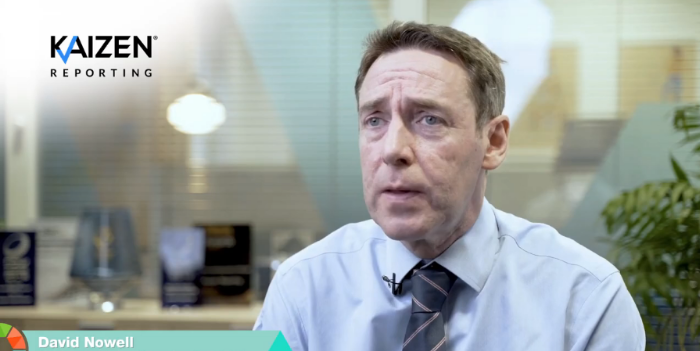
  • Video: David Nowell on what is happening with EMIR Trade Reporting

    Video: David Nowell on what is happening with EMIR Trade Reporting

    In this video, David Nowell answers the below questions:

    • Why is EMIR important?
    • Following recent comments from ESMA about the FCA and other NCAs, what changes are we likely to see?
    • What do the changes mean for financial firms?
    • What are the key changes from the recent EMIR re-fit?

    If you need help with your EMIR Trade Reporting data quality, get in touch.

  • Video series: Dario Crispini on Kaizen’s key regulatory reporting services

    Video series: Dario Crispini on Kaizen’s key regulatory reporting services

    Kaizen Reporting’s CEO Dario Crispini talks about the regtech company’s multi-award winning regulatory reporting assurance services and the unique testing methodology behind them. 

    This is a four part introduction to Kaizen Reporting video series from CEO Dario Crispini.

    Watch the first video in the series – Why was Kaizen founded?

    Watch the third video in the series – Issues and risks of poor data quality in regulatory reporting.

    If you’re concerned about the data quality of your regulatory reporting, get in touch. 

    Huge thanks to the Wealth Mosaic whom we collaborated with on this project. 

  • Video series: Dario Crispini on why he set up Kaizen Reporting

    Video series: Dario Crispini on why he set up Kaizen Reporting

    Kaizen Reporting’s CEO Dario Crispini talks about the factors that led him to start the company, our services, and the benefits we bring to our clients, in the first video of a series introducing who we are and what we do.


    This is a four part introduction to Kaizen Reporting video series from CEO Dario Crispini.

    Watch the second video in the series – Kaizen’s key regulatory reporting services.

    Watch the third video in the series – Issues and risks of poor data quality in regulatory reporting.

    If you’re concerned about the data quality of your regulatory reporting, get in touch. 

    Huge thanks to the Wealth Mosaic whom we collaborated with on this project. 

  • FCA warns on further transaction reporting errors in Market Watch 62

    FCA warns on further transaction reporting errors in Market Watch 62

    In its latest Market Watch newsletter, the FCA has highlighted further errors it has detected in firms’ MiFIR transaction reporting. While some of these errors reflect the complexity of reporting requirements, others are very basic and must be testing the patience of the regulator.

    First, the basics…

    Starting with the most basic of errors – some firms are still failing to populate their own LEI in the ‘executing entity’ field where they are executing a transaction. This betrays a fundamental misunderstanding of the transaction reporting requirements and highlights the need for training to be an essential element in firms’ systems and controls framework.

    Another basic mistake is in the incorrect use of national identifiers for buyer/sellers (and their decision makers), ‘investment decision maker within firm’ and ‘person responsible for execution within the firm’. In particular, the FCA has detected use of the second or third priority identifier when the first priority identifier is available. These fields are absolutely essential for market abuse detection and obviously the regulators are going to be particularly unhappy with incorrect population. Failures with these fields could be the result of a misinterpretation of the requirement, or could result from the inadequate collection of data from clients and employees.

    The more complex..

    Moving to some of the more complex requirements, the FCA has highlighted issues with the buyer/seller decision maker, misuse of the aggregate client identifier (INTC) and use of default values in the ‘waiver indicator’, short selling indicator’, OTC post-trading Indicator’, and ‘commodity derivative indicator’.

    There is also an important message for reporting buy-side scenarios – the FCA has detected issues where the buyer/seller decision maker hasn’t been populated with the fund management company where appropriate. Additionally, the FCA has discovered instances of the broker identifying fund in the buyer/seller identifier fields when the fund management company is expected (i.e. where transmission within the definition of RTS 22, Article 4 has not taken place).

    To summarise…

    • The FCA is still very far from happy with the quality of MiFIR transaction reports
    • In highlighting these errors, the FCA removes any defence of ‘ignorance’ for firms
    • The FCA is increasing the sophistication of its data quality procedures and may be implementing cross-entity testing
    • The FCA has again stressed the need for robust methods and arrangements for reporting transactions, including reconciliation of front-office trading records against data provided by the FCA.

    Our advice…

    • Validations do not detect all reporting errors. Only quality assurance testing of the accuracy of your transaction reporting data will help you stay one step ahead of the FCA – get on the front foot and discover any reporting issues before the regulator does
    • To meet the requirements of RTS 22, Article 15 you must reconcile the data in your front office systems to that reported to the regulator 
    • Training on the reporting obligations will help ensure you haven’t misinterpreted any of the MiFIR reporting requirements.

    And of course, we can’t help but point out that detecting transaction reporting errors is why we here at Kaizen exist! Our ReportShield™ assurance services are designed to help you meet all the requirements of MiFIR transaction reporting. Please contact us to learn more about how we can get your reporting accurate and complete. 

    Further reading: Market Watch 62

  • ESMA clarifies FX forwards transaction reporting in new MiFIR Q&A

    ESMA clarifies FX forwards transaction reporting in new MiFIR Q&A

    ESMA has provided a very useful example of how to report FX forwards in its latest Q&A on MiFIR data reporting. In particular, we would urge firms to take note on the practice of populating the ‘quantity’ and ‘price’ fields:

    • The ‘quantity’ (and ‘quantity currency’) should reflect the amount of the FX forwards in the base currency
    • The ‘price’ (and ‘price currency) should show the forward rate expressed as a price of base currency in the quoted The monetary value XML tag should be used (if reporting to an ARM in flat file, ‘price type’ is monetary value.

    The only additional changes appear to be in the table of national identifier formats. This details a change in the format of Portuguese passports issued after April 2018 and corrections to the Romanian National Identification Number and national passport formats.

    Whilst the new MiFIR Q&A signals only relatively minor changes, it clearly demonstrates the need for firms to remain on top of regulatory developments. Our regulatory reporting training courses help firms stay abreast of the reporting requirements and help identify any interpretational errors. For further details, please see our training courses.

     
  • In the news: David Nowell speaks to Practice Insight on regulatory change

    In the news: David Nowell speaks to Practice Insight on regulatory change

    Senior Regulatory Reporting Specialist David Nowell spoke to Alice Tchernookova from International Financial Law Review’s publication Practice Insight about the future of regulation now that MiFID II has bedded down within the industry. 

    “We have almost reached a stage where we must ask ourselves whether being fully compliant is actually possible,” said David Nowell.

    Read the full article. 

  • ESMA fines trade repository for data delivery breaches

    ESMA has announced it has fined a trade repository for failing to provide regulators direct and immediate access to details of derivative contracts. The failures relate to trade terminations and valuations and collateral updates for the period from the start of EMIR trade reporting go live in February 2016 through to October of the same year. According to the public notice, ESMA remained unaware of the error until it was informed by the Dutch national competent authority (NCA) in July 2016.

    The fine should be a reminder to all industry participants that ESMA takes EMIR trade reporting very seriously. ESMA and the NCAs also have a ‘Data Quality Action Plan’ to address quality issues in EMIR trade reports submitted by firms.

    If you are in any doubt whether your reports meet the standards required by the regulators, please get in contact with us to discuss your EMIR data quality. The FCA has already issued a £34.5m fine for EMIR reporting breaches – we can help you put the right controls in place to make sure that you are not at risk too.

  • Kaizen wins ‘Best Reporting Platform or Service’ at Sell-Side Technology Awards

    Kaizen wins ‘Best Reporting Platform or Service’ at Sell-Side Technology Awards

    FOR IMMEDIATE RELEASE

    15 April 2019, London: Leading regulatory reporting firm Kaizen Reporting (Kaizen), developer of the multi-award-winning assurance service, ReportShield™, has won ‘Best Reporting Platform or Service for the Sell-Side’ at the Sell-Side Technology Awards. Hosted and run by WatersTechnology, the awards were set up in order to recognise market-leading technologies and third-party vendors that enable sell-side firms to operate more efficiently and transparently.

    “It’s a real honour to be named as the winner of ‘Best Reporting Platform or Service’, which further shows Kaizen’s commitment to offering our customers the best solutions to their reporting needs.”

    The methodology which applied to nominated companies focused on how they address the sector’s most pressing needs and manage the various risks financial firms frequently face, through innovation and effective collaboration. The winners of the awards were narrowed down from an extremely broad field; entry was open to all technology providers, brokers and sell-side institutions, illustrating the level of quality required to stand out.

    Dario Crispini, CEO of Kaizen, commented:

    “It’s a real honour to be named as the winner of ‘Best Reporting Platform or Service’, which further shows Kaizen’s commitment to offering our customers the best solutions to their reporting needs. The latest transaction reporting fine imposed by the FCA highlights the extent of the challenges firms face in trying to achieve high-quality reporting and the increased risks and costs of reporting failures for both the firms and their senior managers. Our solutions uniquely address these challenges and having that recognised through the Sell–Side Technology Awards is testament to the great work the team at Kaizen is doing”.

    Kaizen’s ReportShield™ is a set of services that help financial firms meet their reporting control obligations and effectively manage their reporting risks.  The service includes Kaizen’s award-winning accuracy testing, which utilises our multi-dimensional testing methodology to fully assess the quality of the data firms report to the regulator.

    (ends)

    For media inquiries, please contact Fiona Wilde on media@kaizenreporting.com or +44 (0) 20 3912 3271.

  • Second fine for transaction reporting breaches in two weeks is a record £34.3m

    Second fine for transaction reporting breaches in two weeks is a record £34.3m

    The FCA has issued a record fine of £34.3m for incorrect transaction reporting, hot on the heels of a fine two weeks ago for similar breaches. 

    According to the FCA, the firm in question failed to provide accurate and timely reporting relating to 220.2 million transaction reports between November 2007 and March 2017.

    If any firm doubts the FCA’s resolve in its pursuit of complete and accurate transaction reporting, they need to take note of these fines and the accompanying warning from Mark Steward, the FCA’s Director of Enforcement:

    ‘The failings in this case demonstrate a failure over an extended period to manage and test controls that are vitally important to the integrity of our markets. These were serious and prolonged failures. We expect all firms will take this opportunity to ensure they can fully detail their activity and are regularly checking their systems so any problems are detected and remedied promptly, unlike in this case.’

    The two recent fines are almost double the amount of the previous 12 fines for MiFID reporting combined.

    What went wrong?

    The FCA’s Final Notice tells a very familiar tale of what happens when a complex organisation, acting in good faith, attempts to deliver upon these very complex regulatory obligations; a significant, material, and widespread set of issues left undetected for many years.

    The key message is that these errors result from inadequate systems and controls over transaction reporting. In particular, the FCA found issues with:

    1. Change management
    2. Accuracy and completeness controls – again signalling issues with an approach that only tests data samples
    3. Reference Data – identification of counterparties

    The FCA is evidently tired of sounding like a broken record as these three control issues continually result in transaction reporting failings. The message should be familiar to firms and their SMCR managers responsible for reporting.  It’s not a secret that if firms don’t test the accuracy of their reporting, don’t test their reference data and change management processes, and don’t have adequate reconciliation from front office systems to the reports received by the FCA, then they cannot have confidence their reporting is correct.

    Lessons for MiFIR transaction reporting

    It is important to note that both fines are for failures under the previous MiFID transaction reporting regime. It is possible that this now marks the end of sanctions for the MiFID reporting regime and that the FCA’s focus will turn to the MiFIR reporting regime which is considerably more complex than the MiFID reporting regime. The FCA has already warned about the unsatisfactory quality of some transaction reporting under the new regime and the potential future consequences. There are many more things that can go wrong under the new regime and it is essential that firms are confident that they have adequate controls over their transaction reporting. Firms need to take note that the reference period for this fine’s transaction reporting breaches started on 5 November 2007 – the very first day of the MiFID transaction reporting; no grace period. 

    Get peace of mind in your reporting quality

    Our blog about the fine two weeks ago asks ‘could it have been you?’ and if you have any doubt, it is important to act now.  These two fines should be a wake up call for senior managers to get their reporting controls up to standard – and fast. This is exactly what we here at Kaizen exist to do.  We have a proven track record in helping firms tackle their trade and transaction reporting issues and risks head on – and helping them to avoid censure whether it is for MiFIR, EMIR, Dodd-Frank or another G20 regulation.

    Our ReportShield™ quality assurance service marries our regulatory expertise with data science, and uniquely tests every single record at source avoiding the pitfalls of testing only a sample of data.  The service includes everything you need for reporting assurance including a bespoke control framework, quality assurance testing, reference data testing, advanced reconciliation and training. Please contact us for a discussion with one of our regulatory experts to find out how we can give you peace of mind in your reporting quality. 

  • Senior Managers Regime – are you ready?

    Senior Managers Regime – are you ready?

    The Senior Managers & Certification Regime (SMCR) for the remaining financial firms not yet obligated* is going live on 9 December 2019.  Yes, a little scary, given that Brexit is still an unknown, MiFID II is still giving everyone the run around, and SFTR is just around the corner too.

    If you’re one of the firms affected, are you ready for the extra responsibilities of SMCR?  If you’re a senior manager, are you up to speed with your heightened remit, obligation and duties?

    The FCA states its aims are to:

    • encourage a culture of staff at all levels taking personal responsibility for their actions
    • make sure firms and staff clearly understand and can demonstrate where responsibility lies.

    Like many regulations, SMCR was born out of failings in previous regimes and financial market misconduct; in trying to increase personal accountability on approved persons and making sure firms apply the correct framework and governance to the function of senior managers, with the assurance they have ‘fit and proper’ personnel in place. In essence, just to make sure firms are run better.

    Regulatory reporting controls, governance and ultimately, sign-off, will be key to senior managers. Our ReportShield™ services can help compliance and management within firms meet their regulatory reporting requirements with confidence that independent quality assurance, reconciliation and accuracy testing has been implemented across their active regulatory reporting regimes.

    If you have any questions about your SMCR reporting requirements, our regulatory experts can help.  Please contact us to find out more. 

    *These include: investment firms – brokers, securities firms, assets managers, financial advisers).

  • MiFIR offering from Kaizen to include APA trade reporting

    MiFIR offering from Kaizen to include APA trade reporting

    FOR IMMEDIATE RELEASE

    3 December 2018, London: Kaizen Reporting, the specialist regulatory reporting firm, has announced it is extending its award-winning assurance service, ReportShield™, to cover MiFIR trade reporting*.

    Kaizen has hired Chris Machin, who was instrumental in the development of the MiFIR real-time reporting solution TRADEcho, to help develop its new testing service. With a background in global banking (including at UBS and Credit Suisse), operations and client services, Machin brings significant subject-matter expertise on major regulatory regimes including MiFIR, CSDR, SFTR, MAR, EMIR and Dodd-Frank. He was most recently Head of Client Support at Simplitium, where he partnered with the London Stock Exchange to help build the APA TRADEcho.

    Ian Rennie, Managing Director of Kaizen, said: “With both the buy- and sell-side financial firms now turning their attention to the quality of the data published in the real-time reports through APAs, trade reporting is an important focus for our clients and exactly where Kaizen’s strengths of quality, accuracy and transparency will pay dividends.”

    He added: “We are delighted to have Chris leading the development of our testing service for MiFIR trade reporting. Chris previously played a prominent role in the planning, development and go-live at one of the main APAs. His expertise will enable us to quickly meet the increasing demand from clients and regulators for accurate and complete MiFIR trade reports.”

    Machin’s move to Kaizen adds to the company’s growing list of regulatory experts. Earlier this year the regulatory technology firm hired former regulator and EMIR and MiFIR expert David Nowell, and the former head of the ICMA Taskforce on SFTR, Jonathan Lee.  Already providing peace of mind to clients with its market-leading assurance services for EMIR, MIFID II transaction reporting, Dodd Frank and SFTR, the new MiFID II trade reporting testing service will provide additional confidence to clients that they are meeting their reporting obligations.

    Chris Machin commented: “Kaizen are pioneers in their approach to regulatory reporting assurance and I’m delighted to be joining such a forward-thinking company dedicated to giving clients peace of mind in their reporting data quality.  Trade reporting is a key part of MiFID II’s aims to improve price transparency in the financial markets and I am confident that clients will quickly benefit from the new service.”

    Kaizen’s ReportShield assurance service is a set of four controls that test for the accuracy and completeness of regulatory reports, something mandated under MiFIR.  Kaizen’s testing services are unique in their comprehensiveness, delivering full visibility of reporting quality.

    *Under MiFID II, investment firms are required to both trade and transaction report. Trade reporting improves the near to real-time trade transparency information published to potential investors. Financial details of trades are reported to an Approved Publication Arrangement (APA) for dissemination to the market. In transaction reporting trade details must be reported in T+1 to an Approved Reporting Mechanism (ARM) which validates the data before sending the reports to regulators. 

    (ends)

    For media inquiries, please contact Fiona Wilde at communications@kaizenreporting.com or +44 (0) 20 3912 3271.

  • Kaizen attends Queen’s Award royal reception

    Kaizen attends Queen’s Award royal reception

    We’re delighted to share some official – and unofficial – photos from last week’s Buckingham Palace reception for winners of the 2017 Queen’s Award for Enterprise. 

    Our Senior Data Scientist Tamer Onder and CEO and Founder Dario Crispini had the honour of meeting Her Majesty the Queen at the event, held on Tuesday 11 July. 

    In April, we were awarded a Queen’s Award for innovation for our ReportShield accuracy testing service which checks all regulatory reporting data at source to give financial firms complete transparency of their regulatory reporting quality. 

    Awards for innovation are given to businesses that can demonstrate their innovative products or services are commercially successful, stable and sustainable.  Winners also have to prove they are a good corporate citizen. 

    The Queen’s Awards for Enterprise are for outstanding achievement by UK businesses in the categories of innovation, international trade and sustainable development and were established in 1965.

    They are one of the most prestigious business awards in the country, with winning businesses able to use the esteemed Queen’s Awards emblem for the next five years. 

    Read our press release from earlier in the year when we first found out we’d won the award.